


Kops Lab
@kopslab.bsky.social
Interested in all things chromosome segregation and aneuploidy | Director & PI at Hubrecht Institute
Reposted by Kops Lab
Recently, a Hypothesis was posed in @jcellsci.bsky.social in which the root of eukaryotes was placed between kinetoplastids and all other eukaryotes. From this, it was implied that LECA did not have a kinetochore. We argue this is highly unlikely. A 🧵(1/12)
Read our reply here: tinyurl.com/n87myhpr
Read our reply here: tinyurl.com/n87myhpr

The LECA had a conventional kinetochore and the kinetoplastid kinetochore is a derived feature – a critical evaluation of Akiyoshi, 2025
Summary:Akiyoshi, 2025 presented a hypothesis with implications for the early evolution of eukaryotes and eukaryotic cell division machinery. In this Correspondence, the authors conclude that this hyp...
tinyurl.com
February 13, 2026 at 12:45 PM
Recently, a Hypothesis was posed in @jcellsci.bsky.social in which the root of eukaryotes was placed between kinetoplastids and all other eukaryotes. From this, it was implied that LECA did not have a kinetochore. We argue this is highly unlikely. A 🧵(1/12)
Read our reply here: tinyurl.com/n87myhpr
Read our reply here: tinyurl.com/n87myhpr
Our story on the kinetochore composition of the ciliate Tetrahymena thermophila is out now on bioRxiv! We find surprisingly many orthologs of conventional kinetochore components, but also components that have very different evolutionary origins. A 🧵 (1/11)
Check it out here: tinyurl.com/4ectm9x4
Check it out here: tinyurl.com/4ectm9x4
tinyurl.com
December 1, 2025 at 2:53 PM
Reposted by Kops Lab
Our story on the kinetochore composition of the ciliate Tetrahymena thermophila is out now on bioRxiv! We find surprisingly many orthologs of conventional kinetochore components, but also components that have very different evolutionary origins. A 🧵 (1/11)
Check it out here: tinyurl.com/4ectm9x4
Check it out here: tinyurl.com/4ectm9x4
tinyurl.com
December 1, 2025 at 2:06 PM
Our story on the kinetochore composition of the ciliate Tetrahymena thermophila is out now on bioRxiv! We find surprisingly many orthologs of conventional kinetochore components, but also components that have very different evolutionary origins. A 🧵 (1/11)
Check it out here: tinyurl.com/4ectm9x4
Check it out here: tinyurl.com/4ectm9x4
Surprise — it wasn’t: RNA-seq and histology show that moderate/high CIN causes massive cell death, triggering regeneration without immune infiltration — providing the non–cell-autonomous push that fuels tumorigenesis. (5/5)
November 4, 2025 at 11:41 AM
Surprise — it wasn’t: RNA-seq and histology show that moderate/high CIN causes massive cell death, triggering regeneration without immune infiltration — providing the non–cell-autonomous push that fuels tumorigenesis. (5/5)
One possibility of such a mechanism: CIN may mimic TPA in promoting tumorigenesis. Indeed, moderate/high CIN could partially replace TPA in the DMBA/TPA regimen.
But what TPA effect was CIN mimicking? Inflammation? (4/5)
But what TPA effect was CIN mimicking? Inflammation? (4/5)
November 4, 2025 at 11:41 AM
One possibility of such a mechanism: CIN may mimic TPA in promoting tumorigenesis. Indeed, moderate/high CIN could partially replace TPA in the DMBA/TPA regimen.
But what TPA effect was CIN mimicking? Inflammation? (4/5)
But what TPA effect was CIN mimicking? Inflammation? (4/5)
Now the twist: despite being induced under moderate/high CIN, these tumors are made of low CIN cells across other tumor types.
So what’s happening?
Moderate/high CIN drives the outgrowth of rare low-CIN tumor cells through a non–cell-autonomous mechanism which doesn't happen in only low CIN. (3/5)
So what’s happening?
Moderate/high CIN drives the outgrowth of rare low-CIN tumor cells through a non–cell-autonomous mechanism which doesn't happen in only low CIN. (3/5)
November 4, 2025 at 11:41 AM
Now the twist: despite being induced under moderate/high CIN, these tumors are made of low CIN cells across other tumor types.
So what’s happening?
Moderate/high CIN drives the outgrowth of rare low-CIN tumor cells through a non–cell-autonomous mechanism which doesn't happen in only low CIN. (3/5)
So what’s happening?
Moderate/high CIN drives the outgrowth of rare low-CIN tumor cells through a non–cell-autonomous mechanism which doesn't happen in only low CIN. (3/5)
CIN levels matter!
We used CiMKi mice to induce and monitor skin tumors across five CIN levels in combination with DMBA/TPA treatment.
Low → more tumors but no effect on onset or growth
Moderate → more tumors earlier onset and larger growth
High → fewer tumors but earlier and earlier growth (2/5)
We used CiMKi mice to induce and monitor skin tumors across five CIN levels in combination with DMBA/TPA treatment.
Low → more tumors but no effect on onset or growth
Moderate → more tumors earlier onset and larger growth
High → fewer tumors but earlier and earlier growth (2/5)
November 4, 2025 at 11:41 AM
CIN levels matter!
We used CiMKi mice to induce and monitor skin tumors across five CIN levels in combination with DMBA/TPA treatment.
Low → more tumors but no effect on onset or growth
Moderate → more tumors earlier onset and larger growth
High → fewer tumors but earlier and earlier growth (2/5)
We used CiMKi mice to induce and monitor skin tumors across five CIN levels in combination with DMBA/TPA treatment.
Low → more tumors but no effect on onset or growth
Moderate → more tumors earlier onset and larger growth
High → fewer tumors but earlier and earlier growth (2/5)
Ever wondered how chromosomal instability (CIN) influences tumorigenesis? And how does it contribute to shaping the tumor microenvironment?
In our latest preprint, we used the CiMKi model to induce and monitor skin tumors across five levels of CIN
tinyurl.com/52tuk88z
Here's what we find (1/5):
In our latest preprint, we used the CiMKi model to induce and monitor skin tumors across five levels of CIN
tinyurl.com/52tuk88z
Here's what we find (1/5):

Non-cell-autonomous mechanisms of tumor initiation and relapse by chromosomal instability
Chromosomal instability (CIN) is a hallmark of cancer, and a primary cause of genetic heterogeneity in tumors. Depending on the degree of CIN and the affected tissue, CIN can promote or suppress tumor...
tinyurl.com
November 4, 2025 at 11:41 AM
Ever wondered how chromosomal instability (CIN) influences tumorigenesis? And how does it contribute to shaping the tumor microenvironment?
In our latest preprint, we used the CiMKi model to induce and monitor skin tumors across five levels of CIN
tinyurl.com/52tuk88z
Here's what we find (1/5):
In our latest preprint, we used the CiMKi model to induce and monitor skin tumors across five levels of CIN
tinyurl.com/52tuk88z
Here's what we find (1/5):
Reposted by Kops Lab
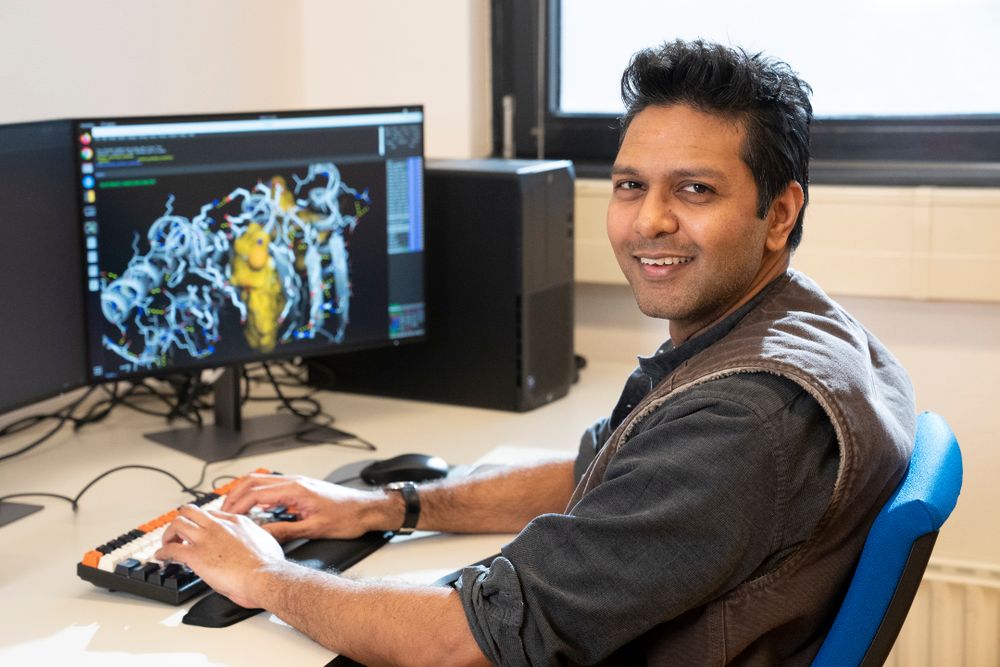
Ready to establish your own research group at the Hubrecht Institute for Molecular and Developmental Biology? We’re seeking a tenure-track group leader to develop an innovative research line within our vibrant scientific community. Learn more & apply! https://f.mtr.cool/jncxfqkuds


September 26, 2025 at 1:53 PM
Ready to establish your own research group at the Hubrecht Institute for Molecular and Developmental Biology? We’re seeking a tenure-track group leader to develop an innovative research line within our vibrant scientific community. Learn more & apply! https://f.mtr.cool/jncxfqkuds
Altogether, our findings highlight the need to explore the tissue context of p53 responses to aneuploidy. We propose that future efforts should integrate the use of appropriate models of diverse healthy and pre-cancer human tissues.
(8/8)
(8/8)
July 9, 2025 at 10:32 AM
Altogether, our findings highlight the need to explore the tissue context of p53 responses to aneuploidy. We propose that future efforts should integrate the use of appropriate models of diverse healthy and pre-cancer human tissues.
(8/8)
(8/8)
Finally, we show that losses, but not gains, are more universally linked with p53 deficiency across cancer types. This association has been previously made and highlights an exciting direction to explore the role of p53 responses to aneuploidy.
(7/8)
(7/8)
July 9, 2025 at 10:32 AM
Finally, we show that losses, but not gains, are more universally linked with p53 deficiency across cancer types. This association has been previously made and highlights an exciting direction to explore the role of p53 responses to aneuploidy.
(7/8)
(7/8)
Surprisingly, we find that neither arm-level or whole-chromosome CNAs correlate with p53 deficiency. This is particularly interesting given the role of p53 in responding to DNA damage, which is often linked to arm-level copy number alterations.
(6/8)
(6/8)
July 9, 2025 at 10:32 AM
Surprisingly, we find that neither arm-level or whole-chromosome CNAs correlate with p53 deficiency. This is particularly interesting given the role of p53 in responding to DNA damage, which is often linked to arm-level copy number alterations.
(6/8)
(6/8)
This lead us to ask the following question: can specific features of aneuploidy better distinguish p53 proficient and deficient tumors? To explore this we focused on the type (arm- or whole-chromosome) and direction of copy-number alteration (CNA).
(5/8)
(5/8)
July 9, 2025 at 10:32 AM
This lead us to ask the following question: can specific features of aneuploidy better distinguish p53 proficient and deficient tumors? To explore this we focused on the type (arm- or whole-chromosome) and direction of copy-number alteration (CNA).
(5/8)
(5/8)
We were excited to find that p53 inactivation is neither sufficient nor necessary for tumors to accumulate a high degree of aneuploidy. We find that tumors with high aneuploidy yet intact p53 are common, and also that p53 inactivation does not invariably lead to highly aneuploid tumors.
(4/8)
(4/8)
July 9, 2025 at 10:32 AM
We were excited to find that p53 inactivation is neither sufficient nor necessary for tumors to accumulate a high degree of aneuploidy. We find that tumors with high aneuploidy yet intact p53 are common, and also that p53 inactivation does not invariably lead to highly aneuploid tumors.
(4/8)
(4/8)
To fully capture the p53 status we defined p53 deficiency as either TP53 mutations or alterations that phenocopy TP53 loss. Aneuploidy was defined as arm- or whole-chromosome copy number alterations (CNAs).
(3/8)
(3/8)
July 9, 2025 at 10:32 AM
To fully capture the p53 status we defined p53 deficiency as either TP53 mutations or alterations that phenocopy TP53 loss. Aneuploidy was defined as arm- or whole-chromosome copy number alterations (CNAs).
(3/8)
(3/8)
Despite decades of research, it is still unclear whether p53 protects against particular forms of copy number alterations and whether it does so universally across cancer types. To investigate this we systematically analyzed TCGA tumors across 31 cancer types.
(2/8)
(2/8)
July 9, 2025 at 10:32 AM
Despite decades of research, it is still unclear whether p53 protects against particular forms of copy number alterations and whether it does so universally across cancer types. To investigate this we systematically analyzed TCGA tumors across 31 cancer types.
(2/8)
(2/8)
Our new preprint is out! We revisit the associations between p53 status and cancer aneuploidy using TCGA data. Here’s a breakdown of our findings. Important work spearheaded by the talented PhD candidate Joana Marques. Check it out here: www.biorxiv.org/content/10.1...
(1/8)🧵
(1/8)🧵
Cancer type-specific association of p53 deficiency with aneuploidy and chromosome losses
Aneuploidy and mutations in the TP53 tumor suppressor gene are among the most frequent genetic alterations in cancer, and p53 inactivation is considered an important contributor to the emergence of cancer aneuploidy. It is unclear, however, if p53 protects against particular forms of copy number alterations and whether it does so universally across cancer types. By analyzing p53 status and various aneuploidy features in 31 cancer types in the TCGA database, we verify that on a pan-cancer level p53-deficient cancers tend to have a higher degree of aneuploidy. However, for many cancer types, the average degree of aneuploidy is similar in p53-proficient and -deficient samples, and a substantial degree of aneuploidy can accumulate with intact p53 in almost all cancer types. Neither arm-level nor whole chromosome aneuploidy but rather chromosome loss events distinguish p53-deficient from proficient cancers. p53 inactivation is therefore neither sufficient nor necessary for the emergence of cancer aneuploidy, but is associated with the degree of aneuploidy in a subset of cancer types and more universally with chromosome losses. Our findings underscore the poorly understood nature of aneuploidy emergence in cancer and shed new light on the role of p53 therein. ### Competing Interest Statement The authors have declared no competing interest. Dutch Cancer Society (KWF Kankerbestrijding) European Research Council, ERC-SyG 855158
www.biorxiv.org
July 9, 2025 at 10:32 AM
Our new preprint is out! We revisit the associations between p53 status and cancer aneuploidy using TCGA data. Here’s a breakdown of our findings. Important work spearheaded by the talented PhD candidate Joana Marques. Check it out here: www.biorxiv.org/content/10.1...
(1/8)🧵
(1/8)🧵
A few weeks ago, we said goodbye to long-term Kops lab member Emine Ali, our resident protistologist.
We wish Emine all the best in her future career.
We wish Emine all the best in her future career.

July 8, 2025 at 1:36 PM
A few weeks ago, we said goodbye to long-term Kops lab member Emine Ali, our resident protistologist.
We wish Emine all the best in her future career.
We wish Emine all the best in her future career.
Spending a few days in beautiful Heidelberg for the 5th EMBL partnership conference. Our Hubrecht institute is EMBL partner and it has been wonderful to see the exciting science of the other partner institutes! @embl.org @hubrechtinstitute.bsky.social

April 2, 2025 at 7:58 AM
Spending a few days in beautiful Heidelberg for the 5th EMBL partnership conference. Our Hubrecht institute is EMBL partner and it has been wonderful to see the exciting science of the other partner institutes! @embl.org @hubrechtinstitute.bsky.social
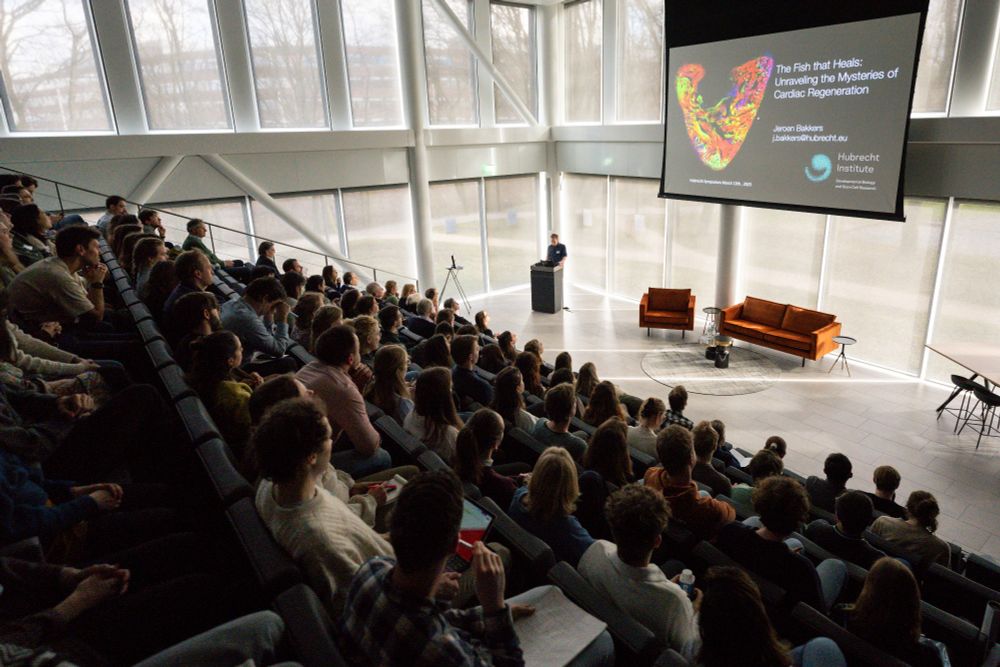
An amazing inaugural Hubrecht Symposium on Developmental Biology, bringing the Dutch community together and getting inspired by amazing science! A big thank you to the speakers, the organizing committee and the many dedicated Hubrechters who made it happen.
We closed today with a great keynote by @embo.org director Fiona Watt, highlighting how spatial maps of epidermal cell populations have allowed the generation and testing of new hypotheses.
Thanks for joining the #HubrechtSymposium2025! We hope you leave with fresh insights and new connections.
Thanks for joining the #HubrechtSymposium2025! We hope you leave with fresh insights and new connections.


March 25, 2025 at 1:29 PM
An amazing inaugural Hubrecht Symposium on Developmental Biology, bringing the Dutch community together and getting inspired by amazing science! A big thank you to the speakers, the organizing committee and the many dedicated Hubrechters who made it happen.
Reposted by Kops Lab
🚀Ever wondered if there's a universal rule of spindle scaling across eukaryotes? Turns out, there is! Our study reveals an evolutionarily conserved principle driven by a surprising factor: chromosome crowding. 🧵👇
shorturl.at/MmPNr
shorturl.at/MmPNr
March 10, 2025 at 4:25 PM
🚀Ever wondered if there's a universal rule of spindle scaling across eukaryotes? Turns out, there is! Our study reveals an evolutionarily conserved principle driven by a surprising factor: chromosome crowding. 🧵👇
shorturl.at/MmPNr
shorturl.at/MmPNr
Reposted by Kops Lab
How do cells measure time? Despite its fundamental role in development, the underlying mechanisms remain unclear. An NWO ENW-XL grant allows a research consortium from the Hubrecht Institute, AMOLF, TU Delft, and ENS Paris to study timing regulation in C. elegans. www.hubrecht.eu/how-do-cells...

February 14, 2025 at 9:11 AM
How do cells measure time? Despite its fundamental role in development, the underlying mechanisms remain unclear. An NWO ENW-XL grant allows a research consortium from the Hubrecht Institute, AMOLF, TU Delft, and ENS Paris to study timing regulation in C. elegans. www.hubrecht.eu/how-do-cells...
Reposted by Kops Lab
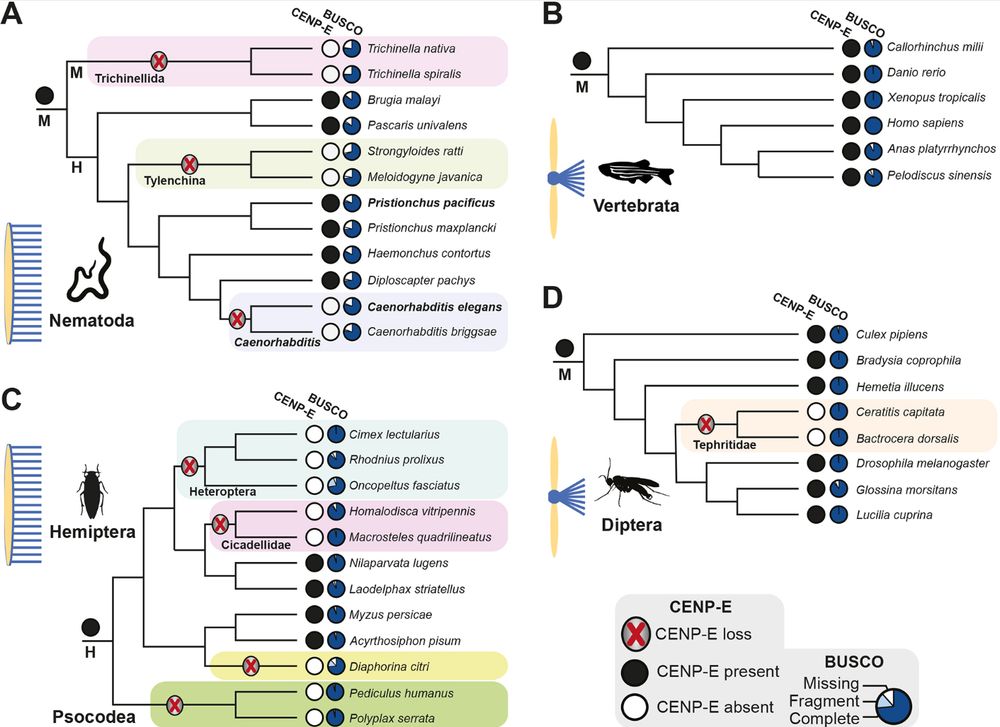
Ana Almeida, Helder Rocha, Maximilian Raas, Geert Kops, Reto Gassmann, Helder Maiato @i3suporto.bsky.social, et al. dissect the relationship between kinetochore size & CENP-E dependence for chromosome alignment.
journals.biologists.com/jcs/article/...
journals.biologists.com/jcs/article/...
journals.biologists.com/jcs/article/...
journals.biologists.com/jcs/article/...
January 9, 2025 at 12:03 PM
Ana Almeida, Helder Rocha, Maximilian Raas, Geert Kops, Reto Gassmann, Helder Maiato @i3suporto.bsky.social, et al. dissect the relationship between kinetochore size & CENP-E dependence for chromosome alignment.
journals.biologists.com/jcs/article/...
journals.biologists.com/jcs/article/...
journals.biologists.com/jcs/article/...
journals.biologists.com/jcs/article/...