



Mathijs Boom
@mathijsboom.bsky.social
Historian of science and environment | finishing a book on watery Earth histories 1600-1800 and crafting a new one on anti-nuclear movements and planetary futures in the 1970s-80s | Postdoc @iisg-amsterdam.bsky.social | PhD from @uva.nl
Reposted by Mathijs Boom
Ahead of new print alert! You can now read @mathijsboom.bsky.social and Jip van Besouw's "Rising Seas, Sinking Lands: Reckoning with Local and Global Sea Level in the Early Modern Netherlands" from the January 2026 issue. #envhist #envhum
www.journals.uchicago.edu/doi/10.1086/...
www.journals.uchicago.edu/doi/10.1086/...
Rising Seas, Sinking Lands: Reckoning with Local and Global Sea Level in the Early Modern Netherlands | Environmental History
Abstract This article examines notions of rising seas in the early modern Dutch Republic and explores how Dutch water management spurred efforts to think and act across scales. Focusing on a 1731 repo...
www.journals.uchicago.edu
January 8, 2026 at 4:39 PM
Ahead of new print alert! You can now read @mathijsboom.bsky.social and Jip van Besouw's "Rising Seas, Sinking Lands: Reckoning with Local and Global Sea Level in the Early Modern Netherlands" from the January 2026 issue. #envhist #envhum
www.journals.uchicago.edu/doi/10.1086/...
www.journals.uchicago.edu/doi/10.1086/...
Reposted by Mathijs Boom
Early career historians (< 3 year post PhD) of science, art and ideas: the Dr. C. Louise Thijssen-Schoute Foundation awards one three-month visiting fellowship annually, hosted by our department @huygensknaw.bsky.social. Deadline for the 2027 fellowship is 15 May: www.huygens.knaw.nl/en/open-call...

Open Call: Thijssen-Schoute Fellowship 2027 - Huygens Instituut
Jaarlijks wordt een fellowship toegekend aan een jonge onderzoeker die onderzoek op dit gebied wil ontwikkelen. Het fellowship wordt aangeboden in samenwerking met de onderzoeksgroep Kennis- en kunstp...
www.huygens.knaw.nl
January 8, 2026 at 10:31 AM
Early career historians (< 3 year post PhD) of science, art and ideas: the Dr. C. Louise Thijssen-Schoute Foundation awards one three-month visiting fellowship annually, hosted by our department @huygensknaw.bsky.social. Deadline for the 2027 fellowship is 15 May: www.huygens.knaw.nl/en/open-call...
We've thought about this case study partly as a contribution to historiographies of scaling and environmental reflexivity taken up by Lydia Barnett, Deborah Coen, and Wilko von Hardenberg. Curious to see what others will make of it. 8/8
December 16, 2025 at 1:02 PM
We've thought about this case study partly as a contribution to historiographies of scaling and environmental reflexivity taken up by Lydia Barnett, Deborah Coen, and Wilko von Hardenberg. Curious to see what others will make of it. 8/8
The 1731 manuscript also offers a unique window into thinking across different scales in time and space: from the governmental scale of Delfland, to the planetary scale of rising sea levels; and from the ancient past of the second century BCE to the near future. 7/8
December 16, 2025 at 1:02 PM
The 1731 manuscript also offers a unique window into thinking across different scales in time and space: from the governmental scale of Delfland, to the planetary scale of rising sea levels; and from the ancient past of the second century BCE to the near future. 7/8
What made Cruquius’ theory so interesting? Like many contemporaries, he combined naturalist and antiquarian methods—including such historical maps—to make sense of histories of the Earth and particular geographies. Boundaries between disciplines were often porous (although not absent). 6/8

December 16, 2025 at 1:02 PM
What made Cruquius’ theory so interesting? Like many contemporaries, he combined naturalist and antiquarian methods—including such historical maps—to make sense of histories of the Earth and particular geographies. Boundaries between disciplines were often porous (although not absent). 6/8
Cruquius' 1731 theory had a specific goal: to convince the Delfland water board to intervene at the Hoek of Holland, where a shifting sand dune appeared poised to block off the mouth of the river Meuse, as seen in another map made by Cruquius. 5/8

December 16, 2025 at 1:02 PM
Cruquius' 1731 theory had a specific goal: to convince the Delfland water board to intervene at the Hoek of Holland, where a shifting sand dune appeared poised to block off the mouth of the river Meuse, as seen in another map made by Cruquius. 5/8
I'd dealt with the latter in my dissertation. Jip had worked on the practices undergirding Cruquius' much-celebrated map of the river Merwede; a map which pioneered the usage of depth contour lines. (doi.org/10.1086/730416) 4/8

December 16, 2025 at 1:02 PM
I'd dealt with the latter in my dissertation. Jip had worked on the practices undergirding Cruquius' much-celebrated map of the river Merwede; a map which pioneered the usage of depth contour lines. (doi.org/10.1086/730416) 4/8
Cruquius theory predicted sea level rise, using naturalist and antiquarian methods. Making sense of Cruquius' argument requires a dive into technical debates about water management as well as seventeenth-century antiquarian debates about the changing nature of Holland's geography. 3/8
December 16, 2025 at 1:02 PM
Cruquius theory predicted sea level rise, using naturalist and antiquarian methods. Making sense of Cruquius' argument requires a dive into technical debates about water management as well as seventeenth-century antiquarian debates about the changing nature of Holland's geography. 3/8
We began with a 1731 report by hydraulic expert and surveyor Nicolaas Kruik, beter known as Cruquius (1678-1754). In this report for the water board of Delfland, Cruquius developed a theory about the past, present and future of the Dutch river landscapes and coasts, as well as global sea level. 2/8

December 16, 2025 at 1:02 PM
We began with a 1731 report by hydraulic expert and surveyor Nicolaas Kruik, beter known as Cruquius (1678-1754). In this report for the water board of Delfland, Cruquius developed a theory about the past, present and future of the Dutch river landscapes and coasts, as well as global sea level. 2/8
Finally out in Environmental History! In this article with Jip van Besouw, we explore notions of global sea level rise from the vantage of the 18th-century Dutch Republic. Here are a few of our finds. 1/8 doi.org/10.1086/738533

December 16, 2025 at 1:02 PM
Finally out in Environmental History! In this article with Jip van Besouw, we explore notions of global sea level rise from the vantage of the 18th-century Dutch Republic. Here are a few of our finds. 1/8 doi.org/10.1086/738533
Reposted by Mathijs Boom

Gister een draadje over Galileo, vandaag de polders.
Na mijn promotie in 2020 ben ik qua onderzoek best een andere weg ingeslagen. Met 2 beurzen kon ik 3 jaar naar het buitenland (Los Angeles en Cambridge) om daar nieuw onderzoek op te zetten, naar 17e eeuwse inpolderingsprojecten dus.
Na mijn promotie in 2020 ben ik qua onderzoek best een andere weg ingeslagen. Met 2 beurzen kon ik 3 jaar naar het buitenland (Los Angeles en Cambridge) om daar nieuw onderzoek op te zetten, naar 17e eeuwse inpolderingsprojecten dus.

December 11, 2025 at 12:42 PM
Gister een draadje over Galileo, vandaag de polders.
Na mijn promotie in 2020 ben ik qua onderzoek best een andere weg ingeslagen. Met 2 beurzen kon ik 3 jaar naar het buitenland (Los Angeles en Cambridge) om daar nieuw onderzoek op te zetten, naar 17e eeuwse inpolderingsprojecten dus.
Na mijn promotie in 2020 ben ik qua onderzoek best een andere weg ingeslagen. Met 2 beurzen kon ik 3 jaar naar het buitenland (Los Angeles en Cambridge) om daar nieuw onderzoek op te zetten, naar 17e eeuwse inpolderingsprojecten dus.
Reposted by Mathijs Boom

From the current issue: “The Atmosphere in Spatial History: Digital Evidence and Visual Argument”
by @lscholz.bsky.social (@manchester.ac.uk)
#OpenAccess
doi.org/10.1093/past...
by @lscholz.bsky.social (@manchester.ac.uk)
#OpenAccess
doi.org/10.1093/past...

The Atmosphere in Spatial History: Digital Evidence and Visual Argument*
Abstract. Taking its cue from the weather wars that unfolded around the Alps in the eighteenth century — conflicts between neighbouring towns and polities
doi.org
December 10, 2025 at 8:12 AM
From the current issue: “The Atmosphere in Spatial History: Digital Evidence and Visual Argument”
by @lscholz.bsky.social (@manchester.ac.uk)
#OpenAccess
doi.org/10.1093/past...
by @lscholz.bsky.social (@manchester.ac.uk)
#OpenAccess
doi.org/10.1093/past...
Reposted by Mathijs Boom
Action group 0.7: ‘To @d66.nl, if you break your promise to retract the budget cuts, you will lose the votes of students and academics forever.’

December 9, 2025 at 11:43 AM
Action group 0.7: ‘To @d66.nl, if you break your promise to retract the budget cuts, you will lose the votes of students and academics forever.’
For anyone interested in earthy, environmental and knowledge histories, I can recommend following the SCARCE project in Vienna: they put up and interesting colloquium series this semester.
🚨Join Christophe Bonneuil’s online talk “Historicizing Planetarity: Trans-imperial Circulations, Western Elites and Planetary Environmental Knowledge and Alerts around 1900”! Co-hosted by SCARCE and History of Science & Knowledge. 🎓✨
⏰ Tomorrow, 11:30 CET
More info: bit.ly/3Ml9OFw
#histSci
⏰ Tomorrow, 11:30 CET
More info: bit.ly/3Ml9OFw
#histSci
Historicizing planetarity. Trans-imperial circulations, Western elites and planetary environmental knowledge and alerts around 1900
Joint meeting with the History of Science and Knowledge Colloquium
Speaker: Christophe Bonneuil (CNRS-EHSS)
University of Vienna
Online Event
bit.ly
December 9, 2025 at 12:06 PM
For anyone interested in earthy, environmental and knowledge histories, I can recommend following the SCARCE project in Vienna: they put up and interesting colloquium series this semester.
Het succes van protest is deel van mijn historische onderzoek, maar in het recente verleden was er geen succesvollere Nederlandse beweging dan Kick Out Zwarte Piet. Waanzinnig sterk om vandaag, na 15 jaar strijd en successen, te stoppen. Veel bewondering voor Afriyie en consorten.

Jerry Afriyie: na vijftien jaar is de strijd tegen Zwarte Piet voltooid
Mensenrechtenactivist Jerry Afriyie ziet zijn missie als volbracht. In aanloop naar Sinterklaas blikt hij terug op vijftien jaar actie en verandering.
www.trouw.nl
December 5, 2025 at 9:57 AM
Het succes van protest is deel van mijn historische onderzoek, maar in het recente verleden was er geen succesvollere Nederlandse beweging dan Kick Out Zwarte Piet. Waanzinnig sterk om vandaag, na 15 jaar strijd en successen, te stoppen. Veel bewondering voor Afriyie en consorten.
Reposted by Mathijs Boom

"Het is een democratische absurditeit die we ondertussen bijna normaal zijn gaan vinden: een demissionaire regering die nauwelijks een zesde van de Tweede Kamer vertegenwoordigt, maar die wel doorgaat met beslissingen die diep ingrijpen in de toekomst van ons land. [..]"
www.nrc.nl/nieuws/2025/...
www.nrc.nl/nieuws/2025/...

Opinie | Hoe een mini-kabinet het hoger onderwijs sloopt
Dit demissionair kabinet voert ingrijpende onderwijsbezuinigingen door, zonder benodigd mandaat. Dat moet stoppen, zeggen Rens Bod, Remco Breuker en Ingrid Robeyns.
www.nrc.nl
December 3, 2025 at 4:19 PM
"Het is een democratische absurditeit die we ondertussen bijna normaal zijn gaan vinden: een demissionaire regering die nauwelijks een zesde van de Tweede Kamer vertegenwoordigt, maar die wel doorgaat met beslissingen die diep ingrijpen in de toekomst van ons land. [..]"
www.nrc.nl/nieuws/2025/...
www.nrc.nl/nieuws/2025/...
Reposted by Mathijs Boom

Generations of Navajo miners were sent underground to extract uranium for America’s weapons and energy programs. Many were never told the risks. Many never made it out alive.
New from @sarahlazare.bsky.social in partnership with @workdaymagazine.bsky.social
inthesetimes.com/article/they...
New from @sarahlazare.bsky.social in partnership with @workdaymagazine.bsky.social
inthesetimes.com/article/they...

December 3, 2025 at 2:56 PM
Generations of Navajo miners were sent underground to extract uranium for America’s weapons and energy programs. Many were never told the risks. Many never made it out alive.
New from @sarahlazare.bsky.social in partnership with @workdaymagazine.bsky.social
inthesetimes.com/article/they...
New from @sarahlazare.bsky.social in partnership with @workdaymagazine.bsky.social
inthesetimes.com/article/they...
Thrilled to see the Dutch citizens' assembly on climate come to a conclusion. Results will be presented coming Monday! Another test for this democratic tool in the face of accelerating catastrophe.

Hoe is dat, een jaar lang deelnemen aan een burgerklimaatberaad?
Klimaatbeleid: Wat gebeurt er als 175 burgers uit alle hoeken van de samenleving zich zeven weekeinden lang inspannen om de overheid klimaatadvies te geven? „Dit is ook hoe democratie werkt.”
www.nrc.nl
November 29, 2025 at 12:15 PM
Thrilled to see the Dutch citizens' assembly on climate come to a conclusion. Results will be presented coming Monday! Another test for this democratic tool in the face of accelerating catastrophe.
From the writer of a book about mass extinctions called "The Ends of the World."
November 26, 2025 at 11:50 AM
From the writer of a book about mass extinctions called "The Ends of the World."
Peter Brannen on where this COP (and its sordid predecessors) have left the Earth system: not as bad as predicted earlier, but apocalyptic still. www.theatlantic.com/science/2025...

Our Almost-Apocalyptic Climate Future
By shooting for 3 degrees Celsius of warming, the world could slide toward a more cataclysmic 4 degrees.
www.theatlantic.com
November 26, 2025 at 11:49 AM
Peter Brannen on where this COP (and its sordid predecessors) have left the Earth system: not as bad as predicted earlier, but apocalyptic still. www.theatlantic.com/science/2025...
Post-COP reminder: climate scenarios are useful sci-fi. There are uncertainties about the impacts of policies, actual climate sensitivity, and the feedbacks in Earth's carbon cycle. Among other things.
November 26, 2025 at 11:40 AM
Post-COP reminder: climate scenarios are useful sci-fi. There are uncertainties about the impacts of policies, actual climate sensitivity, and the feedbacks in Earth's carbon cycle. Among other things.
My week at @historicivertellen.bsky.social has come to an end. For anyone reading Dutch, I spun this long thread, highlighting some of the most interesting finds from my dissertation research.
Een ‘zondvloedland,’ zo karakteriseerde ik het beeld van de Lage Landen in 17de- en 18de-eeuwse geleerde natuurgeschiedenissen. Het denken over het verleden van de Aarde bewoog tussen Bijbelse zondvloed en de volgende dijkdoorbraak, tussen schriftgeleerden en turfstekers. 1/

November 22, 2025 at 8:59 AM
My week at @historicivertellen.bsky.social has come to an end. For anyone reading Dutch, I spun this long thread, highlighting some of the most interesting finds from my dissertation research.
Wish I could attend this one!
✨For our second talk in this semester’s colloquium series, @mininghistory.bsky.social will present “Mining the Past: What is the role of historians in the mining industry?”⛏️📜
📅 Date: November 24, 2025
⏰ Time: 3:00–4:30 PM CET
Learn more and register: bit.ly/MiningThePast
#histSci
📅 Date: November 24, 2025
⏰ Time: 3:00–4:30 PM CET
Learn more and register: bit.ly/MiningThePast
#histSci

Mining the Past: What is the role of historians in the mining industry?
SCARCE Colloquium
Speaker: Duncan Money (Independent scholar)
University of Vienna
Hybrid Event
bit.ly
November 21, 2025 at 11:10 AM
Wish I could attend this one!
Reposted by Mathijs Boom
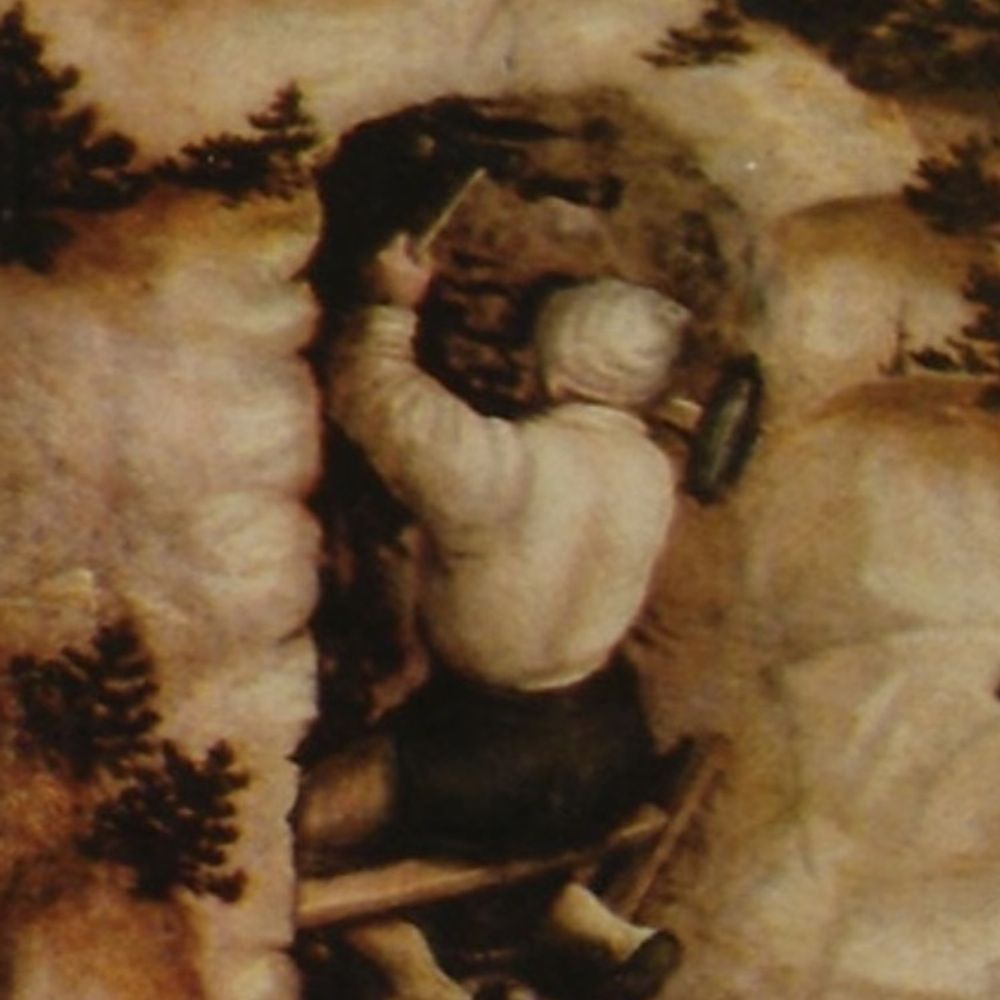
✨For our second talk in this semester’s colloquium series, @mininghistory.bsky.social will present “Mining the Past: What is the role of historians in the mining industry?”⛏️📜
📅 Date: November 24, 2025
⏰ Time: 3:00–4:30 PM CET
Learn more and register: bit.ly/MiningThePast
#histSci
📅 Date: November 24, 2025
⏰ Time: 3:00–4:30 PM CET
Learn more and register: bit.ly/MiningThePast
#histSci
Mining the Past: What is the role of historians in the mining industry?
SCARCE Colloquium
Speaker: Duncan Money (Independent scholar)
University of Vienna
Hybrid Event
bit.ly
November 17, 2025 at 11:35 AM
✨For our second talk in this semester’s colloquium series, @mininghistory.bsky.social will present “Mining the Past: What is the role of historians in the mining industry?”⛏️📜
📅 Date: November 24, 2025
⏰ Time: 3:00–4:30 PM CET
Learn more and register: bit.ly/MiningThePast
#histSci
📅 Date: November 24, 2025
⏰ Time: 3:00–4:30 PM CET
Learn more and register: bit.ly/MiningThePast
#histSci
