




Migration Ecology Group
@migecol.bsky.social
News from the Migration Ecology Group
@University of Oldenburg, Germany
led by Prof. Heiko Schmaljohann
https://uol.de/en/migration-ecology
@University of Oldenburg, Germany
led by Prof. Heiko Schmaljohann
https://uol.de/en/migration-ecology
February 3, 2026 at 8:41 AM
Meet Matteo!
Our new @sfb1372.bsky.social songbird orientation fellow
With a background in waterbirds, he is excited to dive deeper into migration research
Originally from 🇮🇹, he is strongly motivated to contribute to various research activities & firmly believes that lunch should never be rushed
Our new @sfb1372.bsky.social songbird orientation fellow
With a background in waterbirds, he is excited to dive deeper into migration research
Originally from 🇮🇹, he is strongly motivated to contribute to various research activities & firmly believes that lunch should never be rushed

February 3, 2026 at 8:41 AM
Meet Matteo!
Our new @sfb1372.bsky.social songbird orientation fellow
With a background in waterbirds, he is excited to dive deeper into migration research
Originally from 🇮🇹, he is strongly motivated to contribute to various research activities & firmly believes that lunch should never be rushed
Our new @sfb1372.bsky.social songbird orientation fellow
With a background in waterbirds, he is excited to dive deeper into migration research
Originally from 🇮🇹, he is strongly motivated to contribute to various research activities & firmly believes that lunch should never be rushed
A warm welcome to @mguidotti29.bsky.social who joined our lab now as an @sfb1372.bsky.social fellow
In the next 10 months he will work on orientation 🧭
in Northern Wheatears together with @annikapeter.bsky.social
In the next 10 months he will work on orientation 🧭
in Northern Wheatears together with @annikapeter.bsky.social

January 30, 2026 at 12:40 PM
A warm welcome to @mguidotti29.bsky.social who joined our lab now as an @sfb1372.bsky.social fellow
In the next 10 months he will work on orientation 🧭
in Northern Wheatears together with @annikapeter.bsky.social
In the next 10 months he will work on orientation 🧭
in Northern Wheatears together with @annikapeter.bsky.social
We have a new group logo - honouring one of our key study species, the northern wheatear 😍
And of cause, this bird is also tagged with a transmitter - but the tracking devices we use for our studies are so tiny, that you can´t see them on the bird 😉
And of cause, this bird is also tagged with a transmitter - but the tracking devices we use for our studies are so tiny, that you can´t see them on the bird 😉

January 23, 2026 at 10:09 AM
We have a new group logo - honouring one of our key study species, the northern wheatear 😍
And of cause, this bird is also tagged with a transmitter - but the tracking devices we use for our studies are so tiny, that you can´t see them on the bird 😉
And of cause, this bird is also tagged with a transmitter - but the tracking devices we use for our studies are so tiny, that you can´t see them on the bird 😉
Congrats to @annikapeter.bsky.social and team for successfully organising this great young researcher symposium on #magnetoreception and #animalnavigation in connection with @sfb1372.bsky.social 🥳

[1/2] Thank you to everyone who joined our Young Researchers Symposium 2025 in Hamburg! In these 3 days, we learned about fascinating day and night science and connected with other early career researchers. It was a pleasure to organize this symposium as part of an amazing team! @sfb1372.bsky.social

November 27, 2025 at 10:48 AM
Congrats to @annikapeter.bsky.social and team for successfully organising this great young researcher symposium on #magnetoreception and #animalnavigation in connection with @sfb1372.bsky.social 🥳
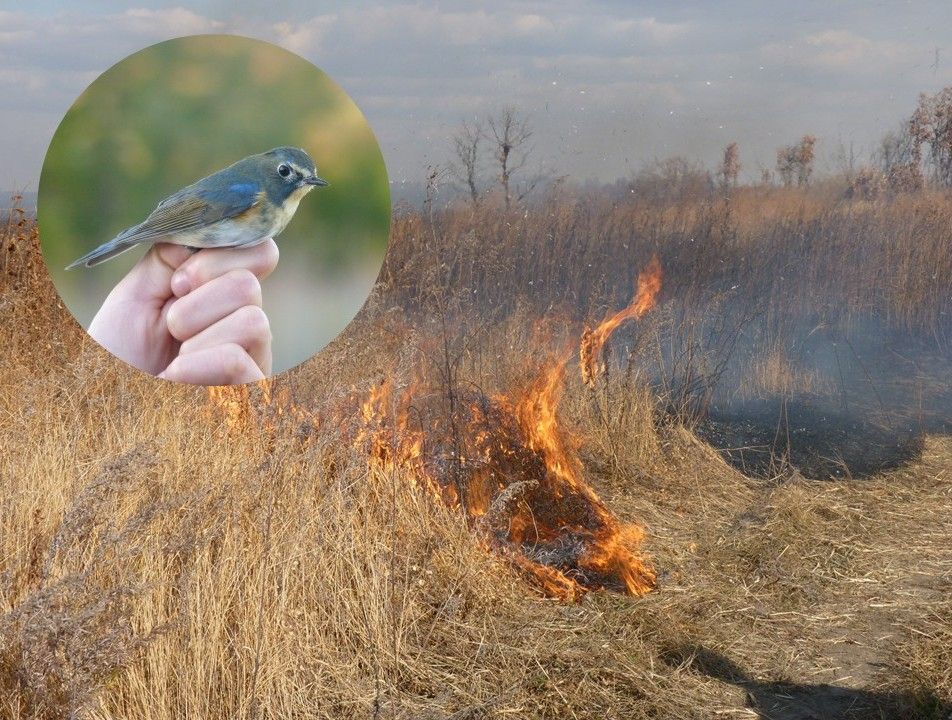
New study led by our @wielandheim.bsky.social uncovered negative effects of an anthropogenic fire on bird abundance and diversity during stopover:
New #ornithology paper + @ramonaheim.bsky.social
negative effects of #fire on bird abundance & diversity during stopover🔥
past work focussed on breeding birds, while fire impacts during migration remained unknown 🐤
fire management needed to sustain stopover habitat 👩🚒
doi.org/10.1038/s415...
negative effects of #fire on bird abundance & diversity during stopover🔥
past work focussed on breeding birds, while fire impacts during migration remained unknown 🐤
fire management needed to sustain stopover habitat 👩🚒
doi.org/10.1038/s415...
November 19, 2025 at 7:44 AM
New study led by our @wielandheim.bsky.social uncovered negative effects of an anthropogenic fire on bird abundance and diversity during stopover:
In cooperation with RWE, we proudly announce the installation of the first #MOTUS station in an offshore wind farm (Amrumbank West) in Germany and in Europe. This will help to fill key knowledge gaps in offshore environmental monitoring. We were supported by our colleagues from Wind Energy Systems

October 29, 2025 at 9:26 AM
In cooperation with RWE, we proudly announce the installation of the first #MOTUS station in an offshore wind farm (Amrumbank West) in Germany and in Europe. This will help to fill key knowledge gaps in offshore environmental monitoring. We were supported by our colleagues from Wind Energy Systems
Reposted by Migration Ecology Group

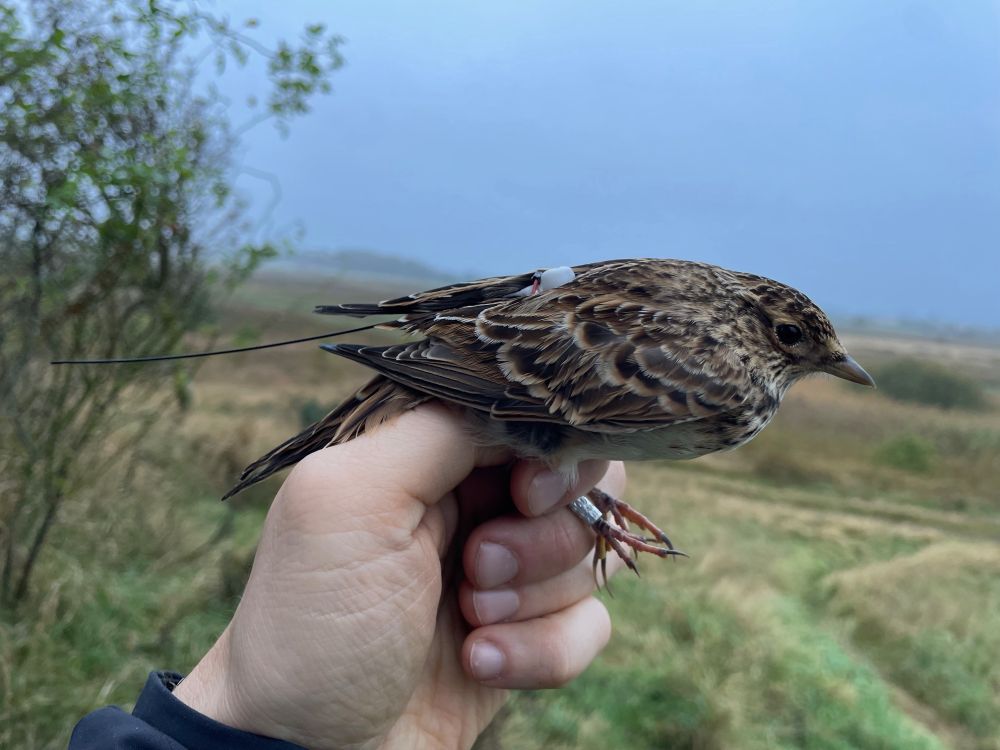
A skylark I tagged last autumn in northernmost Germany with a #Motus transmitter (to study #pesticide effects) was now detected near our University in Oldenburg - we @migecol.bsky.social col.bsky.social now have data from 3 migration seasons for this bird!
motus.org/dashboard/#e...
#birdmigration
motus.org/dashboard/#e...
#birdmigration

October 24, 2025 at 1:52 PM
A skylark I tagged last autumn in northernmost Germany with a #Motus transmitter (to study #pesticide effects) was now detected near our University in Oldenburg - we @migecol.bsky.social col.bsky.social now have data from 3 migration seasons for this bird!
motus.org/dashboard/#e...
#birdmigration
motus.org/dashboard/#e...
#birdmigration
Reposted by Migration Ecology Group

We’re #hiring! Our new fellowship holder Dr. Alina Sigaeva will soon be establishing her research group on #cell #physiology 🥼🔬🧪🧫 🧬of avian #magnetoreception 🐣🧭🧲. She is looking for a talented PhD student 🧑🎓👩🎓. Apply by 2 November at uol.de/job764en Please share widely!
Doctoral researcher in cell physiology of avian magnetoreception // University of Oldenburg
uol.de
October 6, 2025 at 9:50 AM
We’re #hiring! Our new fellowship holder Dr. Alina Sigaeva will soon be establishing her research group on #cell #physiology 🥼🔬🧪🧫 🧬of avian #magnetoreception 🐣🧭🧲. She is looking for a talented PhD student 🧑🎓👩🎓. Apply by 2 November at uol.de/job764en Please share widely!
We’re hiring a doctoral researcher in the area of migration ecology.
The work will focus on the question of how and when migratory songbirds learn where their home is using #Motus.
Part of the Cluster of Excellence NaviSense and linked with @sfb1372.bsky.social
uol.de/job788en
#ornithology
The work will focus on the question of how and when migratory songbirds learn where their home is using #Motus.
Part of the Cluster of Excellence NaviSense and linked with @sfb1372.bsky.social
uol.de/job788en
#ornithology

October 20, 2025 at 10:13 AM
We’re hiring a doctoral researcher in the area of migration ecology.
The work will focus on the question of how and when migratory songbirds learn where their home is using #Motus.
Part of the Cluster of Excellence NaviSense and linked with @sfb1372.bsky.social
uol.de/job788en
#ornithology
The work will focus on the question of how and when migratory songbirds learn where their home is using #Motus.
Part of the Cluster of Excellence NaviSense and linked with @sfb1372.bsky.social
uol.de/job788en
#ornithology
See the thread of our group member about one of our papers:

3rd anniversary of this paper: Karwinkel et al. 2022 "A magnetic pulse does not affect free-flight navigation behaviour of a medium-distance songbird migrant in spring" in JEB, where we tried to reproduce old studies on magnetoreception, but found no effects. A thread:
doi.org/10.1242/jeb....
doi.org/10.1242/jeb....

October 2, 2025 at 6:31 PM
See the thread of our group member about one of our papers:
1. Yellow-browed Warbler tagged in 2025! 🤩
On September 24, @annikapeter.bsky.social tagged the first Yellow-browed warbler (Phylloscopus inornatus) on Helgoland in 2025 to study its migratory behaviour. Stay tuned for fascinating bird tracks!
#Motus #Tracking #Birdmigration
On September 24, @annikapeter.bsky.social tagged the first Yellow-browed warbler (Phylloscopus inornatus) on Helgoland in 2025 to study its migratory behaviour. Stay tuned for fascinating bird tracks!
#Motus #Tracking #Birdmigration

September 26, 2025 at 1:55 PM
1. Yellow-browed Warbler tagged in 2025! 🤩
On September 24, @annikapeter.bsky.social tagged the first Yellow-browed warbler (Phylloscopus inornatus) on Helgoland in 2025 to study its migratory behaviour. Stay tuned for fascinating bird tracks!
#Motus #Tracking #Birdmigration
On September 24, @annikapeter.bsky.social tagged the first Yellow-browed warbler (Phylloscopus inornatus) on Helgoland in 2025 to study its migratory behaviour. Stay tuned for fascinating bird tracks!
#Motus #Tracking #Birdmigration
(vii) Over all species, the departure direction within the first 1-10 km does not change from Helgoland towards the coastline within 50-100 km flight distance.

September 26, 2025 at 8:11 AM
(vii) Over all species, the departure direction within the first 1-10 km does not change from Helgoland towards the coastline within 50-100 km flight distance.
(vi) departure direction from Helgoland only aligned with ring recovery directions in Redstart, Robin and Dunnock, all towards a nortwesterly direction (as expected). Wheatears depart significantly to southeast (why?) and Garden warbers depart in a random direction (why?).

September 26, 2025 at 8:10 AM
(vi) departure direction from Helgoland only aligned with ring recovery directions in Redstart, Robin and Dunnock, all towards a nortwesterly direction (as expected). Wheatears depart significantly to southeast (why?) and Garden warbers depart in a random direction (why?).
(iv) the more fat the bird has, the more motivated it is to depart
(v) the more fat the bird has, the earlier the bird departs within the night
(v) the more fat the bird has, the earlier the bird departs within the night

September 26, 2025 at 8:09 AM
(iv) the more fat the bird has, the more motivated it is to depart
(v) the more fat the bird has, the earlier the bird departs within the night
(v) the more fat the bird has, the earlier the bird departs within the night
(iii) There is no difference in the time of night, when the birds depart, except, that Dunnocks depart during morning dawn and all other species during evening dusk - interestingly both at the same sun´s angle below horizon!

September 26, 2025 at 8:07 AM
(iii) There is no difference in the time of night, when the birds depart, except, that Dunnocks depart during morning dawn and all other species during evening dusk - interestingly both at the same sun´s angle below horizon!
(ii) Trans-Saharan migrants are less selective to wind conditions for departure. All species are similarly prone to overcast, meaning they are less motivated to migrate, when the sky is cloudy

September 26, 2025 at 8:06 AM
(ii) Trans-Saharan migrants are less selective to wind conditions for departure. All species are similarly prone to overcast, meaning they are less motivated to migrate, when the sky is cloudy
(i) stopover duration of trans-saharan migrants is shorter

September 26, 2025 at 8:05 AM
(i) stopover duration of trans-saharan migrants is shorter
citation:
Klinner, T.*, Karwinkel, T.*, Packmor, F., & Schmaljohann, H. (2025). Stopover departure decisions in spring: pre-Saharan migrants stay longer and are more selective for favourable wind than trans-Saharan migrants. Movement Ecology, 13(1), 64. doi.org/10.1186/s404...
Klinner, T.*, Karwinkel, T.*, Packmor, F., & Schmaljohann, H. (2025). Stopover departure decisions in spring: pre-Saharan migrants stay longer and are more selective for favourable wind than trans-Saharan migrants. Movement Ecology, 13(1), 64. doi.org/10.1186/s404...

Stopover departure decisions in spring: pre-Saharan migrants stay longer and are more selective for favourable wind than trans-Saharan migrants - Movement Ecology
Birds that breed in Europe and winter south of the Sahara, so-called trans-Saharan migrants, generally migrate longer distances than pre-Saharan migrants. The latter are expected to be less time constrained during autumn migration than the former. As such, pre-Saharan migrants are assumed to be more selective for favourable weather conditions and are more likely to minimise energy cost of migration than trans-Saharan migrants. While this pattern is supported for autumn migration, it is less well understood for spring migration. Since the optimal arrival timing at the breeding areas is generally under selection pressure to arrive ‘early’, i.e. before ‘competitors’, and since this advantage is likely to hold across migration strategies, we predict that the general differences in decision making between pre- and trans-Saharan migrants will also be manifested during spring migration. We radio-tracked three trans-Saharan (Common Redstart Phoenicurus phoenicurus, Garden Warbler Sylvia borin and Northern Wheatear Oenanthe oenanthe) and two pre-Saharan (European Robin Erithacus rubecula and Dunnock Prunella modularis) migrants during stopover using a regional network of Motus receiving stations. We analysed the night-to-night and within-night departure decisions in relation to weather and energy stores, and compared species’ departure direction with the location of their ring recoveries. Trans-Saharan migrants stopped-over shorter and were less selective for favourable wind conditions than pre-Saharan migrants. The positive effect of high energy stores and low cloud cover on departure probability was a consistent pattern. Within-night departure times did not differ between migration strategies. Departure directions were in line with geographical mean location of ring recoveries for Common Redstart, European Robin and Dunnock. Our results suggest that pre-Saharan migrants are less time-constrained and follow an energy-saving strategy more strongly than trans-Saharan migrants that seem to have a stronger urge to migrate fast in spring. Since a similar pattern exists for autumn migration, we suggest that how the species-specific migration strategies and associated time constraints affect stopover decision making in both migration seasons is a general mechanism in migratory songbirds.
doi.org
September 26, 2025 at 8:03 AM
citation:
Klinner, T.*, Karwinkel, T.*, Packmor, F., & Schmaljohann, H. (2025). Stopover departure decisions in spring: pre-Saharan migrants stay longer and are more selective for favourable wind than trans-Saharan migrants. Movement Ecology, 13(1), 64. doi.org/10.1186/s404...
Klinner, T.*, Karwinkel, T.*, Packmor, F., & Schmaljohann, H. (2025). Stopover departure decisions in spring: pre-Saharan migrants stay longer and are more selective for favourable wind than trans-Saharan migrants. Movement Ecology, 13(1), 64. doi.org/10.1186/s404...
NEW PUBLICATION on stopover ecology of Songbirds during spring migration: After packmor et al. 2020 (Mov Ecol) found that trans-Saharan migrants react differently to weather for migratory departure, we aked ourselves, whether this is also valid for spring migration? 🐦
a thread 🧵 on 7 hypotheses:
a thread 🧵 on 7 hypotheses:

September 26, 2025 at 8:02 AM
NEW PUBLICATION on stopover ecology of Songbirds during spring migration: After packmor et al. 2020 (Mov Ecol) found that trans-Saharan migrants react differently to weather for migratory departure, we aked ourselves, whether this is also valid for spring migration? 🐦
a thread 🧵 on 7 hypotheses:
a thread 🧵 on 7 hypotheses:
Meet Lasse,
He‘ll support the working group as a volunteer for the next year, hoping to learn and observe scientific work in the process. While his interests lay elsewhere beforehand, he‘s become curios about the groups work and likes to try to think along :)
He‘ll support the working group as a volunteer for the next year, hoping to learn and observe scientific work in the process. While his interests lay elsewhere beforehand, he‘s become curios about the groups work and likes to try to think along :)

September 11, 2025 at 7:30 AM
Meet Lasse,
He‘ll support the working group as a volunteer for the next year, hoping to learn and observe scientific work in the process. While his interests lay elsewhere beforehand, he‘s become curios about the groups work and likes to try to think along :)
He‘ll support the working group as a volunteer for the next year, hoping to learn and observe scientific work in the process. While his interests lay elsewhere beforehand, he‘s become curios about the groups work and likes to try to think along :)
This week we were at #BESMove2025, where @giovannasandretti.bsky.social presented our results on the overlooked pre-migratory flights.
The conference title of this year was "Understanding Migration", and she came back home full of fresh insights and great new connections!
The conference title of this year was "Understanding Migration", and she came back home full of fresh insights and great new connections!

September 5, 2025 at 5:37 AM
This week we were at #BESMove2025, where @giovannasandretti.bsky.social presented our results on the overlooked pre-migratory flights.
The conference title of this year was "Understanding Migration", and she came back home full of fresh insights and great new connections!
The conference title of this year was "Understanding Migration", and she came back home full of fresh insights and great new connections!
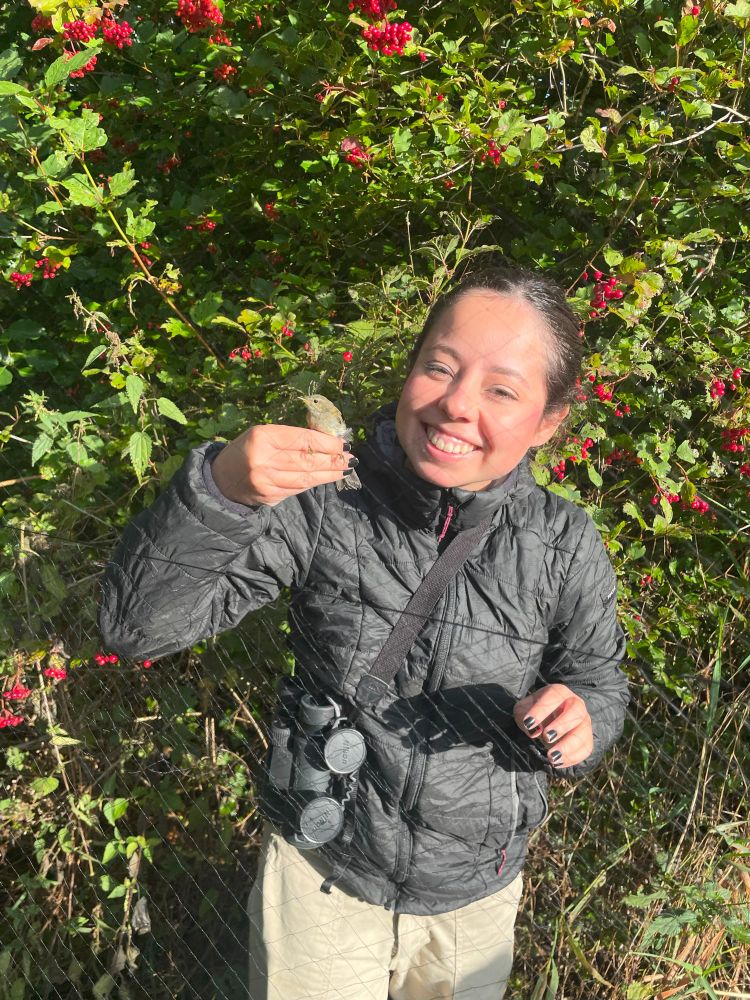
Our group is now also involved in the education of future biology teachers here at the University of Oldenburg #birdringing #birdbanding #birdmigration
Great fun to teach students how to catch and handle #birds for scientific studies and how to collect and analyse fecal samples together with @giovannasandretti.bsky.social - but shocking to see how many songbirds´ droppings contain #microplastics



September 1, 2025 at 2:25 PM
Our group is now also involved in the education of future biology teachers here at the University of Oldenburg #birdringing #birdbanding #birdmigration
Join us in the migration ecology group at the University of Oldenburg! 📡🐦🐥
Spread the word: we’re #hiring! We offer two short-term #fellowships for master’s degree holders and PhD candidates for 6-12 months to excellent researchers, who are interested in doing research within one dedicated project of our SFB/CRC 1372. Find more information on www.sfb1372.de/jobs

August 26, 2025 at 9:27 AM
Join us in the migration ecology group at the University of Oldenburg! 📡🐦🐥
A very nice #EOU2025 @eounion.bsky.social conference in Bangor, Wales, with @thiemokarwinkel.bsky.social (hosting a symposium on #MOTUS bird tracking) and @wielandheim.bsky.social (summarizing recent advances in landbird migration studies along the Asian flyways) representing our group 🕊️🐦📡


August 25, 2025 at 12:45 PM
A very nice #EOU2025 @eounion.bsky.social conference in Bangor, Wales, with @thiemokarwinkel.bsky.social (hosting a symposium on #MOTUS bird tracking) and @wielandheim.bsky.social (summarizing recent advances in landbird migration studies along the Asian flyways) representing our group 🕊️🐦📡