


Kai Caspar
@nomascus.bsky.social
Zoology lecturer @hhu.de | Armchair biologist | Focus on rodents underground and gibbons in the trees, also one of @themanybirds.bsky.social | Organismic vertebrate biology
Reposted by Kai Caspar

wait so birds don't have a blue field entoptic effect at all? we just stare at the sky and see snow for reasons of evolutionary happenstance?
Birds have a thick retina devoid of blood vessels - so how do they ensure sufficient oxygen availability?
They don't - neurons rely on glycolysis, metabolizing glucose released from the pecten.
Insane new study that includes comparative data on lizards and crocs.🧪
www.nature.com/articles/s41...
They don't - neurons rely on glycolysis, metabolizing glucose released from the pecten.
Insane new study that includes comparative data on lizards and crocs.🧪
www.nature.com/articles/s41...

Oxygen-free metabolism in the bird inner retina supported by the pecten - Nature
While the photoreceptor outer segments in the bird outer retina have access to oxygen, the inner retina operates under chronic anoxia, supported by anaerobic glycolysis in the retinal neurons.
www.nature.com
January 22, 2026 at 3:48 PM
wait so birds don't have a blue field entoptic effect at all? we just stare at the sky and see snow for reasons of evolutionary happenstance?
Birds have a thick retina devoid of blood vessels - so how do they ensure sufficient oxygen availability?
They don't - neurons rely on glycolysis, metabolizing glucose released from the pecten.
Insane new study that includes comparative data on lizards and crocs.🧪
www.nature.com/articles/s41...
They don't - neurons rely on glycolysis, metabolizing glucose released from the pecten.
Insane new study that includes comparative data on lizards and crocs.🧪
www.nature.com/articles/s41...
Oxygen-free metabolism in the bird inner retina supported by the pecten - Nature
While the photoreceptor outer segments in the bird outer retina have access to oxygen, the inner retina operates under chronic anoxia, supported by anaerobic glycolysis in the retinal neurons.
www.nature.com
January 22, 2026 at 2:14 PM
Birds have a thick retina devoid of blood vessels - so how do they ensure sufficient oxygen availability?
They don't - neurons rely on glycolysis, metabolizing glucose released from the pecten.
Insane new study that includes comparative data on lizards and crocs.🧪
www.nature.com/articles/s41...
They don't - neurons rely on glycolysis, metabolizing glucose released from the pecten.
Insane new study that includes comparative data on lizards and crocs.🧪
www.nature.com/articles/s41...
Reposted by Kai Caspar

Our paper on the mysterious Devonian organism Prototaxites has now finally been published! See the paper here (www.science.org/doi/10.1126/...) and our explainer thread below!
Prototaxites reconstruction by Matt Humpage
Prototaxites reconstruction by Matt Humpage

January 21, 2026 at 7:25 PM
Our paper on the mysterious Devonian organism Prototaxites has now finally been published! See the paper here (www.science.org/doi/10.1126/...) and our explainer thread below!
Prototaxites reconstruction by Matt Humpage
Prototaxites reconstruction by Matt Humpage
Reposted by Kai Caspar

New paper presenting rather compelling evidence that the stem-vertebrate Haikouichthys had paired lateral and supranumerary medial eyes (!!!), and proposing that the medial eyes may have deep homology with the pineal and parapineal organs.
www.nature.com/articles/s41...
www.nature.com/articles/s41...

Four camera-type eyes in the earliest vertebrates from the Cambrian Period - Nature
Early vertebrates, particularly myllokunmingids, possessed four camera-type eyes (a pair of lateral eyes and pineal and parapineal organs), which indicates that these structures functio...
www.nature.com
January 21, 2026 at 5:47 PM
New paper presenting rather compelling evidence that the stem-vertebrate Haikouichthys had paired lateral and supranumerary medial eyes (!!!), and proposing that the medial eyes may have deep homology with the pineal and parapineal organs.
www.nature.com/articles/s41...
www.nature.com/articles/s41...
Reposted by Kai Caspar

Paranthropus in the Afar, pretty neat find! 🏺🧪

2.6 million-year-old jaw from extinct 'Nutcracker Man' is found where we didn't expect it
A fossil jaw of a distant human relative was discovered much farther north than previously thought possible, revealing new information about diversity in human evolution.
www.livescience.com
January 21, 2026 at 4:06 PM
Paranthropus in the Afar, pretty neat find! 🏺🧪
Reposted by Kai Caspar

Today (Jan 21st) is the day... TWO DECADES of Tetrapod Zoology. We start with a review of what went down in 2025... it was quite a busy year. Huge thanks to everyone who visits, reads and leaves comments at Tet Zoo, and especially those who assist with efforts. tetzoo.com/blog/2026/1/...


January 21, 2026 at 1:38 AM
Today (Jan 21st) is the day... TWO DECADES of Tetrapod Zoology. We start with a review of what went down in 2025... it was quite a busy year. Huge thanks to everyone who visits, reads and leaves comments at Tet Zoo, and especially those who assist with efforts. tetzoo.com/blog/2026/1/...
Reposted by Kai Caspar
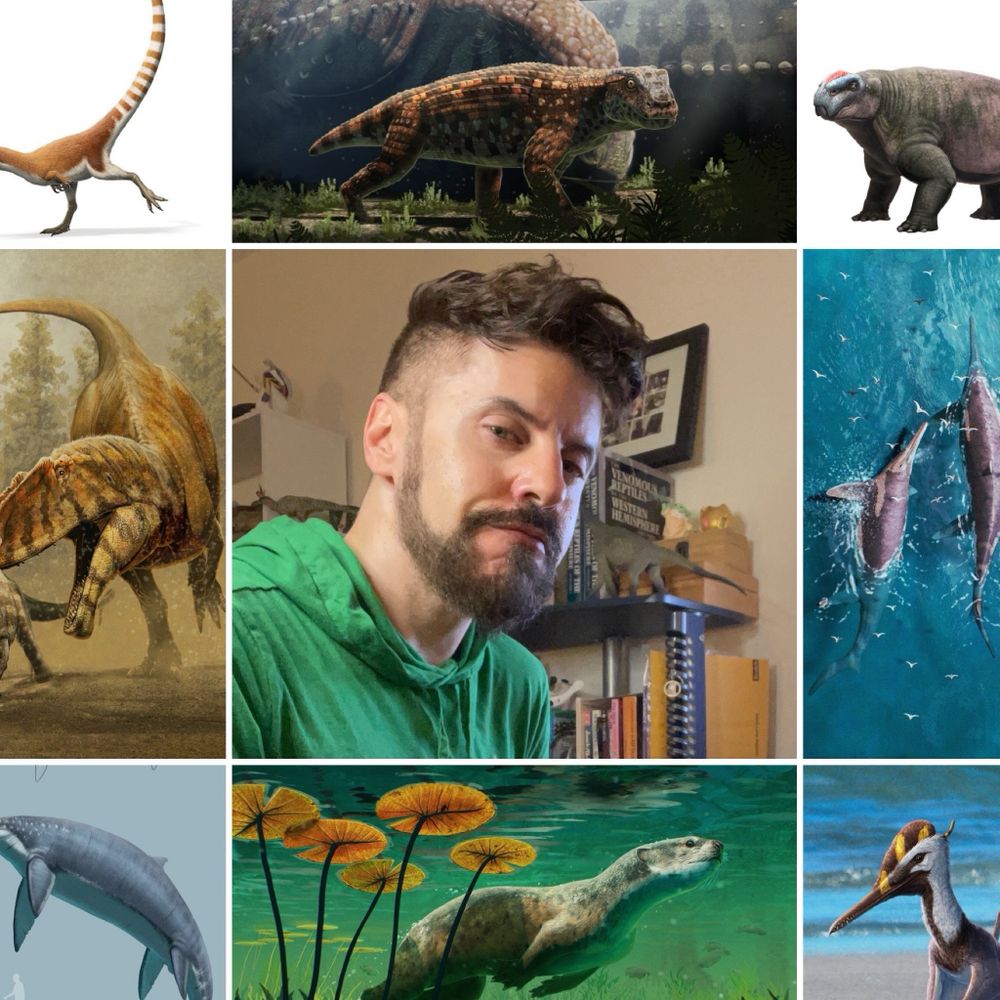
Two more amazing Triassic reptiles. In this case from the Late Triassic Keuper Group of Europe. The huge phytosaur Nicrosaurus kapfii and one of the earliest plesiosaurs, Rhaeticosaurus mertensi
Part of my book of Triassic Tetrapods (currently in preparation)
#paleoart #sciart #reptiles
Part of my book of Triassic Tetrapods (currently in preparation)
#paleoart #sciart #reptiles


January 20, 2026 at 3:14 PM
Reposted by Kai Caspar
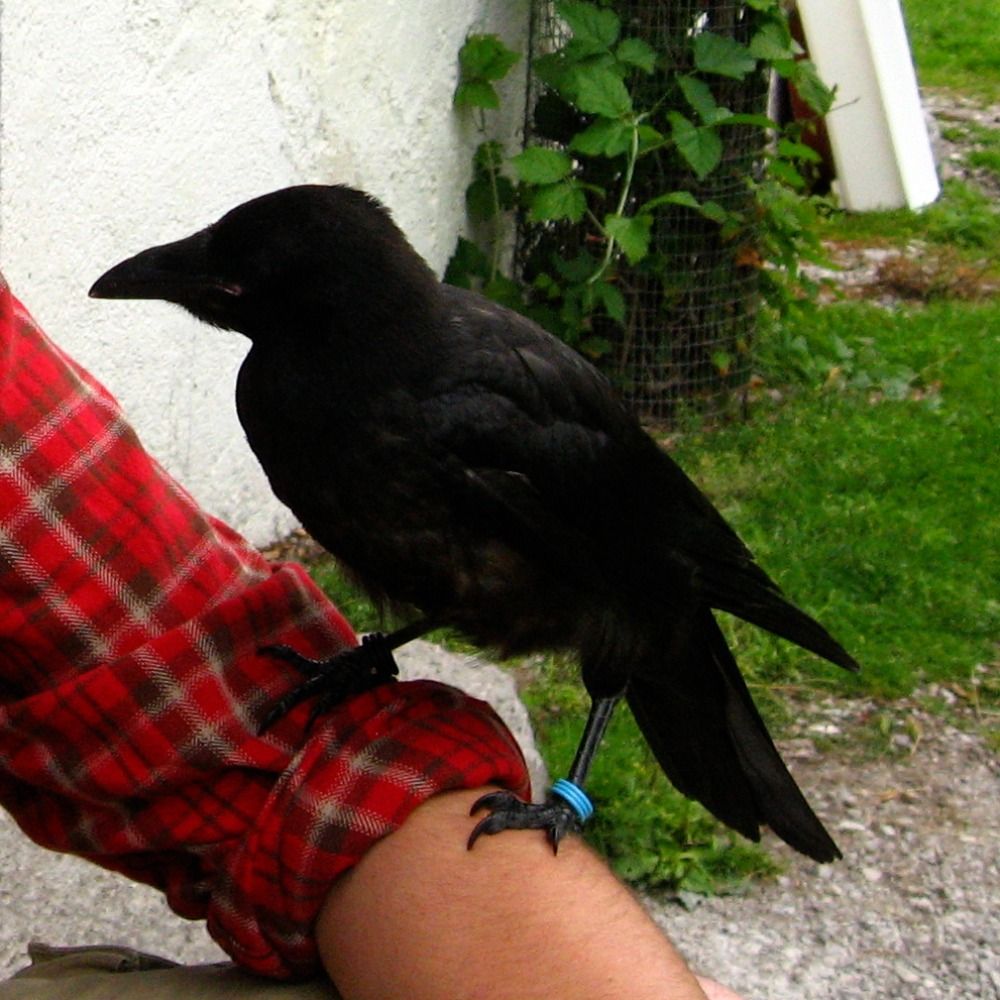
Might be that learning to use tools individually needs nothing more than shared associative processes. But transmitting tool use socially across a pop requires a correlation between widespread tool availability and social learning opportunities, which is likely rare. m.youtube.com/watch?v=mDnt...

A Pigeon Solves the Classic Box-and-Banana Problem
YouTube video by drrobertepstein
m.youtube.com
January 19, 2026 at 11:19 PM
Might be that learning to use tools individually needs nothing more than shared associative processes. But transmitting tool use socially across a pop requires a correlation between widespread tool availability and social learning opportunities, which is likely rare. m.youtube.com/watch?v=mDnt...
What the study about the Austrian cow (and many other works) nicely illustrates: Spontaneous innovation of tooling likely is taxonomically widespread - such cases will be discovered again and again.
But then, why are they still so rare and why is habitual population-level tooling so exceptional?
But then, why are they still so rare and why is habitual population-level tooling so exceptional?
January 19, 2026 at 11:08 PM
What the study about the Austrian cow (and many other works) nicely illustrates: Spontaneous innovation of tooling likely is taxonomically widespread - such cases will be discovered again and again.
But then, why are they still so rare and why is habitual population-level tooling so exceptional?
But then, why are they still so rare and why is habitual population-level tooling so exceptional?
Reposted by Kai Caspar
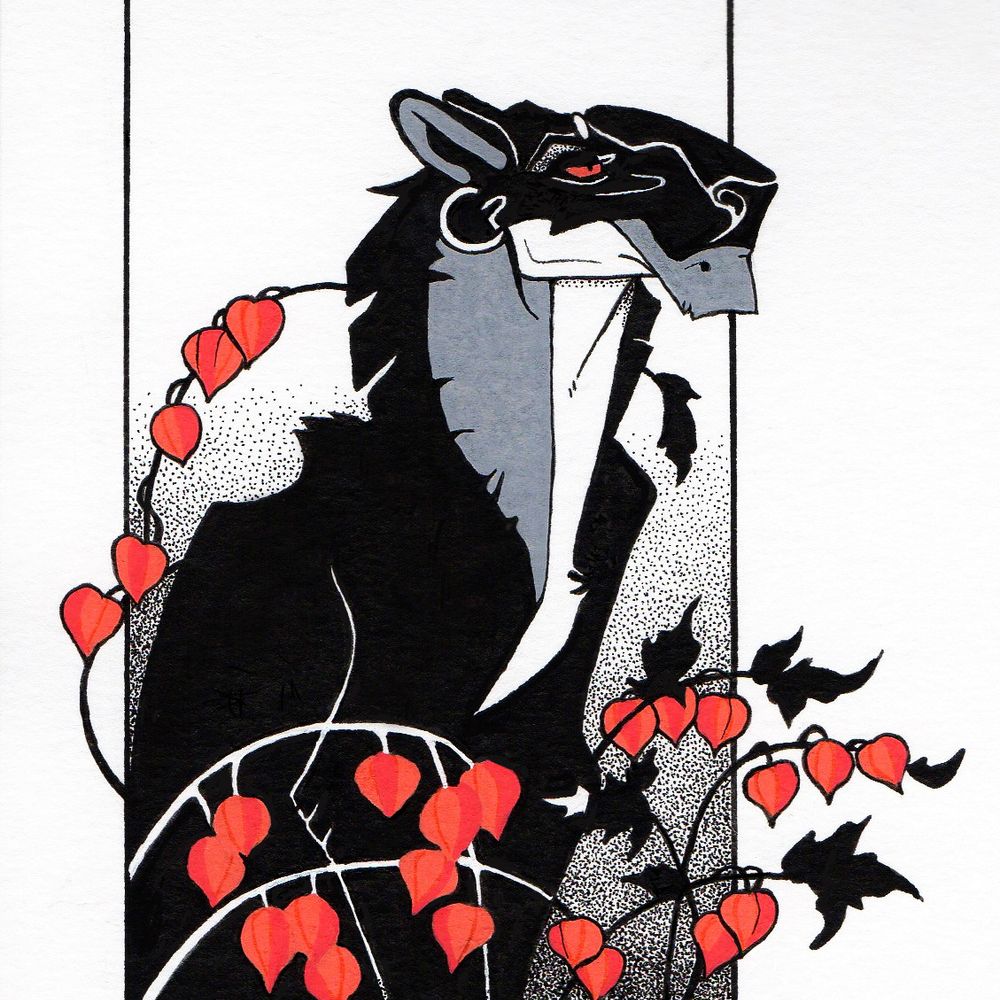
Bramiscus micros- newly discovered early giraffid from the Pakistan. The whole skull of the animal has not yet been found and there is an opinion that it could have had four ossicones, but I still focused on the two existing frontal horns, slightly indicating the theoretical rear ones.

April 29, 2025 at 10:25 PM
Bramiscus micros- newly discovered early giraffid from the Pakistan. The whole skull of the animal has not yet been found and there is an opinion that it could have had four ossicones, but I still focused on the two existing frontal horns, slightly indicating the theoretical rear ones.
Reposted by Kai Caspar

🧪🦣 Related, I'd love to hear people's opinions on current evidence of significant sex dimorphism or not for H. ergaster/erectus.
In my reading it's trending back towards "probably, but not as much as gorillas"?
#HumanOrigins
#Palaeoanth
In my reading it's trending back towards "probably, but not as much as gorillas"?
#HumanOrigins
#Palaeoanth
So have we gone back to Homo erectus now for African fossils as well as Asian, rather than H. ergaster?
www.nature.com/articles/s41...
www.nature.com/articles/s41...

New reconstruction of DAN5 cranium (Gona, Ethiopia) supports complex emergence of Homo erectus - Nature Communications
The origin and dispersal of Homo erectus, a long-lived and geographically widespread human ancestor, are unclear despite a rich fossil record. Here, the authors reconstruct the face from a Homo erectu...
www.nature.com
January 19, 2026 at 2:17 PM
🧪🦣 Related, I'd love to hear people's opinions on current evidence of significant sex dimorphism or not for H. ergaster/erectus.
In my reading it's trending back towards "probably, but not as much as gorillas"?
#HumanOrigins
#Palaeoanth
In my reading it's trending back towards "probably, but not as much as gorillas"?
#HumanOrigins
#Palaeoanth
Reposted by Kai Caspar
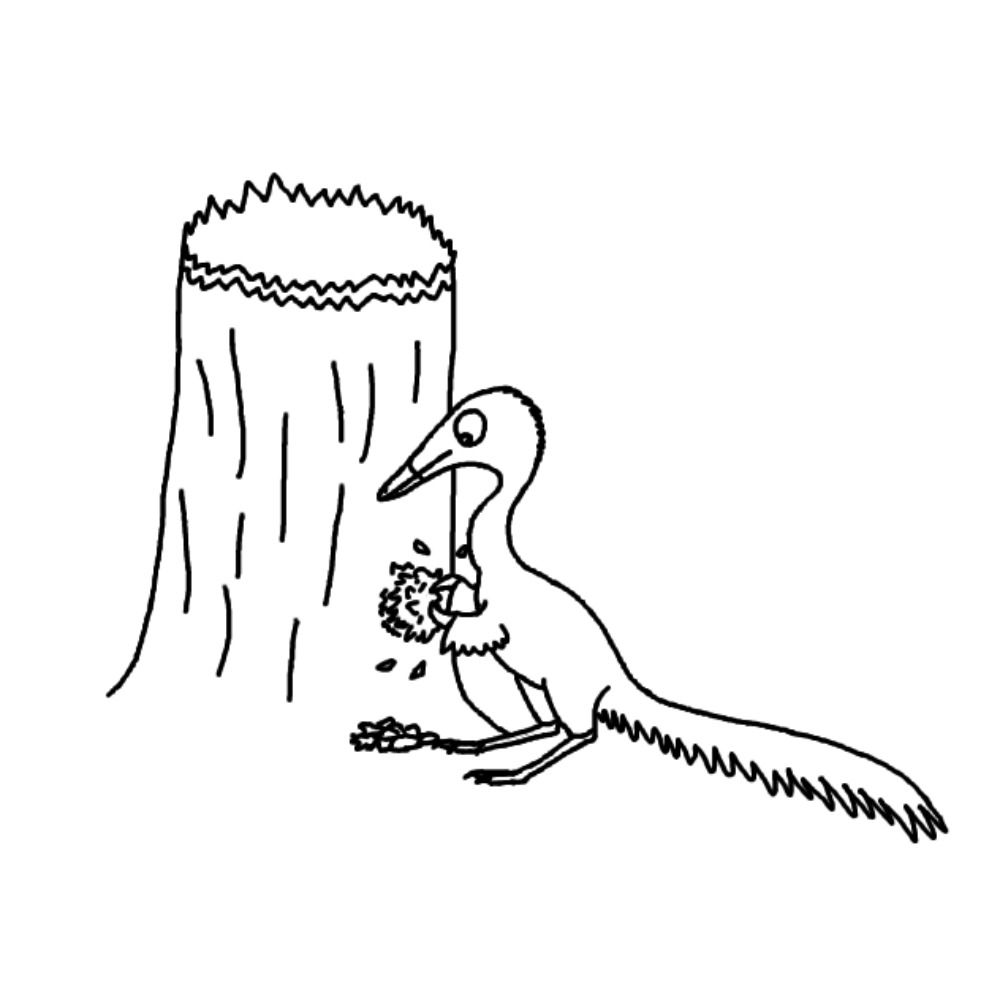
Bone histology of phorusrhacids (terror birds) indicates rapid, uninterrupted growth (typical of most modern birds but unlike flightless paleognaths such as ostriches and kiwi): anatomypubs.onlinelibrary.wiley.com/doi/10.1002/... 🪶🧪 (📷Dreyer et al.)

January 19, 2026 at 2:48 PM
Bone histology of phorusrhacids (terror birds) indicates rapid, uninterrupted growth (typical of most modern birds but unlike flightless paleognaths such as ostriches and kiwi): anatomypubs.onlinelibrary.wiley.com/doi/10.1002/... 🪶🧪 (📷Dreyer et al.)
Reposted by Kai Caspar
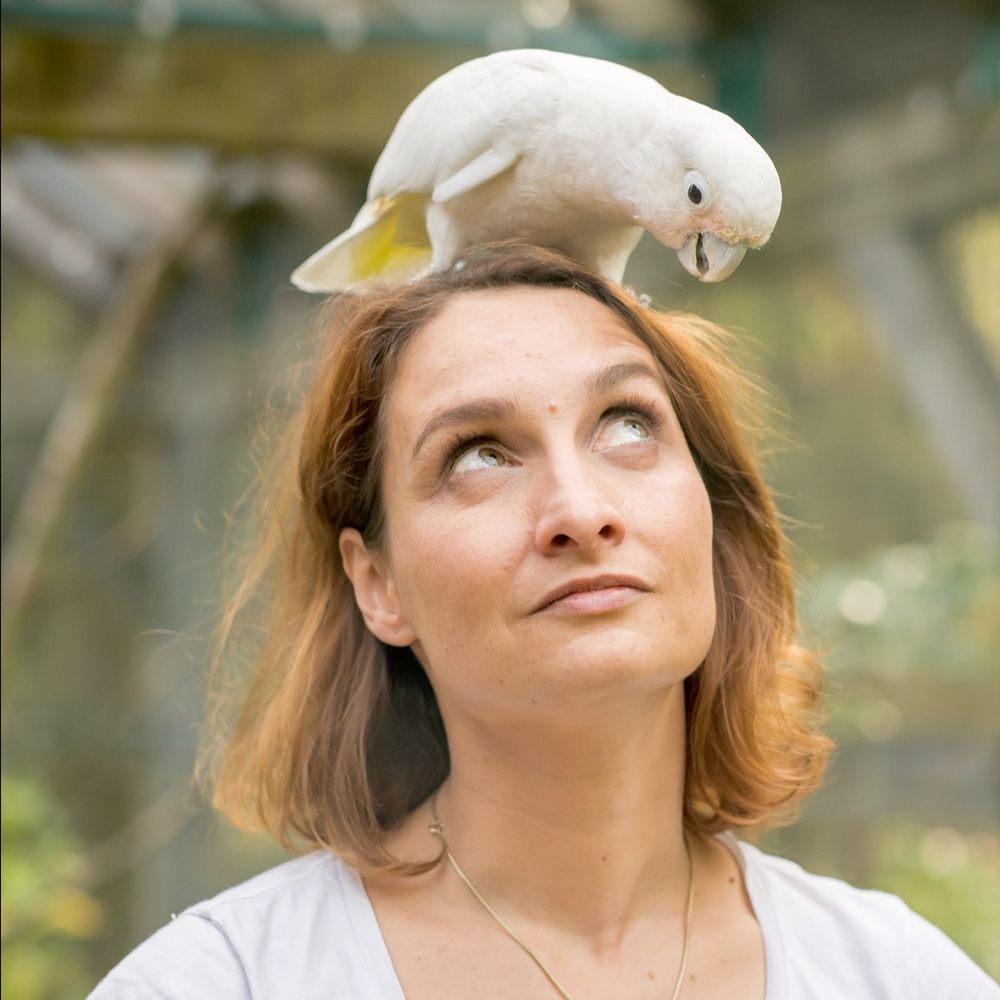
Our new paper (with @biotay.bsky.social) is out and on the cover story of @currentbiology.bsky.social !!!! Veronika, a Carinthian mountain cow flexibly uses a “multi-purpose tool” to scratch herself. A video and more information will follow in the comments.
www.cell.com/current-biol...
www.cell.com/current-biol...

January 19, 2026 at 4:07 PM
Our new paper (with @biotay.bsky.social) is out and on the cover story of @currentbiology.bsky.social !!!! Veronika, a Carinthian mountain cow flexibly uses a “multi-purpose tool” to scratch herself. A video and more information will follow in the comments.
www.cell.com/current-biol...
www.cell.com/current-biol...
Reposted by Kai Caspar
Chimpanzees’ working memory is not affected by the presence and activity of zoo visitors
link.springer.com/article/10.1...
link.springer.com/article/10.1...

Chimpanzees’ working memory is not affected by the presence and activity of zoo visitors - Animal Cognition
Animal Cognition - Cognitive research in non-human primates is increasingly conducted in zoos, where zoo visitors are likely to be present and observe the testing sessions. Previous zoo research...
link.springer.com
January 19, 2026 at 1:33 PM
Chimpanzees’ working memory is not affected by the presence and activity of zoo visitors
link.springer.com/article/10.1...
link.springer.com/article/10.1...


Reposted by Kai Caspar


January 16, 2026 at 11:41 PM
Reposted by Kai Caspar

I have no skin in this game, but if you are really wanting to argue in good faith - to the benefit of the science and bringing the discourse forward - I think it's not helpful to selectively (over)interpret words that manufacture disagreement that isn't even there...
January 14, 2026 at 7:24 PM
I have no skin in this game, but if you are really wanting to argue in good faith - to the benefit of the science and bringing the discourse forward - I think it's not helpful to selectively (over)interpret words that manufacture disagreement that isn't even there...
Recommended reading:
By accepting an invitation to review with a Wiley journal, reviewers agree to act in accordance with generally accepted publication ethics and best practices. (...) We also require that authors maintain the confidentiality of the peer review process.
tinyurl.com/nxyytknm
By accepting an invitation to review with a Wiley journal, reviewers agree to act in accordance with generally accepted publication ethics and best practices. (...) We also require that authors maintain the confidentiality of the peer review process.
tinyurl.com/nxyytknm
January 13, 2026 at 10:49 PM
Recommended reading:
By accepting an invitation to review with a Wiley journal, reviewers agree to act in accordance with generally accepted publication ethics and best practices. (...) We also require that authors maintain the confidentiality of the peer review process.
tinyurl.com/nxyytknm
By accepting an invitation to review with a Wiley journal, reviewers agree to act in accordance with generally accepted publication ethics and best practices. (...) We also require that authors maintain the confidentiality of the peer review process.
tinyurl.com/nxyytknm
Reposted by Kai Caspar

Before scaling up, EvOCRO tests its protocols with a small sample to ensure methods work in real conditions.
Adjusting, refining, improving — this is how science moves forward.
www.instagram.com/p/DTdTmmdCDG...
#EvOCRO #PilotStudy #AnimalCognition #ResearchInAction #HorizonEurope
Adjusting, refining, improving — this is how science moves forward.
www.instagram.com/p/DTdTmmdCDG...
#EvOCRO #PilotStudy #AnimalCognition #ResearchInAction #HorizonEurope

January 13, 2026 at 4:45 PM
Before scaling up, EvOCRO tests its protocols with a small sample to ensure methods work in real conditions.
Adjusting, refining, improving — this is how science moves forward.
www.instagram.com/p/DTdTmmdCDG...
#EvOCRO #PilotStudy #AnimalCognition #ResearchInAction #HorizonEurope
Adjusting, refining, improving — this is how science moves forward.
www.instagram.com/p/DTdTmmdCDG...
#EvOCRO #PilotStudy #AnimalCognition #ResearchInAction #HorizonEurope
Reposted by Kai Caspar

Excellent write-up in Science by Ann Gibbons of the exciting new Ileret Homo material: ]
www.science.org/content/arti...
Check out the original AR article by Frederick Grine and colleagues here:
anatomypubs.onlinelibrary.wiley.com/doi/10.1002/...
www.science.org/content/arti...
Check out the original AR article by Frederick Grine and colleagues here:
anatomypubs.onlinelibrary.wiley.com/doi/10.1002/...

January 13, 2026 at 2:10 PM
Excellent write-up in Science by Ann Gibbons of the exciting new Ileret Homo material: ]
www.science.org/content/arti...
Check out the original AR article by Frederick Grine and colleagues here:
anatomypubs.onlinelibrary.wiley.com/doi/10.1002/...
www.science.org/content/arti...
Check out the original AR article by Frederick Grine and colleagues here:
anatomypubs.onlinelibrary.wiley.com/doi/10.1002/...
Reposted by Kai Caspar
The only thing I would add is that neuron counts are HIGHLY variable within species. We are still working on a paper that shows that brain region volumes are far less variable than neuron numbers within species. So neuron # based on n = 1 is even more problematic than volumetric measures of n = 1.
January 12, 2026 at 9:03 PM
The only thing I would add is that neuron counts are HIGHLY variable within species. We are still working on a paper that shows that brain region volumes are far less variable than neuron numbers within species. So neuron # based on n = 1 is even more problematic than volumetric measures of n = 1.
Exactly - given how heated this debate is fought at times, it's important to highlight that a lot of what we're talking about here is not falsifiable anyway - we need to do our best to keep speculation within reasonable bounds.
Brilliant overview here of the ongoing debate over dinosaur cognition. In short, it's complicated and evidence is fragmentary.
#neuroethology #neuroskyence #anatomy #brains
@tetzoo.bsky.social @gallinaciega.bsky.social @nomascus.bsky.social
#neuroethology #neuroskyence #anatomy #brains
@tetzoo.bsky.social @gallinaciega.bsky.social @nomascus.bsky.social
The Continuing Debate on Dinosaur Cognition .... tetzoo.com/blog/2026/1/...
January 12, 2026 at 9:22 PM
Exactly - given how heated this debate is fought at times, it's important to highlight that a lot of what we're talking about here is not falsifiable anyway - we need to do our best to keep speculation within reasonable bounds.
Reposted by Kai Caspar
The Continuing Debate on Dinosaur Cognition .... tetzoo.com/blog/2026/1/...

The Continuing Debate on Dinosaur Cognition — Tetrapod Zoology
The dinosaur cognition debate continues…
tetzoo.com
January 12, 2026 at 4:22 PM
The Continuing Debate on Dinosaur Cognition .... tetzoo.com/blog/2026/1/...
Reposted by Kai Caspar

BIG FIGHT AT POLAND’S WROCLAW ZOO!!!
January 9, 2026 at 8:02 PM
BIG FIGHT AT POLAND’S WROCLAW ZOO!!!
Reposted by Kai Caspar

New paper out! 🐦📊
We realease AVONICHE, a global dataset with detailed information on the proportional use of 32 foraging niches, combining dietary categories with the behaviours and substrates used to access resources.
Openly access the paper and data in GEB: doi.org/10.1111/geb....
We realease AVONICHE, a global dataset with detailed information on the proportional use of 32 foraging niches, combining dietary categories with the behaviours and substrates used to access resources.
Openly access the paper and data in GEB: doi.org/10.1111/geb....

January 8, 2026 at 11:09 AM
New paper out! 🐦📊
We realease AVONICHE, a global dataset with detailed information on the proportional use of 32 foraging niches, combining dietary categories with the behaviours and substrates used to access resources.
Openly access the paper and data in GEB: doi.org/10.1111/geb....
We realease AVONICHE, a global dataset with detailed information on the proportional use of 32 foraging niches, combining dietary categories with the behaviours and substrates used to access resources.
Openly access the paper and data in GEB: doi.org/10.1111/geb....