




Paul Bertin
@paulbertin.bsky.social
Junior lecturer at UNIL (Lausanne, Switzerland)
Conspiracy beliefs, sport fandom, metascience
Conspiracy beliefs, sport fandom, metascience
Reposted by Paul Bertin
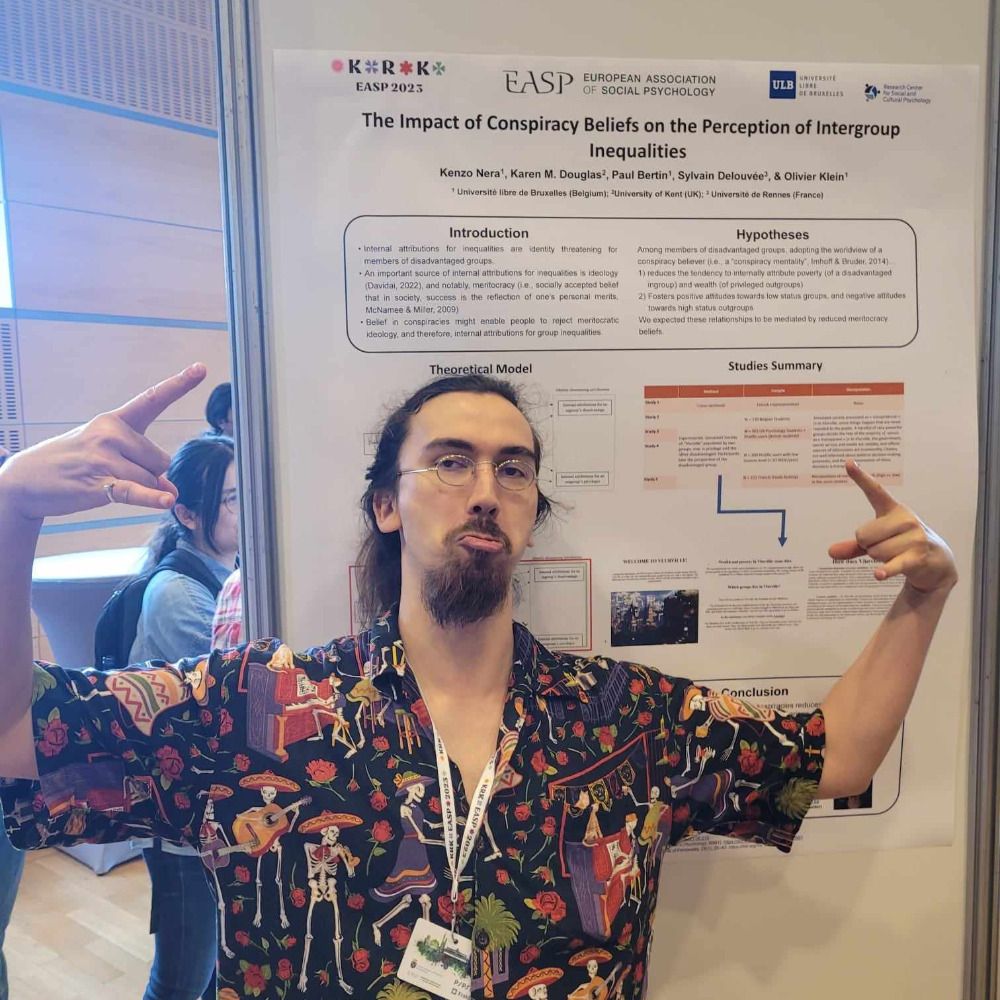
This was not an easy one to write, but here it is!
🎈🤡 Freshly published in Collabra: Psychology: the life and death of one of the coolest findings in my PhD dissertation. 🎈🤡
With the usual – and wonderful – Karen M. Douglas, @paulbertin.bsky.social, and @olivierklein.bsky.social.
1/11
🎈🤡 Freshly published in Collabra: Psychology: the life and death of one of the coolest findings in my PhD dissertation. 🎈🤡
With the usual – and wonderful – Karen M. Douglas, @paulbertin.bsky.social, and @olivierklein.bsky.social.
1/11

Does Being Confronted With Internal Attributions for an Ingroup’s Sufferings Foster the Endorsement of Conspiracy Theories? New in social psychology, from @kenzonera.bsky.social, Karen Douglas, @paulbertin.bsky.social, and @olivierklein.bsky.social doi.org/10.1525/coll...
Does Being Confronted With Internal Attributions for an Ingroup’s Sufferings Foster the Endorsement of Conspiracy Theories?
Conspiracy theories are often viewed as a means to externally attribute ingroup sufferings by blaming them on the actions of powerful groups. Building on this assumption, we tested the hypothesis that...
doi.org
December 17, 2025 at 8:49 AM
This was not an easy one to write, but here it is!
🎈🤡 Freshly published in Collabra: Psychology: the life and death of one of the coolest findings in my PhD dissertation. 🎈🤡
With the usual – and wonderful – Karen M. Douglas, @paulbertin.bsky.social, and @olivierklein.bsky.social.
1/11
🎈🤡 Freshly published in Collabra: Psychology: the life and death of one of the coolest findings in my PhD dissertation. 🎈🤡
With the usual – and wonderful – Karen M. Douglas, @paulbertin.bsky.social, and @olivierklein.bsky.social.
1/11
Reposted by Paul Bertin

New publication. Congrats to the whole team, and especially @paulbertin.bsky.social who led this effort. Thanks also to the editor (Nicolas Sommet) and reviewers, who desserve credit for improving our paper.
Shout-out to the best possible team of co-authors: Elisa Tognon, @kenzonera.bsky.social, @rritabajraktari.bsky.social, Vincent Yzerbyt, @olivierklein.bsky.social, and Klein Pit (who originally started this project).
OA here: onlinelibrary.wiley.com/doi/10.1002/...
OA here: onlinelibrary.wiley.com/doi/10.1002/...

The Impact of Freedom of Speech on Conspiracy Beliefs
Conspiracy beliefs are often portrayed as a threat to democracies. However, less is known about the extent to which the state of democracy may affect conspiracy beliefs. Hence, we investigated the im...
onlinelibrary.wiley.com
November 15, 2025 at 8:31 AM
New publication. Congrats to the whole team, and especially @paulbertin.bsky.social who led this effort. Thanks also to the editor (Nicolas Sommet) and reviewers, who desserve credit for improving our paper.
Shout-out to the best possible team of co-authors: Elisa Tognon, @kenzonera.bsky.social, @rritabajraktari.bsky.social, Vincent Yzerbyt, @olivierklein.bsky.social, and Klein Pit (who originally started this project).
OA here: onlinelibrary.wiley.com/doi/10.1002/...
OA here: onlinelibrary.wiley.com/doi/10.1002/...
The Impact of Freedom of Speech on Conspiracy Beliefs
Conspiracy beliefs are often portrayed as a threat to democracies. However, less is known about the extent to which the state of democracy may affect conspiracy beliefs. Hence, we investigated the im...
onlinelibrary.wiley.com
October 31, 2025 at 12:57 PM
Shout-out to the best possible team of co-authors: Elisa Tognon, @kenzonera.bsky.social, @rritabajraktari.bsky.social, Vincent Yzerbyt, @olivierklein.bsky.social, and Klein Pit (who originally started this project).
OA here: onlinelibrary.wiley.com/doi/10.1002/...
OA here: onlinelibrary.wiley.com/doi/10.1002/...
We found robust evidence that lower freedom of speech increases conspiracy beliefs.
This effect was consistent across contexts and held even when controlling for perceived levels of democracy, highlighting the specific nature of this relationship.
This effect was consistent across contexts and held even when controlling for perceived levels of democracy, highlighting the specific nature of this relationship.
October 31, 2025 at 12:57 PM
We found robust evidence that lower freedom of speech increases conspiracy beliefs.
This effect was consistent across contexts and held even when controlling for perceived levels of democracy, highlighting the specific nature of this relationship.
This effect was consistent across contexts and held even when controlling for perceived levels of democracy, highlighting the specific nature of this relationship.
🚨 New paper out in the European Journal of Social Psychology!
Across one study using aggregated nation-level data and four preregistered experiments, we examined how freedom of speech within a society influences belief in conspiracy theories.
Across one study using aggregated nation-level data and four preregistered experiments, we examined how freedom of speech within a society influences belief in conspiracy theories.
The Impact of Freedom of Speech on Conspiracy Beliefs
Conspiracy beliefs are often portrayed as a threat to democracies. However, less is known about the extent to which the state of democracy may affect conspiracy beliefs. Hence, we investigated the im...
onlinelibrary.wiley.com
October 31, 2025 at 12:57 PM
🚨 New paper out in the European Journal of Social Psychology!
Across one study using aggregated nation-level data and four preregistered experiments, we examined how freedom of speech within a society influences belief in conspiracy theories.
Across one study using aggregated nation-level data and four preregistered experiments, we examined how freedom of speech within a society influences belief in conspiracy theories.
Reposted by Paul Bertin
I am so excited to announce the publication of my first PhD paper, written in collaboration with Laurent Licata and amazing participants!
“We Are No Longer the First to Lead the Dance”: Analysing Intergroup Conflicts Within the French-Speaking Belgian Feminist Movement
doi.org/10.1002/casp...
“We Are No Longer the First to Lead the Dance”: Analysing Intergroup Conflicts Within the French-Speaking Belgian Feminist Movement
doi.org/10.1002/casp...
doi.org
June 13, 2025 at 11:18 AM
I am so excited to announce the publication of my first PhD paper, written in collaboration with Laurent Licata and amazing participants!
“We Are No Longer the First to Lead the Dance”: Analysing Intergroup Conflicts Within the French-Speaking Belgian Feminist Movement
doi.org/10.1002/casp...
“We Are No Longer the First to Lead the Dance”: Analysing Intergroup Conflicts Within the French-Speaking Belgian Feminist Movement
doi.org/10.1002/casp...
Reposted by Paul Bertin

📢 Thèse en psychologie sociale
Le LAPSCO (Université Clermont Auvergne / CNRS) recrute un·e doctorant·e à partir du 1er octobre 2025, dans le cadre du projet ANR IDEOPOL portant sur la polarisation idéologique.
📄 Détail de l’offre et candidature :
tinyurl.com/nzw896bf
Merci de partager !
Le LAPSCO (Université Clermont Auvergne / CNRS) recrute un·e doctorant·e à partir du 1er octobre 2025, dans le cadre du projet ANR IDEOPOL portant sur la polarisation idéologique.
📄 Détail de l’offre et candidature :
tinyurl.com/nzw896bf
Merci de partager !
Portail Emploi CNRS - Offre d'emploi - Thèse en psychologie sociale expérimentale (H/F)
tinyurl.com
May 28, 2025 at 11:04 AM
📢 Thèse en psychologie sociale
Le LAPSCO (Université Clermont Auvergne / CNRS) recrute un·e doctorant·e à partir du 1er octobre 2025, dans le cadre du projet ANR IDEOPOL portant sur la polarisation idéologique.
📄 Détail de l’offre et candidature :
tinyurl.com/nzw896bf
Merci de partager !
Le LAPSCO (Université Clermont Auvergne / CNRS) recrute un·e doctorant·e à partir du 1er octobre 2025, dans le cadre du projet ANR IDEOPOL portant sur la polarisation idéologique.
📄 Détail de l’offre et candidature :
tinyurl.com/nzw896bf
Merci de partager !
Merci à @adrienfillon.bsky.social et @nathlarigaldie.bsky.social pour ce super moment 😊
Version clickbait du titre : ils découvrent en live l'identité du pair qui a expertisé leur papier… leur réaction est incroyable !
Version clickbait du titre : ils découvrent en live l'identité du pair qui a expertisé leur papier… leur réaction est incroyable !

RTS #13 sur le trilemme en psychologie, ou pourquoi la psychologie ne peut pas être en même temps transparente, cohérente et innovante.
Avec en invités @paulbertin.bsky.social et @kenzonera.bsky.social. Merci à eux pour cette interview passionnante !
creators.spotify.com/pod/show/adr...
Avec en invités @paulbertin.bsky.social et @kenzonera.bsky.social. Merci à eux pour cette interview passionnante !
creators.spotify.com/pod/show/adr...
Le trilemme de la psychologie RTS #13 by Répare Ta Science
Aujourd'hui, nous invitons Paul Bertin et Kenzo Nera pour discuter de leur article : Nouveauté, cohérence, transparence : Le trilemme des sciences psychologiques et ses conséquences sur les pratiques ...
creators.spotify.com
June 2, 2025 at 10:15 AM
Merci à @adrienfillon.bsky.social et @nathlarigaldie.bsky.social pour ce super moment 😊
Version clickbait du titre : ils découvrent en live l'identité du pair qui a expertisé leur papier… leur réaction est incroyable !
Version clickbait du titre : ils découvrent en live l'identité du pair qui a expertisé leur papier… leur réaction est incroyable !
Reposted by Paul Bertin

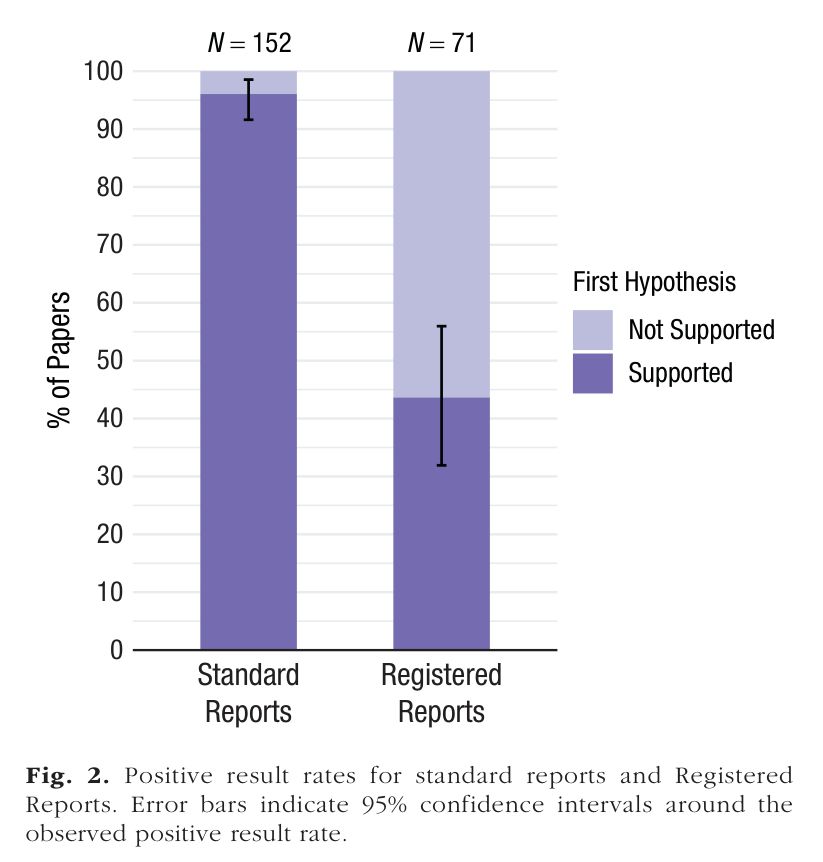
If you work in psychology in a research area without Registered Reports, you will see that the main hypotheses in papers are almost always supported. If your peers publish Registered Reports, you will also have access to null results, which should be very common. doi.org/10.1177/2515...
May 29, 2025 at 5:02 AM
If you work in psychology in a research area without Registered Reports, you will see that the main hypotheses in papers are almost always supported. If your peers publish Registered Reports, you will also have access to null results, which should be very common. doi.org/10.1177/2515...
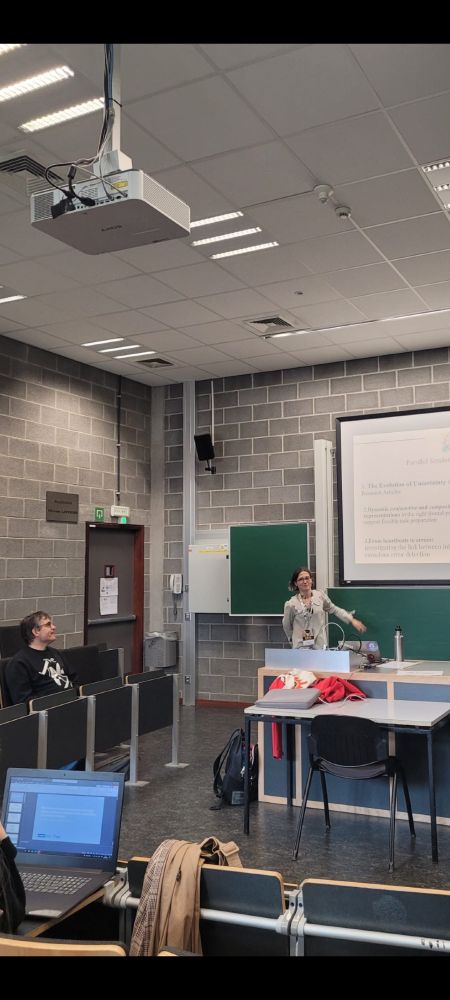
Great talk by @rritabajraktari.bsky.social at @bapsciences.bsky.social 2025, with a proud supervisor @olivierklein.bsky.social!
May 26, 2025 at 2:51 PM
Great talk by @rritabajraktari.bsky.social at @bapsciences.bsky.social 2025, with a proud supervisor @olivierklein.bsky.social!
Reposted by Paul Bertin

📢 AFR-PsyPol fait ses 1ers pas sur les réseaux ! Nous sommes l'Association Francophone pour la Recherche en Psychologie Politique et avons pour but de promouvoir la recherche et la coopération en #Psychologie #Politique. Envie d'en savoir davantage ? Découvrez nous ici : afr-psypol.org
Promouvoir la recherche et la coopération entre les chercheur·se·s et faciliter le partage du savoir sur la psychologie politique
afr-psypol.org
April 15, 2025 at 11:17 AM
📢 AFR-PsyPol fait ses 1ers pas sur les réseaux ! Nous sommes l'Association Francophone pour la Recherche en Psychologie Politique et avons pour but de promouvoir la recherche et la coopération en #Psychologie #Politique. Envie d'en savoir davantage ? Découvrez nous ici : afr-psypol.org
Reposted by Paul Bertin

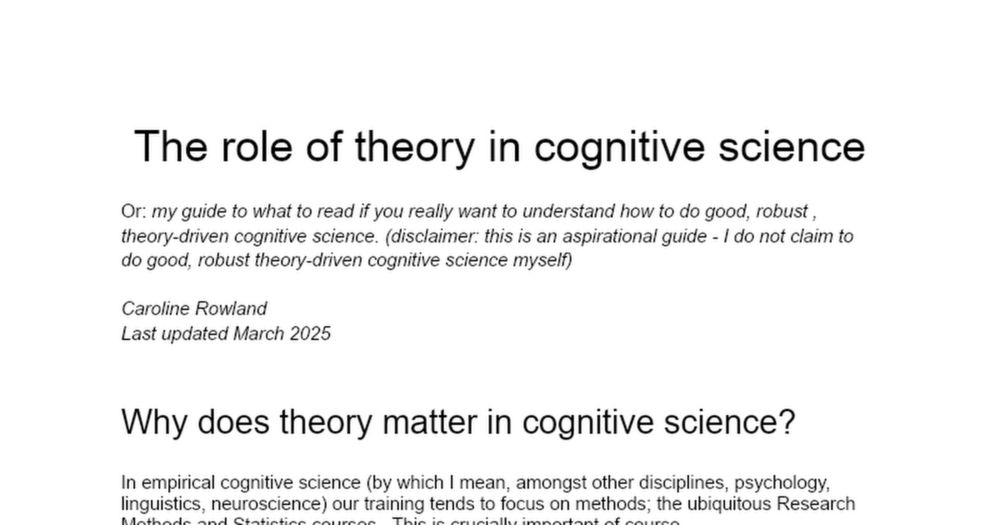
Inspired by my reading this week, I wrote a list of the resources I think every cognitive science researcher should read/listen to about theory development. It's in this google.doc (feel free to add your own suggestions) and in the thread below. docs.google.com/document/d/1...
Theory: Whtat to read
The role of theory in cognitive science Or: my guide to what to read if you really want to understand how to do good, robust , theory-driven cognitive science. (disclaimer: this is an aspirational gu...
docs.google.com
March 28, 2025 at 7:15 AM
Inspired by my reading this week, I wrote a list of the resources I think every cognitive science researcher should read/listen to about theory development. It's in this google.doc (feel free to add your own suggestions) and in the thread below. docs.google.com/document/d/1...
Reposted by Paul Bertin
🚨 New Manylabs launch 🚀
How does extreme heat affect our cognition & social behaviors?
Contribute & become a co-author:
🔗 Info: heatandmind.wordpress.com
📋 Sign up: www.soscisurvey.de/HeatandCogni...
Please share 🔁
#EnvironmentalPsychology
How does extreme heat affect our cognition & social behaviors?
Contribute & become a co-author:
🔗 Info: heatandmind.wordpress.com
📋 Sign up: www.soscisurvey.de/HeatandCogni...
Please share 🔁
#EnvironmentalPsychology

The Heat and Cognition Project: The Collective Cost of Extreme Heat
heatandmind.wordpress.com
March 27, 2025 at 4:40 PM
🚨 New Manylabs launch 🚀
How does extreme heat affect our cognition & social behaviors?
Contribute & become a co-author:
🔗 Info: heatandmind.wordpress.com
📋 Sign up: www.soscisurvey.de/HeatandCogni...
Please share 🔁
#EnvironmentalPsychology
How does extreme heat affect our cognition & social behaviors?
Contribute & become a co-author:
🔗 Info: heatandmind.wordpress.com
📋 Sign up: www.soscisurvey.de/HeatandCogni...
Please share 🔁
#EnvironmentalPsychology
Reposted by Paul Bertin
I am super happy to back my most appreciated and trustworthy partner in crime in this great piece (in all objectivity of course)! #metascience #transparency #virtuesignaling
New publication with my dearest friend, @kenzonera.bsky.social!
We propose that multi-study articles can hardly achieve conceptual novelty and statistical consistency while remaining transparent.
Fulfilling two of these criteria considerably reduces the probability of satisfying the third one.
We propose that multi-study articles can hardly achieve conceptual novelty and statistical consistency while remaining transparent.
Fulfilling two of these criteria considerably reduces the probability of satisfying the third one.

New article by @paulbertin.bsky.social and @kenzonera.bsky.social considers the trilemma between novelty, consistency, and transparency in psychological research.
Open Access: rips-irsp.com/articles/10....
Open Access: rips-irsp.com/articles/10....
March 24, 2025 at 8:01 PM
I am super happy to back my most appreciated and trustworthy partner in crime in this great piece (in all objectivity of course)! #metascience #transparency #virtuesignaling
This trilemma may have detrimental consequences for open science practices, turning them into a form of virtue signalling that compensates for low transparency.
To learn more about the trilemma, its consequences, and potential solutions to alleviate its pressure, check out the open-access article:
To learn more about the trilemma, its consequences, and potential solutions to alleviate its pressure, check out the open-access article:
Novelty, Consistency, Transparency: The Trilemma of Psychological Sciences and its Consequences on Open Science Practices | International Review of Social Psychology
rips-irsp.com
March 24, 2025 at 11:05 AM
This trilemma may have detrimental consequences for open science practices, turning them into a form of virtue signalling that compensates for low transparency.
To learn more about the trilemma, its consequences, and potential solutions to alleviate its pressure, check out the open-access article:
To learn more about the trilemma, its consequences, and potential solutions to alleviate its pressure, check out the open-access article:
New publication with my dearest friend, @kenzonera.bsky.social!
We propose that multi-study articles can hardly achieve conceptual novelty and statistical consistency while remaining transparent.
Fulfilling two of these criteria considerably reduces the probability of satisfying the third one.
We propose that multi-study articles can hardly achieve conceptual novelty and statistical consistency while remaining transparent.
Fulfilling two of these criteria considerably reduces the probability of satisfying the third one.
New article by @paulbertin.bsky.social and @kenzonera.bsky.social considers the trilemma between novelty, consistency, and transparency in psychological research.
Open Access: rips-irsp.com/articles/10....
Open Access: rips-irsp.com/articles/10....

March 24, 2025 at 11:05 AM
New publication with my dearest friend, @kenzonera.bsky.social!
We propose that multi-study articles can hardly achieve conceptual novelty and statistical consistency while remaining transparent.
Fulfilling two of these criteria considerably reduces the probability of satisfying the third one.
We propose that multi-study articles can hardly achieve conceptual novelty and statistical consistency while remaining transparent.
Fulfilling two of these criteria considerably reduces the probability of satisfying the third one.
Are there any fully online or hybrid conferences in social/political psychology?
March 17, 2025 at 12:48 PM
Are there any fully online or hybrid conferences in social/political psychology?
S/O to YouTubers (Wiloo, Les Outsiderz) and @lequipedusoir.bsky.social journalists (l'immense et regretté Didier Roustan, Guillaume Dufy, Philippe Sanfourche) who shared our survey.
Thanks also to @olivierklein.bsky.social for his help in designing nice figures!
Preprint: osf.io/preprints/ps...
Thanks also to @olivierklein.bsky.social for his help in designing nice figures!
Preprint: osf.io/preprints/ps...
OSF
osf.io
February 14, 2025 at 11:31 AM
S/O to YouTubers (Wiloo, Les Outsiderz) and @lequipedusoir.bsky.social journalists (l'immense et regretté Didier Roustan, Guillaume Dufy, Philippe Sanfourche) who shared our survey.
Thanks also to @olivierklein.bsky.social for his help in designing nice figures!
Preprint: osf.io/preprints/ps...
Thanks also to @olivierklein.bsky.social for his help in designing nice figures!
Preprint: osf.io/preprints/ps...
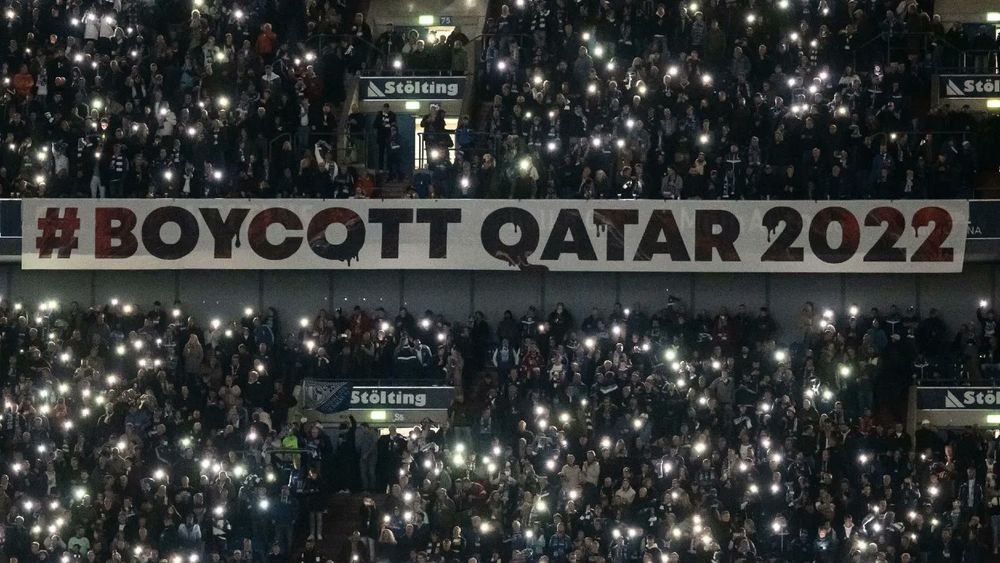
Boycott behaviors may be hard for sports fans to maintain due to the lack of alternative products.
Ultimately, boycott may reflect low fandom rather than high political engagement.
In the end, lasting boycotters may be those uninterested in sports events, making the boycott poorly consequential.
Ultimately, boycott may reflect low fandom rather than high political engagement.
In the end, lasting boycotters may be those uninterested in sports events, making the boycott poorly consequential.
February 14, 2025 at 11:31 AM
Boycott behaviors may be hard for sports fans to maintain due to the lack of alternative products.
Ultimately, boycott may reflect low fandom rather than high political engagement.
In the end, lasting boycotters may be those uninterested in sports events, making the boycott poorly consequential.
Ultimately, boycott may reflect low fandom rather than high political engagement.
In the end, lasting boycotters may be those uninterested in sports events, making the boycott poorly consequential.
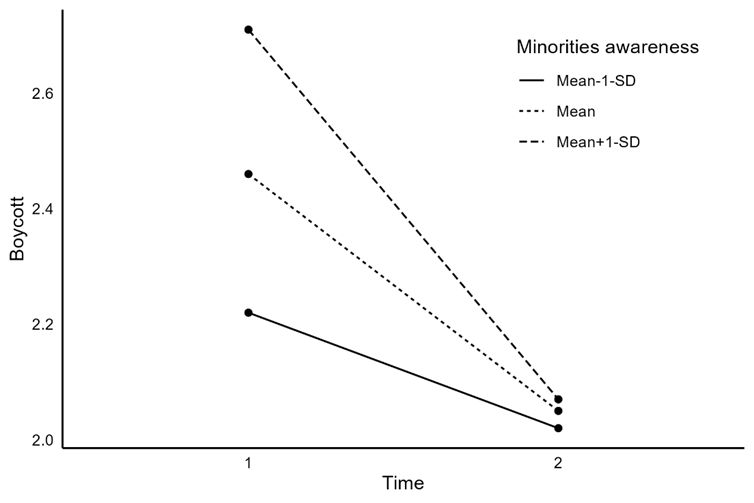
Even more puzzling was the finding that this decrease occurred regardless of French fans' political concerns about minorities and environmental issues—the best predictors of boycott intentions.
In other words, politicized fans struggled to maintain the boycott.
In other words, politicized fans struggled to maintain the boycott.
February 14, 2025 at 11:31 AM
Even more puzzling was the finding that this decrease occurred regardless of French fans' political concerns about minorities and environmental issues—the best predictors of boycott intentions.
In other words, politicized fans struggled to maintain the boycott.
In other words, politicized fans struggled to maintain the boycott.
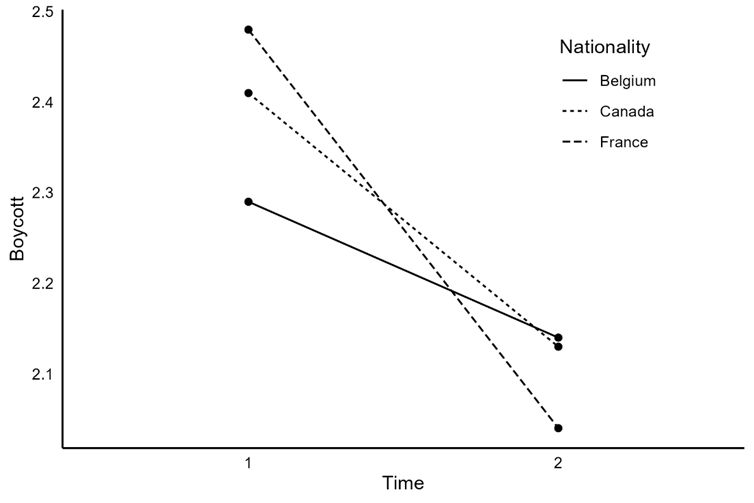
Then, we compared fans' intentions before the WC with their actual boycott behavior after the tournament.
We observed a decrease in all countries, but it was only significant in France—likely due to limited statistical power in other countries and the strong performance of the French team.
We observed a decrease in all countries, but it was only significant in France—likely due to limited statistical power in other countries and the strong performance of the French team.
February 14, 2025 at 11:31 AM
Then, we compared fans' intentions before the WC with their actual boycott behavior after the tournament.
We observed a decrease in all countries, but it was only significant in France—likely due to limited statistical power in other countries and the strong performance of the French team.
We observed a decrease in all countries, but it was only significant in France—likely due to limited statistical power in other countries and the strong performance of the French team.
We investigated boycott intentions in France, Belgium, Canada, and Switzerland (N = 1,635).
Boycott intentions were tied to concerns about environmental and minority issues.
Rejection of the boycott was best predicted by strong identification with the team and enjoying football’s aesthetic appeal.
Boycott intentions were tied to concerns about environmental and minority issues.
Rejection of the boycott was best predicted by strong identification with the team and enjoying football’s aesthetic appeal.
February 14, 2025 at 11:31 AM
We investigated boycott intentions in France, Belgium, Canada, and Switzerland (N = 1,635).
Boycott intentions were tied to concerns about environmental and minority issues.
Rejection of the boycott was best predicted by strong identification with the team and enjoying football’s aesthetic appeal.
Boycott intentions were tied to concerns about environmental and minority issues.
Rejection of the boycott was best predicted by strong identification with the team and enjoying football’s aesthetic appeal.
New paper on sports fans and political behaviors now in press at bsky.app/profile/ispp...
In late 2022, @paulinegrippa.bsky.social and I conducted an intercultural, longitudinal study on fans' motives for (not) boycotting the 2022 World Cup.
A 🧵
In late 2022, @paulinegrippa.bsky.social and I conducted an intercultural, longitudinal study on fans' motives for (not) boycotting the 2022 World Cup.
A 🧵
February 14, 2025 at 11:31 AM
New paper on sports fans and political behaviors now in press at bsky.app/profile/ispp...
In late 2022, @paulinegrippa.bsky.social and I conducted an intercultural, longitudinal study on fans' motives for (not) boycotting the 2022 World Cup.
A 🧵
In late 2022, @paulinegrippa.bsky.social and I conducted an intercultural, longitudinal study on fans' motives for (not) boycotting the 2022 World Cup.
A 🧵