




Daniel Lakens
@lakens.bsky.social
Metascience, statistics, psychology, philosophy of science. Eindhoven University of Technology, The Netherlands. Omnia probate. 🇪🇺
Pinned
Daniel Lakens
@lakens.bsky.social
· Apr 14
OSF
osf.io
My paper on concerns about replicability, theorizing, relevance, generalizability, and methodology across 2 crises is now in press at the International Review of Social Psychology. After revisions it was 17500 words, so it is split in 2 parts: osf.io/dtvs7_v2 and osf.io/g6kja_v1
Reposted by Daniel Lakens
Exactly, we need meta-scientists who not only operate on an abstract level, but who are also involved in specific areas of research!
February 14, 2026 at 1:00 PM
Exactly, we need meta-scientists who not only operate on an abstract level, but who are also involved in specific areas of research!
What I find so impressive about @jamessteeleii.bsky.social is that he practices what he preaches. How many metascientists say 'we need better theory' without ever having improved a theory? How many say 'there is not one way to do good science' without showing us any way to do good science?
We continue with James Steele (wearing his 'stay calm and read Paul Meehl' shirt) who is in a high pace running us through his views on how we develop and test strong theories. #PSE8

February 14, 2026 at 10:17 AM
What I find so impressive about @jamessteeleii.bsky.social is that he practices what he preaches. How many metascientists say 'we need better theory' without ever having improved a theory? How many say 'there is not one way to do good science' without showing us any way to do good science?
Reposted by Daniel Lakens
New paper, on a worrying trend in meta-science: the practice of anonymising datasets on, e.g., published articles. We argue that this is at odds with norms established in research synthesis, explore arguments for anonymisation, provide counterpoints, and demonstrate implications and epistemic costs.

Against Anonymising Meta-Scientific Data: https://osf.io/6eyjf
February 13, 2026 at 4:50 PM
New paper, on a worrying trend in meta-science: the practice of anonymising datasets on, e.g., published articles. We argue that this is at odds with norms established in research synthesis, explore arguments for anonymisation, provide counterpoints, and demonstrate implications and epistemic costs.
Very pleased with these new hex stickers, for the #PSE8 conference, but also for our TOSTER package, Metacheck, and my Improving Your Statistical Inferences book and course :)

February 13, 2026 at 11:43 AM
Very pleased with these new hex stickers, for the #PSE8 conference, but also for our TOSTER package, Metacheck, and my Improving Your Statistical Inferences book and course :)
The Metacheck team (www.scienceverse.org/metacheck/) and some interested collaborators are hackatonning away on how to create and validate new metacheck modules to automatically detect information in scientific papers. #PSE8

February 13, 2026 at 11:24 AM
The Metacheck team (www.scienceverse.org/metacheck/) and some interested collaborators are hackatonning away on how to create and validate new metacheck modules to automatically detect information in scientific papers. #PSE8
We are starting the 3rd day of #PSE8, which is completely dedicated to hackathons. People can join one in the morning, and one in the afternoon, and collaboratively work on projects, or develop new ideas for future projects!

February 13, 2026 at 8:33 AM
We are starting the 3rd day of #PSE8, which is completely dedicated to hackathons. People can join one in the morning, and one in the afternoon, and collaboratively work on projects, or develop new ideas for future projects!
Reposted by Daniel Lakens
This reminds me of this cool paper by Calcagno et al. that showed that 75% of all published articles in biology are published in the first journal they are submitted to. I guess biologists are (or at least used to be) quite well calibrated:
www.science.org/doi/full/10....
www.science.org/doi/full/10....
February 12, 2026 at 8:59 PM
This reminds me of this cool paper by Calcagno et al. that showed that 75% of all published articles in biology are published in the first journal they are submitted to. I guess biologists are (or at least used to be) quite well calibrated:
www.science.org/doi/full/10....
www.science.org/doi/full/10....
Reposted by Daniel Lakens
"justice in science requires 'epistemic inclusion', not just diversity"
- @vlastasikimic.bsky.social in amazing keynote at #PSE8
- @vlastasikimic.bsky.social in amazing keynote at #PSE8

February 11, 2026 at 11:10 AM
"justice in science requires 'epistemic inclusion', not just diversity"
- @vlastasikimic.bsky.social in amazing keynote at #PSE8
- @vlastasikimic.bsky.social in amazing keynote at #PSE8
Reposted by Daniel Lakens

Wahou, so refreshing this first day at the meta-science conference #PSE8. How did I change my mind from science is broken to yes but great minds are working on it!
I also received very positive feedback on my work on outlier detection (that should be out as a preprint soonish)
I also received very positive feedback on my work on outlier detection (that should be out as a preprint soonish)

February 11, 2026 at 6:12 PM
Wahou, so refreshing this first day at the meta-science conference #PSE8. How did I change my mind from science is broken to yes but great minds are working on it!
I also received very positive feedback on my work on outlier detection (that should be out as a preprint soonish)
I also received very positive feedback on my work on outlier detection (that should be out as a preprint soonish)
Reposted by Daniel Lakens
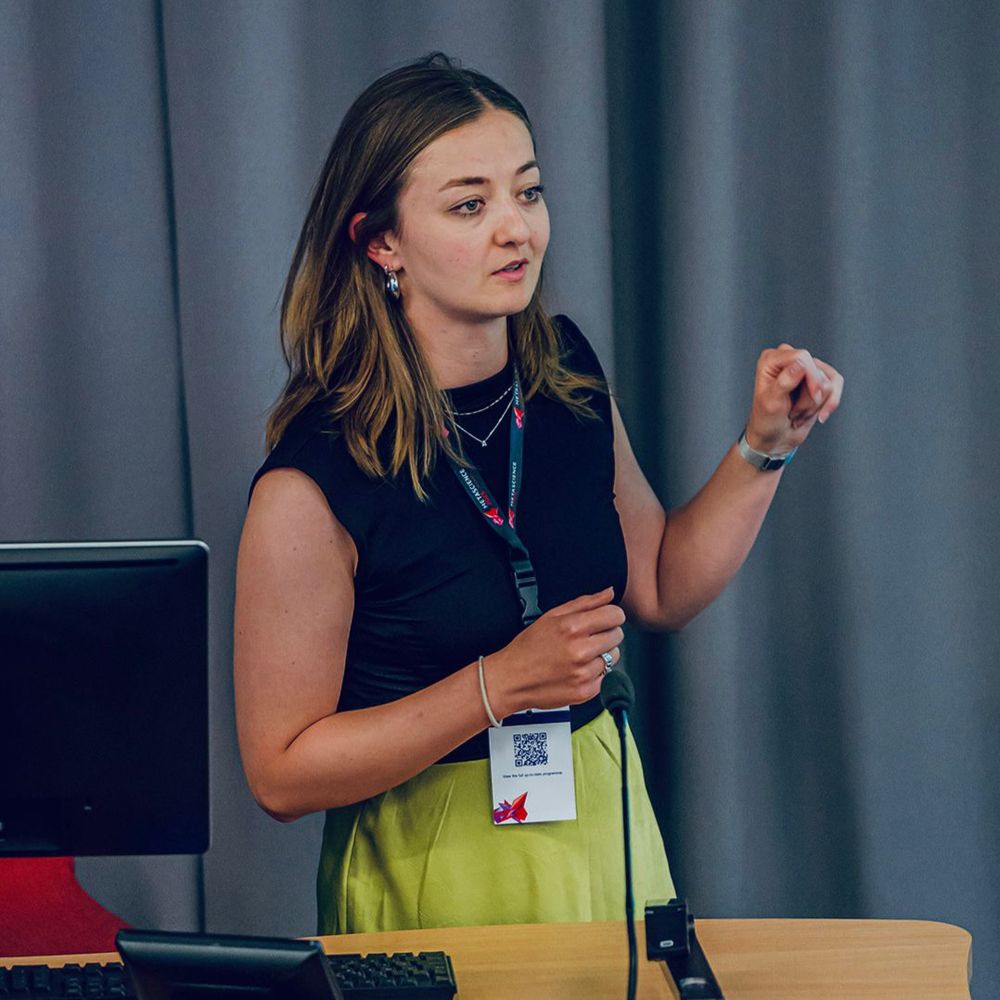
Thanks to everyone that was interested in my poster for the great conversations and discussions!
The preprint on reporting, open science, and trustworthiness in simulation studies is available here: osf.io/jn9sy_v2
Ready for day two of #PSE8!
The preprint on reporting, open science, and trustworthiness in simulation studies is available here: osf.io/jn9sy_v2
Ready for day two of #PSE8!

February 12, 2026 at 7:25 AM
Thanks to everyone that was interested in my poster for the great conversations and discussions!
The preprint on reporting, open science, and trustworthiness in simulation studies is available here: osf.io/jn9sy_v2
Ready for day two of #PSE8!
The preprint on reporting, open science, and trustworthiness in simulation studies is available here: osf.io/jn9sy_v2
Ready for day two of #PSE8!
Reposted by Daniel Lakens

Very relevant following the keynote by Leif Nelson! #PSE8
Dear colleagues - we want to better understand perceptions of data fraud and its detection and need your support! Are you currently a #researcher in #psych (or related fields) working with #data? Perfect - please respond to & share this short study (7min): sosci.rlp.net/detection/?r... Thank you!! 🫶
Fragebogen | Seite 1
sosci.rlp.net
February 12, 2026 at 11:45 AM
Very relevant following the keynote by Leif Nelson! #PSE8
Reposted by Daniel Lakens
Insights from the #PSE8 conference
Day 2: I was particularly struck by a presentation from Prof Leif Nelson on the detection of problematic data.
I wonder how many of us have came across problematic papers - or datasets and don’t what to do!?
#ResearchIntegrity #OpenScience
Day 2: I was particularly struck by a presentation from Prof Leif Nelson on the detection of problematic data.
I wonder how many of us have came across problematic papers - or datasets and don’t what to do!?
#ResearchIntegrity #OpenScience
February 12, 2026 at 12:49 PM
Insights from the #PSE8 conference
Day 2: I was particularly struck by a presentation from Prof Leif Nelson on the detection of problematic data.
I wonder how many of us have came across problematic papers - or datasets and don’t what to do!?
#ResearchIntegrity #OpenScience
Day 2: I was particularly struck by a presentation from Prof Leif Nelson on the detection of problematic data.
I wonder how many of us have came across problematic papers - or datasets and don’t what to do!?
#ResearchIntegrity #OpenScience
Reposted by Daniel Lakens
This was a banger of a talk.
Leif Nelson pointing out that lawsuits are not great for science, as we need to be able to criticize others without the threat of having to pay huge legal fees, and I vest a ton of time, to defend ourselves.

February 12, 2026 at 4:39 PM
This was a banger of a talk.
Reposted by Daniel Lakens
First time presenting this work to a room of scientists. General reaction to learning about how science is evaluated for use in court: 🤯
Edith Beerdsen from Temple University, USA, continues the afternoon about the role that scientific error plays in the courtroom, providing a perspective on Scientific Error from how science influences the practice of law. #PSE8

February 12, 2026 at 4:41 PM
First time presenting this work to a room of scientists. General reaction to learning about how science is evaluated for use in court: 🤯
Final keynote and talk of the #PSE8 conference, by František Bartoš, University of Amsterdam, talking about the idea of robustness reports.

February 12, 2026 at 2:39 PM
Final keynote and talk of the #PSE8 conference, by František Bartoš, University of Amsterdam, talking about the idea of robustness reports.
Reposted by Daniel Lakens

Leif’s #PSE8 keynote was ridiculously good, basically a live episode of @datacolada.bsky.social ... if anyone deserves a detective/sitcom series based in their work, it’s Leif, not Ariely – take note @netflix.com
Neil Nelson will give the first keynote of the day, about finding lies in the work of scientists. He argues we need to be able to detect what is not true when we interact with the scientific literature. #PSE8

February 12, 2026 at 2:00 PM
Leif’s #PSE8 keynote was ridiculously good, basically a live episode of @datacolada.bsky.social ... if anyone deserves a detective/sitcom series based in their work, it’s Leif, not Ariely – take note @netflix.com
Reposted by Daniel Lakens

Really cool talk

February 12, 2026 at 1:45 PM
Really cool talk
We continue with the field of medical imaging with deep learning, in a talk by Attila Simkó from Umeå University, talking about computationally reproducing code.

February 12, 2026 at 1:42 PM
We continue with the field of medical imaging with deep learning, in a talk by Attila Simkó from Umeå University, talking about computationally reproducing code.
Edith Beerdsen from Temple University, USA, continues the afternoon about the role that scientific error plays in the courtroom, providing a perspective on Scientific Error from how science influences the practice of law. #PSE8
February 12, 2026 at 1:07 PM
Edith Beerdsen from Temple University, USA, continues the afternoon about the role that scientific error plays in the courtroom, providing a perspective on Scientific Error from how science influences the practice of law. #PSE8
Leif Nelson pointing out that lawsuits are not great for science, as we need to be able to criticize others without the threat of having to pay huge legal fees, and I vest a ton of time, to defend ourselves.
February 12, 2026 at 11:07 AM
Leif Nelson pointing out that lawsuits are not great for science, as we need to be able to criticize others without the threat of having to pay huge legal fees, and I vest a ton of time, to defend ourselves.
Neil Nelson will give the first keynote of the day, about finding lies in the work of scientists. He argues we need to be able to detect what is not true when we interact with the scientific literature. #PSE8
February 12, 2026 at 10:23 AM
Neil Nelson will give the first keynote of the day, about finding lies in the work of scientists. He argues we need to be able to detect what is not true when we interact with the scientific literature. #PSE8
We continue with a discussion about theory specification in social psychology by Anand Krishna from Wurzburg, Germany. #PSE8 After decades of calls for stronger theory, how do we actually specify more detailed theories?

February 12, 2026 at 9:25 AM
We continue with a discussion about theory specification in social psychology by Anand Krishna from Wurzburg, Germany. #PSE8 After decades of calls for stronger theory, how do we actually specify more detailed theories?
We continue with James Steele (wearing his 'stay calm and read Paul Meehl' shirt) who is in a high pace running us through his views on how we develop and test strong theories. #PSE8
February 12, 2026 at 9:02 AM
We continue with James Steele (wearing his 'stay calm and read Paul Meehl' shirt) who is in a high pace running us through his views on how we develop and test strong theories. #PSE8
We are back at the second day of #PSE8! Liz Tenney from the University of Utah is stepping in to cover for an I'll speaker, and talking about doing replication in the trenches - reflecting on the practices of doing replication studies.
February 12, 2026 at 8:29 AM
We are back at the second day of #PSE8! Liz Tenney from the University of Utah is stepping in to cover for an I'll speaker, and talking about doing replication in the trenches - reflecting on the practices of doing replication studies.
Second keynote of the day, Femke Truijens, from the Erasmus University, talking about what it means to be an 'error' in mental health research. #PSE8 After this we will have posters, drinks, and continue discussions over dinner!

February 11, 2026 at 3:07 PM
Second keynote of the day, Femke Truijens, from the Erasmus University, talking about what it means to be an 'error' in mental health research. #PSE8 After this we will have posters, drinks, and continue discussions over dinner!