



Nat Walker-Hale
@phylonatworks.bsky.social
PDRA in the Chomicki group, Department of Biosciences, Durham University. Mostly phylo stuff, sometimes NZ pol, sometime just pol
Pinned
www.biorxiv.org
Delighted to share new work with a great bunch of collaborators using ancient DNA to study melon domestication www.biorxiv.org/content/10.6...
Reposted by Nat Walker-Hale

Emerling, @freddelsuc.bsky.social et al. investigated candidate genes related to dentition, gustation, and mastication in nine convergent myrmecophagous mammalian lineages, finding that convergent evolution of myrmecophagy was a protracted process.
🔗 doi.org/10.1093/molbev/msag009
#evobio #molbio
🔗 doi.org/10.1093/molbev/msag009
#evobio #molbio

Pseudogenes document protracted parallel regression of oral anatomy in myrmecophagous mammals
Abstract. Adaptation to ant and/or termite consumption (myrmecophagy) in mammals constitutes a textbook example of convergent evolution, being independentl
doi.org
February 17, 2026 at 10:56 AM
Emerling, @freddelsuc.bsky.social et al. investigated candidate genes related to dentition, gustation, and mastication in nine convergent myrmecophagous mammalian lineages, finding that convergent evolution of myrmecophagy was a protracted process.
🔗 doi.org/10.1093/molbev/msag009
#evobio #molbio
🔗 doi.org/10.1093/molbev/msag009
#evobio #molbio
Reposted by Nat Walker-Hale

February 12, 2026 at 4:17 PM
Reposted by Nat Walker-Hale

A small polymerase ribozyme that can synthesize itself and its complementary strand | Science www.science.org/doi/10.1126/... - this looks super cool, but does it really relate to the origin of life?

A small polymerase ribozyme that can synthesize itself and its complementary strand
The emergence of a chemical system capable of self-replication and evolution is a critical event in the origin of life. RNA polymerase ribozymes can replicate RNA, but their large size and structural ...
www.science.org
February 13, 2026 at 12:26 PM
A small polymerase ribozyme that can synthesize itself and its complementary strand | Science www.science.org/doi/10.1126/... - this looks super cool, but does it really relate to the origin of life?
Reposted by Nat Walker-Hale
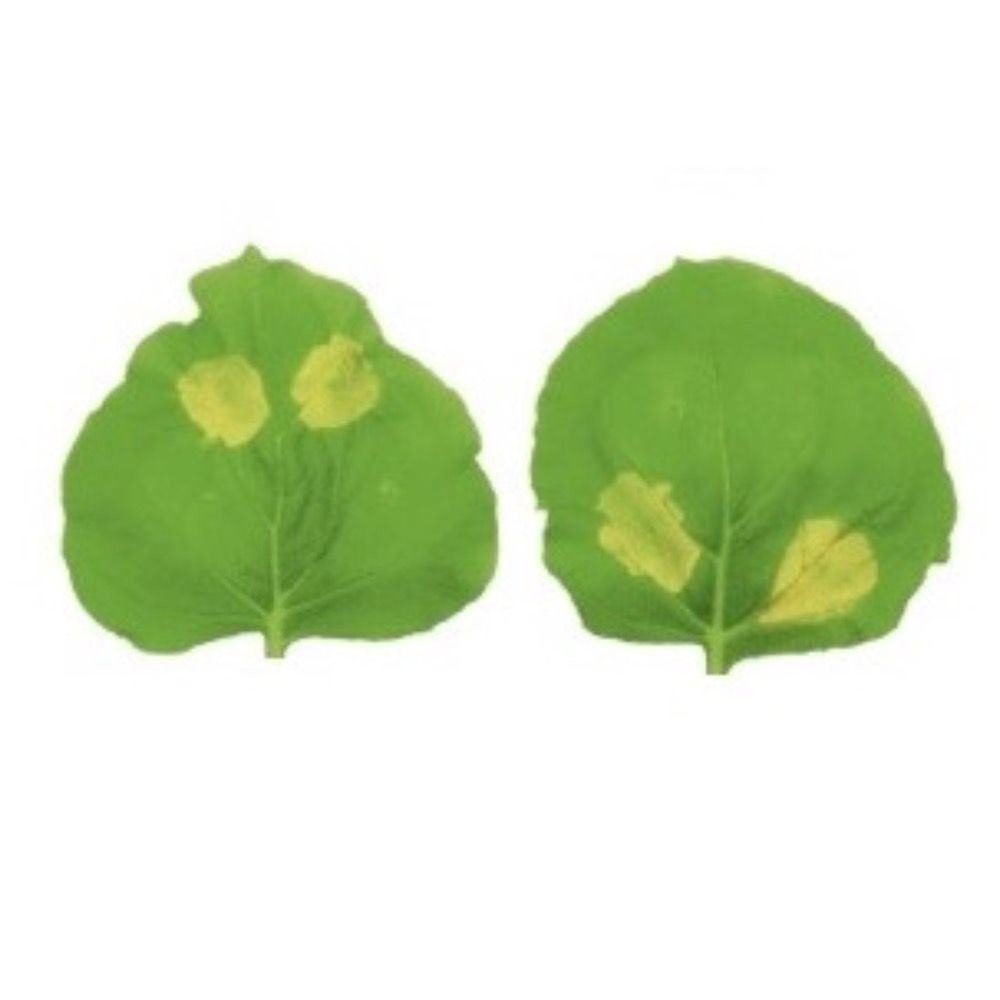
Vorholt Lab re-created endosymbiosis in the lab: injected bacteria into a fungus and evolved a heritable partnership.
Evolution, fast-forwarded.
doi.org/10.1038/s415...
Evolution, fast-forwarded.
doi.org/10.1038/s415...

Inducing novel endosymbioses by implanting bacteria in fungi - Nature
A study presents an approach to establish and track a new endosymbiotic partnership by implanting bacteria in a non-host fungus and shows that stable inheritance of the implanted bacteria is possible ...
doi.org
February 13, 2026 at 12:32 PM
Vorholt Lab re-created endosymbiosis in the lab: injected bacteria into a fungus and evolved a heritable partnership.
Evolution, fast-forwarded.
doi.org/10.1038/s415...
Evolution, fast-forwarded.
doi.org/10.1038/s415...
Delighted to share new work with a great bunch of collaborators using ancient DNA to study melon domestication www.biorxiv.org/content/10.6...
www.biorxiv.org
February 12, 2026 at 8:33 PM
Delighted to share new work with a great bunch of collaborators using ancient DNA to study melon domestication www.biorxiv.org/content/10.6...
Reposted by Nat Walker-Hale

This isn't shortread data, but alignments of genome assemblies with N50 > 100Mb. The plot is the # of bp per 100Kb window that are dropped because of missing data -- because those bp physically are not there in one of the other 25 genomes. This is what normal plant genomes look like, folks.

February 12, 2026 at 3:29 PM
This isn't shortread data, but alignments of genome assemblies with N50 > 100Mb. The plot is the # of bp per 100Kb window that are dropped because of missing data -- because those bp physically are not there in one of the other 25 genomes. This is what normal plant genomes look like, folks.
Reposted by Nat Walker-Hale

Happy Darwin Day to all! To celebrate can you comment with your favorite paper on evolutionary biology from the last few years? Whatever comes to mind and whichever paper that really changed your view of evolution.
February 12, 2026 at 7:18 PM
Happy Darwin Day to all! To celebrate can you comment with your favorite paper on evolutionary biology from the last few years? Whatever comes to mind and whichever paper that really changed your view of evolution.
Reposted by Nat Walker-Hale

Huge thanks to @asn-amnat.bsky.social for inviting our review on the evolutionary and ecological consequences of cooperation. @annadewar.bsky.social @asgriffin.bsky.social @lauriebelch.bsky.social www.journals.uchicago.edu/doi/10.1086/...


February 12, 2026 at 8:18 PM
Huge thanks to @asn-amnat.bsky.social for inviting our review on the evolutionary and ecological consequences of cooperation. @annadewar.bsky.social @asgriffin.bsky.social @lauriebelch.bsky.social www.journals.uchicago.edu/doi/10.1086/...
Reposted by Nat Walker-Hale

Our paper is out in MBE! doi.org/10.1093/molb...
We tracked TF binding site evolution across 589 grass species, and found that while binding preferences are pretty stable over 80 million years of evolution, individual binding sites have turned over a lot.
Thread here: bsky.app/profile/char...
We tracked TF binding site evolution across 589 grass species, and found that while binding preferences are pretty stable over 80 million years of evolution, individual binding sites have turned over a lot.
Thread here: bsky.app/profile/char...

December 16, 2025 at 8:45 PM
Our paper is out in MBE! doi.org/10.1093/molb...
We tracked TF binding site evolution across 589 grass species, and found that while binding preferences are pretty stable over 80 million years of evolution, individual binding sites have turned over a lot.
Thread here: bsky.app/profile/char...
We tracked TF binding site evolution across 589 grass species, and found that while binding preferences are pretty stable over 80 million years of evolution, individual binding sites have turned over a lot.
Thread here: bsky.app/profile/char...
Reposted by Nat Walker-Hale

Does the noncoding genome actually carry more genetic information than coding seqs? Motivated by this question we mutated every bp in the 10kb MYC locus. Results are even more exciting: Decoding the MYC locus reveals a druggable ultraconserved RNA element www.biorxiv.org/content/10.6...
www.biorxiv.org
January 31, 2026 at 1:13 AM
Does the noncoding genome actually carry more genetic information than coding seqs? Motivated by this question we mutated every bp in the 10kb MYC locus. Results are even more exciting: Decoding the MYC locus reveals a druggable ultraconserved RNA element www.biorxiv.org/content/10.6...
Reposted by Nat Walker-Hale

We are hiring for group leaders again — EBI is a great place to start your research group!
embl.wd103.myworkdayjobs.com/EMBL/job/Hin...
embl.wd103.myworkdayjobs.com/EMBL/job/Hin...

Research Group Leader
Do you want to lead groundbreaking research in computational biology? Join us at EMBL-EBI! EMBL's European Bioinformatics Institute (EMBL-EBI) is seeking talented and highly-motivated scientists to jo...
embl.wd103.myworkdayjobs.com
January 30, 2026 at 9:02 AM
We are hiring for group leaders again — EBI is a great place to start your research group!
embl.wd103.myworkdayjobs.com/EMBL/job/Hin...
embl.wd103.myworkdayjobs.com/EMBL/job/Hin...
Reposted by Nat Walker-Hale

New paper showing clustering of the many traits across reproductive strategies of angiosperms. Lots of interesting discussions that gave raise to this piece. But only possible thanks to the hard work of Andrew Helmstetter, Sylvain Glémin, and Jos Käfer.
nph.onlinelibrary.wiley.com/doi/abs/10.1...
nph.onlinelibrary.wiley.com/doi/abs/10.1...

An angiosperm‐wide perspective on reproductive strategies and floral traits
Flowering plants have many modes of sexual reproduction, notably varying from selfing to outcrossing, and from bisexual flowers to individuals with separate sexes (dioecy). These reproductive modes ...
nph.onlinelibrary.wiley.com
January 26, 2026 at 3:41 PM
New paper showing clustering of the many traits across reproductive strategies of angiosperms. Lots of interesting discussions that gave raise to this piece. But only possible thanks to the hard work of Andrew Helmstetter, Sylvain Glémin, and Jos Käfer.
nph.onlinelibrary.wiley.com/doi/abs/10.1...
nph.onlinelibrary.wiley.com/doi/abs/10.1...
Reposted by Nat Walker-Hale

Distribution of Gene Tree Topologies with Duplication, Loss, and Coalescence https://www.biorxiv.org/content/10.64898/2026.01.19.700405v1
January 22, 2026 at 10:32 PM
Distribution of Gene Tree Topologies with Duplication, Loss, and Coalescence https://www.biorxiv.org/content/10.64898/2026.01.19.700405v1
Reposted by Nat Walker-Hale

LoFi drafts to map to: 4 haplotype-resolved Cannabis genomes enable characterization of large structural variants https://www.biorxiv.org/content/10.64898/2026.01.19.700373v1
January 22, 2026 at 11:02 PM
LoFi drafts to map to: 4 haplotype-resolved Cannabis genomes enable characterization of large structural variants https://www.biorxiv.org/content/10.64898/2026.01.19.700373v1
Reposted by Nat Walker-Hale
Rewinding evolution in planta: A Rubisco-null platform validates high-performance ancestral enzymes | PNAS www.pnas.org/doi/10.1073/... @pnas.org
PNAS
Proceedings of the National Academy of Sciences (PNAS), a peer reviewed journal of the National Academy of Sciences (NAS) - an authoritative source of high-impact, original research that broadly spans...
www.pnas.org
January 9, 2026 at 7:08 PM
Rewinding evolution in planta: A Rubisco-null platform validates high-performance ancestral enzymes | PNAS www.pnas.org/doi/10.1073/... @pnas.org
Reposted by Nat Walker-Hale

1/7 🧬 New preprint!
What is it like to have one of the highest genomic diversities among metazoans?
🔗 www.biorxiv.org/content/10.6...
What is it like to have one of the highest genomic diversities among metazoans?
🔗 www.biorxiv.org/content/10.6...
The highly heterozygous European amphioxus (Branchiostoma lanceolatum) at the edge of panmixia
Amphioxus are small marine chordates that have broad ecological ranges, yet as adults form local settlements and exhibit limited mobility. Genomic surveys of two amphioxus species have suggested that they rank among the most genetically diverse metazoans. Here, we present the first accurate assessment of genomic diversity in the European amphioxus ( Branchiostoma lanceolatum ) and investigate the processes underlying this diversity. We leverage high-coverage whole-genome sequencing data from multiple individuals sampled at two geographically distant Atlantic and Mediterranean locations. Consistent with previous estimates in other amphioxus species, we measure exceptionally high genomic diversity, with an average heterozygosity of 2.73% in B. lanceolatum . Despite the large geographic separation between sampling sites, population differentiation is minimal, indicating extensive gene flow among distant adult settlements. Phylogenetic analyses combined with population genetic simulations confirm that this elevated genomic diversity is primarily driven by a large effective population size. Although adult amphioxus have limited mobility, our results indicate that long-distance larval dispersal mediated by ocean currents is sufficient to generate a near-panmictic population structure across their broad ecological range. ### Competing Interest Statement The authors have declared no competing interest. Swiss National Science Foundation, 207853 Agence Nationale de la Recherche, ANR-21-CE13-0034
www.biorxiv.org
January 20, 2026 at 9:42 AM
1/7 🧬 New preprint!
What is it like to have one of the highest genomic diversities among metazoans?
🔗 www.biorxiv.org/content/10.6...
What is it like to have one of the highest genomic diversities among metazoans?
🔗 www.biorxiv.org/content/10.6...
Reposted by Nat Walker-Hale
Genomic signatures of reproductive isolation are decoupled from floral divergence in a long-standing hybrid zone https://www.biorxiv.org/content/10.64898/2026.01.17.700129v1
January 19, 2026 at 4:31 AM
Genomic signatures of reproductive isolation are decoupled from floral divergence in a long-standing hybrid zone https://www.biorxiv.org/content/10.64898/2026.01.17.700129v1
Reposted by Nat Walker-Hale

Job alert! Assistant professor position in the Department of Molecular Genetics (University of Toronto). Amazing department and city. jobs.utoronto.ca/job/Toronto-... Please share.
Assistant Professor - Virology
Assistant Professor - Virology
jobs.utoronto.ca
January 15, 2026 at 8:04 PM
Job alert! Assistant professor position in the Department of Molecular Genetics (University of Toronto). Amazing department and city. jobs.utoronto.ca/job/Toronto-... Please share.
Reposted by Nat Walker-Hale

New paper out: “allopatric” Drosophila species aren’t so allopatric after all. We show that most currently allopatric species pairs probably overlapped in the past and exchanged genes at levels similar to sympatric pairs. @evolletters.bsky.social
doi.org/10.1093/evle... [1/6]
doi.org/10.1093/evle... [1/6]

Genomic analyses in Drosophila do not support the classic allopatric model of speciation
Abstract. The allopatric model of speciation has dominated our understanding of speciation biology and biogeography since the Modern Synthesis. It is uncon
doi.org
January 15, 2026 at 11:58 AM
New paper out: “allopatric” Drosophila species aren’t so allopatric after all. We show that most currently allopatric species pairs probably overlapped in the past and exchanged genes at levels similar to sympatric pairs. @evolletters.bsky.social
doi.org/10.1093/evle... [1/6]
doi.org/10.1093/evle... [1/6]
Reposted by Nat Walker-Hale


Reposted by Nat Walker-Hale
from a thread by a historian of Reconstruction. this bit seems key

If so, is there as much moderate support for Trumpism today as there was white Republican support for white supremacy in the 1890s? Have we gone that far down the road?
Given current public sentiment, I do not think so.
Given current public sentiment, I do not think so.
January 15, 2026 at 8:55 PM
from a thread by a historian of Reconstruction. this bit seems key
Reposted by Nat Walker-Hale

Characterising the detectable and invisible fractions of genomic loci under balancing selection https://www.biorxiv.org/content/10.64898/2026.01.13.698512v1
January 13, 2026 at 1:32 PM
Characterising the detectable and invisible fractions of genomic loci under balancing selection https://www.biorxiv.org/content/10.64898/2026.01.13.698512v1
Reposted by Nat Walker-Hale

🚀 Our new paper on Alignoth just published in Bioinformatics!
Alignoth generates self-contained interactive HTML read alignment plots from BAM files – Rust-based, portable, and ideal for headless workflows.
📄 doi.org/10.1093/bioi...
#bioinformatics #genomics #rust @johanneskoester.bsky.social
Alignoth generates self-contained interactive HTML read alignment plots from BAM files – Rust-based, portable, and ideal for headless workflows.
📄 doi.org/10.1093/bioi...
#bioinformatics #genomics #rust @johanneskoester.bsky.social

January 8, 2026 at 1:57 PM
🚀 Our new paper on Alignoth just published in Bioinformatics!
Alignoth generates self-contained interactive HTML read alignment plots from BAM files – Rust-based, portable, and ideal for headless workflows.
📄 doi.org/10.1093/bioi...
#bioinformatics #genomics #rust @johanneskoester.bsky.social
Alignoth generates self-contained interactive HTML read alignment plots from BAM files – Rust-based, portable, and ideal for headless workflows.
📄 doi.org/10.1093/bioi...
#bioinformatics #genomics #rust @johanneskoester.bsky.social
Reposted by Nat Walker-Hale

Want to study the genomics of repeated adaptation with data from hundreds of species? New funding for non-Canadians @ grad or postdoc level. Internal competition at UCalgary with very short deadline so please get in touch ASAP!!
sshrc-crsh.canada.ca/en/funding/o...
sshrc-crsh.canada.ca/en/funding/o...

January 9, 2026 at 6:41 PM
Want to study the genomics of repeated adaptation with data from hundreds of species? New funding for non-Canadians @ grad or postdoc level. Internal competition at UCalgary with very short deadline so please get in touch ASAP!!
sshrc-crsh.canada.ca/en/funding/o...
sshrc-crsh.canada.ca/en/funding/o...
Reposted by Nat Walker-Hale

Our new commentary on @blackrim.bsky.social et al's fascinating work in @newphyt.bsky.social, using simulation and analysis of empirical data to scale microevolutionary process to macroevolutionary patterns. Punchline: death rate and max age are driving.
nph.onlinelibrary.wiley.com/doi/10.1111/...
nph.onlinelibrary.wiley.com/doi/10.1111/...

January 10, 2026 at 11:26 AM
Our new commentary on @blackrim.bsky.social et al's fascinating work in @newphyt.bsky.social, using simulation and analysis of empirical data to scale microevolutionary process to macroevolutionary patterns. Punchline: death rate and max age are driving.
nph.onlinelibrary.wiley.com/doi/10.1111/...
nph.onlinelibrary.wiley.com/doi/10.1111/...