Dave Leigh
@profdaveleigh.bsky.social
Royal Society Research Professor & Sir Samuel Hall Chair of Chemistry, University of Manchester, UK. European. molecules・ machines・ magic
Reposted by Dave Leigh

Our latest collaborative preprint from the group and @kilbinger-group.bsky.social is out - tinyurl.com/3bbrfyhw - we've been looking at creating stably folded, helical, and polyfluorinated transmembrane channels with rates of water transport exceeding Aquaporins. Great to see the manuscript up!

January 16, 2026 at 11:31 AM
Our latest collaborative preprint from the group and @kilbinger-group.bsky.social is out - tinyurl.com/3bbrfyhw - we've been looking at creating stably folded, helical, and polyfluorinated transmembrane channels with rates of water transport exceeding Aquaporins. Great to see the manuscript up!
Out today in @natchem.nature.com 😃 Huakui, @stefanborsley.bsky.social @benjaminoacid.bsky.social & co illustrate why catalysis-driven motors (like motor proteins) can't use designs based on light-driven motors or molecules-that-rotate-through-multi-reaction-sequences www.nature.com/articles/s41...

Chiral catalysis-driven rotary molecular motors - Nature Chemistry
The structural anisotropy necessary for the powered directional rotation of chemically fuelled molecular motors had previously been provided by chiral fuels or enzymes. Now it has been shown that asym...
www.nature.com
January 16, 2026 at 10:32 AM
Out today in @natchem.nature.com 😃 Huakui, @stefanborsley.bsky.social @benjaminoacid.bsky.social & co illustrate why catalysis-driven motors (like motor proteins) can't use designs based on light-driven motors or molecules-that-rotate-through-multi-reaction-sequences www.nature.com/articles/s41...
Wow, that’s a lot of brilliance in one photo! 😍 Are you sure you’re allowed to all be in the same place at the same time? Merry Christmas all! 🎄🎅#MASC2025 #RSC_MASC

December 17, 2025 at 11:12 AM
Wow, that’s a lot of brilliance in one photo! 😍 Are you sure you’re allowed to all be in the same place at the same time? Merry Christmas all! 🎄🎅#MASC2025 #RSC_MASC
Brilliant news!😃🇪🇺 www.theguardian.com/world/2025/d...

UK to rejoin EU’s Erasmus student exchange programme
Exclusive: British students will be able to participate in EU-wide scheme from January 2027, sources say
www.theguardian.com
December 17, 2025 at 9:47 AM
Brilliant news!😃🇪🇺 www.theguardian.com/world/2025/d...

Reposted by Dave Leigh

Great to see this collaborative work out in @natureportfolio.nature.com , led by Michael James @manchester.ac.uk and James Douglas @astra-zeneca.bsky.social
Congrats to Ethan Lim and everyone involved!
www.nature.com/articles/s44...
#Chemistry #Collaboration #AcademicIndustry #compchem
Congrats to Ethan Lim and everyone involved!
www.nature.com/articles/s44...
#Chemistry #Collaboration #AcademicIndustry #compchem

Reductive radical chain initiation through the thermal generation of carbon dioxide radical anion - Nature Synthesis
Radical chain initiation strategies are fundamental to the synthesis of small molecule drugs and macromolecular materials. Here a general, thermally driven and scalable method for reductive initiation...
www.nature.com
November 6, 2025 at 2:37 PM
Great to see this collaborative work out in @natureportfolio.nature.com , led by Michael James @manchester.ac.uk and James Douglas @astra-zeneca.bsky.social
Congrats to Ethan Lim and everyone involved!
www.nature.com/articles/s44...
#Chemistry #Collaboration #AcademicIndustry #compchem
Congrats to Ethan Lim and everyone involved!
www.nature.com/articles/s44...
#Chemistry #Collaboration #AcademicIndustry #compchem
Reposted by Dave Leigh

Jean-Claude Chambron highlights the work by @profdaveleigh.bsky.social and co-workers on the synthesis of [2]catenanes from readily available molecular precursors via a metal-free active template approach. Have a look at the article at onlinelibrary.wiley.com/doi/10.1002/... #AngewandteChemieNovit

Acceleration of [2]Catenane Formation by One of its Rings
This highlight underscores the most straightforward synthesis of [2]catenanes from readily available molecular precursors: The one-pot, two-step catenane formation from a crown ether, a linear diamin...
onlinelibrary.wiley.com
October 28, 2025 at 1:15 PM
Jean-Claude Chambron highlights the work by @profdaveleigh.bsky.social and co-workers on the synthesis of [2]catenanes from readily available molecular precursors via a metal-free active template approach. Have a look at the article at onlinelibrary.wiley.com/doi/10.1002/... #AngewandteChemieNovit
Fantastic talk from @marklautens.bsky.social, our 2025 T Y Shen Lecturer! Ably supported by…
September 19, 2025 at 5:13 PM
Fantastic talk from @marklautens.bsky.social, our 2025 T Y Shen Lecturer! Ably supported by…
Reposted by Dave Leigh

A trip “home” - back to the area my family emigrated from in 1951!
They left Oldham after WWII, when jobs were in short supply for unskilled workers.
I return a few years later to give the TY Shen Lecture University of Manchester with my kind host @profdaveleigh.bsky.social
They left Oldham after WWII, when jobs were in short supply for unskilled workers.
I return a few years later to give the TY Shen Lecture University of Manchester with my kind host @profdaveleigh.bsky.social

September 18, 2025 at 5:16 PM
A trip “home” - back to the area my family emigrated from in 1951!
They left Oldham after WWII, when jobs were in short supply for unskilled workers.
I return a few years later to give the TY Shen Lecture University of Manchester with my kind host @profdaveleigh.bsky.social
They left Oldham after WWII, when jobs were in short supply for unskilled workers.
I return a few years later to give the TY Shen Lecture University of Manchester with my kind host @profdaveleigh.bsky.social
Reposted by Dave Leigh

‼️ Today, we have the great pleasure to host David Leigh @profdaveleigh.bsky.social in Rennes. He is currently giving an incredible talk about "Giving chemistry direction". 👍
@iscr-rennes.bsky.social
@iscr-rennes.bsky.social

September 2, 2025 at 9:11 AM
‼️ Today, we have the great pleasure to host David Leigh @profdaveleigh.bsky.social in Rennes. He is currently giving an incredible talk about "Giving chemistry direction". 👍
@iscr-rennes.bsky.social
@iscr-rennes.bsky.social
Chemistry involves such large and small numbers that it’s often hard to take in just how fast some processes occur. Dethreading a ring off the open end of a chain when there are no binding interactions present, or passing the end of one strand past another, are incredibly fast processes...
August 29, 2025 at 10:55 AM
Chemistry involves such large and small numbers that it’s often hard to take in just how fast some processes occur. Dethreading a ring off the open end of a chain when there are no binding interactions present, or passing the end of one strand past another, are incredibly fast processes...
Reposted by Dave Leigh


Reposted by Dave Leigh

Information ratchets drive many molecular motors, but we can also use them for other nonequilibrium processes like performing error correction in a molecular recognition process to increase selectivity. Published today in @natnano.nature.com
www.nature.com/articles/s41...
www.nature.com/articles/s41...
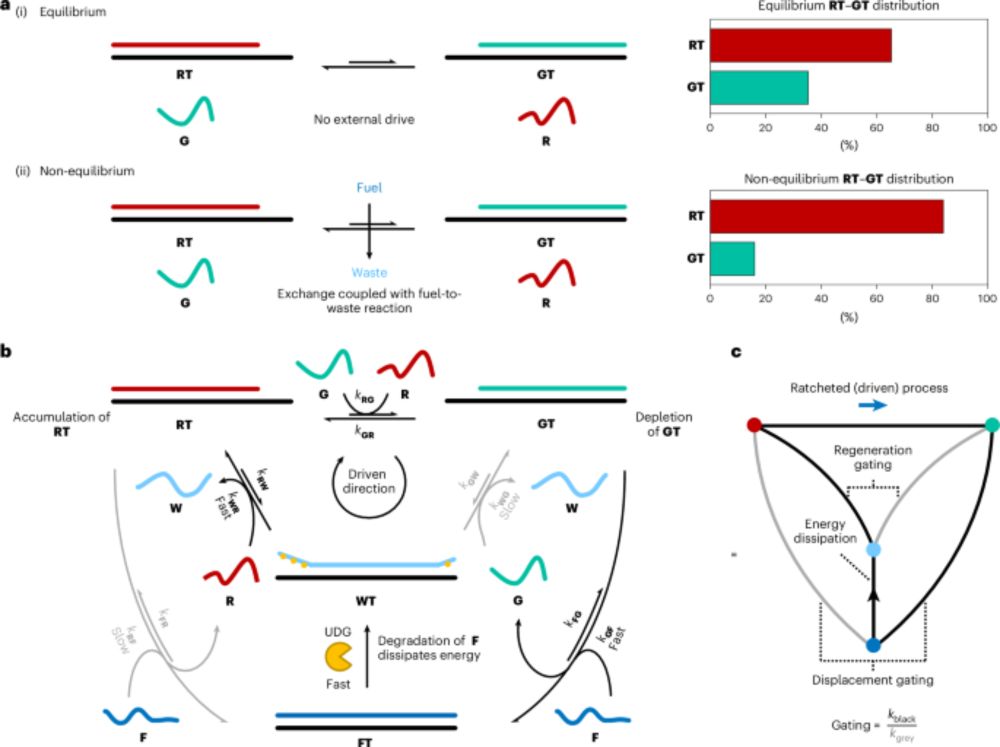
An information ratchet improves selectivity in molecular recognition under non-equilibrium conditions - Nature Nanotechnology
An abiotic information ratchet mechanism increases selectivity for the correct DNA duplex from 2:1 at equilibrium to 6:1 under energy-dissipating conditions.
www.nature.com
August 1, 2025 at 9:51 AM
Information ratchets drive many molecular motors, but we can also use them for other nonequilibrium processes like performing error correction in a molecular recognition process to increase selectivity. Published today in @natnano.nature.com
www.nature.com/articles/s41...
www.nature.com/articles/s41...
Reposted by Dave Leigh
Can you work out how fast a molecular motor rotates from in situ measurments? Turns out that yes, you can, as we show today in @jacs.acspublications.org
pubs.acs.org/doi/10.1021/...
@profdaveleigh.bsky.social @stefanborsley.bsky.social
pubs.acs.org/doi/10.1021/...
@profdaveleigh.bsky.social @stefanborsley.bsky.social
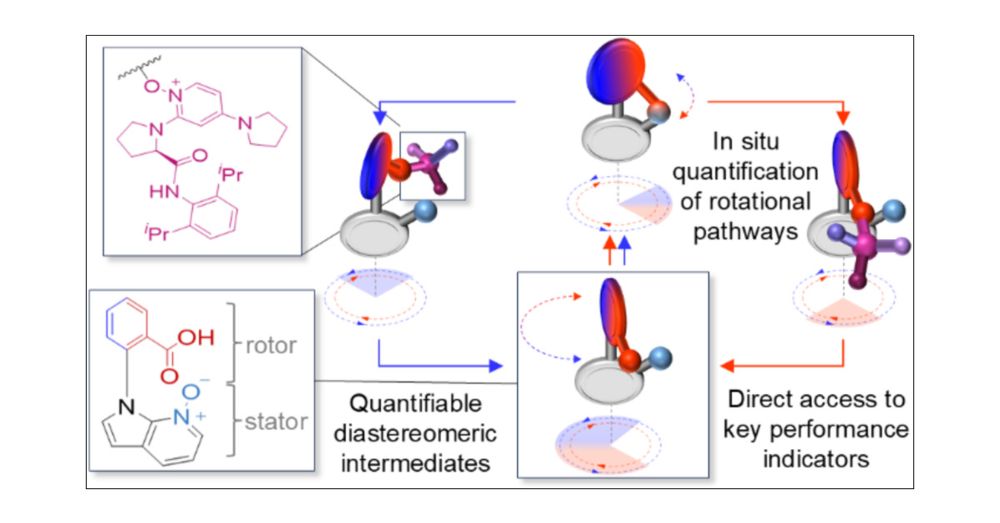
In Situ Quantification of Directional Rotation by a Catalysis-Driven Azaindole-N-Oxide–Phenoic Acid Molecular Motor
We report the in situ quantification of directional rotation of a new type of catalysis-driven rotary motor featuring a phenyl carboxylic acid rotor attached to a 7-azaindole-N-oxide stator through a biaryl C–N bond. Continuous directional rotation of the rotor about the stator is driven by the achiral motor’s rotary catalysis of carbodiimide hydration in the presence of a chiral pyrrolidinylpyridine-N-oxide. The catalytic cycle features an intermediate O-acyl-azaindole-N-oxide ester tether formed between the carboxylic acid of the rotor and the N-oxide of the stator. Face-selective cleavage of the tether by the chiral pyrrolidinylpyridine-N-oxide additive generates relatively long-lived diastereomeric pyridine-N-oxide esters of the phenyl carboxylic acid. These are hydrolyzed during the catalytic cycle to reform the carboxylic acid resting state of the motor, completing net directional 360° rotation. In contrast to previous catalysis-driven motor-molecules, the motor’s directionality could be determined directly from the transient concentrations of the diastereomeric intermediates formed during rotary catalysis. This avoids reliance on restricted rotation models to assess motor directionality and provides direct access to other key performance indicators such as motor speed and catalytic, coupling and fuel efficiency. The in situ-determined directionality of the motor was found to be in excellent agreement with the directionality determined from a restricted rotation model, supporting both the efficacy of the new approach and the validity of using appropriately designed restricted rotation models. The results establish a straightforward method for the in situ quantification of various aspects of motor behavior, aiding the design and optimization of artificial molecular motors.
pubs.acs.org
August 1, 2025 at 9:21 AM
Can you work out how fast a molecular motor rotates from in situ measurments? Turns out that yes, you can, as we show today in @jacs.acspublications.org
pubs.acs.org/doi/10.1021/...
@profdaveleigh.bsky.social @stefanborsley.bsky.social
pubs.acs.org/doi/10.1021/...
@profdaveleigh.bsky.social @stefanborsley.bsky.social
'Ullo @jacs.acspublications.org, Hua-Kui, Axel, @benjaminoacid.bsky.social & @stefanborsley.bsky.social have gotta new motor! doi.org/10.1021/jacs...
August 1, 2025 at 5:59 AM
'Ullo @jacs.acspublications.org, Hua-Kui, Axel, @benjaminoacid.bsky.social & @stefanborsley.bsky.social have gotta new motor! doi.org/10.1021/jacs...
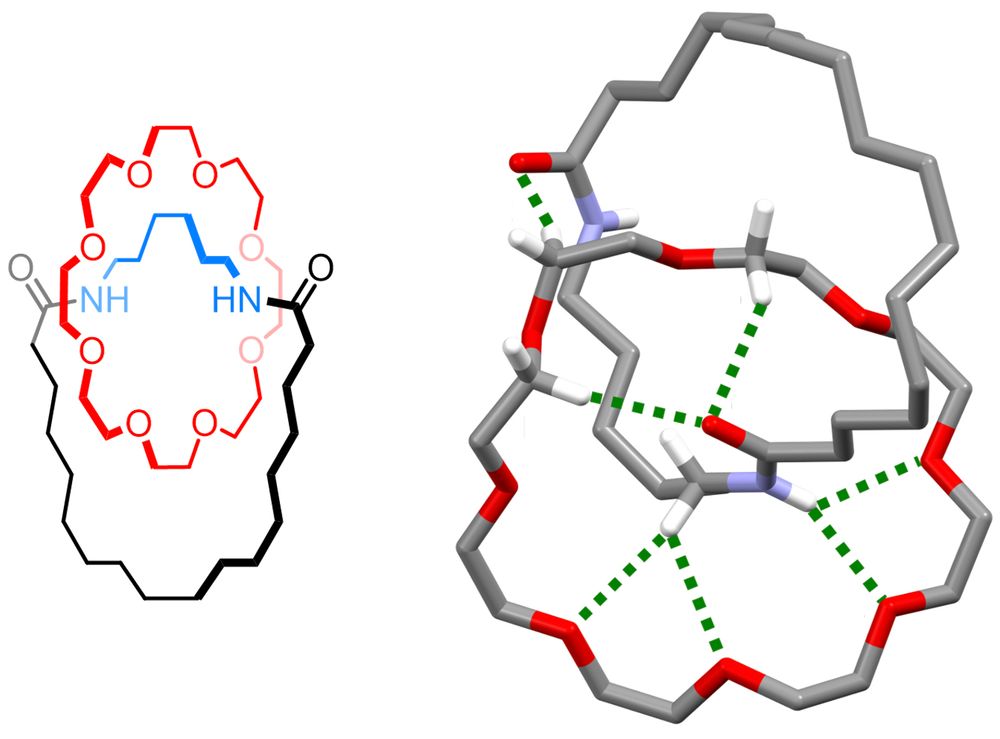
Delighted to follow @mvdelius.bsky.social into the 1st issue of @angewandtechemie.bsky.social Novit! Congrats to Jiankang, Enzo, Patrick, Axel, Andrei & Dan on the spontaneous assembly of catenanes lacking strong recognition sites🔗😃 onlinelibrary.wiley.com/doi/full/10....
August 1, 2025 at 5:20 AM
Delighted to follow @mvdelius.bsky.social into the 1st issue of @angewandtechemie.bsky.social Novit! Congrats to Jiankang, Enzo, Patrick, Axel, Andrei & Dan on the spontaneous assembly of catenanes lacking strong recognition sites🔗😃 onlinelibrary.wiley.com/doi/full/10....
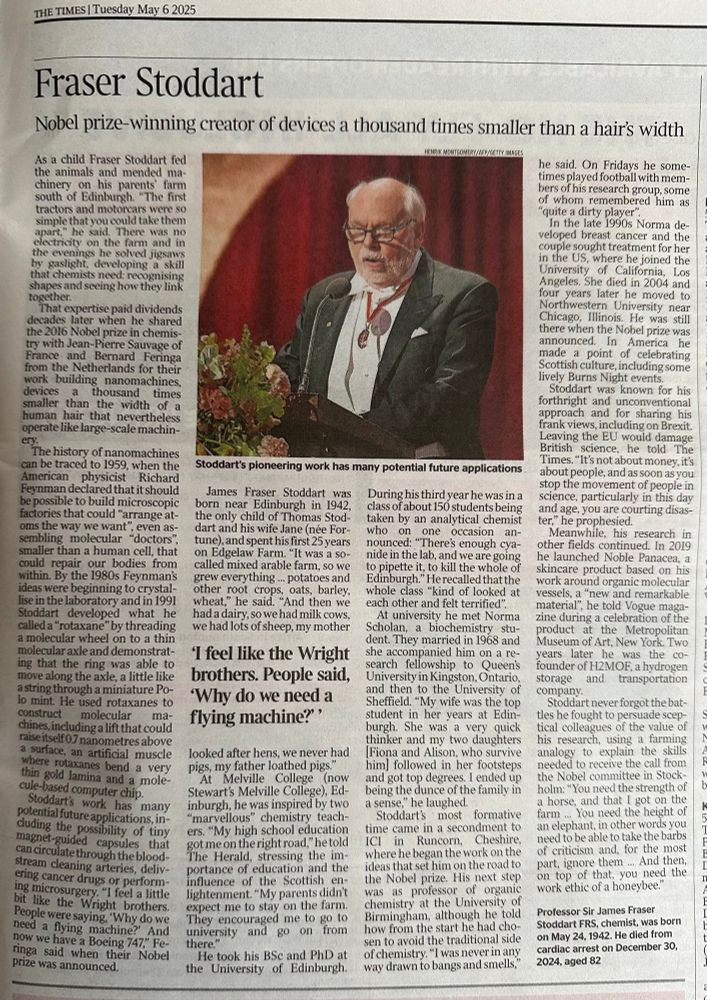
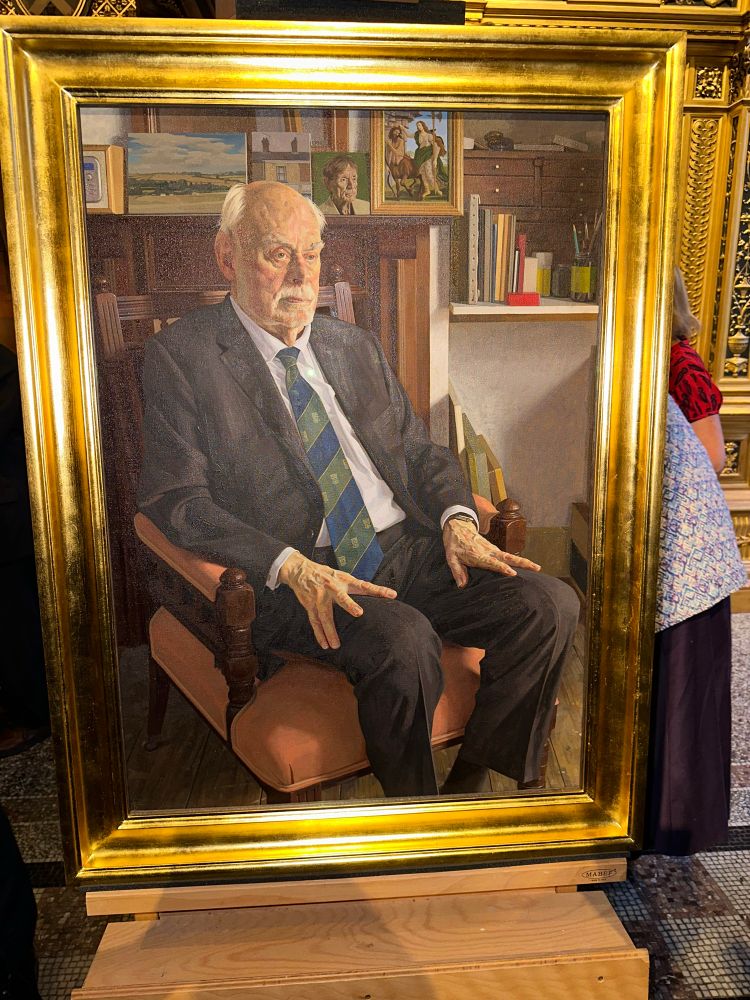
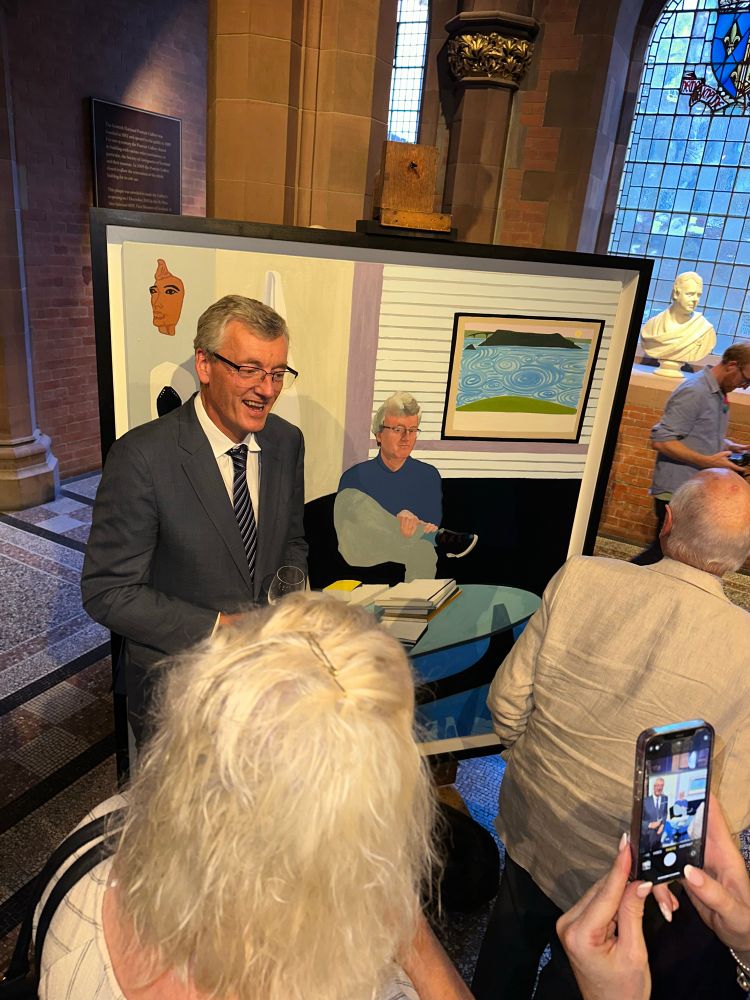
Lovely evening at the fabulous @nationalgalleries.bsky.social in Edinburgh for the unveiling of portraits of recent Scottish chemistry Nobel laureates Sir Fraser Stoddart, Richard Henderson & Sir Dave MacMillan😃. Sir Fraser captured looking like he wanted to get back to work!😆

July 29, 2025 at 9:29 AM
Lovely evening at the fabulous @nationalgalleries.bsky.social in Edinburgh for the unveiling of portraits of recent Scottish chemistry Nobel laureates Sir Fraser Stoddart, Richard Henderson & Sir Dave MacMillan😃. Sir Fraser captured looking like he wanted to get back to work!😆
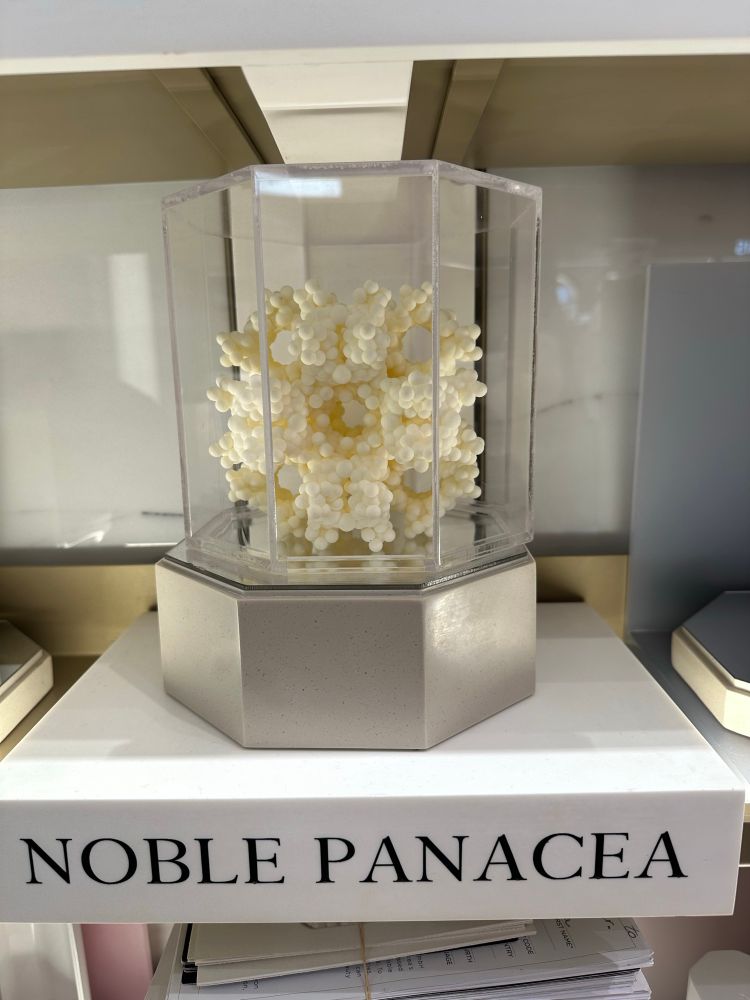
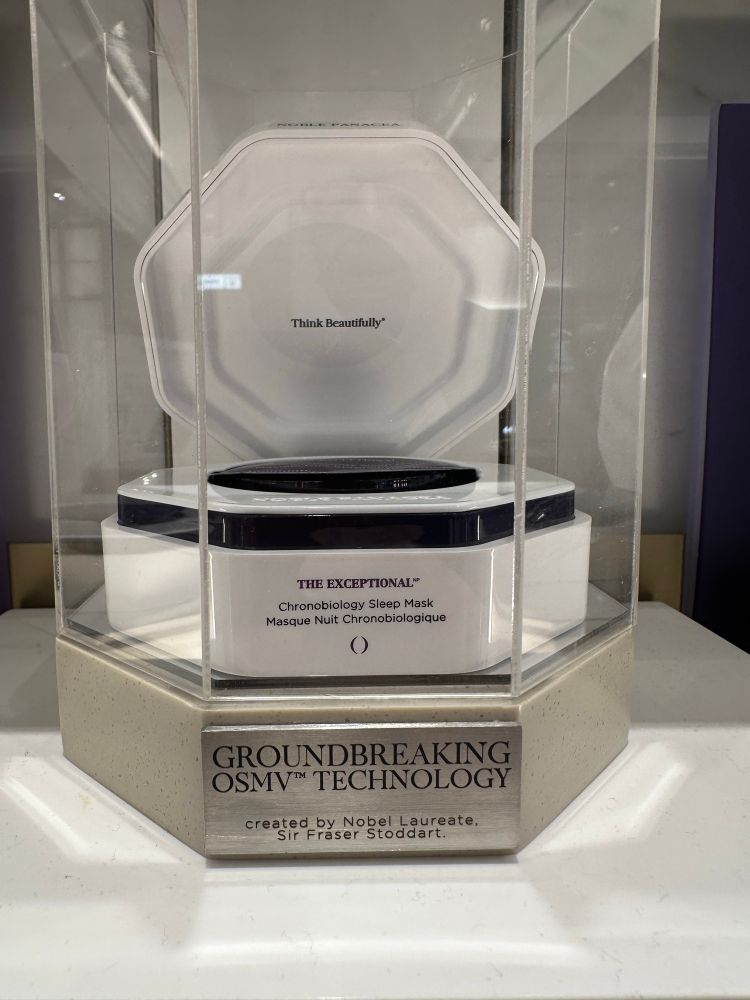
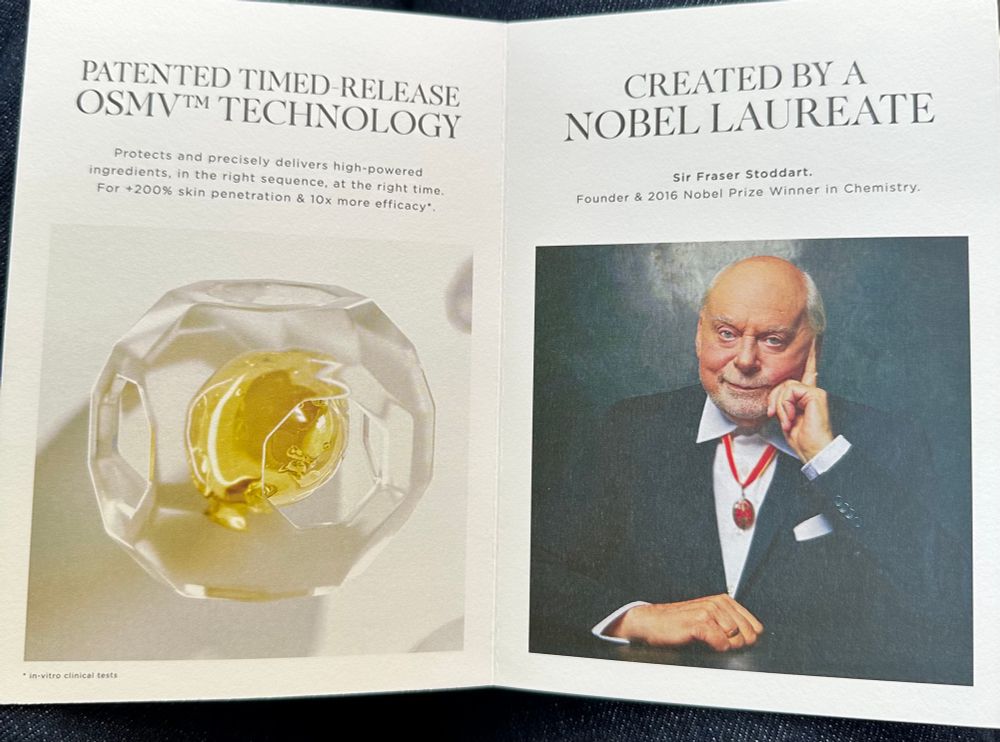
Walking through Harrods unexpectedly spotted a familiar X-ray structure!😍Received free sample for my skincare regime😎

July 11, 2025 at 12:53 PM
Walking through Harrods unexpectedly spotted a familiar X-ray structure!😍Received free sample for my skincare regime😎
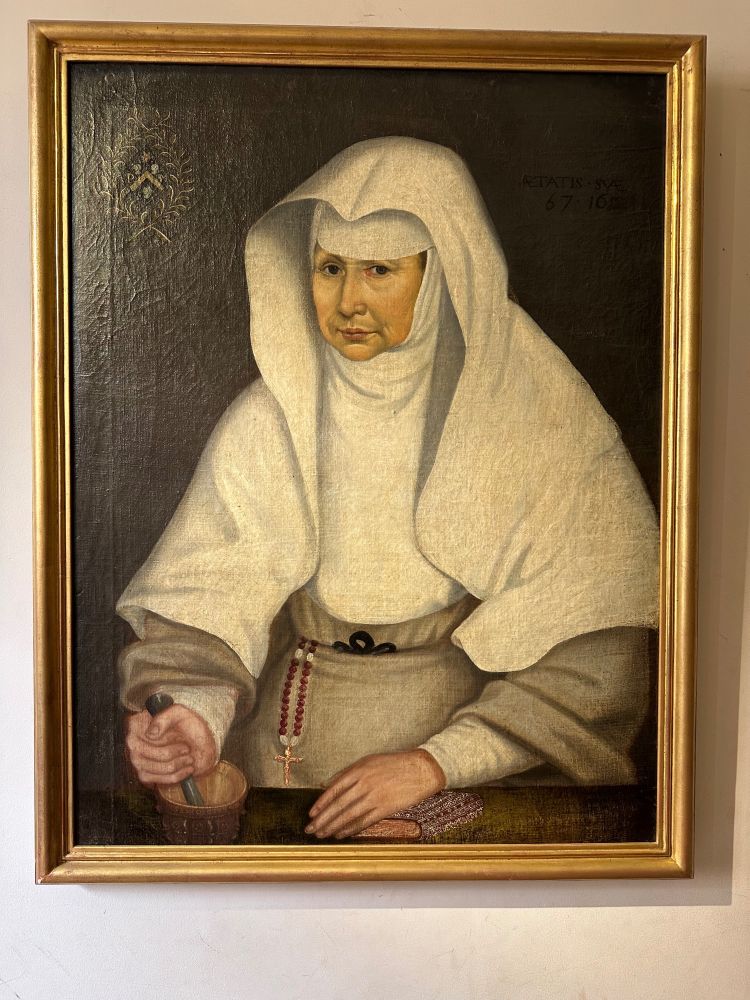
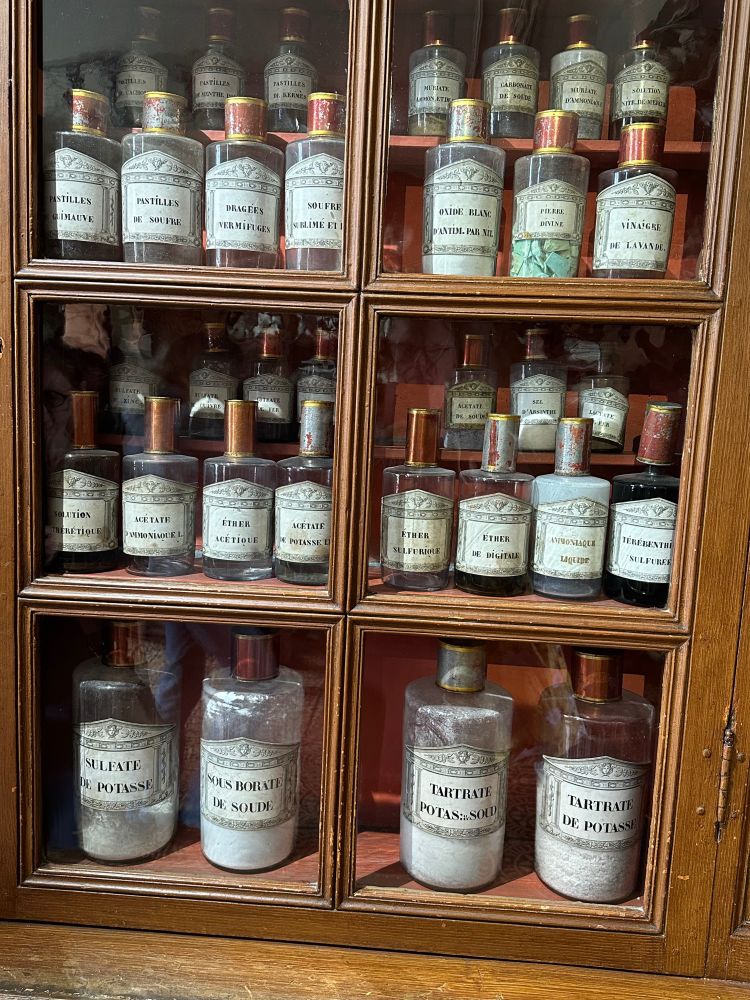
Great 16th century #WomeninChemistry (apothecaries) at l'Hôtel-Dieu, Beaune👩🔬
June 9, 2025 at 11:27 AM
Great 16th century #WomeninChemistry (apothecaries) at l'Hôtel-Dieu, Beaune👩🔬
Reposted by Dave Leigh
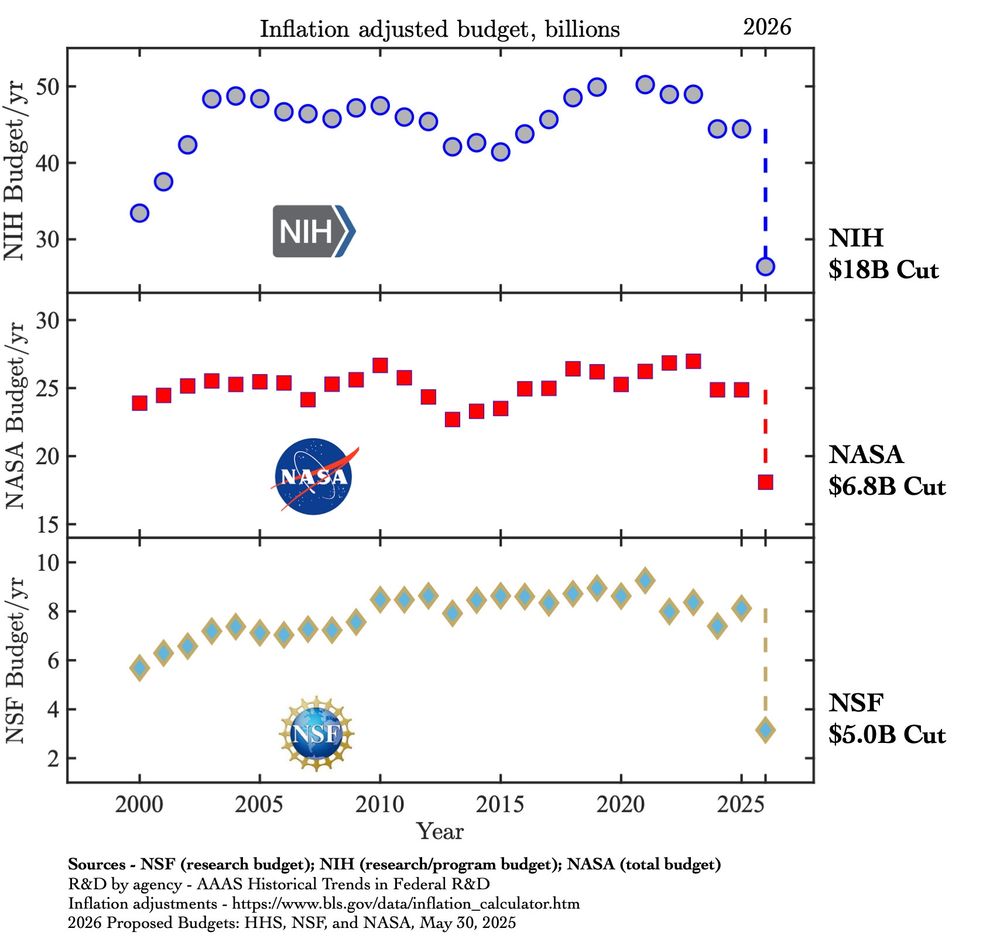
There are 2 previous historical cases of countries destroying their science and universities, crippling them for decades: Lysenkoism in the USSR and Nazi Germany. The Trump administration will be the 3rd.
It's not just budgets but research, institutions, expertise, and training the next generation.
It's not just budgets but research, institutions, expertise, and training the next generation.
May 31, 2025 at 4:43 AM
There are 2 previous historical cases of countries destroying their science and universities, crippling them for decades: Lysenkoism in the USSR and Nazi Germany. The Trump administration will be the 3rd.
It's not just budgets but research, institutions, expertise, and training the next generation.
It's not just budgets but research, institutions, expertise, and training the next generation.
Reposted by Dave Leigh

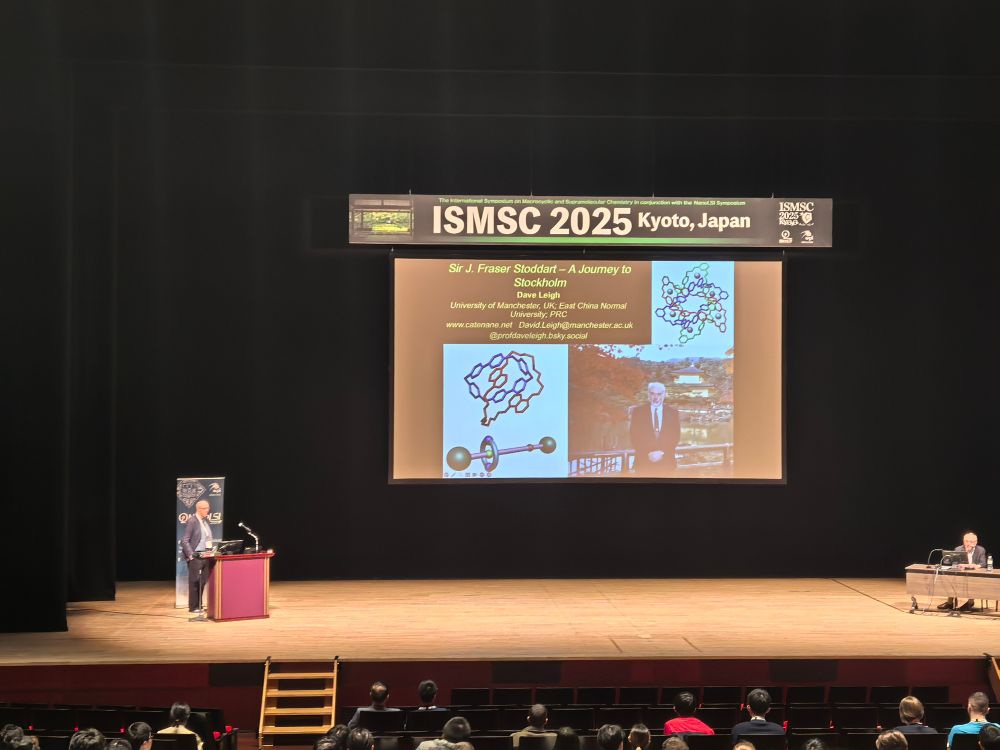
@profdaveleigh.bsky.social giving the Fraser Stoddart memorial talk at #ismsc2025
May 25, 2025 at 8:30 AM
@profdaveleigh.bsky.social giving the Fraser Stoddart memorial talk at #ismsc2025
Reposted by Dave Leigh

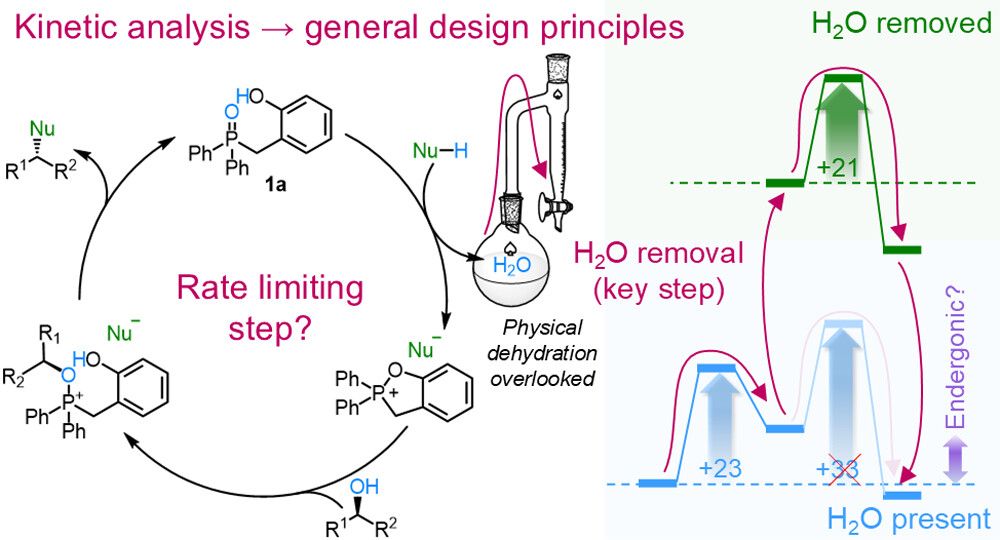
An argument over a whisky turned into a paper! We apply kinetic modelling to describe Denton’s catalytic Mitsunobu reaction, and show how it can be improved! Not a paper I ever expected to write, but a testament to the benefits of chatting science with friends! Thanks @keithandrews.bsky.social!

How can Le Chatelier drive kinetics? @stefanborsley.bsky.social and I analyse Denton's organocatalytic Mitsunobu reaction and show water removal improvements outperform catalyst redesigns. Why? Removing water part way through the reaction resets the potential energy surface! doi.org/10.1021/jacs...
May 13, 2025 at 7:17 AM
An argument over a whisky turned into a paper! We apply kinetic modelling to describe Denton’s catalytic Mitsunobu reaction, and show how it can be improved! Not a paper I ever expected to write, but a testament to the benefits of chatting science with friends! Thanks @keithandrews.bsky.social!
Excellent recent mini-review on autonomous molecular motors & pumps by the Corra group chemistry-europe.onlinelibrary.wiley.com/doi/full/10.... @masscurcio.bsky.social
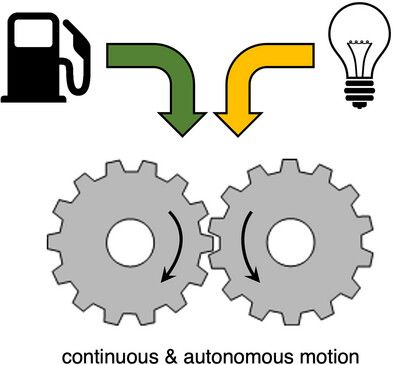
Autonomous Artificial Molecular Motors and Pumps
Autonomous energy consumption is the only way to introduce molecular motors into more sophisticated, larger systems, capable of life-like behavior. We reviewed a selection of the most recent advances...
chemistry-europe.onlinelibrary.wiley.com
May 11, 2025 at 10:12 AM
Excellent recent mini-review on autonomous molecular motors & pumps by the Corra group chemistry-europe.onlinelibrary.wiley.com/doi/full/10.... @masscurcio.bsky.social