



Sandy Hetherington
@sandyheth.bsky.social
Dr Alexander J. Hetherington | Plant evolutionary biologist, University of Edinburgh UK | UKRI Future Leader Fellow |
Lab website: https://www.ed.ac.uk/biology/groups/hetherington
Lab website: https://www.ed.ac.uk/biology/groups/hetherington
Pinned

Excited to share our new investigation of Prototaxites!
We found no support for a fungal affinity and instead suggest it is best considered an entirely extinct complex eukaryotic lineage
Great team effort @transitionalform.bsky.social Corentin Loron, and many others!
www.science.org/doi/10.1126/...
We found no support for a fungal affinity and instead suggest it is best considered an entirely extinct complex eukaryotic lineage
Great team effort @transitionalform.bsky.social Corentin Loron, and many others!
www.science.org/doi/10.1126/...
Reposted by Sandy Hetherington
It was a joy to contribute to this paper led by @sandyheth.bsky.social, Corentin Loron and Laura Cooper. We show the Devonian fossil, Prototaxites, is not a fungus but is in fact an organism from an as yet unknown extinct eukaryotic lineage.
www.science.org/doi/10.1126/...
@dcu-lsi.bsky.social
www.science.org/doi/10.1126/...
@dcu-lsi.bsky.social

Prototaxites fossils are structurally and chemically distinct from extinct and extant Fungi
Prototaxites fossils are distinct from Fungi, suggesting that they represent an extinct lineage of eukaryotic life.
www.science.org
January 22, 2026 at 2:26 PM
It was a joy to contribute to this paper led by @sandyheth.bsky.social, Corentin Loron and Laura Cooper. We show the Devonian fossil, Prototaxites, is not a fungus but is in fact an organism from an as yet unknown extinct eukaryotic lineage.
www.science.org/doi/10.1126/...
@dcu-lsi.bsky.social
www.science.org/doi/10.1126/...
@dcu-lsi.bsky.social
Really exciting to get some press coverage on our Prototaxites paper @instmolplantsci.bsky.social @edinburgh-uni.bsky.social
www.bbc.co.uk/news/article...
www.bbc.co.uk/news/article...

Aberdeenshire fossil dating back 410 million years joins museum collection
Researchers say the fossil found in Aberdeenshire is neither plant nor fungus as previously thought.
www.bbc.co.uk
January 22, 2026 at 9:54 AM
Really exciting to get some press coverage on our Prototaxites paper @instmolplantsci.bsky.social @edinburgh-uni.bsky.social
www.bbc.co.uk/news/article...
www.bbc.co.uk/news/article...
Reposted by Sandy Hetherington

Gorgeous #paleoart: Prototaxites towering over an expanse of early land plants. Great work @matt-humpage.bsky.social!
Our paper on the mysterious Devonian organism Prototaxites has now finally been published! See the paper here (www.science.org/doi/10.1126/...) and our explainer thread below!
Prototaxites reconstruction by Matt Humpage
Prototaxites reconstruction by Matt Humpage

January 21, 2026 at 8:44 PM
Gorgeous #paleoart: Prototaxites towering over an expanse of early land plants. Great work @matt-humpage.bsky.social!
Reposted by Sandy Hetherington

See also nice summary here in @science.org: www.science.org/content/arti...

Bizarre 400-million-year-old fossil was an unknown life form
Enigmatic organism known as Prototaxites cannot be fungus, new analysis finds
www.science.org
January 21, 2026 at 8:51 PM
See also nice summary here in @science.org: www.science.org/content/arti...
Reposted by Sandy Hetherington
22 / 23 This project was a large collaboration between research groups at Edinburgh and other institutions, with Corentin Loron and I as co-first authors (and as part of my PhD thesis!) and @sandyheth.bsky.social as corresponding author.

January 21, 2026 at 7:39 PM
22 / 23 This project was a large collaboration between research groups at Edinburgh and other institutions, with Corentin Loron and I as co-first authors (and as part of my PhD thesis!) and @sandyheth.bsky.social as corresponding author.
Reposted by Sandy Hetherington
12 / 23 Below shows us imaging through the medullary spots of Prototaxites, revealing the dense and interconnected branching of tubes that go down to one micron in diameter!
January 21, 2026 at 7:39 PM
12 / 23 Below shows us imaging through the medullary spots of Prototaxites, revealing the dense and interconnected branching of tubes that go down to one micron in diameter!
Reposted by Sandy Hetherington
4 / 23 First we used high-resolution microscopy to examine in detail the structure of the fossils, and then analysis of the molecular fingerprint of the organic matter preserved within the fossil.
January 21, 2026 at 7:39 PM
4 / 23 First we used high-resolution microscopy to examine in detail the structure of the fossils, and then analysis of the molecular fingerprint of the organic matter preserved within the fossil.
Reposted by Sandy Hetherington
3 / 23 But Prototaxites hasn’t been definitively placed in any of the groups of living fungi. In our study, we took a new approach to this question. We wanted to see if Prototaxites could fit within the fungal group as a whole, and to answer this, we used a combination of techniques.
January 21, 2026 at 7:39 PM
3 / 23 But Prototaxites hasn’t been definitively placed in any of the groups of living fungi. In our study, we took a new approach to this question. We wanted to see if Prototaxites could fit within the fungal group as a whole, and to answer this, we used a combination of techniques.
Reposted by Sandy Hetherington
2 / 23 What Prototaxites was has been debated extensively since its first description almost 170 years ago. It was originally described as a tree, but this was soon rejected. More recent researchers have described it as a fungus, due to its hypha-like structure and likely decomposer lifestyle.
January 21, 2026 at 7:39 PM
2 / 23 What Prototaxites was has been debated extensively since its first description almost 170 years ago. It was originally described as a tree, but this was soon rejected. More recent researchers have described it as a fungus, due to its hypha-like structure and likely decomposer lifestyle.
Reposted by Sandy Hetherington
1 / 23 Prototaxites is known from some very large fossils, including columns over 8m tall. These fossils date from the end of the Silurian to the Late Devonian (425–365 million years ago). This makes Prototaxites the largest organism on the Earth’s surface before the appearance of tall trees.

January 21, 2026 at 7:39 PM
1 / 23 Prototaxites is known from some very large fossils, including columns over 8m tall. These fossils date from the end of the Silurian to the Late Devonian (425–365 million years ago). This makes Prototaxites the largest organism on the Earth’s surface before the appearance of tall trees.
Reposted by Sandy Hetherington
Our paper on the mysterious Devonian organism Prototaxites has now finally been published! See the paper here (www.science.org/doi/10.1126/...) and our explainer thread below!
Prototaxites reconstruction by Matt Humpage
Prototaxites reconstruction by Matt Humpage
January 21, 2026 at 7:25 PM
Our paper on the mysterious Devonian organism Prototaxites has now finally been published! See the paper here (www.science.org/doi/10.1126/...) and our explainer thread below!
Prototaxites reconstruction by Matt Humpage
Prototaxites reconstruction by Matt Humpage
Excited to share our new investigation of Prototaxites!
We found no support for a fungal affinity and instead suggest it is best considered an entirely extinct complex eukaryotic lineage
Great team effort @transitionalform.bsky.social Corentin Loron, and many others!
www.science.org/doi/10.1126/...
We found no support for a fungal affinity and instead suggest it is best considered an entirely extinct complex eukaryotic lineage
Great team effort @transitionalform.bsky.social Corentin Loron, and many others!
www.science.org/doi/10.1126/...
January 21, 2026 at 8:01 PM
Excited to share our new investigation of Prototaxites!
We found no support for a fungal affinity and instead suggest it is best considered an entirely extinct complex eukaryotic lineage
Great team effort @transitionalform.bsky.social Corentin Loron, and many others!
www.science.org/doi/10.1126/...
We found no support for a fungal affinity and instead suggest it is best considered an entirely extinct complex eukaryotic lineage
Great team effort @transitionalform.bsky.social Corentin Loron, and many others!
www.science.org/doi/10.1126/...
Reposted by Sandy Hetherington

Happy to present our latest: Evolutionary adaptations to the hormonal regulation of vascular tissue development | PNAS www.pnas.org/doi/10.1073/.... Work by Wei Xiao and funded by @erc.europa.eu
PNAS
Proceedings of the National Academy of Sciences (PNAS), a peer reviewed journal of the National Academy of Sciences (NAS) - an authoritative source of high-impact, original research that broadly spans...
www.pnas.org
January 20, 2026 at 7:22 PM
Happy to present our latest: Evolutionary adaptations to the hormonal regulation of vascular tissue development | PNAS www.pnas.org/doi/10.1073/.... Work by Wei Xiao and funded by @erc.europa.eu
Reposted by Sandy Hetherington

🌱🌾🌲🌍🌿🍄🌺🌳🌴🌷🪳🐝🧬🥦 Botanical University Challenge 2026 #BUC2026 starts on-line 11 February. Teams of 4 students on degree programmes should register by 23 January- deadline extended. See website for more details. botanicaluniversitychallenge.co.uk/buc2026/ @bsbibotany.bsky.social

January 15, 2026 at 9:56 AM
🌱🌾🌲🌍🌿🍄🌺🌳🌴🌷🪳🐝🧬🥦 Botanical University Challenge 2026 #BUC2026 starts on-line 11 February. Teams of 4 students on degree programmes should register by 23 January- deadline extended. See website for more details. botanicaluniversitychallenge.co.uk/buc2026/ @bsbibotany.bsky.social
Reposted by Sandy Hetherington
2026 UK plant biomechanics workshop on 17th April 2026 in Nottingham.
Abstract submissions deadline is 13 Feb, and registration is open.
🌱🧪🌿🔬#PlantSci
Abstract submissions deadline is 13 Feb, and registration is open.
🌱🧪🌿🔬#PlantSci
Home - Plant Biomechanics Workshop 2026 - East Midlands Conference Centre
iop.eventsair.com
January 15, 2026 at 10:30 AM
2026 UK plant biomechanics workshop on 17th April 2026 in Nottingham.
Abstract submissions deadline is 13 Feb, and registration is open.
🌱🧪🌿🔬#PlantSci
Abstract submissions deadline is 13 Feb, and registration is open.
🌱🧪🌿🔬#PlantSci
Reposted by Sandy Hetherington

ECRs in plant–microbe interactions:
Join us in Norwich for an intensive, interactive 1.5-week Summer Conference at TSL (20–31 July). Lots of opportunities for networking and deep discussions.
(We also plan to offer hands-on practical sessions using our technologies 🔬🧬)
Join us in Norwich for an intensive, interactive 1.5-week Summer Conference at TSL (20–31 July). Lots of opportunities for networking and deep discussions.
(We also plan to offer hands-on practical sessions using our technologies 🔬🧬)

Join us in Norwich this July for the TSL Summer Conference in Plant-Microbe Interactions! ☀️🌱🧬
Discuss the latest approaches & discoveries in plant health with international keynote and local speakers.
APPLY by 30 March '26 ⬇️ Click link for more info
www.tsl.ac.uk/tsl-summer-c...
Discuss the latest approaches & discoveries in plant health with international keynote and local speakers.
APPLY by 30 March '26 ⬇️ Click link for more info
www.tsl.ac.uk/tsl-summer-c...

TSL Summer Conference in Plant-Microbe Interactions, 20th – 31st July…
Inviting Early Career Researchers to join international experts in discussing the latest approaches and discoveries in Plant-Microbe Interactions …
www.tsl.ac.uk
January 15, 2026 at 9:03 AM
ECRs in plant–microbe interactions:
Join us in Norwich for an intensive, interactive 1.5-week Summer Conference at TSL (20–31 July). Lots of opportunities for networking and deep discussions.
(We also plan to offer hands-on practical sessions using our technologies 🔬🧬)
Join us in Norwich for an intensive, interactive 1.5-week Summer Conference at TSL (20–31 July). Lots of opportunities for networking and deep discussions.
(We also plan to offer hands-on practical sessions using our technologies 🔬🧬)
Reposted by Sandy Hetherington

Why does life explore so few of the forms it could possibly take? Using fractal descriptors, this #scienceadvances paper shows that Earth’s biosphere clusters around simple shapes, reflecting deep evolutionary constraints. @artemyte.bsky.social @manlius.bsky.social www.science.org/doi/pdf/10.1...

January 11, 2026 at 1:23 PM
Why does life explore so few of the forms it could possibly take? Using fractal descriptors, this #scienceadvances paper shows that Earth’s biosphere clusters around simple shapes, reflecting deep evolutionary constraints. @artemyte.bsky.social @manlius.bsky.social www.science.org/doi/pdf/10.1...
Reposted by Sandy Hetherington
We’re hiring! 🌱
Open positions in my lab for candidates interested in cambium development in Arabidopsis, hybrid aspen, or silver birch. Apply now! Please repost! jobs.helsinki.fi/job/Helsinki...
Open positions in my lab for candidates interested in cambium development in Arabidopsis, hybrid aspen, or silver birch. Apply now! Please repost! jobs.helsinki.fi/job/Helsinki...

Postdoctoral and Doctoral Researchers in Plant Developmental Biology
Postdoctoral and Doctoral Researchers in Plant Developmental Biology
jobs.helsinki.fi
January 9, 2026 at 2:45 PM
We’re hiring! 🌱
Open positions in my lab for candidates interested in cambium development in Arabidopsis, hybrid aspen, or silver birch. Apply now! Please repost! jobs.helsinki.fi/job/Helsinki...
Open positions in my lab for candidates interested in cambium development in Arabidopsis, hybrid aspen, or silver birch. Apply now! Please repost! jobs.helsinki.fi/job/Helsinki...
Reposted by Sandy Hetherington
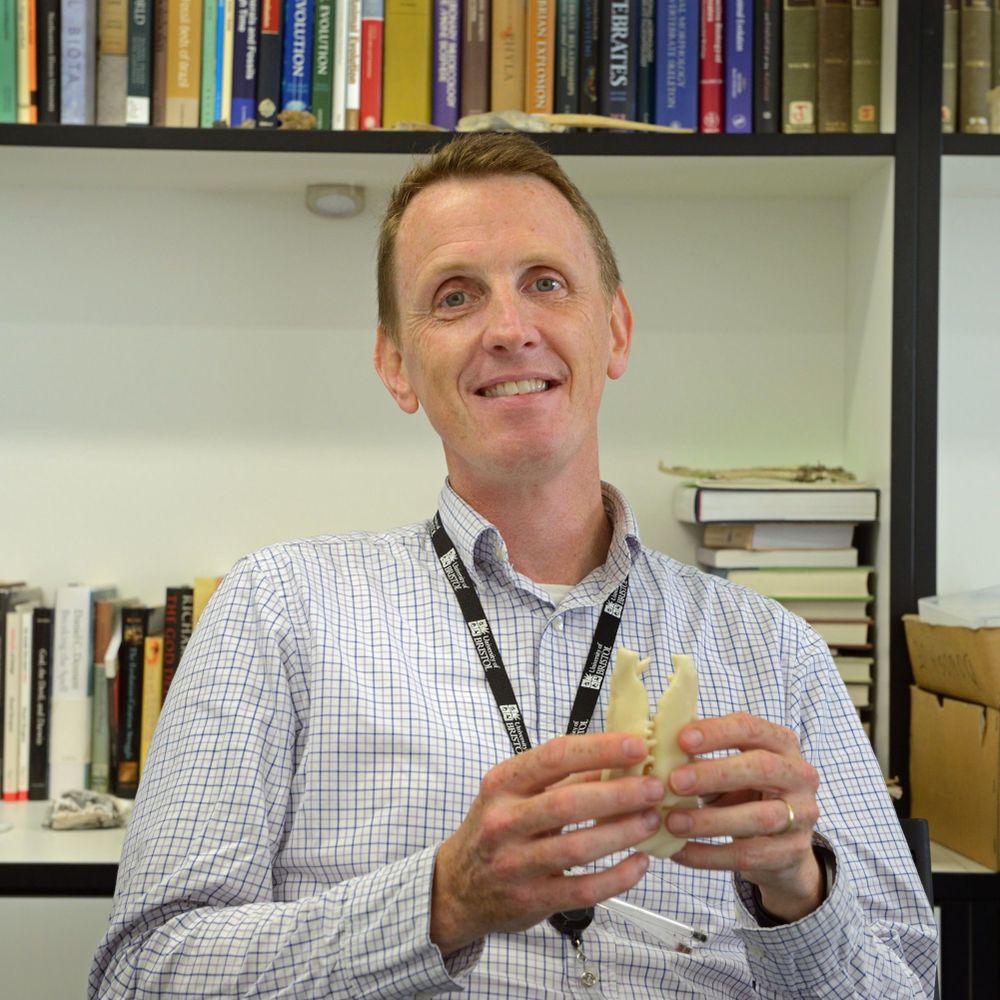
And when you’re done with Fay-Wei’s excellent book, get a copy of this awesomeness by Neil Bell, which explains why mosses are almost as cool as liverworts, including stunning photography and the latest science

January 10, 2026 at 9:34 AM
And when you’re done with Fay-Wei’s excellent book, get a copy of this awesomeness by Neil Bell, which explains why mosses are almost as cool as liverworts, including stunning photography and the latest science
Reposted by Sandy Hetherington

After a few chaotic but exciting months I am now settled in the beautiful university city of #Salamanca, Spain working at @irnasa.bsky.social @csic.es as #TenuredScientist (since Oct) in the Plant–Microbe Interaction Group 🌱🦠 New Year, updated profiles! 🎉 www.irnasa.csic.es/sanchez-canizares-carmen/

January 9, 2026 at 2:52 PM
After a few chaotic but exciting months I am now settled in the beautiful university city of #Salamanca, Spain working at @irnasa.bsky.social @csic.es as #TenuredScientist (since Oct) in the Plant–Microbe Interaction Group 🌱🦠 New Year, updated profiles! 🎉 www.irnasa.csic.es/sanchez-canizares-carmen/
Reposted by Sandy Hetherington

Congratulations to @saskiahogenhout.bsky.social on this fantastic appointment! 👏
We’re delighted to welcome Prof. Saskia Hogenhout as the new BSPP President, whose pioneering research on plant-microbe-insect interactions is transforming our understanding of pathogen transmission and plant health.
More about her work @johninnescentre.bsky.social www.jic.ac.uk/people/saski...
More about her work @johninnescentre.bsky.social www.jic.ac.uk/people/saski...

January 9, 2026 at 9:51 AM
Congratulations to @saskiahogenhout.bsky.social on this fantastic appointment! 👏
Reposted by Sandy Hetherington
NEWS - New group leader outlines big, broad, shared vision
Dr Chris Whitewoods, a specialist in leaf development, will return to our institute as a tenure track group leader in 2026 🌱👉 www.jic.ac.uk/news/new-gro...
Dr Chris Whitewoods, a specialist in leaf development, will return to our institute as a tenure track group leader in 2026 🌱👉 www.jic.ac.uk/news/new-gro...

January 9, 2026 at 4:06 PM
NEWS - New group leader outlines big, broad, shared vision
Dr Chris Whitewoods, a specialist in leaf development, will return to our institute as a tenure track group leader in 2026 🌱👉 www.jic.ac.uk/news/new-gro...
Dr Chris Whitewoods, a specialist in leaf development, will return to our institute as a tenure track group leader in 2026 🌱👉 www.jic.ac.uk/news/new-gro...
Looking for a new 📕 to read about plants??
I highly recommend the brilliant book ‘Ferns, Lessons in survival from Earth’s most adaptable plants’
Written by @fernway.bsky.social and Jacob Suissa with amazing illustrations by Laura Silburn
🌿 #FernFriday 🌿
I highly recommend the brilliant book ‘Ferns, Lessons in survival from Earth’s most adaptable plants’
Written by @fernway.bsky.social and Jacob Suissa with amazing illustrations by Laura Silburn
🌿 #FernFriday 🌿

January 9, 2026 at 12:34 PM
Looking for a new 📕 to read about plants??
I highly recommend the brilliant book ‘Ferns, Lessons in survival from Earth’s most adaptable plants’
Written by @fernway.bsky.social and Jacob Suissa with amazing illustrations by Laura Silburn
🌿 #FernFriday 🌿
I highly recommend the brilliant book ‘Ferns, Lessons in survival from Earth’s most adaptable plants’
Written by @fernway.bsky.social and Jacob Suissa with amazing illustrations by Laura Silburn
🌿 #FernFriday 🌿
Reposted by Sandy Hetherington

paper is out now in Nature Plants, here is a link: Imputation integrates single-cell and spatial gene expression data to resolve transcriptional networks in barley shoot meristem development. Nat. Plants (2026). doi.org/10.1038/s414...

Imputation integrates single-cell and spatial gene expression data to resolve transcriptional networks in barley shoot meristem development - Nature Plants
Spatially resolved gene expression during barley development was done by integrating an scRNA-seq dataset from cells with unknown position with spatial transcriptomics. This dataset is publicly availa...
doi.org
January 8, 2026 at 12:49 AM
paper is out now in Nature Plants, here is a link: Imputation integrates single-cell and spatial gene expression data to resolve transcriptional networks in barley shoot meristem development. Nat. Plants (2026). doi.org/10.1038/s414...
Reposted by Sandy Hetherington
Here is a link to the seminar series organised by the International Barley Hub, at James Hutton Institute. This is a recording of an online seminar, where I explained the approach we used and some applications to developmental questions.
barleyhub.org/ibh-seminar-...
barleyhub.org/ibh-seminar-...
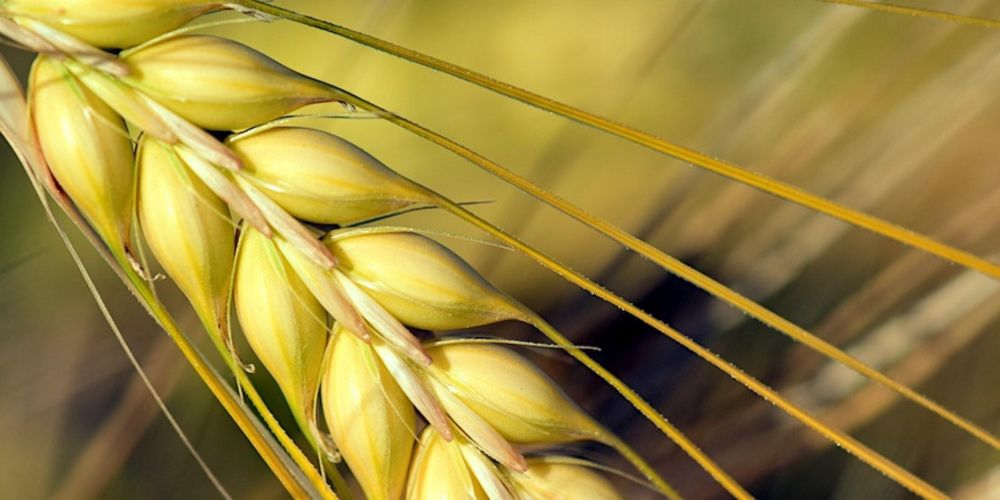
IBH Seminar: BARVISTA. Cell-resolved transcriptomics & gene expression imputation uncovers barley gene regulatory networks - Barley Hub
IBH 2025 series of seminars: 'BARVISTA. Cell-resolved transcriptomics & gene expression imputation uncovers barley gene regulatory networks'
barleyhub.org
May 28, 2025 at 8:47 AM
Here is a link to the seminar series organised by the International Barley Hub, at James Hutton Institute. This is a recording of an online seminar, where I explained the approach we used and some applications to developmental questions.
barleyhub.org/ibh-seminar-...
barleyhub.org/ibh-seminar-...