




Sandy Hetherington
@sandyheth.bsky.social
Dr Alexander J. Hetherington | Plant evolutionary biologist, University of Edinburgh UK | UKRI Future Leader Fellow |
Lab website: https://www.ed.ac.uk/biology/groups/hetherington
Lab website: https://www.ed.ac.uk/biology/groups/hetherington
Reposted by Sandy Hetherington

See also nice summary here in @science.org: www.science.org/content/arti...

Bizarre 400-million-year-old fossil was an unknown life form
Enigmatic organism known as Prototaxites cannot be fungus, new analysis finds
www.science.org
January 21, 2026 at 8:51 PM
See also nice summary here in @science.org: www.science.org/content/arti...
Reposted by Sandy Hetherington
22 / 23 This project was a large collaboration between research groups at Edinburgh and other institutions, with Corentin Loron and I as co-first authors (and as part of my PhD thesis!) and @sandyheth.bsky.social as corresponding author.

January 21, 2026 at 7:39 PM
22 / 23 This project was a large collaboration between research groups at Edinburgh and other institutions, with Corentin Loron and I as co-first authors (and as part of my PhD thesis!) and @sandyheth.bsky.social as corresponding author.
Reposted by Sandy Hetherington
12 / 23 Below shows us imaging through the medullary spots of Prototaxites, revealing the dense and interconnected branching of tubes that go down to one micron in diameter!
January 21, 2026 at 7:39 PM
12 / 23 Below shows us imaging through the medullary spots of Prototaxites, revealing the dense and interconnected branching of tubes that go down to one micron in diameter!
Reposted by Sandy Hetherington
4 / 23 First we used high-resolution microscopy to examine in detail the structure of the fossils, and then analysis of the molecular fingerprint of the organic matter preserved within the fossil.
January 21, 2026 at 7:39 PM
4 / 23 First we used high-resolution microscopy to examine in detail the structure of the fossils, and then analysis of the molecular fingerprint of the organic matter preserved within the fossil.
Reposted by Sandy Hetherington
3 / 23 But Prototaxites hasn’t been definitively placed in any of the groups of living fungi. In our study, we took a new approach to this question. We wanted to see if Prototaxites could fit within the fungal group as a whole, and to answer this, we used a combination of techniques.
January 21, 2026 at 7:39 PM
3 / 23 But Prototaxites hasn’t been definitively placed in any of the groups of living fungi. In our study, we took a new approach to this question. We wanted to see if Prototaxites could fit within the fungal group as a whole, and to answer this, we used a combination of techniques.
Reposted by Sandy Hetherington
2 / 23 What Prototaxites was has been debated extensively since its first description almost 170 years ago. It was originally described as a tree, but this was soon rejected. More recent researchers have described it as a fungus, due to its hypha-like structure and likely decomposer lifestyle.
January 21, 2026 at 7:39 PM
2 / 23 What Prototaxites was has been debated extensively since its first description almost 170 years ago. It was originally described as a tree, but this was soon rejected. More recent researchers have described it as a fungus, due to its hypha-like structure and likely decomposer lifestyle.
Reposted by Sandy Hetherington
1 / 23 Prototaxites is known from some very large fossils, including columns over 8m tall. These fossils date from the end of the Silurian to the Late Devonian (425–365 million years ago). This makes Prototaxites the largest organism on the Earth’s surface before the appearance of tall trees.

January 21, 2026 at 7:39 PM
1 / 23 Prototaxites is known from some very large fossils, including columns over 8m tall. These fossils date from the end of the Silurian to the Late Devonian (425–365 million years ago). This makes Prototaxites the largest organism on the Earth’s surface before the appearance of tall trees.
That's fantastic Chris! I have always been intrigued by the figure of it in his 1986 paper so its amazing to know the specimen still exists! Can't wait to see it in person next time I am down in Cardiff!
January 21, 2026 at 9:55 AM
That's fantastic Chris! I have always been intrigued by the figure of it in his 1986 paper so its amazing to know the specimen still exists! Can't wait to see it in person next time I am down in Cardiff!
Reposted by Sandy Hetherington
And when you’re done with Fay-Wei’s excellent book, get a copy of this awesomeness by Neil Bell, which explains why mosses are almost as cool as liverworts, including stunning photography and the latest science

January 10, 2026 at 9:34 AM
And when you’re done with Fay-Wei’s excellent book, get a copy of this awesomeness by Neil Bell, which explains why mosses are almost as cool as liverworts, including stunning photography and the latest science
Congratulations Chris!!!
January 9, 2026 at 5:39 PM
Congratulations Chris!!!
Reposted by Sandy Hetherington

paper is out now in Nature Plants, here is a link: Imputation integrates single-cell and spatial gene expression data to resolve transcriptional networks in barley shoot meristem development. Nat. Plants (2026). doi.org/10.1038/s414...

Imputation integrates single-cell and spatial gene expression data to resolve transcriptional networks in barley shoot meristem development - Nature Plants
Spatially resolved gene expression during barley development was done by integrating an scRNA-seq dataset from cells with unknown position with spatial transcriptomics. This dataset is publicly availa...
doi.org
January 8, 2026 at 12:49 AM
paper is out now in Nature Plants, here is a link: Imputation integrates single-cell and spatial gene expression data to resolve transcriptional networks in barley shoot meristem development. Nat. Plants (2026). doi.org/10.1038/s414...
Reposted by Sandy Hetherington
Here is a link to the seminar series organised by the International Barley Hub, at James Hutton Institute. This is a recording of an online seminar, where I explained the approach we used and some applications to developmental questions.
barleyhub.org/ibh-seminar-...
barleyhub.org/ibh-seminar-...
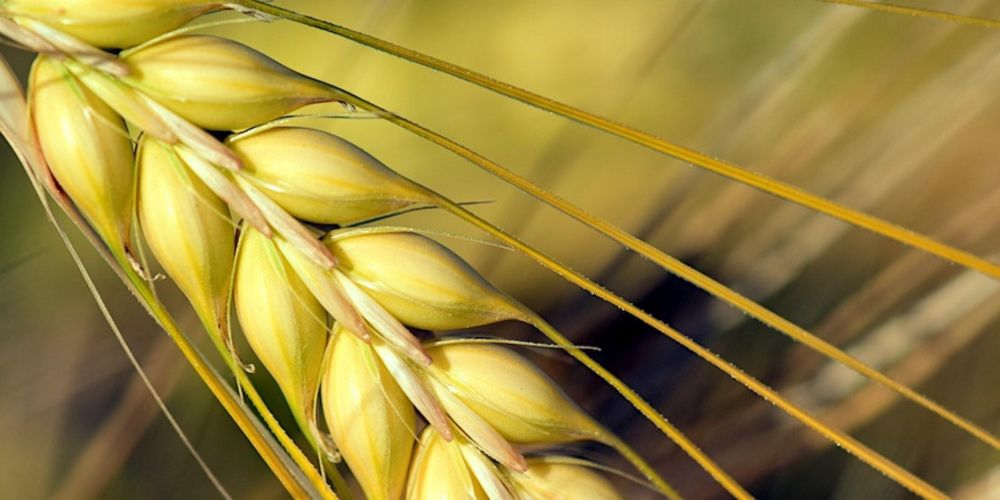
IBH Seminar: BARVISTA. Cell-resolved transcriptomics & gene expression imputation uncovers barley gene regulatory networks - Barley Hub
IBH 2025 series of seminars: 'BARVISTA. Cell-resolved transcriptomics & gene expression imputation uncovers barley gene regulatory networks'
barleyhub.org
May 28, 2025 at 8:47 AM
Here is a link to the seminar series organised by the International Barley Hub, at James Hutton Institute. This is a recording of an online seminar, where I explained the approach we used and some applications to developmental questions.
barleyhub.org/ibh-seminar-...
barleyhub.org/ibh-seminar-...