


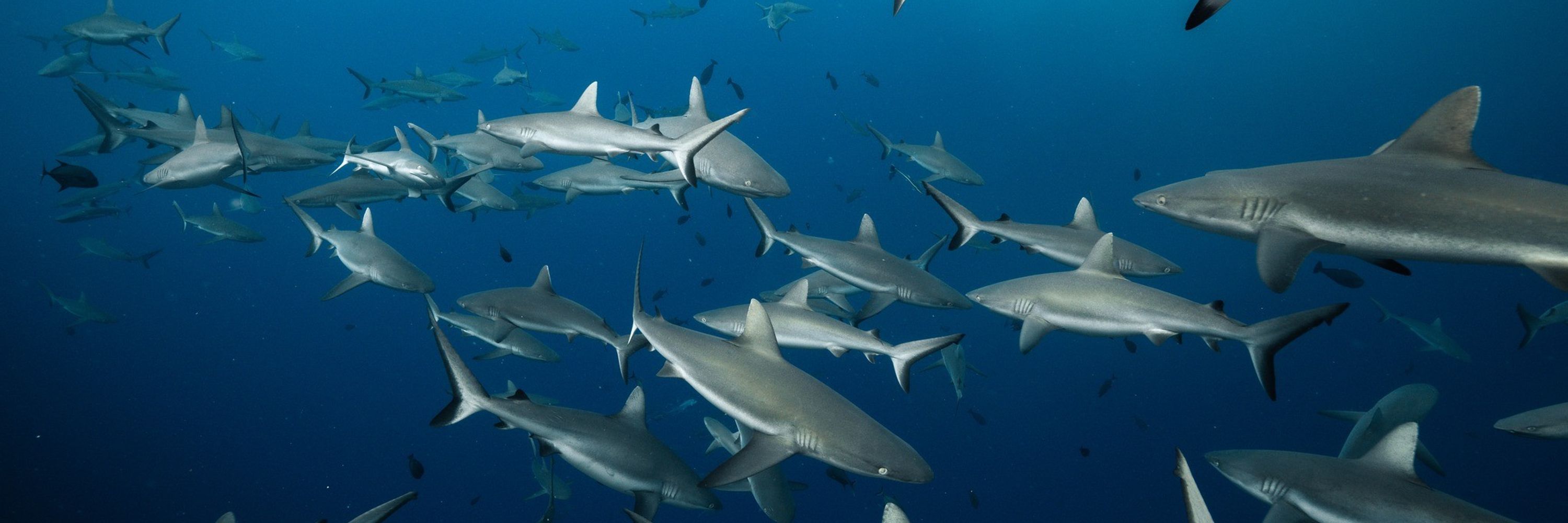
Save Our Seas Foundation
@saveourseas.bsky.social
The Save Our Seas Foundation supports marine projects in the areas of conservation, awareness, research and education.
https://saveourseas.com/
https://saveourseas.com/
Two barbels project downward from the blunt snout of this juvenile leopard catshark. These barbels help them locate prey on nocturnal hunts, in the warmer coastal waters of South Africa, where they're resident to the rocky reefs and the kelp forests.
📷: Jake Wilton
📷: Jake Wilton

January 15, 2026 at 4:31 PM
Two barbels project downward from the blunt snout of this juvenile leopard catshark. These barbels help them locate prey on nocturnal hunts, in the warmer coastal waters of South Africa, where they're resident to the rocky reefs and the kelp forests.
📷: Jake Wilton
📷: Jake Wilton
Calling all emerging conservation filmmakers.
Applications for our Ocean Storytelling Film Grant close on 30 January 2026.
Here is everything you need to know about this opportunity.
Apply here: grants.saveourseas.com
Applications for our Ocean Storytelling Film Grant close on 30 January 2026.
Here is everything you need to know about this opportunity.
Apply here: grants.saveourseas.com

January 15, 2026 at 4:23 PM
Calling all emerging conservation filmmakers.
Applications for our Ocean Storytelling Film Grant close on 30 January 2026.
Here is everything you need to know about this opportunity.
Apply here: grants.saveourseas.com
Applications for our Ocean Storytelling Film Grant close on 30 January 2026.
Here is everything you need to know about this opportunity.
Apply here: grants.saveourseas.com
The end of 2025 was rang in with success for shark and ray conservation. At the Convention on International Trade in Endangered Species of Wild Fauna and Flora (CITES) CoP20, over 70 of these species received new protection from international trade.
saveourseas.com/resounding-s...
saveourseas.com/resounding-s...

Resounding support for sharks and rays at CITES CoP20
It was action over extinction as shark conservationists ended 2025 ringing in success at the Convention on International Trade in Endangered Species of Wild Fauna and Flora (CITES) CoP20 as over 70 sp...
saveourseas.com
January 15, 2026 at 12:03 PM
The end of 2025 was rang in with success for shark and ray conservation. At the Convention on International Trade in Endangered Species of Wild Fauna and Flora (CITES) CoP20, over 70 of these species received new protection from international trade.
saveourseas.com/resounding-s...
saveourseas.com/resounding-s...
What is eDNA? And why is an eDNA reference library important? Find out the answers to these questions in Reem Almealla’s blog as she shares rare insight into Bahrain’s very first DNA Library for Sharks and Batoids.
saveourseas.com/update/from-...
saveourseas.com/update/from-...

From Fish Markets to Genetic Blueprints: Building Bahrain’s First DNA Library for Sharks and Batoids
After completing Bahrain’s first environmental DNA (eDNA) surveys in the hottest sea on the planet, one question lingered quietly behind the science: How do we know exactly who we are detecting? eDNA ...
saveourseas.com
January 15, 2026 at 8:21 AM
What is eDNA? And why is an eDNA reference library important? Find out the answers to these questions in Reem Almealla’s blog as she shares rare insight into Bahrain’s very first DNA Library for Sharks and Batoids.
saveourseas.com/update/from-...
saveourseas.com/update/from-...
Under the expansive cloak of night, Galapagos sharks cruise the balmy waters of Bassas da India, using the low light to their advantage as they roam the vast, inky landscape in search of their next meal.
🎥: Dan Beecham
🎥: Dan Beecham
January 14, 2026 at 4:46 PM
Under the expansive cloak of night, Galapagos sharks cruise the balmy waters of Bassas da India, using the low light to their advantage as they roam the vast, inky landscape in search of their next meal.
🎥: Dan Beecham
🎥: Dan Beecham
Reposted by Save Our Seas Foundation
New Global Report Identifies Critical Habitats for Migratory Sharks and Rays
A new global report released by the IUCN SSC Shark Specialist Group, -
A new global report released by the IUCN SSC Shark Specialist Group, -

January 14, 2026 at 9:00 AM
New Global Report Identifies Critical Habitats for Migratory Sharks and Rays
A new global report released by the IUCN SSC Shark Specialist Group, -
A new global report released by the IUCN SSC Shark Specialist Group, -
In an attempt to combat the devastating impact of artisanal fishing on batoids, Carlos Polo and team are working with local communities in the Colombian Caribbean to test alternative fishing gears that reduce the bycatch of these endangered rays.
saveourseas.com/update/fishi...
saveourseas.com/update/fishi...

Fishing with Data: Magdalena Communities Unite to Protect Rays
In the Colombian Caribbean, artisanal fishing is more than an economic activity, it is a way of life deeply rooted in coastal culture. Yet this practice also intersects with one of the most vulnerable...
saveourseas.com
January 14, 2026 at 10:57 AM
In an attempt to combat the devastating impact of artisanal fishing on batoids, Carlos Polo and team are working with local communities in the Colombian Caribbean to test alternative fishing gears that reduce the bycatch of these endangered rays.
saveourseas.com/update/fishi...
saveourseas.com/update/fishi...
Our latest research shows that silky sharks spent around half their time outside of MPAs, putting them at risk to threats like commercial fisheries and the global fin trade.
saveourseas.com/the-galapago...
saveourseas.com/the-galapago...

The Galápagos Marine Reserve is a haven for silky sharks, but overfishing still looms large
Although the silky shark is one of the ocean’s widest-ranging nomads, individuals tagged at Darwin and Wolf islands spend nearly half their time in the Galápagos Marine Reserve. A new publication show...
saveourseas.com
January 13, 2026 at 2:59 PM
Our latest research shows that silky sharks spent around half their time outside of MPAs, putting them at risk to threats like commercial fisheries and the global fin trade.
saveourseas.com/the-galapago...
saveourseas.com/the-galapago...
Satellite tracking of nomadic silky sharks shows they spend about half their time beyond the borders of Eastern Tropical Pacific marine reserves. Beyond this safety, this 'Vulnerable' species is threatened by overfishing.
🎥: Tom Campbell
🎥: Byron Dilkes
🎥: Tom Campbell
🎥: Byron Dilkes
January 13, 2026 at 1:00 PM
Satellite tracking of nomadic silky sharks shows they spend about half their time beyond the borders of Eastern Tropical Pacific marine reserves. Beyond this safety, this 'Vulnerable' species is threatened by overfishing.
🎥: Tom Campbell
🎥: Byron Dilkes
🎥: Tom Campbell
🎥: Byron Dilkes
Threatened by commercial fisheries and the global fin trade, silky sharks of the Eastern Tropical Pacific marine reserves are highly vulnerable as research shows they spend about half their time beyond the safety of the reserve.
Infographic by Kelsey Manners Dickson | © Save Our Seas Foundation
Infographic by Kelsey Manners Dickson | © Save Our Seas Foundation


January 13, 2026 at 10:59 AM
Threatened by commercial fisheries and the global fin trade, silky sharks of the Eastern Tropical Pacific marine reserves are highly vulnerable as research shows they spend about half their time beyond the safety of the reserve.
Infographic by Kelsey Manners Dickson | © Save Our Seas Foundation
Infographic by Kelsey Manners Dickson | © Save Our Seas Foundation
On any given day, being a scientist can mean acting as a finance officer, an administrator, a project manager, or even a blogger. Fieldwork may be the dream, but in reality, scientists wear many hats, and they change often. Read more in Mina Hatayama’s blog.
saveourseas.com/update/befor...
saveourseas.com/update/befor...

Before the Bite Off: behind the scenes of cross-disciplinary shark work (part two)
In my last blog, I introduced the complexities of shark depredation, a growing fisheries and conservation conflict within Maldivian reef fisheries. Shark depredation—which is more commonly known in Ma...
saveourseas.com
January 13, 2026 at 9:08 AM
On any given day, being a scientist can mean acting as a finance officer, an administrator, a project manager, or even a blogger. Fieldwork may be the dream, but in reality, scientists wear many hats, and they change often. Read more in Mina Hatayama’s blog.
saveourseas.com/update/befor...
saveourseas.com/update/befor...
“What is a sawfish? Why does it matter?”
At Gonzaga’s International Sawfish Day table, these questions led to thoughtful conversations, hands-on learning, and a clearer understanding for students of how research and outreach can support sawfish conservation.
saveourseas.com/update/the-s...
At Gonzaga’s International Sawfish Day table, these questions led to thoughtful conversations, hands-on learning, and a clearer understanding for students of how research and outreach can support sawfish conservation.
saveourseas.com/update/the-s...

The Sawfish Arrived: student outreach event was a success
Back in October of 2025 we spread the word: the sawfish were coming! The Current Archives Lab here at Gonzaga University was well prepared for International Sawfish Day, having printed 3D sawfish toys...
saveourseas.com
January 9, 2026 at 9:40 AM
“What is a sawfish? Why does it matter?”
At Gonzaga’s International Sawfish Day table, these questions led to thoughtful conversations, hands-on learning, and a clearer understanding for students of how research and outreach can support sawfish conservation.
saveourseas.com/update/the-s...
At Gonzaga’s International Sawfish Day table, these questions led to thoughtful conversations, hands-on learning, and a clearer understanding for students of how research and outreach can support sawfish conservation.
saveourseas.com/update/the-s...
Clutched in their mother’s protective embrace, the eggs of peacock mantis shrimp are aerated for roughly 11 weeks before they start life as tiny larvae. Red or pink in colour, these clutches can be as large as 50,000 eggs! It seems that even in the ocean, motherhood is serious business.
January 8, 2026 at 2:53 PM
Clutched in their mother’s protective embrace, the eggs of peacock mantis shrimp are aerated for roughly 11 weeks before they start life as tiny larvae. Red or pink in colour, these clutches can be as large as 50,000 eggs! It seems that even in the ocean, motherhood is serious business.
In the final episode of season 8 of the World of Sharks podcast, host Isla sat down with Sarah Fowler and Dr Rima Jabado, to discuss how far we’ve come in the race to save sharks and rays from extinction, and more.
Listen here: saveourseas.com/worldofshark...
Listen here: saveourseas.com/worldofshark...
January 8, 2026 at 12:00 PM
In the final episode of season 8 of the World of Sharks podcast, host Isla sat down with Sarah Fowler and Dr Rima Jabado, to discuss how far we’ve come in the race to save sharks and rays from extinction, and more.
Listen here: saveourseas.com/worldofshark...
Listen here: saveourseas.com/worldofshark...
Ichrak Bouzidi and team are working alongside fishers in Tunisia’s Gulf of Hammamet to understand when, where, and how vulnerable shortfin mako sharks are caught as bycatch to inform safer fishing practices and reduce unintended capture.
saveourseas.com/update/from-...
saveourseas.com/update/from-...

From the quay to the open sea
In the Gulf of Hammamet (Central Mediterranean Sea, Tunisia), the shortfin mako shark Isurus oxyrinchus is frequently caught as bycatch by various fishing gear operating in the area. Therefore, it is ...
saveourseas.com
January 8, 2026 at 9:43 AM
Ichrak Bouzidi and team are working alongside fishers in Tunisia’s Gulf of Hammamet to understand when, where, and how vulnerable shortfin mako sharks are caught as bycatch to inform safer fishing practices and reduce unintended capture.
saveourseas.com/update/from-...
saveourseas.com/update/from-...
Male Mexican hogfish are easily recognisable by the pronounced hump between the eyes and display a colour pattern distinct from females: a greyish body tinged with red, marked by a yellow bar near the midsection.
📷: Sandra Bessudo
📷: Sandra Bessudo

January 7, 2026 at 4:18 PM
Male Mexican hogfish are easily recognisable by the pronounced hump between the eyes and display a colour pattern distinct from females: a greyish body tinged with red, marked by a yellow bar near the midsection.
📷: Sandra Bessudo
📷: Sandra Bessudo
To track elusive smooth hammerhead sharks that remain just out of reach along Portugal’s southern coast, Miguel Gandra and team are deploying drones and compiling regional sighting records to advance both shark science and how its story is told.
saveourseas.com/update/impac...
saveourseas.com/update/impac...

Impactful Ocean Storytelling Using Novel Digital Tools
In our last update, I shared some of the challenges we faced at sea, as we tried to catch the elusive smooth hammerhead sharks off southern Portugal. Despite our best efforts, the young hammerheads co...
saveourseas.com
January 7, 2026 at 9:48 AM
To track elusive smooth hammerhead sharks that remain just out of reach along Portugal’s southern coast, Miguel Gandra and team are deploying drones and compiling regional sighting records to advance both shark science and how its story is told.
saveourseas.com/update/impac...
saveourseas.com/update/impac...
The spiky crown-of-thorns starfish is a wonder to look at. Adorned in bright colours and interesting spikes, these sea stars are native to coral reefs across the Indo-Pacific region and the Great Barrier Reef, where they hide under ledges and reef nooks and crannies.
January 6, 2026 at 5:36 PM
The spiky crown-of-thorns starfish is a wonder to look at. Adorned in bright colours and interesting spikes, these sea stars are native to coral reefs across the Indo-Pacific region and the Great Barrier Reef, where they hide under ledges and reef nooks and crannies.
What does it take to protect a fragile paradise? In Seychelles, marine science education links classrooms to reefs, shaping students into stewards of their island nation.
Read Terence Vel’s blog to learn more.
saveourseas.com/update/divin...
Read Terence Vel’s blog to learn more.
saveourseas.com/update/divin...

Diving into marine science: inspiring ocean conservation action through education
PROTECTING PARADISE UNDER PRESSURE Seychelles is renowned for its turquoise waters, rich biodiversity, and tropical lifestyle, often dubbed the “Garden of Eden.” However, beneath this beauty lies a ...
saveourseas.com
January 6, 2026 at 9:54 AM
What does it take to protect a fragile paradise? In Seychelles, marine science education links classrooms to reefs, shaping students into stewards of their island nation.
Read Terence Vel’s blog to learn more.
saveourseas.com/update/divin...
Read Terence Vel’s blog to learn more.
saveourseas.com/update/divin...
How might fishers in Benin contribute to scalloped hammerhead conservation? Project leader Rodrigue Pelebe shares insights from surveys, training, and community action driving shark conservation in the region.
saveourseas.com/update/how-c...
saveourseas.com/update/how-c...

How community research and engagement are driving success in conserving scalloped hammerhead shark in Benin
After the reconnaissance surveys in the frame of our project supported by Save Our Seas Foundation, intervention sites were confirmed in three selected coastal municipalities in Benin: POPAC in Cotono...
saveourseas.com
January 6, 2026 at 9:02 AM
How might fishers in Benin contribute to scalloped hammerhead conservation? Project leader Rodrigue Pelebe shares insights from surveys, training, and community action driving shark conservation in the region.
saveourseas.com/update/how-c...
saveourseas.com/update/how-c...
Jillian Morris’ blog explores how real lemon shark research is transformed into hands-on lessons through the Sharks4Kids programme, reaching students across Turks and Caicos and inspiring future ocean advocates.
saveourseas.com/update/bring...
saveourseas.com/update/bring...

Bringing shark science to the classroom: how Project Lemon Aid connects students to real research
Shark science doesn’t just happen on the water; it comes alive in classrooms, sparking curiosity, challenging misconceptions, and inspiring future ocean advocates. Through Project Lemon Aid, our field...
saveourseas.com
January 5, 2026 at 1:46 PM
Jillian Morris’ blog explores how real lemon shark research is transformed into hands-on lessons through the Sharks4Kids programme, reaching students across Turks and Caicos and inspiring future ocean advocates.
saveourseas.com/update/bring...
saveourseas.com/update/bring...
A nesting hawksbill turtle tagged in Seychelles was found dead nearly 1,500 km away on the Kenyan coast. This account traces her journey & what it reveals about migration, fishing pressure, & shared responsibility across the Western Indian Ocean. More below.
saveourseas.com/update/seych...
saveourseas.com/update/seych...

December 15, 2025 at 8:49 AM
A nesting hawksbill turtle tagged in Seychelles was found dead nearly 1,500 km away on the Kenyan coast. This account traces her journey & what it reveals about migration, fishing pressure, & shared responsibility across the Western Indian Ocean. More below.
saveourseas.com/update/seych...
saveourseas.com/update/seych...
How do you map microstructures in the brain of a 5m fish? Kara Yopak and team are using MRI chambers to study the neuroanatomy of the Critically Endangered smalltooth sawfish. More below!
saveourseas.com/update/devel...
saveourseas.com/update/devel...

December 11, 2025 at 8:50 AM
How do you map microstructures in the brain of a 5m fish? Kara Yopak and team are using MRI chambers to study the neuroanatomy of the Critically Endangered smalltooth sawfish. More below!
saveourseas.com/update/devel...
saveourseas.com/update/devel...
Yasmine Mohammad and the BCWhales team spent the day with seventy-nine humpbacks: a rare communion that left them feeling humbled, and in awe of these gentle giants. More below.
saveourseas.com/update/an-en...
saveourseas.com/update/an-en...

December 10, 2025 at 10:09 AM
Yasmine Mohammad and the BCWhales team spent the day with seventy-nine humpbacks: a rare communion that left them feeling humbled, and in awe of these gentle giants. More below.
saveourseas.com/update/an-en...
saveourseas.com/update/an-en...
A little giant, sheltered beneath its mother’s fin. Every calf’s first lesson: safety in a mother’s care.
🎥: Luke Saddler
🎥: Luke Saddler
December 9, 2025 at 4:49 PM
A little giant, sheltered beneath its mother’s fin. Every calf’s first lesson: safety in a mother’s care.
🎥: Luke Saddler
🎥: Luke Saddler