


Margaret Schotte
@schottemargaret.bsky.social
Early modern history, DH & Indian Ocean. Loves all things bookish, maritime, & history-of-science. ☞ she/her 🌈
Reposted by Margaret Schotte
This is a good argument for withdrawing entirely from using institutional LMS’s.
YorkU management is building systems to comb through instructor course pages to create AI tutors.
There are plenty of people within the academic space, whether they're staff, managers or faculty who see an opportunity.
Whether it is right or not is not being asked.
www.yorku.ca/yfile/2025/0...
There are plenty of people within the academic space, whether they're staff, managers or faculty who see an opportunity.
Whether it is right or not is not being asked.
www.yorku.ca/yfile/2025/0...
December 20, 2025 at 4:58 PM
This is a good argument for withdrawing entirely from using institutional LMS’s.
Reposted by Margaret Schotte
Our tribute to Natalie Zemon Davis, in the Archiv für Reformationsgeschichte. Please share widely!
www.degruyterbrill.com/journal/key/...
www.degruyterbrill.com/journal/key/...

Archiv für Reformationsgeschichte - Archive for Reformation History Volume 116 Issue 1
Volume 116, issue 1 of the journal Archiv für Reformationsgeschichte - Archive for Reformation History was published in 2025.
www.degruyterbrill.com
December 20, 2025 at 12:33 PM
Our tribute to Natalie Zemon Davis, in the Archiv für Reformationsgeschichte. Please share widely!
www.degruyterbrill.com/journal/key/...
www.degruyterbrill.com/journal/key/...
Reposted by Margaret Schotte
@rsaorg.bsky.social's inaugural Eloise Quiñones Keber Fellowship "supports research travel for a scholar working in any area of pre-Columbian, early modern, or colonial Latin American art history for the period 1300–1700."
Apply by March 1. 🗃
#arthistory #LatinAmerica
www.rsa.org/page/keberfe...
Apply by March 1. 🗃
#arthistory #LatinAmerica
www.rsa.org/page/keberfe...
www.rsa.org
December 17, 2025 at 12:27 PM
@rsaorg.bsky.social's inaugural Eloise Quiñones Keber Fellowship "supports research travel for a scholar working in any area of pre-Columbian, early modern, or colonial Latin American art history for the period 1300–1700."
Apply by March 1. 🗃
#arthistory #LatinAmerica
www.rsa.org/page/keberfe...
Apply by March 1. 🗃
#arthistory #LatinAmerica
www.rsa.org/page/keberfe...
Reposted by Margaret Schotte
The @contingent-mag.bsky.social ’s book list 2025 is now published and it includes e.g. @mtoiv.bsky.social ’s ”Empire, Tourism, and Colonial Knowledge in Nineteenth-Century Southeast Asia and Sri Lanka” and Brian Harnetty’s ”Noisy Memory: Recording Sound, Performing Archives” to name 2/39 🤩

2025 Contingent Book List
When you’re shopping for books this season, consider a contingent scholar.
contingentmagazine.org
December 17, 2025 at 11:35 AM
The @contingent-mag.bsky.social ’s book list 2025 is now published and it includes e.g. @mtoiv.bsky.social ’s ”Empire, Tourism, and Colonial Knowledge in Nineteenth-Century Southeast Asia and Sri Lanka” and Brian Harnetty’s ”Noisy Memory: Recording Sound, Performing Archives” to name 2/39 🤩
Reposted by Margaret Schotte
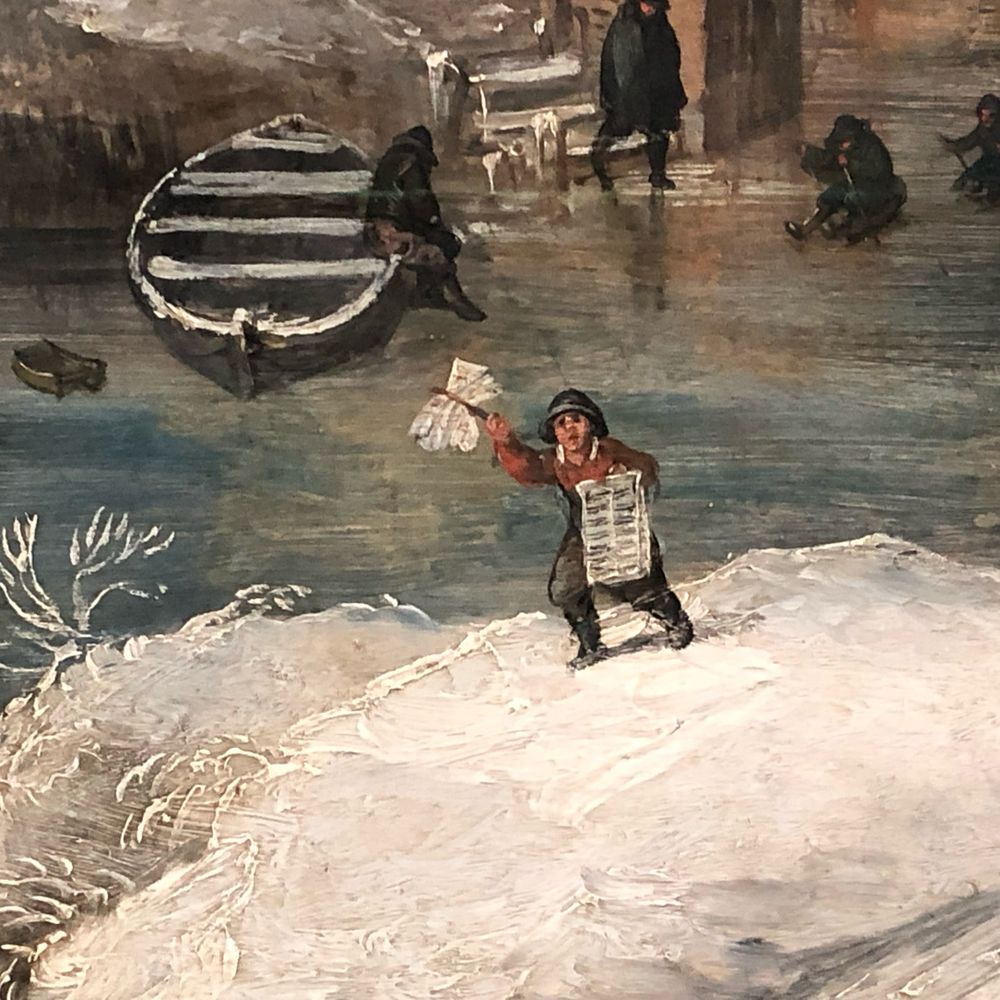
The New Netherland Institute announces a new, semester-long fellowship to study the Dutch in/and the American Revolution. Applications are due 2/1/26. For more information and to apply, visit www.newnetherlandinstitute.org/application/...
Image: St Eustatius, View of Fort Orange, ca. 1860.
Image: St Eustatius, View of Fort Orange, ca. 1860.

December 16, 2025 at 2:29 PM
The New Netherland Institute announces a new, semester-long fellowship to study the Dutch in/and the American Revolution. Applications are due 2/1/26. For more information and to apply, visit www.newnetherlandinstitute.org/application/...
Image: St Eustatius, View of Fort Orange, ca. 1860.
Image: St Eustatius, View of Fort Orange, ca. 1860.
Reposted by Margaret Schotte
Thank you to @belovedofoizys.bsky.social for the latest 'Academic process and Digital Humanities' Post where she discusses her use of GIS in her archaeological studies

December 15, 2025 at 4:03 PM
Thank you to @belovedofoizys.bsky.social for the latest 'Academic process and Digital Humanities' Post where she discusses her use of GIS in her archaeological studies
Reposted by Margaret Schotte

I really loved this two years ago, but last year I didn't get enough messages to make it happen. Don't be shy! Tell me about the best history book you read this year for the year-end episode.
I need your help! I want to put together a year-end episode, and I want to know what you read this year. Go here: www.speakpipe.com/DraftingtheP... and record a short message telling me who you are and the best history book you read this year. Doesn't have to be published this year!
Send a voice message to
DraftingthePast
A podcast devoted to the craft of writing history.
www.speakpipe.com
December 15, 2025 at 1:56 AM
I really loved this two years ago, but last year I didn't get enough messages to make it happen. Don't be shy! Tell me about the best history book you read this year for the year-end episode.
Reposted by Margaret Schotte

The winter holidays are here, and PEN America is ready to celebrate them in our favorite way — curled up with a good book!
But this year — as our holiday season Banned Books Reading List shows — even heartwarming holiday tales aren't safe from bans: bookshop.org/lists/happy-...
But this year — as our holiday season Banned Books Reading List shows — even heartwarming holiday tales aren't safe from bans: bookshop.org/lists/happy-...

Happy Holidays: A Banned Books Reading List
The winter holidays are here, and PEN America is ready to celebrate them in our favorite way — curled up with a good book!
bookshop.org
December 14, 2025 at 6:04 PM
The winter holidays are here, and PEN America is ready to celebrate them in our favorite way — curled up with a good book!
But this year — as our holiday season Banned Books Reading List shows — even heartwarming holiday tales aren't safe from bans: bookshop.org/lists/happy-...
But this year — as our holiday season Banned Books Reading List shows — even heartwarming holiday tales aren't safe from bans: bookshop.org/lists/happy-...
Reposted by Margaret Schotte
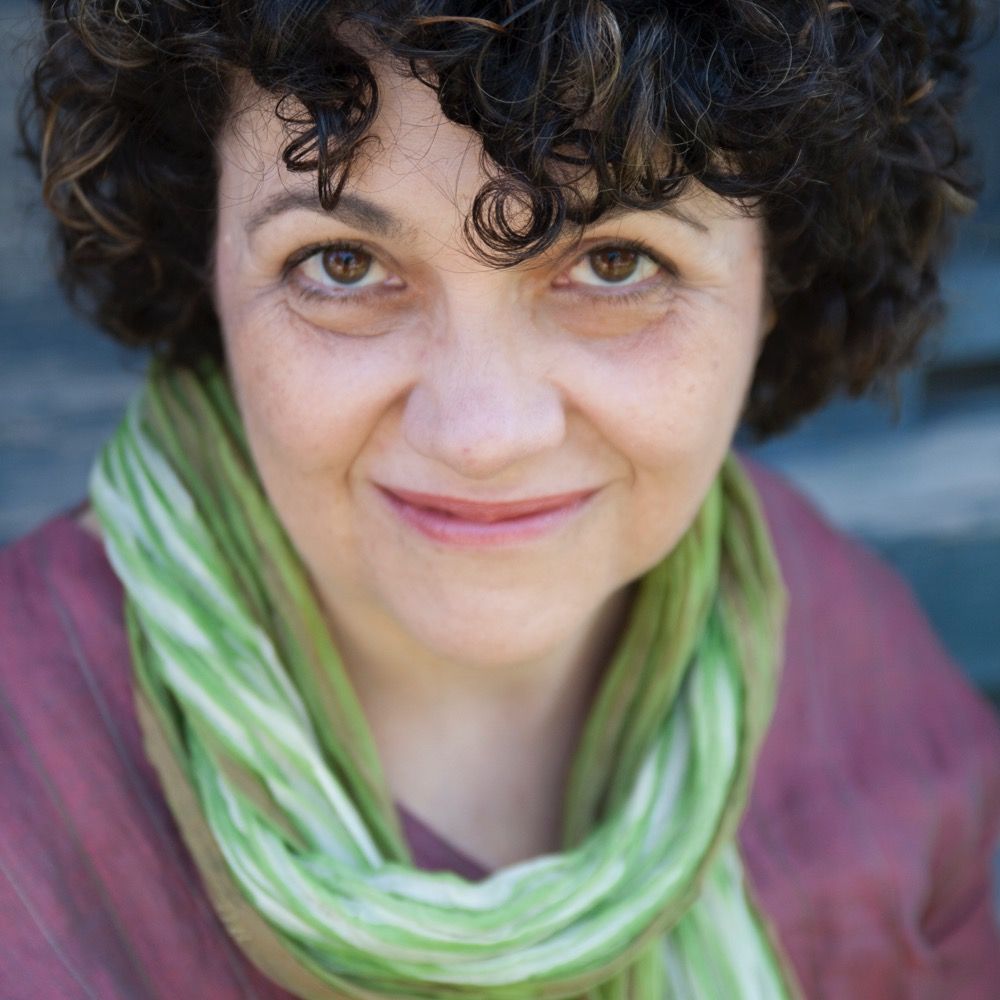
Defy the icy weather, Torontonians, and come to the Toronto Reference Library to celebrate Jane Austen's 250th with me and some very smart & funny Austenians: Alex Hernandez, Tom Keymer, Karen Vallihora. This coming Tuesday at 6:30 p.m. in Beeton Hall at the Reference Library.


December 13, 2025 at 1:38 PM
Defy the icy weather, Torontonians, and come to the Toronto Reference Library to celebrate Jane Austen's 250th with me and some very smart & funny Austenians: Alex Hernandez, Tom Keymer, Karen Vallihora. This coming Tuesday at 6:30 p.m. in Beeton Hall at the Reference Library.
Reposted by Margaret Schotte
Amsterdam in the seventeenth century is a city where women are the true backbone. They keep the city running while men are at sea or abroad – as labourers, businesswomen, caregivers, regentesses, artists and also as sex workers. #Amsterdam #newcanon #amsterdam750 www.amsterdam.nl/stadsarchief...

1681 Women's City
Amsterdam in the seventeenth century is a city where women are the true backbone. They keep the city running while men are at sea or abroad – as labourers, businesswomen, caregivers, regentesses, arti...
www.amsterdam.nl
December 13, 2025 at 1:35 PM
Amsterdam in the seventeenth century is a city where women are the true backbone. They keep the city running while men are at sea or abroad – as labourers, businesswomen, caregivers, regentesses, artists and also as sex workers. #Amsterdam #newcanon #amsterdam750 www.amsterdam.nl/stadsarchief...
Reposted by Margaret Schotte
I took a detour to the edge of the city to take a picture of these amazing sundogs over Winnipeg caused by ice crystals blowing around in the sky.

December 12, 2025 at 9:34 PM
I took a detour to the edge of the city to take a picture of these amazing sundogs over Winnipeg caused by ice crystals blowing around in the sky.
My worry here is that tabular, numerical info is much easier to decipher and standardize, so it gets turned into a dataset without…
Think about:
- Scientists' lab notebooks with abandoned experiments that might be promising with today's technology
- Rejected grant proposals addressing problems we can now tackle
- Field notes from geological surveys
- Medical case files, engineering reports, meteorological observations
- Scientists' lab notebooks with abandoned experiments that might be promising with today's technology
- Rejected grant proposals addressing problems we can now tackle
- Field notes from geological surveys
- Medical case files, engineering reports, meteorological observations
December 11, 2025 at 12:49 PM
My worry here is that tabular, numerical info is much easier to decipher and standardize, so it gets turned into a dataset without…
Reposted by Margaret Schotte
Next Monday, the Prize Papers Talk is hitting new waters, as Eleonora Rohland's talk dives into climate history: The Doldrums is a belt-shaped weather phenomenon near the equator, where winds are very weak, trapping sailing ships inside. Sign up here: www.eventbrite.com/e/ships-seaf...
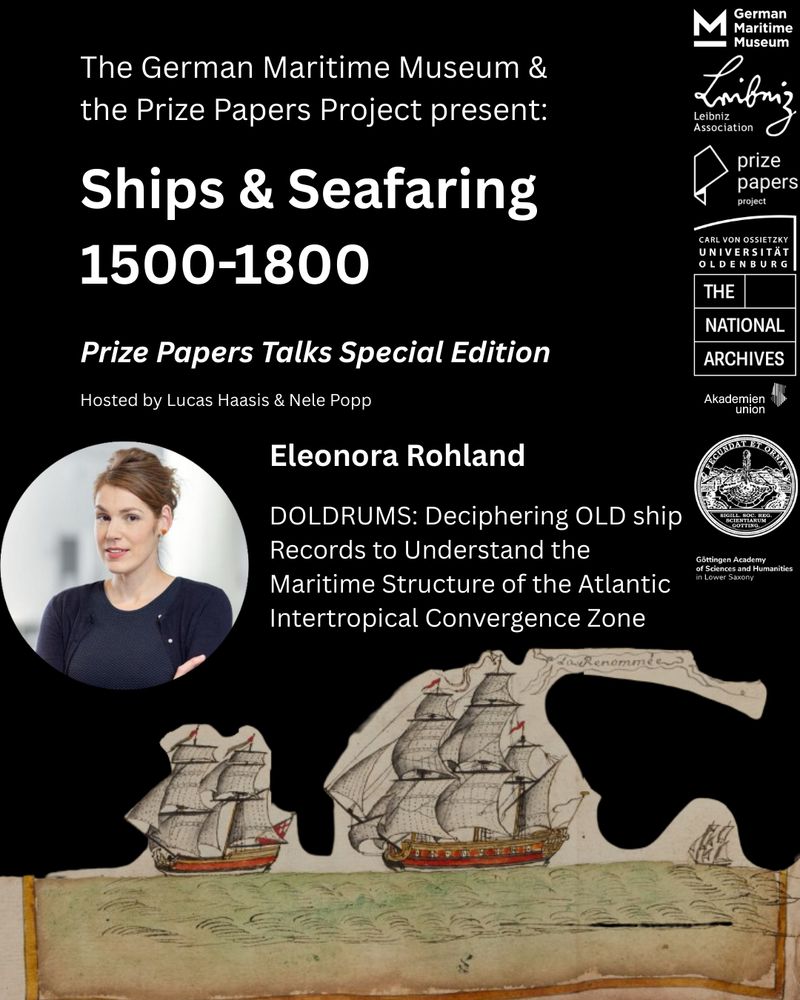
December 10, 2025 at 4:25 PM
Next Monday, the Prize Papers Talk is hitting new waters, as Eleonora Rohland's talk dives into climate history: The Doldrums is a belt-shaped weather phenomenon near the equator, where winds are very weak, trapping sailing ships inside. Sign up here: www.eventbrite.com/e/ships-seaf...
Reposted by Margaret Schotte
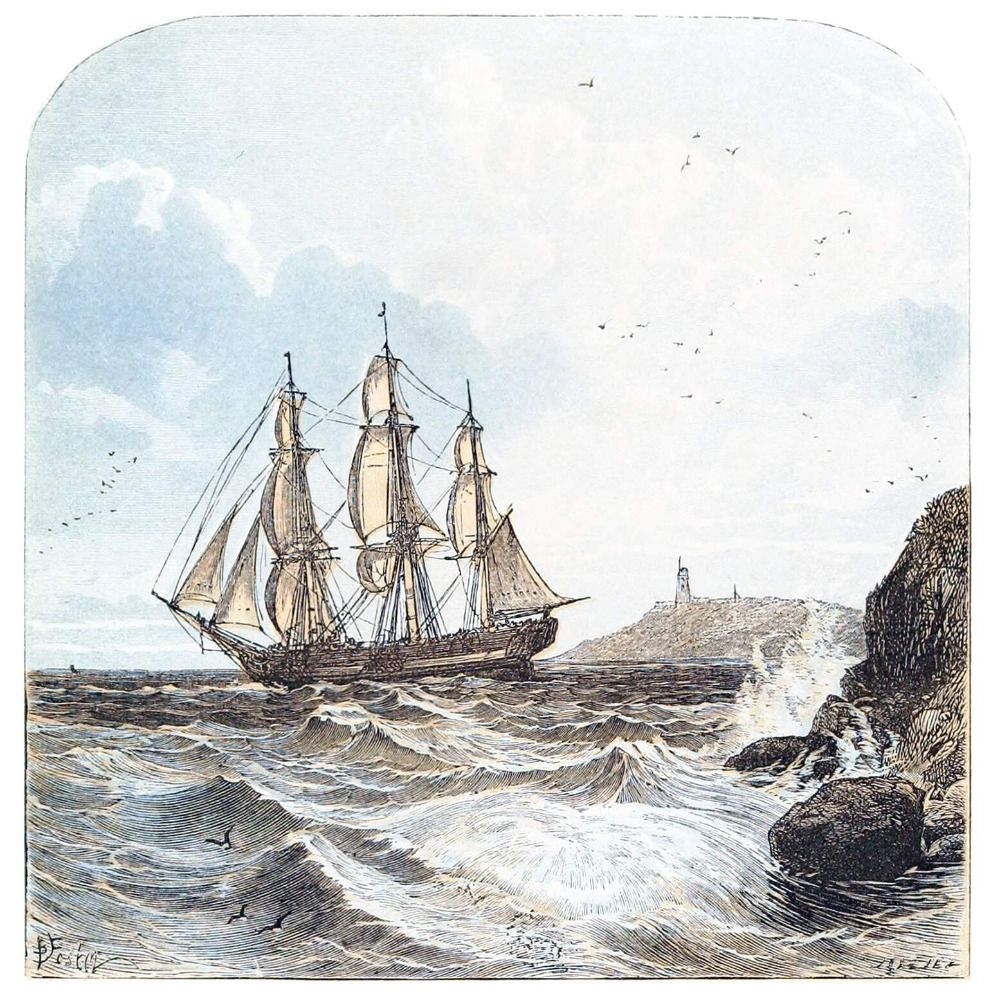
Crew Agreement Advent Calendar '25, Day 10: Disappearance
I promised it would get worse for our poor seafarer yesterday.
#crewagadvent25 #maritimehistory
Previous entry was fro Feb 3, 1869, buddy had been sick since Jan 17th, next entry comes Feb 6th: "Last night Carl Fred Johannsen had the cook
I promised it would get worse for our poor seafarer yesterday.
#crewagadvent25 #maritimehistory
Previous entry was fro Feb 3, 1869, buddy had been sick since Jan 17th, next entry comes Feb 6th: "Last night Carl Fred Johannsen had the cook
December 10, 2025 at 12:44 PM
Crew Agreement Advent Calendar '25, Day 10: Disappearance
I promised it would get worse for our poor seafarer yesterday.
#crewagadvent25 #maritimehistory
Previous entry was fro Feb 3, 1869, buddy had been sick since Jan 17th, next entry comes Feb 6th: "Last night Carl Fred Johannsen had the cook
I promised it would get worse for our poor seafarer yesterday.
#crewagadvent25 #maritimehistory
Previous entry was fro Feb 3, 1869, buddy had been sick since Jan 17th, next entry comes Feb 6th: "Last night Carl Fred Johannsen had the cook
Reposted by Margaret Schotte
Crew Agreement Advent Calendar '25, Day 9: Vignette
Just a little story from the logs today, because it's been one of those days. Not as bad as this guy's day will get tomorrow. #crewagadvent25
Wed Feb 3rd, 1869, from Antwerp to Callao: "Carl F Johansen has been off duty since the 8th January he
Just a little story from the logs today, because it's been one of those days. Not as bad as this guy's day will get tomorrow. #crewagadvent25
Wed Feb 3rd, 1869, from Antwerp to Callao: "Carl F Johansen has been off duty since the 8th January he
December 9, 2025 at 8:42 PM
Crew Agreement Advent Calendar '25, Day 9: Vignette
Just a little story from the logs today, because it's been one of those days. Not as bad as this guy's day will get tomorrow. #crewagadvent25
Wed Feb 3rd, 1869, from Antwerp to Callao: "Carl F Johansen has been off duty since the 8th January he
Just a little story from the logs today, because it's been one of those days. Not as bad as this guy's day will get tomorrow. #crewagadvent25
Wed Feb 3rd, 1869, from Antwerp to Callao: "Carl F Johansen has been off duty since the 8th January he
Reposted by Margaret Schotte
Please share widely, & consider attending, all levels of training & fields of study welcome - you don't have to be a 'maritime historian'! We also welcome those interested in marginalized identities broadly conceived - gender is just one intersectional consideration! See the CFP:
#maritimehistory
#maritimehistory

Women and the Sea Workshop — SWAAN
SWAAN will host the Woman and the Sea Workship on 29 April to 1 May 2026 at Memorial University's Maritime History Archive in St. John's NL. To imagine a future for women in maritime industries, we mu...
www.swaan.org
December 8, 2025 at 11:22 AM
Please share widely, & consider attending, all levels of training & fields of study welcome - you don't have to be a 'maritime historian'! We also welcome those interested in marginalized identities broadly conceived - gender is just one intersectional consideration! See the CFP:
#maritimehistory
#maritimehistory
Reposted by Margaret Schotte
Announcing a workshop on women and the sea, taking place in St. John's, Newfoundland, April 29th-May 1st, 2026!
www.swaan.org
Supported by a Lloyd's Heritage Foundation grant, the SWAAN project focuses on women in ocean industries in history and today. The workshop is the first of 2 gatherings...
www.swaan.org
Supported by a Lloyd's Heritage Foundation grant, the SWAAN project focuses on women in ocean industries in history and today. The workshop is the first of 2 gatherings...

SWAAN | Seafaring Women Ashore and Abroad Network
Women have always been at sea. Here at SWAAN, we look to the past to push for a future where women have opportunities to work in maritime industries on land and at sea with our partners. We will build...
www.swaan.org
December 8, 2025 at 11:22 AM
Announcing a workshop on women and the sea, taking place in St. John's, Newfoundland, April 29th-May 1st, 2026!
www.swaan.org
Supported by a Lloyd's Heritage Foundation grant, the SWAAN project focuses on women in ocean industries in history and today. The workshop is the first of 2 gatherings...
www.swaan.org
Supported by a Lloyd's Heritage Foundation grant, the SWAAN project focuses on women in ocean industries in history and today. The workshop is the first of 2 gatherings...
Reposted by Margaret Schotte
Solidarity with British Library workers on the picket line!
Reading Rooms at the British Library are closed *all week* because so many of its workers refuse to work for pitiful wages in a contemptuously authoritarian and obliviously managed environment.
We need leaders who get it and are big enough to sort it out!
It’s a mess and a disgrace.
Lift it up!!
We need leaders who get it and are big enough to sort it out!
It’s a mess and a disgrace.
Lift it up!!


December 8, 2025 at 5:14 PM
Solidarity with British Library workers on the picket line!
Reposted by Margaret Schotte

this is what i propose: we get a lot of huge funded projects to use AI but actually use the money to pay historians it’s the perfect scam
December 8, 2025 at 2:32 PM
this is what i propose: we get a lot of huge funded projects to use AI but actually use the money to pay historians it’s the perfect scam
Reposted by Margaret Schotte
Next week, Séverine Angers will present her research on women's patriotism during the American Revolutionary War and the Napoleonic Wars, based on letters from military families. Sign up for the Prize Papers Talks Special Edition with the German Maritime Museum in Bremerhaven with the link below!

December 2, 2025 at 9:20 AM
Next week, Séverine Angers will present her research on women's patriotism during the American Revolutionary War and the Napoleonic Wars, based on letters from military families. Sign up for the Prize Papers Talks Special Edition with the German Maritime Museum in Bremerhaven with the link below!
Reposted by Margaret Schotte
t's #DigitalFriday ! This is my routine appeal to #skystorians and all other academics prepping for teaching to share any software, hardware, online resources (primary, secondary, teaching tools, blogs) tips and tricks that they've found useful this week! #AcademicSky 🗃️(pls boost to relevant feeds)
December 5, 2025 at 8:10 AM
t's #DigitalFriday ! This is my routine appeal to #skystorians and all other academics prepping for teaching to share any software, hardware, online resources (primary, secondary, teaching tools, blogs) tips and tricks that they've found useful this week! #AcademicSky 🗃️(pls boost to relevant feeds)
Reposted by Margaret Schotte
On 7 December 2025, 10:00-11:00 CET, @mrfw17thc.bsky.social is speaking on "Time Apart in the Early English East India Company" as part of @movedapart.bsky.social's Gendering Global History seminar series. Contact [email protected] for the Zoom link.
#EarlyModern #17thC #skystorians
#EarlyModern #17thC #skystorians
December 4, 2025 at 5:20 PM
On 7 December 2025, 10:00-11:00 CET, @mrfw17thc.bsky.social is speaking on "Time Apart in the Early English East India Company" as part of @movedapart.bsky.social's Gendering Global History seminar series. Contact [email protected] for the Zoom link.
#EarlyModern #17thC #skystorians
#EarlyModern #17thC #skystorians
Reposted by Margaret Schotte
A chapter in the new womensart book 'Reframing Women Printmakers' explores creative #printmaking in protest, including in women's Civil Rights activism & zine making in the Riot Grrrl era....Art below left by LaToya Hobbs of Black Women of Print bookshop.org/beta-search?...


November 2, 2025 at 6:15 AM
A chapter in the new womensart book 'Reframing Women Printmakers' explores creative #printmaking in protest, including in women's Civil Rights activism & zine making in the Riot Grrrl era....Art below left by LaToya Hobbs of Black Women of Print bookshop.org/beta-search?...
Reposted by Margaret Schotte

The Louvre heist got all the fanfare so I missed this Oakland museum theft a few days later, which included a number of precious Native baskets and other items.

California museum's collection looted: Over 1,000 items stolen in early morning heist
Police in California are investigating the theft of over 1,000 items from the Oakland Museum of California.
apnews.com
December 4, 2025 at 4:29 PM
The Louvre heist got all the fanfare so I missed this Oakland museum theft a few days later, which included a number of precious Native baskets and other items.
Reposted by Margaret Schotte
It’s my book’s half-birthday today! To celebrate, I’d like to mail one of you a free signed copy.
Just like this post to enter the draw. You can enter your name until 11:59 pm Pacific time on Wednesday, December 3rd.
Please reskeet! #cdnhist #envhist
www.ubcpress.ca/a-cold-colon...
Just like this post to enter the draw. You can enter your name until 11:59 pm Pacific time on Wednesday, December 3rd.
Please reskeet! #cdnhist #envhist
www.ubcpress.ca/a-cold-colon...

A Cold Colonialism
A Cold Colonialism - Modern Exploration and the Canadian North; A Cold Colonialism reframes exploration as a modern enterprise – one through which southern Canadians and Americans sought to exert cont...
www.ubcpress.ca
December 1, 2025 at 5:44 PM
It’s my book’s half-birthday today! To celebrate, I’d like to mail one of you a free signed copy.
Just like this post to enter the draw. You can enter your name until 11:59 pm Pacific time on Wednesday, December 3rd.
Please reskeet! #cdnhist #envhist
www.ubcpress.ca/a-cold-colon...
Just like this post to enter the draw. You can enter your name until 11:59 pm Pacific time on Wednesday, December 3rd.
Please reskeet! #cdnhist #envhist
www.ubcpress.ca/a-cold-colon...