




Stephen Harrison
@stephenharrison.com
Paper pusher (print advocate). Sometimes tech reporter. Author of The Editors. Words in The New York Times, the Washington Post, the Atlantic, the Guardian, and Slate.
Substack: stephenharrison.com
Substack: stephenharrison.com
Pinned

They Were Every Student’s Worst Nightmare. Now Blue Books Are Back.
Cheating with ChatGPT has become a huge problem for colleges. The solution is painfully old-school.
www.wsj.com
Does anyone else bristle at this framing? WSJ says blue books are “torturing” students with hand cramps, and “nobody likes them.”
Listen, students have been outsourcing everything to AI and cheating their way through college. Blue books should be celebrated as a return to authentic human learning.
Listen, students have been outsourcing everything to AI and cheating their way through college. Blue books should be celebrated as a return to authentic human learning.
“My hip flexors scream for mercy as I lie on my side, quieting my mind. We’ve been reading books for a thousand years. Clearly, it must be worth the pain.”

My Body Is Being Battered and Broken by an Unlikely Tormentor: Books.
Don’t act like you don’t know what I’m talking about.
slate.com
January 17, 2026 at 11:52 PM
“My hip flexors scream for mercy as I lie on my side, quieting my mind. We’ve been reading books for a thousand years. Clearly, it must be worth the pain.”
Anyone marking Wikipedia's 25th anniversary today can believe it’s an incredible success story for commons-based peer production and that there're aspects of the site that sometimes piss them off. Let's hope it lasts a while longer.
My latest for WIRED:
My latest for WIRED:

As the free online encyclopedia turns 25, it’s facing political opposition, AI scraping, dwindling volunteers, and a public that may no longer believe in its ideals. www.wired.com/story/wikipe...

Wikipedia’s Existential Threats Feel Greater Than Ever
As the free online encyclopedia turns 25, it’s facing political opposition, AI scraping, dwindling volunteers, and a public that may no longer believe in its ideals.
www.wired.com
January 15, 2026 at 3:08 PM
Anyone marking Wikipedia's 25th anniversary today can believe it’s an incredible success story for commons-based peer production and that there're aspects of the site that sometimes piss them off. Let's hope it lasts a while longer.
My latest for WIRED:
My latest for WIRED:
Reposted by Stephen Harrison
Microblogging is just a catastrophically bad form of human interaction. If you sat down to design a system specifically meant to make people act out and create harassment mobs, you'd be hard pressed to build something more effectively toxic.
January 5, 2026 at 8:27 PM
Microblogging is just a catastrophically bad form of human interaction. If you sat down to design a system specifically meant to make people act out and create harassment mobs, you'd be hard pressed to build something more effectively toxic.
Anyone else conflicted by this Atlantic essay? I agree with the author that the “democracy depends on reading” line won’t be effective.
Then again, promoting reading as a “vice” seems like a mistake, especially now as so many folks are starved for wisdom/virtue/healthy pleasures.
Then again, promoting reading as a “vice” seems like a mistake, especially now as so many folks are starved for wisdom/virtue/healthy pleasures.

Reading Is a Vice
Being a reader means cultivating a relationship with the world that, by most standards, can seem pointless and counterproductive.
www.theatlantic.com
January 5, 2026 at 2:54 PM
Anyone else conflicted by this Atlantic essay? I agree with the author that the “democracy depends on reading” line won’t be effective.
Then again, promoting reading as a “vice” seems like a mistake, especially now as so many folks are starved for wisdom/virtue/healthy pleasures.
Then again, promoting reading as a “vice” seems like a mistake, especially now as so many folks are starved for wisdom/virtue/healthy pleasures.
As we start 2026, I’m grateful for the sharp, thoughtful people I’ve met on Bluesky, but I also want to keep in mind what my favorite contemporary philosopher says about posting:


January 3, 2026 at 9:49 PM
As we start 2026, I’m grateful for the sharp, thoughtful people I’ve met on Bluesky, but I also want to keep in mind what my favorite contemporary philosopher says about posting:
Gotta love the do-it-yourself gumption in Adler’s 1940 guide How to Read a Book.
“With nothing but the power of your own mind, you operate on the symbols before you in such a way that you gradually lift yourself from a state of understanding less to one of understanding more.”
“With nothing but the power of your own mind, you operate on the symbols before you in such a way that you gradually lift yourself from a state of understanding less to one of understanding more.”
December 31, 2025 at 8:24 PM
Gotta love the do-it-yourself gumption in Adler’s 1940 guide How to Read a Book.
“With nothing but the power of your own mind, you operate on the symbols before you in such a way that you gradually lift yourself from a state of understanding less to one of understanding more.”
“With nothing but the power of your own mind, you operate on the symbols before you in such a way that you gradually lift yourself from a state of understanding less to one of understanding more.”
One of the underrated benefits of print is the variety of forms. Heavy textbooks, faintly musky paperbacks, pocket-sized primers…
Whereas digital tools tie the experience to a single, uniform environment. The knowledge sticks less, and we struggle to transfer what we’ve learned to other contexts.
Whereas digital tools tie the experience to a single, uniform environment. The knowledge sticks less, and we struggle to transfer what we’ve learned to other contexts.
December 31, 2025 at 1:05 AM
One of the underrated benefits of print is the variety of forms. Heavy textbooks, faintly musky paperbacks, pocket-sized primers…
Whereas digital tools tie the experience to a single, uniform environment. The knowledge sticks less, and we struggle to transfer what we’ve learned to other contexts.
Whereas digital tools tie the experience to a single, uniform environment. The knowledge sticks less, and we struggle to transfer what we’ve learned to other contexts.
We all know McLuhan’s, “The medium is the message.”
He also said, “As technology advances, it reverses the characteristics of every situation.”
By his logic, AI was always going to flip the framework, producing new appreciation for analogue forms.
Let’s hope we make the most of the reversal.
He also said, “As technology advances, it reverses the characteristics of every situation.”
By his logic, AI was always going to flip the framework, producing new appreciation for analogue forms.
Let’s hope we make the most of the reversal.

The rise of AI art is spurring a revival of analogue media
It is not just vinyl. Film cameras and print publications are trendy again, too
www.economist.com
December 27, 2025 at 4:18 PM
We all know McLuhan’s, “The medium is the message.”
He also said, “As technology advances, it reverses the characteristics of every situation.”
By his logic, AI was always going to flip the framework, producing new appreciation for analogue forms.
Let’s hope we make the most of the reversal.
He also said, “As technology advances, it reverses the characteristics of every situation.”
By his logic, AI was always going to flip the framework, producing new appreciation for analogue forms.
Let’s hope we make the most of the reversal.
Does anyone else bristle at this framing? WSJ says blue books are “torturing” students with hand cramps, and “nobody likes them.”
Listen, students have been outsourcing everything to AI and cheating their way through college. Blue books should be celebrated as a return to authentic human learning.
Listen, students have been outsourcing everything to AI and cheating their way through college. Blue books should be celebrated as a return to authentic human learning.
They Were Every Student’s Worst Nightmare. Now Blue Books Are Back.
Cheating with ChatGPT has become a huge problem for colleges. The solution is painfully old-school.
www.wsj.com
December 24, 2025 at 3:21 PM
Does anyone else bristle at this framing? WSJ says blue books are “torturing” students with hand cramps, and “nobody likes them.”
Listen, students have been outsourcing everything to AI and cheating their way through college. Blue books should be celebrated as a return to authentic human learning.
Listen, students have been outsourcing everything to AI and cheating their way through college. Blue books should be celebrated as a return to authentic human learning.
We can form intense ties with analog objects over years of use. That’s why Flaubert asked to be buried with his inkwell.
But digital tech is mostly disposable. We value its connection to the infosphere, not the thing itself. No one’s dying wish is to be buried with AI glasses.
But digital tech is mostly disposable. We value its connection to the infosphere, not the thing itself. No one’s dying wish is to be buried with AI glasses.

December 22, 2025 at 11:09 PM
We can form intense ties with analog objects over years of use. That’s why Flaubert asked to be buried with his inkwell.
But digital tech is mostly disposable. We value its connection to the infosphere, not the thing itself. No one’s dying wish is to be buried with AI glasses.
But digital tech is mostly disposable. We value its connection to the infosphere, not the thing itself. No one’s dying wish is to be buried with AI glasses.
Looking to talk to people who bought a reMarkable tablet, or similar digital notebook with e-ink, and stopped using it after a few weeks or months.
December 21, 2025 at 6:09 PM
Looking to talk to people who bought a reMarkable tablet, or similar digital notebook with e-ink, and stopped using it after a few weeks or months.
Víctor Hugo, born 1802 in Eastern France, spent his teenage years filling notebooks with poetry and sketches. Eruptions from his restless mind.
He developed a two-handed approach—one hand writing, the other drawing—that he’d later use while writing classics like The Hunchback of Notre Dame (cont.)
He developed a two-handed approach—one hand writing, the other drawing—that he’d later use while writing classics like The Hunchback of Notre Dame (cont.)

December 19, 2025 at 4:44 PM
Víctor Hugo, born 1802 in Eastern France, spent his teenage years filling notebooks with poetry and sketches. Eruptions from his restless mind.
He developed a two-handed approach—one hand writing, the other drawing—that he’d later use while writing classics like The Hunchback of Notre Dame (cont.)
He developed a two-handed approach—one hand writing, the other drawing—that he’d later use while writing classics like The Hunchback of Notre Dame (cont.)
Engagement is not the same as learning. As a former DuoLingo user, I can attest that it’s a fun addictive game, but you don’t learn much. One independent study found DuoLingo users scored lower on a standardized language test than Babbel users, despite spending significantly more time on the app.
December 18, 2025 at 3:40 PM
Engagement is not the same as learning. As a former DuoLingo user, I can attest that it’s a fun addictive game, but you don’t learn much. One independent study found DuoLingo users scored lower on a standardized language test than Babbel users, despite spending significantly more time on the app.
Intellectualism is the new counterculture.

Academic lectures have invaded L.A. bars and tickets are selling out in minutes
Attendees can geek out on topics from the use of AI in medicine to the psychology of deception, all in a fun, low-stakes environment.
www.latimes.com
December 15, 2025 at 9:09 PM
Intellectualism is the new counterculture.
Today I learned that Albert Wenger, head of the VC firm that originally backed Twitter, has this sticker on the back of his phone

December 11, 2025 at 8:34 PM
Today I learned that Albert Wenger, head of the VC firm that originally backed Twitter, has this sticker on the back of his phone
Case study in the enduring power of print: BookTok creator Jack Edwards reaches millions of readers with his online videos, but always dreamed of seeing his work in physical form. He's now a books columnist for British Esquire and made a video about the thrill of tracking down a copy of the magazine


December 10, 2025 at 7:16 PM
Case study in the enduring power of print: BookTok creator Jack Edwards reaches millions of readers with his online videos, but always dreamed of seeing his work in physical form. He's now a books columnist for British Esquire and made a video about the thrill of tracking down a copy of the magazine
@404media.co is making a zine.
“Print can totally sidestep Big Tech’s distribution mechanisms... It is a piece of physical media that can be organically discovered in the real world... we are hopeful that people like it and that we can figure out how to do more print products."
“Print can totally sidestep Big Tech’s distribution mechanisms... It is a piece of physical media that can be organically discovered in the real world... we are hopeful that people like it and that we can figure out how to do more print products."

404 Media Is Making a Zine
We are publishing a risograph-printed zine about the surveillance technologies used by ICE.
www.404media.co
December 9, 2025 at 7:45 PM
@404media.co is making a zine.
“Print can totally sidestep Big Tech’s distribution mechanisms... It is a piece of physical media that can be organically discovered in the real world... we are hopeful that people like it and that we can figure out how to do more print products."
“Print can totally sidestep Big Tech’s distribution mechanisms... It is a piece of physical media that can be organically discovered in the real world... we are hopeful that people like it and that we can figure out how to do more print products."
“The medium is the message.” Johann Hari on the message of printed books:


December 8, 2025 at 3:19 PM
“The medium is the message.” Johann Hari on the message of printed books:
If you ask AI to describe its own writing style, it’ll say it’s too smooth, too neutral.
“In fact, this is not even remotely true. A.I. writing is marked by a whole complex of frankly bizarre rhetorical features that make it immediately distinctive… It’s not smooth or neutral at all—it’s weird.”
“In fact, this is not even remotely true. A.I. writing is marked by a whole complex of frankly bizarre rhetorical features that make it immediately distinctive… It’s not smooth or neutral at all—it’s weird.”

Why Does A.I. Write Like … That?
www.nytimes.com
December 8, 2025 at 1:45 AM
If you ask AI to describe its own writing style, it’ll say it’s too smooth, too neutral.
“In fact, this is not even remotely true. A.I. writing is marked by a whole complex of frankly bizarre rhetorical features that make it immediately distinctive… It’s not smooth or neutral at all—it’s weird.”
“In fact, this is not even remotely true. A.I. writing is marked by a whole complex of frankly bizarre rhetorical features that make it immediately distinctive… It’s not smooth or neutral at all—it’s weird.”
When I argue for the benefits of physical books, people tell me that every generation misses the old ways. But no, this isn’t pure nostalgia. Yes, my dad used to complain about decline back in the 90s, but the scores weren't plummeting then. Today they're in a free fall.

December 5, 2025 at 4:26 PM
When I argue for the benefits of physical books, people tell me that every generation misses the old ways. But no, this isn’t pure nostalgia. Yes, my dad used to complain about decline back in the 90s, but the scores weren't plummeting then. Today they're in a free fall.
-How to avoid the Redditization of Wikipedia
-Jimmy Wales wrote a pretty good book about bipartisanship & Wikipedia
-56% of Grokipedia entries carry the Wikipedia CC license, suggesting wholesale ingestion
-GASP
Talked about these topics and more for the latest "Between the Brackets" pod
-Jimmy Wales wrote a pretty good book about bipartisanship & Wikipedia
-56% of Grokipedia entries carry the Wikipedia CC license, suggesting wholesale ingestion
-GASP
Talked about these topics and more for the latest "Between the Brackets" pod

Talking with Stephen Harrison about Jimmy Wales, Larry Sanger and Elon Musk
YouTube video by Between the Brackets
www.youtube.com
December 3, 2025 at 10:28 PM
-How to avoid the Redditization of Wikipedia
-Jimmy Wales wrote a pretty good book about bipartisanship & Wikipedia
-56% of Grokipedia entries carry the Wikipedia CC license, suggesting wholesale ingestion
-GASP
Talked about these topics and more for the latest "Between the Brackets" pod
-Jimmy Wales wrote a pretty good book about bipartisanship & Wikipedia
-56% of Grokipedia entries carry the Wikipedia CC license, suggesting wholesale ingestion
-GASP
Talked about these topics and more for the latest "Between the Brackets" pod
1. Grokipedia borrows extensively from Wikipedia (more than half the time).
2. When Grokipedia doesn't copy Wikipedia, things get weird fast (hallucinations, citing Infowars).
3. Grokipedia seems to prefer first-person sources like LinkedIn to traditional, independent news organizations.
(cont.)
2. When Grokipedia doesn't copy Wikipedia, things get weird fast (hallucinations, citing Infowars).
3. Grokipedia seems to prefer first-person sources like LinkedIn to traditional, independent news organizations.
(cont.)

Nine Based Takes on Grokipedia
What's the point? Plus Jimmy Wales's book, Larry Sanger's Nine Theses
www.stephenharrison.com
December 3, 2025 at 10:05 PM
1. Grokipedia borrows extensively from Wikipedia (more than half the time).
2. When Grokipedia doesn't copy Wikipedia, things get weird fast (hallucinations, citing Infowars).
3. Grokipedia seems to prefer first-person sources like LinkedIn to traditional, independent news organizations.
(cont.)
2. When Grokipedia doesn't copy Wikipedia, things get weird fast (hallucinations, citing Infowars).
3. Grokipedia seems to prefer first-person sources like LinkedIn to traditional, independent news organizations.
(cont.)
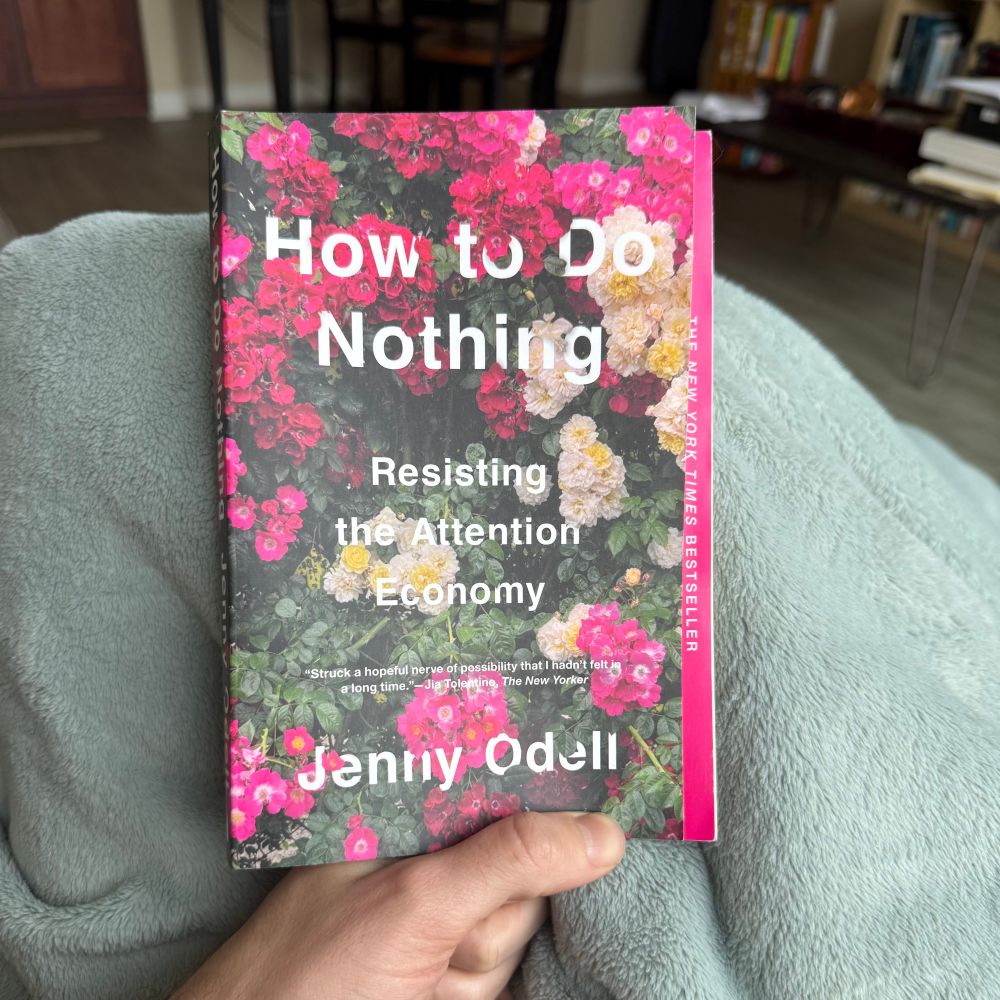
At first I avoided O’Dell’s book, assuming it was mostly about chilling out. It covers that, yes, but it’s really a defense of *all* activities that aren’t commercially productive but “produce” value which can’t be measured or exploited. Bird-watching, contemplation, wandering through a labyrinth…
December 1, 2025 at 6:11 PM
At first I avoided O’Dell’s book, assuming it was mostly about chilling out. It covers that, yes, but it’s really a defense of *all* activities that aren’t commercially productive but “produce” value which can’t be measured or exploited. Bird-watching, contemplation, wandering through a labyrinth…
It’s no coincidence that people are turning to handwriting on paper more and more. A.I. models regularly steal writers’ work. Anything posted online can be ingested without consent by the machines. The physicality of handwriting is a defensive maneuver, a strategy to protect the human voice.

Opinion | Paper-and-Pen Diaries Are Forever
www.nytimes.com
December 1, 2025 at 1:21 AM
It’s no coincidence that people are turning to handwriting on paper more and more. A.I. models regularly steal writers’ work. Anything posted online can be ingested without consent by the machines. The physicality of handwriting is a defensive maneuver, a strategy to protect the human voice.
Philosopher Byung-Chul Han has been helping me think through why we identify with certain types of things (in my case, physical books) more than others.
For Han, we are living in “the age of non-things,” in which “there is something almost utopian about the notion of possession.” 1/5
For Han, we are living in “the age of non-things,” in which “there is something almost utopian about the notion of possession.” 1/5
November 23, 2025 at 7:37 PM
Philosopher Byung-Chul Han has been helping me think through why we identify with certain types of things (in my case, physical books) more than others.
For Han, we are living in “the age of non-things,” in which “there is something almost utopian about the notion of possession.” 1/5
For Han, we are living in “the age of non-things,” in which “there is something almost utopian about the notion of possession.” 1/5