



Tom Plender
@tomplender.bsky.social
Musician, Artist, chairman of FND Action
Reposted by Tom Plender
This is great - a really nice overview of recent FND network studies, and a friendly introduction to predictive processing theory in FND 🙌
Findings in this @biologicalpsych.bsky.social CNNI paper are complementary to other results published using graph theory metrics in @braincomms.bsky.social.
Check out this 20 minute lecture by Christi Westlin that connects the two papers! 8/8
youtu.be/0Zjs-7lf6fA
academic.oup.com/braincomms/a...
Check out this 20 minute lecture by Christi Westlin that connects the two papers! 8/8
youtu.be/0Zjs-7lf6fA
academic.oup.com/braincomms/a...

Inside the Predictive Brain: Neuroimaging Insights into Brain Circuitry in FND
YouTube video by David L Perez
youtu.be
January 22, 2026 at 3:27 AM
This is great - a really nice overview of recent FND network studies, and a friendly introduction to predictive processing theory in FND 🙌
Reposted by Tom Plender
Too bad these conditions are among the most stigmatized, and so the least researched
(This goes for FND too!)
Sometimes it feels like a real “we’ve tried nothing and we’re all out of ideas” kind of situation
(This goes for FND too!)
Sometimes it feels like a real “we’ve tried nothing and we’re all out of ideas” kind of situation
December 1, 2025 at 2:32 PM
Too bad these conditions are among the most stigmatized, and so the least researched
(This goes for FND too!)
Sometimes it feels like a real “we’ve tried nothing and we’re all out of ideas” kind of situation
(This goes for FND too!)
Sometimes it feels like a real “we’ve tried nothing and we’re all out of ideas” kind of situation
Reposted by Tom Plender
New @aanmember.bsky.social guidelines for the management of functional seizures led by Ben Tolchin. A landmark for people with FND worldwide.
✅Rigorous evidence-based process
✅Consensus practical recommendations
✅Endorsed by @fndsociety.bsky.social
www.neurology.org/doi/10.1212/...
✅Rigorous evidence-based process
✅Consensus practical recommendations
✅Endorsed by @fndsociety.bsky.social
www.neurology.org/doi/10.1212/...

December 13, 2025 at 5:33 PM
New @aanmember.bsky.social guidelines for the management of functional seizures led by Ben Tolchin. A landmark for people with FND worldwide.
✅Rigorous evidence-based process
✅Consensus practical recommendations
✅Endorsed by @fndsociety.bsky.social
www.neurology.org/doi/10.1212/...
✅Rigorous evidence-based process
✅Consensus practical recommendations
✅Endorsed by @fndsociety.bsky.social
www.neurology.org/doi/10.1212/...
Reposted by Tom Plender
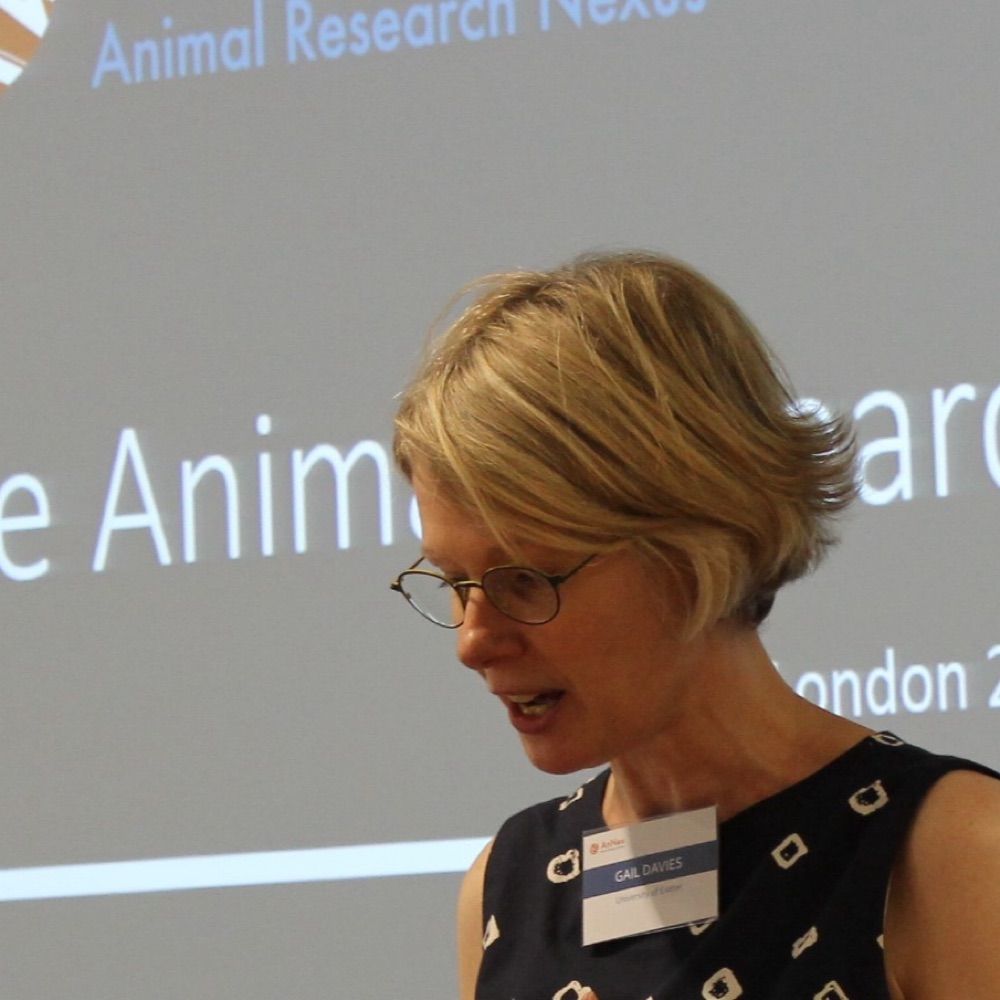
New paper outlining a spatial account of #FND and proposing an approach to the co-production of functional symptoms. It draws on my longstanding work on geographies of health knowledges, my recent health experiences, and emerging interdisciplinary conversations www.tandfonline.com/doi/full/10....

December 22, 2025 at 8:15 AM
New paper outlining a spatial account of #FND and proposing an approach to the co-production of functional symptoms. It draws on my longstanding work on geographies of health knowledges, my recent health experiences, and emerging interdisciplinary conversations www.tandfonline.com/doi/full/10....
Reposted by Tom Plender
Such a superb, insightful & brave paper from @gailfdavies.bsky.social who so eloquently captures and describes what many of us have noticed about the evolution of symptoms as a result of patients’ interactions with the medical system👏👏💪🏻💪🏻
Straight into my top 10 of best papers ever on FND👌👌
Straight into my top 10 of best papers ever on FND👌👌
New paper outlining a spatial account of #FND and proposing an approach to the co-production of functional symptoms. It draws on my longstanding work on geographies of health knowledges, my recent health experiences, and emerging interdisciplinary conversations www.tandfonline.com/doi/full/10....
December 22, 2025 at 9:45 PM
Such a superb, insightful & brave paper from @gailfdavies.bsky.social who so eloquently captures and describes what many of us have noticed about the evolution of symptoms as a result of patients’ interactions with the medical system👏👏💪🏻💪🏻
Straight into my top 10 of best papers ever on FND👌👌
Straight into my top 10 of best papers ever on FND👌👌
Reposted by Tom Plender
Reclaiming FND for Rehabilitation Medicine – new open access editorial
Neurorehab colleague Phil Milburn-McNulty and I set out why Rehab Medicine is so well-suited to treating FND, why they historically haven’t and what can be done to change things.
journals.sagepub.com/doi/10.1177/...
Neurorehab colleague Phil Milburn-McNulty and I set out why Rehab Medicine is so well-suited to treating FND, why they historically haven’t and what can be done to change things.
journals.sagepub.com/doi/10.1177/...

December 23, 2025 at 10:59 AM
Reclaiming FND for Rehabilitation Medicine – new open access editorial
Neurorehab colleague Phil Milburn-McNulty and I set out why Rehab Medicine is so well-suited to treating FND, why they historically haven’t and what can be done to change things.
journals.sagepub.com/doi/10.1177/...
Neurorehab colleague Phil Milburn-McNulty and I set out why Rehab Medicine is so well-suited to treating FND, why they historically haven’t and what can be done to change things.
journals.sagepub.com/doi/10.1177/...
Reposted by Tom Plender

As this year closes, hope may not feel loud or triumphant. It may be quiet, tender, or barely noticeable. It may be found in rest, self-kindness, or making it through one more day. If this year took more than it gave, know you are still worthy. Feather-light hope is still singing within you. #fnd

December 30, 2025 at 1:42 AM
As this year closes, hope may not feel loud or triumphant. It may be quiet, tender, or barely noticeable. It may be found in rest, self-kindness, or making it through one more day. If this year took more than it gave, know you are still worthy. Feather-light hope is still singing within you. #fnd
Reposted by Tom Plender
How gratifying that this is finally out!
And what a pleasure to colllaborate on this.
I hope it’s a real step forward for clinical care of people w func seizures.
Also a wonderful learning experience for me personally - extremely rigorous methodology thnx to Maryam Oskoui and co-authors
And what a pleasure to colllaborate on this.
I hope it’s a real step forward for clinical care of people w func seizures.
Also a wonderful learning experience for me personally - extremely rigorous methodology thnx to Maryam Oskoui and co-authors
Four yrs in the making, @greenjournal.bsky.social Practice Guideline Executive Summary on the Management of Functional Seizures. First @aanmember.bsky.social published guideline on any #FND variant. Brilliantly led by #BenTolchin. @fndportal.bsky.social
www.neurology.org/doi/10.1212/...
www.neurology.org/doi/10.1212/...

Neurology® Journals
www.neurology.org
December 12, 2025 at 1:32 PM
How gratifying that this is finally out!
And what a pleasure to colllaborate on this.
I hope it’s a real step forward for clinical care of people w func seizures.
Also a wonderful learning experience for me personally - extremely rigorous methodology thnx to Maryam Oskoui and co-authors
And what a pleasure to colllaborate on this.
I hope it’s a real step forward for clinical care of people w func seizures.
Also a wonderful learning experience for me personally - extremely rigorous methodology thnx to Maryam Oskoui and co-authors
Reposted by Tom Plender
I'm heartbroken to learn of the passing of Dr. Mark Hallett.
A few thoughts in remembrance…
A few thoughts in remembrance…

November 4, 2025 at 4:44 PM
I'm heartbroken to learn of the passing of Dr. Mark Hallett.
A few thoughts in remembrance…
A few thoughts in remembrance…
Reposted by Tom Plender
An important study (IMO) looking at social dynamics re: FND on Twitter.
People w FND face continual attack by a variety of groups who dismiss our condition and experiences - ranging from abusive clinicians to other disabled people.
It makes it even harder to exist in public with this dx.
People w FND face continual attack by a variety of groups who dismiss our condition and experiences - ranging from abusive clinicians to other disabled people.
It makes it even harder to exist in public with this dx.


October 20, 2025 at 1:59 PM
An important study (IMO) looking at social dynamics re: FND on Twitter.
People w FND face continual attack by a variety of groups who dismiss our condition and experiences - ranging from abusive clinicians to other disabled people.
It makes it even harder to exist in public with this dx.
People w FND face continual attack by a variety of groups who dismiss our condition and experiences - ranging from abusive clinicians to other disabled people.
It makes it even harder to exist in public with this dx.
Reposted by Tom Plender
Hey folks.
ILAE's International Epilepsy Congress is now concluded (great meeting!), so I thought I'd share a few highlights from my talk on Functional / Dissociative Seizures (FDS).
The full talk (and recording) belong to ILAE, but here are some of the key points!
ILAE's International Epilepsy Congress is now concluded (great meeting!), so I thought I'd share a few highlights from my talk on Functional / Dissociative Seizures (FDS).
The full talk (and recording) belong to ILAE, but here are some of the key points!

September 4, 2025 at 12:39 PM
Hey folks.
ILAE's International Epilepsy Congress is now concluded (great meeting!), so I thought I'd share a few highlights from my talk on Functional / Dissociative Seizures (FDS).
The full talk (and recording) belong to ILAE, but here are some of the key points!
ILAE's International Epilepsy Congress is now concluded (great meeting!), so I thought I'd share a few highlights from my talk on Functional / Dissociative Seizures (FDS).
The full talk (and recording) belong to ILAE, but here are some of the key points!
Reposted by Tom Plender
I know what I’m reading this weekend! 😎
Our new open access paper looking at Migraine and FND, two of the commonest conditions in neurological practice.
Migraine and functional neurological disorder (FND)—a review of comorbidity and potential overlap. academic.oup.com/braincomms/a... 🧵1/
Migraine and functional neurological disorder (FND)—a review of comorbidity and potential overlap. academic.oup.com/braincomms/a... 🧵1/

August 21, 2025 at 7:19 PM
I know what I’m reading this weekend! 😎
Reposted by Tom Plender

Really looking forward to this www.rsm.ac.uk/events/hypno...
interest?
@mattburkemd.bsky.social @matthewbroome.bsky.social @jonstoneneuro.bsky.social @kingsioppn.bsky.social @susannahpick.bsky.social @wendyburn.bsky.social @inspirethemind.bsky.social @tomplender.bsky.social @fndportal.bsky.social
interest?
@mattburkemd.bsky.social @matthewbroome.bsky.social @jonstoneneuro.bsky.social @kingsioppn.bsky.social @susannahpick.bsky.social @wendyburn.bsky.social @inspirethemind.bsky.social @tomplender.bsky.social @fndportal.bsky.social
August 20, 2025 at 2:55 PM
Latest attempt to try and define predictive brain mechanism in #FND in the simplest terms -
A disconnect in the brain where -
Beliefs/expectations + prior experiences
Outweigh
Incoming sensory input from present reality
Does that seem accurate? Any thoughts appreciated 🙏
A disconnect in the brain where -
Beliefs/expectations + prior experiences
Outweigh
Incoming sensory input from present reality
Does that seem accurate? Any thoughts appreciated 🙏
August 19, 2025 at 11:16 AM
Latest attempt to try and define predictive brain mechanism in #FND in the simplest terms -
A disconnect in the brain where -
Beliefs/expectations + prior experiences
Outweigh
Incoming sensory input from present reality
Does that seem accurate? Any thoughts appreciated 🙏
A disconnect in the brain where -
Beliefs/expectations + prior experiences
Outweigh
Incoming sensory input from present reality
Does that seem accurate? Any thoughts appreciated 🙏
Is hypnosis the ideal therapy for #FND ?great presentation from Dr Abhijit Das -
youtu.be/GEKLOwfhvA8?...
youtu.be/GEKLOwfhvA8?...
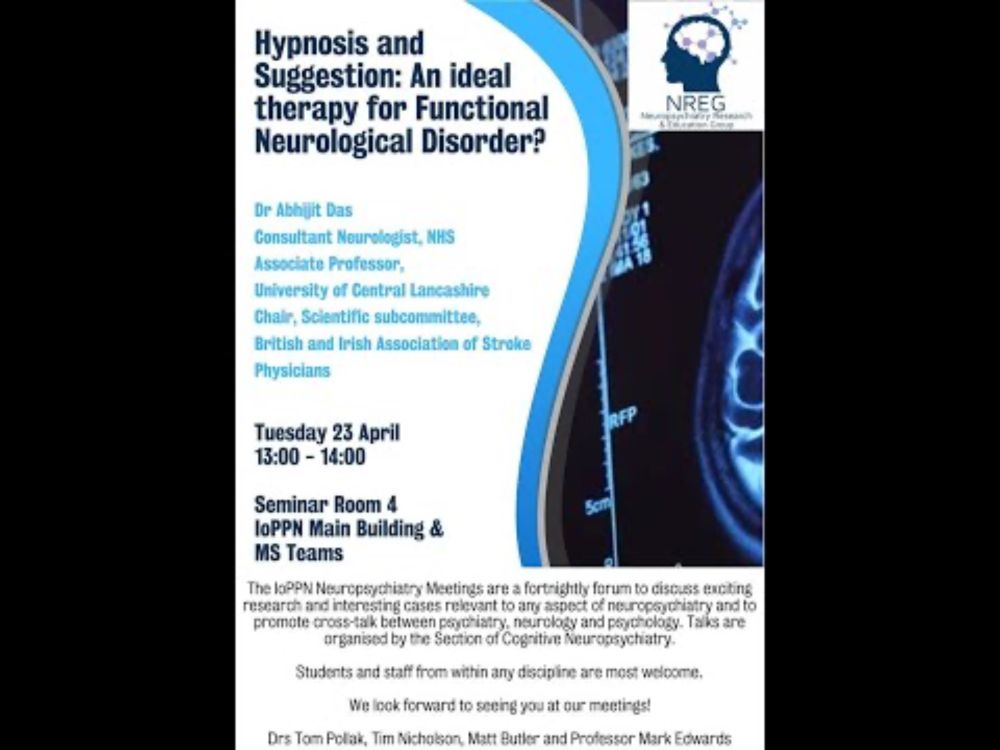
Hypnosis and Suggestion: An ideal therapy for Functional Neurological Disorder (FND)?
YouTube video by Dr Abhijit Das
youtu.be
July 23, 2025 at 7:54 PM
Is hypnosis the ideal therapy for #FND ?great presentation from Dr Abhijit Das -
youtu.be/GEKLOwfhvA8?...
youtu.be/GEKLOwfhvA8?...
Reposted by Tom Plender
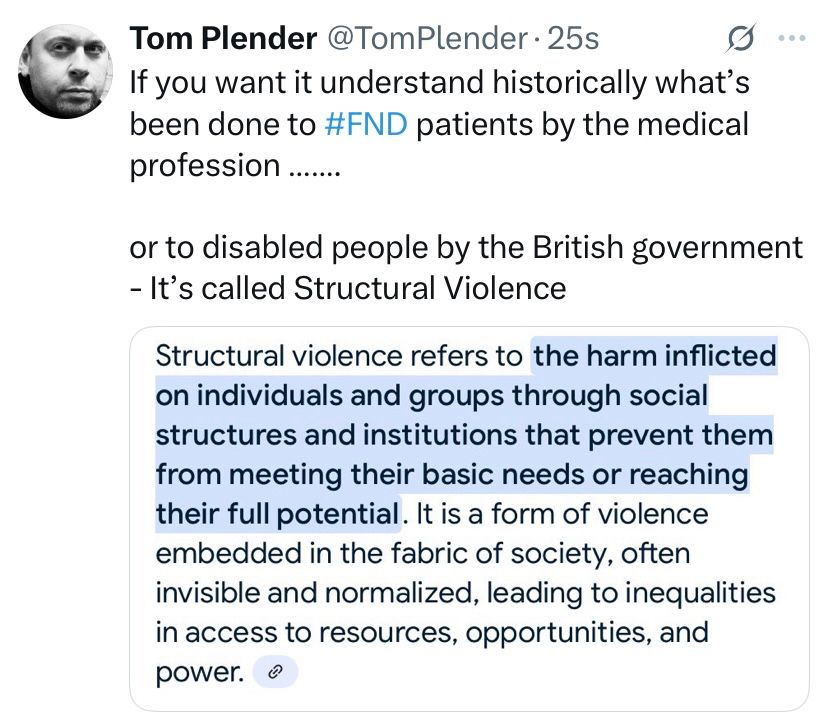
Functional seizures don't act like epilepsy. Functional movement disorders don't act like nervous system damage.
But is FND feigning or malingering? No!
A great paper from @mahyog.bsky.social @jonstoneneuro.bsky.social explains why
www.pure.ed.ac.uk/ws/portalfil...
But is FND feigning or malingering? No!
A great paper from @mahyog.bsky.social @jonstoneneuro.bsky.social explains why
www.pure.ed.ac.uk/ws/portalfil...
www.pure.ed.ac.uk
July 23, 2025 at 3:28 AM
Functional seizures don't act like epilepsy. Functional movement disorders don't act like nervous system damage.
But is FND feigning or malingering? No!
A great paper from @mahyog.bsky.social @jonstoneneuro.bsky.social explains why
www.pure.ed.ac.uk/ws/portalfil...
But is FND feigning or malingering? No!
A great paper from @mahyog.bsky.social @jonstoneneuro.bsky.social explains why
www.pure.ed.ac.uk/ws/portalfil...
July 15, 2025 at 5:38 PM
Reposted by Tom Plender
“Connections between the nervous and immune systems are increasingly recognized as central to brain–body physiology […] we examine how these systems collaborate to detect and respond to both internal and external stimuli — such as psychological stress, circadian cues, infection, and tissue injury.“

July 11, 2025 at 4:09 PM
“Connections between the nervous and immune systems are increasingly recognized as central to brain–body physiology […] we examine how these systems collaborate to detect and respond to both internal and external stimuli — such as psychological stress, circadian cues, infection, and tissue injury.“
Reposted by Tom Plender
“The findings emphasize the need for personalised and compassionate care for individuals suffering from FND, underpinned by increased service provision within the healthcare system.”

The journey to a diagnosis of Functional Neurological Disorder (FND) https://www.medrxiv.org/content/10.1101/2025.07.02.25330696v1
July 4, 2025 at 4:45 AM
“The findings emphasize the need for personalised and compassionate care for individuals suffering from FND, underpinned by increased service provision within the healthcare system.”
Reposted by Tom Plender

🎉 Congratulations to Prof. @katerinafoto.bsky.social, who has won the ALBA-FKNE Diversity Prize for her outstanding contributions to promoting equality and diversity in the brain sciences. @network-alba.bsky.social @kavlifoundation.org
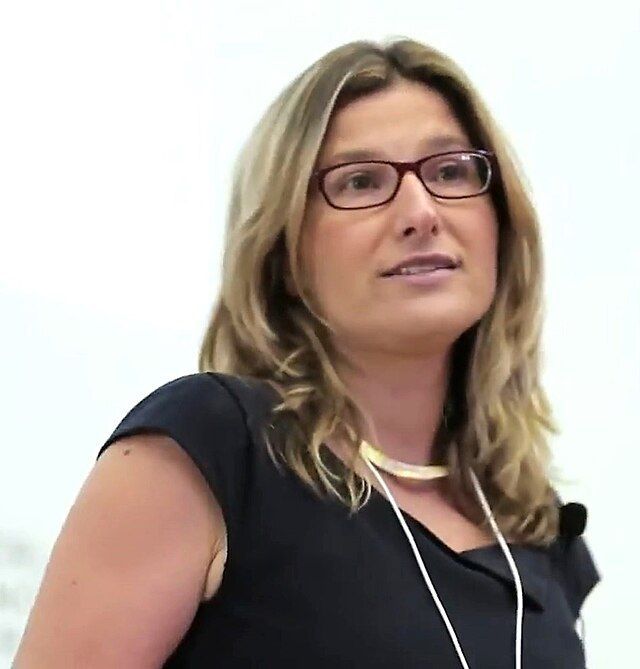
Professor Aikaterini Fotopoulou Awarded 2025 ALBA-FKNE Diversity Prize
Professor Aikaterini Fotopoulou from UCL Division of Psychology and Language Sciences has been awarded the ALBA-FKNE Diversity Prize at the Federation of European Neuroscience Societies meeting.
buff.ly
June 25, 2025 at 10:08 AM
🎉 Congratulations to Prof. @katerinafoto.bsky.social, who has won the ALBA-FKNE Diversity Prize for her outstanding contributions to promoting equality and diversity in the brain sciences. @network-alba.bsky.social @kavlifoundation.org
For anybody struggling- great video from Dan Buglio on not losing hope with these #FND / chronic pain type conditions
www.youtube.com/watch?v=9ccd...
www.youtube.com/watch?v=9ccd...
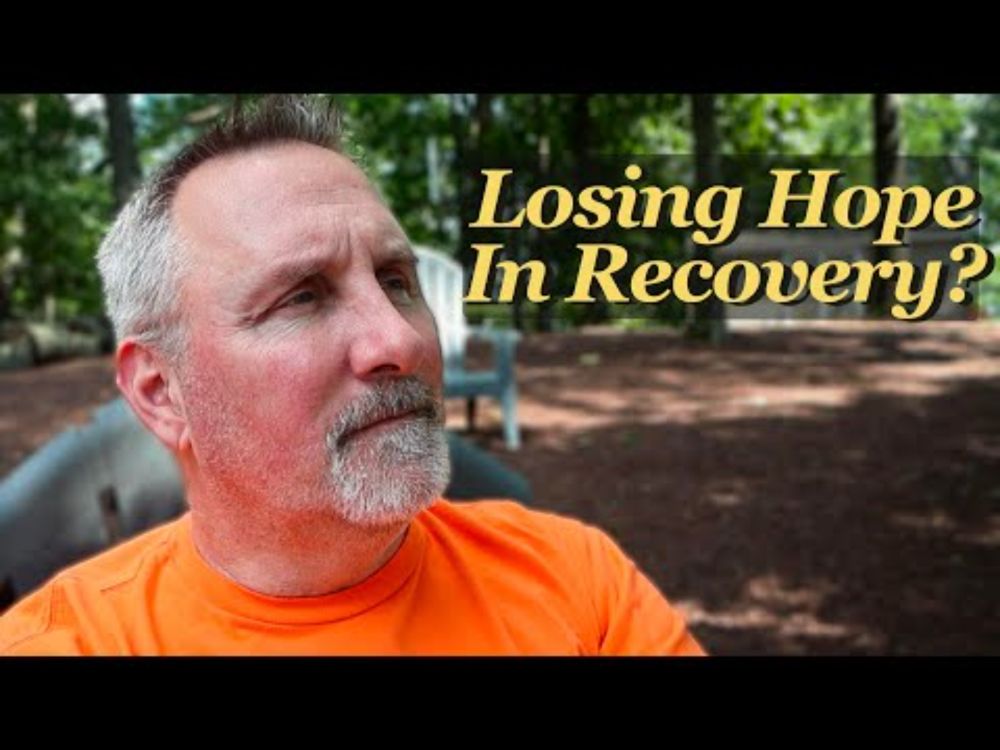
Are You Losing Hope?
YouTube video by Pain Free You
www.youtube.com
June 22, 2025 at 7:56 PM
For anybody struggling- great video from Dan Buglio on not losing hope with these #FND / chronic pain type conditions
www.youtube.com/watch?v=9ccd...
www.youtube.com/watch?v=9ccd...
Fascinating talk with @Brain_Tinkerer and Karl Friston on how hypnosis for #FND might fit into a Free energy principle/ computational neuroscience model
www.youtube.com/watch?v=AvoN...
@fndportal.bsky.social @katerinafoto.bsky.social @edinpublishing.bsky.social
www.youtube.com/watch?v=AvoN...
@fndportal.bsky.social @katerinafoto.bsky.social @edinpublishing.bsky.social
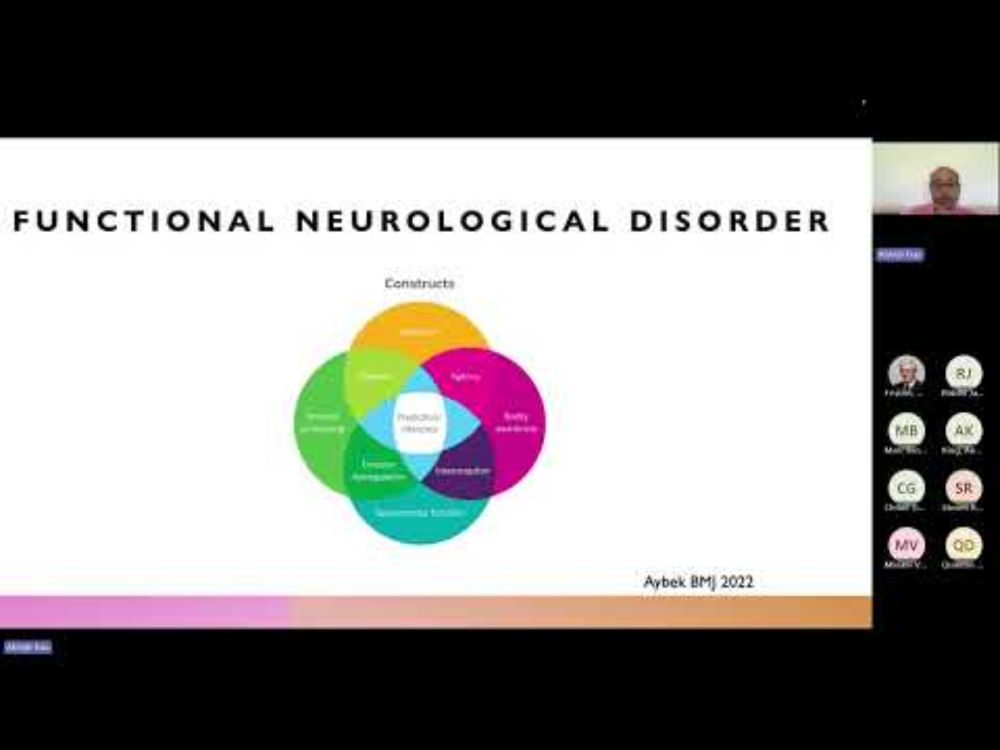
FEP & Functional Neurological Disorder: Clinical Features and a Therapeutic Approach - Abhijit Das
YouTube video by Theoretical Neurobiology Group
www.youtube.com
June 18, 2025 at 10:06 AM
Fascinating talk with @Brain_Tinkerer and Karl Friston on how hypnosis for #FND might fit into a Free energy principle/ computational neuroscience model
www.youtube.com/watch?v=AvoN...
@fndportal.bsky.social @katerinafoto.bsky.social @edinpublishing.bsky.social
www.youtube.com/watch?v=AvoN...
@fndportal.bsky.social @katerinafoto.bsky.social @edinpublishing.bsky.social
1/A major flaw with Freuds conversion disorder theory- that patients who've been traumatised cannot consciously remember the event and it ends up repressed. In my experience people are more likely to vividly remember traumatic events from the past-
June 17, 2025 at 11:05 AM
1/A major flaw with Freuds conversion disorder theory- that patients who've been traumatised cannot consciously remember the event and it ends up repressed. In my experience people are more likely to vividly remember traumatic events from the past-
Reposted by Tom Plender
Sadly still seeing many reports from newly-diagnosed folks in FND spaces that their doctor diagnosed them by “ruling things out.”
This is bad!
FND should be diagnosed based on positive clinical signs.
It is not a diagnosis of exclusion.
Someone please have a word with the neurologists 🙏
This is bad!
FND should be diagnosed based on positive clinical signs.
It is not a diagnosis of exclusion.
Someone please have a word with the neurologists 🙏
June 17, 2025 at 2:40 AM
Sadly still seeing many reports from newly-diagnosed folks in FND spaces that their doctor diagnosed them by “ruling things out.”
This is bad!
FND should be diagnosed based on positive clinical signs.
It is not a diagnosis of exclusion.
Someone please have a word with the neurologists 🙏
This is bad!
FND should be diagnosed based on positive clinical signs.
It is not a diagnosis of exclusion.
Someone please have a word with the neurologists 🙏