



Zoological Journal of the Linnean Society
@zoojlinnsoc.bsky.social
An international Zoological journal covering systematic & evolutionary research from species both alive and extinct 🐆🦋🪲🦇🦕
Homepage: https://academic.oup.com/zoolinnean
Blog: https://www.linnean.org/news/categories/the-paper-trail
Homepage: https://academic.oup.com/zoolinnean
Blog: https://www.linnean.org/news/categories/the-paper-trail
New Blog Alert!
Seven lords...uhhh no lemurs leaping? If you've ever wondered how primates learned to leap between trees, you'll be jumping for joy at the latest #ThePaperTrail blog, written by guest bloggers Grégoire Boulinguez-Ambroise & Jesse W. Young! Check it out below 🧪🌍
buff.ly/CzqCAuR
Seven lords...uhhh no lemurs leaping? If you've ever wondered how primates learned to leap between trees, you'll be jumping for joy at the latest #ThePaperTrail blog, written by guest bloggers Grégoire Boulinguez-Ambroise & Jesse W. Young! Check it out below 🧪🌍
buff.ly/CzqCAuR

Out on a Limb: How Primates Jump in the Trees
Discover the latest news from The Linnean Society of London.
www.linnean.org
February 4, 2026 at 11:58 AM
New Blog Alert!
Seven lords...uhhh no lemurs leaping? If you've ever wondered how primates learned to leap between trees, you'll be jumping for joy at the latest #ThePaperTrail blog, written by guest bloggers Grégoire Boulinguez-Ambroise & Jesse W. Young! Check it out below 🧪🌍
buff.ly/CzqCAuR
Seven lords...uhhh no lemurs leaping? If you've ever wondered how primates learned to leap between trees, you'll be jumping for joy at the latest #ThePaperTrail blog, written by guest bloggers Grégoire Boulinguez-Ambroise & Jesse W. Young! Check it out below 🧪🌍
buff.ly/CzqCAuR
As the penguin yearned for the mountains, so too did cetaceans yearn for the sea...
A return to aquatic life came with *ahem* big changes, but did you ever wonder about their sense of smell? Here, comparing cribriform plate size in whales revealed the gradual loss of olfaction...👇🌍🧪
buff.ly/lDhmQKX
A return to aquatic life came with *ahem* big changes, but did you ever wonder about their sense of smell? Here, comparing cribriform plate size in whales revealed the gradual loss of olfaction...👇🌍🧪
buff.ly/lDhmQKX

January 30, 2026 at 10:30 AM
As the penguin yearned for the mountains, so too did cetaceans yearn for the sea...
A return to aquatic life came with *ahem* big changes, but did you ever wonder about their sense of smell? Here, comparing cribriform plate size in whales revealed the gradual loss of olfaction...👇🌍🧪
buff.ly/lDhmQKX
A return to aquatic life came with *ahem* big changes, but did you ever wonder about their sense of smell? Here, comparing cribriform plate size in whales revealed the gradual loss of olfaction...👇🌍🧪
buff.ly/lDhmQKX
Reposted by Zoological Journal of the Linnean Society

Accelerating #BiodiversityLoss, environmental degradation & social instability affect tropical & subtropical regions in South America. Museum collections are critical for documenting & preserving biodiversity, yet often get overlooked. Introducing: INALI snake collection (1/2) 🧪🌍
buff.ly/DbvmLsf
buff.ly/DbvmLsf

Fighting biodiversity loss in the Anthropocene: the INALI snake collection as a key resource for natural history in the Global South
Abstract. In the Anthropocene, accelerating biodiversity loss, environmental degradation, and social instability are profoundly affecting tropical and subt
doi.org
January 27, 2026 at 9:45 AM
Accelerating #BiodiversityLoss, environmental degradation & social instability affect tropical & subtropical regions in South America. Museum collections are critical for documenting & preserving biodiversity, yet often get overlooked. Introducing: INALI snake collection (1/2) 🧪🌍
buff.ly/DbvmLsf
buff.ly/DbvmLsf
Bamboo, bioacoustics, brand new species...what a ribbiting read!
Using morphology & bioacoustics, 3 new species of frog are described in the Ecuadorian Andes! What's even cooler? Their patterns mimic bamboo leaves, providing evidence for parallel evolution! 🧪🌍
doi.org/10.1093/zool...
Using morphology & bioacoustics, 3 new species of frog are described in the Ecuadorian Andes! What's even cooler? Their patterns mimic bamboo leaves, providing evidence for parallel evolution! 🧪🌍
doi.org/10.1093/zool...


January 26, 2026 at 11:34 AM
Bamboo, bioacoustics, brand new species...what a ribbiting read!
Using morphology & bioacoustics, 3 new species of frog are described in the Ecuadorian Andes! What's even cooler? Their patterns mimic bamboo leaves, providing evidence for parallel evolution! 🧪🌍
doi.org/10.1093/zool...
Using morphology & bioacoustics, 3 new species of frog are described in the Ecuadorian Andes! What's even cooler? Their patterns mimic bamboo leaves, providing evidence for parallel evolution! 🧪🌍
doi.org/10.1093/zool...
Reposted by Zoological Journal of the Linnean Society
New Blog Alert! 🚨 🐘
Elephants are known to be Ecosystem Engineers, but did you know they are also the largest gardeners on Earth? Our latest blog, written by guest blogger Jin-Gyu Chang, reveals their pollinator role...but it's less green thumb and more elephant dung...(1/6) 🧪🌍
buff.ly/GSCUM4R
Elephants are known to be Ecosystem Engineers, but did you know they are also the largest gardeners on Earth? Our latest blog, written by guest blogger Jin-Gyu Chang, reveals their pollinator role...but it's less green thumb and more elephant dung...(1/6) 🧪🌍
buff.ly/GSCUM4R

January 21, 2026 at 10:30 AM
New Blog Alert! 🚨 🐘
Elephants are known to be Ecosystem Engineers, but did you know they are also the largest gardeners on Earth? Our latest blog, written by guest blogger Jin-Gyu Chang, reveals their pollinator role...but it's less green thumb and more elephant dung...(1/6) 🧪🌍
buff.ly/GSCUM4R
Elephants are known to be Ecosystem Engineers, but did you know they are also the largest gardeners on Earth? Our latest blog, written by guest blogger Jin-Gyu Chang, reveals their pollinator role...but it's less green thumb and more elephant dung...(1/6) 🧪🌍
buff.ly/GSCUM4R
Lift your spirits his January by taking a peek at the Plagiosaurs...you won't be disappointed!
Flattened Triassic temnospondyls (early amphibians) were adapted for ambush predation in oxygen-rich littoral environments. Read about their evolution here 👇🧪
Flattened Triassic temnospondyls (early amphibians) were adapted for ambush predation in oxygen-rich littoral environments. Read about their evolution here 👇🧪

Postcranial morphology and ontogeny of the Middle Triassic plagiosaurid temnospondyl Gerrothorax pulcherrimus and the increased body-flattening of bottom-dwelling plagiosaurs
Abstract. In order to understand the evolutionary modifications of the skeleton in plagiosaurids, a group of highly aberrant, flattened Triassic temnospond
doi.org
January 20, 2026 at 6:00 PM
Lift your spirits his January by taking a peek at the Plagiosaurs...you won't be disappointed!
Flattened Triassic temnospondyls (early amphibians) were adapted for ambush predation in oxygen-rich littoral environments. Read about their evolution here 👇🧪
Flattened Triassic temnospondyls (early amphibians) were adapted for ambush predation in oxygen-rich littoral environments. Read about their evolution here 👇🧪
Reposted by Zoological Journal of the Linnean Society

With the diversity of flowers comes the diversity of ways to analyse them, but which is best & how are they linked? Here, combining flower morphology characters of 951 species revealed that the most common characters are rarely found together in 1 flower! 🌍🧪
doi.org/10.1093/botl...
#Conservation
doi.org/10.1093/botl...
#Conservation


January 20, 2026 at 4:23 PM
With the diversity of flowers comes the diversity of ways to analyse them, but which is best & how are they linked? Here, combining flower morphology characters of 951 species revealed that the most common characters are rarely found together in 1 flower! 🌍🧪
doi.org/10.1093/botl...
#Conservation
doi.org/10.1093/botl...
#Conservation

"But where was Wallace?" we hear you cry! At that time, he was very busy being nine years old. So instead, we've hidden his more recognisable, older self in amongst these Richard Owen sketches. See if you can spot him! #WheresWallace


January 16, 2026 at 5:14 PM
What do you call a reptile that looks like a lizard but isn't? I'm Nothosaurus...
Helping to understand ecosystem recovery after the PT-extinction, a large new nothosaurian is described, adding to the evidence of large predators in the Tethys shallow seas! 🧪👇
doi.org/10.1093/zool...
#FossilFriday
Helping to understand ecosystem recovery after the PT-extinction, a large new nothosaurian is described, adding to the evidence of large predators in the Tethys shallow seas! 🧪👇
doi.org/10.1093/zool...
#FossilFriday

January 16, 2026 at 11:18 AM
What do you call a reptile that looks like a lizard but isn't? I'm Nothosaurus...
Helping to understand ecosystem recovery after the PT-extinction, a large new nothosaurian is described, adding to the evidence of large predators in the Tethys shallow seas! 🧪👇
doi.org/10.1093/zool...
#FossilFriday
Helping to understand ecosystem recovery after the PT-extinction, a large new nothosaurian is described, adding to the evidence of large predators in the Tethys shallow seas! 🧪👇
doi.org/10.1093/zool...
#FossilFriday
This year, why not publish your research with a Society Journal?
The Linnean Society is committed to publishing high-quality and groundbreaking scientific research across the four themes of botany, zoology, biology and evolution, striving to make these accessible & engaging to a global audience.
The Linnean Society is committed to publishing high-quality and groundbreaking scientific research across the four themes of botany, zoology, biology and evolution, striving to make these accessible & engaging to a global audience.

January 14, 2026 at 9:01 AM
This year, why not publish your research with a Society Journal?
The Linnean Society is committed to publishing high-quality and groundbreaking scientific research across the four themes of botany, zoology, biology and evolution, striving to make these accessible & engaging to a global audience.
The Linnean Society is committed to publishing high-quality and groundbreaking scientific research across the four themes of botany, zoology, biology and evolution, striving to make these accessible & engaging to a global audience.
Call these Martians the way they Rove(r)...
The rove beetle genus Xenogaster has 12 described species, yet their biology & interspecific relationships remain poorly understood. Here, a taxonomic revision & phylogenetic analysis uncovers a new genus & a new species! 🧪👇
doi.org/10.1093/zool...
The rove beetle genus Xenogaster has 12 described species, yet their biology & interspecific relationships remain poorly understood. Here, a taxonomic revision & phylogenetic analysis uncovers a new genus & a new species! 🧪👇
doi.org/10.1093/zool...

January 13, 2026 at 9:00 AM
Call these Martians the way they Rove(r)...
The rove beetle genus Xenogaster has 12 described species, yet their biology & interspecific relationships remain poorly understood. Here, a taxonomic revision & phylogenetic analysis uncovers a new genus & a new species! 🧪👇
doi.org/10.1093/zool...
The rove beetle genus Xenogaster has 12 described species, yet their biology & interspecific relationships remain poorly understood. Here, a taxonomic revision & phylogenetic analysis uncovers a new genus & a new species! 🧪👇
doi.org/10.1093/zool...
Fossils offer a glimpse into the #Biodiversity & ecosystems of the past. In fossil amphibians, allometric variation (i.e., how shape changes with size) is a rarely explored aspect of research...until now! Kicking off 2026 with Aussie amphibian snout measurements! 👇🌍🧪

Integrating allometry for accurate identification of Anura fossils from the Naracoorte Caves World Heritage Area
Abstract. Understanding the morphology of fossil remains is essential for reconstructing past biodiversity and ecosystems. In palaeoherpetology, geometric
doi.org
January 2, 2026 at 4:30 PM
Fossils offer a glimpse into the #Biodiversity & ecosystems of the past. In fossil amphibians, allometric variation (i.e., how shape changes with size) is a rarely explored aspect of research...until now! Kicking off 2026 with Aussie amphibian snout measurements! 👇🌍🧪
Slaying at the Linnean, this blog gets 10s across the board from us! Kicking off our journal blog 'The Paper Trail', this paper turned some heads not just because of its looks, but because this 'tropical' butterfly was found hiding in the snow! 🌍🧪👇🦋
buff.ly/S7wr5Td
buff.ly/S7wr5Td

December 10, 2025 at 8:30 AM
Slaying at the Linnean, this blog gets 10s across the board from us! Kicking off our journal blog 'The Paper Trail', this paper turned some heads not just because of its looks, but because this 'tropical' butterfly was found hiding in the snow! 🌍🧪👇🦋
buff.ly/S7wr5Td
buff.ly/S7wr5Td
Reposted by Zoological Journal of the Linnean Society

On the fifth day of Christmas, Linnaeus gave to me...FIVE ANOLES! Well, more like anoles adapting to temperature change in the Andes, as taught to us in this lunchtime lecture! Kicking off the journal series, it contributed to the 1000+ lecture attendees this year! 🌍🧪👇
buff.ly/Tgjn9Pk
buff.ly/Tgjn9Pk

December 5, 2025 at 10:24 AM
On the fifth day of Christmas, Linnaeus gave to me...FIVE ANOLES! Well, more like anoles adapting to temperature change in the Andes, as taught to us in this lunchtime lecture! Kicking off the journal series, it contributed to the 1000+ lecture attendees this year! 🌍🧪👇
buff.ly/Tgjn9Pk
buff.ly/Tgjn9Pk
Reposted by Zoological Journal of the Linnean Society
We all know ornithologists loved naming birds, but less so trying to understand their evolutionary history...
Using the (perfectly named) Buzzing Flowerpecker as a case study, phylogenetic studies revealed rapid evolution & shared genes, making it difficult to draw boundaries...
Using the (perfectly named) Buzzing Flowerpecker as a case study, phylogenetic studies revealed rapid evolution & shared genes, making it difficult to draw boundaries...

Rapid divergence with gene flow creates intractable nodes in the tree of life: An empirical demonstration in the Buzzing Flowerpecker (Dicaeum hypoleucum)
Abstract. The avian tree of life contains a series of famously intractable nodes and controversial relationships whose resolution varies between studies de
doi.org
December 2, 2025 at 3:03 PM
We all know ornithologists loved naming birds, but less so trying to understand their evolutionary history...
Using the (perfectly named) Buzzing Flowerpecker as a case study, phylogenetic studies revealed rapid evolution & shared genes, making it difficult to draw boundaries...
Using the (perfectly named) Buzzing Flowerpecker as a case study, phylogenetic studies revealed rapid evolution & shared genes, making it difficult to draw boundaries...
Like a fish out of water, literally!
Amphibious fish can emerge from water, enabling them to occupy niches unavailable to fully aquatic species! Here, the amphibious capabilities of killifish were studied, finding them able to breathe air for several days!
doi.org/10.1093/zool...
Amphibious fish can emerge from water, enabling them to occupy niches unavailable to fully aquatic species! Here, the amphibious capabilities of killifish were studied, finding them able to breathe air for several days!
doi.org/10.1093/zool...

November 29, 2025 at 12:30 PM
Like a fish out of water, literally!
Amphibious fish can emerge from water, enabling them to occupy niches unavailable to fully aquatic species! Here, the amphibious capabilities of killifish were studied, finding them able to breathe air for several days!
doi.org/10.1093/zool...
Amphibious fish can emerge from water, enabling them to occupy niches unavailable to fully aquatic species! Here, the amphibious capabilities of killifish were studied, finding them able to breathe air for several days!
doi.org/10.1093/zool...
AHHHH, WHO OPENED THE UPSIDE DOWN?!
Ahhh Rafflesia, the parasitic corpse flower...what's not to love? Known for their scent of rotting flesh, these Strange(r) Things can be found in the rainforests of South East Asia, and may remind you of a certain Demogorgon, henchmen of the upside down...
#StrangerThings #Demogorgon
#StrangerThings #Demogorgon

November 27, 2025 at 2:15 PM
AHHHH, WHO OPENED THE UPSIDE DOWN?!
I spy with my little eye, a brand new...butterfly?
Found hiding from Panama to Colombia, whole-genome sequencing uncovered this new species as part of the tribe Phocidini!
doi.org/10.1093/zool...
@linneansociety.bsky.social
Found hiding from Panama to Colombia, whole-genome sequencing uncovered this new species as part of the tribe Phocidini!
doi.org/10.1093/zool...
@linneansociety.bsky.social

November 26, 2025 at 11:30 AM
I spy with my little eye, a brand new...butterfly?
Found hiding from Panama to Colombia, whole-genome sequencing uncovered this new species as part of the tribe Phocidini!
doi.org/10.1093/zool...
@linneansociety.bsky.social
Found hiding from Panama to Colombia, whole-genome sequencing uncovered this new species as part of the tribe Phocidini!
doi.org/10.1093/zool...
@linneansociety.bsky.social
Reposted by Zoological Journal of the Linnean Society
Effective conservation relies on accurate research, monitoring & understanding of species. Here, the first comprehensive IUCN Red List assessment of the High Atlas vascular flora has been done, helping to uncover extinction threats to endemic flora! 🧪 🌍 👇
doi.org/10.1093/botl...
doi.org/10.1093/botl...

November 9, 2025 at 11:01 AM
Effective conservation relies on accurate research, monitoring & understanding of species. Here, the first comprehensive IUCN Red List assessment of the High Atlas vascular flora has been done, helping to uncover extinction threats to endemic flora! 🧪 🌍 👇
doi.org/10.1093/botl...
doi.org/10.1093/botl...
Reposted by Zoological Journal of the Linnean Society
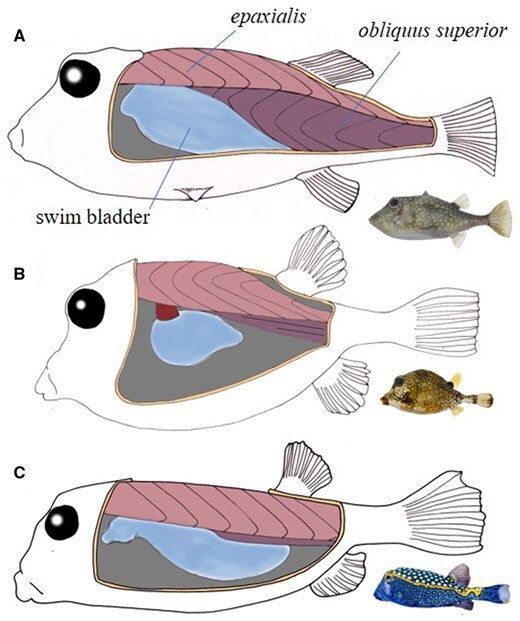
What's that? You didn't know boxfish made sound? Me neither...
It turns out all species (Atlantic & Pacific) do, yet little is known about how this evolved. A novel structure found only in the Atlantic species offered the answer, but it isn't quite what you think...🌍 🧪
doi.org/10.1093/biol...
It turns out all species (Atlantic & Pacific) do, yet little is known about how this evolved. A novel structure found only in the Atlantic species offered the answer, but it isn't quite what you think...🌍 🧪
doi.org/10.1093/biol...
November 25, 2025 at 8:30 AM
What's that? You didn't know boxfish made sound? Me neither...
It turns out all species (Atlantic & Pacific) do, yet little is known about how this evolved. A novel structure found only in the Atlantic species offered the answer, but it isn't quite what you think...🌍 🧪
doi.org/10.1093/biol...
It turns out all species (Atlantic & Pacific) do, yet little is known about how this evolved. A novel structure found only in the Atlantic species offered the answer, but it isn't quite what you think...🌍 🧪
doi.org/10.1093/biol...
Weevil, weevil, rock you!
Not quite as catchy as the Queen hit, the phylogeny of broad-nosed weevils was explored using mitochondrial genomes of 130 species, helping to classify the subfamily & uncover their biogeography! 🌍👇🧪
doi.org/10.1093/zool...
@linneansociety.bsky.social
Not quite as catchy as the Queen hit, the phylogeny of broad-nosed weevils was explored using mitochondrial genomes of 130 species, helping to classify the subfamily & uncover their biogeography! 🌍👇🧪
doi.org/10.1093/zool...
@linneansociety.bsky.social

November 24, 2025 at 11:01 AM
Weevil, weevil, rock you!
Not quite as catchy as the Queen hit, the phylogeny of broad-nosed weevils was explored using mitochondrial genomes of 130 species, helping to classify the subfamily & uncover their biogeography! 🌍👇🧪
doi.org/10.1093/zool...
@linneansociety.bsky.social
Not quite as catchy as the Queen hit, the phylogeny of broad-nosed weevils was explored using mitochondrial genomes of 130 species, helping to classify the subfamily & uncover their biogeography! 🌍👇🧪
doi.org/10.1093/zool...
@linneansociety.bsky.social
This #FossilFriday marvel at an early Dyrosauridae from the middle Campanian Quseir Formation of Egypt! Displaying transitional cranial features, Wadisuchus is confirmed as the early-diverging dyrosauridae! Check it out: doi.org/10.1093/zool... @linneansociety.bsky.social

November 21, 2025 at 10:45 AM
This #FossilFriday marvel at an early Dyrosauridae from the middle Campanian Quseir Formation of Egypt! Displaying transitional cranial features, Wadisuchus is confirmed as the early-diverging dyrosauridae! Check it out: doi.org/10.1093/zool... @linneansociety.bsky.social
Seeya later ant-eater (you have to say eater weird) it's #AnteaterDay ! Known for their slender noses and taste for six-legged creatures, these guys were originally considered four species. 1/2


November 19, 2025 at 4:30 PM
Seeya later ant-eater (you have to say eater weird) it's #AnteaterDay ! Known for their slender noses and taste for six-legged creatures, these guys were originally considered four species. 1/2
I sea what you did there...
The yellow sea snake can only be found in Costa Rica's Golfo Dulce basin, with this population being geographically & morphologically isolated from the pelagic sea snake. However, genetic differentiation is lacking! An intriguing paradox...🧪 🌍 👇
doi.org/10.1093/zool...
The yellow sea snake can only be found in Costa Rica's Golfo Dulce basin, with this population being geographically & morphologically isolated from the pelagic sea snake. However, genetic differentiation is lacking! An intriguing paradox...🧪 🌍 👇
doi.org/10.1093/zool...

November 16, 2025 at 9:01 PM
I sea what you did there...
The yellow sea snake can only be found in Costa Rica's Golfo Dulce basin, with this population being geographically & morphologically isolated from the pelagic sea snake. However, genetic differentiation is lacking! An intriguing paradox...🧪 🌍 👇
doi.org/10.1093/zool...
The yellow sea snake can only be found in Costa Rica's Golfo Dulce basin, with this population being geographically & morphologically isolated from the pelagic sea snake. However, genetic differentiation is lacking! An intriguing paradox...🧪 🌍 👇
doi.org/10.1093/zool...
Reposted by Zoological Journal of the Linnean Society
This #FossilFriday marvel at the presence of Astropanax leaves & pollen in Ethiopia 21.73 million years ago, found in the Mush Valley, providing the earliest evidence for Araliaceae on the African continent! (around the time when ancient rhinos & horses began to evolve)🌍🧪
doi.org/10.1093/botl...
doi.org/10.1093/botl...

November 14, 2025 at 8:30 AM
This #FossilFriday marvel at the presence of Astropanax leaves & pollen in Ethiopia 21.73 million years ago, found in the Mush Valley, providing the earliest evidence for Araliaceae on the African continent! (around the time when ancient rhinos & horses began to evolve)🌍🧪
doi.org/10.1093/botl...
doi.org/10.1093/botl...