




Adam Andreassen
@adamandreassen.bsky.social
Behavioral Health Executive
Reposted by Adam Andreassen

The fact that literally zero outlets ever cover crime decline as a story is a huge reason. (And before you yell at me, we do!)

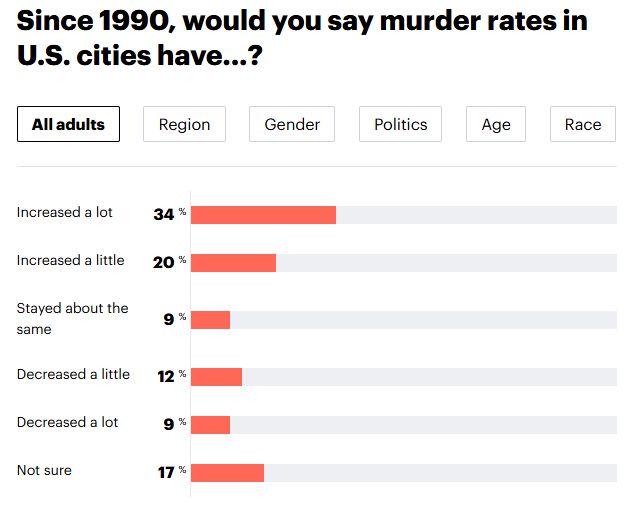
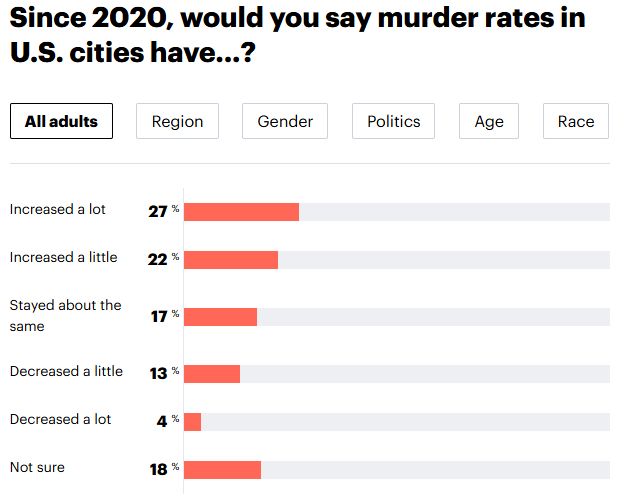
This @today.yougov.com poll is why I'm going to become the Joker.
The US murder rate in 2024 was likely down nearly 30 percent relative to 2020 and down nearly 50 percent relative to 1990.
The US murder rate in 2024 was likely down nearly 30 percent relative to 2020 and down nearly 50 percent relative to 1990.
July 30, 2025 at 8:09 PM
The fact that literally zero outlets ever cover crime decline as a story is a huge reason. (And before you yell at me, we do!)
Reposted by Adam Andreassen

Reposted by Adam Andreassen

Stand with science. Always.

DISEASES ERADICATED OR DECIMATED BY SCIENCE:
1. Chickenpox
2. Diphtheria
3. Measles
4. Pertussis
5. Pneumococcal Infection
6. Polio
7. Tetanus
8. Typhoid
9. Yellow Fever
10. Smallpox
DISEASES ERADICATED OR DECIMATED BY RFK JR. OR PRAYER:
1.
2.
3.
4.
5.
6.
7.
8.
9.
10.
1. Chickenpox
2. Diphtheria
3. Measles
4. Pertussis
5. Pneumococcal Infection
6. Polio
7. Tetanus
8. Typhoid
9. Yellow Fever
10. Smallpox
DISEASES ERADICATED OR DECIMATED BY RFK JR. OR PRAYER:
1.
2.
3.
4.
5.
6.
7.
8.
9.
10.
February 14, 2025 at 9:30 PM
Stand with science. Always.
Reposted by Adam Andreassen

I tell every kid that asks, that you paid money to learn. Now it’s time to get paid to learn. You don’t need a perfect job. You need to be the best as you can at your job. People like jobs they are good at
But.
You are always a free agent. You can always be looking and learn more in a new job
But.
You are always a free agent. You can always be looking and learn more in a new job

There’s also a perception that once you are in a job, that you’re locked into that job for the rest of you life. Which isn’t exactly the truth, it may be a little tough to adjust, but it’s always possible. A lot of teachers I meet didn’t want to be teachers until after they got through a job or two.
December 29, 2024 at 2:22 PM
I tell every kid that asks, that you paid money to learn. Now it’s time to get paid to learn. You don’t need a perfect job. You need to be the best as you can at your job. People like jobs they are good at
But.
You are always a free agent. You can always be looking and learn more in a new job
But.
You are always a free agent. You can always be looking and learn more in a new job
Reposted by Adam Andreassen
Yup. The NBA doesn’t do a good job of managing and training the officials. Just look at the GLeague officiating. It is easier to officiate. It should have great officials, pushing to replace the refs who can’t make the playoffs. It doesn’t work that way. Unfortunately.

Mark I agree. I think the NBA has an officiating issue more than a 3 point issue. Fans don't want to feel hosed. And seeing bad calls all night every night turns off WAY more fans than 3s.
December 21, 2024 at 10:28 PM
Yup. The NBA doesn’t do a good job of managing and training the officials. Just look at the GLeague officiating. It is easier to officiate. It should have great officials, pushing to replace the refs who can’t make the playoffs. It doesn’t work that way. Unfortunately.
Reposted by Adam Andreassen

Sadly, it’s a good time to once again share this amazing infographic that we ran at @science.org more than 7 years ago
🧪 #IDsky
www.science.org/content/arti...
🧪 #IDsky
www.science.org/content/arti...
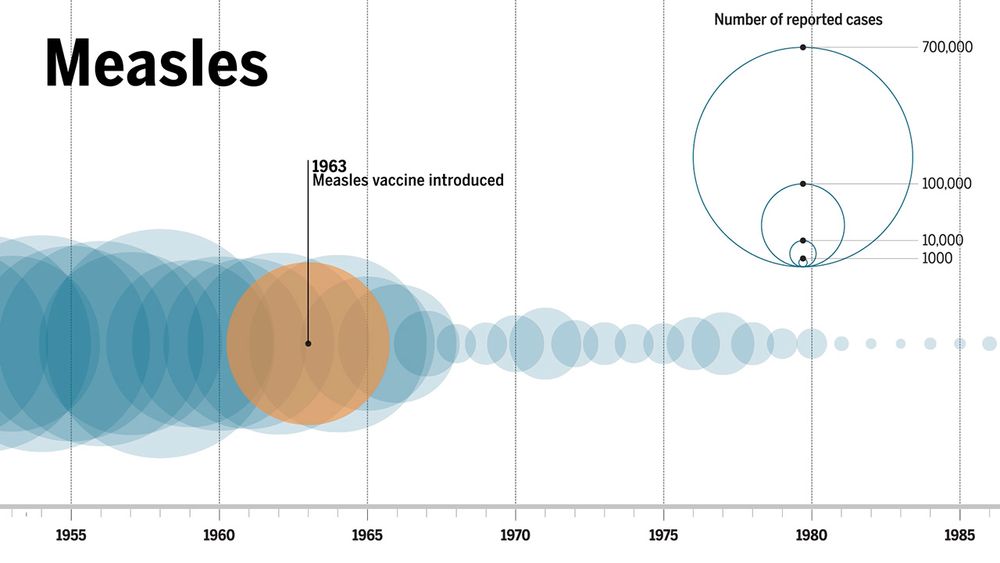
Here's the visual proof of why vaccines do more good than harm
See year by year how vaccines beat back nine dangerous infectious diseases
www.science.org
December 14, 2024 at 9:10 PM
Sadly, it’s a good time to once again share this amazing infographic that we ran at @science.org more than 7 years ago
🧪 #IDsky
www.science.org/content/arti...
🧪 #IDsky
www.science.org/content/arti...
"This mind-boggling number exceeds known timescales in physics and vastly exceeds the age of the universe," he argued. "It lends credence to the notion that quantum computation occurs in many parallel universes, in line with the idea that we live in a multiverse..."
futurism.com/google-quant...
futurism.com/google-quant...

Google Says It Appears to Have Accessed Parallel Universes
Google argued that its new uber-powerful quantum computer is so fast that it may have tapped a parallel universe.
futurism.com
December 14, 2024 at 12:49 AM
"This mind-boggling number exceeds known timescales in physics and vastly exceeds the age of the universe," he argued. "It lends credence to the notion that quantum computation occurs in many parallel universes, in line with the idea that we live in a multiverse..."
futurism.com/google-quant...
futurism.com/google-quant...
Reposted by Adam Andreassen

Recent work on the “illusion of information adequacy” shows how we assume we know enough—even when crucial info is missing. This bias, linked to naïve realism, highlights why critical thinking requires questioning what we don’t know.
🧪
#CriticalThinking #Bias
journals.plos.org/plosone/arti...
🧪
#CriticalThinking #Bias
journals.plos.org/plosone/arti...

The illusion of information adequacy
How individuals navigate perspectives and attitudes that diverge from their own affects an array of interpersonal outcomes from the health of marriages to the unfolding of international conflicts. The finesse with which people negotiate these differing perceptions depends critically upon their tacit assumptions—e.g., in the bias of naïve realism people assume that their subjective construal of a situation represents objective truth. The present study adds an important assumption to this list of biases: the illusion of information adequacy. Specifically, because individuals rarely pause to consider what information they may be missing, they assume that the cross-section of relevant information to which they are privy is sufficient to adequately understand the situation. Participants in our preregistered study (N = 1261) responded to a hypothetical scenario in which control participants received full information and treatment participants received approximately half of that same information. We found that treatment participants assumed that they possessed comparably adequate information and presumed that they were just as competent to make thoughtful decisions based on that information. Participants’ decisions were heavily influenced by which cross-section of information they received. Finally, participants believed that most other people would make a similar decision to the one they made. We discuss the implications in the context of naïve realism and other biases that implicate how people navigate differences of perspective.
journals.plos.org
November 27, 2024 at 9:37 PM
Recent work on the “illusion of information adequacy” shows how we assume we know enough—even when crucial info is missing. This bias, linked to naïve realism, highlights why critical thinking requires questioning what we don’t know.
🧪
#CriticalThinking #Bias
journals.plos.org/plosone/arti...
🧪
#CriticalThinking #Bias
journals.plos.org/plosone/arti...
