




Andrew Mongue
@ajmongue.bsky.social
Assistant Professor of Molecular Ecology at University of Florida's Department of Entomology and Nematology. Comparative genomics and evolutionary genetics of weird reproductive systems.
To explore this, we've done genomics, proteomics, and a bit of cytogenetics on the evergreen bagworm.
The one sperm type looks basically like fertilizing sperm, but with some differences from other lep sperm proteomes, like a lack of proteases to break apart bundled fertilizing sperm.
The one sperm type looks basically like fertilizing sperm, but with some differences from other lep sperm proteomes, like a lack of proteases to break apart bundled fertilizing sperm.

December 9, 2025 at 1:41 PM
To explore this, we've done genomics, proteomics, and a bit of cytogenetics on the evergreen bagworm.
The one sperm type looks basically like fertilizing sperm, but with some differences from other lep sperm proteomes, like a lack of proteases to break apart bundled fertilizing sperm.
The one sperm type looks basically like fertilizing sperm, but with some differences from other lep sperm proteomes, like a lack of proteases to break apart bundled fertilizing sperm.
But we're most interested in the adults. In this pic, the grub-like insect is an ADULT female bagworm(!!). The males look like normal moths...extreme sexual dimorphism!!
We're studying how this evolved, but that's another story. Today I want to highlight their sperm biology.
We're studying how this evolved, but that's another story. Today I want to highlight their sperm biology.

December 9, 2025 at 1:41 PM
But we're most interested in the adults. In this pic, the grub-like insect is an ADULT female bagworm(!!). The males look like normal moths...extreme sexual dimorphism!!
We're studying how this evolved, but that's another story. Today I want to highlight their sperm biology.
We're studying how this evolved, but that's another story. Today I want to highlight their sperm biology.
Pre-print and weird repro thread time!
I've posted here about scale insects a lot, but ~half of my research is on Lepidoptera. My lab is developing bagworm moths (Psychidae) as models for comparative genomics.
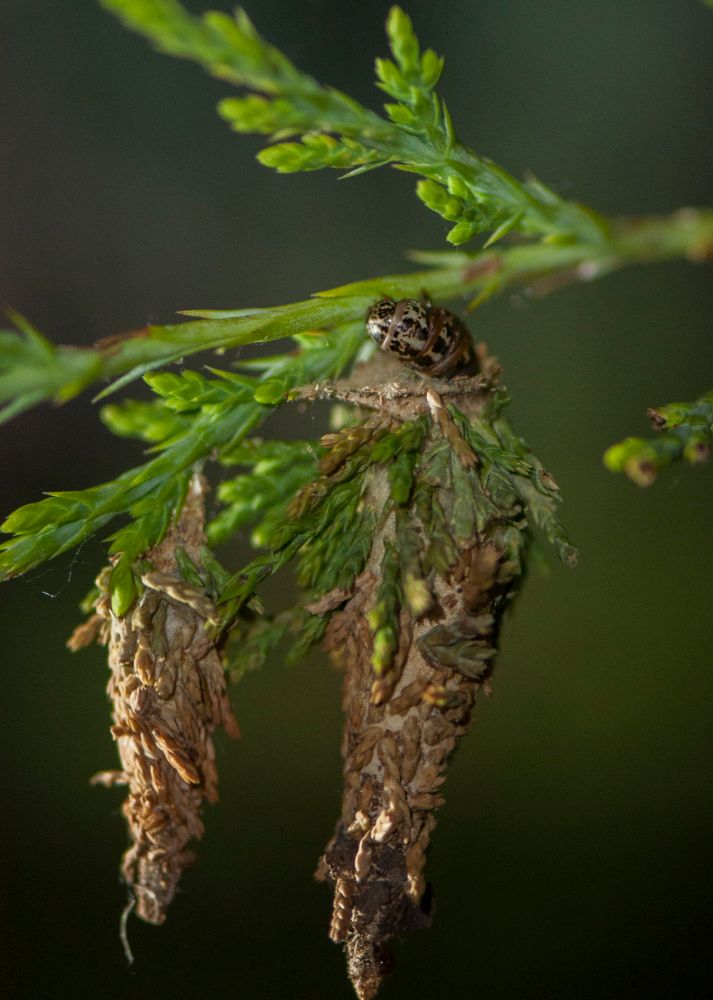
You probably know them like you see in the pics below: caterpillars that make cases.
I've posted here about scale insects a lot, but ~half of my research is on Lepidoptera. My lab is developing bagworm moths (Psychidae) as models for comparative genomics.
You probably know them like you see in the pics below: caterpillars that make cases.

December 9, 2025 at 1:41 PM
Pre-print and weird repro thread time!
I've posted here about scale insects a lot, but ~half of my research is on Lepidoptera. My lab is developing bagworm moths (Psychidae) as models for comparative genomics.
You probably know them like you see in the pics below: caterpillars that make cases.
I've posted here about scale insects a lot, but ~half of my research is on Lepidoptera. My lab is developing bagworm moths (Psychidae) as models for comparative genomics.
You probably know them like you see in the pics below: caterpillars that make cases.
This thread needs the Bible...the Perry Bible Fellowship.

November 22, 2025 at 3:44 PM
This thread needs the Bible...the Perry Bible Fellowship.
Talk about a life list critter, I've finally found a male cottony cushion scale insect (pic 1)!!
Male scale insects are rare in general but this species is composed almost entirely of simultaneous hermaphrodites (pic 2)! Rare pure males can occur, but we don't fully know under what conditions.
Male scale insects are rare in general but this species is composed almost entirely of simultaneous hermaphrodites (pic 2)! Rare pure males can occur, but we don't fully know under what conditions.


November 14, 2025 at 8:42 PM
Talk about a life list critter, I've finally found a male cottony cushion scale insect (pic 1)!!
Male scale insects are rare in general but this species is composed almost entirely of simultaneous hermaphrodites (pic 2)! Rare pure males can occur, but we don't fully know under what conditions.
Male scale insects are rare in general but this species is composed almost entirely of simultaneous hermaphrodites (pic 2)! Rare pure males can occur, but we don't fully know under what conditions.

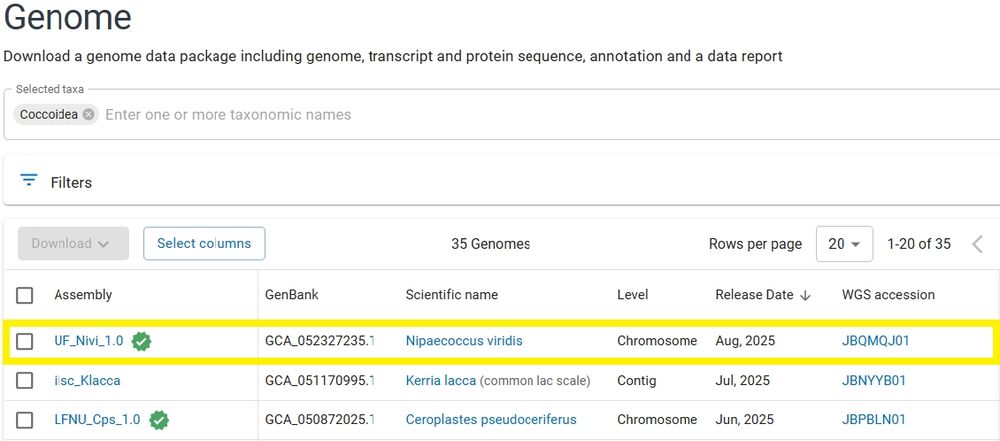
Lab milestone: My first (now graduated) student's first genome assembly is now publicly available! Well done, @tliesenfelt.bsky.social !!
You can read the companion article below!
You can read the companion article below!
September 4, 2025 at 12:20 AM
Lab milestone: My first (now graduated) student's first genome assembly is now publicly available! Well done, @tliesenfelt.bsky.social !!
You can read the companion article below!
You can read the companion article below!
Such a fun and productive trip! Be on the lookout for more on evolutionary genomics and systematics of bagworms from my lab and @dr-akito.bsky.social 's lab soon!


July 9, 2025 at 1:05 AM
Such a fun and productive trip! Be on the lookout for more on evolutionary genomics and systematics of bagworms from my lab and @dr-akito.bsky.social 's lab soon!
Getting ready for #Evol2025. If you see me say hi!
I'll be doing a very preliminary talk on bagworm moth evolutionary genetics on Sunday at 11:45 as well!
I'll be doing a very preliminary talk on bagworm moth evolutionary genetics on Sunday at 11:45 as well!
June 19, 2025 at 6:42 PM
Getting ready for #Evol2025. If you see me say hi!
I'll be doing a very preliminary talk on bagworm moth evolutionary genetics on Sunday at 11:45 as well!
I'll be doing a very preliminary talk on bagworm moth evolutionary genetics on Sunday at 11:45 as well!
Well if that's the game of the game...here's a shot of Fulgora lanternaria from a recent trip to Costa Rica.

June 12, 2025 at 8:49 PM
Well if that's the game of the game...here's a shot of Fulgora lanternaria from a recent trip to Costa Rica.
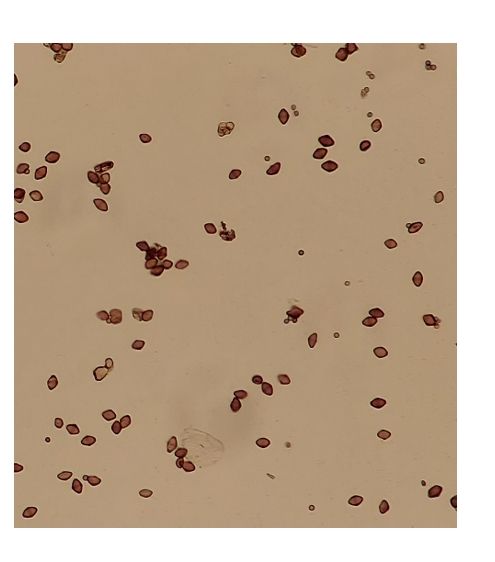
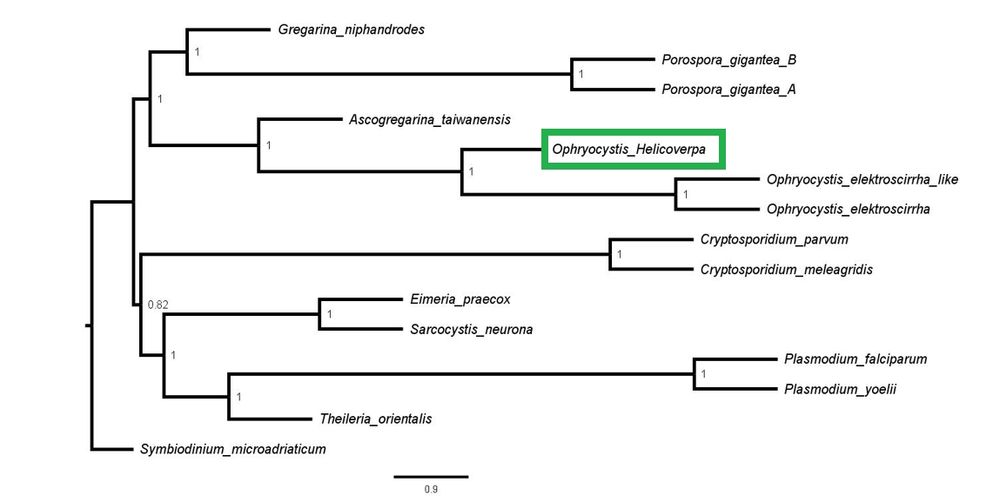
How do you differentiate species when the most visible lifestage is a featureless brown rugby ball?
You sequence it and place it with phylogenomics!
Read all about this and the evolutionary genetics of a moth-infecting apicomplexan #parasite in our pre-print here:
www.biorxiv.org/cgi/content/...
You sequence it and place it with phylogenomics!
Read all about this and the evolutionary genetics of a moth-infecting apicomplexan #parasite in our pre-print here:
www.biorxiv.org/cgi/content/...
June 2, 2025 at 5:23 PM
How do you differentiate species when the most visible lifestage is a featureless brown rugby ball?
You sequence it and place it with phylogenomics!
Read all about this and the evolutionary genetics of a moth-infecting apicomplexan #parasite in our pre-print here:
www.biorxiv.org/cgi/content/...
You sequence it and place it with phylogenomics!
Read all about this and the evolutionary genetics of a moth-infecting apicomplexan #parasite in our pre-print here:
www.biorxiv.org/cgi/content/...
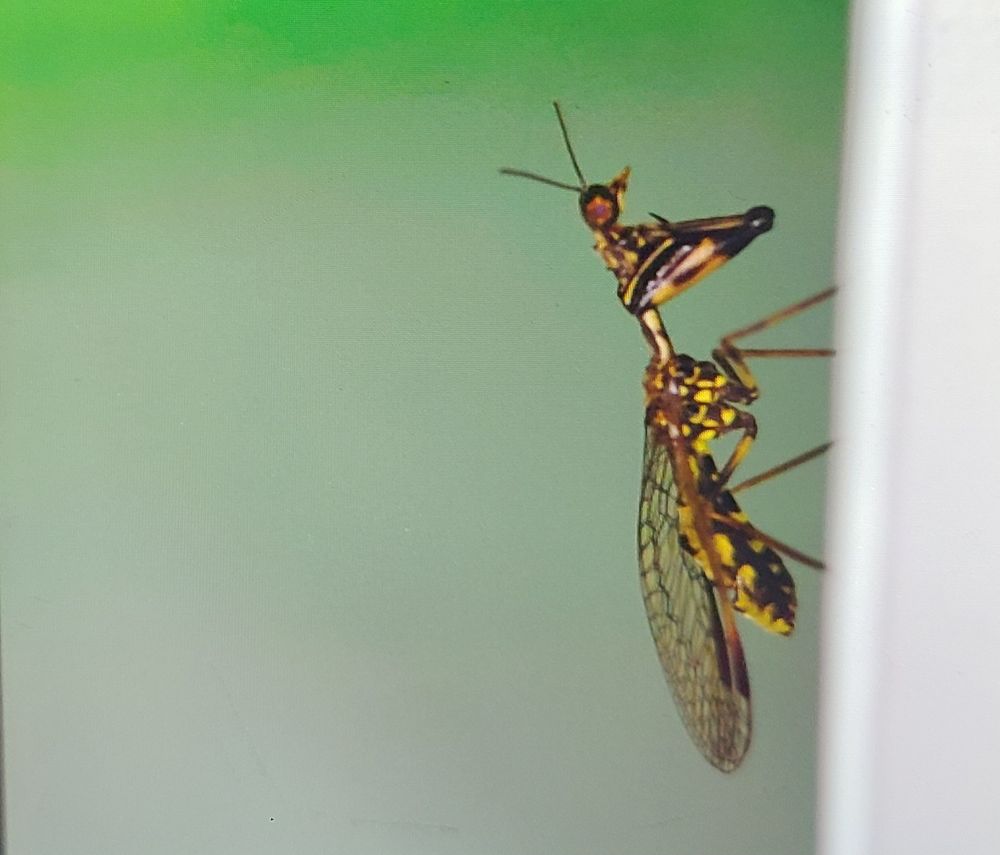
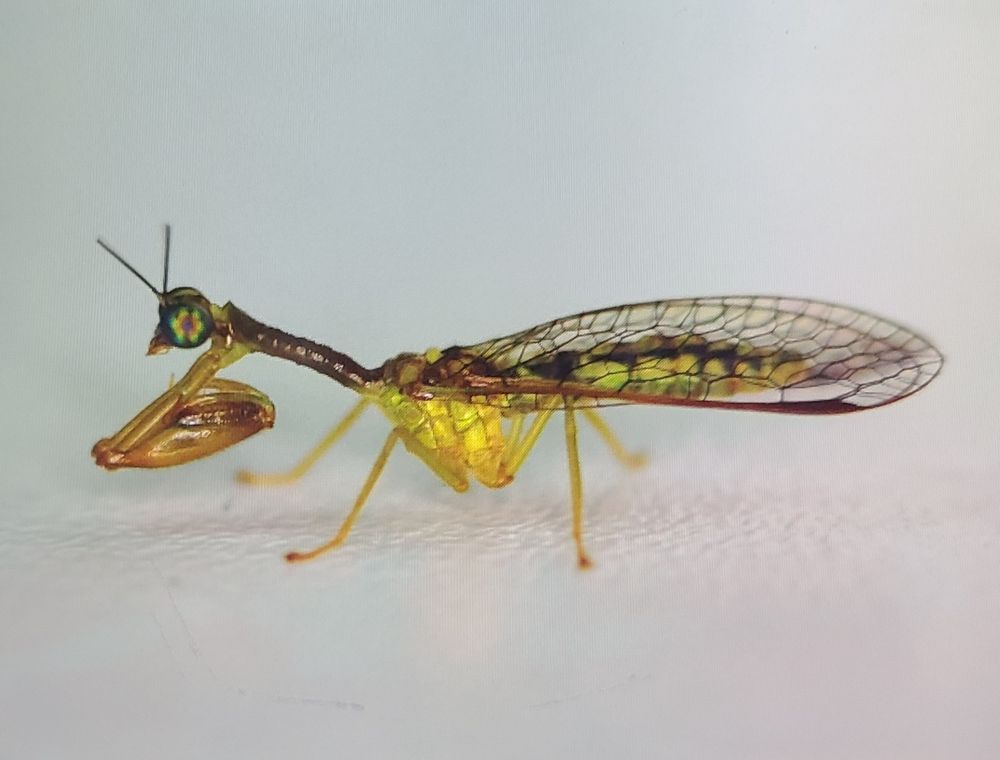
Some more mantidfly mania for #WorldBiodiversityDay
These two were photographed in Costa Rica, where my lab is currently doing fieldwork (more on that soon)!
These two were photographed in Costa Rica, where my lab is currently doing fieldwork (more on that soon)!
May 22, 2025 at 11:18 PM
Some more mantidfly mania for #WorldBiodiversityDay
These two were photographed in Costa Rica, where my lab is currently doing fieldwork (more on that soon)!
These two were photographed in Costa Rica, where my lab is currently doing fieldwork (more on that soon)!
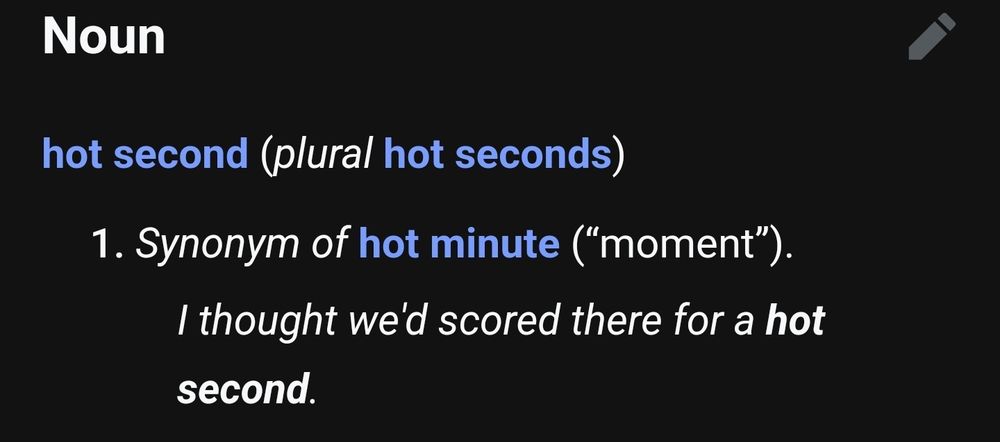
You can divide a hot minute by 60 and it has the same value, baffling
April 17, 2025 at 2:19 PM
You can divide a hot minute by 60 and it has the same value, baffling
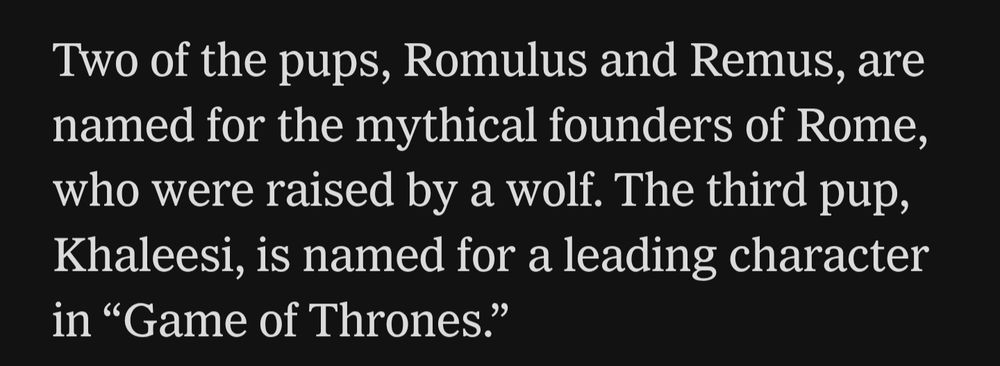
This is far from the most salient problem with the new "dire wolves," but while we're all dogpiling this story...they couldn't even name the female pup Arya or Sansa? They went with the title (not even name) of the war crimes dragon lady...absolute hacks
April 8, 2025 at 4:01 AM
This is far from the most salient problem with the new "dire wolves," but while we're all dogpiling this story...they couldn't even name the female pup Arya or Sansa? They went with the title (not even name) of the war crimes dragon lady...absolute hacks
Excited to announce another genome preprint! This one is first-authored by my first master's student, Tracy!
We generated a chromosome level genome for the invasive hibiscus mealybug, a citrus crop pest.
Thanks to coauthors
@lmdiepenbrock.bsky.social @kkbugtime.bsky.social
tinyurl.com/5n8h42r6
We generated a chromosome level genome for the invasive hibiscus mealybug, a citrus crop pest.
Thanks to coauthors
@lmdiepenbrock.bsky.social @kkbugtime.bsky.social
tinyurl.com/5n8h42r6


February 14, 2025 at 3:37 PM
Excited to announce another genome preprint! This one is first-authored by my first master's student, Tracy!
We generated a chromosome level genome for the invasive hibiscus mealybug, a citrus crop pest.
Thanks to coauthors
@lmdiepenbrock.bsky.social @kkbugtime.bsky.social
tinyurl.com/5n8h42r6
We generated a chromosome level genome for the invasive hibiscus mealybug, a citrus crop pest.
Thanks to coauthors
@lmdiepenbrock.bsky.social @kkbugtime.bsky.social
tinyurl.com/5n8h42r6
Okay wrapping up: this odd genetic system creates contrasting evolutionary dynamics for the sexes. How do these patterns extend to longer evolutionary time? More soon, stay tuned to the Mongue lab as we continue exploring paternal genome elimination and other weird repro!
7/7
7/7

November 17, 2024 at 2:20 AM
Okay wrapping up: this odd genetic system creates contrasting evolutionary dynamics for the sexes. How do these patterns extend to longer evolutionary time? More soon, stay tuned to the Mongue lab as we continue exploring paternal genome elimination and other weird repro!
7/7
7/7
If we look at the amount of adaption involved (let's save the pop gen methods for a future thread?), the pattern reverses: female-biased genes evolve less adaptively than those expressed in males! Why? Because haploid selection slows evolution but also removes more weakly deletetious variants.
6/n
6/n

November 17, 2024 at 2:16 AM
If we look at the amount of adaption involved (let's save the pop gen methods for a future thread?), the pattern reverses: female-biased genes evolve less adaptively than those expressed in males! Why? Because haploid selection slows evolution but also removes more weakly deletetious variants.
6/n
6/n
So different dynamics for the sexes and lots of sex-specific gene expression? This creates differing evolutionary trajectories for genes. First, genes expressed partly or entirely in males more slowly than female-biased genes. Evolution is faster on the female side in mealybugs! But..
5/n
5/n

November 17, 2024 at 2:10 AM
So different dynamics for the sexes and lots of sex-specific gene expression? This creates differing evolutionary trajectories for genes. First, genes expressed partly or entirely in males more slowly than female-biased genes. Evolution is faster on the female side in mealybugs! But..
5/n
5/n
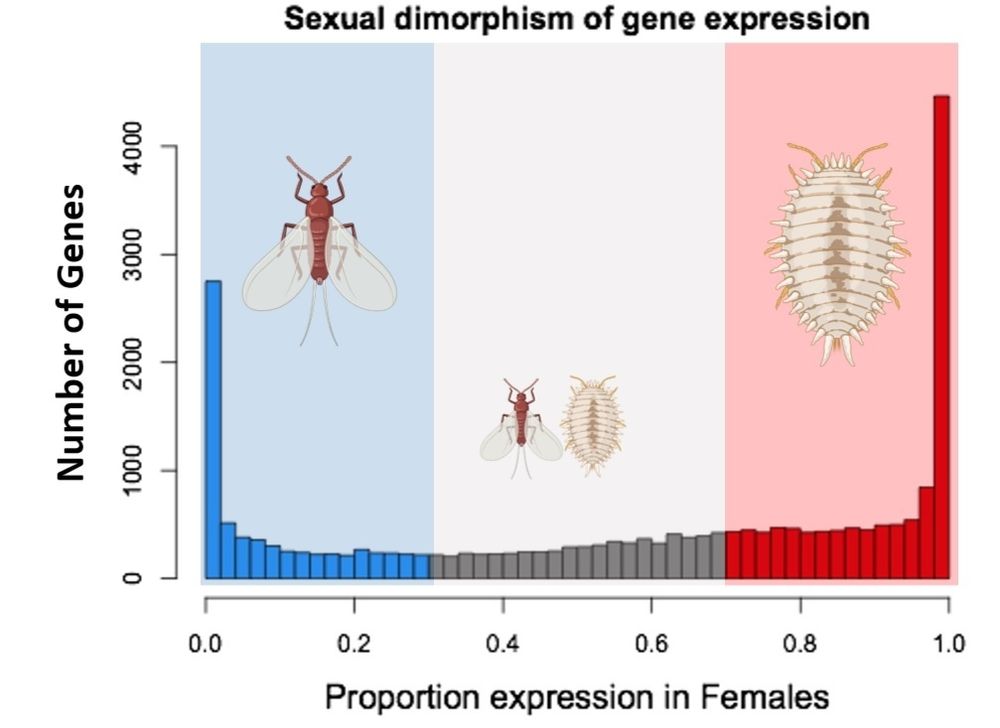
As you've maybe noticed, males and females are highly sexually dimorphic! Males are small, winged, and don't eat as adults. Females are large, sessile, and long-lived. This dimorphism extends to gene expression as well. Most genes are expressed in one sex or the other, but not both.
4/n
4/n
November 17, 2024 at 2:04 AM
As you've maybe noticed, males and females are highly sexually dimorphic! Males are small, winged, and don't eat as adults. Females are large, sessile, and long-lived. This dimorphism extends to gene expression as well. Most genes are expressed in one sex or the other, but not both.
4/n
4/n
This dynamic has two consequences: (1) males express genes in a haploid state, which should create more efficient selection than in diploids (2) fathers cannot pass on genes directly to their sons. They have to pass through a daughter to end up in a grandson.
3/n
3/n

November 17, 2024 at 2:00 AM
This dynamic has two consequences: (1) males express genes in a haploid state, which should create more efficient selection than in diploids (2) fathers cannot pass on genes directly to their sons. They have to pass through a daughter to end up in a grandson.
3/n
3/n
Mealybugs are sexually reproducing but have no sex chromosomes. Sex is determined by whether an embryo expreses 1 or 2 copies of the genome, so haplodiploidy BUT unlike other haplodiploids, eggs that develop male are fertilized too. They just eliminate their paternally inherited chromosomes!
2/n
2/n

November 17, 2024 at 1:55 AM
Mealybugs are sexually reproducing but have no sex chromosomes. Sex is determined by whether an embryo expreses 1 or 2 copies of the genome, so haplodiploidy BUT unlike other haplodiploids, eggs that develop male are fertilized too. They just eliminate their paternally inherited chromosomes!
2/n
2/n
Wow, lots of new followers this week! To celebrate and (re)introduce myself, I want to share one of the weird reproductive systems my lab works on: Paternal Genome Elimination in mealybugs. If you have house plants, maybe you know these waxy little pests already. But do you know their genetics?
1/n
1/n

November 17, 2024 at 1:42 AM
Wow, lots of new followers this week! To celebrate and (re)introduce myself, I want to share one of the weird reproductive systems my lab works on: Paternal Genome Elimination in mealybugs. If you have house plants, maybe you know these waxy little pests already. But do you know their genetics?
1/n
1/n
When you watch Jurassic Park but have a background in reproductive genomics...
"All vertebrate embryos are inherently female" assumes XX/XY sex chromosomes, but all living dinosaurs (birds) have ZZ/ZW chromosomes which would be "inherently male" from this perspective.
"All vertebrate embryos are inherently female" assumes XX/XY sex chromosomes, but all living dinosaurs (birds) have ZZ/ZW chromosomes which would be "inherently male" from this perspective.

November 11, 2024 at 1:19 PM
When you watch Jurassic Park but have a background in reproductive genomics...
"All vertebrate embryos are inherently female" assumes XX/XY sex chromosomes, but all living dinosaurs (birds) have ZZ/ZW chromosomes which would be "inherently male" from this perspective.
"All vertebrate embryos are inherently female" assumes XX/XY sex chromosomes, but all living dinosaurs (birds) have ZZ/ZW chromosomes which would be "inherently male" from this perspective.

The first fully Mongue lab generated genome is finally published!
Have a read about tuliptree scale insect, Toumeyella liriodendri:
academic.oup.com/g3journal/ad...
Credit to Erin Powell for the awesome photos!
#genomics #insects
Have a read about tuliptree scale insect, Toumeyella liriodendri:
academic.oup.com/g3journal/ad...
Credit to Erin Powell for the awesome photos!
#genomics #insects

September 27, 2024 at 7:39 PM
The first fully Mongue lab generated genome is finally published!
Have a read about tuliptree scale insect, Toumeyella liriodendri:
academic.oup.com/g3journal/ad...
Credit to Erin Powell for the awesome photos!
#genomics #insects
Have a read about tuliptree scale insect, Toumeyella liriodendri:
academic.oup.com/g3journal/ad...
Credit to Erin Powell for the awesome photos!
#genomics #insects