




Ashley Love
@ashley-love.bsky.social
Disease ecologist studying why individuals vary in how they respond to parasites 🧬🦠🐣 New PI 🔬 she/her
Reposted by Ashley Love

🪰Fitness consequences of parasitism in a changing world: A case study with bird blow flies and sagebrush songbirds. The authors provide an empirical example of how parasitism can combine with extrinsic stressors to affect host fitness
📖 Read the full paper here ➡️ buff.ly/PWTfZLJ
📖 Read the full paper here ➡️ buff.ly/PWTfZLJ

December 10, 2025 at 1:01 PM
🪰Fitness consequences of parasitism in a changing world: A case study with bird blow flies and sagebrush songbirds. The authors provide an empirical example of how parasitism can combine with extrinsic stressors to affect host fitness
📖 Read the full paper here ➡️ buff.ly/PWTfZLJ
📖 Read the full paper here ➡️ buff.ly/PWTfZLJ
Reposted by Ashley Love

We know that wildlife provisioning can promote or inhibit infectious disease spread, depending on things like food quality.
What about pathogen evolution? Using math with a focus on birdfeeders and house finches, we found that high quality food selects for higher virulence!
doi.org/10.1086/738726
What about pathogen evolution? Using math with a focus on birdfeeders and house finches, we found that high quality food selects for higher virulence!
doi.org/10.1086/738726
September 26, 2025 at 1:52 PM
We know that wildlife provisioning can promote or inhibit infectious disease spread, depending on things like food quality.
What about pathogen evolution? Using math with a focus on birdfeeders and house finches, we found that high quality food selects for higher virulence!
doi.org/10.1086/738726
What about pathogen evolution? Using math with a focus on birdfeeders and house finches, we found that high quality food selects for higher virulence!
doi.org/10.1086/738726
Reposted by Ashley Love

I haven’t been on social media much but I wanted to share the limited OS link to our new review in Trends in Parasitology.
Net positive effects of early-life parasitism on wild animal host fitness
@ashley-love.bsky.social
The link will work until Decembet!
www.sciencedirect.com/science/arti...
Net positive effects of early-life parasitism on wild animal host fitness
@ashley-love.bsky.social
The link will work until Decembet!
www.sciencedirect.com/science/arti...

Net positive effects of early-life parasitism on wild animal host fitness
Early-life parasitism can negatively impact the health of wild animal hosts. However, parasitism can also positively influence host physiology, behavi…
www.sciencedirect.com
October 13, 2025 at 12:38 PM
I haven’t been on social media much but I wanted to share the limited OS link to our new review in Trends in Parasitology.
Net positive effects of early-life parasitism on wild animal host fitness
@ashley-love.bsky.social
The link will work until Decembet!
www.sciencedirect.com/science/arti...
Net positive effects of early-life parasitism on wild animal host fitness
@ashley-love.bsky.social
The link will work until Decembet!
www.sciencedirect.com/science/arti...
Reposted by Ashley Love

Some literally amazing research on parasite coextinction and recovery in the kakapo - makes me so happy to see this www.cell.com/current-biol...
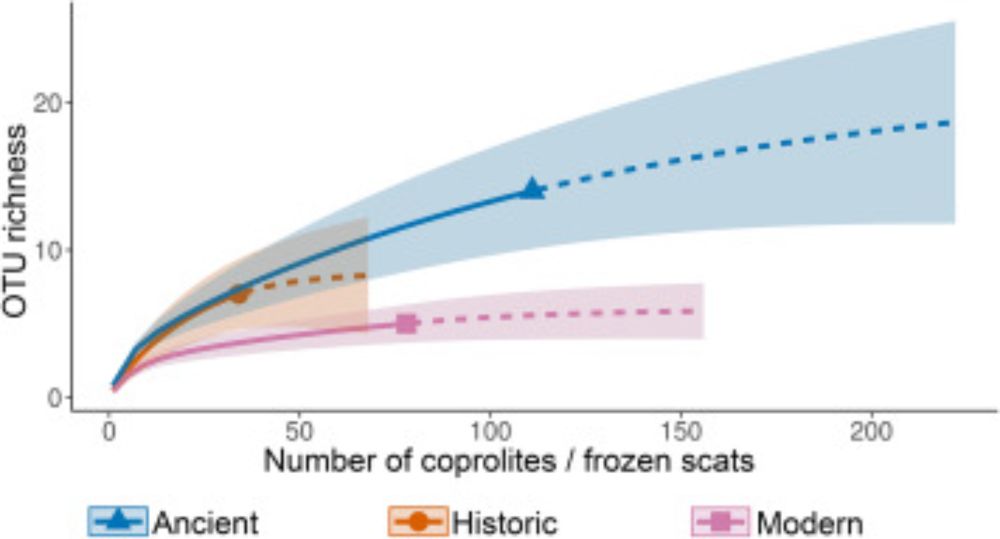
Long-term parasite decline associated with near extinction and conservation of the critically endangered kākāpō parrot
Boast et al. analyze a unique fecal record of the endangered kākāpō parrot to reveal
>800 years of changing parasite communities. Parasite losses occur during the species’
decline to near extinction a...
www.cell.com
July 25, 2025 at 6:03 PM
Some literally amazing research on parasite coextinction and recovery in the kakapo - makes me so happy to see this www.cell.com/current-biol...
Reposted by Ashley Love
New paper out modelling how the nutritional content of wild bird foods could affect disease transmission - a nice follow-up application of our Molecular Ecology study showing that food quality can affect immune function and disease tolerance.
doi.org/10.1093/icb/... @durantlab.bsky.social
doi.org/10.1093/icb/... @durantlab.bsky.social
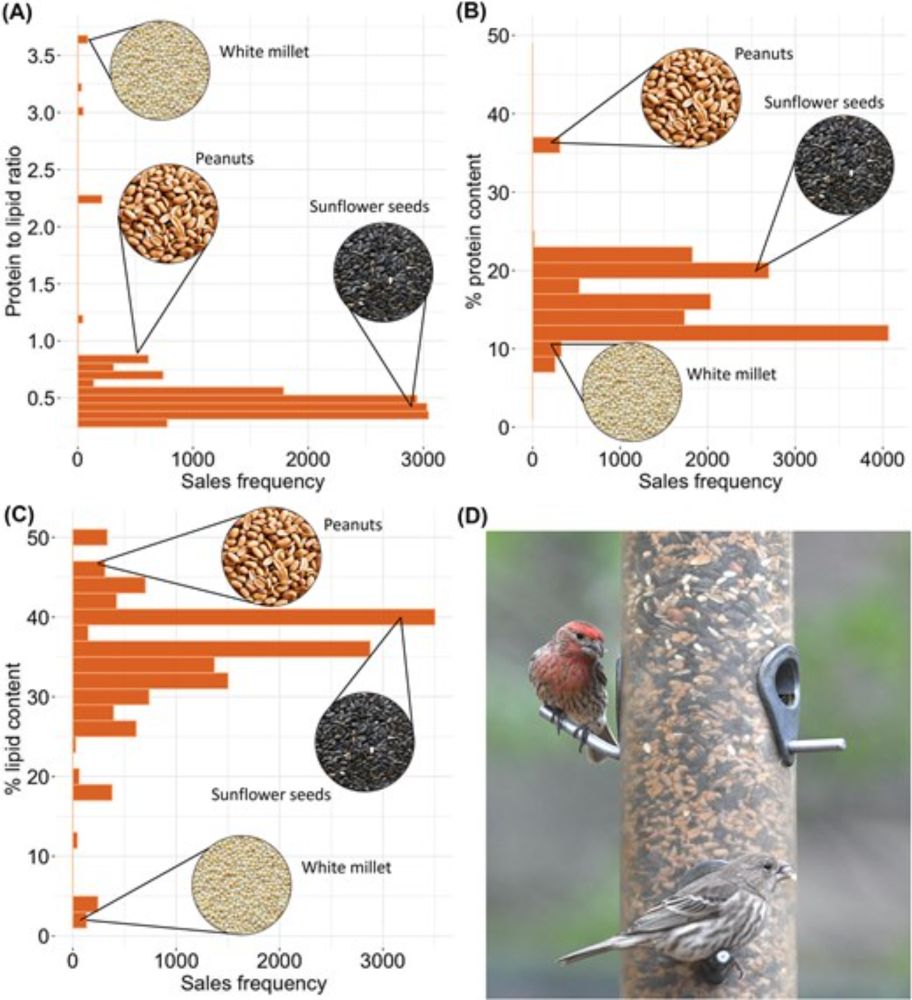
The nutritional content of anthropogenic resources affects wildlife disease dynamics
Synopsis. Wildlife have become increasingly reliant on human-supplemented food, affecting interactions between individuals and subsequently pathogen transm
doi.org
July 21, 2025 at 5:40 PM
New paper out modelling how the nutritional content of wild bird foods could affect disease transmission - a nice follow-up application of our Molecular Ecology study showing that food quality can affect immune function and disease tolerance.
doi.org/10.1093/icb/... @durantlab.bsky.social
doi.org/10.1093/icb/... @durantlab.bsky.social
Reposted by Ashley Love
🧪 New paper out at Molecular Ecology! We find that diet quality impacts host ability to tolerate infection and use transcriptomics to determine the molecular mechanisms underlying these diet-driven differences. This was a fun collab between @durantlab.bsky.social & @lewislab.bsky.social labs.

Diet Driven Differences in Host Tolerance Are Linked to Shifts in Global Gene Expression in a Common Avian Host‐Pathogen System
Wildlife have become increasingly dependent on anthropogenic resources, altering interactions between individuals and subsequently disease transmission. Further, nutritional quantity and quality impa....
onlinelibrary.wiley.com
May 15, 2025 at 4:21 PM
🧪 New paper out at Molecular Ecology! We find that diet quality impacts host ability to tolerate infection and use transcriptomics to determine the molecular mechanisms underlying these diet-driven differences. This was a fun collab between @durantlab.bsky.social & @lewislab.bsky.social labs.
Reposted by Ashley Love
Thread with an email being sent to @asn-amnat.bsky.social @sse-evolution.bsky.social @systbiol.bsky.social members today calling for a Tri-society week of action for NSF:
Dear members:
The tri-societies (ASN, SSE,SSB) are running a ‘Week of Action for NSF’. Your engagement is crucial.
Dear members:
The tri-societies (ASN, SSE,SSB) are running a ‘Week of Action for NSF’. Your engagement is crucial.

May 5, 2025 at 11:59 AM
Thread with an email being sent to @asn-amnat.bsky.social @sse-evolution.bsky.social @systbiol.bsky.social members today calling for a Tri-society week of action for NSF:
Dear members:
The tri-societies (ASN, SSE,SSB) are running a ‘Week of Action for NSF’. Your engagement is crucial.
Dear members:
The tri-societies (ASN, SSE,SSB) are running a ‘Week of Action for NSF’. Your engagement is crucial.
Reposted by Ashley Love

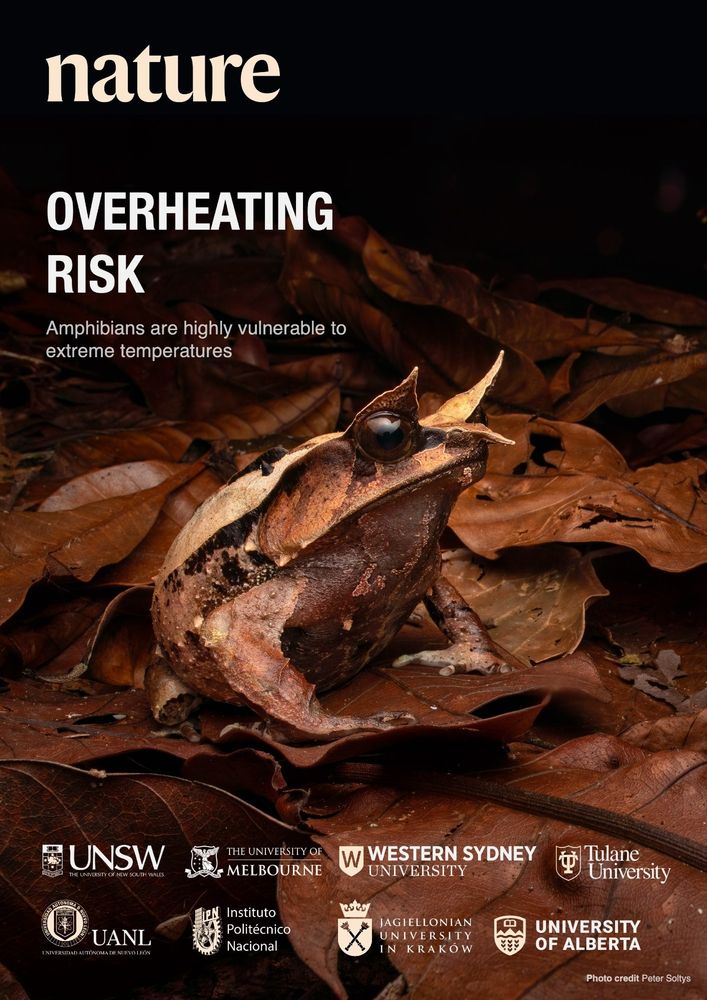
How vulnerable are #amphibians to extreme heat? 🐸🌡️
Our paper in @nature.com shows that many amphibians are already overheating, and many more species will be impacted by climate warming globally.
See the thread below for a digest 🧵
Link to the paper: doi.org/10.1038/s415...
#Nature
Our paper in @nature.com shows that many amphibians are already overheating, and many more species will be impacted by climate warming globally.
See the thread below for a digest 🧵
Link to the paper: doi.org/10.1038/s415...
#Nature
March 6, 2025 at 11:36 PM
How vulnerable are #amphibians to extreme heat? 🐸🌡️
Our paper in @nature.com shows that many amphibians are already overheating, and many more species will be impacted by climate warming globally.
See the thread below for a digest 🧵
Link to the paper: doi.org/10.1038/s415...
#Nature
Our paper in @nature.com shows that many amphibians are already overheating, and many more species will be impacted by climate warming globally.
See the thread below for a digest 🧵
Link to the paper: doi.org/10.1038/s415...
#Nature
Reposted by Ashley Love

A high lipid diet leads to worse infectious disease outcomes. Interesting implications for wildlife food supplementation. Always exciting to have a new manuscript out! Congrats @ashley-love.bsky.social @sauerscientist.bsky.social
@jexpbiol.Bsky.social
journals.biologists.com/jeb/article/...
@jexpbiol.Bsky.social
journals.biologists.com/jeb/article/...

A high-lipid diet leads to greater pathology and lower tolerance during infection
Summary: Canaries fed a diet high in lipids show more severe disease outcomes than those fed a high-protein diet, with important implications for human and wildlife disease transmission.
journals.biologists.com
March 5, 2025 at 4:34 PM
A high lipid diet leads to worse infectious disease outcomes. Interesting implications for wildlife food supplementation. Always exciting to have a new manuscript out! Congrats @ashley-love.bsky.social @sauerscientist.bsky.social
@jexpbiol.Bsky.social
journals.biologists.com/jeb/article/...
@jexpbiol.Bsky.social
journals.biologists.com/jeb/article/...
Reposted by Ashley Love

Welp this is horrifying. These researchers quantified the "stratigraphy" of plastic waste used in Common Coot nests. Using expiration dates, they found one nest that contained 635 (!!!) pieces of trash, including plastic dating back to 1991.
esajournals.onlinelibrary.wiley.com/doi/full/10....
esajournals.onlinelibrary.wiley.com/doi/full/10....

February 28, 2025 at 6:37 PM
Welp this is horrifying. These researchers quantified the "stratigraphy" of plastic waste used in Common Coot nests. Using expiration dates, they found one nest that contained 635 (!!!) pieces of trash, including plastic dating back to 1991.
esajournals.onlinelibrary.wiley.com/doi/full/10....
esajournals.onlinelibrary.wiley.com/doi/full/10....
Reposted by Ashley Love
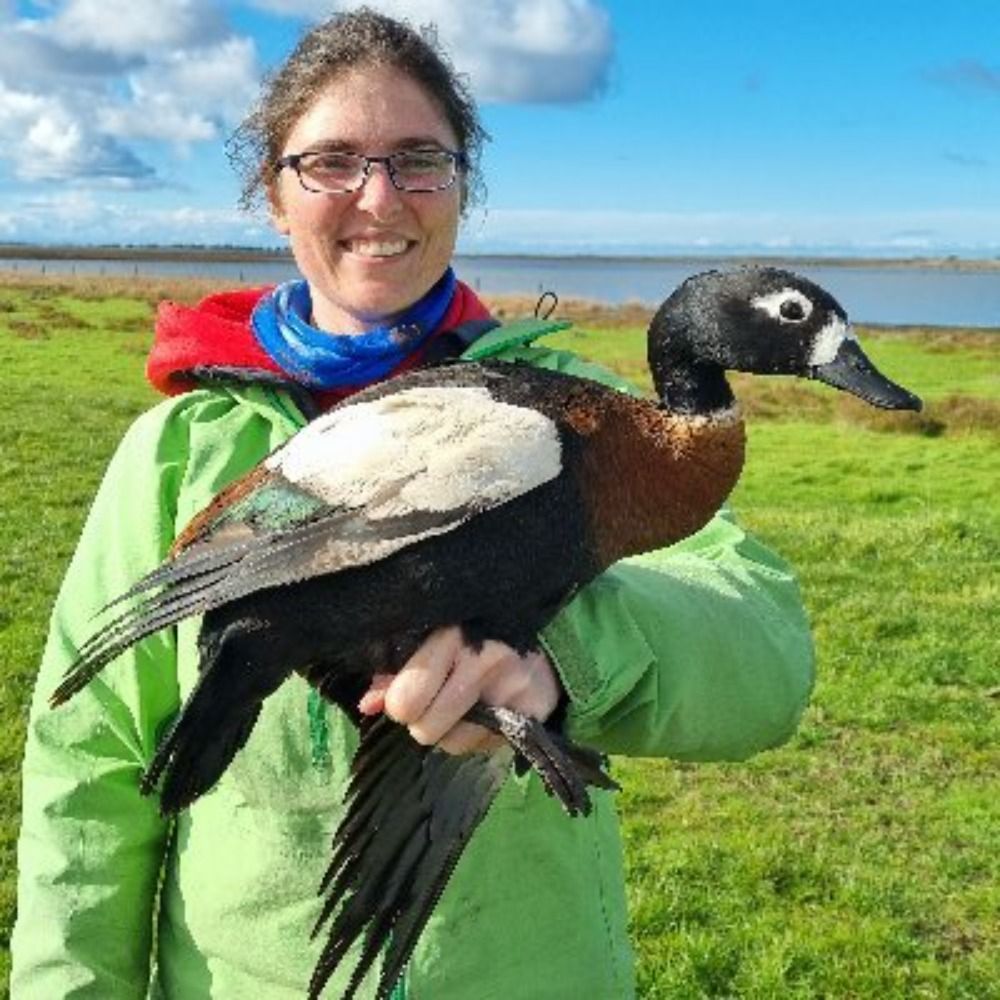
Raptors highly impacted by HPAI, but to they survive infection? Antibodies to H5 and N1 were detected in 60/316 individuals across 6 species, where Bald Eagles have highest seroprev = higher survival rate post-HP H5N1 than expected.
👉 link.springer.com/article/10.1...
👉 link.springer.com/article/10.1...

March 2, 2025 at 11:01 PM
Raptors highly impacted by HPAI, but to they survive infection? Antibodies to H5 and N1 were detected in 60/316 individuals across 6 species, where Bald Eagles have highest seroprev = higher survival rate post-HP H5N1 than expected.
👉 link.springer.com/article/10.1...
👉 link.springer.com/article/10.1...
Reposted by Ashley Love
Just a few more days to apply for a PhD with me! Use new technologies to study movement and ecology of serotine bats in UK. Evidence can guide future rabies control strategies, helping bats and people. Click on project 'Understanding transmission..' here: www.surrey.ac.uk/bbsrc-wessex... #PhD #bats

February 25, 2025 at 8:34 AM
Just a few more days to apply for a PhD with me! Use new technologies to study movement and ecology of serotine bats in UK. Evidence can guide future rabies control strategies, helping bats and people. Click on project 'Understanding transmission..' here: www.surrey.ac.uk/bbsrc-wessex... #PhD #bats
Reposted by Ashley Love

Our next Student Research Grant Seminar is at noon (ET) on Monday, 3/3: "The impact of wildfires on the vocal output of boreal birds communities in Alaska" with Brendan A. Graham, Post-Doctoral Fellow, Institute of Arctic Biology
INFO: americanornithology.org/professional...
#AOS_SRGS #AOSmembers
INFO: americanornithology.org/professional...
#AOS_SRGS #AOSmembers

February 26, 2025 at 8:40 PM
Our next Student Research Grant Seminar is at noon (ET) on Monday, 3/3: "The impact of wildfires on the vocal output of boreal birds communities in Alaska" with Brendan A. Graham, Post-Doctoral Fellow, Institute of Arctic Biology
INFO: americanornithology.org/professional...
#AOS_SRGS #AOSmembers
INFO: americanornithology.org/professional...
#AOS_SRGS #AOSmembers
Reposted by Ashley Love

2025. Replacing native grazers with livestock influences arthropods to have implications for ecosystem functions and disease esajournals.onlinelibrary.wiley.com/doi/abs/10.1...

Replacing native grazers with livestock influences arthropods to have implications for ecosystem functions and disease
Grazing by large mammalian herbivores influences ecosystem structure and functions through its impacts on vegetation and soil, as well as by the influence on other animals such as arthropods. As live....
esajournals.onlinelibrary.wiley.com
February 27, 2025 at 12:09 AM
2025. Replacing native grazers with livestock influences arthropods to have implications for ecosystem functions and disease esajournals.onlinelibrary.wiley.com/doi/abs/10.1...
Reposted by Ashley Love
New Research Highlight: citizen science observations shed light on how anthropogenic food sources influence wildlife disease - https://buff.ly/48C9ucE 🦠
🧪 🌏
🧪 🌏

buff.ly
November 18, 2024 at 9:00 AM
New Research Highlight: citizen science observations shed light on how anthropogenic food sources influence wildlife disease - https://buff.ly/48C9ucE 🦠
🧪 🌏
🧪 🌏
Reposted by Ashley Love
"Feather mites have been known to consume microbes from their host feathers, but here, for the first time, we demonstrate that they selectively consume feather-degrading microbes from feathers...."🪽
Read the full paper here: https://buff.ly/3OmCOKN 🧪 🌏
Read the full paper here: https://buff.ly/3OmCOKN 🧪 🌏

buff.ly
November 26, 2024 at 2:00 PM
"Feather mites have been known to consume microbes from their host feathers, but here, for the first time, we demonstrate that they selectively consume feather-degrading microbes from feathers...."🪽
Read the full paper here: https://buff.ly/3OmCOKN 🧪 🌏
Read the full paper here: https://buff.ly/3OmCOKN 🧪 🌏