




Ash
@ashrajesh.bsky.social
Clinical psychologist (in training), Precision Neuroimaging Postdoc at Wash U
Reposted by Ash

Targeting the somato-cognitive action network (SCAN) rather than motor regions doubles efficacy of TMS treatments for Parkinson’s disease. Seems that various DBS targets for Parkinson’s are selectively connected to the SCAN rather than effector-specific motor regions.🧪
www.nature.com/articles/s41...
www.nature.com/articles/s41...

Parkinson’s disease as a somato-cognitive action network disorder - Nature
The substantia nigra and all Parkinson’s disease deep-brain stimulation targets are selectively connected to the somato-cognitive action network rather than to effector-specific motor regions.
www.nature.com
February 7, 2026 at 7:38 AM
Targeting the somato-cognitive action network (SCAN) rather than motor regions doubles efficacy of TMS treatments for Parkinson’s disease. Seems that various DBS targets for Parkinson’s are selectively connected to the SCAN rather than effector-specific motor regions.🧪
www.nature.com/articles/s41...
www.nature.com/articles/s41...
Reposted by Ash

The highlight of my week was the publication of "Parkinson’s disease as a somato-cognitive action network disorder" in @nature.com. It's a great paper that shows how conceptual changes in fundamental neuroscience - the discovery of SCAN - can improve treatment 🧪 www.nature.com/articles/s41...

Parkinson’s disease as a somato-cognitive action network disorder - Nature
The substantia nigra and all Parkinson’s disease deep-brain stimulation targets are selectively connected to the somato-cognitive action network rather than to effector-specific motor regions.
www.nature.com
February 7, 2026 at 3:14 PM
The highlight of my week was the publication of "Parkinson’s disease as a somato-cognitive action network disorder" in @nature.com. It's a great paper that shows how conceptual changes in fundamental neuroscience - the discovery of SCAN - can improve treatment 🧪 www.nature.com/articles/s41...
Reposted by Ash

Nature research paper: Parkinson’s disease as a somato-cognitive action network disorder
go.nature.com/4aemciV
go.nature.com/4aemciV

Parkinson’s disease as a somato-cognitive action network disorder - Nature
The substantia nigra and all Parkinson’s disease deep-brain stimulation targets are selectively connected to the somato-cognitive action network rather than to effector-specific motor regions.
go.nature.com
February 6, 2026 at 6:23 PM
Nature research paper: Parkinson’s disease as a somato-cognitive action network disorder
go.nature.com/4aemciV
go.nature.com/4aemciV
Reposted by Ash

It’s time to rethink Parkinson’s disease. Our work reframes PD as a disorder of the somato-cognitive action network (SCAN), and shows that normalizing SCAN connectivity represents a shared mechanism across diverse effective therapies.
rdcu.be/e2n4t
@ndosenbach.bsky.social @gordonneuro.bsky.social
rdcu.be/e2n4t
@ndosenbach.bsky.social @gordonneuro.bsky.social
February 5, 2026 at 12:35 AM
It’s time to rethink Parkinson’s disease. Our work reframes PD as a disorder of the somato-cognitive action network (SCAN), and shows that normalizing SCAN connectivity represents a shared mechanism across diverse effective therapies.
rdcu.be/e2n4t
@ndosenbach.bsky.social @gordonneuro.bsky.social
rdcu.be/e2n4t
@ndosenbach.bsky.social @gordonneuro.bsky.social
Reposted by Ash

Scientists just discovered a key brain network affected by Parkinson’s disease. The finding could change how doctors understand symptoms and lead to better treatments. 🧠 bit.ly/4qdpLMf

February 4, 2026 at 8:13 PM
Scientists just discovered a key brain network affected by Parkinson’s disease. The finding could change how doctors understand symptoms and lead to better treatments. 🧠 bit.ly/4qdpLMf
Reposted by Ash

Parkinson's disease affects over 10 million people worldwide. A new study led by WashU Medicine researchers is paving the way for more personalized, non-invasive treatment, tackling this neurological disorder at its root. @ndosenbach.bsky.social medicine.washu.edu/news/brain-n...

Brain network responsible for Parkinson’s disease identified | WashU Medicine
In a new study, treatments targeted to the network resulted in greater improvements in symptoms compared to treating nearby brain regions.
medicine.washu.edu
February 5, 2026 at 3:34 PM
Parkinson's disease affects over 10 million people worldwide. A new study led by WashU Medicine researchers is paving the way for more personalized, non-invasive treatment, tackling this neurological disorder at its root. @ndosenbach.bsky.social medicine.washu.edu/news/brain-n...
Reposted by Ash
I’m very excited about this new work describing the specific cortical-striatal circuits that are altered in Parkinson’s Disease and that should be targeted for optimal PD treatment.
www.nature.com/articles/s41...
www.nature.com/articles/s41...

February 5, 2026 at 7:24 PM
I’m very excited about this new work describing the specific cortical-striatal circuits that are altered in Parkinson’s Disease and that should be targeted for optimal PD treatment.
www.nature.com/articles/s41...
www.nature.com/articles/s41...
Reposted by Ash
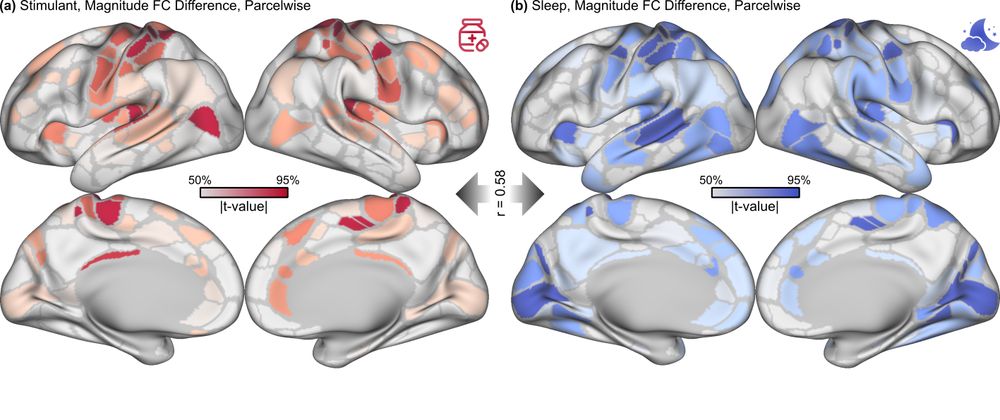
My med school textbook says stimulants like Ritalin treat hyperactivity by “stimulating” the brain’s attention and cognitive control systems. We studied children taking stimulants in the ABCD Study, and the largest differences were actually in arousal and reward networks! Check out our preprint!
May 22, 2025 at 9:33 PM
My med school textbook says stimulants like Ritalin treat hyperactivity by “stimulating” the brain’s attention and cognitive control systems. We studied children taking stimulants in the ABCD Study, and the largest differences were actually in arousal and reward networks! Check out our preprint!
Reposted by Ash

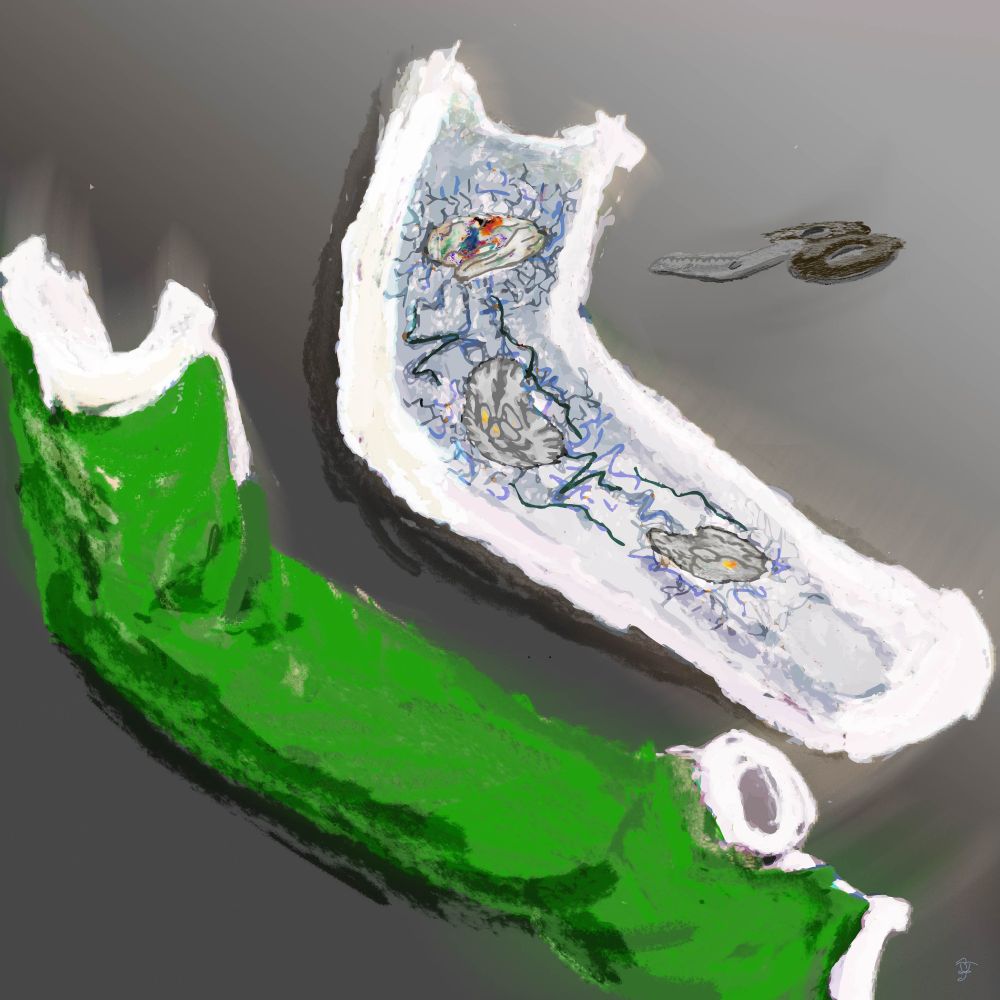
It turns out the brain🧠is silently🤫working when your arm is in a cast. 🩼 🚧
Plastic changes occur, and revert again when the cast is removed … not just in cortex.
Plastic changes occur, and revert again when the cast is removed … not just in cortex.
April 12, 2025 at 5:59 PM
It turns out the brain🧠is silently🤫working when your arm is in a cast. 🩼 🚧
Plastic changes occur, and revert again when the cast is removed … not just in cortex.
Plastic changes occur, and revert again when the cast is removed … not just in cortex.
Reposted by Ash

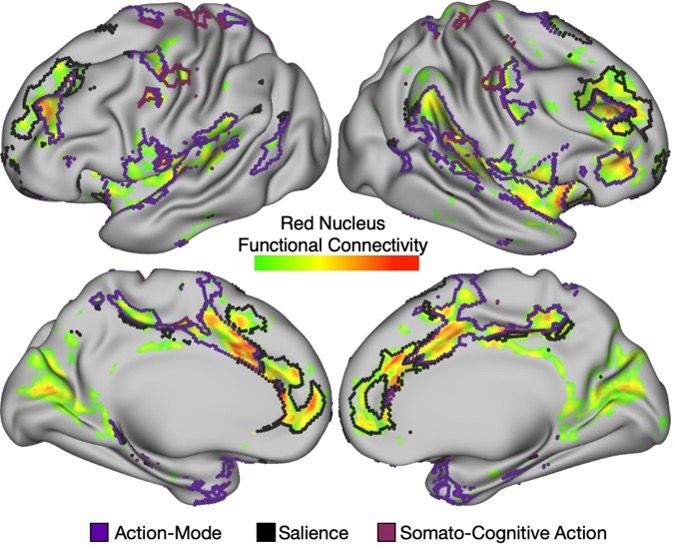
It's shocking how little is known about the brainstem red nucleus. In our new paper “The human brainstem’s red nucleus was upgraded to support goal-directed action” out now in @naturecomms.bsky.social we show that current thinking on the red nucleus is in need of a serious upgrade. rdcu.be/ehbOy
April 10, 2025 at 3:46 PM
It's shocking how little is known about the brainstem red nucleus. In our new paper “The human brainstem’s red nucleus was upgraded to support goal-directed action” out now in @naturecomms.bsky.social we show that current thinking on the red nucleus is in need of a serious upgrade. rdcu.be/ehbOy