


A. Villechenous
@avillechenous.bsky.social
Chemist, PhD👨🏾🔬 Organometallic and Bioinorganic Chemistry 👨🏾🎓🇪🇸 In metals, we trust ⚗️ Climbing mountains 🏔 Diving oceans 🤿
Thrilled to join Prof. Aidan McDonald’s group at @tcddublin.bsky.social as a postdoc!🤩👨🏾🔬🤩
Excited to contribute to Bioinspired Catalysis, exploring molecular catalysts to address global challenges. 🧪🌍
Ready for this new adventure! 🤓🤜🏾🤛🏾 #Organometallic #Catalysis #PostdocLife
Excited to contribute to Bioinspired Catalysis, exploring molecular catalysts to address global challenges. 🧪🌍
Ready for this new adventure! 🤓🤜🏾🤛🏾 #Organometallic #Catalysis #PostdocLife

April 3, 2025 at 6:53 PM
Thrilled to join Prof. Aidan McDonald’s group at @tcddublin.bsky.social as a postdoc!🤩👨🏾🔬🤩
Excited to contribute to Bioinspired Catalysis, exploring molecular catalysts to address global challenges. 🧪🌍
Ready for this new adventure! 🤓🤜🏾🤛🏾 #Organometallic #Catalysis #PostdocLife
Excited to contribute to Bioinspired Catalysis, exploring molecular catalysts to address global challenges. 🧪🌍
Ready for this new adventure! 🤓🤜🏾🤛🏾 #Organometallic #Catalysis #PostdocLife
Reposted by A. Villechenous
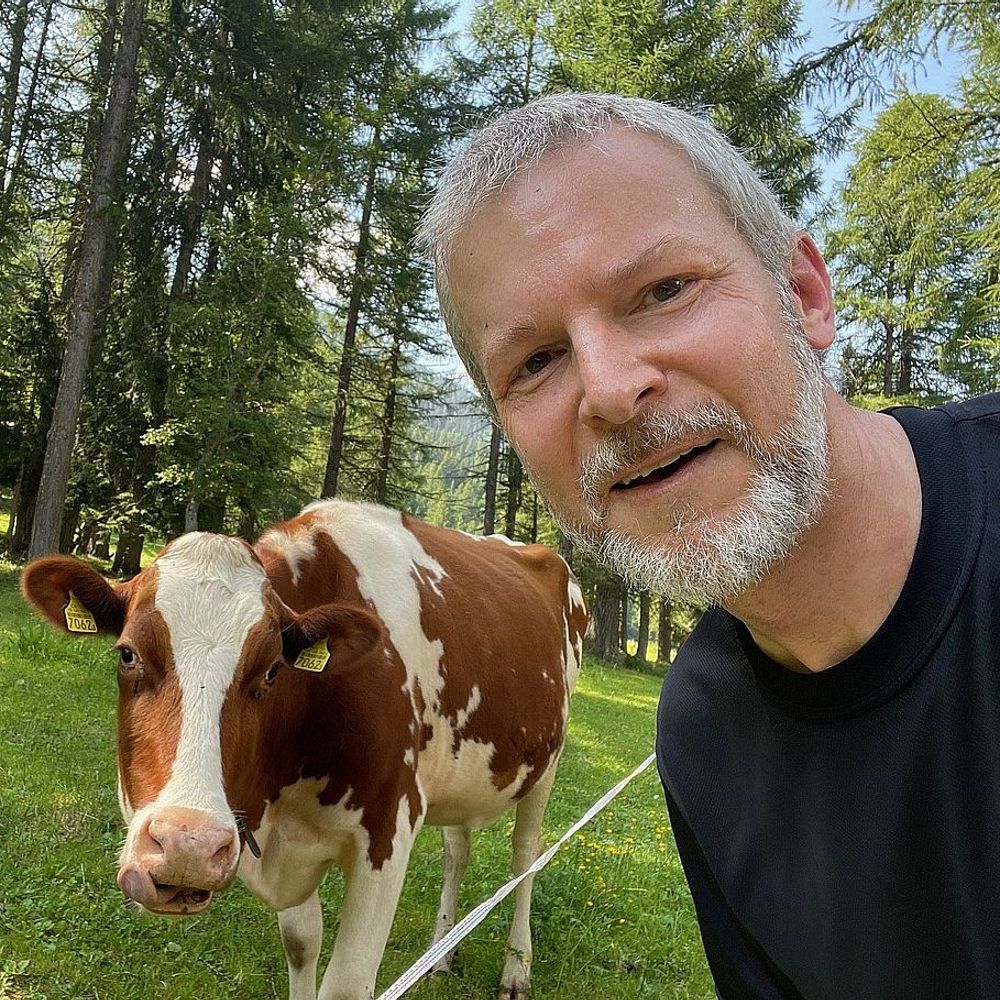
A simple guide to the design of metal complexes in luminescence and photoredox catalysis.
With Giacomo Morselli and Christian Reber in JACS @jacs.acspublications.org
pubs.acs.org/doi/10.1021/...
With Giacomo Morselli and Christian Reber in JACS @jacs.acspublications.org
pubs.acs.org/doi/10.1021/...
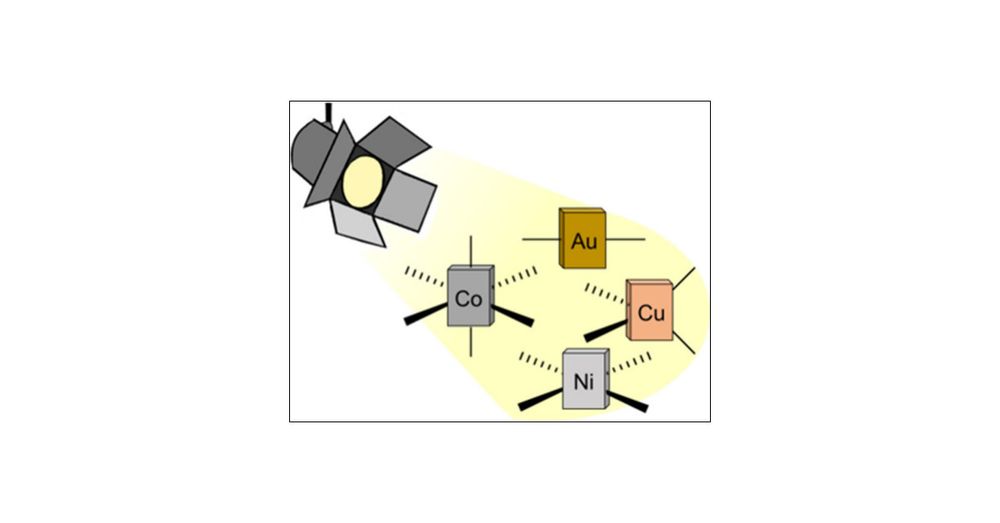
Molecular Design Principles for Photoactive Transition Metal Complexes: A Guide for “Photo-Motivated” Chemists
Luminescence and photochemistry involve electronically excited states that are inherently unstable and therefore spontaneously decay to electronic ground states, in most cases by nonradiative energy release that generates heat. This energy dissipation can occur on a time scale of 100 fs (∼10–13 s) and usually needs to be slowed down to at least the nanosecond (∼10–9 s) time scale for luminescence and intermolecular photochemistry to occur. This is a challenging task with many different factors to consider. An alternative emerging strategy is to target dissociative excited states that lead to metal–ligand bond homolysis on the subnanosecond time scale to access synthetically useful radicals. Based on a thorough review at the most recent advances in the field, this article aims to provide a concise guide to obtaining luminescent and photochemically useful coordination compounds with d-block elements. We hope to encourage “photo-motivated” chemists who have been reluctant to apply their synthetic and other knowledge to photophysics and photochemistry, and we intend to stimulate new approaches to the synthetic control of excited state behavior.
pubs.acs.org
March 27, 2025 at 10:18 PM
A simple guide to the design of metal complexes in luminescence and photoredox catalysis.
With Giacomo Morselli and Christian Reber in JACS @jacs.acspublications.org
pubs.acs.org/doi/10.1021/...
With Giacomo Morselli and Christian Reber in JACS @jacs.acspublications.org
pubs.acs.org/doi/10.1021/...
🫣😮🤯

In a new Science study, cryo–electron tomography captures the in-cell architecture of the mitochondrial respiratory chain, illuminating how the coordinated action of molecular machines drives life’s fundamental energy conversion.
Learn more in this week's issue: scim.ag/3FA3Ygq
Learn more in this week's issue: scim.ag/3FA3Ygq
March 21, 2025 at 12:34 PM
🫣😮🤯
Reposted by A. Villechenous
Check out this article from Chad Mirkin and colleagues at @iinanonu.bsky.social
'Manipulating metal–ligand binding in allosteric coordination complexes through ring strain'
#OpenAccess 🔓
'Manipulating metal–ligand binding in allosteric coordination complexes through ring strain'
#OpenAccess 🔓

Manipulating metal–ligand binding in allosteric coordination complexes through ring strain
The weak-link approach (WLA) to organometallic complexes offers a powerful method to create allosteric shape-shifting coordination complexes. However, chemically tuning the metal–ligand interactions…
buff.ly
March 6, 2025 at 7:00 PM
Check out this article from Chad Mirkin and colleagues at @iinanonu.bsky.social
'Manipulating metal–ligand binding in allosteric coordination complexes through ring strain'
#OpenAccess 🔓
'Manipulating metal–ligand binding in allosteric coordination complexes through ring strain'
#OpenAccess 🔓
Reposted by A. Villechenous
If you wonder about how to harness innate excited-state reactivity in TM photocatalysis to design new synthetic methods, you can find some guidelines and a rationalization attending to orbitals in this Perspective, just published in
ACSCatalysis @acs.org:
pubs.acs.org/doi/10.1021/...
(1/3)
ACSCatalysis @acs.org:
pubs.acs.org/doi/10.1021/...
(1/3)

Catalysis in the Excited State: Bringing Innate Transition Metal Photochemistry into Play
Transition metal catalysis is an indispensable tool for organic synthesis that has been harnessed, modulated, and perfected for many decades by careful selection of metal centers and ligands, giving r...
pubs.acs.org
March 6, 2025 at 8:44 AM
If you wonder about how to harness innate excited-state reactivity in TM photocatalysis to design new synthetic methods, you can find some guidelines and a rationalization attending to orbitals in this Perspective, just published in
ACSCatalysis @acs.org:
pubs.acs.org/doi/10.1021/...
(1/3)
ACSCatalysis @acs.org:
pubs.acs.org/doi/10.1021/...
(1/3)
Reposted by A. Villechenous

Discovery of Phototoxic Metal Complexes with Antibacterial Properties via a Combinatorial Approach | Inorganic Chemistry pubs.acs.org/doi/10.1021/... Vilar and co-workers @InorgChem #iridium #antibacterial #combinatorial #S_aureus #MRSA #phototoxic #ROS #permeability #bactericidal

March 1, 2025 at 5:02 AM
Discovery of Phototoxic Metal Complexes with Antibacterial Properties via a Combinatorial Approach | Inorganic Chemistry pubs.acs.org/doi/10.1021/... Vilar and co-workers @InorgChem #iridium #antibacterial #combinatorial #S_aureus #MRSA #phototoxic #ROS #permeability #bactericidal
Reposted by A. Villechenous

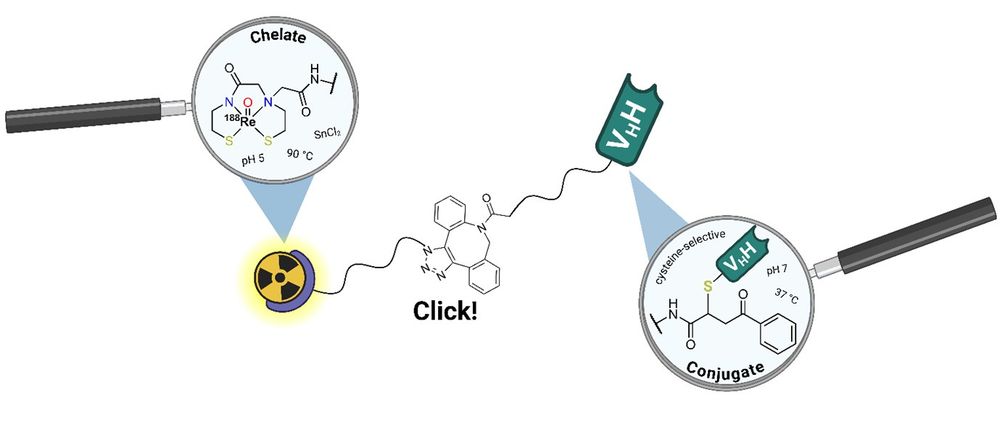
Happy to share some of the results coming from my PhD with SCK CEN and @gassergroup.bsky.social accepted in @chemicalscience.rsc.org ! This work focuses on radiolabelling methods to attach Re-188 to a Nanobody for use in the targeted radionuclide therapy of cancer ☢️

Congrats @dianamelis.bsky.social for her article in @chemicalscience.rsc.org. We describe the 1st use of bioorthogonal click chemistry with 188Re for radiolabelling of an anti-c-Met VHH Nanobody®. Great collaboration with the Opsomer/Ooms group
@chimieparistechpsl.bsky.social
doi.org/10.1039/D4SC...
@chimieparistechpsl.bsky.social
doi.org/10.1039/D4SC...
February 28, 2025 at 7:45 AM
Happy to share some of the results coming from my PhD with SCK CEN and @gassergroup.bsky.social accepted in @chemicalscience.rsc.org ! This work focuses on radiolabelling methods to attach Re-188 to a Nanobody for use in the targeted radionuclide therapy of cancer ☢️
Reposted by A. Villechenous

🚀 Exciting news! Our paper “Copper(II) cyclopeptides with high ROS-mediated cytotoxicity” has been accepted in Bioconjugate Chemistry! @pubs.acs.org 🎉
More details soon!
#Metallodrugs #ROS #BioconjugateChem #MetalPeptides #ChemSky
More details soon!
#Metallodrugs #ROS #BioconjugateChem #MetalPeptides #ChemSky

February 26, 2025 at 7:27 PM
🚀 Exciting news! Our paper “Copper(II) cyclopeptides with high ROS-mediated cytotoxicity” has been accepted in Bioconjugate Chemistry! @pubs.acs.org 🎉
More details soon!
#Metallodrugs #ROS #BioconjugateChem #MetalPeptides #ChemSky
More details soon!
#Metallodrugs #ROS #BioconjugateChem #MetalPeptides #ChemSky