



Clémence Henon
@clemence-henon.bsky.social
MD-PhD | Medical Oncologist & Postdoc @ DKFZ
Between Biology, Data & Care 🔬🧬
Sarcomas & rare cancers | Affiliated with Gustave Roussy
Between Biology, Data & Care 🔬🧬
Sarcomas & rare cancers | Affiliated with Gustave Roussy
Reposted by Clémence Henon

Designing synthetic regulatory elements using the generative AI framework DNA-Diffusion www.nature.com/articles/s41... 🧬🖥️🧪 github.com/pinellolab/D... (noncommercial)

December 23, 2025 at 7:00 PM
Designing synthetic regulatory elements using the generative AI framework DNA-Diffusion www.nature.com/articles/s41... 🧬🖥️🧪 github.com/pinellolab/D... (noncommercial)
Reposted by Clémence Henon

Now online! Multimodal AI generates virtual population for tumor microenvironment modeling
Multimodal AI generates virtual population for tumor microenvironment modeling
GigaTIME leverages multimodal AI to generate virtual multiplex immunofluorescence (mIF) profiles from standard H&E slides, enabling comprehensive tumor immune microenvironment modeling across a large (>14,000) and diverse patient population. This virtual approach unlocks new opportunities for large-scale clinical discoveries that were previously hindered by the scarcity of mIF data.
dlvr.it
December 9, 2025 at 7:51 PM
Now online! Multimodal AI generates virtual population for tumor microenvironment modeling
Reposted by Clémence Henon

📢 @fionakolbinger.bsky.social and @jnkt.bsky.social characterize the discordance between metrics used to evaluate AI tools and their clinical impact, proposing a framework to reduce this disconnect. www.nature.com/articles/s43... @tudresden.bsky.social @ekfzdigital.bsky.social
🔓 rdcu.be/eQmQp
🔓 rdcu.be/eQmQp

Adaptive validation strategies for real-world clinical artificial intelligence - Nature Computational Science
Technical metrics used to evaluate medical artificial intelligence tools often fail to predict their clinical impact. We characterize this discordance and propose a framework of study designs to guide...
www.nature.com
November 17, 2025 at 3:23 PM
📢 @fionakolbinger.bsky.social and @jnkt.bsky.social characterize the discordance between metrics used to evaluate AI tools and their clinical impact, proposing a framework to reduce this disconnect. www.nature.com/articles/s43... @tudresden.bsky.social @ekfzdigital.bsky.social
🔓 rdcu.be/eQmQp
🔓 rdcu.be/eQmQp
Reposted by Clémence Henon
📢Out now! Ouyang Zhu and Jun Li from @notredame.bsky.social present Scouter, a lightweight AI method that can predict genome-wide transcriptional responses to single- and two-gene perturbations using LLM embeddings. www.nature.com/articles/s43... 🖥️ 🧬

Scouter predicts transcriptional responses to genetic perturbations with large language model embeddings - Nature Computational Science
A lightweight AI method called Scouter that predicts genome-wide transcriptional responses to single- and two-gene perturbations using large language model embeddings is presented and achieves substan...
www.nature.com
December 5, 2025 at 7:10 PM
📢Out now! Ouyang Zhu and Jun Li from @notredame.bsky.social present Scouter, a lightweight AI method that can predict genome-wide transcriptional responses to single- and two-gene perturbations using LLM embeddings. www.nature.com/articles/s43... 🖥️ 🧬
Reposted by Clémence Henon

Dissecting the impact of transcription factor dose on cell reprogramming heterogeneity using scTF-seq | Nature Genetics www.nature.com/articles/s4...

October 11, 2025 at 2:15 PM
Dissecting the impact of transcription factor dose on cell reprogramming heterogeneity using scTF-seq | Nature Genetics www.nature.com/articles/s4...
Reposted by Clémence Henon
🚀 Excited to share scPortrait! Led by Sophia Mädler & Niklas Schmacke w/ the Mann lab — a new @scverse tool for standardized single-cell image data. Enables ML-ready extraction, >1B cell processing, cross-omics, & cancer macrophage insights.
🔗 www.biorxiv.org/content/10.1...
🔗 www.biorxiv.org/content/10.1...

September 28, 2025 at 5:50 PM
🚀 Excited to share scPortrait! Led by Sophia Mädler & Niklas Schmacke w/ the Mann lab — a new @scverse tool for standardized single-cell image data. Enables ML-ready extraction, >1B cell processing, cross-omics, & cancer macrophage insights.
🔗 www.biorxiv.org/content/10.1...
🔗 www.biorxiv.org/content/10.1...
Reposted by Clémence Henon

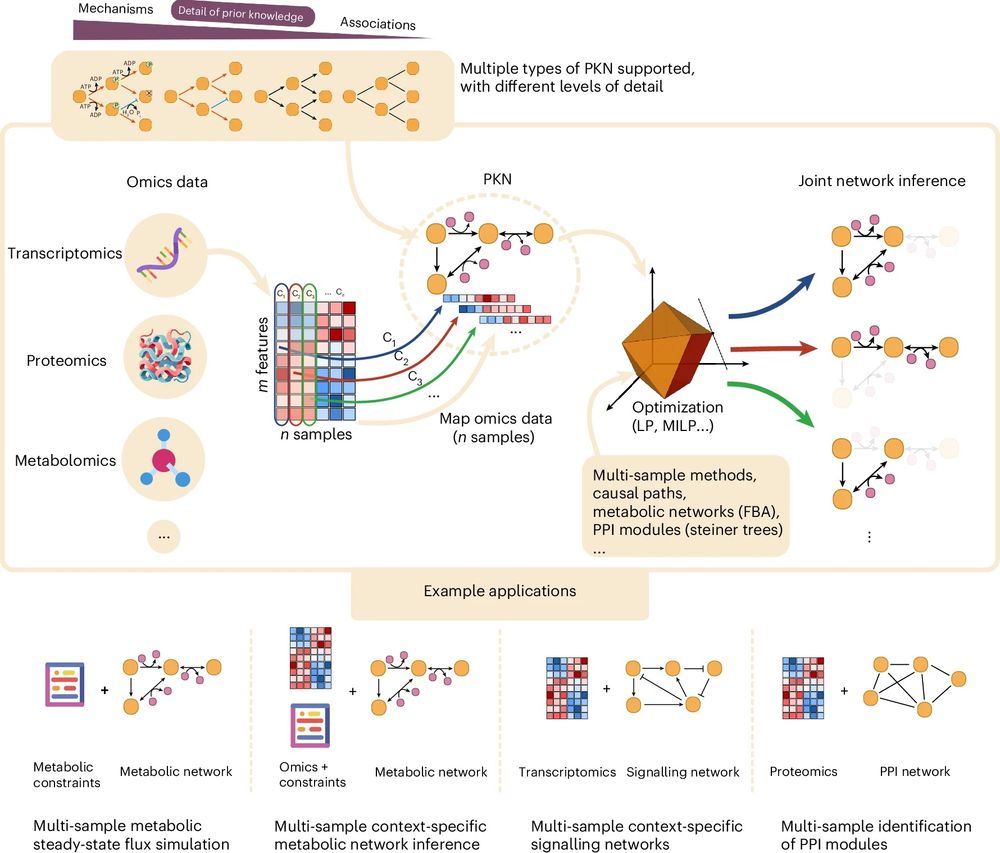
🎉 The revised version of CORNETO, our unified Python framework for knowledge-driven network inference from omics data, is published in peer reviewed form
🔗 Paper: www.nature.com/articles/s42...
📖 News & Views: www.nature.com/articles/s42...
💻 Code: corneto.org
🧵 Thread 👇
🔗 Paper: www.nature.com/articles/s42...
📖 News & Views: www.nature.com/articles/s42...
💻 Code: corneto.org
🧵 Thread 👇
July 22, 2025 at 3:23 PM
🎉 The revised version of CORNETO, our unified Python framework for knowledge-driven network inference from omics data, is published in peer reviewed form
🔗 Paper: www.nature.com/articles/s42...
📖 News & Views: www.nature.com/articles/s42...
💻 Code: corneto.org
🧵 Thread 👇
🔗 Paper: www.nature.com/articles/s42...
📖 News & Views: www.nature.com/articles/s42...
💻 Code: corneto.org
🧵 Thread 👇
Reposted by Clémence Henon

Online Now: Gene context drift identifies drug targets to mitigate cancer treatment resistance

Gene context drift identifies drug targets to mitigate cancer treatment resistance
Jassim et al. introduce a graph-embedding computational pipeline (RECODR) that measures changes in gene co-expression context during cancer treatment. RECODR enables the design of highly effective combination treatments for aggressive brain tumors in mice and the prediction of potential new treatments for patients with medulloblastoma and triple-negative breast cancer.
dlvr.it
June 27, 2025 at 6:52 PM
Online Now: Gene context drift identifies drug targets to mitigate cancer treatment resistance
Reposted by Clémence Henon

ICYMI: New Online! Decoding the interactions and functions of non-coding RNA with artificial intelligence

Decoding the interactions and functions of non-coding RNA with artificial intelligence
Nature Reviews Molecular Cell Biology, Published online: 19 June 2025; doi:10.1038/s41580-025-00857-wStudying RNA function is constrained by limitations of traditional methods. This Roadmap discusses how artificial intelligence (AI) can enhance the study of how non-coding regions of mRNA regulate its function, and suggests how to use AI to harness publicly available data towards that goal.
bit.ly
June 22, 2025 at 9:12 AM
ICYMI: New Online! Decoding the interactions and functions of non-coding RNA with artificial intelligence
Reposted by Clémence Henon
Identification of non-canonical peptides with moPepGen - @uclahealth.org @uoftmedicine.bsky.social @kislingerthomas.bsky.social go.nature.com/3HYJyyz
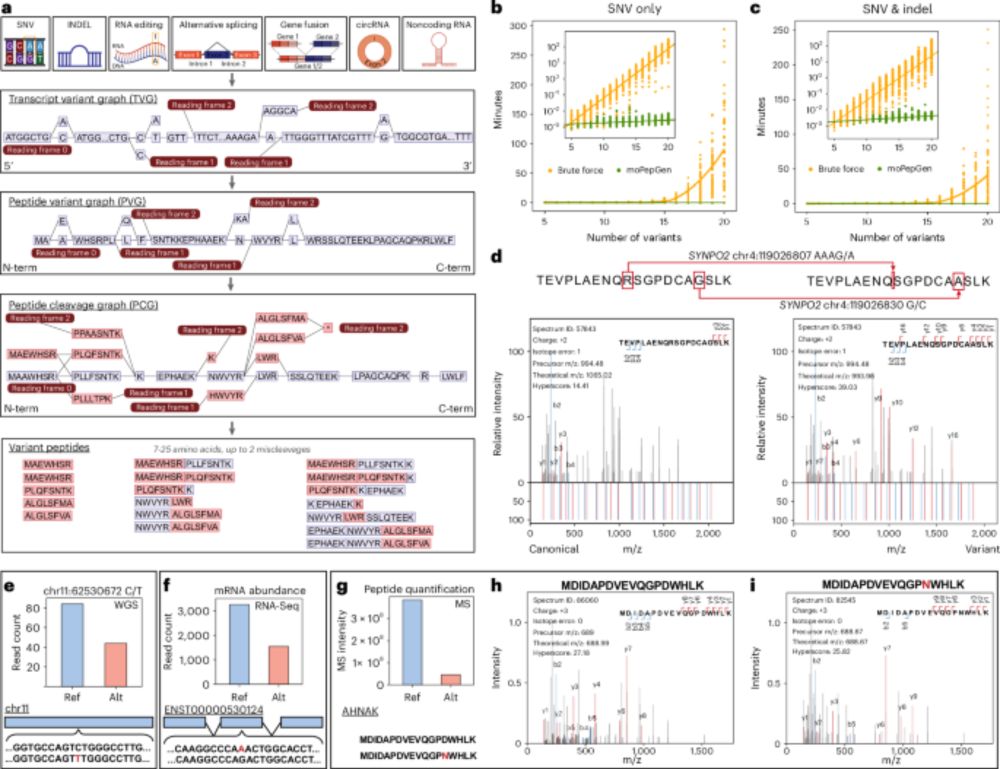
Identification of non-canonical peptides with moPepGen - Nature Biotechnology
moPepGen enables the detection of peptides across species, proteases and technologies.
go.nature.com
June 16, 2025 at 2:38 PM
Identification of non-canonical peptides with moPepGen - @uclahealth.org @uoftmedicine.bsky.social @kislingerthomas.bsky.social go.nature.com/3HYJyyz
Reposted by Clémence Henon
Online Now: The pan-cancer proteome atlas, a mass spectrometry-based landscape for discovering tumor biology, biomarkers, and therapeutic targets
The pan-cancer proteome atlas, a mass spectrometry-based landscape for discovering tumor biology, biomarkers, and therapeutic targets
Knol et al. report a large pan-cancer proteome landscape based on high-throughput, single-shot mass spectrometry across 22 cancer types including both liquid (n = 4) and solid cancers (n = 18), revealing co-expression-based phenotypes and immune phenotypes and defining top 25 ranked proteins as potential biomarkers and drug targets for each cancer type as well as a multi-cancer classifier.
dlvr.it
May 30, 2025 at 11:52 AM
Online Now: The pan-cancer proteome atlas, a mass spectrometry-based landscape for discovering tumor biology, biomarkers, and therapeutic targets
Reposted by Clémence Henon

What if LLMs could “read” & “write” biology? 🤔
Introducing C2S‑Scale—a Yale and Google collab: we scaled LLMs (up to 27B!) to analyze & generate single‑cell data 🧬 ➡️ 📝
🔗 Blog: research.google/blog/teachin...
🔗 Preprint: biorxiv.org/content/10.1...
Introducing C2S‑Scale—a Yale and Google collab: we scaled LLMs (up to 27B!) to analyze & generate single‑cell data 🧬 ➡️ 📝
🔗 Blog: research.google/blog/teachin...
🔗 Preprint: biorxiv.org/content/10.1...

Teaching machines the language of biology: Scaling large language models for next-generation single-cell analysis
research.google
April 18, 2025 at 2:14 PM
What if LLMs could “read” & “write” biology? 🤔
Introducing C2S‑Scale—a Yale and Google collab: we scaled LLMs (up to 27B!) to analyze & generate single‑cell data 🧬 ➡️ 📝
🔗 Blog: research.google/blog/teachin...
🔗 Preprint: biorxiv.org/content/10.1...
Introducing C2S‑Scale—a Yale and Google collab: we scaled LLMs (up to 27B!) to analyze & generate single‑cell data 🧬 ➡️ 📝
🔗 Blog: research.google/blog/teachin...
🔗 Preprint: biorxiv.org/content/10.1...
Reposted by Clémence Henon

I am super happy to annonce that after 9 months under review the first paper of my PhD: scPRINT is finally available on Nature Comms! 🎉🧬
www.nature.com/artic...
www.nature.com/artic...
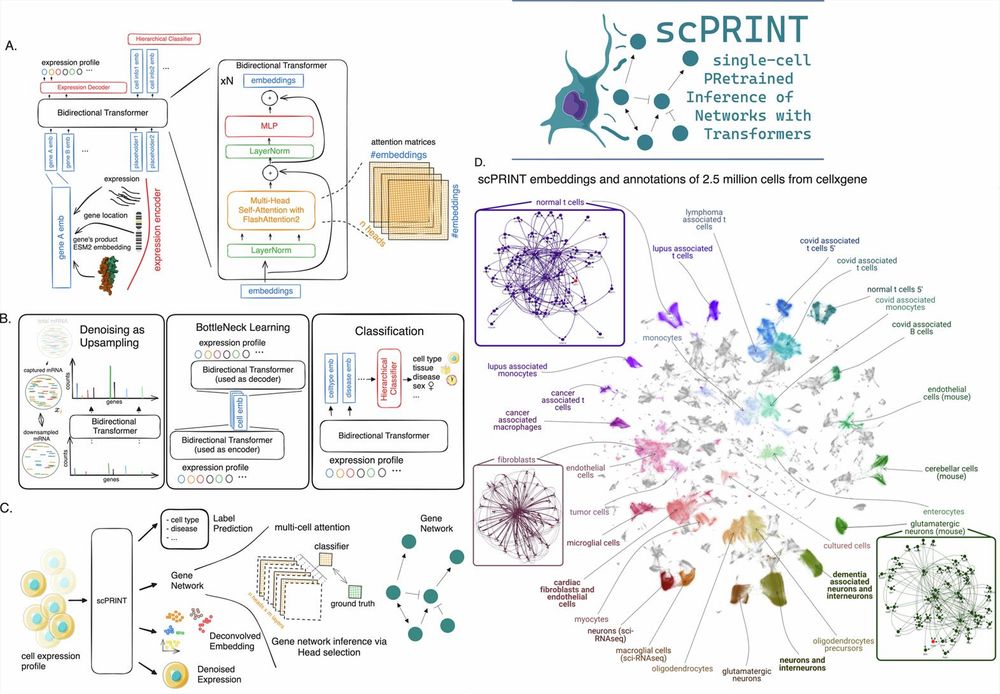
scPRINT: pre-training on 50 million cells allows robust gene network predictions
Nature Communications - Authors present a state-of-the-art cell foundation model trained on 50 million cells. They show that the model generates a meaningful gene network and has zero-shot...
www.nature.com
April 16, 2025 at 12:53 PM
I am super happy to annonce that after 9 months under review the first paper of my PhD: scPRINT is finally available on Nature Comms! 🎉🧬
www.nature.com/artic...
www.nature.com/artic...
Reposted by Clémence Henon
Conserved spatial subtypes and cellular neighborhoods of cancer-associated fibroblasts revealed by single-cell spatial multi-omics

Conserved spatial subtypes and cellular neighborhoods of cancer-associated fibroblasts revealed by single-cell spatial multi-omics
Through integrative analyses of single-cell spatial multi-omics datasets, Liu et al. identify four distinct spatial subtypes of cancer-associated fibroblasts, conserved across cancer types and independent of platforms. These subtypes exhibit unique transcriptomic profiles, distinct interactions with neighboring cells, and correlations with tumor microenvironment characteristics and clinical outcomes.
dlvr.it
May 14, 2025 at 2:18 PM
Conserved spatial subtypes and cellular neighborhoods of cancer-associated fibroblasts revealed by single-cell spatial multi-omics
Reposted by Clémence Henon
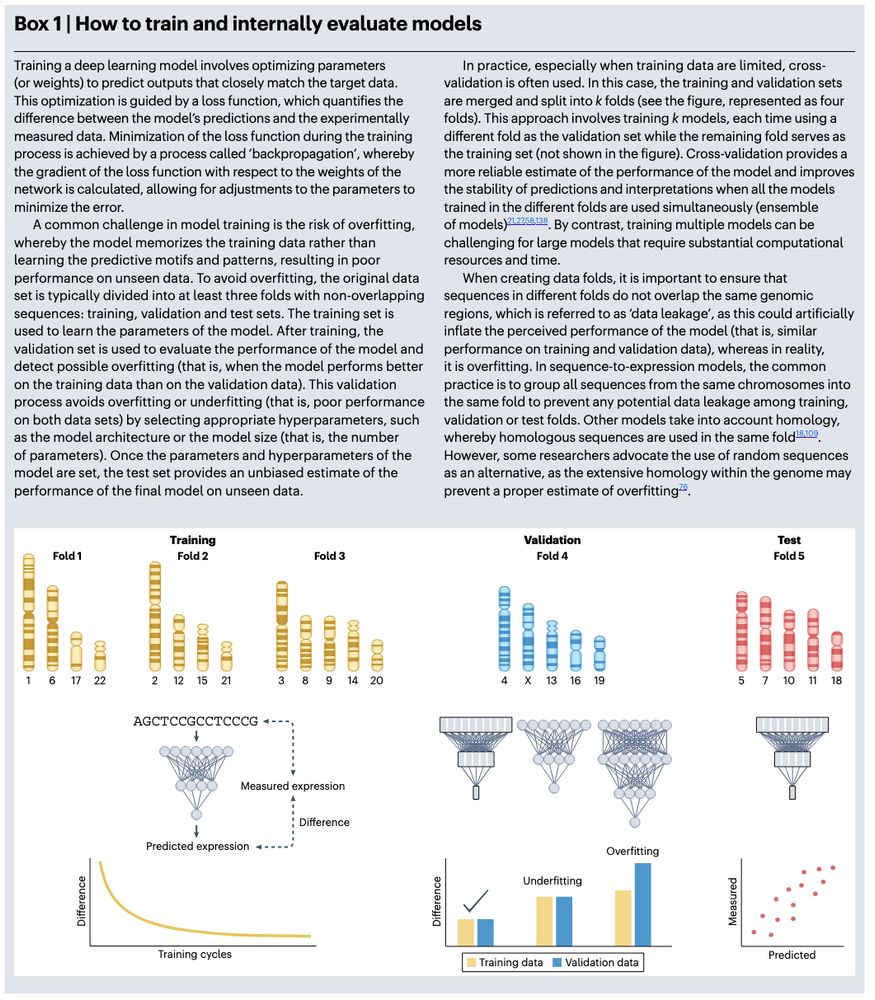
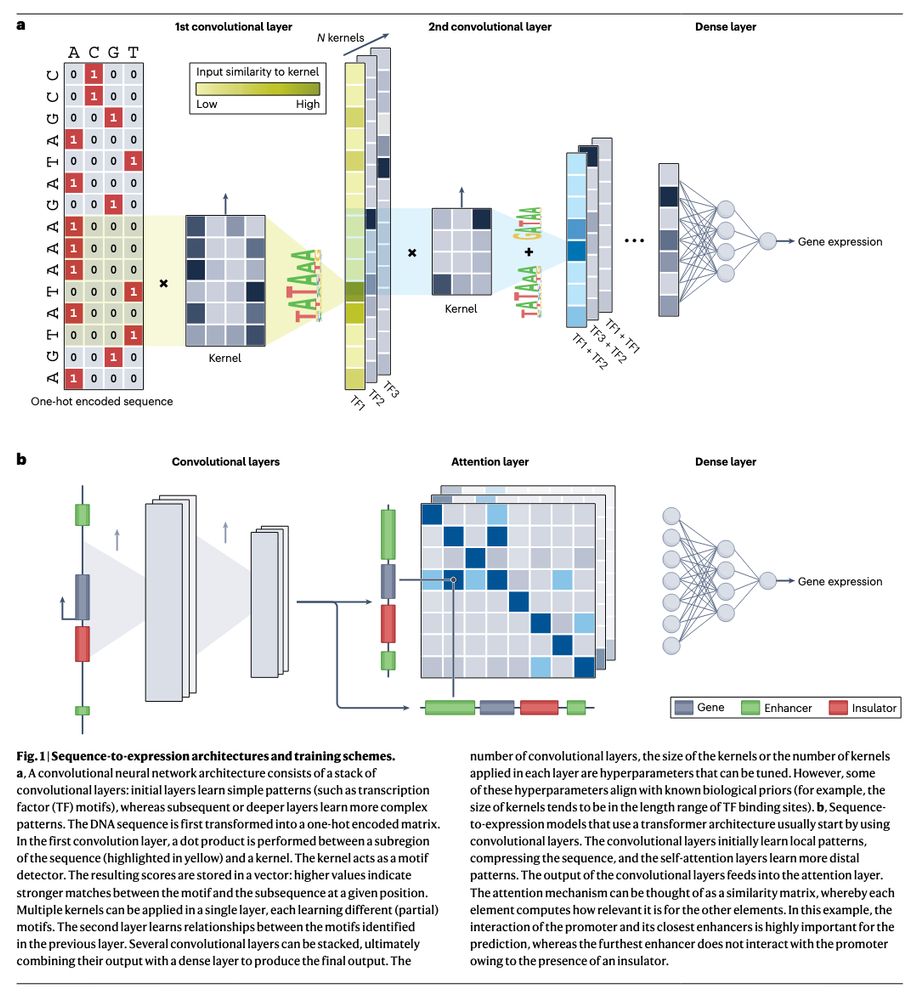
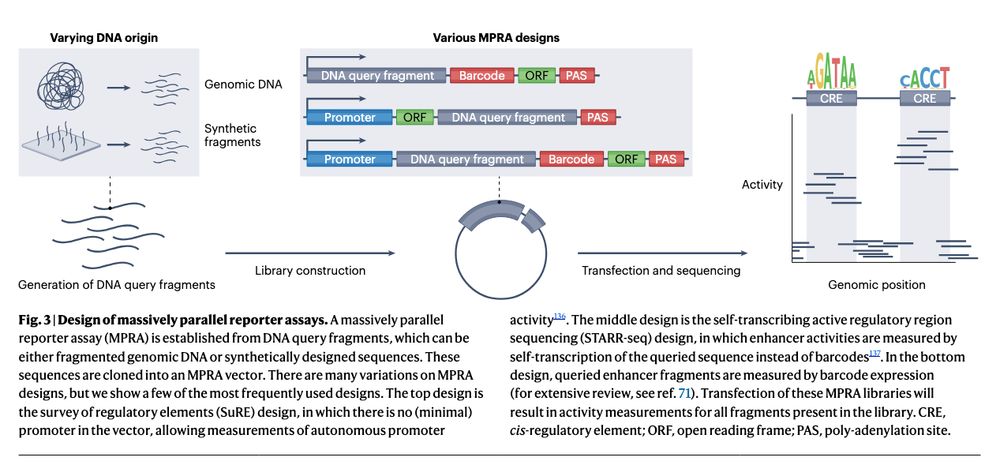
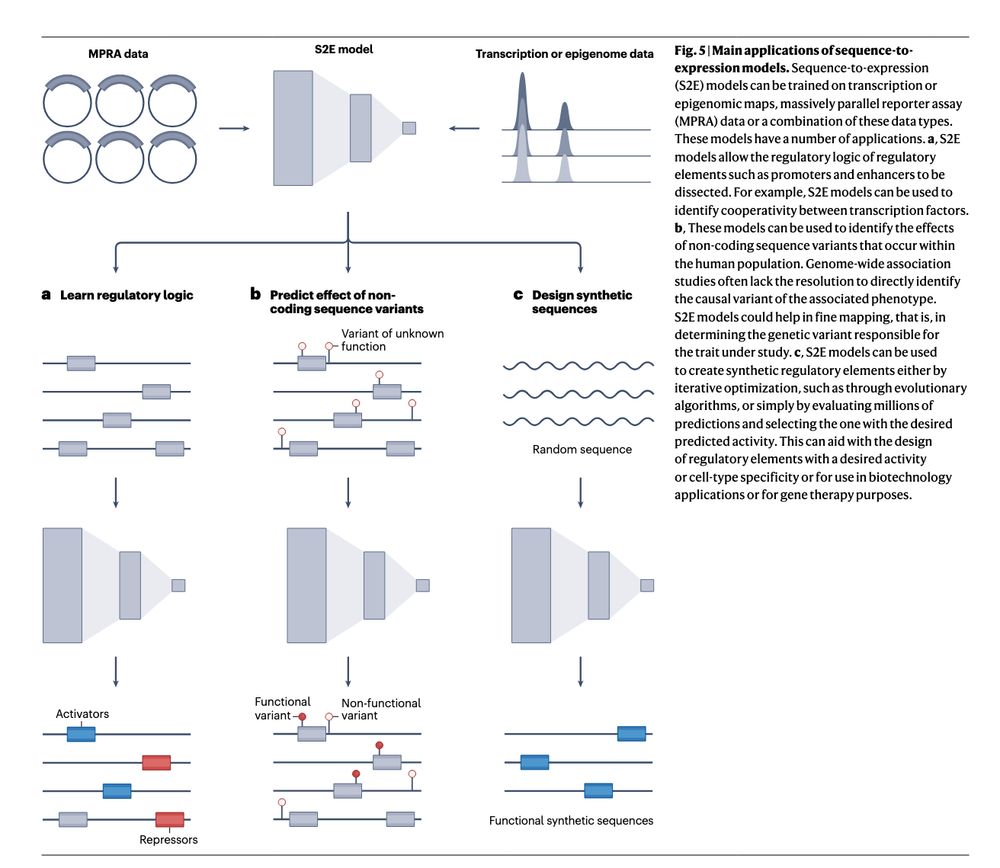
Predicting gene expression from DNA sequence using deep learning models www.nature.com/articles/s41... (read free: rdcu.be/elSrE) 🧬🖥️🧪
May 13, 2025 at 3:30 PM
Predicting gene expression from DNA sequence using deep learning models www.nature.com/articles/s41... (read free: rdcu.be/elSrE) 🧬🖥️🧪
Reposted by Clémence Henon

Dissecting regulatory syntax in human development with scalable multiomics and deep learning https://www.biorxiv.org/content/10.1101/2025.04.30.651381v1
May 1, 2025 at 3:33 AM
Dissecting regulatory syntax in human development with scalable multiomics and deep learning https://www.biorxiv.org/content/10.1101/2025.04.30.651381v1
Reposted by Clémence Henon

Nature research paper: Multimodal cell maps as a foundation for structural and functional genomics
https://go.nature.com/3YpvALv
https://go.nature.com/3YpvALv

Multimodal cell maps as a foundation for structural and functional genomics - Nature
A global map of human subcellular architecture yields protein complex structures, reveals protein functions, identifies assemblies with multiple localizations or cell-type specificity and decodes paediatric cancer genomes.
go.nature.com
April 11, 2025 at 7:49 AM
Nature research paper: Multimodal cell maps as a foundation for structural and functional genomics
https://go.nature.com/3YpvALv
https://go.nature.com/3YpvALv
Reposted by Clémence Henon
Nature research paper: Towards multimodal foundation models in molecular cell biology
https://go.nature.com/3YvGcbJ
https://go.nature.com/3YvGcbJ

Towards multimodal foundation models in molecular cell biology - Nature
The development of multimodal foundation models, pretrained on diverse omics datasets, to unravel the intricate complexities of molecular cell biology is envisioned.
go.nature.com
April 21, 2025 at 10:20 AM
Nature research paper: Towards multimodal foundation models in molecular cell biology
https://go.nature.com/3YvGcbJ
https://go.nature.com/3YvGcbJ
Reposted by Clémence Henon
Toward single-molecule protein sequencing using nanopores - @unigroningen.bsky.social go.nature.com/3FL0g3k

March 18, 2025 at 1:39 PM
Toward single-molecule protein sequencing using nanopores - @unigroningen.bsky.social go.nature.com/3FL0g3k
Reposted by Clémence Henon

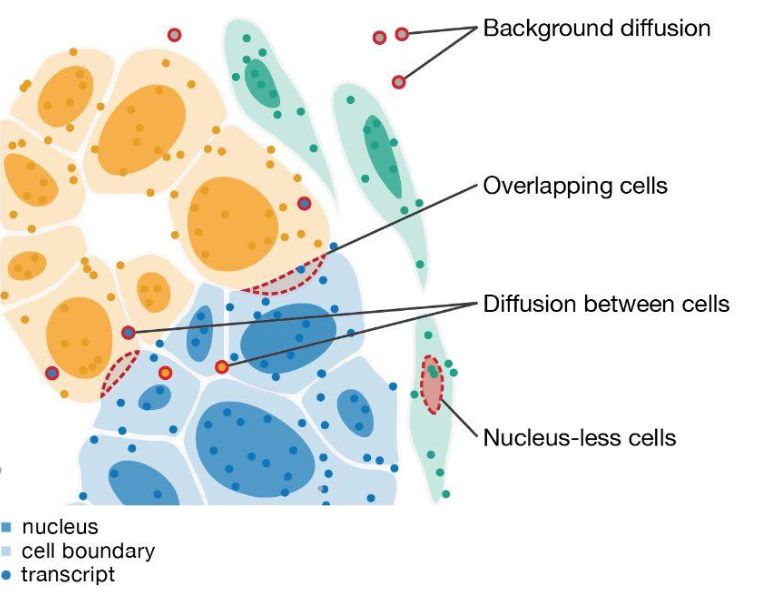
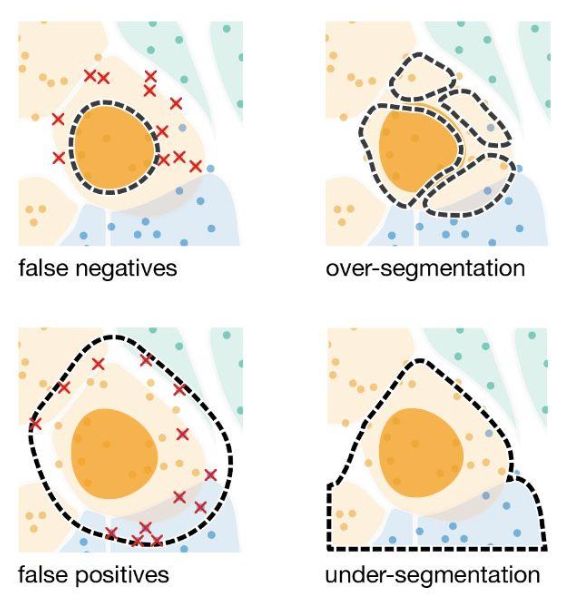
Spatial transcriptomics holds great promise to understand biological tissue function, but the assignment of transcripts to cells has been a substantial bottleneck.
For this reason, Elyas Heidari, a student in my lab and in @steglelab.bsky.social built segger.
www.biorxiv.org/content/10.1...
For this reason, Elyas Heidari, a student in my lab and in @steglelab.bsky.social built segger.
www.biorxiv.org/content/10.1...
March 17, 2025 at 4:19 PM
Spatial transcriptomics holds great promise to understand biological tissue function, but the assignment of transcripts to cells has been a substantial bottleneck.
For this reason, Elyas Heidari, a student in my lab and in @steglelab.bsky.social built segger.
www.biorxiv.org/content/10.1...
For this reason, Elyas Heidari, a student in my lab and in @steglelab.bsky.social built segger.
www.biorxiv.org/content/10.1...
Reposted by Clémence Henon
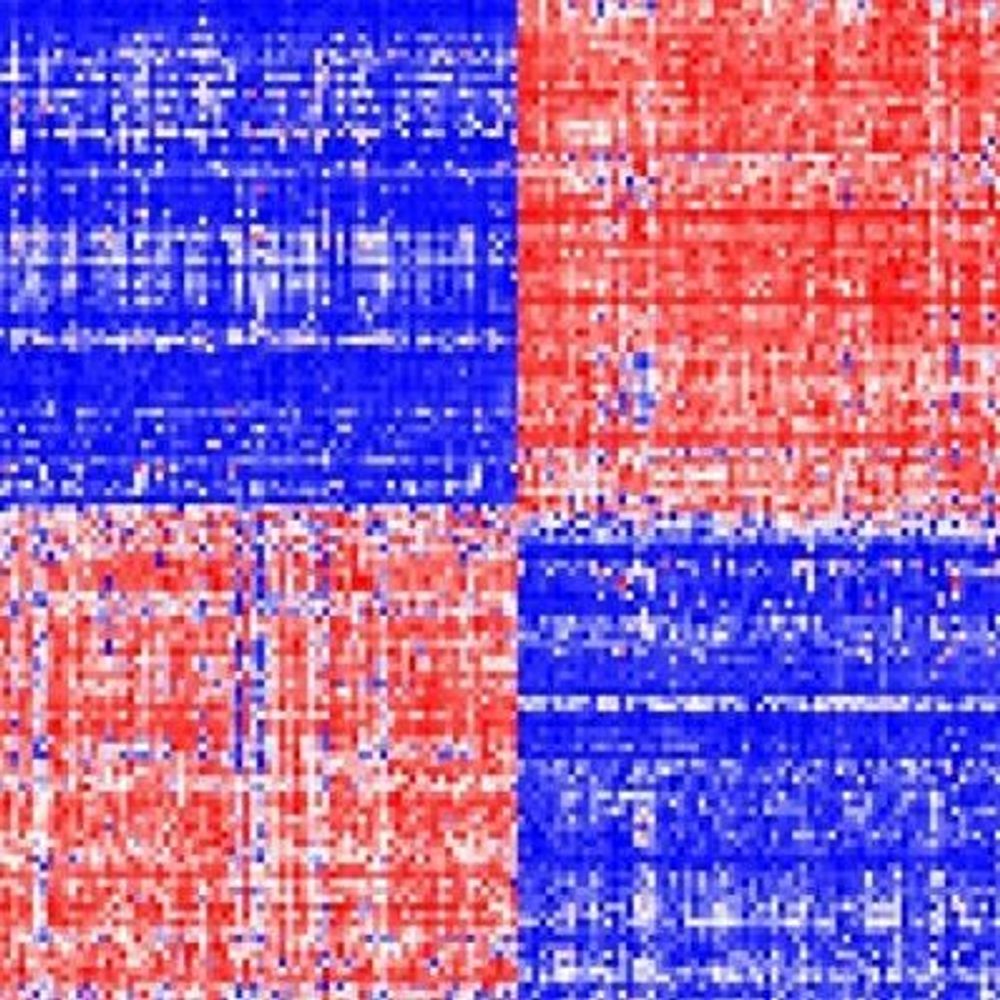
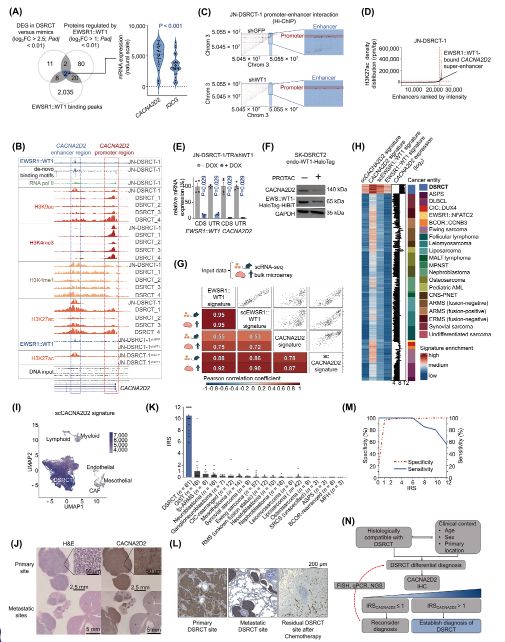
So proud on our stellar medical student Florian H. Geyer for his first first-authorship paper!
Comprehensive #DSRCT multi-omics analyses unveil CACNA2D2 as a diagnostic hallmark and super-enhancer-driven EWSR1::WT1 signature gene
tinyurl.com/42fxmmud
@dkfz.bsky.social
@uniheidelberg.bsky.social
Comprehensive #DSRCT multi-omics analyses unveil CACNA2D2 as a diagnostic hallmark and super-enhancer-driven EWSR1::WT1 signature gene
tinyurl.com/42fxmmud
@dkfz.bsky.social
@uniheidelberg.bsky.social
March 15, 2025 at 2:42 PM
So proud on our stellar medical student Florian H. Geyer for his first first-authorship paper!
Comprehensive #DSRCT multi-omics analyses unveil CACNA2D2 as a diagnostic hallmark and super-enhancer-driven EWSR1::WT1 signature gene
tinyurl.com/42fxmmud
@dkfz.bsky.social
@uniheidelberg.bsky.social
Comprehensive #DSRCT multi-omics analyses unveil CACNA2D2 as a diagnostic hallmark and super-enhancer-driven EWSR1::WT1 signature gene
tinyurl.com/42fxmmud
@dkfz.bsky.social
@uniheidelberg.bsky.social
Reposted by Clémence Henon
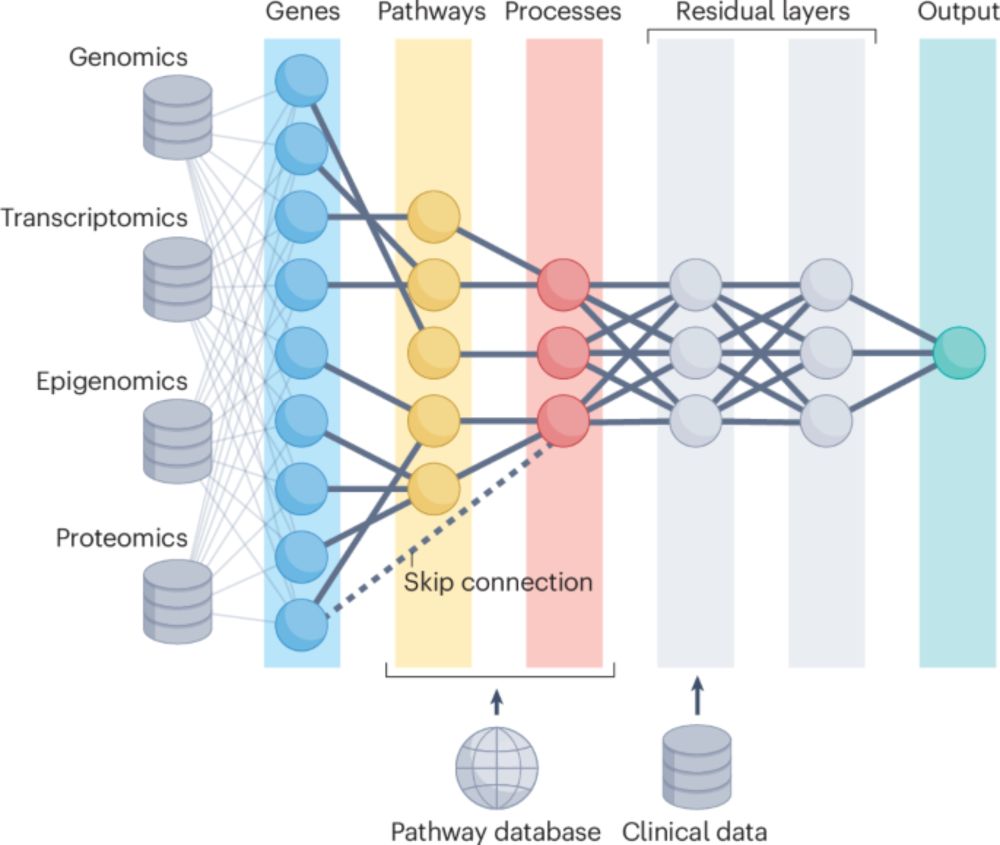
Thrilled to share our latest publication in @natrevgenet.bsky.social. We explore how deep learning models infused with prior knowledge—biologically-informed neural networks or BINNs—offer better predictive accuracy and interpretability in multi-omics data analysis. www.nature.com/articles/s41...
Beyond the black box with biologically informed neural networks - Nature Reviews Genetics
Biologically informed neural networks promise to lead to more explainable, data-driven discoveries in genomics, drug development and precision medicine. Selby et al. highlight emerging opportunities, ...
www.nature.com
March 4, 2025 at 3:12 PM
Thrilled to share our latest publication in @natrevgenet.bsky.social. We explore how deep learning models infused with prior knowledge—biologically-informed neural networks or BINNs—offer better predictive accuracy and interpretability in multi-omics data analysis. www.nature.com/articles/s41...
Reposted by Clémence Henon

SIGN! SHARE!
Wichtiger, denn je!
www.openpetition.de/petition/onl...
Hier noch Bilder aus #Essen UK-Essen und #Fortress Meeting. #Aufstehenfuerdemokratie
Wichtiger, denn je!
www.openpetition.de/petition/onl...
Hier noch Bilder aus #Essen UK-Essen und #Fortress Meeting. #Aufstehenfuerdemokratie


February 19, 2025 at 6:49 PM
SIGN! SHARE!
Wichtiger, denn je!
www.openpetition.de/petition/onl...
Hier noch Bilder aus #Essen UK-Essen und #Fortress Meeting. #Aufstehenfuerdemokratie
Wichtiger, denn je!
www.openpetition.de/petition/onl...
Hier noch Bilder aus #Essen UK-Essen und #Fortress Meeting. #Aufstehenfuerdemokratie
Ongoing chromothripsis underpins osteosarcoma genome complexity and clonal evolution: Cell www.cell.com/cell/fulltex...

Ongoing chromothripsis underpins osteosarcoma genome complexity and clonal evolution
Ongoing chromothripsis shapes genomic evolution in a diverse range of sarcomas and
carcinomas. High-grade osteosarcoma is predominantly driven by the mechanism of loss-translocation-amplification
chro...
www.cell.com
January 15, 2025 at 8:15 AM
Ongoing chromothripsis underpins osteosarcoma genome complexity and clonal evolution: Cell www.cell.com/cell/fulltex...