



David Zipper
@davidzipper.bsky.social
Senior Fellow @ MIT Mobility Initiative & Contributing Writer @ Vox, focused on transport, cities and tech. Words in Atlantic, CityLab, WaPo, etc. https://linktr.ee/davidzipper
Newsletter, speaking and advisory work: http://davidzipper.com
Newsletter, speaking and advisory work: http://davidzipper.com
Could be this
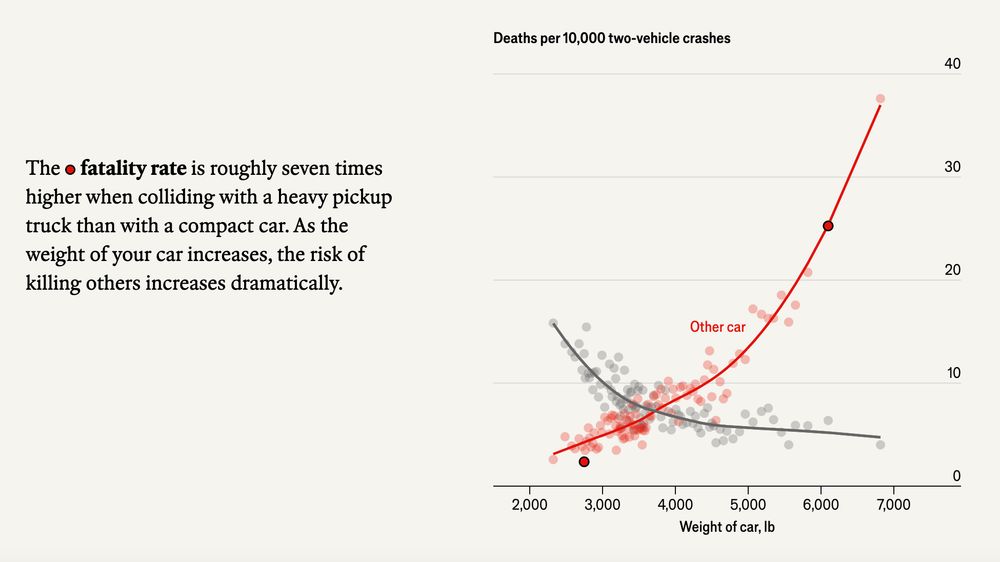
The Economist has published a deeply-researched story about car bloat -- and it's very, very damning.
"For every life that the heaviest 1% of SUVs and trucks save, there are more than a dozen lives lost in other vehicles."
Well worth your time: www.economist.com/interactive/...
"For every life that the heaviest 1% of SUVs and trucks save, there are more than a dozen lives lost in other vehicles."
Well worth your time: www.economist.com/interactive/...
January 25, 2026 at 4:12 PM
Could be this
The abundance movement & YIMBY allies call for upzoning as a strategy to lower housing costs. Rightly so. But such reforms also reduce residents’ travel expenses. That gets much less attention, but it shouldn't.
I can’t think of a better way to pursue abundant transportation than densification.
I can’t think of a better way to pursue abundant transportation than densification.

Achieving ‘Transportation Abundance’ Is All About Density
To drive down transportation costs and move the needle on affordability, Americans need to embrace living closer together.
www.bloomberg.com
January 22, 2026 at 1:30 PM
The abundance movement & YIMBY allies call for upzoning as a strategy to lower housing costs. Rightly so. But such reforms also reduce residents’ travel expenses. That gets much less attention, but it shouldn't.
I can’t think of a better way to pursue abundant transportation than densification.
I can’t think of a better way to pursue abundant transportation than densification.
As important as transit-oriented development is, density also lower transportation costs *even in places where almost everyone drives.*
Closer destinations --> Fewer miles driven --> Less spent on gas, car maintenance, etc
Columbus, OH is a model.
Closer destinations --> Fewer miles driven --> Less spent on gas, car maintenance, etc
Columbus, OH is a model.

It’s Unanimous: Columbus Approves Density-Friendly Zoning Changes
Columbus has approved six zoning code amendments, which include height limit increases from three stories to 16 and eliminate parking requirements for large developments in 12,300 parcels along major ...
www.planetizen.com
January 22, 2026 at 1:24 PM
As important as transit-oriented development is, density also lower transportation costs *even in places where almost everyone drives.*
Closer destinations --> Fewer miles driven --> Less spent on gas, car maintenance, etc
Columbus, OH is a model.
Closer destinations --> Fewer miles driven --> Less spent on gas, car maintenance, etc
Columbus, OH is a model.
To their credit, a bipartisan group in Congress embraces density, including a bill calling on USDOT to consider construction near stations when reviewing transit grants.
As one source said, “Why waste taxpayer money building transit no one will use?”
www.congress.gov/bill/119th-c...
As one source said, “Why waste taxpayer money building transit no one will use?”
www.congress.gov/bill/119th-c...

January 22, 2026 at 1:22 PM
To their credit, a bipartisan group in Congress embraces density, including a bill calling on USDOT to consider construction near stations when reviewing transit grants.
As one source said, “Why waste taxpayer money building transit no one will use?”
www.congress.gov/bill/119th-c...
As one source said, “Why waste taxpayer money building transit no one will use?”
www.congress.gov/bill/119th-c...
Consider: Because of its cheap housing, Houston is often seen as a beacon of affordability. But sprawl inflates residents’ transportation costs.
In dense New York City, transportation consumes half as much of residents’ income as in Houston.
In dense New York City, transportation consumes half as much of residents’ income as in Houston.

Houston Is Now Less Affordable Than New York City
A new report finds that, when transportation costs are factored in, Texas’s biggest metros aren’t the bargain they often claim to be.
www.texasmonthly.com
January 22, 2026 at 1:21 PM
Consider: Because of its cheap housing, Houston is often seen as a beacon of affordability. But sprawl inflates residents’ transportation costs.
In dense New York City, transportation consumes half as much of residents’ income as in Houston.
In dense New York City, transportation consumes half as much of residents’ income as in Houston.
Here’s a simple strategy to make transportation more abundant and less expensive: Shorter trips! That’s what density enables.
When destinations are closer:
- Fewer miles driven (save $)
- Easier to take transit/bike/walk (save $$)
- Families might get by with one car instead of two (save $$$)
When destinations are closer:
- Fewer miles driven (save $)
- Easier to take transit/bike/walk (save $$)
- Families might get by with one car instead of two (save $$$)

January 22, 2026 at 1:20 PM
Here’s a simple strategy to make transportation more abundant and less expensive: Shorter trips! That’s what density enables.
When destinations are closer:
- Fewer miles driven (save $)
- Easier to take transit/bike/walk (save $$)
- Families might get by with one car instead of two (save $$$)
When destinations are closer:
- Fewer miles driven (save $)
- Easier to take transit/bike/walk (save $$)
- Families might get by with one car instead of two (save $$$)
“Abundance” – a trendy idea among policy wonks – strives to make necessities like housing, health care, and energy cheaper and more accessible.
It’s a laudable vision. But as I argued here, the meaning of “abundant transportation” has been murky. (More transit? Great. More cars? Not so much.)
It’s a laudable vision. But as I argued here, the meaning of “abundant transportation” has been murky. (More transit? Great. More cars? Not so much.)

What Would ‘Transportation Abundance’ Look Like?
Fans of the abundance movement say that adding supply solves big problems in housing and health care. But when it comes to getting around, things get complicated.
www.bloomberg.com
January 22, 2026 at 1:18 PM
“Abundance” – a trendy idea among policy wonks – strives to make necessities like housing, health care, and energy cheaper and more accessible.
It’s a laudable vision. But as I argued here, the meaning of “abundant transportation” has been murky. (More transit? Great. More cars? Not so much.)
It’s a laudable vision. But as I argued here, the meaning of “abundant transportation” has been murky. (More transit? Great. More cars? Not so much.)
My Bloomberg article that seems to have ruffled a lot of feathers in Silicon Valley

We Still Don’t Know if Robotaxis Are Safer Than Human Drivers
And even if self-driving technology proves to be less dangerous, there are many better ways to improve traffic safety and prevent fatal crashes.
www.bloomberg.com
January 21, 2026 at 7:59 PM
My Bloomberg article that seems to have ruffled a lot of feathers in Silicon Valley