



Dennis P Waters
@dpwaters.bsky.social
Author, Behavior & Culture in One Dimension (http://1dimensional.com; Routledge 2021); Visiting Scientist, Rutgers DEENR & CHRB; Founder, GenomeWeb.com, WatersTechnology.com; Lichenology; Patteeist
Reposted by Dennis P Waters
What child is this? Look to the father.

How Dad’s Fitness May Be Packaged and Passed Down in Sperm RNA | Quanta Magazine
Research into how a father’s choices — such as diet, exercise, stress, nicotine use — may transfer traits to his children has become impossible to ignore.
www.quantamagazine.org
December 24, 2025 at 11:15 PM
What child is this? Look to the father.
Reposted by Dennis P Waters

New paper led by @amahury.bsky.social published in JRS Interface:
"Closing the loop: how semantic closure enables open-ended evolution?"
royalsocietypublishing.org/rsif/article...
"Closing the loop: how semantic closure enables open-ended evolution?"
royalsocietypublishing.org/rsif/article...

Closing the loop: how semantic closure enables open-ended evolution?
Abstract. This study explores the evolutionary emergence of semantic closure—the self-referential mechanism through which symbols actively construct and in
royalsocietypublishing.org
December 22, 2025 at 10:35 AM
New paper led by @amahury.bsky.social published in JRS Interface:
"Closing the loop: how semantic closure enables open-ended evolution?"
royalsocietypublishing.org/rsif/article...
"Closing the loop: how semantic closure enables open-ended evolution?"
royalsocietypublishing.org/rsif/article...


The gift that keeps on giving....
www.amazon.com/Behavior-Dim...
www.amazon.com/Behavior-Dim...

Behavior and Culture in One Dimension (Resources for Ecological Psychology Series)
Amazon.com: Behavior and Culture in One Dimension (Resources for Ecological Psychology Series): 9780367703295: Waters, Dennis: Books
www.amazon.com
December 15, 2025 at 1:27 PM
The gift that keeps on giving....
www.amazon.com/Behavior-Dim...
www.amazon.com/Behavior-Dim...
Humans, of course, are the ultimate allosteric devices, almost infinitely reconfigurable.
The Bohr effect had nothing to do with Niels but was discovered by his physiologist father Christian. Taught now as the first example of allostery in protein action, it touched on deeper questions about the nature of living organisms. My lastest column for CW
www.chemistryworld.com/opinion/the-...
www.chemistryworld.com/opinion/the-...

The wide-ranging influence of the Bohr effect
While not a Nobel prize-winning discovery in itself, this challenge to the reductionist view of physiology has links to several other winners
www.chemistryworld.com
November 28, 2025 at 12:38 PM
Humans, of course, are the ultimate allosteric devices, almost infinitely reconfigurable.
I doubt von Neumann would agree that DNA sequences are computer code. As he wrote in TSRA, "by axiomatizing automata in this manner, one has thrown half of the problem out of the window, and it may be the more important half." It's the stuff that can't be formalized that's interesting.

DNA sequences are computer code! It was a pleasure to explore John Von Neumann's theory on life as a form of computation and the lessons we can learn from modern AI systems with Tim Scarfe on Machine Learning Street Talk: bit.ly/4nreMO7
Thank you for the thoughtful questions!
Thank you for the thoughtful questions!

October 25, 2025 at 12:13 PM
I doubt von Neumann would agree that DNA sequences are computer code. As he wrote in TSRA, "by axiomatizing automata in this manner, one has thrown half of the problem out of the window, and it may be the more important half." It's the stuff that can't be formalized that's interesting.
I continue to think the the more interesting question is "how does language acquire children?"

Children are incredible language learning machines. But how do they do it? Our latest paper, just published in TICS, synthesizes decades of evidence to propose four components that must be built into any theory of how children learn language. 1/
www.cell.com/trends/cogni... @mpi-nl.bsky.social
www.cell.com/trends/cogni... @mpi-nl.bsky.social
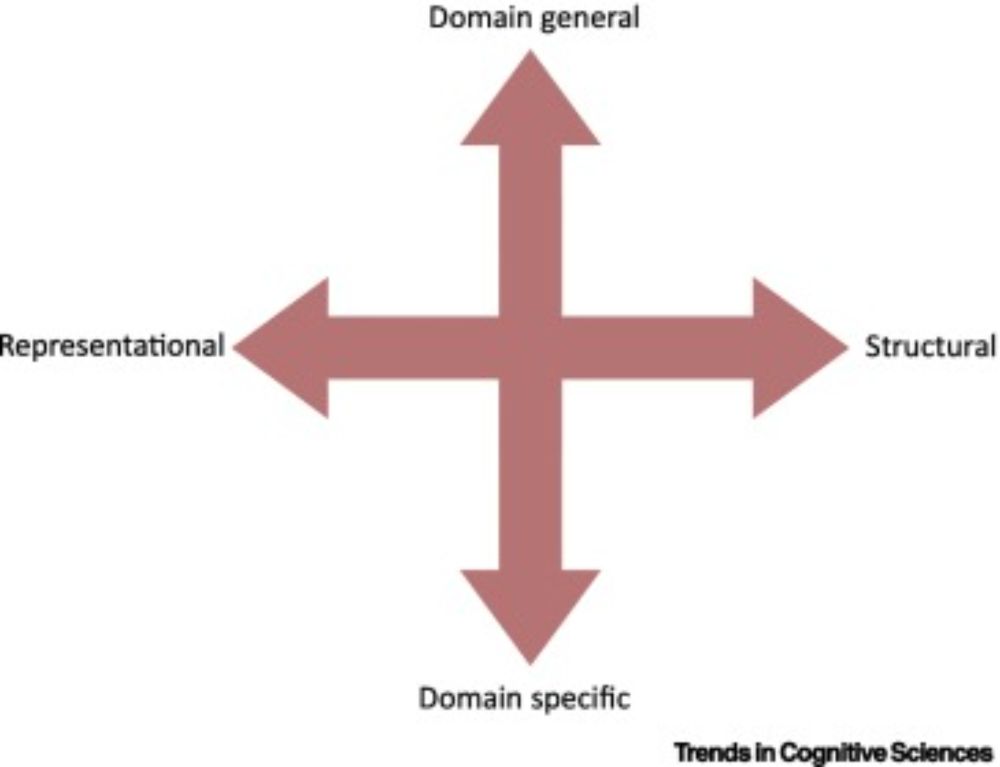
Constructing language: a framework for explaining acquisition
Explaining how children build a language system is a central goal of research in language
acquisition, with broad implications for language evolution, adult language processing,
and artificial intelli...
www.cell.com
June 27, 2025 at 1:03 PM
I continue to think the the more interesting question is "how does language acquire children?"
Thanks to #ComplexityCat (@amahury.bsky.social) for dredging up this old paper and providing thoughtful comments. I should point out that this paper forms the basis of chapter 4 ('The Grammar of Extension') in my book Behavior and Culture in One Dimension. amahury.github.io/posts/review...
Review From extended phenotype to extended affordance: distributed language at the intersection of Gibson and Dawkins
During NERCCS 2025 I had the opportunity to meet Dennis P. Waters, a transdisciplinary thinker whose PhD was done under the direction of Howard Pattee. With Dennis I had the opportunity to talk about ...
amahury.github.io
May 2, 2025 at 4:26 PM
Thanks to #ComplexityCat (@amahury.bsky.social) for dredging up this old paper and providing thoughtful comments. I should point out that this paper forms the basis of chapter 4 ('The Grammar of Extension') in my book Behavior and Culture in One Dimension. amahury.github.io/posts/review...
Reposted by Dennis P Waters

Today #complexitycat reviews an article by @dpwaters.bsky.social, who has proposed a synthesis between Dawkins' extended phenotype and Gibson's theory of affordances. What's the next step towards a synthesis between physical biosemiotics and ecological psychology?👇🐈⬛
amahury.github.io/posts/review...
amahury.github.io/posts/review...
Review From extended phenotype to extended affordance: distributed language at the intersection of Gibson and Dawkins
During NERCCS 2025 I had the opportunity to meet Dennis P. Waters, a transdisciplinary thinker whose PhD was done under the direction of Howard Pattee. With Dennis I had the opportunity to talk about ...
amahury.github.io
May 2, 2025 at 1:31 PM
Today #complexitycat reviews an article by @dpwaters.bsky.social, who has proposed a synthesis between Dawkins' extended phenotype and Gibson's theory of affordances. What's the next step towards a synthesis between physical biosemiotics and ecological psychology?👇🐈⬛
amahury.github.io/posts/review...
amahury.github.io/posts/review...
Reposted by Dennis P Waters

"A maggot knows things about the outside world in a way that no computer does." Read @yaseminsaplakoglu.bsky.social fun + fascinating feature: AI Is Nothing Like a Brain, and That’s OK www.quantamagazine.org/ai-is-nothin...
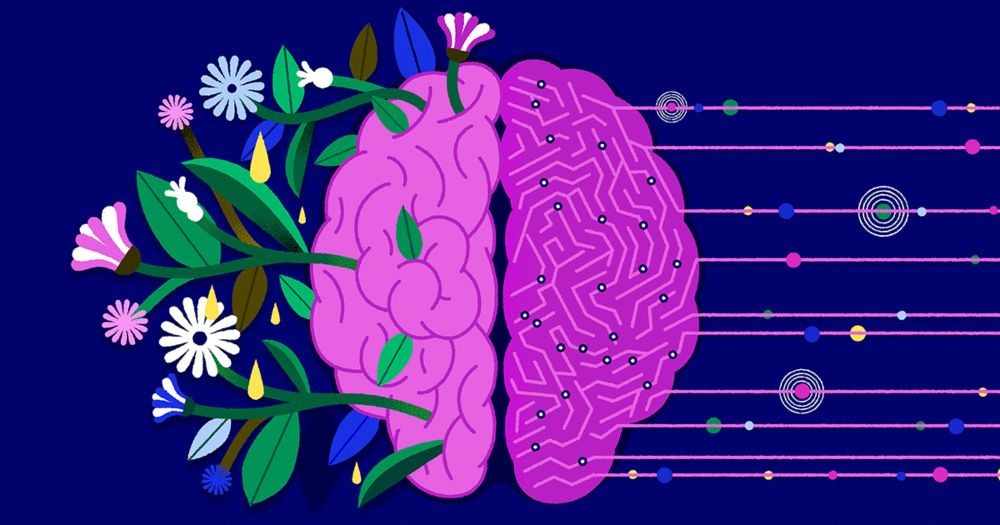
AI Is Nothing Like a Brain, and That’s OK | Quanta Magazine
The brain’s astounding cellular diversity and networked complexity could show how to make AI better.
www.quantamagazine.org
April 30, 2025 at 2:33 PM
"A maggot knows things about the outside world in a way that no computer does." Read @yaseminsaplakoglu.bsky.social fun + fascinating feature: AI Is Nothing Like a Brain, and That’s OK www.quantamagazine.org/ai-is-nothin...
Going thru some old journals and found this amazing TOC. Pattee, Rosen, Richerson & Boyd, Goodwin, Tullock....all in one place. Journal of Social & Biological Structures 1:2 (April 1978). Pretty sure this is the first Pattee paper I read.

March 30, 2025 at 4:30 PM
Going thru some old journals and found this amazing TOC. Pattee, Rosen, Richerson & Boyd, Goodwin, Tullock....all in one place. Journal of Social & Biological Structures 1:2 (April 1978). Pretty sure this is the first Pattee paper I read.
Reposted by Dennis P Waters
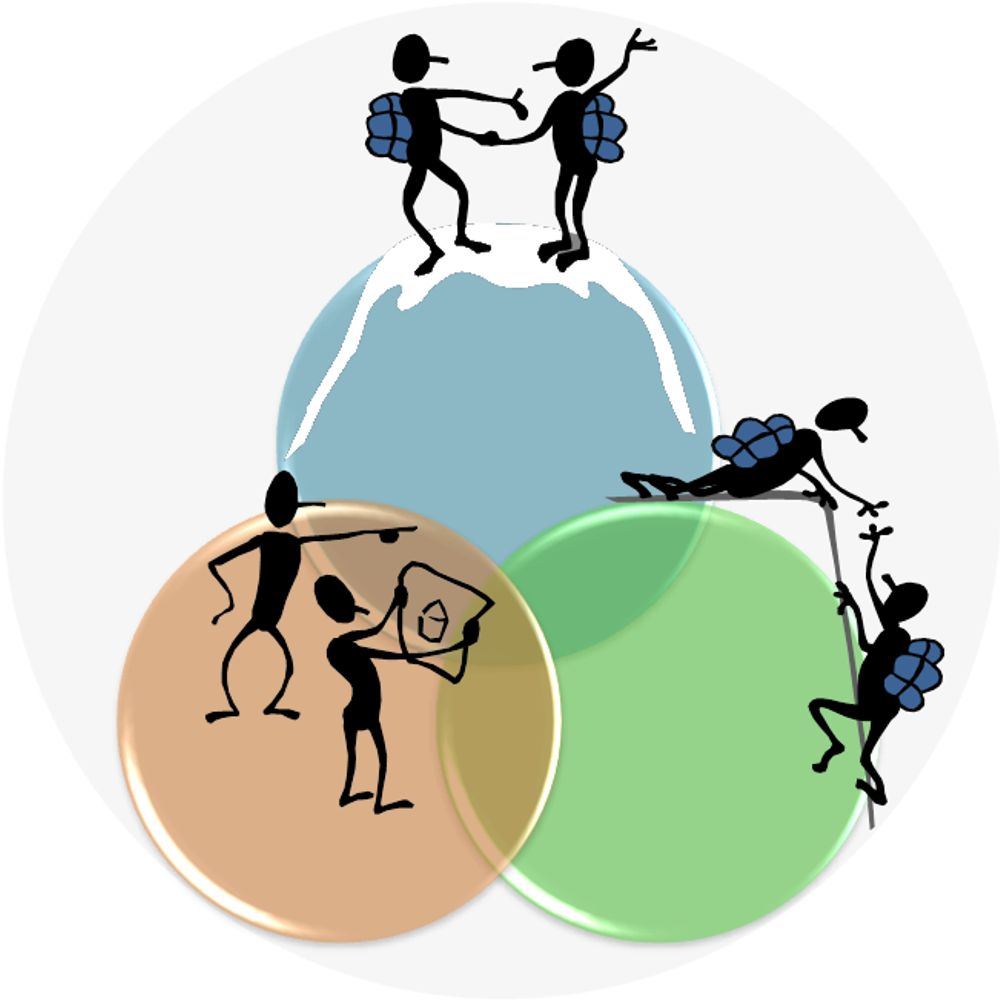
How do you simulate a brain in any detail with a simple digital (or even quantum) computer? "Making a connection" in the brain is not just "information processing." It's physical. There is no workable "software" driving the mind. It is the "hardware" that is messy and unique, and constantly changing

Adult human brains have between 86-100 billion neurons and every single one is unique - like snowflakes! ❄️
🧠📈 In this 3D rendering by our #ElectronMicroscopy team, we see 3 different shapes. Can you name all of them?
#BrainAwarenessWeek @danafoundation.bsky.social
🧠📈 In this 3D rendering by our #ElectronMicroscopy team, we see 3 different shapes. Can you name all of them?
#BrainAwarenessWeek @danafoundation.bsky.social
March 13, 2025 at 4:11 AM
How do you simulate a brain in any detail with a simple digital (or even quantum) computer? "Making a connection" in the brain is not just "information processing." It's physical. There is no workable "software" driving the mind. It is the "hardware" that is messy and unique, and constantly changing
Reposted by Dennis P Waters

Reposted by Dennis P Waters

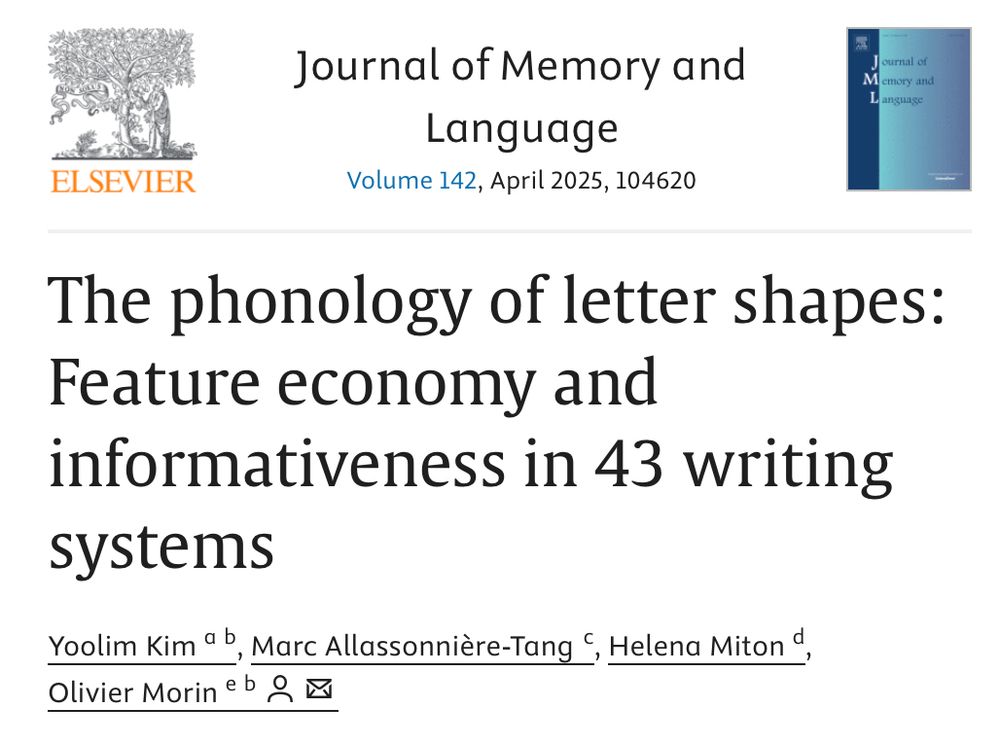
🚨 New paper! 🚨 by Yoolim Kim, @helenamiton.bsky.social, Marc Allassonnière Tang, & myself, in Journal of Memory and Language. We tried to do for letter shapes what phonologists did for speech sounds. doi.org/10.1016/j.jm... A 🧵 (1/14)
February 19, 2025 at 3:56 PM
🚨 New paper! 🚨 by Yoolim Kim, @helenamiton.bsky.social, Marc Allassonnière Tang, & myself, in Journal of Memory and Language. We tried to do for letter shapes what phonologists did for speech sounds. doi.org/10.1016/j.jm... A 🧵 (1/14)
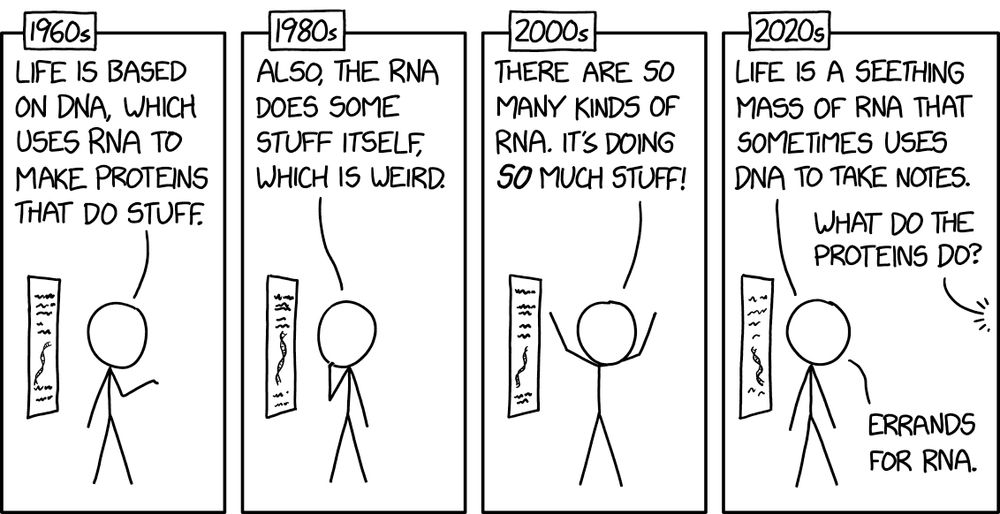
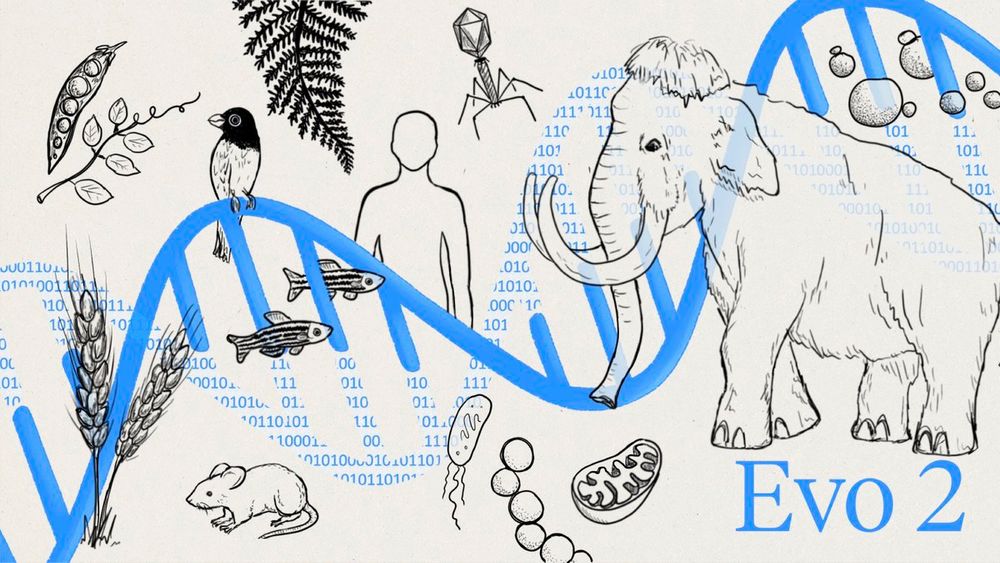
DNA and text are not two different things. They are two different examples of one sort of thing.
The capabilities of the large language of life models (LLLMs) are rapidly proliferating!
nature.com/articles/d41...
@nature.com
arcinstitute.org/manuscripts/... @arcinstitute.org
science.org/doi/10.1126/... @science.org
nature.com/articles/d41...
@nature.com
arcinstitute.org/manuscripts/... @arcinstitute.org
science.org/doi/10.1126/... @science.org
February 20, 2025 at 12:38 AM
DNA and text are not two different things. They are two different examples of one sort of thing.
Reposted by Dennis P Waters

The Genomic Code: the genome instantiates a generative model of the organism www.cell.com/trends/genet... - really delighted to see this in print in @cp-trendsgenetics.bsky.social! 😊
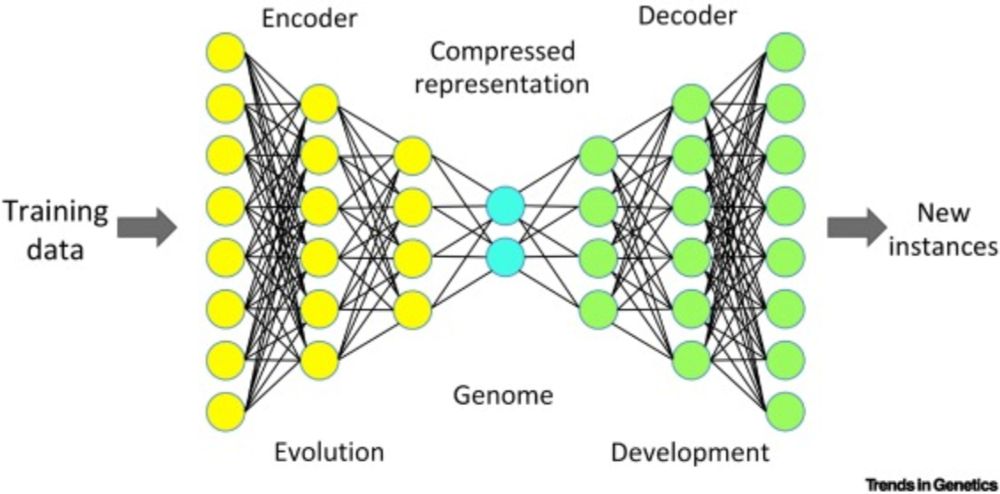
The Genomic Code: the genome instantiates a generative model of the organism
How does the genome encode the form of the organism? What is the nature of this genomic
code? Inspired by recent work in machine learning and neuroscience, we propose that
the genome encodes a generat...
www.cell.com
February 11, 2025 at 11:46 AM
The Genomic Code: the genome instantiates a generative model of the organism www.cell.com/trends/genet... - really delighted to see this in print in @cp-trendsgenetics.bsky.social! 😊
The game of American football is an example of 1-dimensional sequences constraining 3-dimensional behavior. The huddle is an exchange of sequences in the form of speech. These constrain the dynamical behavior of players in the subsequent play. Once the play commences the dynamics take over.
February 10, 2025 at 12:28 PM
The game of American football is an example of 1-dimensional sequences constraining 3-dimensional behavior. The huddle is an exchange of sequences in the form of speech. These constrain the dynamical behavior of players in the subsequent play. Once the play commences the dynamics take over.
Sequences will be sequences.
Curious about the burst of LLMs that claim to interpret DNA and genomes? Read our interview with the creator of one such tool: www.quantamagazine.org/the-poetry-f...

The Poetry Fan Who Taught an LLM to Read and Write DNA | Quanta Magazine
By treating DNA as a language, Brian Hie’s “ChatGPT for genomes” could pick up patterns that humans can’t see, accelerating biological design.
www.quantamagazine.org
February 5, 2025 at 5:13 PM
Sequences will be sequences.
Reposted by Dennis P Waters
Curious about the burst of LLMs that claim to interpret DNA and genomes? Read our interview with the creator of one such tool: www.quantamagazine.org/the-poetry-f...
The Poetry Fan Who Taught an LLM to Read and Write DNA | Quanta Magazine
By treating DNA as a language, Brian Hie’s “ChatGPT for genomes” could pick up patterns that humans can’t see, accelerating biological design.
www.quantamagazine.org
February 5, 2025 at 5:12 PM
Curious about the burst of LLMs that claim to interpret DNA and genomes? Read our interview with the creator of one such tool: www.quantamagazine.org/the-poetry-f...
That would be Charles Bennett. Sometimes you get Dennett on the brain, I know.

What are the physical limits of computation? What is the energy cost of a bit? Can we design a molecular Turing machine running inside cells? Here's a great 1985
@sciam.bsky.social paper by Charles Dennett and Rolf Landauer: physics.bu.edu/~pankajm/PY5...
@sciam.bsky.social paper by Charles Dennett and Rolf Landauer: physics.bu.edu/~pankajm/PY5...

January 12, 2025 at 4:31 PM
That would be Charles Bennett. Sometimes you get Dennett on the brain, I know.
As Howard Pattee wrote in 1982: "Cells do not have feet or ears, but they have motility and irritability, which are basic functions of feet and ears....I suggest that brain-level psychologies are not likely to converge until we have some agreement on the foundations of cell psychology."
Is cognition a universal feature of the living world? How can we define it? Is a nervous system needed? If so, why? If not, why not? Check this fascinating @royalsocietypublishing.org Theme Issue led by @drmichaellevin.bsky.social & co. on Basal Cognition royalsocietypublishing.org/doi/pdf/10.1...

January 11, 2025 at 12:29 PM
As Howard Pattee wrote in 1982: "Cells do not have feet or ears, but they have motility and irritability, which are basic functions of feet and ears....I suggest that brain-level psychologies are not likely to converge until we have some agreement on the foundations of cell psychology."
I only met Rosen once, at a General Systems meeting in Washington in the 1980s (introduction arranged by Howard Pattee). Rosen and Pattee (and Ludwig von Bertalanffy) collaborated when they were at the Center for Theoretical Biology at SUNY Buffalo in the early 70s. They were complementary thinkers.
I've just been told about this website collecting the works, published and unpublished, of Robert Rosen, who was a profound thinker on all kinds of issues, especially in the life sciences. Seems like a great resource.
www.rosenlife.org
www.rosenlife.org
Robert Rosen - Biologist
Robert Rosen was a leading theoretical biologist in the tradition of relational biology, making important contributions to the understanding of living systems.
www.rosenlife.org
January 10, 2025 at 11:27 AM
I only met Rosen once, at a General Systems meeting in Washington in the 1980s (introduction arranged by Howard Pattee). Rosen and Pattee (and Ludwig von Bertalanffy) collaborated when they were at the Center for Theoretical Biology at SUNY Buffalo in the early 70s. They were complementary thinkers.
Reposted by Dennis P Waters

I've just been told about this website collecting the works, published and unpublished, of Robert Rosen, who was a profound thinker on all kinds of issues, especially in the life sciences. Seems like a great resource.
www.rosenlife.org
www.rosenlife.org
Robert Rosen - Biologist
Robert Rosen was a leading theoretical biologist in the tradition of relational biology, making important contributions to the understanding of living systems.
www.rosenlife.org
January 10, 2025 at 10:09 AM
I've just been told about this website collecting the works, published and unpublished, of Robert Rosen, who was a profound thinker on all kinds of issues, especially in the life sciences. Seems like a great resource.
www.rosenlife.org
www.rosenlife.org
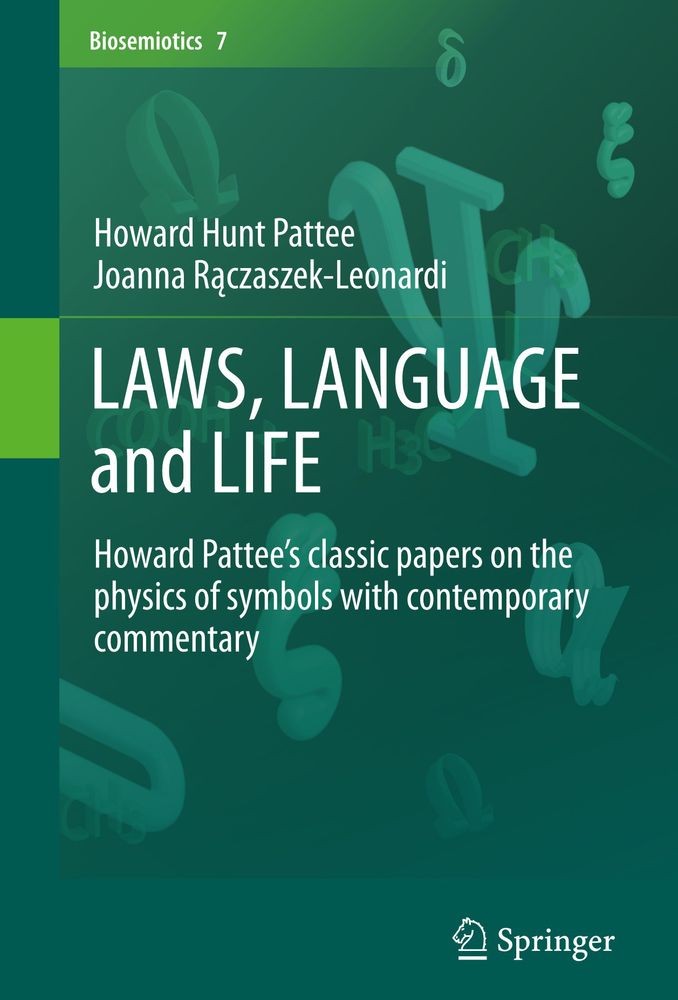
No one else comes close as an influence on my thinking on evolution, complexity, self-organization, symbol sequences vs. dynamics, the whole lot really.
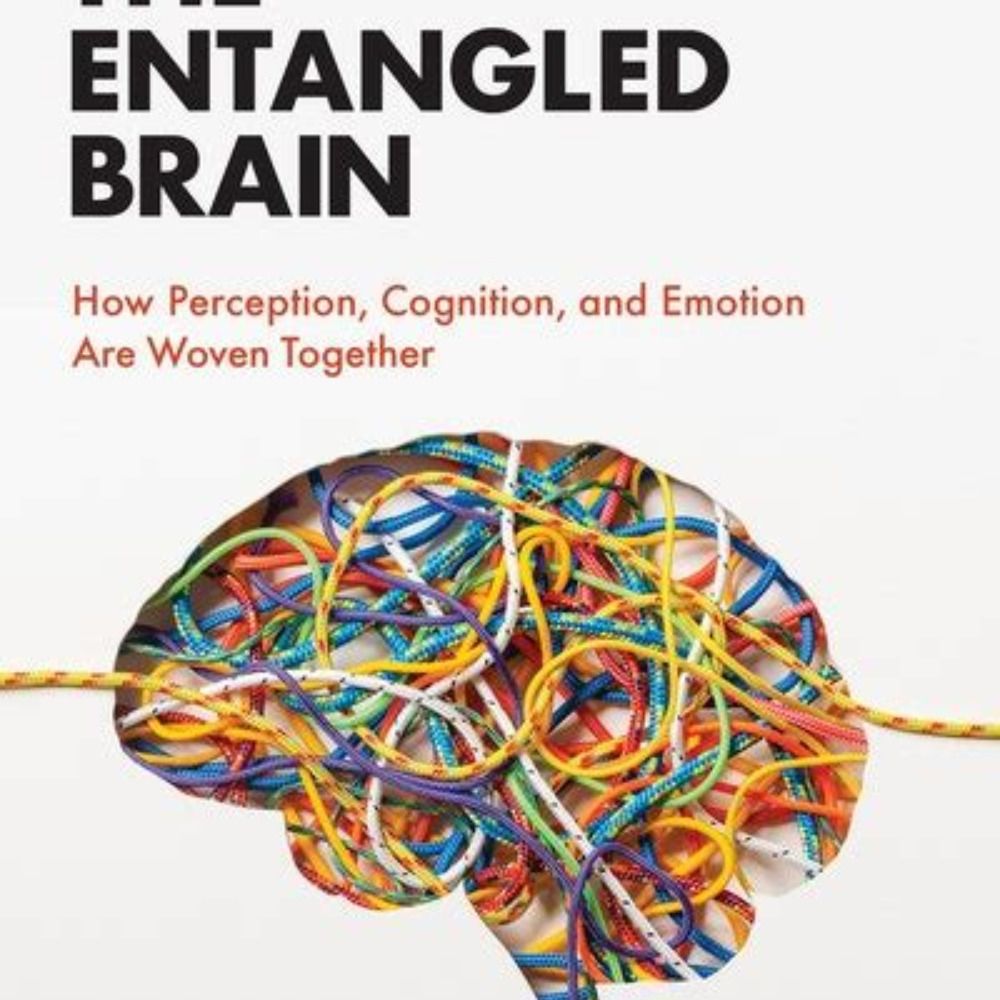
Collection of papers by Howard Pattee is excellent especially with the overview papers. Pattee was really ahead of his time in so many ways: organization, constraints, levels of analysis, symbols, etc. Chapters 5 and 6 on levels of analysis or Hierarchical Control as he calls it are must reads.
January 5, 2025 at 6:47 PM
No one else comes close as an influence on my thinking on evolution, complexity, self-organization, symbol sequences vs. dynamics, the whole lot really.