


Katie O'Reilly
@drkatfish.bsky.social
Aquatic Invasive Species with Illinois-Indiana Sea Grant | #GreatLakes | Come for the #ecology & #scicomm, get reeled in by the fish puns
https://iiseagrant.org/about/our-team/katie-oreilly/
https://iiseagrant.org/about/our-team/katie-oreilly/
get you family members who support/enable you #25DaysofFishmas

December 25, 2025 at 9:20 PM
get you family members who support/enable you #25DaysofFishmas
That's a wrap on 2025's #25DaysofFishmas - the 10th year of #Fishmas silliness! Thanks to everyone who has followed along as we explored some of the amazing fish that call the US home.
From Atlantic to Pacific, there's a lot worth protecting - wishing everyone peace and renewal of hope for 2026.
From Atlantic to Pacific, there's a lot worth protecting - wishing everyone peace and renewal of hope for 2026.

December 25, 2025 at 9:12 PM
That's a wrap on 2025's #25DaysofFishmas - the 10th year of #Fishmas silliness! Thanks to everyone who has followed along as we explored some of the amazing fish that call the US home.
From Atlantic to Pacific, there's a lot worth protecting - wishing everyone peace and renewal of hope for 2026.
From Atlantic to Pacific, there's a lot worth protecting - wishing everyone peace and renewal of hope for 2026.
Everybody's gone sturgeon'
Sturgeon' U.S.A
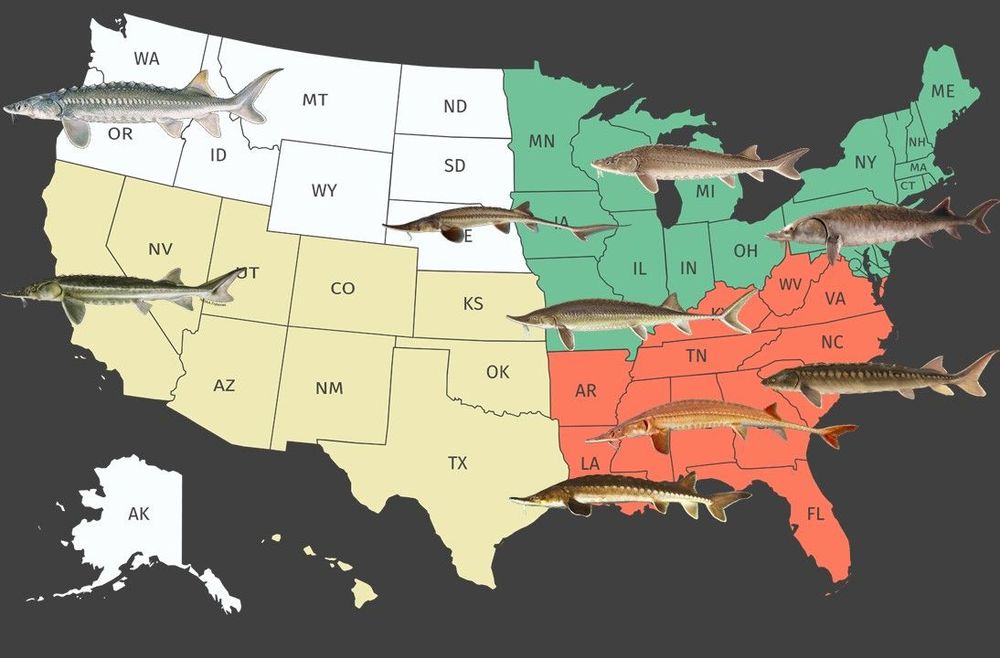
Though we ended #25DaysofFishmas with the Atlantic sturgeon on the East Coast, there are several species of sturgeon all across North America - from Atlantic to Pacific. Maybe even in your own backyard!
Sturgeon' U.S.A
Though we ended #25DaysofFishmas with the Atlantic sturgeon on the East Coast, there are several species of sturgeon all across North America - from Atlantic to Pacific. Maybe even in your own backyard!
December 25, 2025 at 2:41 PM
Everybody's gone sturgeon'
Sturgeon' U.S.A
Though we ended #25DaysofFishmas with the Atlantic sturgeon on the East Coast, there are several species of sturgeon all across North America - from Atlantic to Pacific. Maybe even in your own backyard!
Sturgeon' U.S.A
Though we ended #25DaysofFishmas with the Atlantic sturgeon on the East Coast, there are several species of sturgeon all across North America - from Atlantic to Pacific. Maybe even in your own backyard!
Despite these challenges, Atlantic sturgeon are showing signs of recovery in places like the Chesapeake Bay. Habitat restoration + dam removal have improved spawning success, but since females take a while to mature + may only spawn once every 2-5 years, it takes time to see results #25DaysofFishmas

December 25, 2025 at 2:35 PM
Despite these challenges, Atlantic sturgeon are showing signs of recovery in places like the Chesapeake Bay. Habitat restoration + dam removal have improved spawning success, but since females take a while to mature + may only spawn once every 2-5 years, it takes time to see results #25DaysofFishmas
Fishing for Atlantic sturgeon has mostly ended + protections have been put in place via the endangered/threatened listing, but they still face other threats to recovery including dams that cut off access to spawning rivers, entanglement in fishing gear + mortality from ship strikes #25DaysofFishmas

December 25, 2025 at 2:29 PM
Fishing for Atlantic sturgeon has mostly ended + protections have been put in place via the endangered/threatened listing, but they still face other threats to recovery including dams that cut off access to spawning rivers, entanglement in fishing gear + mortality from ship strikes #25DaysofFishmas
By the late 1800s, Atlantic sturgeon had become the focus of intense harvesting for their eggs/roe that were prized as caviar - for a time, New Jersey supplied more of the world’s caviar than anywhere else. Since females were targeted, this contributed to dramatic population crashes #25DaysofFishmas

December 25, 2025 at 2:24 PM
By the late 1800s, Atlantic sturgeon had become the focus of intense harvesting for their eggs/roe that were prized as caviar - for a time, New Jersey supplied more of the world’s caviar than anywhere else. Since females were targeted, this contributed to dramatic population crashes #25DaysofFishmas
Native Americans harvested Atlantic sturgeon for their meat + roe (eggs) for 1000s of years pre-European settlers. While credited with saving Jamestown during a famine in 1609, settlers initially thought of sturgeon meat as for the poor/lower-class + its eggs fit only for livestock #25DaysofFishmas

December 25, 2025 at 2:21 PM
Native Americans harvested Atlantic sturgeon for their meat + roe (eggs) for 1000s of years pre-European settlers. While credited with saving Jamestown during a famine in 1609, settlers initially thought of sturgeon meat as for the poor/lower-class + its eggs fit only for livestock #25DaysofFishmas
Like other sturgeon species, Atlantic sturgeon feed along the bottom. They find food using their sensitive barbels and use their toothless, expandable mouth like a vacuum, sucking up worms, small fish, and other small animals living on the bottom #25DaysofFishmas
December 25, 2025 at 2:15 PM
Like other sturgeon species, Atlantic sturgeon feed along the bottom. They find food using their sensitive barbels and use their toothless, expandable mouth like a vacuum, sucking up worms, small fish, and other small animals living on the bottom #25DaysofFishmas
One of the East Coast’s largest fish, Atlantic sturgeon are slow-growing. They can grow up to 14 ft/4.3 m long, weigh up to 800 lbs/363 kg and live up to 60 years! Depending on where they live (north vs. south), female sturgeon may not mature until they’re 22-34 years old #25DaysofFishmas

December 25, 2025 at 2:11 PM
One of the East Coast’s largest fish, Atlantic sturgeon are slow-growing. They can grow up to 14 ft/4.3 m long, weigh up to 800 lbs/363 kg and live up to 60 years! Depending on where they live (north vs. south), female sturgeon may not mature until they’re 22-34 years old #25DaysofFishmas
Atlantic sturgeon are migratory, spawning + spending the first few years of life in large rivers from Canada to Florida before moving to coastal waters as adults. All US Atlantic sturgeon populations are currently listed as endangered or threatened under the Endangered Species Act #25DaysofFishmas

December 25, 2025 at 2:08 PM
Atlantic sturgeon are migratory, spawning + spending the first few years of life in large rivers from Canada to Florida before moving to coastal waters as adults. All US Atlantic sturgeon populations are currently listed as endangered or threatened under the Endangered Species Act #25DaysofFishmas
Atlantic sturgeon is one of ~27 species in the sturgeon family Acipenseridae, a group whose looks haven’t changed much since the Cretaceous. They have bony plates (scutes) instead of scales, barbels by their mouths + heterocercal tails (one side larger than the other - like sharks) #25DaysofFishmas

December 25, 2025 at 2:03 PM
Atlantic sturgeon is one of ~27 species in the sturgeon family Acipenseridae, a group whose looks haven’t changed much since the Cretaceous. They have bony plates (scutes) instead of scales, barbels by their mouths + heterocercal tails (one side larger than the other - like sharks) #25DaysofFishmas
The big day is finally here - and with it, a very big fish!
Our #25DaysofFishmas road trip ends on the East Coast with the ancient-looking Atlantic Sturgeon (Acipenser oxyrinchus). Once close to becoming a Ghost of Fishmas Past, their ongoing recovery represents a possible brighter Fishmas Future
Our #25DaysofFishmas road trip ends on the East Coast with the ancient-looking Atlantic Sturgeon (Acipenser oxyrinchus). Once close to becoming a Ghost of Fishmas Past, their ongoing recovery represents a possible brighter Fishmas Future

December 25, 2025 at 2:01 PM
The big day is finally here - and with it, a very big fish!
Our #25DaysofFishmas road trip ends on the East Coast with the ancient-looking Atlantic Sturgeon (Acipenser oxyrinchus). Once close to becoming a Ghost of Fishmas Past, their ongoing recovery represents a possible brighter Fishmas Future
Our #25DaysofFishmas road trip ends on the East Coast with the ancient-looking Atlantic Sturgeon (Acipenser oxyrinchus). Once close to becoming a Ghost of Fishmas Past, their ongoing recovery represents a possible brighter Fishmas Future
Christmas Eve Checklist:
Wrapped presents ✅
Cookies for Santa ✅
Bathtub Carp ✅ (www.npr.org/sections/the...)
#25DaysofFishmas
Wrapped presents ✅
Cookies for Santa ✅
Bathtub Carp ✅ (www.npr.org/sections/the...)
#25DaysofFishmas

December 24, 2025 at 11:46 PM
Christmas Eve Checklist:
Wrapped presents ✅
Cookies for Santa ✅
Bathtub Carp ✅ (www.npr.org/sections/the...)
#25DaysofFishmas
Wrapped presents ✅
Cookies for Santa ✅
Bathtub Carp ✅ (www.npr.org/sections/the...)
#25DaysofFishmas
Need a last-minute gift for the fish-lover in your life? Have sewing supplies, fabric, and time? The National Parks Service can *hook* you up with a pattern to make your very own stuffed American shad #25DaysofFishmas www.nps.gov/articles/000...

December 24, 2025 at 2:37 PM
Need a last-minute gift for the fish-lover in your life? Have sewing supplies, fabric, and time? The National Parks Service can *hook* you up with a pattern to make your very own stuffed American shad #25DaysofFishmas www.nps.gov/articles/000...
Shad bakes are common along the East Coast, including in Connecticut where American shad is the state fish. While cooking shad on wood planks goes back to native peoples, the "shad bake" as we know it was developed by marketers in the 1800s #25DaysofFishmas www.atlasobscura.com/foods/shad-b...

December 24, 2025 at 2:32 PM
Shad bakes are common along the East Coast, including in Connecticut where American shad is the state fish. While cooking shad on wood planks goes back to native peoples, the "shad bake" as we know it was developed by marketers in the 1800s #25DaysofFishmas www.atlasobscura.com/foods/shad-b...
American shad historically spawned in nearly every accessible river along the East Coast. Between overharvest + dams that cut off access to spawning grounds, shad numbers declined even before the 20th century. Commercial ocean fishing for shad closed in 2005 + stocks remain low #25DaysofFishmas

December 24, 2025 at 2:25 PM
American shad historically spawned in nearly every accessible river along the East Coast. Between overharvest + dams that cut off access to spawning grounds, shad numbers declined even before the 20th century. Commercial ocean fishing for shad closed in 2005 + stocks remain low #25DaysofFishmas
American shad “hear” better than other fish + can detect ultrasonic signals up to 180 kHz (above the limit of human hearing). It’s thought that this ability helps them be sensitive to noises like the clicks/echolocation communication used by dolphins, one of their major predators #25DaysofFishmas

December 24, 2025 at 2:18 PM
American shad “hear” better than other fish + can detect ultrasonic signals up to 180 kHz (above the limit of human hearing). It’s thought that this ability helps them be sensitive to noises like the clicks/echolocation communication used by dolphins, one of their major predators #25DaysofFishmas
American shad have been called “America’s Founding Fish” because they were once one of the East Coast’s most abundant and economically important species, feeding native peoples, early colonists, and even George Washington. Their species name sapidissima even means “most delicious”! #25DaysofFishmas

December 24, 2025 at 2:15 PM
American shad have been called “America’s Founding Fish” because they were once one of the East Coast’s most abundant and economically important species, feeding native peoples, early colonists, and even George Washington. Their species name sapidissima even means “most delicious”! #25DaysofFishmas
On the East Coast, American shad spawning runs herald the beginning of spring as the fish return from the ocean to their birth rivers to spawn. You thought you had a long way to travel home for the holidays? Over the course of their lives, shad may migrate over 12,000 mi/19,000 km! #25DaysofFishmas

December 24, 2025 at 2:11 PM
On the East Coast, American shad spawning runs herald the beginning of spring as the fish return from the ocean to their birth rivers to spawn. You thought you had a long way to travel home for the holidays? Over the course of their lives, shad may migrate over 12,000 mi/19,000 km! #25DaysofFishmas
American shad is a migratory fish who spawns in coastal rivers along the Atlantic coast from Newfoundland to Florida. Shad were also introduced to the West Coast in the 1800s + rapidly expanded - in the Columbia River, it's now the predominant migratory species, outnumbering salmon #25DaysofFishmas

December 24, 2025 at 2:07 PM
American shad is a migratory fish who spawns in coastal rivers along the Atlantic coast from Newfoundland to Florida. Shad were also introduced to the West Coast in the 1800s + rapidly expanded - in the Columbia River, it's now the predominant migratory species, outnumbering salmon #25DaysofFishmas
American shad is the largest member of the genus Alosa (river herrings), bigger than other members common along the East Coast (alewife, hickory shad, blueback herring). American shad from the southern part of their range (like FL) are generally smaller than those from the north #25DaysofFishmas

December 24, 2025 at 2:03 PM
American shad is the largest member of the genus Alosa (river herrings), bigger than other members common along the East Coast (alewife, hickory shad, blueback herring). American shad from the southern part of their range (like FL) are generally smaller than those from the north #25DaysofFishmas
Shad tidings we bring to you and your fin! 🐟
Our #25DaysofFishmas road trip heads up the East Coast for a fish as American as apple pie - American Shad (Alosa sapidissima)! Known for their spawning runs, shad know that no matter how far away you roam, no trip could be too far when it comes to home
Our #25DaysofFishmas road trip heads up the East Coast for a fish as American as apple pie - American Shad (Alosa sapidissima)! Known for their spawning runs, shad know that no matter how far away you roam, no trip could be too far when it comes to home

December 24, 2025 at 2:00 PM
Shad tidings we bring to you and your fin! 🐟
Our #25DaysofFishmas road trip heads up the East Coast for a fish as American as apple pie - American Shad (Alosa sapidissima)! Known for their spawning runs, shad know that no matter how far away you roam, no trip could be too far when it comes to home
Our #25DaysofFishmas road trip heads up the East Coast for a fish as American as apple pie - American Shad (Alosa sapidissima)! Known for their spawning runs, shad know that no matter how far away you roam, no trip could be too far when it comes to home
You might ask: Why is any small silvery fish different from any other small silvery fish - aren't they interchangeable? There's much we don't know about many fish species including ghost shiner, but just because we don’t know (yet) doesn’t mean they aren’t important to ecosystems #25DaysofFishmas

December 23, 2025 at 2:32 PM
You might ask: Why is any small silvery fish different from any other small silvery fish - aren't they interchangeable? There's much we don't know about many fish species including ghost shiner, but just because we don’t know (yet) doesn’t mean they aren’t important to ecosystems #25DaysofFishmas
There's some confusion whether ghost shiner is invasive in Ontario, as it was discovered there relatively recently (1972), is disjunct from other southern populations + is used as a baitfish. However, studies have suggested they're native but became isolated from other populations #25DaysofFishmas

December 23, 2025 at 2:24 PM
There's some confusion whether ghost shiner is invasive in Ontario, as it was discovered there relatively recently (1972), is disjunct from other southern populations + is used as a baitfish. However, studies have suggested they're native but became isolated from other populations #25DaysofFishmas
Ghost shiners look *very* similar to and were even previously considered a subspecies of the mimic shiner (Paranotropis volucellus). Ghost shiners never have a stripe along the sides, while mimic shiners usually have at least a faint stripe along the sides + shorter fins #25DaysofFishmas

December 23, 2025 at 2:13 PM
Ghost shiners look *very* similar to and were even previously considered a subspecies of the mimic shiner (Paranotropis volucellus). Ghost shiners never have a stripe along the sides, while mimic shiners usually have at least a faint stripe along the sides + shorter fins #25DaysofFishmas