



Duygu Yıldırım
@duyguyildirim.bsky.social
Assistant Professor of History at the University of Tennessee, Knoxville. PhD from Stanford. Exploring the intersections of knowledge, medicine, and natural history in the early modern Mediterranean. Istanbulite. Villa I Tatti Berenson Fellow ‘26
Reposted by Duygu Yıldırım

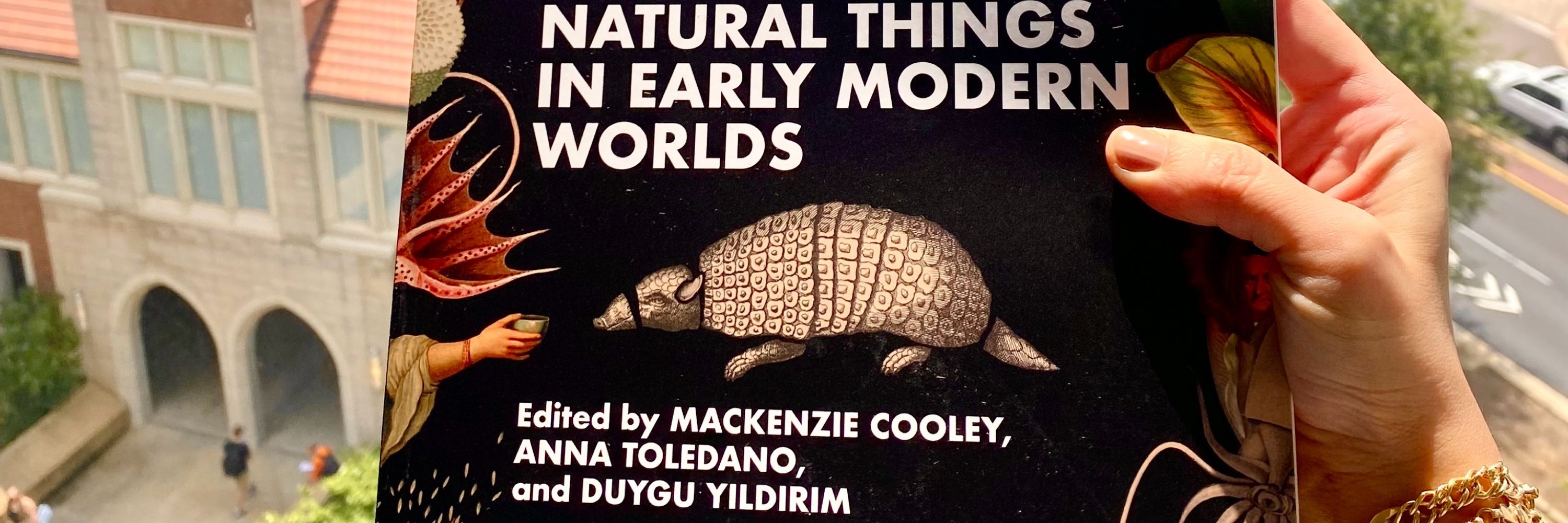
Oh, so you mean present-day exhibitions of early modern objects? I'll have a think. This volume co-edited by @mackenziecooley.bsky.social, @annatoledano.com, and @duyguyildirim.bsky.social (someone needs to encourage them to hang out here!) may have leads:
www.routledge.com/Natural-Thin...
www.routledge.com/Natural-Thin...

Natural Things in Early Modern Worlds
The essays and original visualizations collected in Natural Things in Early Modern Worlds explore the relationships among natural things - ranging from pollen in a gust of wind to a carnivorous pitche...
www.routledge.com
January 18, 2026 at 8:18 AM
Oh, so you mean present-day exhibitions of early modern objects? I'll have a think. This volume co-edited by @mackenziecooley.bsky.social, @annatoledano.com, and @duyguyildirim.bsky.social (someone needs to encourage them to hang out here!) may have leads:
www.routledge.com/Natural-Thin...
www.routledge.com/Natural-Thin...
That would be great, thank you!
August 5, 2025 at 1:42 PM
That would be great, thank you!
The question I asked is more about how scholars of the seventeenth century envisioned the history of knowledge.
July 23, 2025 at 11:44 AM
The question I asked is more about how scholars of the seventeenth century envisioned the history of knowledge.
Thank you! I am revising my book manuscript so I just wanted to share this challenge for brainstorming!
July 22, 2025 at 9:34 PM
Thank you! I am revising my book manuscript so I just wanted to share this challenge for brainstorming!
I like that phrase!
July 22, 2025 at 9:04 PM
I like that phrase!
Yes; so I think there were at least three kinds of historical thinking in the 17th century: one that thinks about lost and found, the other is more about novelties; and the last one is about writing world histories of knowledge like appreciating Arabic science, for example.
July 22, 2025 at 8:48 PM
Yes; so I think there were at least three kinds of historical thinking in the 17th century: one that thinks about lost and found, the other is more about novelties; and the last one is about writing world histories of knowledge like appreciating Arabic science, for example.