




Ella Ford
@ellaford.bsky.social
GTA and PhD student at Leeds Beckett University researching the experience of trying to conceive after early pregnancy loss #pregnancyloss #miscarriage #healthpsychology
📢New paper published in JMIR Formative Research: Exploring Empowerment in Online Support Communities for People Living with Tic Disorders and Tourette Syndrome: Qualitative Survey Study of User Experiences.
#tics #tourettesyndrome #tourettes #onlinesupport #peersupport
#tics #tourettesyndrome #tourettes #onlinesupport #peersupport

JMIR Formative Res: Exploring Empowerment in Online Support Communities for People Living With Tic Disorders and Tourette Syndrome: Qualitative Survey Study of User Experiences #TouretteSyndrome #TicDisorders #MentalHealth #PeerSupport #OnlineCommunity

Exploring Empowerment in Online Support Communities for People Living With Tic Disorders and Tourette Syndrome: Qualitative Survey Study of User Experiences
Background: People with tic disorders (TDs)—such as Tourette syndrome—report poorer quality of life compared to non-TD peers, and experience considerable difficulties, including societal stigmatization and barriers to accessing health care and evidence-based interventions. Peer support can help improve psychological outcomes, and online support communities (OSCs) are one way to access psychological support. Empowerment involves improving an individual’s cognitive processes to increase their ability to assert control over their health condition. OSCs have been suggested to facilitate empowerment, but this has not yet been investigated in users of OSCs for TDs. Objective: This study aimed to explore empowerment processes and outcomes present in OSCs as perceived and reported by users of OSCs for TDs living with a TD. Methods: A web-based survey of current users of OSCs for TDs (n=39) was conducted in summer 2022. The survey included four free-text questions about the impact of using OSCs for TDs in relation to empowerment, such as how it has affected their interactions with health care professionals (HCPs), decisions about treatment, and their experiences of living with a TD. Survey responses were analyzed using deductive and inductive reflexive thematic analysis guided by an initial coding structure derived from the empowering processes and outcomes theoretical framework. Results: Analysis of responses identified a range of empowering processes (eg, exchanging information, encountering emotional support, finding recognition, and sharing experiences) and outcomes (eg, being better informed, feeling more confident in the relationship with HCPs and in making treatment decisions, and enhanced well-being) as related to OSC use in people with TDs that were consistent with the theoretical framework. Additionally, the process of changing stereotypes and stigma, the outcomes of raising awareness, and “one size does not fit all” were identified. A small number of disempowering processes and outcomes were identified, notably the outcome of feeling less confident in the relationship with HCPs. Conclusions: These findings contribute to evidence for empowerment processes and outcomes experienced by users of health OSCs generally and highlight unique aspects of empowerment for users of OSCs with TDs and how these affect their experiences. OSCs appear to be an important tool in improving mental well-being through validation and recognition from peers, related to the acknowledgment of feelings of imposterism. Using OSCs can expand knowledge through exchanging information and experiences they may not have otherwise had access to—increasing empowerment through improvements in self-management and confidence in treatment decisions. However, this can also decrease trust in HCPs and negatively impact relationships due to decreased hope of assistance and fear of stigmatization for using OSCs. The authors suggest that recommendations regarding the use of OSCs are presented in self-management guidelines concerning coping strategies and the importance of peer support in living with tics.
dlvr.it
October 13, 2025 at 2:18 PM
📢New paper published in JMIR Formative Research: Exploring Empowerment in Online Support Communities for People Living with Tic Disorders and Tourette Syndrome: Qualitative Survey Study of User Experiences.
#tics #tourettesyndrome #tourettes #onlinesupport #peersupport
#tics #tourettesyndrome #tourettes #onlinesupport #peersupport
Reposted by Ella Ford
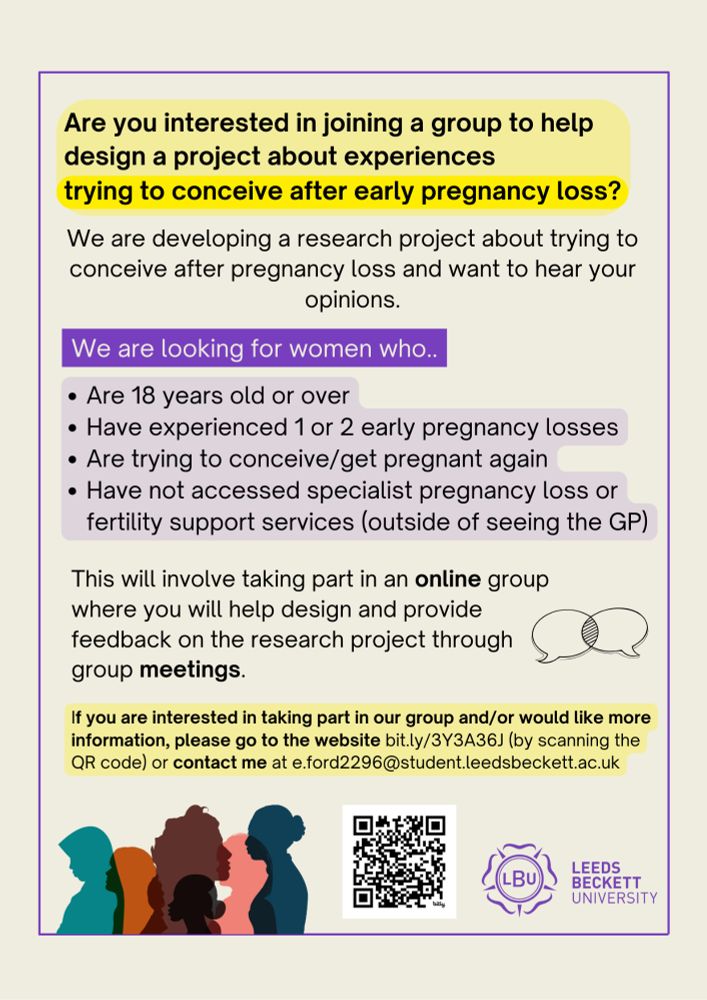
We are developing a research project about trying to conceive after early pregnancy loss as part of my PhD. We want to hear from women with lived experience to help inform this project. Please follow this link (bit.ly/3Y3A36J) and/or get in touch if you are interested, thank you 😊
May 21, 2025 at 3:13 PM
We are developing a research project about trying to conceive after early pregnancy loss as part of my PhD. We want to hear from women with lived experience to help inform this project. Please follow this link (bit.ly/3Y3A36J) and/or get in touch if you are interested, thank you 😊
We are developing a research project about trying to conceive after early pregnancy loss as part of my PhD. We want to hear from women with lived experience to help inform this project. Please follow this link (bit.ly/3Y3A36J) and/or get in touch if you are interested, thank you 😊
May 21, 2025 at 3:13 PM
We are developing a research project about trying to conceive after early pregnancy loss as part of my PhD. We want to hear from women with lived experience to help inform this project. Please follow this link (bit.ly/3Y3A36J) and/or get in touch if you are interested, thank you 😊
Reposted by Ella Ford
Reporting guidelines for qualitative research (these seem quite good):
www.tandfonline.com/doi/full/10....
Thanks to @researchandv.bsky.social for the spot!
www.tandfonline.com/doi/full/10....
Thanks to @researchandv.bsky.social for the spot!
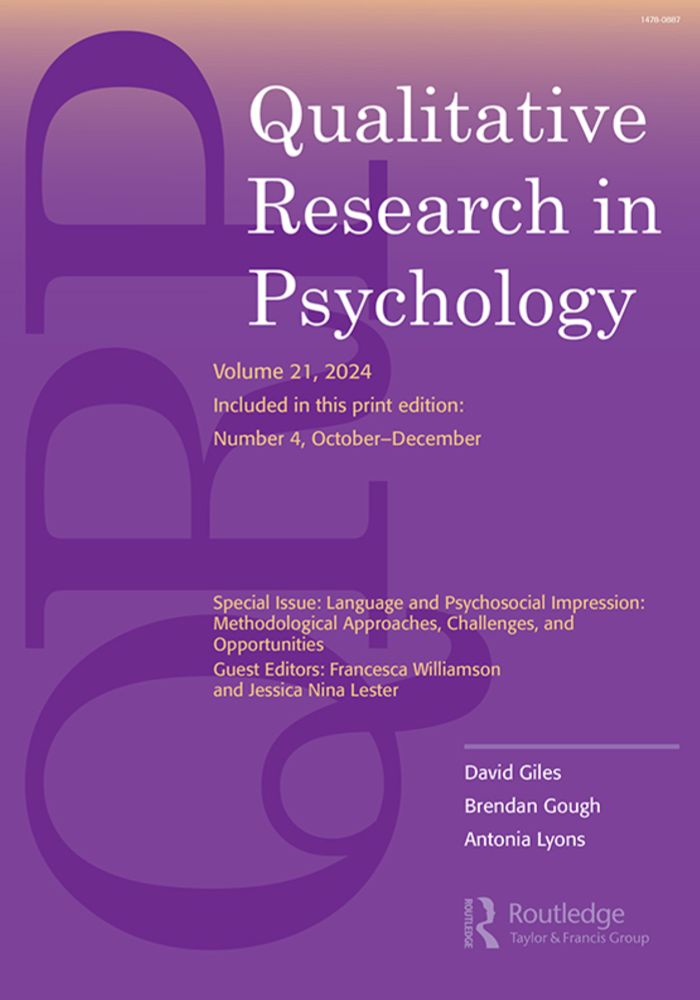
Reporting guidelines for qualitative research: a values-based approach
Evaluative tools for qualitative research need to be developed and designed in a way that allows them to be used by the research community to assess qualitative research on its own terms, and thus ...
www.tandfonline.com
November 6, 2024 at 2:16 PM
Reporting guidelines for qualitative research (these seem quite good):
www.tandfonline.com/doi/full/10....
Thanks to @researchandv.bsky.social for the spot!
www.tandfonline.com/doi/full/10....
Thanks to @researchandv.bsky.social for the spot!