




Fabian Dablander
@fdabl.bsky.social
Postdoc @ SEVEN, the interdisciplinary climate institute of the University of Amsterdam || Climate action, tipping points, sufficiency, social movements. https://fabiandablander.com/
3️⃣ 𝐂𝐨𝐯𝐞𝐫𝐚𝐠𝐞 𝐭𝐞𝐧𝐝𝐬 𝐭𝐨 𝐚𝐥𝐢𝐠𝐧 𝐰𝐢𝐭𝐡 𝐧𝐞𝐰𝐬𝐩𝐚𝐩𝐞𝐫𝐬' 𝐩𝐨𝐥𝐢𝐭𝐢𝐜𝐚𝐥 𝐥𝐞𝐚𝐧𝐢𝐧𝐠.
Left-leaning outlets more frequently reported that climate change is human-caused, highlighted fossil fuels as a cause, emphasized the need to reduce their use, and discussed systemic drivers more often.
Left-leaning outlets more frequently reported that climate change is human-caused, highlighted fossil fuels as a cause, emphasized the need to reduce their use, and discussed systemic drivers more often.

December 2, 2025 at 9:37 AM
3️⃣ 𝐂𝐨𝐯𝐞𝐫𝐚𝐠𝐞 𝐭𝐞𝐧𝐝𝐬 𝐭𝐨 𝐚𝐥𝐢𝐠𝐧 𝐰𝐢𝐭𝐡 𝐧𝐞𝐰𝐬𝐩𝐚𝐩𝐞𝐫𝐬' 𝐩𝐨𝐥𝐢𝐭𝐢𝐜𝐚𝐥 𝐥𝐞𝐚𝐧𝐢𝐧𝐠.
Left-leaning outlets more frequently reported that climate change is human-caused, highlighted fossil fuels as a cause, emphasized the need to reduce their use, and discussed systemic drivers more often.
Left-leaning outlets more frequently reported that climate change is human-caused, highlighted fossil fuels as a cause, emphasized the need to reduce their use, and discussed systemic drivers more often.
We found:
1️⃣ 𝐀𝐝𝐚𝐩𝐭𝐚𝐭𝐢𝐨𝐧 𝐰𝐚𝐬 𝐫𝐚𝐫𝐞𝐥𝐲 𝐜𝐨𝐯𝐞𝐫𝐞𝐝.
Aspects relating to causes, impacts, & mitigation were much more covered than aspects relating to adaptation.
2️⃣ 𝐂𝐨𝐯𝐞𝐫𝐚𝐠𝐞 𝐚𝐛𝐨𝐮𝐭 𝐜𝐚𝐮𝐬𝐞𝐬 𝐰𝐚𝐬 𝐝𝐨𝐦𝐢𝐧𝐚𝐭𝐞𝐝 𝐛𝐲 𝐟𝐨𝐬𝐬𝐢𝐥 𝐟𝐮𝐞𝐥𝐬.
Agriculture, overconsumption, carbon inequality, & economic growth were rarely mentioned.
1️⃣ 𝐀𝐝𝐚𝐩𝐭𝐚𝐭𝐢𝐨𝐧 𝐰𝐚𝐬 𝐫𝐚𝐫𝐞𝐥𝐲 𝐜𝐨𝐯𝐞𝐫𝐞𝐝.
Aspects relating to causes, impacts, & mitigation were much more covered than aspects relating to adaptation.
2️⃣ 𝐂𝐨𝐯𝐞𝐫𝐚𝐠𝐞 𝐚𝐛𝐨𝐮𝐭 𝐜𝐚𝐮𝐬𝐞𝐬 𝐰𝐚𝐬 𝐝𝐨𝐦𝐢𝐧𝐚𝐭𝐞𝐝 𝐛𝐲 𝐟𝐨𝐬𝐬𝐢𝐥 𝐟𝐮𝐞𝐥𝐬.
Agriculture, overconsumption, carbon inequality, & economic growth were rarely mentioned.
December 2, 2025 at 9:37 AM
We found:
1️⃣ 𝐀𝐝𝐚𝐩𝐭𝐚𝐭𝐢𝐨𝐧 𝐰𝐚𝐬 𝐫𝐚𝐫𝐞𝐥𝐲 𝐜𝐨𝐯𝐞𝐫𝐞𝐝.
Aspects relating to causes, impacts, & mitigation were much more covered than aspects relating to adaptation.
2️⃣ 𝐂𝐨𝐯𝐞𝐫𝐚𝐠𝐞 𝐚𝐛𝐨𝐮𝐭 𝐜𝐚𝐮𝐬𝐞𝐬 𝐰𝐚𝐬 𝐝𝐨𝐦𝐢𝐧𝐚𝐭𝐞𝐝 𝐛𝐲 𝐟𝐨𝐬𝐬𝐢𝐥 𝐟𝐮𝐞𝐥𝐬.
Agriculture, overconsumption, carbon inequality, & economic growth were rarely mentioned.
1️⃣ 𝐀𝐝𝐚𝐩𝐭𝐚𝐭𝐢𝐨𝐧 𝐰𝐚𝐬 𝐫𝐚𝐫𝐞𝐥𝐲 𝐜𝐨𝐯𝐞𝐫𝐞𝐝.
Aspects relating to causes, impacts, & mitigation were much more covered than aspects relating to adaptation.
2️⃣ 𝐂𝐨𝐯𝐞𝐫𝐚𝐠𝐞 𝐚𝐛𝐨𝐮𝐭 𝐜𝐚𝐮𝐬𝐞𝐬 𝐰𝐚𝐬 𝐝𝐨𝐦𝐢𝐧𝐚𝐭𝐞𝐝 𝐛𝐲 𝐟𝐨𝐬𝐬𝐢𝐥 𝐟𝐮𝐞𝐥𝐬.
Agriculture, overconsumption, carbon inequality, & economic growth were rarely mentioned.
We built a custom scraping methodology to get access to virtually all articles about climate change published in major German newspapers since 2010.
We then designed a structured set of IPCC-aligned questions covering causes, impacts, mitigation, and adaptation, and used LLMs for content analysis.
We then designed a structured set of IPCC-aligned questions covering causes, impacts, mitigation, and adaptation, and used LLMs for content analysis.

December 2, 2025 at 9:37 AM
We built a custom scraping methodology to get access to virtually all articles about climate change published in major German newspapers since 2010.
We then designed a structured set of IPCC-aligned questions covering causes, impacts, mitigation, and adaptation, and used LLMs for content analysis.
We then designed a structured set of IPCC-aligned questions covering causes, impacts, mitigation, and adaptation, and used LLMs for content analysis.
🚨 Mapping climate change coverage
In a new preprint, Simon Wimmer, @jmbh.bsky.social, and I analyzed over 50,000 articles about climate change from major German newspapers across the political spectrum (2010-2024) using large language models 🧵
🔗 Link: osf.io/preprints/so...
In a new preprint, Simon Wimmer, @jmbh.bsky.social, and I analyzed over 50,000 articles about climate change from major German newspapers across the political spectrum (2010-2024) using large language models 🧵
🔗 Link: osf.io/preprints/so...

December 2, 2025 at 9:37 AM
🚨 Mapping climate change coverage
In a new preprint, Simon Wimmer, @jmbh.bsky.social, and I analyzed over 50,000 articles about climate change from major German newspapers across the political spectrum (2010-2024) using large language models 🧵
🔗 Link: osf.io/preprints/so...
In a new preprint, Simon Wimmer, @jmbh.bsky.social, and I analyzed over 50,000 articles about climate change from major German newspapers across the political spectrum (2010-2024) using large language models 🧵
🔗 Link: osf.io/preprints/so...
I just noticed this too. DeepL suggested I refer to a different different book from the same author. I'm out!

November 25, 2025 at 7:38 AM
I just noticed this too. DeepL suggested I refer to a different different book from the same author. I'm out!
I am beyond excited to announce that the applications are now open for the third Amsterdam Complexity School on Climate Change!
Come visit a beautiful city, hear from world-renowned experts, and work with passionate individuals on challenges related to climate change.
More info: acscc.nl
Come visit a beautiful city, hear from world-renowned experts, and work with passionate individuals on challenges related to climate change.
More info: acscc.nl

November 17, 2025 at 9:03 AM
I am beyond excited to announce that the applications are now open for the third Amsterdam Complexity School on Climate Change!
Come visit a beautiful city, hear from world-renowned experts, and work with passionate individuals on challenges related to climate change.
More info: acscc.nl
Come visit a beautiful city, hear from world-renowned experts, and work with passionate individuals on challenges related to climate change.
More info: acscc.nl
Techno-optimistic scientists were less likely to engage in civic action (e.g., signing petitions, participating in protests) and high-impact lifestyle changes (e.g., reducing flying, shifting to plant-rich diets)
On average, their engagement was 28% and 20% lower, respectively.
On average, their engagement was 28% and 20% lower, respectively.

November 14, 2025 at 9:20 AM
Techno-optimistic scientists were less likely to engage in civic action (e.g., signing petitions, participating in protests) and high-impact lifestyle changes (e.g., reducing flying, shifting to plant-rich diets)
On average, their engagement was 28% and 20% lower, respectively.
On average, their engagement was 28% and 20% lower, respectively.
We found that applied sciences show the highest levels of techno-optimism and humanities the lowest. Interestingly, levels did not differ based on whether scientists work on climate change. Scientists on the political right were more likely to be techno-optimists.

November 14, 2025 at 9:20 AM
We found that applied sciences show the highest levels of techno-optimism and humanities the lowest. Interestingly, levels did not differ based on whether scientists work on climate change. Scientists on the political right were more likely to be techno-optimists.
We estimated the share of scientists who believe that "advances in technology will largely solve the problems caused by climate change" and used causally informed Bayesian regression models to estimate the impact of techno-optimism on scientists' civic actions and high-impact lifestyle changes.

November 14, 2025 at 9:20 AM
We estimated the share of scientists who believe that "advances in technology will largely solve the problems caused by climate change" and used causally informed Bayesian regression models to estimate the impact of techno-optimism on scientists' civic actions and high-impact lifestyle changes.
🚨Techno-optimistic scientists take fewer climate actions
In a new preprint, @colognaviktoria.bsky.social, @maiensachis.bsky.social, @jmbh.bsky.social & I examine techno-optimism among 9,199 scientists and how it relates to their civic engagement and lifestyle choices🧵
🔗 Link: tinyurl.com/hh94huzv
In a new preprint, @colognaviktoria.bsky.social, @maiensachis.bsky.social, @jmbh.bsky.social & I examine techno-optimism among 9,199 scientists and how it relates to their civic engagement and lifestyle choices🧵
🔗 Link: tinyurl.com/hh94huzv

November 14, 2025 at 9:20 AM
🚨Techno-optimistic scientists take fewer climate actions
In a new preprint, @colognaviktoria.bsky.social, @maiensachis.bsky.social, @jmbh.bsky.social & I examine techno-optimism among 9,199 scientists and how it relates to their civic engagement and lifestyle choices🧵
🔗 Link: tinyurl.com/hh94huzv
In a new preprint, @colognaviktoria.bsky.social, @maiensachis.bsky.social, @jmbh.bsky.social & I examine techno-optimism among 9,199 scientists and how it relates to their civic engagement and lifestyle choices🧵
🔗 Link: tinyurl.com/hh94huzv
🔥We've crossed 7 out of 9 planetary boundaries, & global heating is accelerating. What is to be done?
24 scholars, activists & practitioners met at a 5-day workshop to explore how to accelerate collective climate action.
Our summary report is out now ⤵️
🔗 tinyurl.com/cxxembyw
🔗 tinyurl.com/54rmhykx
24 scholars, activists & practitioners met at a 5-day workshop to explore how to accelerate collective climate action.
Our summary report is out now ⤵️
🔗 tinyurl.com/cxxembyw
🔗 tinyurl.com/54rmhykx


November 12, 2025 at 3:40 PM
🔥We've crossed 7 out of 9 planetary boundaries, & global heating is accelerating. What is to be done?
24 scholars, activists & practitioners met at a 5-day workshop to explore how to accelerate collective climate action.
Our summary report is out now ⤵️
🔗 tinyurl.com/cxxembyw
🔗 tinyurl.com/54rmhykx
24 scholars, activists & practitioners met at a 5-day workshop to explore how to accelerate collective climate action.
Our summary report is out now ⤵️
🔗 tinyurl.com/cxxembyw
🔗 tinyurl.com/54rmhykx
There is marked variation between countries, and this appears to differ across hazards. For example, hurricanes, mudslides, and wildfires show similar effects across countries, while the effects of earthquakes, sandstorms, and droughts vary strongly across countries.

October 7, 2025 at 8:03 AM
There is marked variation between countries, and this appears to differ across hazards. For example, hurricanes, mudslides, and wildfires show similar effects across countries, while the effects of earthquakes, sandstorms, and droughts vary strongly across countries.
The data also includes a resilience index defined at the individual level, combining individual, household, community, and societal resilience factors: www.lrfoundation.org.uk/wrp/world-ri...
Risk perceptions do not seem to change differently for people with low or high resilience.
Risk perceptions do not seem to change differently for people with low or high resilience.

October 7, 2025 at 8:03 AM
The data also includes a resilience index defined at the individual level, combining individual, household, community, and societal resilience factors: www.lrfoundation.org.uk/wrp/world-ri...
Risk perceptions do not seem to change differently for people with low or high resilience.
Risk perceptions do not seem to change differently for people with low or high resilience.
I use hierarchical Bayesian multinomial regression modeling, which allows me to investigate what level of risk perception is different for people with hazard experience.
Importantly, people with hazard experience tend to view climate change as a very serious threat, not just a somewhat serious one!
Importantly, people with hazard experience tend to view climate change as a very serious threat, not just a somewhat serious one!

October 7, 2025 at 8:03 AM
I use hierarchical Bayesian multinomial regression modeling, which allows me to investigate what level of risk perception is different for people with hazard experience.
Importantly, people with hazard experience tend to view climate change as a very serious threat, not just a somewhat serious one!
Importantly, people with hazard experience tend to view climate change as a very serious threat, not just a somewhat serious one!
I leverage this data source to assess whether experience with different hazards is associated with increased climate risk perception. The individual-level effects are consistent and, for some hazards, comparable to having a university degree! Effects at the country level are small & uncertain

October 7, 2025 at 8:03 AM
I leverage this data source to assess whether experience with different hazards is associated with increased climate risk perception. The individual-level effects are consistent and, for some hazards, comparable to having a university degree! Effects at the country level are small & uncertain
I use the World Risk Poll data, which includes information on whether respondents have personally experienced a climate-related hazard in the last five years, whether they perceive climate change as a threat to their country, and a multidimensional resilience indicator. www.lrfoundation.org.uk/wrp

October 7, 2025 at 8:03 AM
I use the World Risk Poll data, which includes information on whether respondents have personally experienced a climate-related hazard in the last five years, whether they perceive climate change as a threat to their country, and a multidimensional resilience indicator. www.lrfoundation.org.uk/wrp
🔥 Climate hazard paper published!
Using nationally representative survey data from 142 countries (N = 128,093), I find that people who have experienced a climate-related hazard are more likely to consider climate change a 𝘷𝘦𝘳𝘺 𝘴𝘦𝘳𝘪𝘰𝘶𝘴 𝘵𝘩𝘳𝘦𝘢𝘵. 🧵
Link: iopscience.iop.org/article/10.1...
Using nationally representative survey data from 142 countries (N = 128,093), I find that people who have experienced a climate-related hazard are more likely to consider climate change a 𝘷𝘦𝘳𝘺 𝘴𝘦𝘳𝘪𝘰𝘶𝘴 𝘵𝘩𝘳𝘦𝘢𝘵. 🧵
Link: iopscience.iop.org/article/10.1...

October 7, 2025 at 8:03 AM
🔥 Climate hazard paper published!
Using nationally representative survey data from 142 countries (N = 128,093), I find that people who have experienced a climate-related hazard are more likely to consider climate change a 𝘷𝘦𝘳𝘺 𝘴𝘦𝘳𝘪𝘰𝘶𝘴 𝘵𝘩𝘳𝘦𝘢𝘵. 🧵
Link: iopscience.iop.org/article/10.1...
Using nationally representative survey data from 142 countries (N = 128,093), I find that people who have experienced a climate-related hazard are more likely to consider climate change a 𝘷𝘦𝘳𝘺 𝘴𝘦𝘳𝘪𝘰𝘶𝘴 𝘵𝘩𝘳𝘦𝘢𝘵. 🧵
Link: iopscience.iop.org/article/10.1...
🔥Growing the climate movement by centering transformative adaptation
In a new preprint, Kevin Young, @swaziadam.bsky.social, & I advocate for transformative adaptation as a framework to better connect people's material interests with climate change and increase mobilization. osf.io/preprints/so...
In a new preprint, Kevin Young, @swaziadam.bsky.social, & I advocate for transformative adaptation as a framework to better connect people's material interests with climate change and increase mobilization. osf.io/preprints/so...

September 8, 2025 at 9:27 AM
🔥Growing the climate movement by centering transformative adaptation
In a new preprint, Kevin Young, @swaziadam.bsky.social, & I advocate for transformative adaptation as a framework to better connect people's material interests with climate change and increase mobilization. osf.io/preprints/so...
In a new preprint, Kevin Young, @swaziadam.bsky.social, & I advocate for transformative adaptation as a framework to better connect people's material interests with climate change and increase mobilization. osf.io/preprints/so...
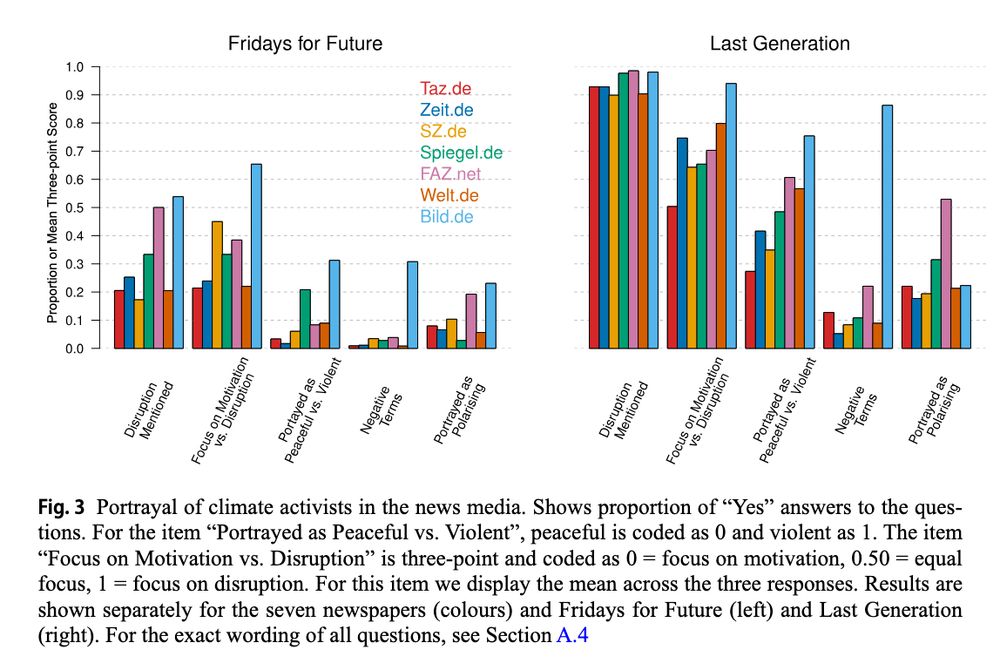
How are the climate activist groups themselves portrayed?
We found large differences between Fridays for Future and Last Generation, as well as large differences between newspapers.
More disruption → more negative coverage
More to the political right → more negative coverage
We found large differences between Fridays for Future and Last Generation, as well as large differences between newspapers.
More disruption → more negative coverage
More to the political right → more negative coverage
July 23, 2025 at 1:03 PM
How are the climate activist groups themselves portrayed?
We found large differences between Fridays for Future and Last Generation, as well as large differences between newspapers.
More disruption → more negative coverage
More to the political right → more negative coverage
We found large differences between Fridays for Future and Last Generation, as well as large differences between newspapers.
More disruption → more negative coverage
More to the political right → more negative coverage
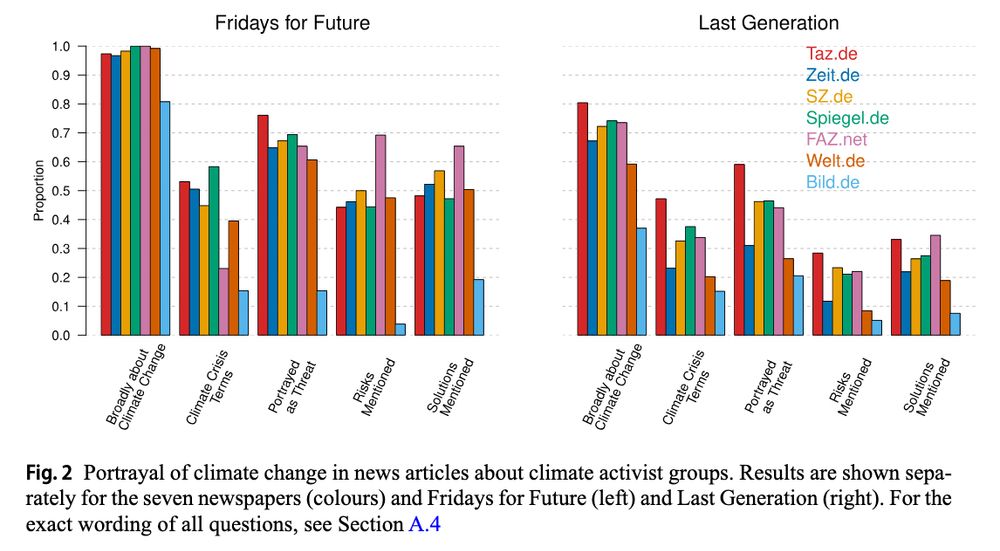
How is climate change portrayed in articles about the activist groups?
We used (& validated) GPT-4 as a tool to help us assess all 4,216 articles, which worked very well!
A substantial proportion of articles did not discuss risks & solutions, and there were large diff. between groups & newspapers.
We used (& validated) GPT-4 as a tool to help us assess all 4,216 articles, which worked very well!
A substantial proportion of articles did not discuss risks & solutions, and there were large diff. between groups & newspapers.
July 23, 2025 at 1:03 PM
How is climate change portrayed in articles about the activist groups?
We used (& validated) GPT-4 as a tool to help us assess all 4,216 articles, which worked very well!
A substantial proportion of articles did not discuss risks & solutions, and there were large diff. between groups & newspapers.
We used (& validated) GPT-4 as a tool to help us assess all 4,216 articles, which worked very well!
A substantial proportion of articles did not discuss risks & solutions, and there were large diff. between groups & newspapers.
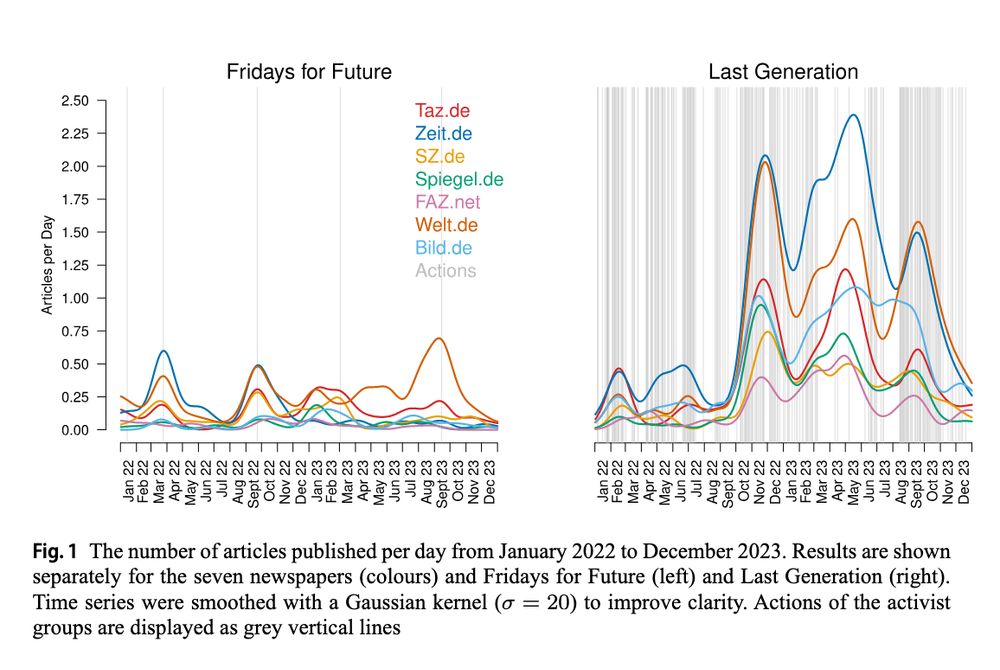
We scraped news articles of seven major German newspapers, ranging from the politically left-leaning @taz.de to the politically right-leaning BILD.
We identified 4,216 articles that were mainly about Fridays for Future or Last Generation. Actions drive coverage!
We identified 4,216 articles that were mainly about Fridays for Future or Last Generation. Actions drive coverage!
July 23, 2025 at 1:03 PM
We scraped news articles of seven major German newspapers, ranging from the politically left-leaning @taz.de to the politically right-leaning BILD.
We identified 4,216 articles that were mainly about Fridays for Future or Last Generation. Actions drive coverage!
We identified 4,216 articles that were mainly about Fridays for Future or Last Generation. Actions drive coverage!
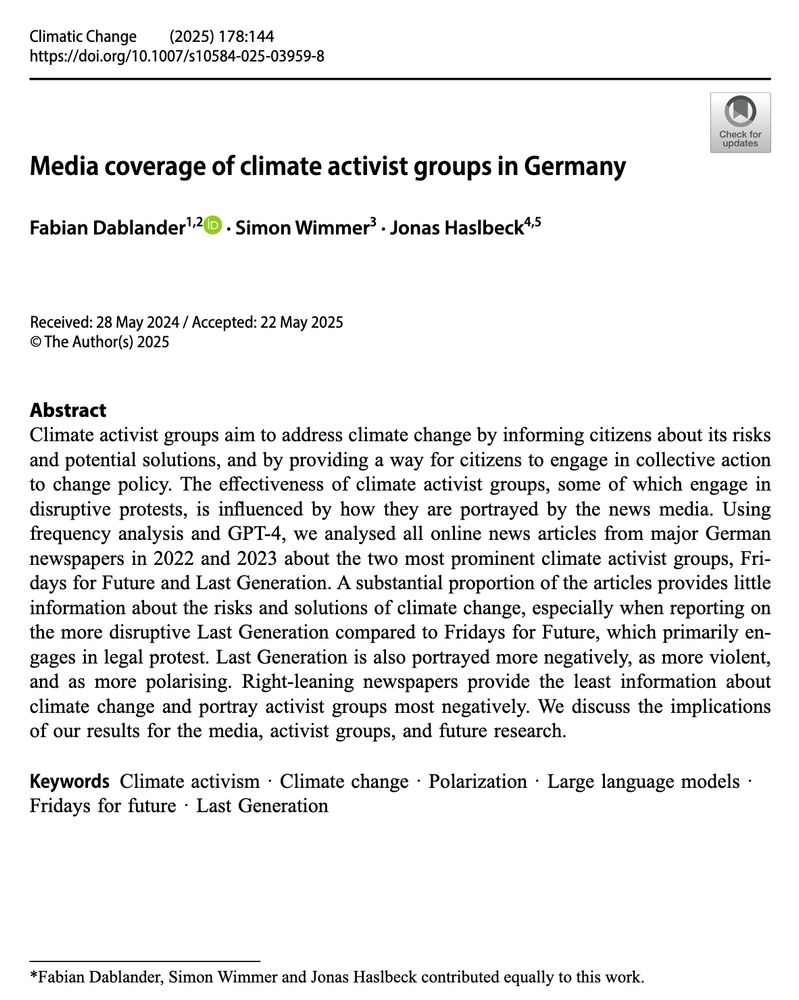
Are climate activists portrayed as polarising & violent in the news media? Are risks & solutions to climate change mentioned?
We used ChatGPT to answer these questions based on > 4,200 articles from seven major German newspapers: link.springer.com/article/10.1... w @jmbh.bsky.social & Simon Wimmer
We used ChatGPT to answer these questions based on > 4,200 articles from seven major German newspapers: link.springer.com/article/10.1... w @jmbh.bsky.social & Simon Wimmer
July 23, 2025 at 1:03 PM
Are climate activists portrayed as polarising & violent in the news media? Are risks & solutions to climate change mentioned?
We used ChatGPT to answer these questions based on > 4,200 articles from seven major German newspapers: link.springer.com/article/10.1... w @jmbh.bsky.social & Simon Wimmer
We used ChatGPT to answer these questions based on > 4,200 articles from seven major German newspapers: link.springer.com/article/10.1... w @jmbh.bsky.social & Simon Wimmer
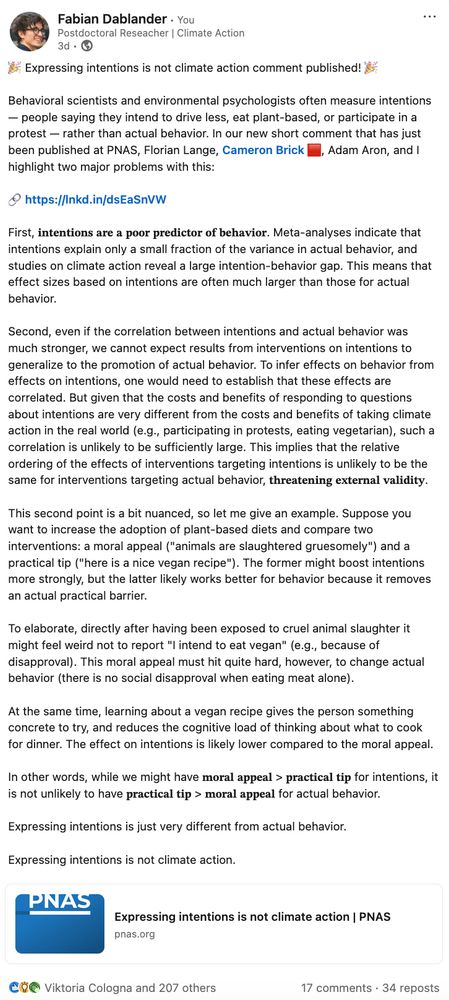
The second point is a bit nuanced, and I have elaborated on it a bit more on LinkedIn: www.linkedin.com/posts/fabian...
This letter was a collaboration with the great Florian Lange, @cameronbrick.bsky.social, & @swaziadam.bsky.social.
You can find the authors' reply at www.pnas.org/doi/10.1073/...
This letter was a collaboration with the great Florian Lange, @cameronbrick.bsky.social, & @swaziadam.bsky.social.
You can find the authors' reply at www.pnas.org/doi/10.1073/...
July 7, 2025 at 12:51 PM
The second point is a bit nuanced, and I have elaborated on it a bit more on LinkedIn: www.linkedin.com/posts/fabian...
This letter was a collaboration with the great Florian Lange, @cameronbrick.bsky.social, & @swaziadam.bsky.social.
You can find the authors' reply at www.pnas.org/doi/10.1073/...
This letter was a collaboration with the great Florian Lange, @cameronbrick.bsky.social, & @swaziadam.bsky.social.
You can find the authors' reply at www.pnas.org/doi/10.1073/...
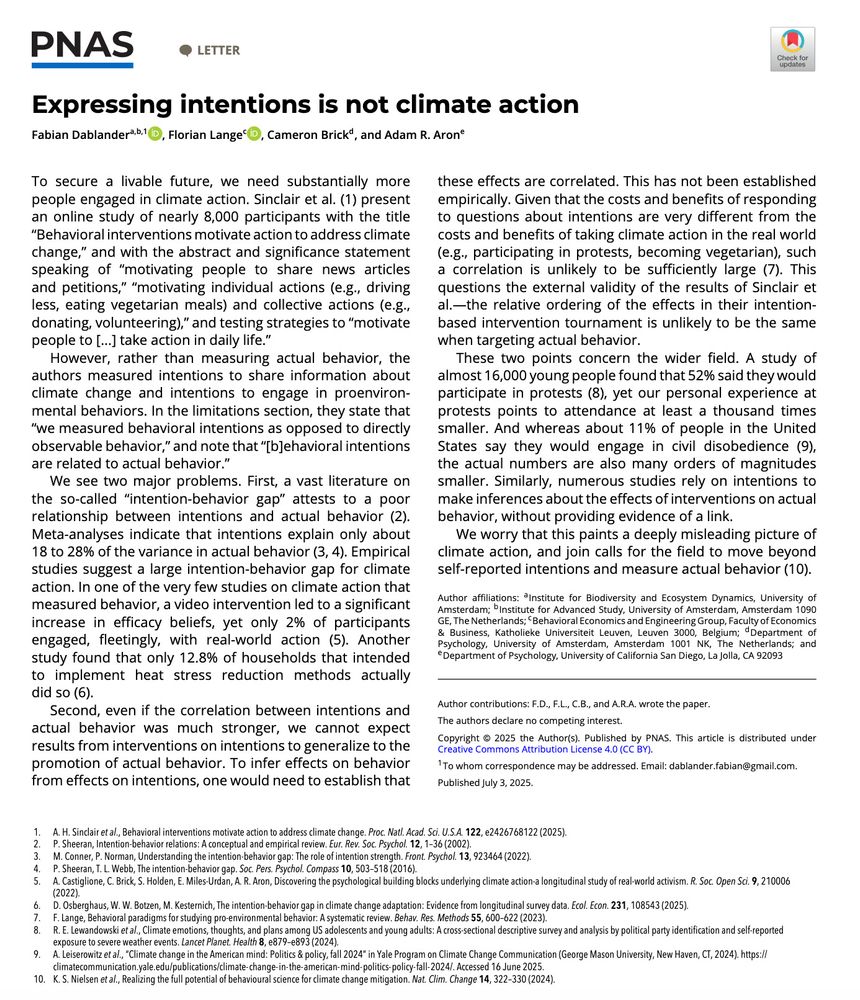
In our now published letter in @pnas.org, we raise two wider issues for behavioral science:
1) Intentions are poor predictors of behavior
2) Effects on intentions need not generalize to effects on behavior
We join calls for researchers to measure actual behavior: www.pnas.org/doi/10.1073/...
1) Intentions are poor predictors of behavior
2) Effects on intentions need not generalize to effects on behavior
We join calls for researchers to measure actual behavior: www.pnas.org/doi/10.1073/...
July 7, 2025 at 12:51 PM
In our now published letter in @pnas.org, we raise two wider issues for behavioral science:
1) Intentions are poor predictors of behavior
2) Effects on intentions need not generalize to effects on behavior
We join calls for researchers to measure actual behavior: www.pnas.org/doi/10.1073/...
1) Intentions are poor predictors of behavior
2) Effects on intentions need not generalize to effects on behavior
We join calls for researchers to measure actual behavior: www.pnas.org/doi/10.1073/...
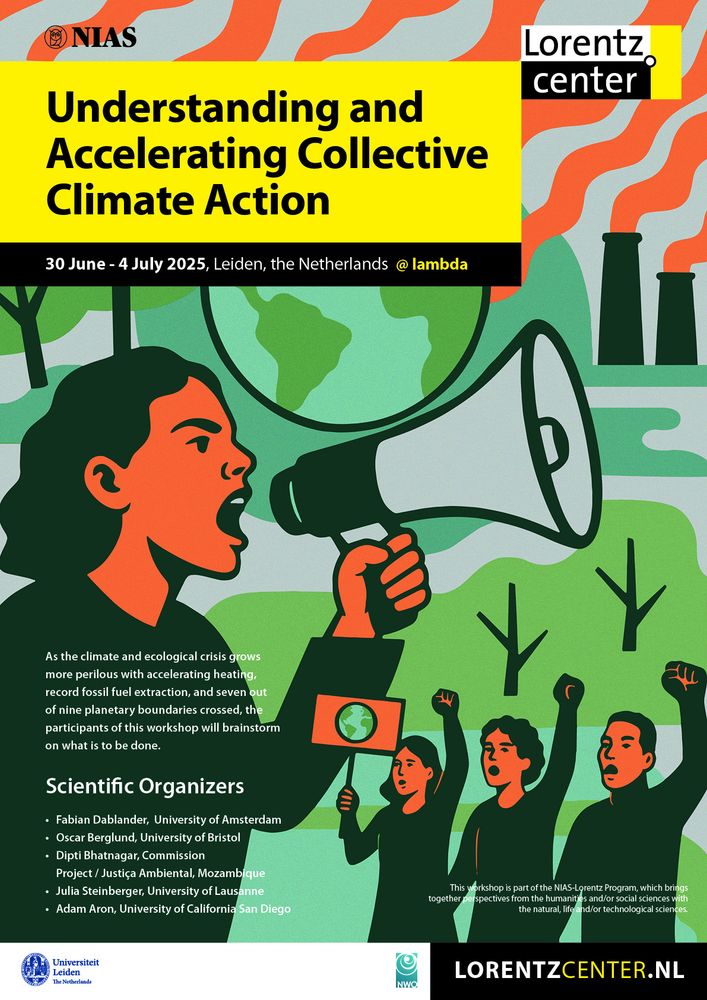
I greatly enjoyed our workshop on climate action, which brought together experienced organizers & engaged scholars for a week of reflection & discussion. Outputs coming fall. We need more of these spaces!
Organized w @swaziadam.bsky.social Dipti @berglundoscar.bsky.social @jksteinberger.bsky.social
Organized w @swaziadam.bsky.social Dipti @berglundoscar.bsky.social @jksteinberger.bsky.social
July 7, 2025 at 6:51 AM
I greatly enjoyed our workshop on climate action, which brought together experienced organizers & engaged scholars for a week of reflection & discussion. Outputs coming fall. We need more of these spaces!
Organized w @swaziadam.bsky.social Dipti @berglundoscar.bsky.social @jksteinberger.bsky.social
Organized w @swaziadam.bsky.social Dipti @berglundoscar.bsky.social @jksteinberger.bsky.social