



Isaac Fradkin
@fradkinisaac.bsky.social
Assistant Professor at HUJI. Studying computational psychopathology, thought dynamics, disorders of thought and communication, semantic cognition and alignment, free association
https://sites.google.com/view/thought-dynamics-lab/
https://sites.google.com/view/thought-dynamics-lab/
(7/8) These new 'semantic density metrics' were also better at detecting repetitiveness in a reanalysis of a previous dataset, particularly for psychopathological dimensions corresponding with depressive and internalizing symptoms more generally. An interesting finding for future work!

November 30, 2025 at 12:28 PM
(7/8) These new 'semantic density metrics' were also better at detecting repetitiveness in a reanalysis of a previous dataset, particularly for psychopathological dimensions corresponding with depressive and internalizing symptoms more generally. An interesting finding for future work!
(6/8)
Findings: Cosine distance metrics were suboptimal in detecting simulated perseveration. They were outperformed by new semantic density metrics using dimensionality reduction to examine (roughly speaking) if a smaller number of sentences could have conveyed the same message.
Findings: Cosine distance metrics were suboptimal in detecting simulated perseveration. They were outperformed by new semantic density metrics using dimensionality reduction to examine (roughly speaking) if a smaller number of sentences could have conveyed the same message.

November 30, 2025 at 12:28 PM
(6/8)
Findings: Cosine distance metrics were suboptimal in detecting simulated perseveration. They were outperformed by new semantic density metrics using dimensionality reduction to examine (roughly speaking) if a smaller number of sentences could have conveyed the same message.
Findings: Cosine distance metrics were suboptimal in detecting simulated perseveration. They were outperformed by new semantic density metrics using dimensionality reduction to examine (roughly speaking) if a smaller number of sentences could have conveyed the same message.
(5/8)
To tackle this, we used generative language modeling to simulate texts characterized by derailment, repetitiveness, or both, and tested whether different NLP metrics could accurately capture these manipulations.
To tackle this, we used generative language modeling to simulate texts characterized by derailment, repetitiveness, or both, and tested whether different NLP metrics could accurately capture these manipulations.

November 30, 2025 at 12:28 PM
(5/8)
To tackle this, we used generative language modeling to simulate texts characterized by derailment, repetitiveness, or both, and tested whether different NLP metrics could accurately capture these manipulations.
To tackle this, we used generative language modeling to simulate texts characterized by derailment, repetitiveness, or both, and tested whether different NLP metrics could accurately capture these manipulations.
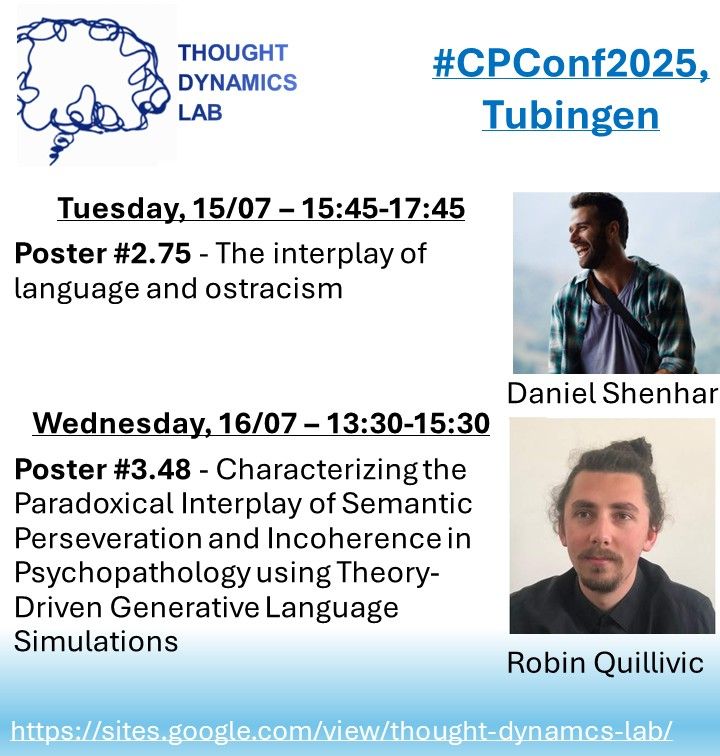
If you are coming to #CPConf2025, come say hello! Also, please check out the cool🆕work from our Thought Dynamics Lab! 💭
Semantic cognition, Ostracism, Theory-driven Generative Language Modeling, Perseverative speech.
Semantic cognition, Ostracism, Theory-driven Generative Language Modeling, Perseverative speech.
July 9, 2025 at 5:13 AM
If you are coming to #CPConf2025, come say hello! Also, please check out the cool🆕work from our Thought Dynamics Lab! 💭
Semantic cognition, Ostracism, Theory-driven Generative Language Modeling, Perseverative speech.
Semantic cognition, Ostracism, Theory-driven Generative Language Modeling, Perseverative speech.
Join the Thought Dynamics Lab! 💭
We seek PhD students passionate about computational psychiatry, thought dynamics, NLP, communication, and semantic alignment.
🔗 sites.google.com/view/thought...
Consider applying for the new, prestigious, and generous Insight Scholarship!
We seek PhD students passionate about computational psychiatry, thought dynamics, NLP, communication, and semantic alignment.
🔗 sites.google.com/view/thought...
Consider applying for the new, prestigious, and generous Insight Scholarship!

April 10, 2025 at 6:52 AM
Join the Thought Dynamics Lab! 💭
We seek PhD students passionate about computational psychiatry, thought dynamics, NLP, communication, and semantic alignment.
🔗 sites.google.com/view/thought...
Consider applying for the new, prestigious, and generous Insight Scholarship!
We seek PhD students passionate about computational psychiatry, thought dynamics, NLP, communication, and semantic alignment.
🔗 sites.google.com/view/thought...
Consider applying for the new, prestigious, and generous Insight Scholarship!
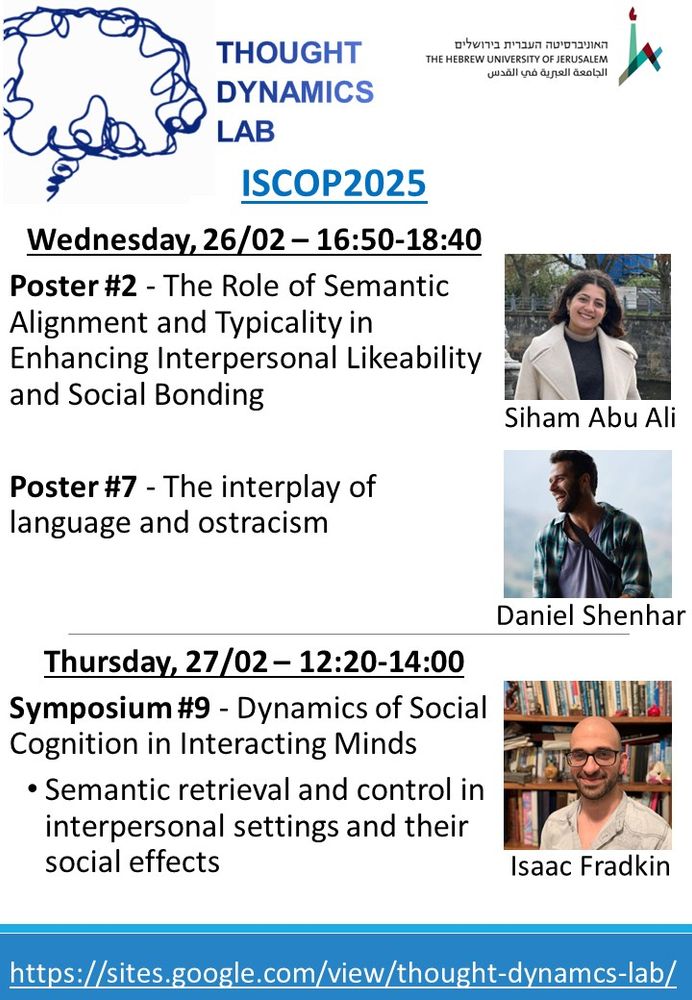
If you are coming to #ISCOP, please check out the cool🆕work from our thought dynamics lab! 💭
Semantic cognition, Interacting minds🧠, Computational modeling🧮, Ostracism, Social dynamics.
Semantic cognition, Interacting minds🧠, Computational modeling🧮, Ostracism, Social dynamics.
February 25, 2025 at 9:10 AM
If you are coming to #ISCOP, please check out the cool🆕work from our thought dynamics lab! 💭
Semantic cognition, Interacting minds🧠, Computational modeling🧮, Ostracism, Social dynamics.
Semantic cognition, Interacting minds🧠, Computational modeling🧮, Ostracism, Social dynamics.
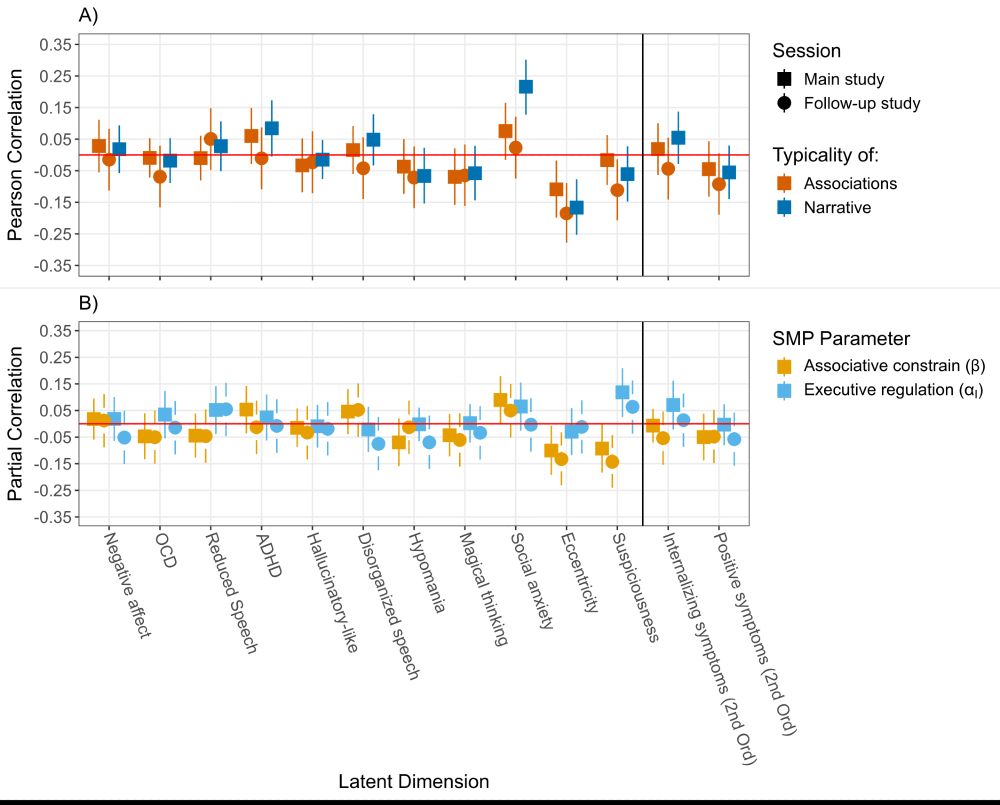
Our finding that alterations in speech and thought are relatively specific is striking given the ubiquity of transdiagnostic findings in psychopathology. Notably, the relevant dimensions were distinctly interpersonal, reflecting the inherently social nature of language.
November 25, 2024 at 6:36 PM
Our finding that alterations in speech and thought are relatively specific is striking given the ubiquity of transdiagnostic findings in psychopathology. Notably, the relevant dimensions were distinctly interpersonal, reflecting the inherently social nature of language.
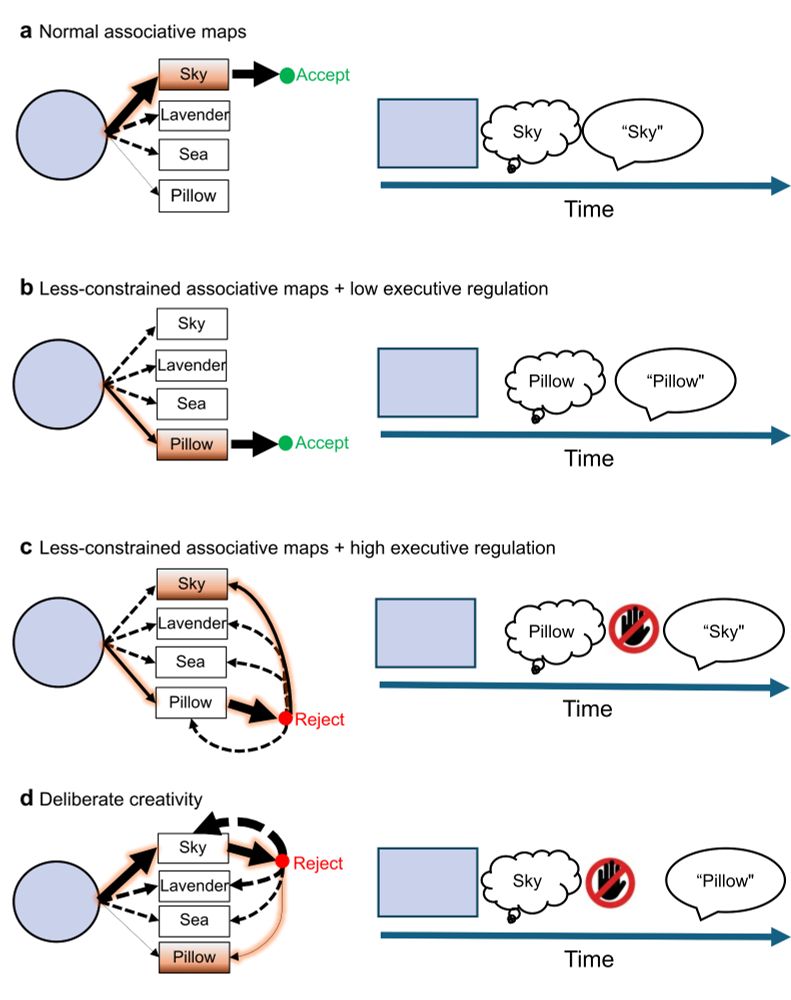
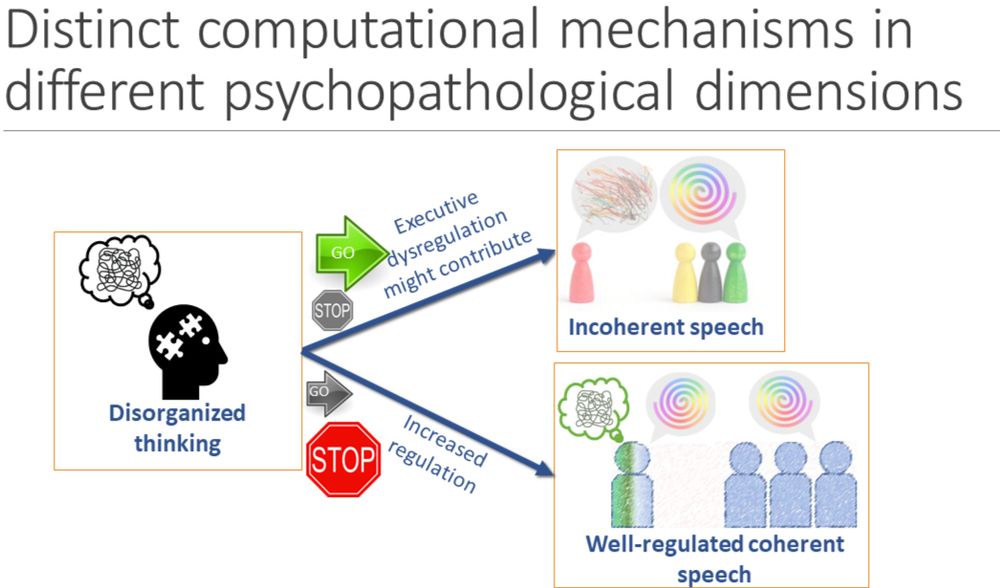
Whereas Formal Thought Disorder, prevalent in psychosis, is usually diagnosed based on speech incoherence, computational modeling of associative output allowed us to uncover disorganized semantic retrieval as a core mechanism, evident even when language output is intact.
November 25, 2024 at 6:36 PM
Whereas Formal Thought Disorder, prevalent in psychosis, is usually diagnosed based on speech incoherence, computational modeling of associative output allowed us to uncover disorganized semantic retrieval as a core mechanism, evident even when language output is intact.
I’m excited to share our new, open-access paper published today in NatMentHealth, “Latent mechanisms of language disorganization relate to specific dimensions of psychopathology”. www.nature.com/articles/s44...
November 25, 2024 at 6:36 PM
I’m excited to share our new, open-access paper published today in NatMentHealth, “Latent mechanisms of language disorganization relate to specific dimensions of psychopathology”. www.nature.com/articles/s44...