


Dr. Jeffrey Millman
@jeffreymillman.bsky.social
Washington University School of Medicine Professor | Diabetes Researcher | Stem Cell Biologist | Bioengineer | Inventor | STEM Educator | Former MIT & Harvard | Former Biotech VP | https://sites.wustl.edu/millmanlab/
I think there were some early reports of an uptick in T1D when COVID hit but don't think that has panned out with time? I'm not certain about other novel viruses.
The only firm statistical correlation that I am aware of is CVB.
The only firm statistical correlation that I am aware of is CVB.
December 19, 2025 at 12:41 AM
I think there were some early reports of an uptick in T1D when COVID hit but don't think that has panned out with time? I'm not certain about other novel viruses.
The only firm statistical correlation that I am aware of is CVB.
The only firm statistical correlation that I am aware of is CVB.
I find the idea of dsRNA being causative a compelling idea. Yuval Dor's data helps with this idea. However, CVB and SARS-Cov-2 both produce dsRNA during its replication, as I understand, so idk how to separate them in this context.
December 17, 2025 at 9:32 PM
I find the idea of dsRNA being causative a compelling idea. Yuval Dor's data helps with this idea. However, CVB and SARS-Cov-2 both produce dsRNA during its replication, as I understand, so idk how to separate them in this context.
Very good question, but I don't have a good answer for you. Simply - I don't know.
We put a proposal into the NIH to investigate this question but were not selected for funding. If funders won't fund this work, I can't say for certain.
We put a proposal into the NIH to investigate this question but were not selected for funding. If funders won't fund this work, I can't say for certain.
December 17, 2025 at 9:32 PM
Very good question, but I don't have a good answer for you. Simply - I don't know.
We put a proposal into the NIH to investigate this question but were not selected for funding. If funders won't fund this work, I can't say for certain.
We put a proposal into the NIH to investigate this question but were not selected for funding. If funders won't fund this work, I can't say for certain.
This is what I am going to get to protect my sequencing data

October 24, 2025 at 4:38 PM
This is what I am going to get to protect my sequencing data
If you would like to donate to support T1D research, please do so here: www2.breakthrought1d.org/site/TR?fr_i...

Join our Breakthrough T1D Walk team and help create a world without type 1 diabetes (T1D).
Our team is walking and raising funds to support the most promising, cutting-edge science to create a world without T1D. Join us!
www2.breakthrought1d.org
October 13, 2025 at 6:00 PM
If you would like to donate to support T1D research, please do so here: www2.breakthrought1d.org/site/TR?fr_i...
September 2, 2025 at 2:50 PM
Overall, CVB3 sparks diverse, cell type-specific stress pathways in islets, with MIR7-3HG emerging as a regulator of infection + survival. These insights could help unravel viral contributions to T1D.
September 2, 2025 at 2:42 PM
Overall, CVB3 sparks diverse, cell type-specific stress pathways in islets, with MIR7-3HG emerging as a regulator of infection + survival. These insights could help unravel viral contributions to T1D.
We also identified the lncRNA MIR7-3HG as a key player. Knockdown in stem cell-derived islets ↓ viral genome levels, ↓ apoptosis, and altered autophagy, suggesting new therapeutic angles.
September 2, 2025 at 2:42 PM
We also identified the lncRNA MIR7-3HG as a key player. Knockdown in stem cell-derived islets ↓ viral genome levels, ↓ apoptosis, and altered autophagy, suggesting new therapeutic angles.
CVB3 disrupted mitochondria differently across cell types. Beta cells had increased mitochondrial size but lose efficiency. Alpha cells had shrunken mitochondria. These are potentially protective acclimations.
September 2, 2025 at 2:42 PM
CVB3 disrupted mitochondria differently across cell types. Beta cells had increased mitochondrial size but lose efficiency. Alpha cells had shrunken mitochondria. These are potentially protective acclimations.
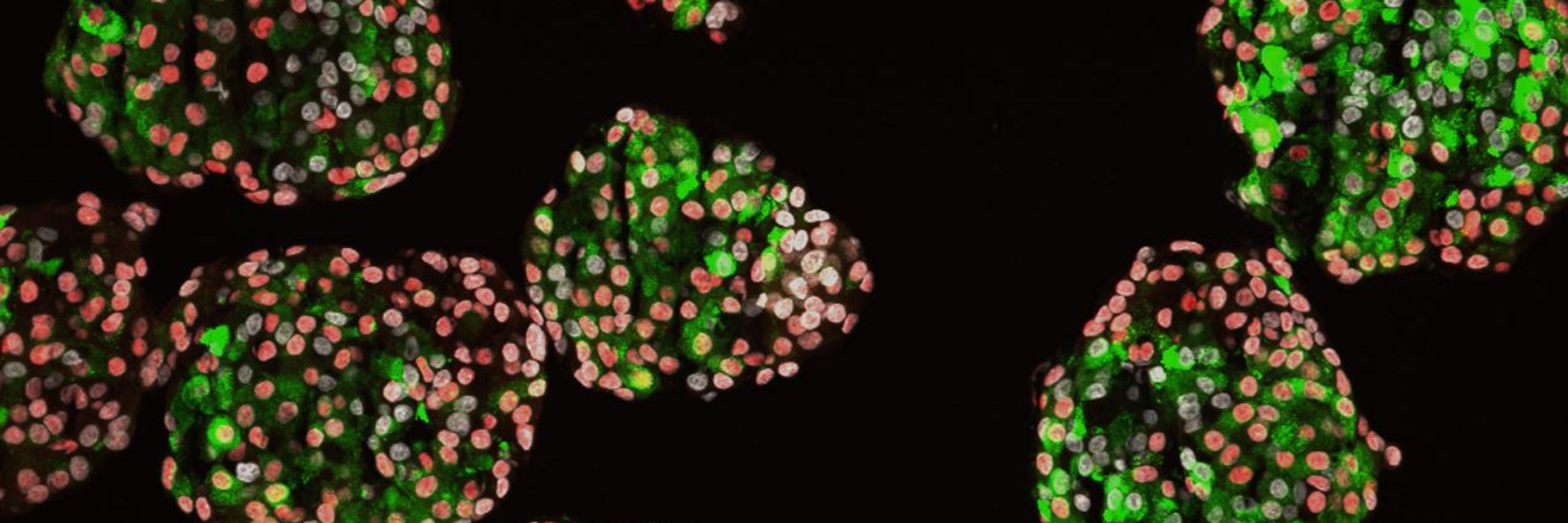
Beta, alpha, and duct cells had the strongest responses. Beta and alpha cells demonstrated mitochondrial dysfunction. Duct had the strongest interferon & HLA responses. All cells had unique stress and immune signatures.
September 2, 2025 at 2:42 PM
Beta, alpha, and duct cells had the strongest responses. Beta and alpha cells demonstrated mitochondrial dysfunction. Duct had the strongest interferon & HLA responses. All cells had unique stress and immune signatures.