




JesperOlsenLab
@jesperolsenlab.bsky.social
Mass spectrometry for quantitative proteomics. The Olsen group at the Center for Protein Research, University of Copenhagen.
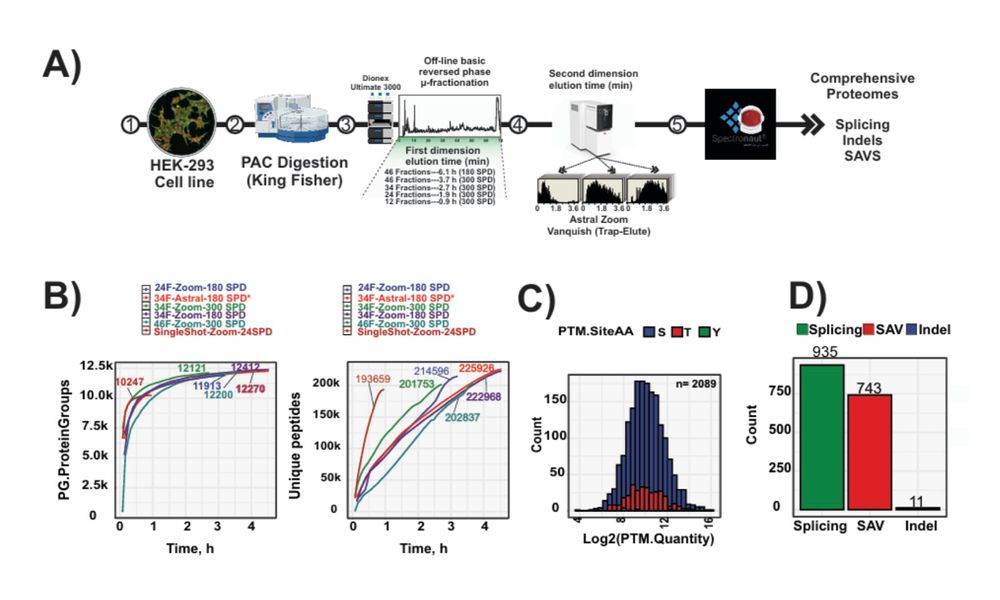
With a 40% reduction in analysis time and >12,000 proteins covered in 2.7 hours, it's setting new benchmarks for proteome studies.
July 19, 2025 at 9:22 AM
With a 40% reduction in analysis time and >12,000 proteins covered in 2.7 hours, it's setting new benchmarks for proteome studies.
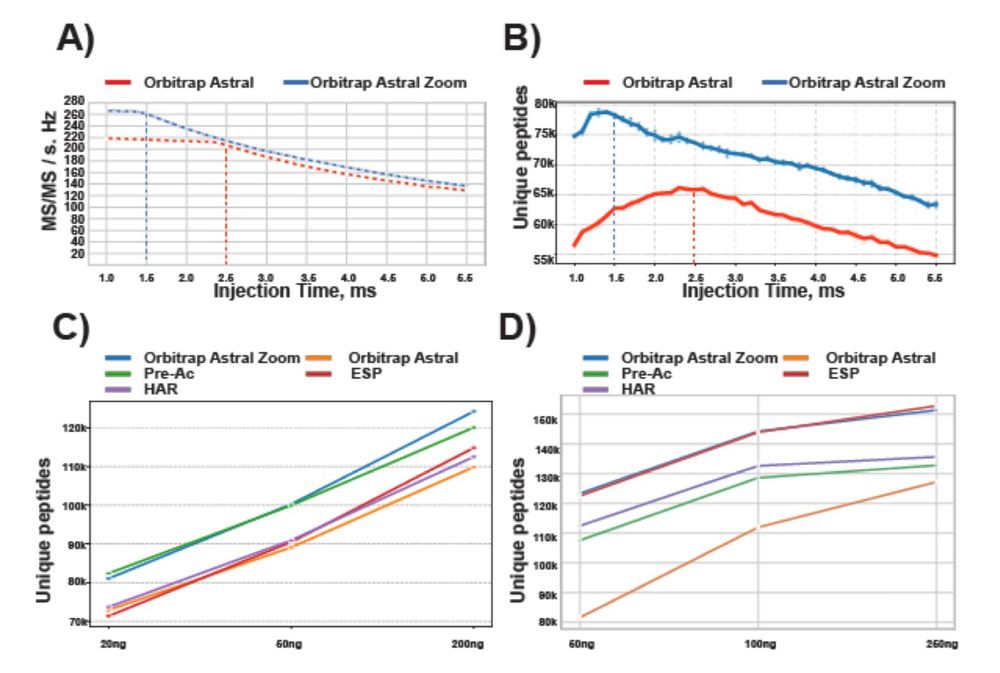
The new Astral Zoom MS overcomes previous MS limitations and is now achieving ultra-fast scans up to 270 Hz. It allows to identity > 100,000 peptides with short LC gradients.
July 19, 2025 at 9:22 AM
The new Astral Zoom MS overcomes previous MS limitations and is now achieving ultra-fast scans up to 270 Hz. It allows to identity > 100,000 peptides with short LC gradients.
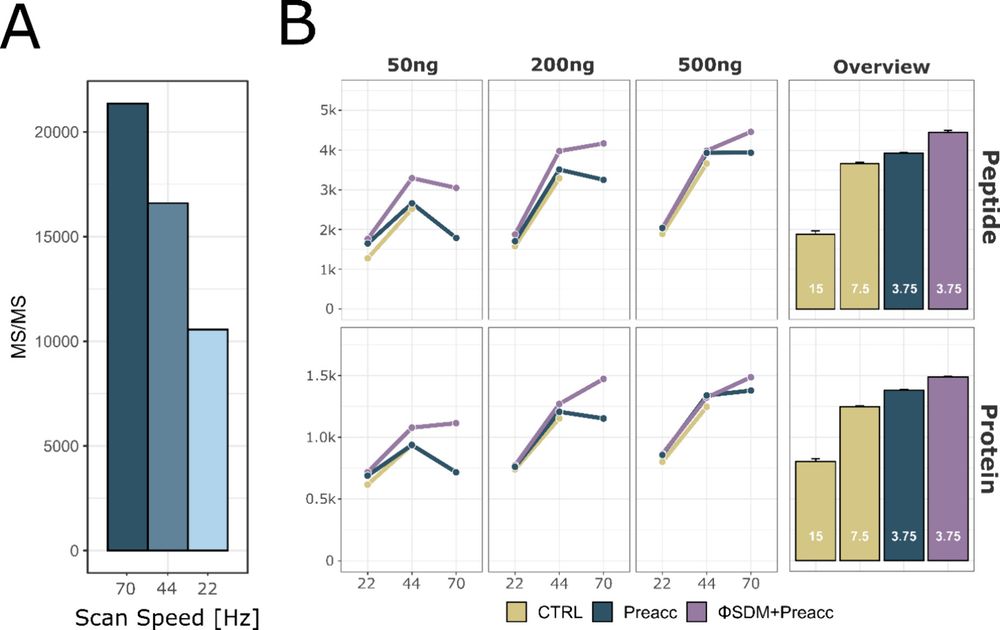
The combination of pre accumulation and faster scans significantly improves peptide/protein IDs on short LC gradients and boosts sensitivity for high-throughput workflows 📈
The benefits are even higher with ΦSDM, especially in fast, low-resolution Orbitrap runs.
The benefits are even higher with ΦSDM, especially in fast, low-resolution Orbitrap runs.
July 1, 2025 at 12:29 PM
The combination of pre accumulation and faster scans significantly improves peptide/protein IDs on short LC gradients and boosts sensitivity for high-throughput workflows 📈
The benefits are even higher with ΦSDM, especially in fast, low-resolution Orbitrap runs.
The benefits are even higher with ΦSDM, especially in fast, low-resolution Orbitrap runs.
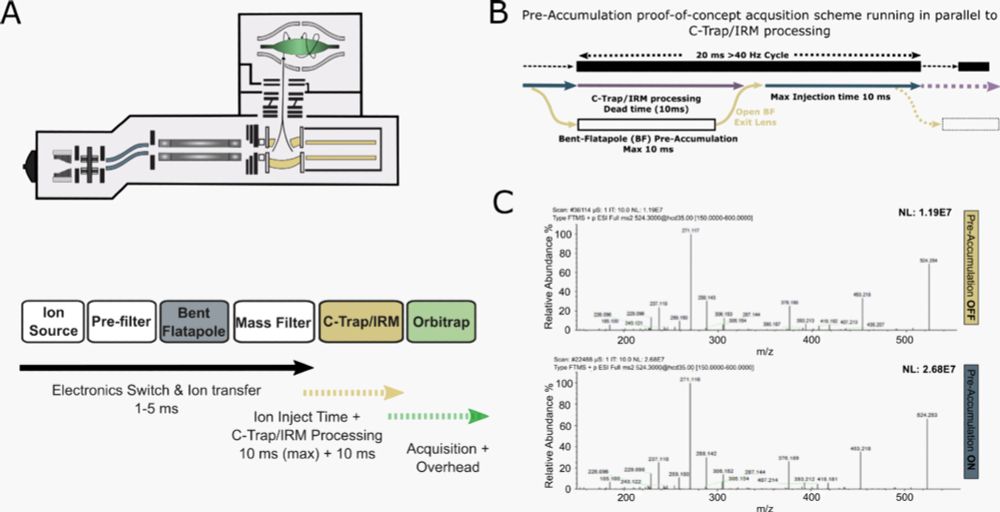
Florian Harking & Ulises H. Guzman made it happen by preaccumulating ions in the bent flatapole and applying phase-constrained spectrum deconvolution method (ΦSDM).
July 1, 2025 at 12:29 PM
Florian Harking & Ulises H. Guzman made it happen by preaccumulating ions in the bent flatapole and applying phase-constrained spectrum deconvolution method (ΦSDM).
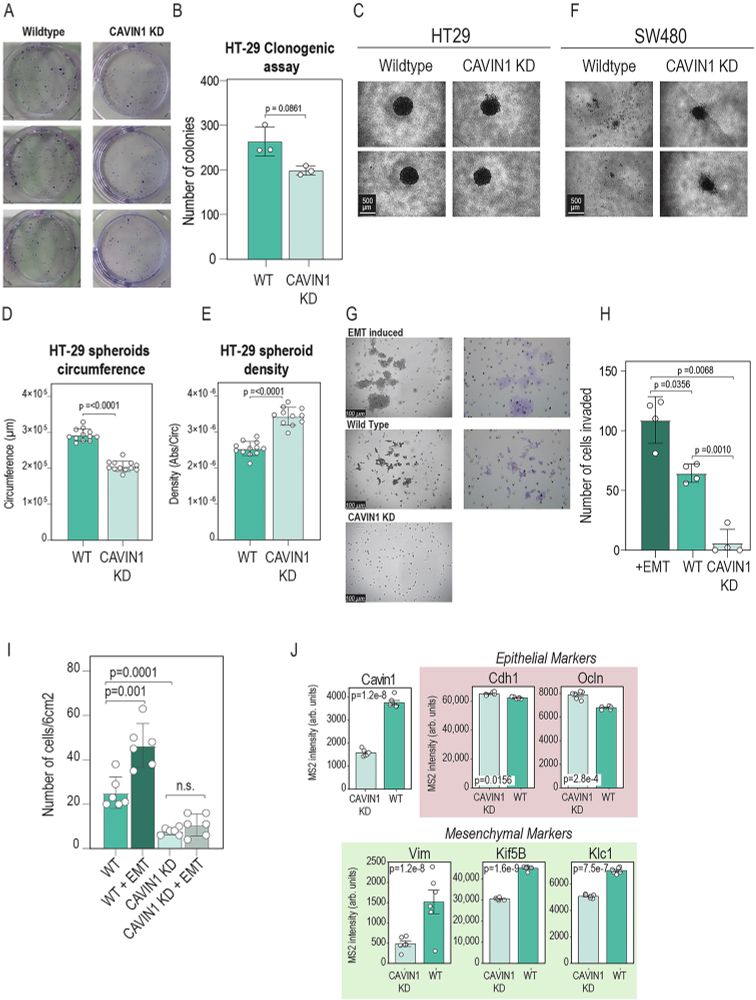
Knocking down CAVIN1 in a 3D model reveals its connection with tumour invasiveness. Hybrid-DIA based phosphoproteomics profiling reveals an intriguing link between mTOR-signalling and its potential association to CAVIN1.
April 25, 2025 at 9:45 AM
Knocking down CAVIN1 in a 3D model reveals its connection with tumour invasiveness. Hybrid-DIA based phosphoproteomics profiling reveals an intriguing link between mTOR-signalling and its potential association to CAVIN1.
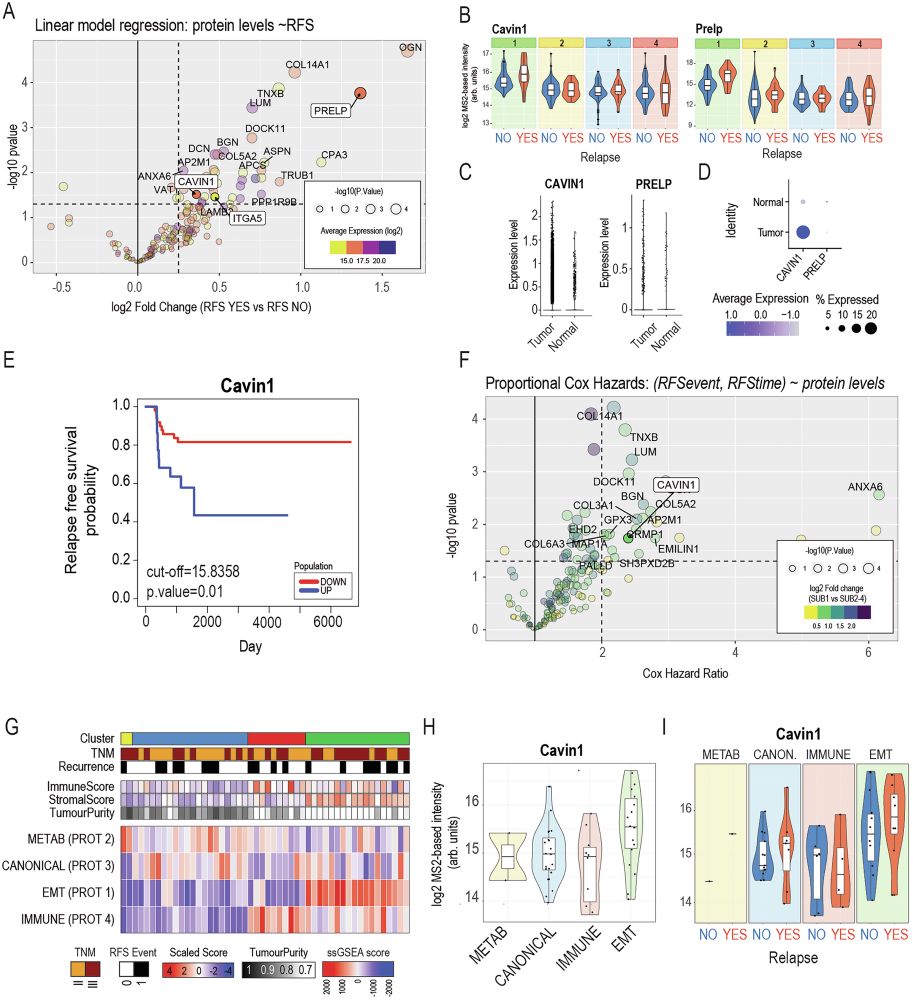
The mesenchymal-like subtype was shown to be marked by increased CAVIN1 and PRELP. Higher CAVIN1 correlates with higher relapse risk in two independent cohorts. We confirmed this in a second cohort and were able to link this to Epithelial to Mesenchymal Transition.
April 25, 2025 at 9:45 AM
The mesenchymal-like subtype was shown to be marked by increased CAVIN1 and PRELP. Higher CAVIN1 correlates with higher relapse risk in two independent cohorts. We confirmed this in a second cohort and were able to link this to Epithelial to Mesenchymal Transition.
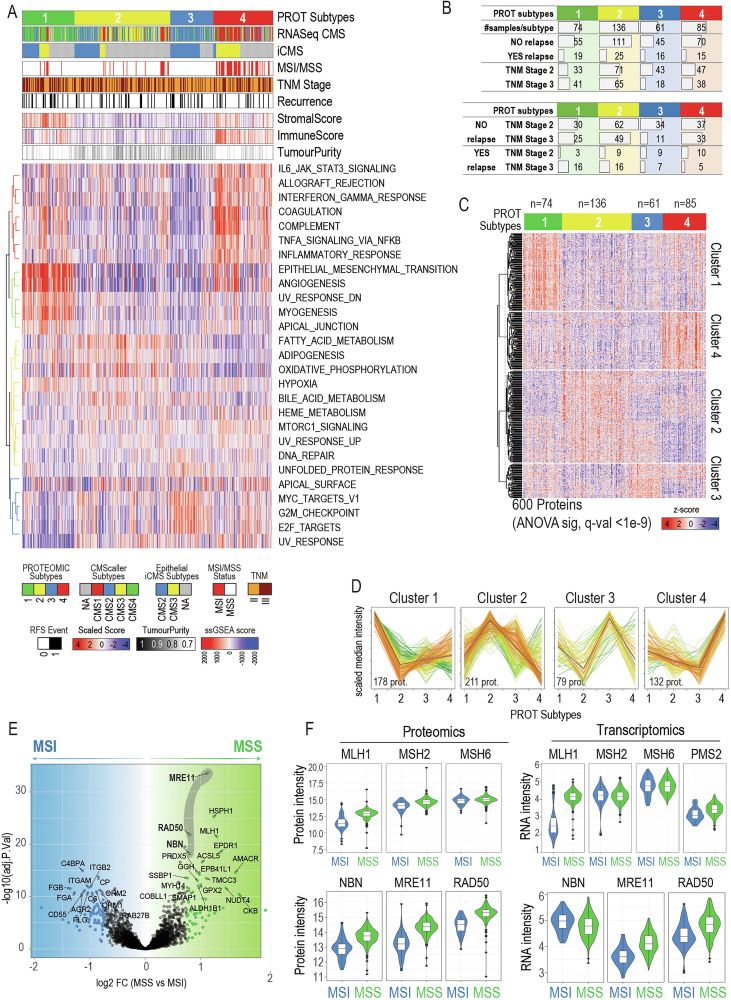
We stratified 412 CRC tumors into 4 distinct subtypes using quantitative proteomics. Our results show clear links to transcriptomics CMS, immune infiltration, tumor purity, and relapse.
April 25, 2025 at 9:45 AM
We stratified 412 CRC tumors into 4 distinct subtypes using quantitative proteomics. Our results show clear links to transcriptomics CMS, immune infiltration, tumor purity, and relapse.
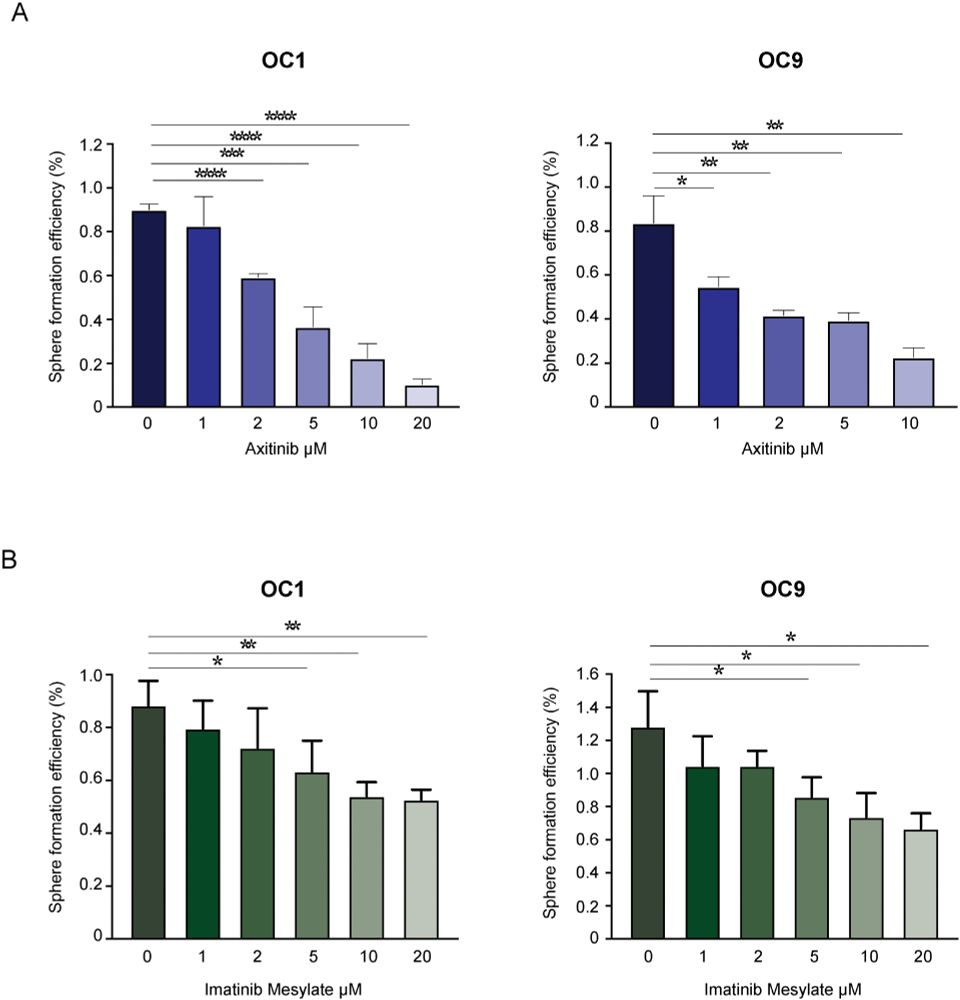
We also identified aberrant PDGF receptor (PDGFR) activation as a key feature of OCSCs.
When we treated patient-derived ovarian cancer cells with a PDGFR inhibitor, their stemness potential dropped (sphere formation ↓).
When we treated patient-derived ovarian cancer cells with a PDGFR inhibitor, their stemness potential dropped (sphere formation ↓).
April 24, 2025 at 8:57 AM
We also identified aberrant PDGF receptor (PDGFR) activation as a key feature of OCSCs.
When we treated patient-derived ovarian cancer cells with a PDGFR inhibitor, their stemness potential dropped (sphere formation ↓).
When we treated patient-derived ovarian cancer cells with a PDGFR inhibitor, their stemness potential dropped (sphere formation ↓).
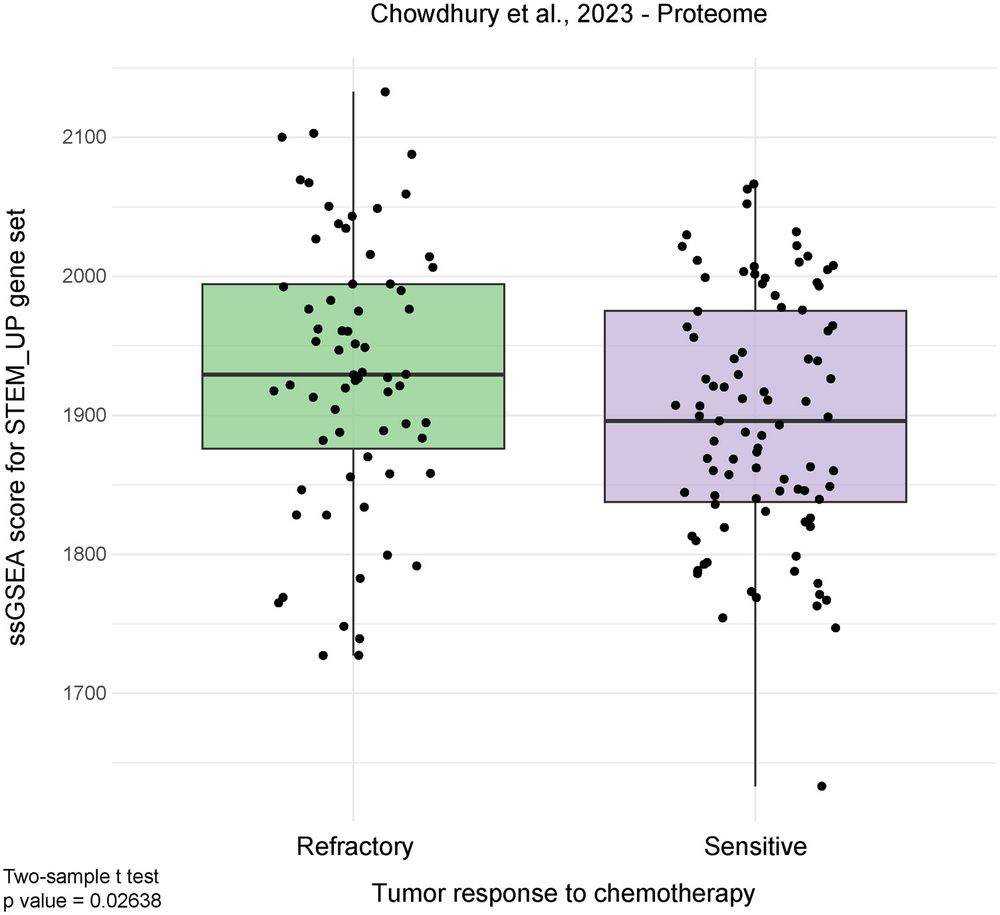
Our stemness signature correlates with chemo-refractoriness in clinical proteomics data.
That’s huge: it means this signature might help predict therapy resistance.
That’s huge: it means this signature might help predict therapy resistance.
April 24, 2025 at 8:57 AM
Our stemness signature correlates with chemo-refractoriness in clinical proteomics data.
That’s huge: it means this signature might help predict therapy resistance.
That’s huge: it means this signature might help predict therapy resistance.
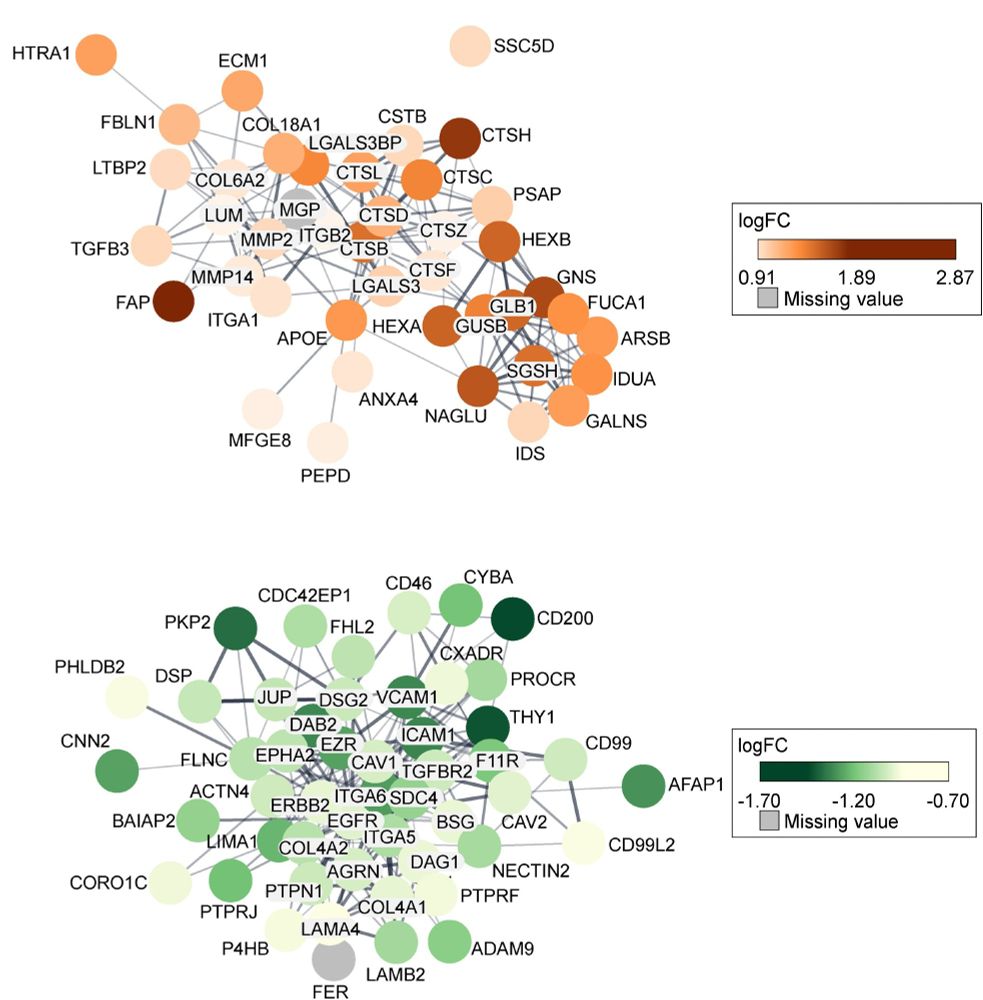
Stemness-associated proteins were involved in extracellular matrix remodeling.
This points to a link between the stem-like state and the tumor microenvironment.
This points to a link between the stem-like state and the tumor microenvironment.
April 24, 2025 at 8:57 AM
Stemness-associated proteins were involved in extracellular matrix remodeling.
This points to a link between the stem-like state and the tumor microenvironment.
This points to a link between the stem-like state and the tumor microenvironment.
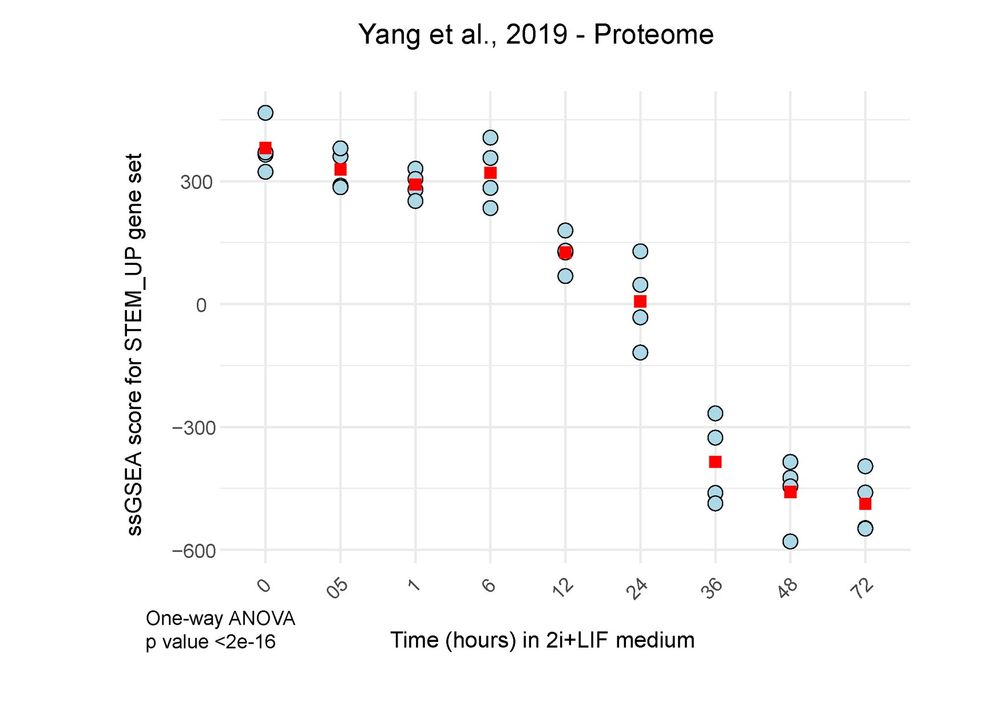
To validate our stemness signature, we used single-sample GSEA on published proteomics data from embryonic stem cell differentiation.
April 24, 2025 at 8:57 AM
To validate our stemness signature, we used single-sample GSEA on published proteomics data from embryonic stem cell differentiation.
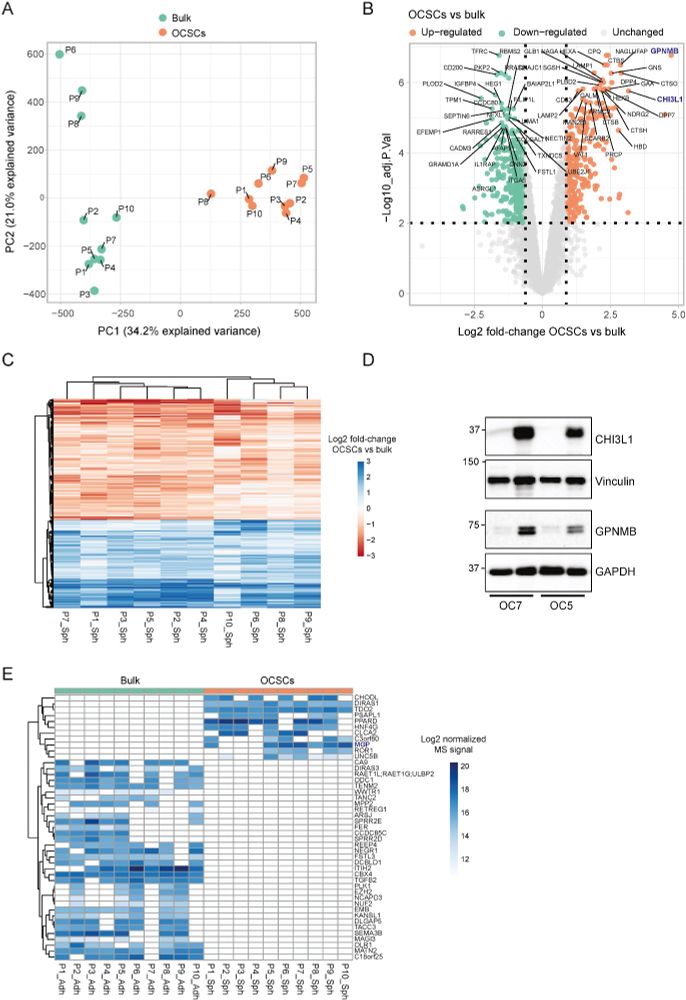
We profiled the proteome and phosphoproteome of 3D spheres enriched for OCSCs from 10 treatment-naive patient-derived lines.
This revealed a shared stemness-related signature across patients, despite high inter-patient heterogeneity.
This revealed a shared stemness-related signature across patients, despite high inter-patient heterogeneity.
April 24, 2025 at 8:57 AM
We profiled the proteome and phosphoproteome of 3D spheres enriched for OCSCs from 10 treatment-naive patient-derived lines.
This revealed a shared stemness-related signature across patients, despite high inter-patient heterogeneity.
This revealed a shared stemness-related signature across patients, despite high inter-patient heterogeneity.
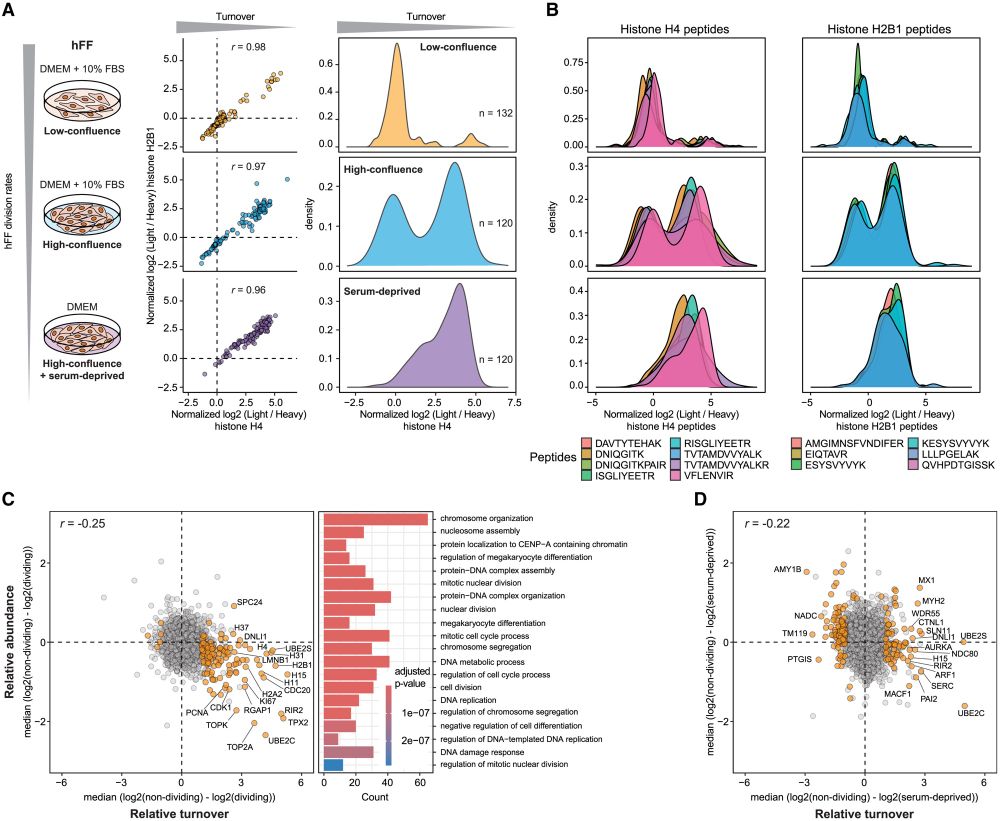
We confirmed this observation and exploited it to compare different modalities of cell division arrest in human foreskin fibroblasts.
March 31, 2025 at 3:12 PM
We confirmed this observation and exploited it to compare different modalities of cell division arrest in human foreskin fibroblasts.
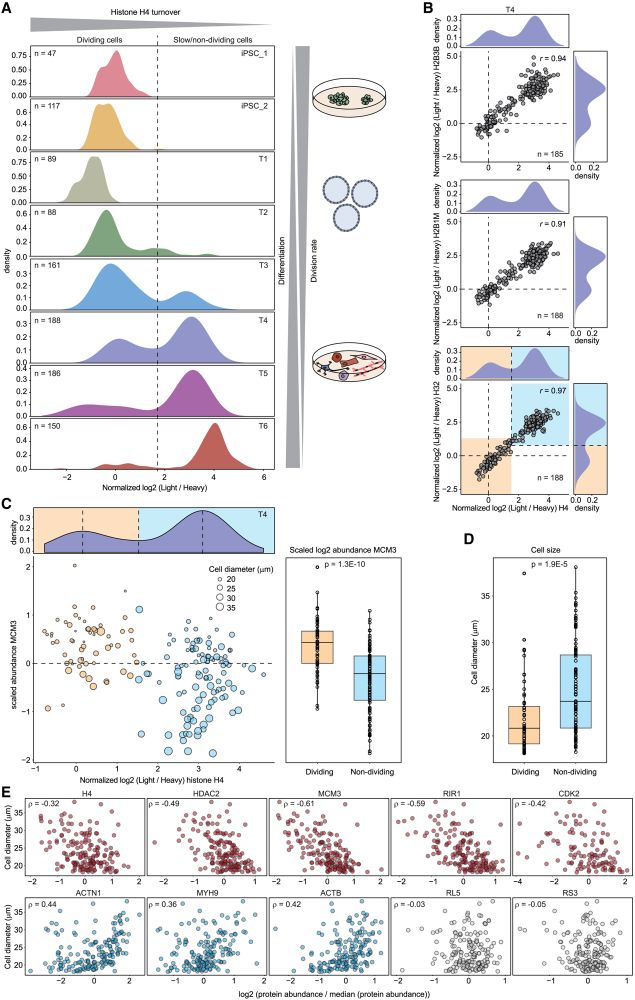
Histone turnover enables distinguishing dividing cells from slow/non-dividing ones, due to the extremely slow core histone turnover in non-dividing cells.
March 31, 2025 at 3:12 PM
Histone turnover enables distinguishing dividing cells from slow/non-dividing ones, due to the extremely slow core histone turnover in non-dividing cells.
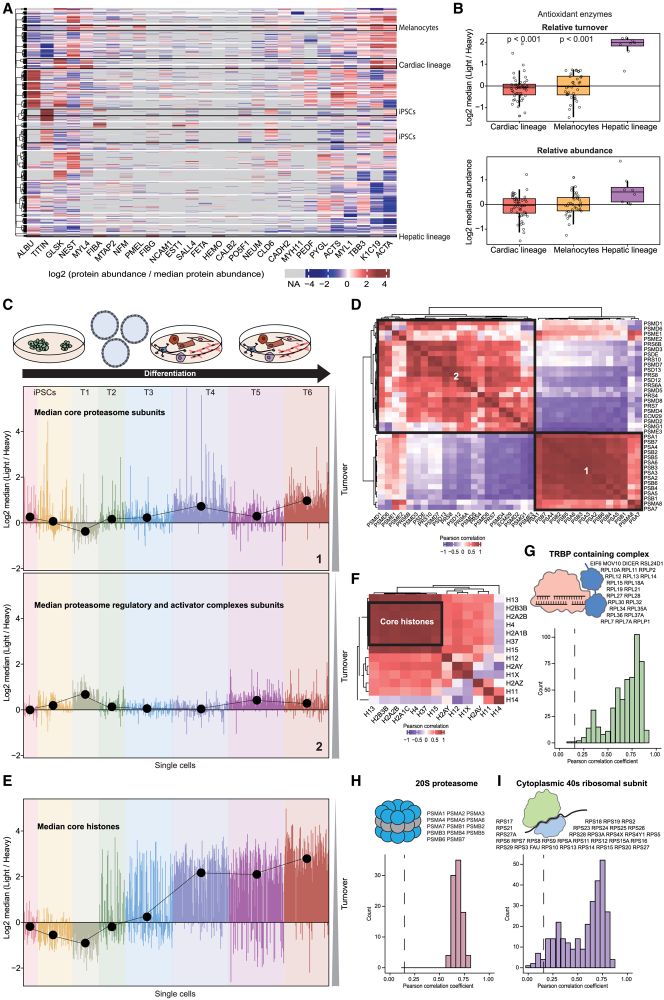
Protein turnover provides an orthogonal measurement to protein abundance, revealing functional differences between cell types and states, and improving protein co-regulation analysis to determine members of protein complexes.
March 31, 2025 at 3:12 PM
Protein turnover provides an orthogonal measurement to protein abundance, revealing functional differences between cell types and states, and improving protein co-regulation analysis to determine members of protein complexes.
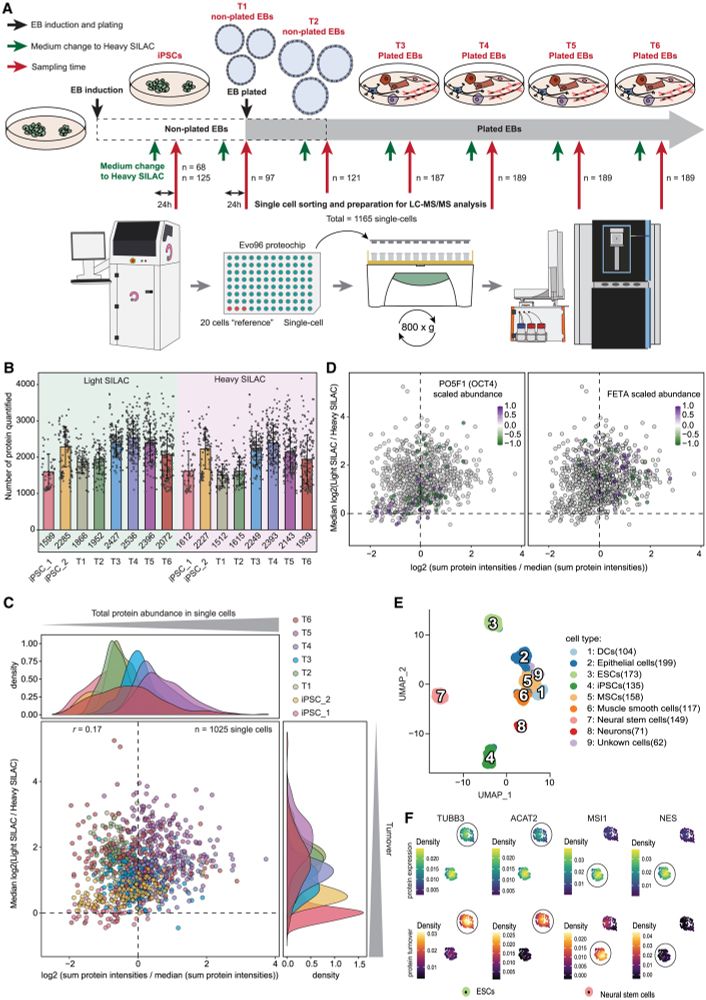
We then performed a large-scale SC-pSILAC experiment to study the undirected differentiation of human induced pluripotent stem cells through embryoid body induction in >1000 individual single cells.
Our comprehensive dataset shows protein turnover dynamics during cell differentiation over 2 months.
Our comprehensive dataset shows protein turnover dynamics during cell differentiation over 2 months.
March 31, 2025 at 3:12 PM
We then performed a large-scale SC-pSILAC experiment to study the undirected differentiation of human induced pluripotent stem cells through embryoid body induction in >1000 individual single cells.
Our comprehensive dataset shows protein turnover dynamics during cell differentiation over 2 months.
Our comprehensive dataset shows protein turnover dynamics during cell differentiation over 2 months.
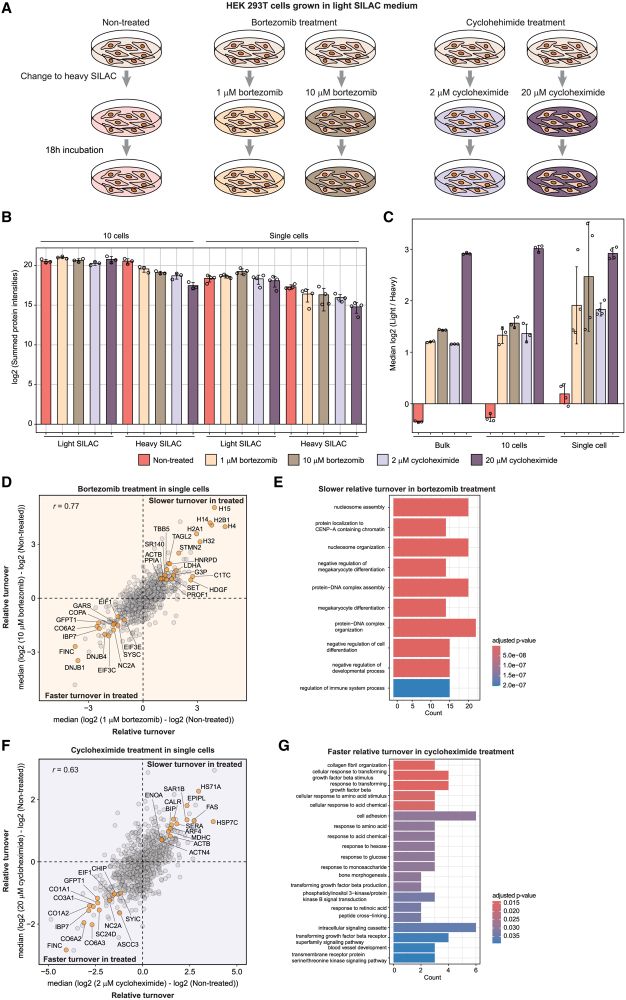
We first studied treatments altering global protein turnover including proteasome(bortezomib), protein translation (cycloheximide), and beta-cathenin inhibitions for altered turnover of a specific protein(GSK3 inhibitor).
SC-pSILAC revealed treatment-related changes in single cells.
SC-pSILAC revealed treatment-related changes in single cells.
March 31, 2025 at 3:12 PM
We first studied treatments altering global protein turnover including proteasome(bortezomib), protein translation (cycloheximide), and beta-cathenin inhibitions for altered turnover of a specific protein(GSK3 inhibitor).
SC-pSILAC revealed treatment-related changes in single cells.
SC-pSILAC revealed treatment-related changes in single cells.