



@loganicusmaximus.bsky.social
Reposted
Can’t look at the news, it’s too unbearable what’s happening in Iran
January 13, 2026 at 9:11 PM
Can’t look at the news, it’s too unbearable what’s happening in Iran
Reposted

Iran Uprising Day 19: Iran’s Regime Imposes Digital Darkness to Hide Crackdown as Uprising Spreads to 200 Cities
www.ncr-iran.org/en/news/iran...
www.ncr-iran.org/en/news/iran...

Iran Uprising Day 19: Iran’s Regime Imposes Digital Darkness to Hide Crackdown as Uprising Spreads to 200 Cities - NCRI
As the sun set on January 15, 2026, the silence emanating from Iran’s digital sphere marked a grim anniversary: exactly one week of total internet
www.ncr-iran.org
January 16, 2026 at 9:31 AM
Iran Uprising Day 19: Iran’s Regime Imposes Digital Darkness to Hide Crackdown as Uprising Spreads to 200 Cities
www.ncr-iran.org/en/news/iran...
www.ncr-iran.org/en/news/iran...
Reposted

I agree about a bad track record, but they can't always be wrong. They've also helped Khomeini btw.
I listened to this press conference a couple of hours ago and he seems genuine.
Maybe you find the time to listen to his plans starting around 37 minutes.
www.youtube.com/live/GIYZhao...
I listened to this press conference a couple of hours ago and he seems genuine.
Maybe you find the time to listen to his plans starting around 37 minutes.
www.youtube.com/live/GIYZhao...

Press Conference | نشست خبری
YouTube video by Reza Pahlavi
www.youtube.com
January 17, 2026 at 12:04 AM
I agree about a bad track record, but they can't always be wrong. They've also helped Khomeini btw.
I listened to this press conference a couple of hours ago and he seems genuine.
Maybe you find the time to listen to his plans starting around 37 minutes.
www.youtube.com/live/GIYZhao...
I listened to this press conference a couple of hours ago and he seems genuine.
Maybe you find the time to listen to his plans starting around 37 minutes.
www.youtube.com/live/GIYZhao...
Reposted
The people of Iran on 9/11.
THESE PEOPLE ARE NOT OUR ENEMIES. They are the best allies we could ever hope to have.
Iran- KEEP FIGHTING! You deserve your freedom and the world is on your side. I look forward to your bright, free future.
THESE PEOPLE ARE NOT OUR ENEMIES. They are the best allies we could ever hope to have.
Iran- KEEP FIGHTING! You deserve your freedom and the world is on your side. I look forward to your bright, free future.
January 16, 2026 at 11:48 PM
The people of Iran on 9/11.
THESE PEOPLE ARE NOT OUR ENEMIES. They are the best allies we could ever hope to have.
Iran- KEEP FIGHTING! You deserve your freedom and the world is on your side. I look forward to your bright, free future.
THESE PEOPLE ARE NOT OUR ENEMIES. They are the best allies we could ever hope to have.
Iran- KEEP FIGHTING! You deserve your freedom and the world is on your side. I look forward to your bright, free future.
Reposted

On Wednesday, January 7, 2026, during protests in the town of Marlik, Tehran province, Iran #RezaRahmati, 23, was killed by special units of the Islamic Republic using live ammunition.
As of now, no information is available regarding the release of his body to his family for funeral arrangements.
As of now, no information is available regarding the release of his body to his family for funeral arrangements.

January 16, 2026 at 11:26 PM
On Wednesday, January 7, 2026, during protests in the town of Marlik, Tehran province, Iran #RezaRahmati, 23, was killed by special units of the Islamic Republic using live ammunition.
As of now, no information is available regarding the release of his body to his family for funeral arrangements.
As of now, no information is available regarding the release of his body to his family for funeral arrangements.
Iranians trust but one name: Reza Pahlavi. @washingtonpost.com thank you for this announcement. It makes sense why Iranians are in the streets chanting his name.

January 16, 2026 at 8:59 PM
Iranians trust but one name: Reza Pahlavi. @washingtonpost.com thank you for this announcement. It makes sense why Iranians are in the streets chanting his name.
Thousands have been killed!
Rally in support of Iranians in occupied Iran this Sunday in Portland Oregon!
@repbonamici.bsky.social please help to be a voice to your constituents!
Rally in support of Iranians in occupied Iran this Sunday in Portland Oregon!
@repbonamici.bsky.social please help to be a voice to your constituents!

January 16, 2026 at 8:13 PM
Thousands have been killed!
Rally in support of Iranians in occupied Iran this Sunday in Portland Oregon!
@repbonamici.bsky.social please help to be a voice to your constituents!
Rally in support of Iranians in occupied Iran this Sunday in Portland Oregon!
@repbonamici.bsky.social please help to be a voice to your constituents!
“More than 12,000 Iranians were massacred in 48 hours. One murder every 14 seconds.”
He went on to outline how world leaders can help, and the core principles of the services he is prepared to offer during a post-revolution transition to secure stability, justice, and freedom for the Iranian people
He went on to outline how world leaders can help, and the core principles of the services he is prepared to offer during a post-revolution transition to secure stability, justice, and freedom for the Iranian people
January 16, 2026 at 7:24 PM
“More than 12,000 Iranians were massacred in 48 hours. One murder every 14 seconds.”
He went on to outline how world leaders can help, and the core principles of the services he is prepared to offer during a post-revolution transition to secure stability, justice, and freedom for the Iranian people
He went on to outline how world leaders can help, and the core principles of the services he is prepared to offer during a post-revolution transition to secure stability, justice, and freedom for the Iranian people
Notice how these hit pieces don’t allow any comments. Meanwhile Iranians in Iran are being murdered for supporting Pahlavi as MSM tries to squash the voices of the oppressed.
January 16, 2026 at 7:19 PM
Notice how these hit pieces don’t allow any comments. Meanwhile Iranians in Iran are being murdered for supporting Pahlavi as MSM tries to squash the voices of the oppressed.
Reposted

January 16, 2026 at 4:54 PM
The truth of Iran will come to light. What an amazing man you were. How blessed we are to have you in our history. Shah en shah aryamehr.
January 16, 2026 at 6:31 PM
The truth of Iran will come to light. What an amazing man you were. How blessed we are to have you in our history. Shah en shah aryamehr.
Don’t stop talking about Iran!
January 16, 2026 at 6:10 PM
Don’t stop talking about Iran!
Reposted

Despite a total internet blackout entering its 5th day, the streets of the capital, Tehran, are alive with defiance tonight. 👊🦁🇮🇷
#IranProtests #Tehran #22Dey #IranRevolution #FreeIran #InternetBlackout #Iran
#IranProtests #Tehran #22Dey #IranRevolution #FreeIran #InternetBlackout #Iran
January 13, 2026 at 1:12 AM
Despite a total internet blackout entering its 5th day, the streets of the capital, Tehran, are alive with defiance tonight. 👊🦁🇮🇷
#IranProtests #Tehran #22Dey #IranRevolution #FreeIran #InternetBlackout #Iran
#IranProtests #Tehran #22Dey #IranRevolution #FreeIran #InternetBlackout #Iran
Reposted
🔴A film from the uprising, which has recently arrived from the heroes of the city of #Arak, shared with us despit great difficulty, during the internet outage.
Date: 18 January 2015
#iran #iranrevolution #iranprotests #jinjiyanazadi #internetblackout #freeiran #iranrevolution2026
Date: 18 January 2015
#iran #iranrevolution #iranprotests #jinjiyanazadi #internetblackout #freeiran #iranrevolution2026
January 14, 2026 at 2:45 PM
🔴A film from the uprising, which has recently arrived from the heroes of the city of #Arak, shared with us despit great difficulty, during the internet outage.
Date: 18 January 2015
#iran #iranrevolution #iranprotests #jinjiyanazadi #internetblackout #freeiran #iranrevolution2026
Date: 18 January 2015
#iran #iranrevolution #iranprotests #jinjiyanazadi #internetblackout #freeiran #iranrevolution2026
Reposted

In the Dark: The Mass Killings After Iran’s Internet Blackout #Iran #InternetBlackout

In the Dark: The Mass Killings After Iran’s Internet Blackout
After the January 8 blackout, killings, mass arrests, and hospital intimidation surged as officials downplayed the toll and rights groups warned a massacre unfolded beyond public view.
The internet blackout that began on January 8, 2026 (18 Dey 1404) did more than cut communications. It changed what could be seen—and what could be denied. The shutdown came on the eleventh day of protests, as unrest spread to more than 100 cities, with bazaar strikes, university assemblies, and escalating nighttime confrontations. As connections collapsed, reports of killings and disappearances surged, while independent verification became harder than ever.
Across tallies, the safest conclusion remains: the confirmed death toll is already in the thousands, and the real figure may be higher—possibly much higher—because the blackout and fear have slowed verification. But numbers are also abstract. What matters is that a qualitatively distinctive violence—historically unprecedented even against the Islamic Republic’s own bloody record of street repression—has been unleashed in ways no statistic can fully capture: coordinated lethal force across cities, bodies removed at speed, families searching among bags and containers, and a whole country pushed into darkness while the killing continues.
What we know about the scale—and why the numbers don’t match
No single death toll can be treated as definitive. The blackout, threats against families, restrictions on journalists, and reports of rapid removal of bodies from streets and medical centers have sharply limited what can be independently verified. What exists instead are competing counts and claims, each shaped by what can still be documented under extreme conditions.
Several figures now dominate public reporting:
* HRANA (Human Rights Activists News Agency) has compiled one of the most detailed running tallies. By day 18 of the protests (January 14, 2026 / 24 Dey), HRANA reported 2,615 confirmed deaths and at least 18,470 arrests, alongside hundreds of protests across 187 cities.
* CBS News, citing two sources inside Iran on January 13 (23 Dey), reported at least 12,000 killed, possibly up to 20,000, saying the figures were based on information from field activists and hospital medical records.
* Reuters, citing an unnamed government official, reported around 2,000 dead over two weeks.
* Other rights reporting has cited 1,134 wounded with severe injuries and 97 broadcast forced confessions; 12 children among confirmed deaths; and 147 killed from military and pro-government forces.
These gaps are not just disagreements; they point to a system built to hide violence. The communications blackout and blocked phone lines have repeatedly been cited as a barrier to independent verification. At the same time, scattered images that reached foreign media reportedly showed rows of body bags near Tehran morgues.
The massacre after the blackout: what changed after January 8
Human rights organizations describe January 8 (18 Dey) as a turning point. Amnesty International says that since that date, security forces have carried out widespread, organized, unlawful killings of unarmed protesters on a scale it describes as unprecedented—even by Iran’s own history of abuse. Amnesty also argues the blackout was imposed to conceal the true scale of violations and erase evidence.
A consistent pattern appears across rights reporting, verified footage reviewed by Amnesty, and witness testimony cited in its findings:
* Live fire used widely and repeatedly against largely unarmed crowds.
* Shooting from elevated positions—including rooftops and buildings linked to state forces; Amnesty says witnesses it interviewed described sniper deployments in some areas.
* Upper bodies targeted—head and torso—with reports of metal pellets used alongside firearms.
* Hospitals overwhelmed, while intimidation and pressure disrupted treatment, documentation, and normal record-keeping.
* Bodies removed rapidly; families searching among body bags, trucks, containers, and improvised storage sites.
Amnesty says it reviewed dozens of verified videos and images from at least ten cities across multiple provinces and conducted interviews with medical workers, witnesses, protesters, and informed sources.
Kahrizak: from the symbol of 2009 to the evidence field of 2026
Kahrizak carries a long shadow. In 2009, it became infamous as a site of torture, abuse, and the killing of detainees—followed by impunity for senior officials. In January 2026, Kahrizak returned to the center of reporting again, this time tied to the handling of the dead.
Videos circulating from the area around Kahrizak’s forensic medicine facilities showed families searching among hundreds of body bags. Amnesty’s analysis of one set of videos pointed to more than 200 body bags in view; a digital counter inside one facility reportedly reached 250. Reports also described transfers to Behesht-e Zahra—Tehran’s main cemetery and burial complex—and storage in warehouses and containers.
Not every image can be independently verified under blackout conditions, but the reporting converges on a single reality: the dead are not only being produced at scale—they are also being processed as a logistical problem.
Mass arrests: the second front of the crackdown
While killings escalated, arrests multiplied. HRANA’s compiled count places arrests at at least 18,470 by January 14.
Regional reporting has added grim detail. Hal Vash reported at least 550 Baluch protesters arrested in the past five days in Zahedan, Chabahar, and Iranshahr, describing violent round-ups—including women, men, and children—and families unable to locate detainees amid severe disruption of communications.
Released detainees described transfers to collective holding sites with blindfolds, humiliation, and violence, alongside threats of heavy charges such as “moharebeh” (commonly framed as “waging war against God,” a charge that can carry the death penalty) and the risk of execution. Many detainees reportedly suffered injuries from batons, fists, and kicks.
State-linked messaging has presented a different picture. Tasnim, citing police security, claimed 297 arrested, reported two killed and 17 “neutralized,” and announced 20 cases alleging links to “terrorist groups” connected to Israel. The Intelligence Ministry, meanwhile, publicly framed arrests in Tehran neighborhoods as countering “sabotage” and “terror.”
Wounded, missing, and the hospital battlefield
The wounded remain the hardest category to count nationwide. FIDH and LDDHI cited reports that one hospital in Tehran received at least 500 injured with severe eye injuries, alongside broader claims of thousands injured. Amnesty describes medical centers overwhelmed by gunshot and pellet wounds, while families searched for missing relatives—sometimes finding bodies rather than survivors.
When hospitals are pressured, raided, or forced into silence, the wounded become invisible: people avoid treatment, records disappear, and injuries go uncounted. This is part of why the death toll is contested—and why the real human cost exceeds what any list can show.
Security-force deaths and the state narrative
Reports also record deaths among security and pro-government forces. HRANA’s compiled statistics list 147 killed on that side, including at least five civilians described as government supporters. State messaging emphasizes these deaths to justify escalation, framing protests as armed “terrorism” rather than mass dissent.
This is central to the official story: turn the street into a battlefield, then argue battlefield rules apply.
What officials are saying
Officials have largely denied the scale. Foreign Minister Abbas Araghchi has publicly claimed the death toll is not “thousands” but “only hundreds.” At the same time, the judiciary’s posture points to escalation: the head of the judiciary, Gholamhossein Mohseni-Ejei, visited a prison holding protest detainees and promised fast and public trials, saying cases tied to “violence” must be handled quickly. Rights groups warn that speed in this system often means coerced confessions, lack of due process, and executions.
Officials have also pushed responsibility outward. After Donald Trump urged protesters to continue and said he was cancelling talks until the killing stops, Ali Larijani responded by naming “the real killers” as Trump and Netanyahu—an inversion that underscores how far the state is willing to go to deny responsibility at home.
What international bodies and rights groups are saying
Amnesty International’s message is blunt: the world must act to end impunity for an unprecedented killing campaign. It calls for urgent international steps—special sessions, investigations, and criminal accountability pathways, including referral to the International Criminal Court.
FIDH and its member organization LDDHI have warned that patterns of widespread, systematic violence—combined with mass arrests and the blackout—may amount to crimes against humanity. Their reporting highlights direct firing of live ammunition at heads, necks, and eyes, and reports of heavy weapons mounted on trucks.
The UN High Commissioner for Human Rights, Volker Türk, condemned the violence and called for an immediate stop to the killing and the restoration of internet and communications. He also rejected the state’s attempt to justify violence by calling peaceful protesters “terrorists.”
A story the state wants to erase
The blackout is not a technical detail in this story; it is part of the violence. It cuts coordination, blocks evidence, isolates families, and gives the state space to act without witnesses. That is why the numbers keep changing and the estimates swing so widely. And that is why, regardless of where the final tally lands, the central fact remains: a level of organized lethal force, and a scale of disappearance and terror, has been unleashed—then covered by darkness.
dlvr.it
January 15, 2026 at 1:14 PM
In the Dark: The Mass Killings After Iran’s Internet Blackout #Iran #InternetBlackout
Suzanne is a hypocrite. Tens of thousands killed in days and she is silent. She is not a humanitarian. She is a terrorist apologist! Her double standard on human rights should be noted by all Oregonians!

I do not support the Israeli government’s current military actions in Gaza. The attack by Hamas on October 7th was horrific, but the response is killing far too many Palestinian civilians, many of them children, as well as numerous aid workers and journalists.
January 16, 2026 at 5:51 PM
Suzanne is a hypocrite. Tens of thousands killed in days and she is silent. She is not a humanitarian. She is a terrorist apologist! Her double standard on human rights should be noted by all Oregonians!
Iranians are being murdered in Hospitals. This is all because they want a return of normality in their lives. Basic Human Rights!

January 16, 2026 at 5:47 PM
Iranians are being murdered in Hospitals. This is all because they want a return of normality in their lives. Basic Human Rights!
Reposted

Exiled Prince Reza Pahlavi proposes a future Iran would abandon its nuclear program, recognize Israel, and seek normalized US relations if the Islamic Republic falls. He argues a free Iran would be a stabilizing force and responsible global partner.

January 15, 2026 at 5:13 AM
Exiled Prince Reza Pahlavi proposes a future Iran would abandon its nuclear program, recognize Israel, and seek normalized US relations if the Islamic Republic falls. He argues a free Iran would be a stabilizing force and responsible global partner.
Reposted
Matt Frei, "What's different this time?"
Omid Djalili, "There's never been a figure people can get behind. One has emerged, his name is Reza Pahlavi, son of the former Shah"
Omid Djalili, "There's never been a figure people can get behind. One has emerged, his name is Reza Pahlavi, son of the former Shah"
January 13, 2026 at 9:52 PM
Matt Frei, "What's different this time?"
Omid Djalili, "There's never been a figure people can get behind. One has emerged, his name is Reza Pahlavi, son of the former Shah"
Omid Djalili, "There's never been a figure people can get behind. One has emerged, his name is Reza Pahlavi, son of the former Shah"
Reposted
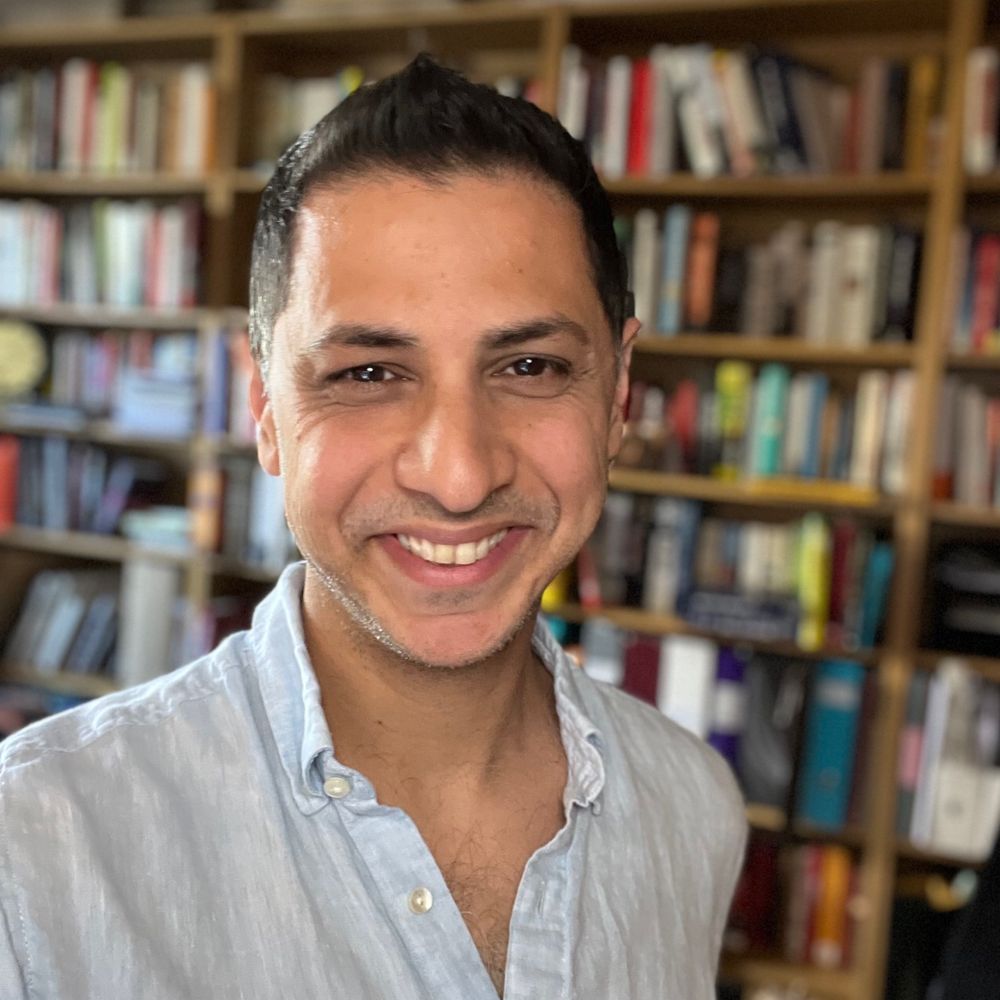
Our interview w/ Reza Pahlavi. "His plan makes him a transitional leader...who would lead a temporary gov't. Iran should, he says, be a democracy. His plan promises a referendum w/in four months on restoring monarchy or setting up a parliamentary republic" www.economist.com/middle-east-...

Reza Pahlavi says Iran is undergoing a revolution
Can the son of the shah deposed long ago rule Iran if the Islamic Republic falls?
www.economist.com
January 16, 2026 at 1:10 PM
Our interview w/ Reza Pahlavi. "His plan makes him a transitional leader...who would lead a temporary gov't. Iran should, he says, be a democracy. His plan promises a referendum w/in four months on restoring monarchy or setting up a parliamentary republic" www.economist.com/middle-east-...
Reposted
I think it's remarkable that anyone would think Reza Pahlavi was not worth interviewing in this moment. Like or loathe him, he was obviously, and surprisingly, a focal point for a large number of protestors inside Iran in recent weeks. It would be arrogant & negligent to ignore him.

Really, the Economist thought the guy was relevant enough to be interviewed ? Someone who's interest is solely on his own aggrandizement
January 16, 2026 at 2:46 PM
I think it's remarkable that anyone would think Reza Pahlavi was not worth interviewing in this moment. Like or loathe him, he was obviously, and surprisingly, a focal point for a large number of protestors inside Iran in recent weeks. It would be arrogant & negligent to ignore him.
Reposted

Reza Pahlavi: is the last shah's son a viable opposition leader for Iran? – video explainer

Reza Pahlavi: is the last shah's son a viable opposition leader for Iran? – video explainer
As the heir of a violent authoritarian regime, Pahlavi's potential return is viewed suspiciously by some, but for others he is the only alternative
www.theguardian.com
January 16, 2026 at 10:04 AM
Reza Pahlavi: is the last shah's son a viable opposition leader for Iran? – video explainer
Reposted

Reza Pahlavi said Iran is under “foreign occupation in clerical disguise,” blaming Khamenei for crimes against humanity and urging global action. He called for targeting the IRGC, freeing political prisoners, and preparing to recognize a democratic transition. #Iran

January 16, 2026 at 4:31 PM
Reza Pahlavi said Iran is under “foreign occupation in clerical disguise,” blaming Khamenei for crimes against humanity and urging global action. He called for targeting the IRGC, freeing political prisoners, and preparing to recognize a democratic transition. #Iran
Reposted

Meanwhile, Senator Graham has met with the Exiled Crown Prince of Iran, Reza Pahlavi.
January 14, 2026 at 11:05 PM
Meanwhile, Senator Graham has met with the Exiled Crown Prince of Iran, Reza Pahlavi.
King Reza Pahlavi represents the light, hope, and the rightful path for every Iranian to reclaim the glory we so richly deserve as heirs to Cyrus the Great and millennia of Persian civilization.
The golden days are coming.
Javid Shah.
Payandeh Iran.
The golden days are coming.
Javid Shah.
Payandeh Iran.

January 16, 2026 at 5:10 PM
King Reza Pahlavi represents the light, hope, and the rightful path for every Iranian to reclaim the glory we so richly deserve as heirs to Cyrus the Great and millennia of Persian civilization.
The golden days are coming.
Javid Shah.
Payandeh Iran.
The golden days are coming.
Javid Shah.
Payandeh Iran.