




Michael Steidel
@michaelsteidel.bsky.social
#Cellzome #TeamMassSpec #Proteomics opinions are my own
I agree MaxLFQ isn’t meant for absolute quantification.
But that still doesn’t explain the complete lack of correlation with UPS2.
From my experience, iBAQ and MaxLFQ usually correlate well (R² ~0.78, non related example dataset shown), suggesting they track the same MS1 signal.
But that still doesn’t explain the complete lack of correlation with UPS2.
From my experience, iBAQ and MaxLFQ usually correlate well (R² ~0.78, non related example dataset shown), suggesting they track the same MS1 signal.

December 7, 2025 at 11:00 PM
I agree MaxLFQ isn’t meant for absolute quantification.
But that still doesn’t explain the complete lack of correlation with UPS2.
From my experience, iBAQ and MaxLFQ usually correlate well (R² ~0.78, non related example dataset shown), suggesting they track the same MS1 signal.
But that still doesn’t explain the complete lack of correlation with UPS2.
From my experience, iBAQ and MaxLFQ usually correlate well (R² ~0.78, non related example dataset shown), suggesting they track the same MS1 signal.
Surprised that u go so low. With EvoSep 24 min method we can load lots more on our Ultra2 until reaching saturation especially with ICC2.0

October 7, 2025 at 2:56 PM
Surprised that u go so low. With EvoSep 24 min method we can load lots more on our Ultra2 until reaching saturation especially with ICC2.0
On a separate note: I was surprised to find that none of the non-canonical SwissProt isoforms are included in the official human reference proteome (UP000005640).
Anyone know what’s going on here? 🤔
#proteomics #bioinformatics @pwilmarth.bsky.social il
Anyone know what’s going on here? 🤔
#proteomics #bioinformatics @pwilmarth.bsky.social il

October 1, 2025 at 3:13 PM
On a separate note: I was surprised to find that none of the non-canonical SwissProt isoforms are included in the official human reference proteome (UP000005640).
Anyone know what’s going on here? 🤔
#proteomics #bioinformatics @pwilmarth.bsky.social il
Anyone know what’s going on here? 🤔
#proteomics #bioinformatics @pwilmarth.bsky.social il
Hey #TeamMassSpec,
Many non-human proteomics studies still search against taxon-filtered FASTAs.
❌ Redundant sequences
❌ Inflated search space
✅ Reference proteomes cut redundancy, improve annotation, and make results comparable.
👉 Time to move beyond taxon filters. #proteomics #massspec #uniprot
Many non-human proteomics studies still search against taxon-filtered FASTAs.
❌ Redundant sequences
❌ Inflated search space
✅ Reference proteomes cut redundancy, improve annotation, and make results comparable.
👉 Time to move beyond taxon filters. #proteomics #massspec #uniprot

September 30, 2025 at 2:21 PM
Hey #TeamMassSpec,
Many non-human proteomics studies still search against taxon-filtered FASTAs.
❌ Redundant sequences
❌ Inflated search space
✅ Reference proteomes cut redundancy, improve annotation, and make results comparable.
👉 Time to move beyond taxon filters. #proteomics #massspec #uniprot
Many non-human proteomics studies still search against taxon-filtered FASTAs.
❌ Redundant sequences
❌ Inflated search space
✅ Reference proteomes cut redundancy, improve annotation, and make results comparable.
👉 Time to move beyond taxon filters. #proteomics #massspec #uniprot
Thanks @pwilmarth.bsky.social - also included the less-redundant "one protein per gene" db here ...Has anybody assessed potential benefits of the reduced search space on sensitivity?

September 25, 2025 at 9:21 PM
Thanks @pwilmarth.bsky.social - also included the less-redundant "one protein per gene" db here ...Has anybody assessed potential benefits of the reduced search space on sensitivity?
aaah guess its "hidden" there :)

September 25, 2025 at 1:39 PM
aaah guess its "hidden" there :)
Hey #TeamMassSpec,
When you run proteomics on non-human species (mouse, rat, macaque, etc.) — which protein FASTA do you prefer?
Taxonomy-filtered UniProt (all entries)
Reference proteome (SwissProt+TrEMBL)
Ensembl/GENCODE
Something else?
When you run proteomics on non-human species (mouse, rat, macaque, etc.) — which protein FASTA do you prefer?
Taxonomy-filtered UniProt (all entries)
Reference proteome (SwissProt+TrEMBL)
Ensembl/GENCODE
Something else?

September 25, 2025 at 12:41 PM
Hey #TeamMassSpec,
When you run proteomics on non-human species (mouse, rat, macaque, etc.) — which protein FASTA do you prefer?
Taxonomy-filtered UniProt (all entries)
Reference proteome (SwissProt+TrEMBL)
Ensembl/GENCODE
Something else?
When you run proteomics on non-human species (mouse, rat, macaque, etc.) — which protein FASTA do you prefer?
Taxonomy-filtered UniProt (all entries)
Reference proteome (SwissProt+TrEMBL)
Ensembl/GENCODE
Something else?
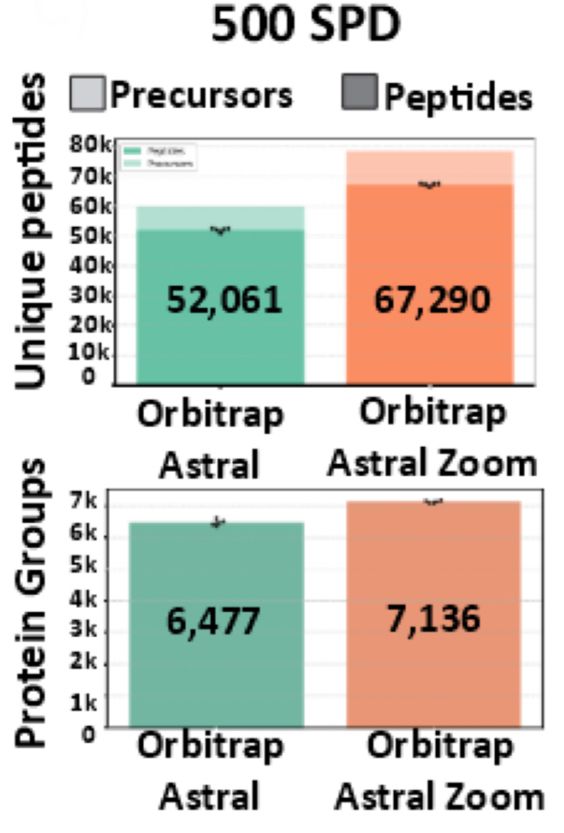
Astral Zoom hits >7,000 protein groups & 67,000 precursors — on a 500 SPD EvoSep ENO run.
www.biorxiv.org/content/10.1...
www.biorxiv.org/content/10.1...
July 19, 2025 at 9:01 AM
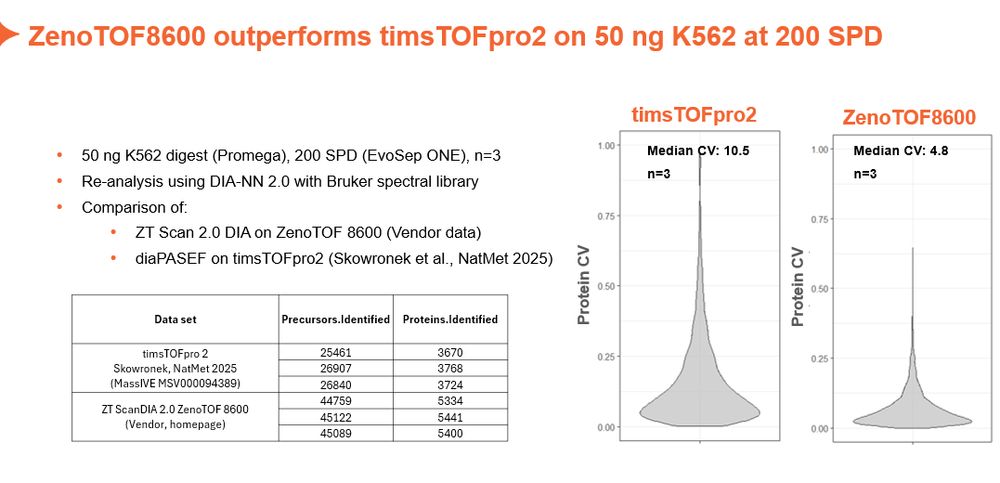
Astral Zoom hits >7,000 protein groups & 67,000 precursors — on a 500 SPD EvoSep ENO run.
www.biorxiv.org/content/10.1...
www.biorxiv.org/content/10.1...
June 27, 2025 at 10:13 AM
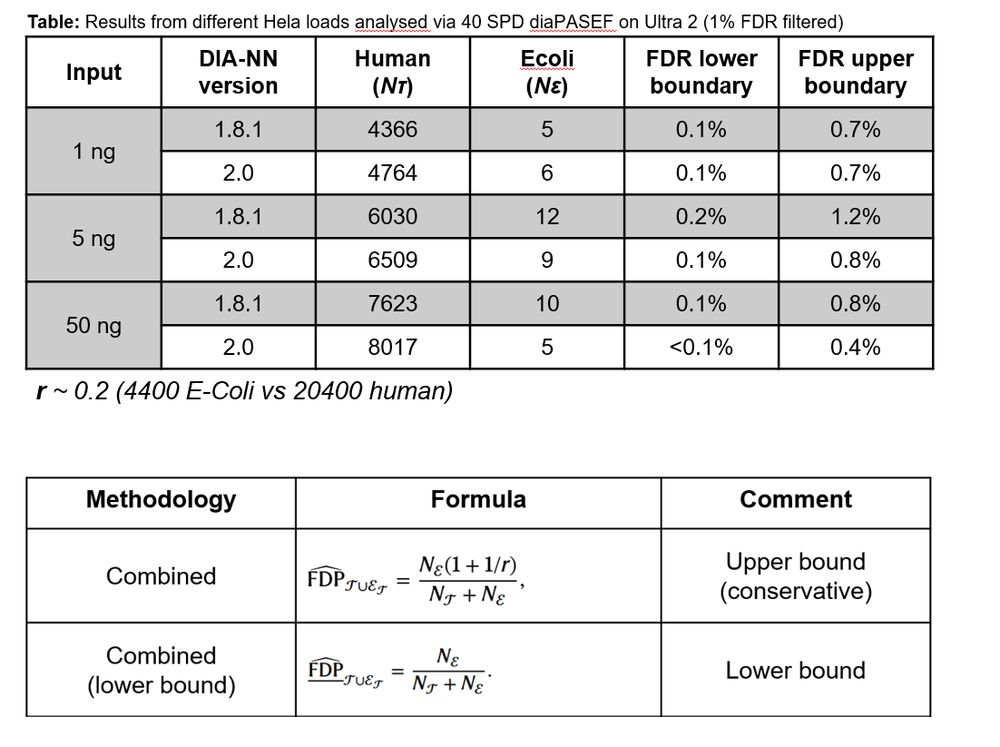
..diaPASEF down to 1 ng Hela looks ok (using E.Coli entrapment)
June 24, 2025 at 2:27 PM
..diaPASEF down to 1 ng Hela looks ok (using E.Coli entrapment)

April 8, 2025 at 10:51 AM
Slice-PASEF: Almost as beautiful as gazing into the starry sky at night
March 18, 2025 at 9:07 PM
Slice-PASEF: Almost as beautiful as gazing into the starry sky at night
Ion mobility stability over time is a helpful metric which we always generate to control for weather-related, or ITI-contamination driven drift effects..

March 11, 2025 at 7:58 PM
Ion mobility stability over time is a helpful metric which we always generate to control for weather-related, or ITI-contamination driven drift effects..
For those interested: Have found the segmentation feature in timsControl. Simply right click in the 'chromatogram' pannel, and select 'Insert New Segment'.

March 5, 2025 at 12:09 PM
For those interested: Have found the segmentation feature in timsControl. Simply right click in the 'chromatogram' pannel, and select 'Insert New Segment'.
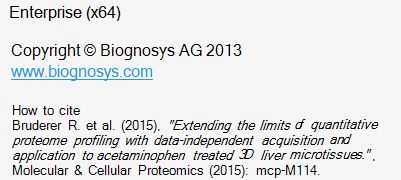
That would be the "official" publication
February 18, 2025 at 8:11 PM
That would be the "official" publication
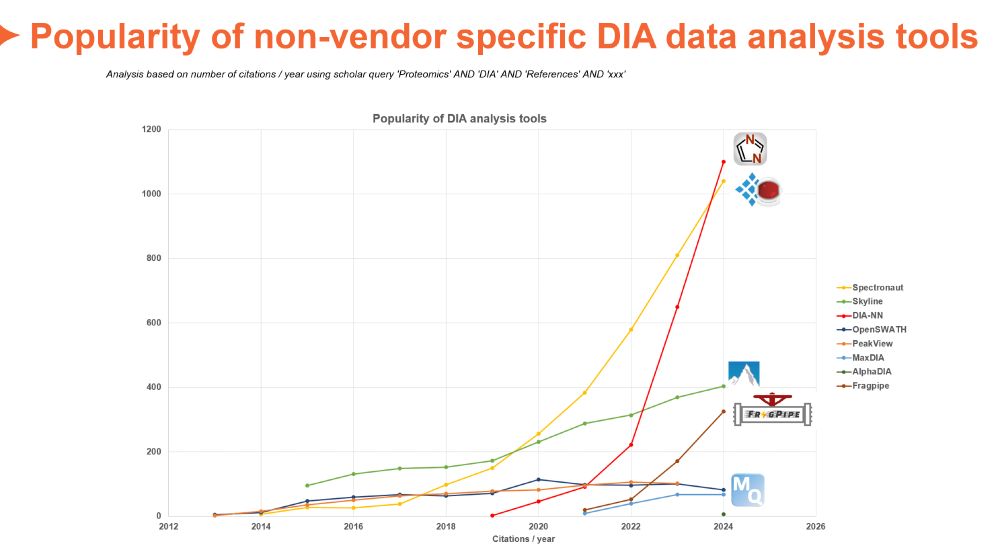
Based on full text search:
February 14, 2025 at 10:25 AM
Based on full text search:
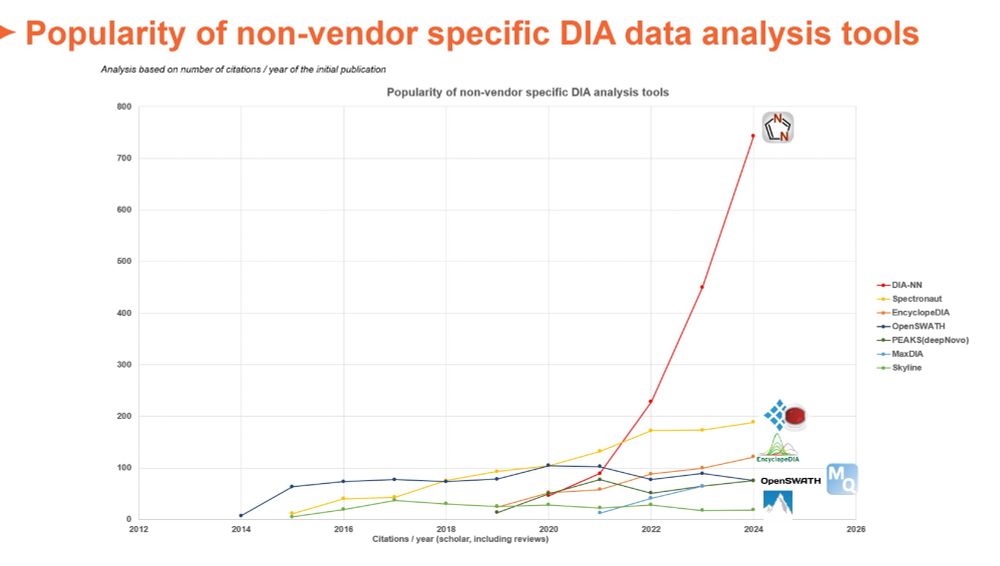
Popularity of current DIA data analysis tools (vendor-independent, based on citations of initial publication) Updated for 2024:
February 14, 2025 at 10:24 AM
Popularity of current DIA data analysis tools (vendor-independent, based on citations of initial publication) Updated for 2024:
Inerestingly, this picture changes when using fulltext search where algorithms based on Sequest (as implemented in ProteomeDiscover) dominate...

January 30, 2024 at 5:09 PM
Inerestingly, this picture changes when using fulltext search where algorithms based on Sequest (as implemented in ProteomeDiscover) dominate...
Trying to estimate popularity of search engines. (Something widespread I missed out?)
Based on citations/year of initial publication it seems as MSFragger would take over soon...
Based on citations/year of initial publication it seems as MSFragger would take over soon...

January 30, 2024 at 5:08 PM
Trying to estimate popularity of search engines. (Something widespread I missed out?)
Based on citations/year of initial publication it seems as MSFragger would take over soon...
Based on citations/year of initial publication it seems as MSFragger would take over soon...