


Michael Schwalbe
@mschwalbe.bsky.social
Postdoctoral Fellow at Stanford University
In case it's helpful, here is another optical illusion example:
www.creativebloq.com/news/mind-be...
www.creativebloq.com/news/mind-be...
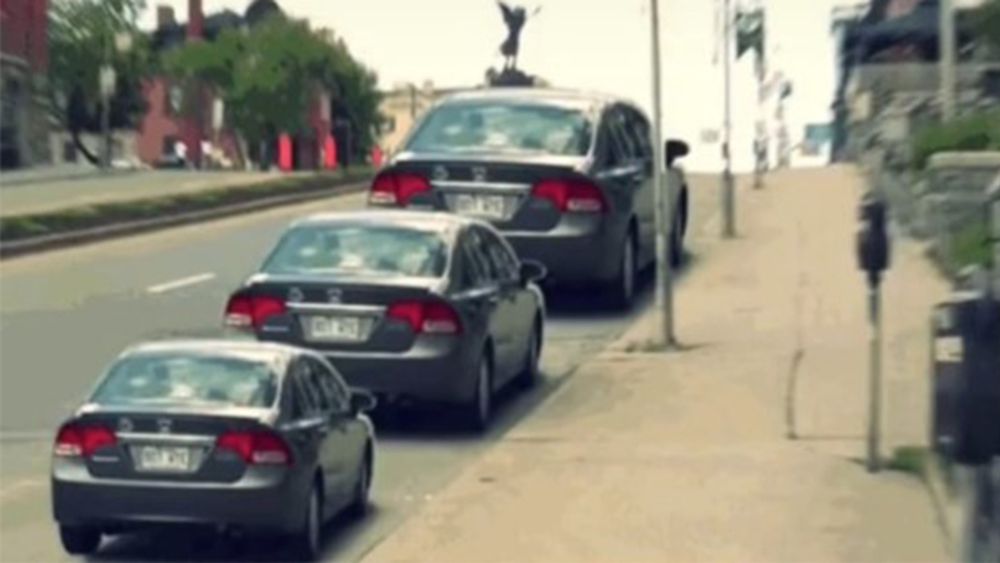
This optical illusion is so mind-bending that no one believes it
What can you see?
www.creativebloq.com
June 27, 2025 at 5:03 PM
In case it's helpful, here is another optical illusion example:
www.creativebloq.com/news/mind-be...
www.creativebloq.com/news/mind-be...
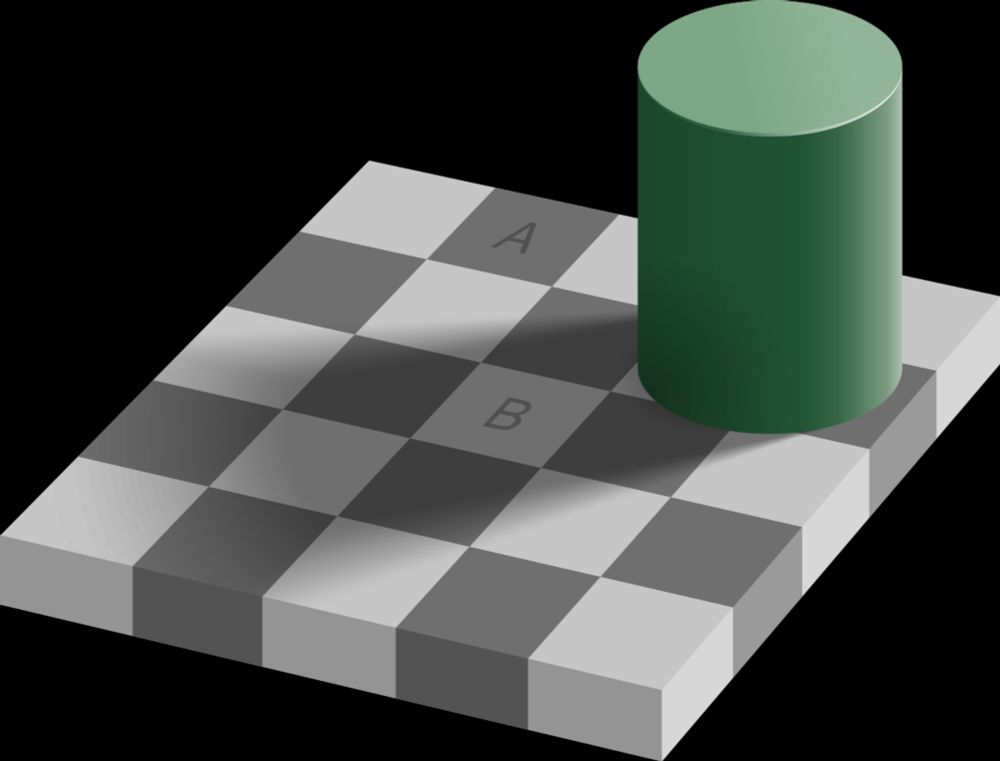
One tool she finds helpful for this draws from research on perception to show how our vision can produce errors (e.g., checker shadow illusion), and to critically then connect this fallibility to our introspections as a way to cultivate intellectual humility.
en.wikipedia.org/wiki/Checker...
en.wikipedia.org/wiki/Checker...
Checker shadow illusion - Wikipedia
en.wikipedia.org
June 27, 2025 at 5:03 PM
One tool she finds helpful for this draws from research on perception to show how our vision can produce errors (e.g., checker shadow illusion), and to critically then connect this fallibility to our introspections as a way to cultivate intellectual humility.
en.wikipedia.org/wiki/Checker...
en.wikipedia.org/wiki/Checker...
People also need to become aware of the biases—i.e., the fallibility of their thoughts and perceptions—through first-hand experience.
June 27, 2025 at 5:03 PM
People also need to become aware of the biases—i.e., the fallibility of their thoughts and perceptions—through first-hand experience.
Great questions! Emily Pronin at Princeton has tested interventions to reduce people's "bias blindspot" and finds that teaching about the biases alone is not sufficient.
June 27, 2025 at 5:03 PM
Great questions! Emily Pronin at Princeton has tested interventions to reduce people's "bias blindspot" and finds that teaching about the biases alone is not sufficient.
Go Drew!! So excited for you!!
May 8, 2025 at 12:49 PM
Go Drew!! So excited for you!!
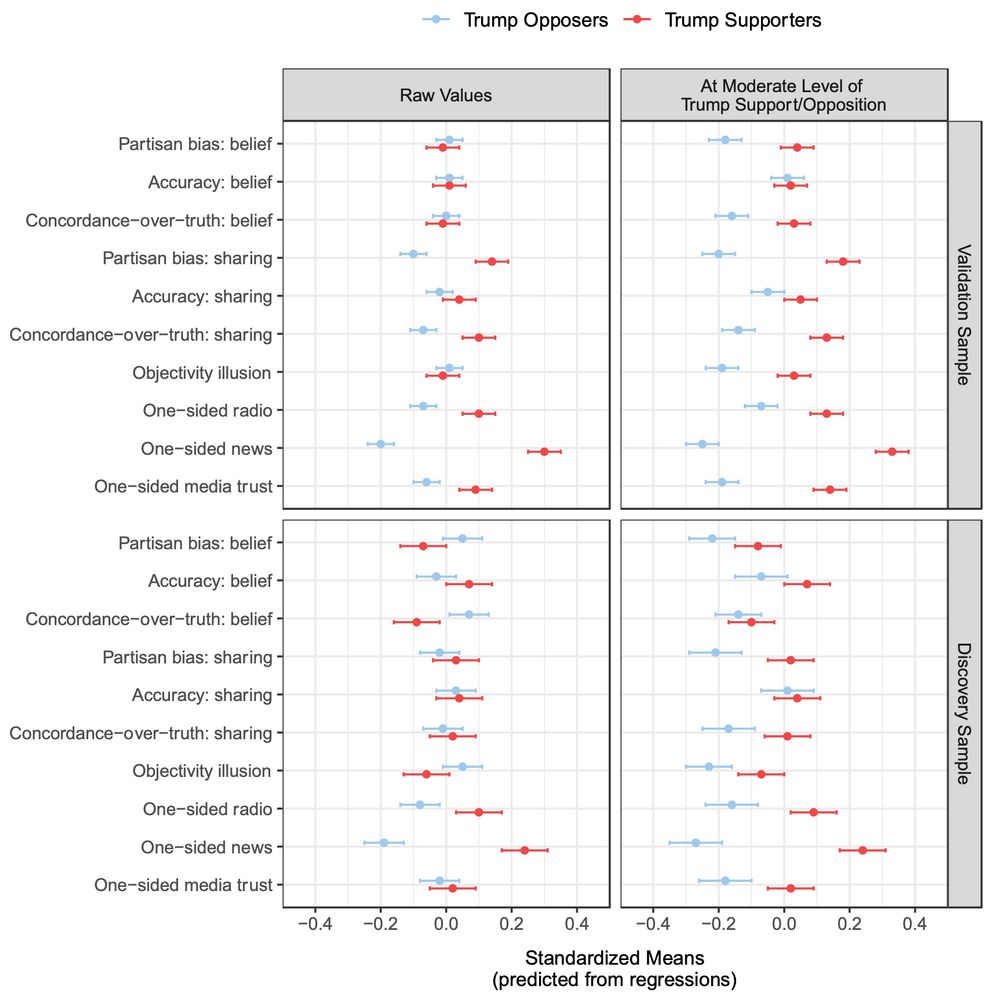
Because Trump supporters were less strong in their support for Trump than opposers were in their opposition to Trump, we compared the groups at each level of support—the right hand panel shows the groups both at moderate support.
Hope that helps!
Hope that helps!
February 28, 2025 at 7:38 PM
Because Trump supporters were less strong in their support for Trump than opposers were in their opposition to Trump, we compared the groups at each level of support—the right hand panel shows the groups both at moderate support.
Hope that helps!
Hope that helps!
Trump supporters did not exhibit a consistently stronger "concordance-over-truth" bias for believing the news.
February 28, 2025 at 7:37 PM
Trump supporters did not exhibit a consistently stronger "concordance-over-truth" bias for believing the news.
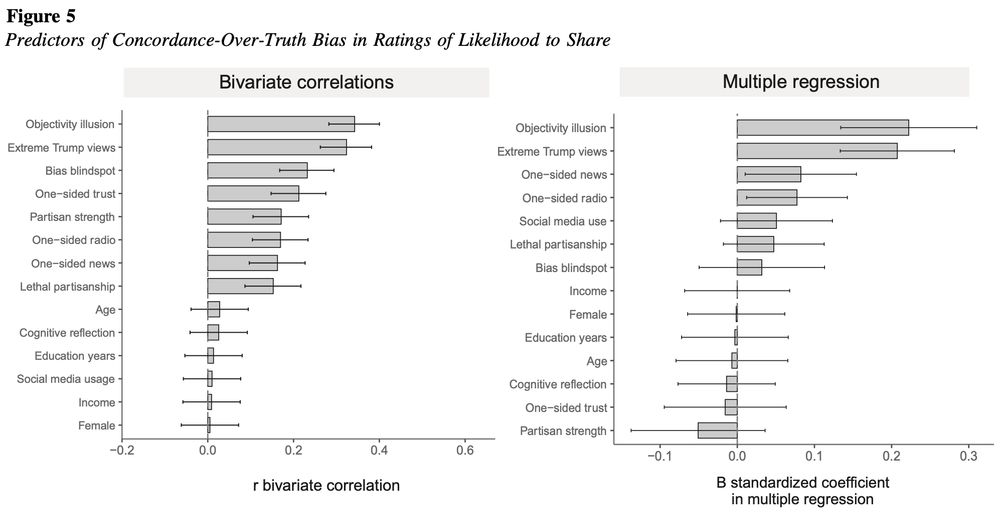
In case it's helpful, here is the figure from the paper. The findings are a bit nuanced, but the high-level takeaway is that Trump supporters exhibited greater one-sided news consumption and a stronger "concordance-over-truth" bias for sharing the news.
February 28, 2025 at 7:37 PM
In case it's helpful, here is the figure from the paper. The findings are a bit nuanced, but the high-level takeaway is that Trump supporters exhibited greater one-sided news consumption and a stronger "concordance-over-truth" bias for sharing the news.
(7/7) Grateful to my amazing collaborators @katiejoseff.bsky.social, Samuel Woolley, and Geoffrey Cohen!
Read the full paper here: psycnet.apa.org/fulltext/202...
Read the full paper here: psycnet.apa.org/fulltext/202...
APA PsycNet
psycnet.apa.org
February 19, 2025 at 5:46 PM
(7/7) Grateful to my amazing collaborators @katiejoseff.bsky.social, Samuel Woolley, and Geoffrey Cohen!
Read the full paper here: psycnet.apa.org/fulltext/202...
Read the full paper here: psycnet.apa.org/fulltext/202...
(6/7) The best ways to avoid the bias are to maintain a balanced media diet, increase self-awareness, and, especially, cultivate intellectual humility.
February 19, 2025 at 5:46 PM
(6/7) The best ways to avoid the bias are to maintain a balanced media diet, increase self-awareness, and, especially, cultivate intellectual humility.
(5/7) One of the top predictors of this bias was the objectivity illusion, or the belief in the objectivity and lack of bias of one’s political side relative to the other.
Those who believed their side was the least biased and most objective were, ironically, the most biased and least objective.
Those who believed their side was the least biased and most objective were, ironically, the most biased and least objective.
February 19, 2025 at 5:46 PM
(5/7) One of the top predictors of this bias was the objectivity illusion, or the belief in the objectivity and lack of bias of one’s political side relative to the other.
Those who believed their side was the least biased and most objective were, ironically, the most biased and least objective.
Those who believed their side was the least biased and most objective were, ironically, the most biased and least objective.
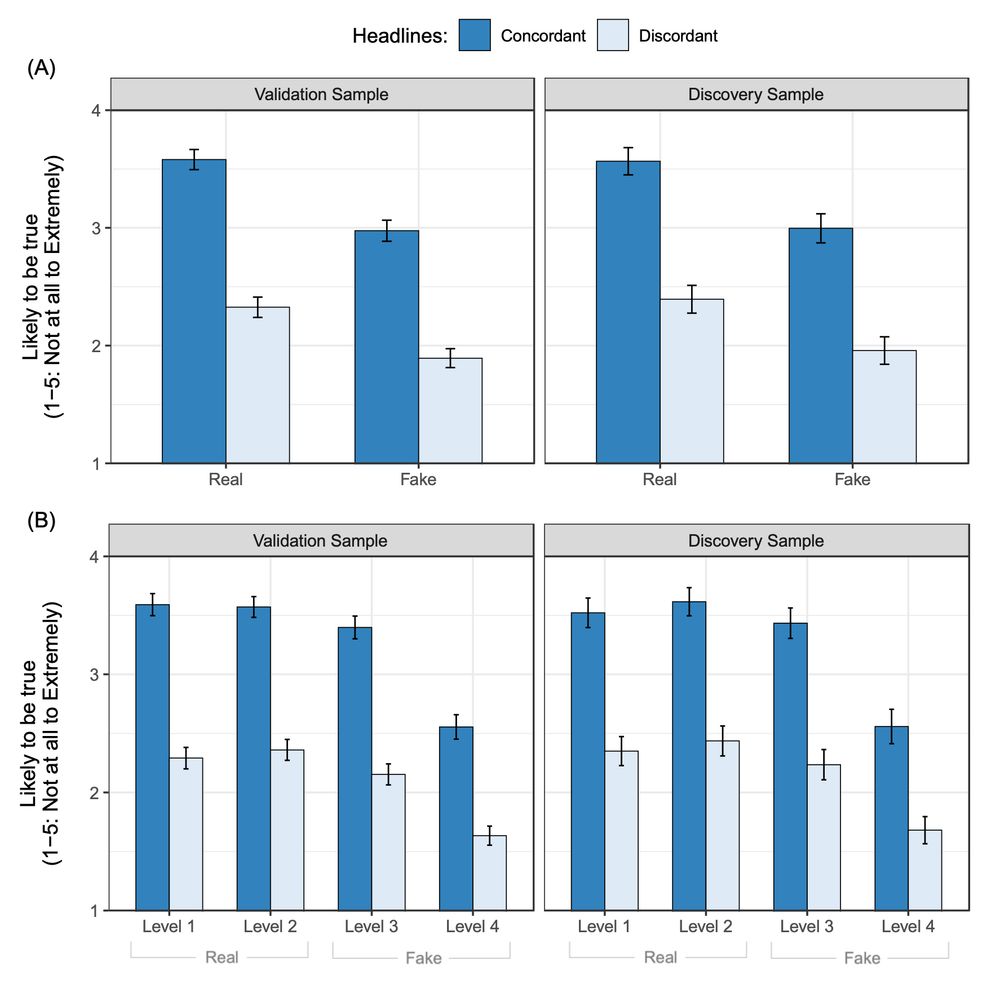
(4/7) The problem won’t be solved alone by dealing with fake news—people also exhibited this bias in disbelieving true news.
In fact, this was the stronger effect: Resistance to inconvenient truth was greater than susceptibility to convenient falsehood.
In fact, this was the stronger effect: Resistance to inconvenient truth was greater than susceptibility to convenient falsehood.
February 19, 2025 at 5:46 PM
(4/7) The problem won’t be solved alone by dealing with fake news—people also exhibited this bias in disbelieving true news.
In fact, this was the stronger effect: Resistance to inconvenient truth was greater than susceptibility to convenient falsehood.
In fact, this was the stronger effect: Resistance to inconvenient truth was greater than susceptibility to convenient falsehood.
(3/7) This bias was more pervasive than we expected. We found it even among the highly educated and the deeper analytical reasoners.
Notably, all these effects held for participants’ intentions to share the headlines as well.
Notably, all these effects held for participants’ intentions to share the headlines as well.
February 19, 2025 at 5:46 PM
(3/7) This bias was more pervasive than we expected. We found it even among the highly educated and the deeper analytical reasoners.
Notably, all these effects held for participants’ intentions to share the headlines as well.
Notably, all these effects held for participants’ intentions to share the headlines as well.
(2/7) Attesting to the robustness of this effect, participants were more likely to believe even our most outlandish fake headlines (Level 4) that were aligned with their political views than they were to believe true headlines that were not.
February 19, 2025 at 5:46 PM
(2/7) Attesting to the robustness of this effect, participants were more likely to believe even our most outlandish fake headlines (Level 4) that were aligned with their political views than they were to believe true headlines that were not.