



Juan Felipe Beltrán, Ph.D.
@offbyjuan.bsky.social
I'm just an Alien, standing in front of a country, asking it to let me improve their biotechnology {Algorithms, Protein Sequencing, Drug Discovery, HCI, jokes}
Reposted by Juan Felipe Beltrán, Ph.D.

New impact case study outlines the impressive economic & scientific value of UniProt - the world-leading open data resource for protein sequence & functional information.
Users save up to 219 hours per year, equivalent to net benefits of up to €5,475 per user.
www.ebi.ac.uk/about/news/a...
Users save up to 219 hours per year, equivalent to net benefits of up to €5,475 per user.
www.ebi.ac.uk/about/news/a...
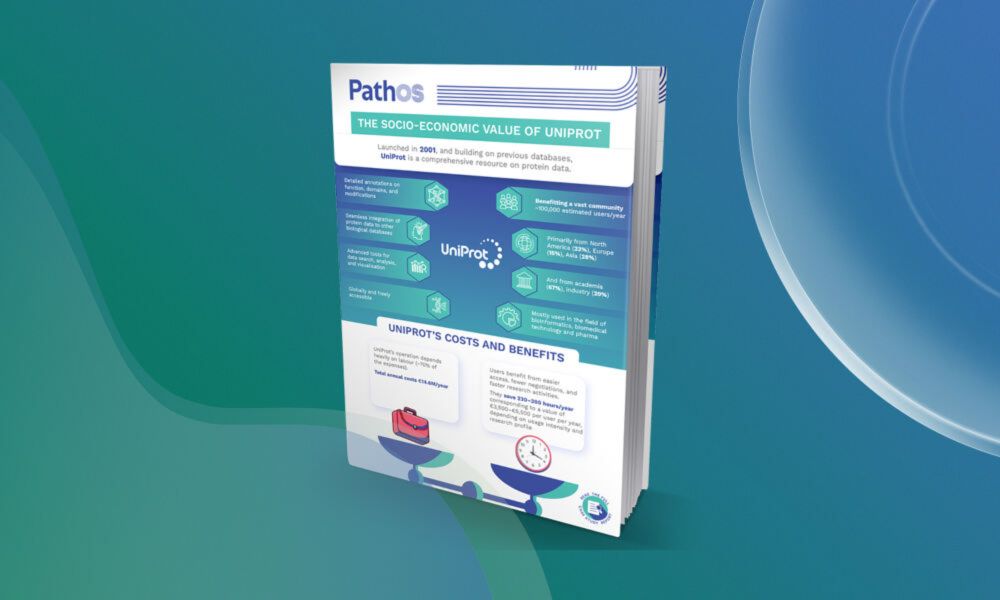
Measuring the value and impact of UniProt
Case study shows the economic value and impact of UniProt, showing estimated annual gains of up to €5,475 per user.
www.ebi.ac.uk
June 25, 2025 at 3:24 PM
New impact case study outlines the impressive economic & scientific value of UniProt - the world-leading open data resource for protein sequence & functional information.
Users save up to 219 hours per year, equivalent to net benefits of up to €5,475 per user.
www.ebi.ac.uk/about/news/a...
Users save up to 219 hours per year, equivalent to net benefits of up to €5,475 per user.
www.ebi.ac.uk/about/news/a...
Reposted by Juan Felipe Beltrán, Ph.D.
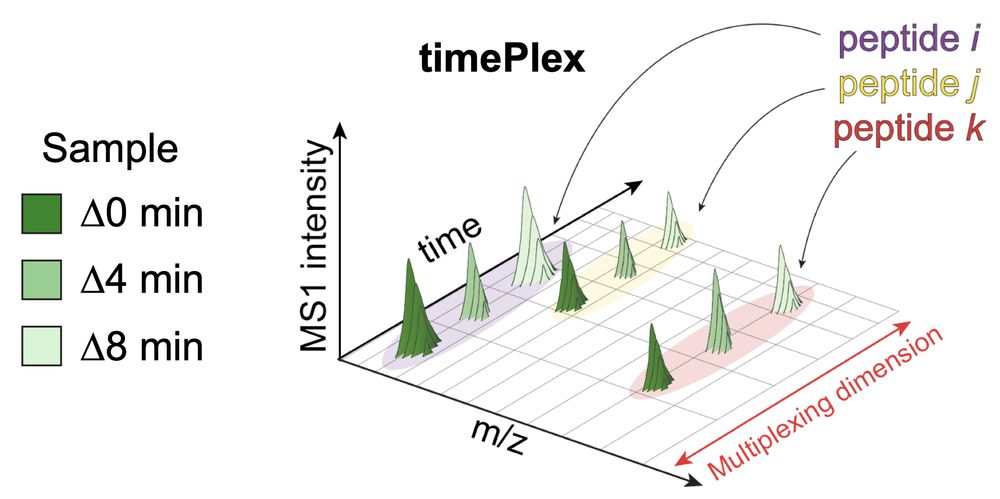
We are excited to introduce ‘time’ as a new domain for proteomics multiplexing!
It enables:
-Label-free multiplexing
-Combinatorial multiplexing with plexDIA
Using combined 9-plexDIA and 3-timePlex we demonstrate 27-plex DIA 🚀
It enables:
-Label-free multiplexing
-Combinatorial multiplexing with plexDIA
Using combined 9-plexDIA and 3-timePlex we demonstrate 27-plex DIA 🚀
May 28, 2025 at 10:05 AM
We are excited to introduce ‘time’ as a new domain for proteomics multiplexing!
It enables:
-Label-free multiplexing
-Combinatorial multiplexing with plexDIA
Using combined 9-plexDIA and 3-timePlex we demonstrate 27-plex DIA 🚀
It enables:
-Label-free multiplexing
-Combinatorial multiplexing with plexDIA
Using combined 9-plexDIA and 3-timePlex we demonstrate 27-plex DIA 🚀
Reposted by Juan Felipe Beltrán, Ph.D.

A new dimension for multiplexing mass spec analysis -- time -- is enabling scaling up throughput at new levels.
We demonstrate 27-plex DIA enabling over 500 samples / day.
We project that timePlex will enable throughputs exceeding 1,000 samples / day.
www.biorxiv.org/content/10.1...
We demonstrate 27-plex DIA enabling over 500 samples / day.
We project that timePlex will enable throughputs exceeding 1,000 samples / day.
www.biorxiv.org/content/10.1...
May 28, 2025 at 10:32 AM
A new dimension for multiplexing mass spec analysis -- time -- is enabling scaling up throughput at new levels.
We demonstrate 27-plex DIA enabling over 500 samples / day.
We project that timePlex will enable throughputs exceeding 1,000 samples / day.
www.biorxiv.org/content/10.1...
We demonstrate 27-plex DIA enabling over 500 samples / day.
We project that timePlex will enable throughputs exceeding 1,000 samples / day.
www.biorxiv.org/content/10.1...
Reposted by Juan Felipe Beltrán, Ph.D.

We're trying a new publication format — the notebook pub!
By turning our Jupyter Notebooks into publishable artifacts, we hope to share faster, reduce the effort to convert analysis ➡️ pub, and make our work more reproducible.
Weigh in on our commentary:
research.arcadiascience.com/pub/perspect...
By turning our Jupyter Notebooks into publishable artifacts, we hope to share faster, reduce the effort to convert analysis ➡️ pub, and make our work more reproducible.
Weigh in on our commentary:
research.arcadiascience.com/pub/perspect...

March 18, 2025 at 9:20 PM
We're trying a new publication format — the notebook pub!
By turning our Jupyter Notebooks into publishable artifacts, we hope to share faster, reduce the effort to convert analysis ➡️ pub, and make our work more reproducible.
Weigh in on our commentary:
research.arcadiascience.com/pub/perspect...
By turning our Jupyter Notebooks into publishable artifacts, we hope to share faster, reduce the effort to convert analysis ➡️ pub, and make our work more reproducible.
Weigh in on our commentary:
research.arcadiascience.com/pub/perspect...
Reposted by Juan Felipe Beltrán, Ph.D.

Was a great pleasure to write this perspective on two transformative works by leading single-cell proteomics labs. LC-MS now enables to quantify ~6000 proteins per HeLa cell. I think many types of experiments will benefit from being augmented with single-cell proteomics measurements.
News & Views from @vadim-demichev.bsky.social: Advances in single-cell proteomics allow quantification of half of the expressed proteome in an individual cell.
www.nature.com/articles/s41...
www.nature.com/articles/s41...

Entering the era of deep single-cell proteomics - Nature Methods
Advances in single-cell proteomics allow quantification of half of the expressed proteome in an individual cell.
www.nature.com
March 6, 2025 at 9:40 PM
Was a great pleasure to write this perspective on two transformative works by leading single-cell proteomics labs. LC-MS now enables to quantify ~6000 proteins per HeLa cell. I think many types of experiments will benefit from being augmented with single-cell proteomics measurements.
Reposted by Juan Felipe Beltrán, Ph.D.
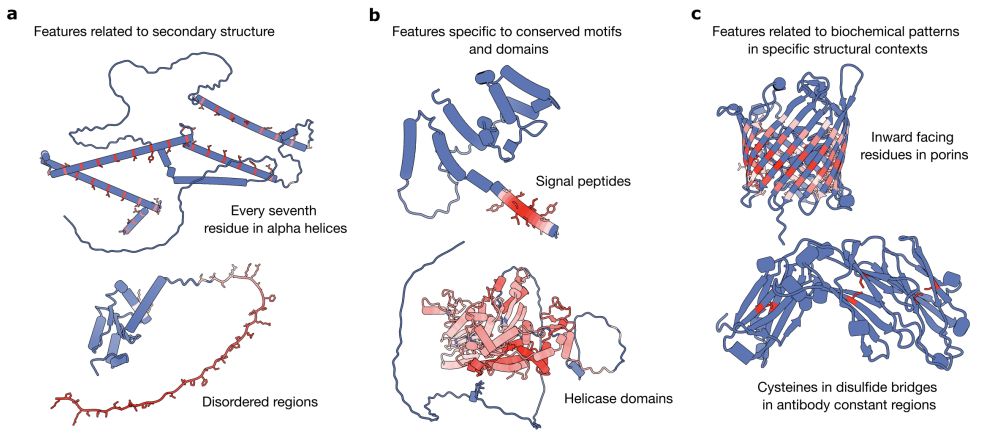
This might be the best paper on applying sparse autoencoders to protein language models. The authors identify how neural networks trained on amino acid sequences "discover" different features, some specific to individual protein families, other for substructures
www.biorxiv.org/content/10.1...
www.biorxiv.org/content/10.1...
February 10, 2025 at 12:15 PM
This might be the best paper on applying sparse autoencoders to protein language models. The authors identify how neural networks trained on amino acid sequences "discover" different features, some specific to individual protein families, other for substructures
www.biorxiv.org/content/10.1...
www.biorxiv.org/content/10.1...
Reposted by Juan Felipe Beltrán, Ph.D.

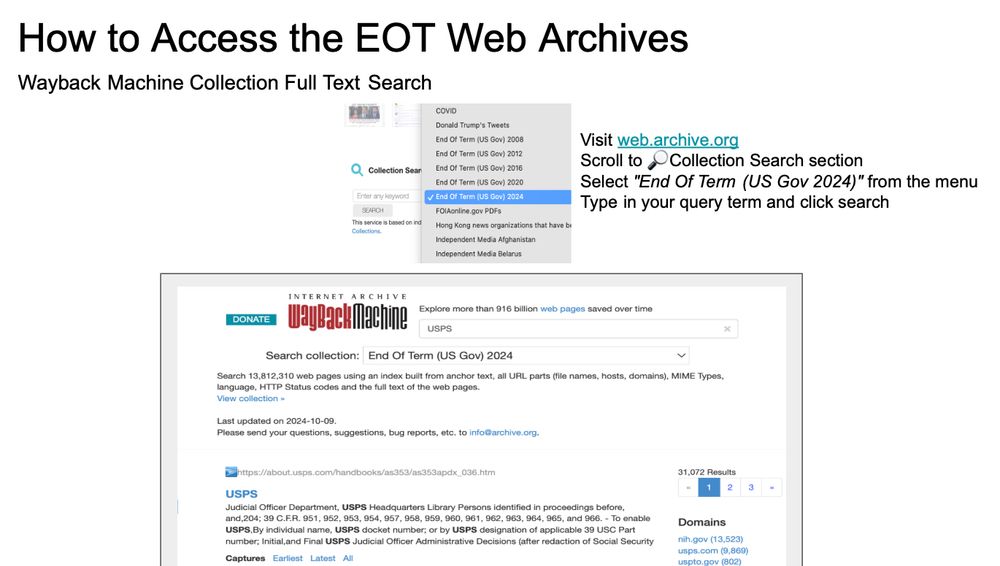
How to Access the EOT Web Archives
Visit web.archive.org
Scroll to 🔎Collection Search section
Select "End Of Term (US Gov 2024)" from the menu
Type in your query term and click search
Or download bulk WARC files from eotarchive.org/data/
#EOT2024 #EOTArchive
Visit web.archive.org
Scroll to 🔎Collection Search section
Select "End Of Term (US Gov 2024)" from the menu
Type in your query term and click search
Or download bulk WARC files from eotarchive.org/data/
#EOT2024 #EOTArchive
December 9, 2024 at 6:38 PM
How to Access the EOT Web Archives
Visit web.archive.org
Scroll to 🔎Collection Search section
Select "End Of Term (US Gov 2024)" from the menu
Type in your query term and click search
Or download bulk WARC files from eotarchive.org/data/
#EOT2024 #EOTArchive
Visit web.archive.org
Scroll to 🔎Collection Search section
Select "End Of Term (US Gov 2024)" from the menu
Type in your query term and click search
Or download bulk WARC files from eotarchive.org/data/
#EOT2024 #EOTArchive
Reposted by Juan Felipe Beltrán, Ph.D.
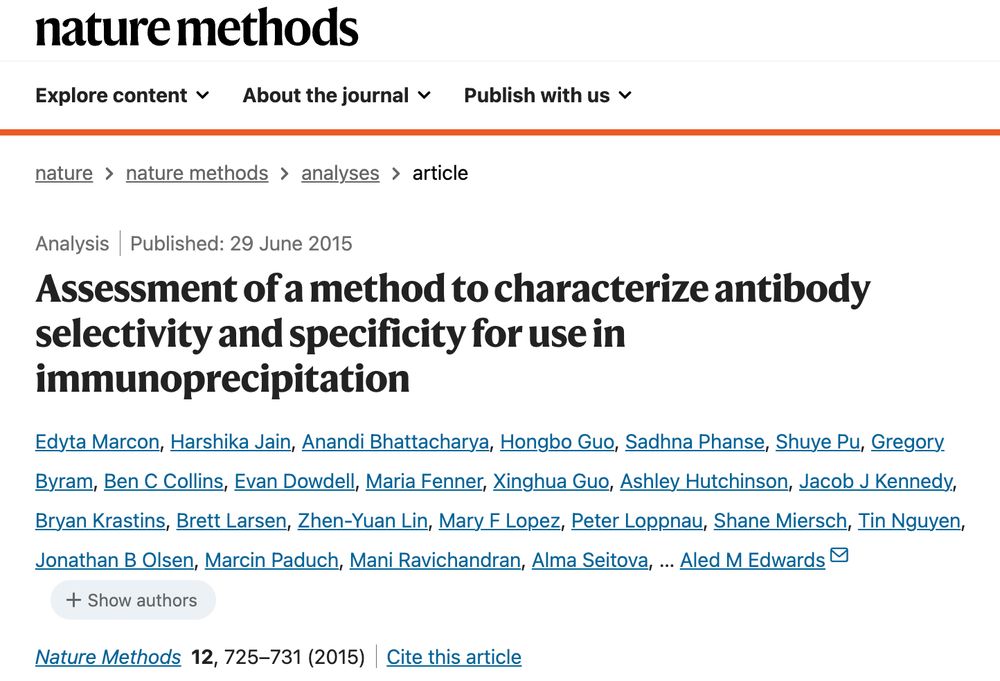
This rate of validation suggests that antibodies should be considered non-specific until proven otherwise:
357 validated out of 1,124 tested.
.
357 validated out of 1,124 tested.
.
January 31, 2025 at 12:24 PM
This rate of validation suggests that antibodies should be considered non-specific until proven otherwise:
357 validated out of 1,124 tested.
.
357 validated out of 1,124 tested.
.
Reposted by Juan Felipe Beltrán, Ph.D.

Our first single cell proteomics paper is online now in JPR. A practical story and practice for the biological studies to come next pubs.acs.org/doi/10.1021/...

Cell Storage Conditions Impact Single-Cell Proteomic Landscapes
Single cell transcriptomics (SCT) has revolutionized our understanding of cellular heterogeneity, yet the emergence of single cell proteomics (SCP) promises a more functional view of cellular dynamics. A challenge is that not all mass spectrometry facilities can perform SCP, and not all laboratories have access to cell sorting equipment required for SCP, which together motivate an interest in sending bulk cell samples through the mail for sorting and SCP analysis. Shipping requires cell storage, which has an unknown effect on SCP results. This study investigates the impact of cell storage conditions on the proteomic landscape at the single cell level, utilizing Data-Independent Acquisition (DIA) coupled with Parallel Accumulation Serial Fragmentation (diaPASEF). Three storage conditions were compared in 293T cells: (1) 37 °C (control), (2) 4 °C overnight, and (3) −196 °C storage followed by liquid nitrogen preservation. Both cold and frozen storage induced significant alterations in the cell diameter, elongation, and proteome composition. By elucidating how cell storage conditions alter cellular morphology and proteome profiles, this study contributes foundational technical information about SCP sample preparation and data quality.
pubs.acs.org
January 25, 2025 at 3:16 PM
Our first single cell proteomics paper is online now in JPR. A practical story and practice for the biological studies to come next pubs.acs.org/doi/10.1021/...
I am thrilled that this transition finally happened. Goodbye aspirational collection of bookmarks, I read some of you.

Proud of my part in helping this happen as a Bluesky Elder.
🧪 🐡 #scicomm
🧪 🐡 #scicomm

Bluesky’s science takeover: 70% of Nature poll respondents use platform
Roughly 6,000 readers answered our poll, with many declaring that Bluesky was nicer, kinder and less antagonistic to science than X.
www.nature.com
January 26, 2025 at 4:32 AM
I am thrilled that this transition finally happened. Goodbye aspirational collection of bookmarks, I read some of you.
Reposted by Juan Felipe Beltrán, Ph.D.

I’m going to use Fig 1 of this PNAS article in my very next graduate biostatistics lecture

Here's a paper that explains the difference between standard errors and standard deviations:
bmj.com/content/331/...
Here's our paper, which shows that experts (doctors, professors, data scientists) mix them up:
www.pnas.org/doi/10.1073/...
bmj.com/content/331/...
Here's our paper, which shows that experts (doctors, professors, data scientists) mix them up:
www.pnas.org/doi/10.1073/...
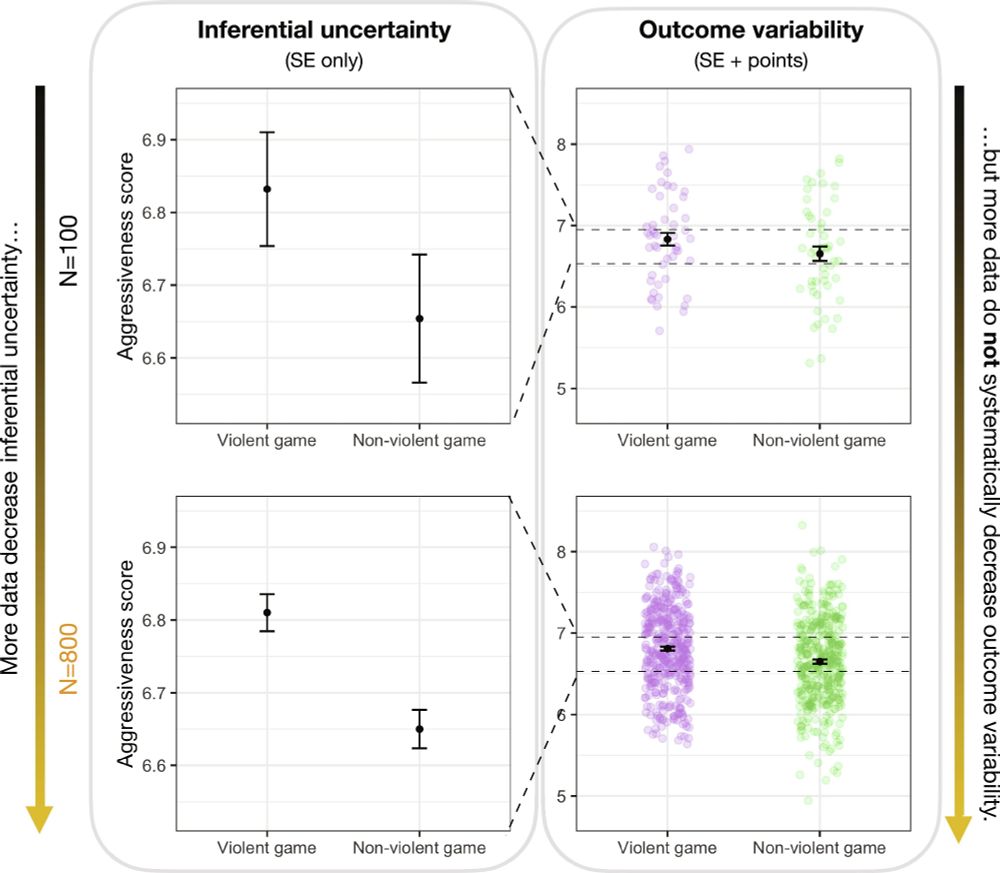
An illusion of predictability in scientific results: Even experts confuse inferential uncertainty and outcome variability | PNAS
Traditionally, scientists have placed more emphasis on communicating inferential uncertainty
(i.e., the precision of statistical estimates) compare...
www.pnas.org
August 30, 2024 at 4:57 PM
I’m going to use Fig 1 of this PNAS article in my very next graduate biostatistics lecture