



Pau Pitarch
@paupitarch.bsky.social
I teach Modern Japanese Literature and Media at Waseda University.
Reposted by Pau Pitarch
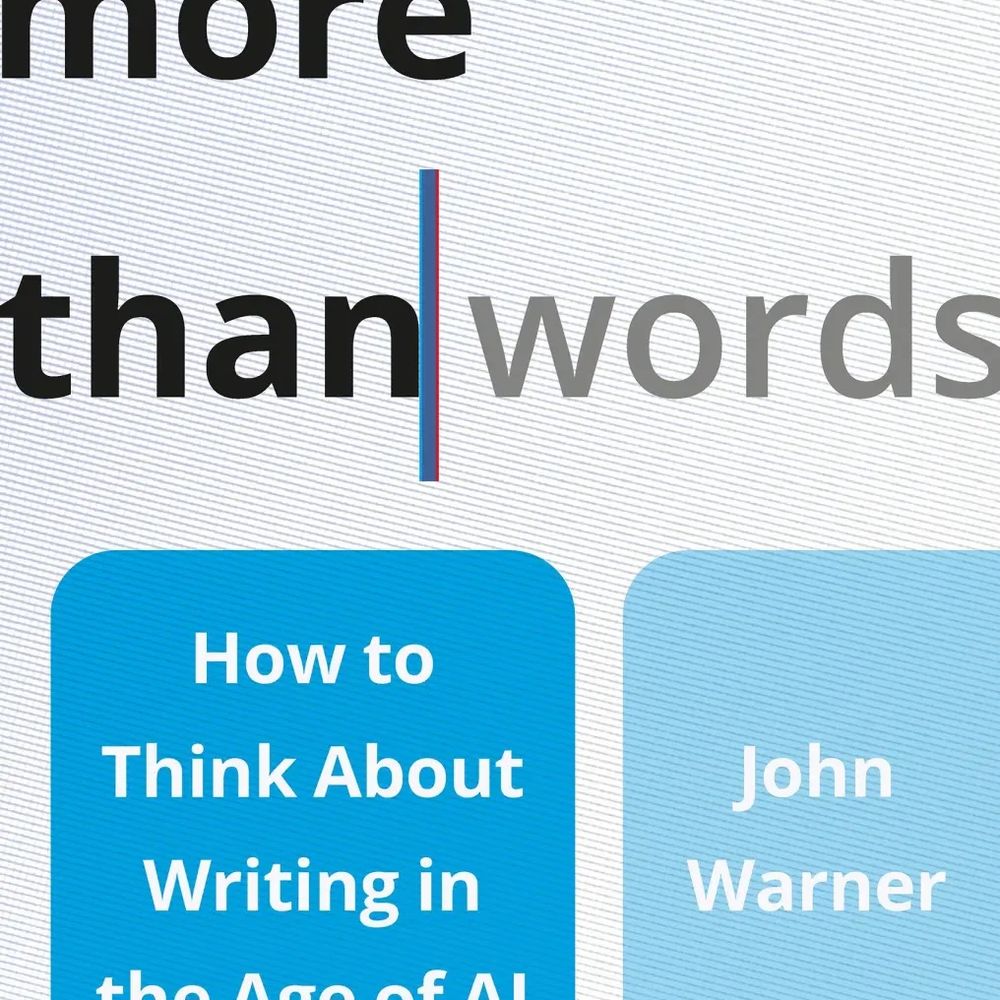
This guy had even read my book (it's why he'd emailed) and I still hadn't convinced him. He thought I could be writing "hundreds" of books. I asked why I would want to do that and who would read them. I haven't heard back on that question yet.
February 13, 2026 at 2:31 PM
This guy had even read my book (it's why he'd emailed) and I still hadn't convinced him. He thought I could be writing "hundreds" of books. I asked why I would want to do that and who would read them. I haven't heard back on that question yet.
Reposted by Pau Pitarch
I had an email exchange with a guy yesterday who insisted I was making a mistake not outsourcing my writing to an LLM. He said, "It knows more than you do." He couldn't understand that this was impossible because the work of writing is figuring out what "I" think.
February 13, 2026 at 2:29 PM
I had an email exchange with a guy yesterday who insisted I was making a mistake not outsourcing my writing to an LLM. He said, "It knows more than you do." He couldn't understand that this was impossible because the work of writing is figuring out what "I" think.
Aquesta consciència de la diferència entre la imatge que té de si mateix el personatge i com el veu el públic em sembla finíssima.
Encara en podem aprendre molt, de _Fūshikaden_.
Encara en podem aprendre molt, de _Fūshikaden_.
February 6, 2026 at 11:31 AM
Aquesta consciència de la diferència entre la imatge que té de si mateix el personatge i com el veu el públic em sembla finíssima.
Encara en podem aprendre molt, de _Fūshikaden_.
Encara en podem aprendre molt, de _Fūshikaden_.
Per representar un ancià dansant, l’actor s’ha de moure amb la mateixa intenció i tècnica que ho faria representant un jove (igual que la persona gran intenta ballar com quan era jove), però un xic endarrerit en alguns moments perquè el públic entengui que el seu cos no li respon com ell voldria.
February 6, 2026 at 11:31 AM
Per representar un ancià dansant, l’actor s’ha de moure amb la mateixa intenció i tècnica que ho faria representant un jove (igual que la persona gran intenta ballar com quan era jove), però un xic endarrerit en alguns moments perquè el públic entengui que el seu cos no li respon com ell voldria.
La proposta de Zeami té una profunditat psicològica meravellosa. Diu: un ancià no pensa mai que és massa gran per dansar. Al contrari, intenta dansar exactament igual que ho feia de jove, però per les seves limitacions físiques de vegades no pot seguir exactament el ritme.
February 6, 2026 at 11:31 AM
La proposta de Zeami té una profunditat psicològica meravellosa. Diu: un ancià no pensa mai que és massa gran per dansar. Al contrari, intenta dansar exactament igual que ho feia de jove, però per les seves limitacions físiques de vegades no pot seguir exactament el ritme.
Un fragment que em va impressionar és com parla de representar el paper d’un ancià dansant, per exemple. Zeami diu que no n’hi ha prou simplement amb copiar els moviments d’una persona gran. No és qüestió de repapiejar i queixar-nos de com ens fa de mal el reuma.
February 6, 2026 at 11:31 AM
Un fragment que em va impressionar és com parla de representar el paper d’un ancià dansant, per exemple. Zeami diu que no n’hi ha prou simplement amb copiar els moviments d’una persona gran. No és qüestió de repapiejar i queixar-nos de com ens fa de mal el reuma.
Per fer aquesta traducció, però, vaig suposar que el seu públic estaria interessat en les arts dramàtiques més que en el Japó medieval, i vaig mirar de llegir el text pensant en què s’hi podria trobar d’interessant avui. Potser per això vaig descobrir-hi un Zeami sorprenenment proper.
February 6, 2026 at 11:31 AM
Per fer aquesta traducció, però, vaig suposar que el seu públic estaria interessat en les arts dramàtiques més que en el Japó medieval, i vaig mirar de llegir el text pensant en què s’hi podria trobar d’interessant avui. Potser per això vaig descobrir-hi un Zeami sorprenenment proper.
Not that recent, I guess, but have you read Attila Veres?
January 12, 2026 at 12:52 PM
Not that recent, I guess, but have you read Attila Veres?
Com pot escriure tant i tan bo? Aquesta combina molt bé biologia i política. Imprescindible.
January 12, 2026 at 11:38 AM
Com pot escriure tant i tan bo? Aquesta combina molt bé biologia i política. Imprescindible.
If you want short stories, I have plenty recs. They allow you to expose students to a wider range of styles and themes. This is the lineup for my current intro class:
樋口一葉「にごりえ」
森鴎外「舞姫」
梶井基次郎「檸檬」
佐多稲子「キャラメル工場から」
金史良「光の中に」
石川淳「焼け跡のイエス」
野坂昭如「アメリカひじき」
倉橋由美子「パルタイ」
大庭みな子「山姥の微笑」
目取真俊「水滴」
川上未映子「三月の毛糸」
樋口一葉「にごりえ」
森鴎外「舞姫」
梶井基次郎「檸檬」
佐多稲子「キャラメル工場から」
金史良「光の中に」
石川淳「焼け跡のイエス」
野坂昭如「アメリカひじき」
倉橋由美子「パルタイ」
大庭みな子「山姥の微笑」
目取真俊「水滴」
川上未映子「三月の毛糸」
January 10, 2026 at 11:45 PM
If you want short stories, I have plenty recs. They allow you to expose students to a wider range of styles and themes. This is the lineup for my current intro class:
樋口一葉「にごりえ」
森鴎外「舞姫」
梶井基次郎「檸檬」
佐多稲子「キャラメル工場から」
金史良「光の中に」
石川淳「焼け跡のイエス」
野坂昭如「アメリカひじき」
倉橋由美子「パルタイ」
大庭みな子「山姥の微笑」
目取真俊「水滴」
川上未映子「三月の毛糸」
樋口一葉「にごりえ」
森鴎外「舞姫」
梶井基次郎「檸檬」
佐多稲子「キャラメル工場から」
金史良「光の中に」
石川淳「焼け跡のイエス」
野坂昭如「アメリカひじき」
倉橋由美子「パルタイ」
大庭みな子「山姥の微笑」
目取真俊「水滴」
川上未映子「三月の毛糸」
Our classes are too compact now for me to assign novels, but _Kokoro_ and _Sanshiro_ are the Soseki works that have worked best for me in the past. Other than that, students have liked Minato Kanae's _Confessions_, Murata Sayaka's _Convenience Store Woman_, Yu Miri _Tokyo Ueno Station_.
January 10, 2026 at 11:39 PM
Our classes are too compact now for me to assign novels, but _Kokoro_ and _Sanshiro_ are the Soseki works that have worked best for me in the past. Other than that, students have liked Minato Kanae's _Confessions_, Murata Sayaka's _Convenience Store Woman_, Yu Miri _Tokyo Ueno Station_.
What's the chronological range you want to cover, how many meetings and how much time do students have to read between meetings?
January 10, 2026 at 8:14 AM
What's the chronological range you want to cover, how many meetings and how much time do students have to read between meetings?
Any specific sections you find especially funny?
December 21, 2025 at 9:10 AM
Any specific sections you find especially funny?
2) online life making a certain type of non-embodied experience more common; 3) the generalization of thinking in terms of ecosystems and biomes.
If anybody has other takes, I'd love to hear them.
If anybody has other takes, I'd love to hear them.
December 1, 2025 at 1:03 AM
2) online life making a certain type of non-embodied experience more common; 3) the generalization of thinking in terms of ecosystems and biomes.
If anybody has other takes, I'd love to hear them.
If anybody has other takes, I'd love to hear them.
It's not new, of course, but I feel like earlier it was mostly something negative, often a metaphor for totalitarianism (cf. the Borg), while now I see it presented more positively. Some explanations I can think of: 1) the political discredit of the "rugged individual" myth;
December 1, 2025 at 1:03 AM
It's not new, of course, but I feel like earlier it was mostly something negative, often a metaphor for totalitarianism (cf. the Borg), while now I see it presented more positively. Some explanations I can think of: 1) the political discredit of the "rugged individual" myth;