



Praveen Suthaharan
@praveensuthaharan.bsky.social
Reposted by Praveen Suthaharan
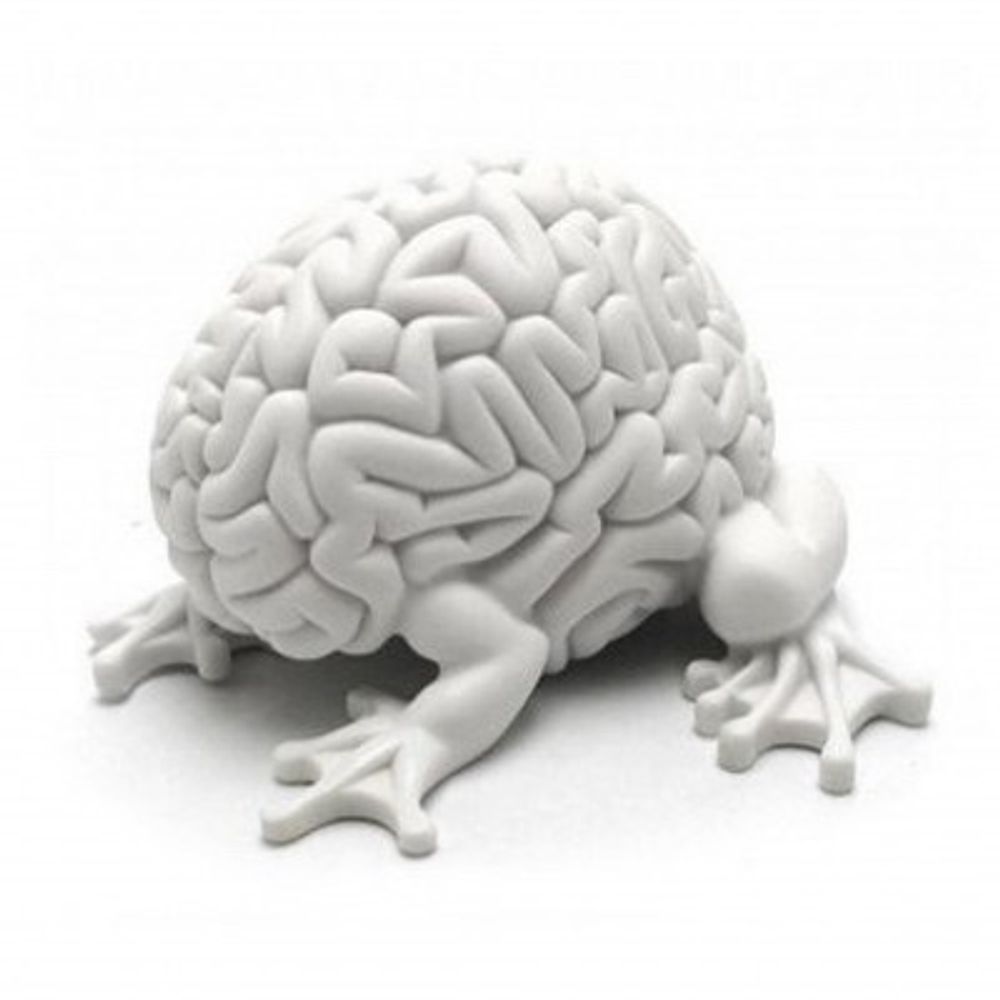
When we see something that's moving, our memories about it end up projected forward in time: We remember it further along than it was. In a new paper in 𝘗𝘴𝘺𝘤𝘩𝘰𝘭𝘰𝘨𝘪𝘤𝘢𝘭 𝘚𝘤𝘪𝘦𝘯𝘤𝘦, out today and led by @dillonplunkett.bsky.social, we demonstrate that this happens even when there is 𝙣𝙤 𝙢𝙤𝙩𝙞𝙤𝙣 𝙬𝙝𝙖𝙩𝙨𝙤𝙚𝙫𝙚𝙧.🧵

Representational Momentum Transcends Motion
Dillon Plunkett & Jorge Morales (2025) Psychological Science
subjectivitylab.org
December 9, 2025 at 3:37 PM
When we see something that's moving, our memories about it end up projected forward in time: We remember it further along than it was. In a new paper in 𝘗𝘴𝘺𝘤𝘩𝘰𝘭𝘰𝘨𝘪𝘤𝘢𝘭 𝘚𝘤𝘪𝘦𝘯𝘤𝘦, out today and led by @dillonplunkett.bsky.social, we demonstrate that this happens even when there is 𝙣𝙤 𝙢𝙤𝙩𝙞𝙤𝙣 𝙬𝙝𝙖𝙩𝙨𝙤𝙚𝙫𝙚𝙧.🧵
Reposted by Praveen Suthaharan

New preprint with super @manuelbaltieri.bsky.social !
Mathematical approaches to the study of agents
osf.io/preprints/ps...
Mathematical approaches to the study of agents
osf.io/preprints/ps...
OSF
osf.io
November 21, 2025 at 12:44 PM
New preprint with super @manuelbaltieri.bsky.social !
Mathematical approaches to the study of agents
osf.io/preprints/ps...
Mathematical approaches to the study of agents
osf.io/preprints/ps...
Reposted by Praveen Suthaharan

📣🔥Thrilled to announce that 2026 Computational Psychiatry Conference will take place in New Haven, CT, btw July 14-16 -
www.cpconf.org
@robbrutledge.bsky.social @drrickadams.bsky.social @tobiasuhauser.bsky.social @docqhuys.bsky.social @clairegillan.bsky.social Sonia Bishop
More info to come soon!
www.cpconf.org
@robbrutledge.bsky.social @drrickadams.bsky.social @tobiasuhauser.bsky.social @docqhuys.bsky.social @clairegillan.bsky.social Sonia Bishop
More info to come soon!

November 21, 2025 at 7:27 PM
📣🔥Thrilled to announce that 2026 Computational Psychiatry Conference will take place in New Haven, CT, btw July 14-16 -
www.cpconf.org
@robbrutledge.bsky.social @drrickadams.bsky.social @tobiasuhauser.bsky.social @docqhuys.bsky.social @clairegillan.bsky.social Sonia Bishop
More info to come soon!
www.cpconf.org
@robbrutledge.bsky.social @drrickadams.bsky.social @tobiasuhauser.bsky.social @docqhuys.bsky.social @clairegillan.bsky.social Sonia Bishop
More info to come soon!
Reposted by Praveen Suthaharan

New from star grad student @m-meyer.bsky.social we wanted to study why delusions (and other beliefs) are so fixed. We turned to a generalization paradigm and the peak shift effect. Martin finds people with delusions over generalize causal relationships during learning: osf.io/preprints/ps...
OSF
osf.io
October 23, 2025 at 4:29 PM
New from star grad student @m-meyer.bsky.social we wanted to study why delusions (and other beliefs) are so fixed. We turned to a generalization paradigm and the peak shift effect. Martin finds people with delusions over generalize causal relationships during learning: osf.io/preprints/ps...
Reposted by Praveen Suthaharan

Why are some people more prone to believe in conspiracy theories? Part of the answer may lie in metacognition, i.e., the ability to correctly estimate one's own knowledge about topics.
-> New paper with @kwinter.bsky.social, @kaisassenberg.bsky.social & Helen Fischer
🔗 doi.org/10.1080/2044...
-> New paper with @kwinter.bsky.social, @kaisassenberg.bsky.social & Helen Fischer
🔗 doi.org/10.1080/2044...

“Knowing what I don’t know” – belief in conspiracy theories relates to lower metacognitive sensitivity: a signal detection theoretic approach
Beliefs in conspiracy theories are seemingly hard to dispute through facts. Researchers have partly attributed this resistance to certain information processing styles that are associated with cons...
doi.org
October 9, 2025 at 8:30 AM
Why are some people more prone to believe in conspiracy theories? Part of the answer may lie in metacognition, i.e., the ability to correctly estimate one's own knowledge about topics.
-> New paper with @kwinter.bsky.social, @kaisassenberg.bsky.social & Helen Fischer
🔗 doi.org/10.1080/2044...
-> New paper with @kwinter.bsky.social, @kaisassenberg.bsky.social & Helen Fischer
🔗 doi.org/10.1080/2044...
Reposted by Praveen Suthaharan

New preprint alert!
We used connectome-based predictive modeling in a transdiagnostic sample to identify brain network correlates of wide array of behavioral measures. We also identify where networks supporting cognition overlap with those linked to diagnostically related clinical symptomatology.
We used connectome-based predictive modeling in a transdiagnostic sample to identify brain network correlates of wide array of behavioral measures. We also identify where networks supporting cognition overlap with those linked to diagnostically related clinical symptomatology.

Transdiagnostic connectome-based predictive modeling of many behavioral phenotypes reveals brain network mediators of clinical-cognitive relationships
Connectome-based predictive modeling (CPM) applied to functional MRI connectivity data can identify brain networks that vary with behavioral measures across subjects. The prediction strength also prov...
www.biorxiv.org
October 6, 2025 at 3:42 PM
New preprint alert!
We used connectome-based predictive modeling in a transdiagnostic sample to identify brain network correlates of wide array of behavioral measures. We also identify where networks supporting cognition overlap with those linked to diagnostically related clinical symptomatology.
We used connectome-based predictive modeling in a transdiagnostic sample to identify brain network correlates of wide array of behavioral measures. We also identify where networks supporting cognition overlap with those linked to diagnostically related clinical symptomatology.
Reposted by Praveen Suthaharan
Perhaps we need tasks other than beads to assess belief formation and updating?
With machine learning, this study showed that predictors from 51 theoretical models of delusions explain only 31% of the variance in persecutory beliefs, raising questions about current theories and pointing to gaps in understanding the specific aetiology of delusions.
www.nature.com/articles/s44...
www.nature.com/articles/s44...

Using machine learning to predict persecutory beliefs based on aetiological models of delusions identified in a systematic literature search - Communications Psychology
Using machine learning, this study revealed that predictors from 51 theoretical models of delusions explain only 31% of the variance in persecutory beliefs, raising questions about current theories and pointing to gaps in understanding the specific aetiology of delusions.
www.nature.com
October 1, 2025 at 10:51 AM
Perhaps we need tasks other than beads to assess belief formation and updating?
Reposted by Praveen Suthaharan
Our reply to recent critiques of our general theory of paranoia: www.sciencedirect.com/science/arti...
We were aiming the pseudo epithet at ourselves, social phenomena needn’t have dedicated social mechanisms, and associative explanations don’t want for complexity.
We were aiming the pseudo epithet at ourselves, social phenomena needn’t have dedicated social mechanisms, and associative explanations don’t want for complexity.

Pseudo-specificity, pseudo-modules, and pseudo-models in paranoia
www.sciencedirect.com
September 26, 2025 at 11:50 AM
Our reply to recent critiques of our general theory of paranoia: www.sciencedirect.com/science/arti...
We were aiming the pseudo epithet at ourselves, social phenomena needn’t have dedicated social mechanisms, and associative explanations don’t want for complexity.
We were aiming the pseudo epithet at ourselves, social phenomena needn’t have dedicated social mechanisms, and associative explanations don’t want for complexity.
Reposted by Praveen Suthaharan

Excited to share this super comprehensive review of psychedelic research in NHPs! W/ Alex Kwan. This work was by our grad student Jamie who is passionate about psychedelics. Her in-depth knowledge is impressive as reflected here.
www.nature.com/articles/s41...
www.nature.com/articles/s41...

Psychedelic studies in nonhuman primates: Past and future
Molecular Psychiatry - Psychedelic studies in nonhuman primates: Past and future
www.nature.com
September 12, 2025 at 6:29 PM
Excited to share this super comprehensive review of psychedelic research in NHPs! W/ Alex Kwan. This work was by our grad student Jamie who is passionate about psychedelics. Her in-depth knowledge is impressive as reflected here.
www.nature.com/articles/s41...
www.nature.com/articles/s41...
Reposted by Praveen Suthaharan
New from our music team, song making in a group changes paranoia and patterns of language use consistent with lower distress, greater agency, and more positive emotion in people with psychosis: osf.io/preprints/ps...
These are the open-label pilot data - full randomized control study wrapping soon!
These are the open-label pilot data - full randomized control study wrapping soon!
September 12, 2025 at 6:26 PM
New from our music team, song making in a group changes paranoia and patterns of language use consistent with lower distress, greater agency, and more positive emotion in people with psychosis: osf.io/preprints/ps...
These are the open-label pilot data - full randomized control study wrapping soon!
These are the open-label pilot data - full randomized control study wrapping soon!
Reposted by Praveen Suthaharan
Fun write up of Imagination/perception work from @nadinedijkstra.bsky.social @smfleming.bsky.social and others: www.scientificamerican.com/article/newf...
I was just live on Canadian Breakfast radio chatting about it. Bad pun, but this work really has captured the public imagination!
I was just live on Canadian Breakfast radio chatting about it. Bad pun, but this work really has captured the public imagination!

Your Brain Has a Reality Check System—Here’s How It Works
Seeing and imagining use similar brain machinery. New research reveals the brain circuit that identifies what is real, which may help scientists understand conditions such as schizophrenia
www.scientificamerican.com
September 10, 2025 at 1:24 PM
Fun write up of Imagination/perception work from @nadinedijkstra.bsky.social @smfleming.bsky.social and others: www.scientificamerican.com/article/newf...
I was just live on Canadian Breakfast radio chatting about it. Bad pun, but this work really has captured the public imagination!
I was just live on Canadian Breakfast radio chatting about it. Bad pun, but this work really has captured the public imagination!
Reposted by Praveen Suthaharan
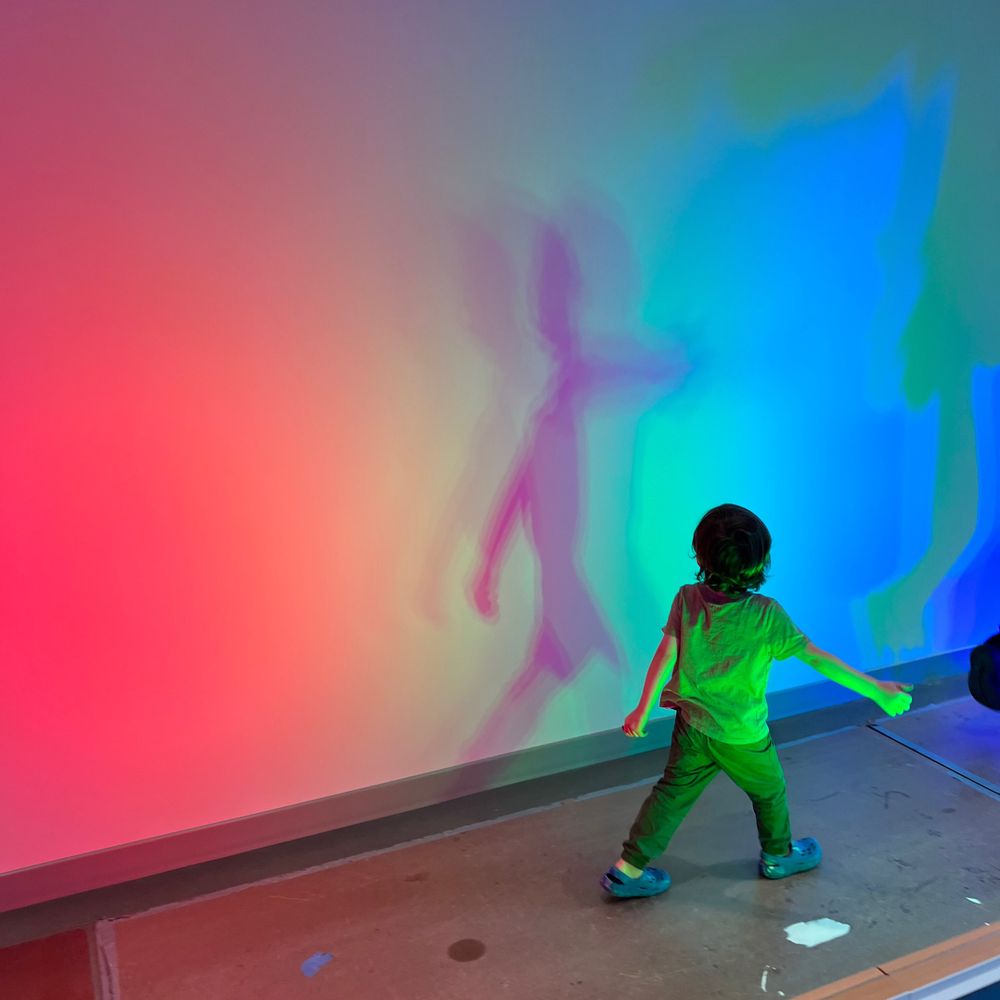
New preprint from the lab! 🧠
Led by Juliana Trach, w/ Sophia Ou
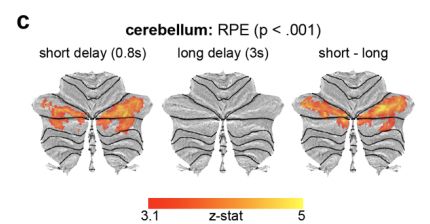
Using fMRI, we discovered evidence for time-sensitive reward prediction errors (RPEs) in the human cerebellum.
Builds on, and extends, recent work in both rodents and NHPs
Led by Juliana Trach, w/ Sophia Ou
Using fMRI, we discovered evidence for time-sensitive reward prediction errors (RPEs) in the human cerebellum.
Builds on, and extends, recent work in both rodents and NHPs
September 8, 2025 at 2:31 PM
New preprint from the lab! 🧠
Led by Juliana Trach, w/ Sophia Ou
Using fMRI, we discovered evidence for time-sensitive reward prediction errors (RPEs) in the human cerebellum.
Builds on, and extends, recent work in both rodents and NHPs
Led by Juliana Trach, w/ Sophia Ou
Using fMRI, we discovered evidence for time-sensitive reward prediction errors (RPEs) in the human cerebellum.
Builds on, and extends, recent work in both rodents and NHPs
Reposted by Praveen Suthaharan
New from our CNTRACS collab: Santiago Castiello finds that people with schizophrenia false alarm speech in sine wave stimuli, and benefit more greatly from the templates - particularly if they are voice hearers osf.io/preprints/ps...
OSF
osf.io
September 6, 2025 at 10:55 AM
New from our CNTRACS collab: Santiago Castiello finds that people with schizophrenia false alarm speech in sine wave stimuli, and benefit more greatly from the templates - particularly if they are voice hearers osf.io/preprints/ps...
Reposted by Praveen Suthaharan

Our new paper explores an analogy between representations of objects and representations of events, finding that similar illusions arise for both! Check it out 👇

September 4, 2025 at 4:31 PM
Our new paper explores an analogy between representations of objects and representations of events, finding that similar illusions arise for both! Check it out 👇
Reposted by Praveen Suthaharan
@kurtfraser.bsky.social and I made the cover of American Journal of Psychiatry - with our examination of the aberrant salience hypothesis. Next stop Rolling Stone 😎

September 3, 2025 at 1:38 PM
@kurtfraser.bsky.social and I made the cover of American Journal of Psychiatry - with our examination of the aberrant salience hypothesis. Next stop Rolling Stone 😎
Reposted by Praveen Suthaharan

man I wish Carlsberg had funded our FUS infrastructure grant. such a promising technology!

🚨We believe this is a major step forward in how we study hippocampus function in healthy humans.
Using novel behavioral tasks, fMRI, RL & RNN modeling, and transcranial ultrasound stimulation (TUS), we demonstrate the causal role of hippocampus in relational structure learning.
Using novel behavioral tasks, fMRI, RL & RNN modeling, and transcranial ultrasound stimulation (TUS), we demonstrate the causal role of hippocampus in relational structure learning.
August 29, 2025 at 4:57 AM
man I wish Carlsberg had funded our FUS infrastructure grant. such a promising technology!
Reposted by Praveen Suthaharan
Super excited to share this new collaborative work - marmosets use diverse and highly flexible strategies when they cooperate. These strategies are powerfully determined by both social factors (sex, dominance, familiarity) & individual partner identity.
www.cell.com/current-biol...
www.cell.com/current-biol...

Diverse and flexible strategies enable successful cooperation in marmoset dyads
Meisner and Shi et al. show that common marmosets flexibly coordinate with partners
using both gaze-dependent and rhythmic strategies. Cooperation depends on active social
monitoring and is shaped by ...
www.cell.com
August 28, 2025 at 2:49 PM
Super excited to share this new collaborative work - marmosets use diverse and highly flexible strategies when they cooperate. These strategies are powerfully determined by both social factors (sex, dominance, familiarity) & individual partner identity.
www.cell.com/current-biol...
www.cell.com/current-biol...

Reposted by Praveen Suthaharan

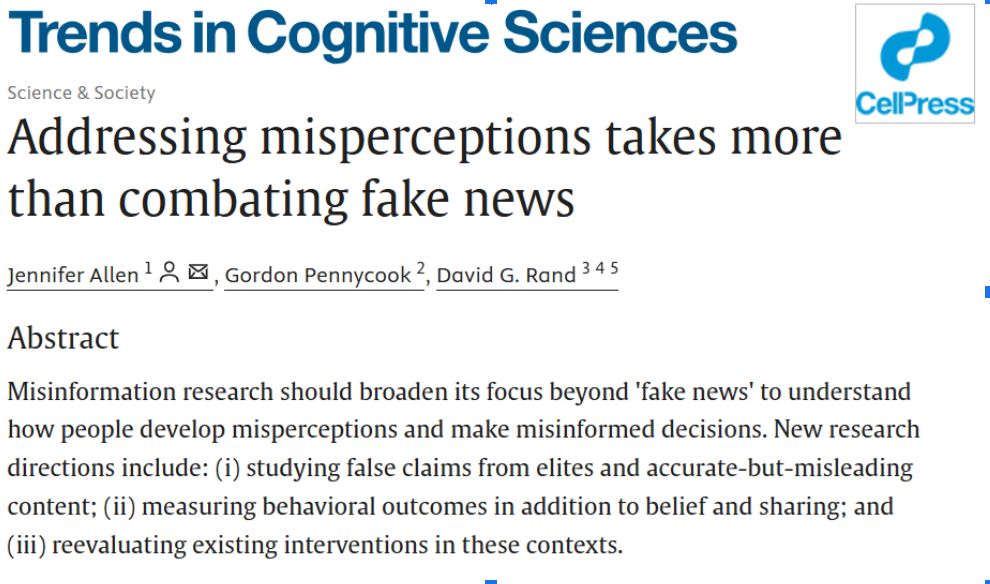
New in TiCS w @dgrand.bsky.social @gordpennycook.bsky.social
It’s been ~10yrs since misinfo research exploded but our paradigms are stuck in the post-2016 “fake news” model
Time for new approaches:
o True/False → Content that misleads
o Belief → Behavior
o Eval interventions in ambiguous settings
It’s been ~10yrs since misinfo research exploded but our paradigms are stuck in the post-2016 “fake news” model
Time for new approaches:
o True/False → Content that misleads
o Belief → Behavior
o Eval interventions in ambiguous settings
August 6, 2025 at 1:40 PM
New in TiCS w @dgrand.bsky.social @gordpennycook.bsky.social
It’s been ~10yrs since misinfo research exploded but our paradigms are stuck in the post-2016 “fake news” model
Time for new approaches:
o True/False → Content that misleads
o Belief → Behavior
o Eval interventions in ambiguous settings
It’s been ~10yrs since misinfo research exploded but our paradigms are stuck in the post-2016 “fake news” model
Time for new approaches:
o True/False → Content that misleads
o Belief → Behavior
o Eval interventions in ambiguous settings
Reposted by Praveen Suthaharan


Reposted by Praveen Suthaharan

High social aloofness was linked to reduced exploration, lower
decision noise, and high choice stickiness in a bandit task. These effects reflect habitual and outcome-driven behaviours, linking social disengagement to nonsocial decision flexibility.
www.nature.com/articles/s44...
decision noise, and high choice stickiness in a bandit task. These effects reflect habitual and outcome-driven behaviours, linking social disengagement to nonsocial decision flexibility.
www.nature.com/articles/s44...

Social aloofness is associated with non-social explore-exploit decisions - Communications Psychology
High social aloofness was linked to reduced exploration, lower decision noise, and high choice stickiness in a bandit task. These effects reflect habitual and outcome-driven behaviours, linking social...
www.nature.com
July 16, 2025 at 7:20 AM
High social aloofness was linked to reduced exploration, lower
decision noise, and high choice stickiness in a bandit task. These effects reflect habitual and outcome-driven behaviours, linking social disengagement to nonsocial decision flexibility.
www.nature.com/articles/s44...
decision noise, and high choice stickiness in a bandit task. These effects reflect habitual and outcome-driven behaviours, linking social disengagement to nonsocial decision flexibility.
www.nature.com/articles/s44...
Reposted by Praveen Suthaharan
What happens when you train AI on psychological experiments? It behaves a lot like a human mind. Here's my story on Centaur, and the debate about what AI has to offer to cognitive science. Gift link nyti.ms/3ZYqXcg 🧪

Scientist Use A.I. To Mimic the Mind, Warts and All
To better understand human cognition, scientists trained a large language model on 10 million psychology experiment questions. It now answers questions much like we do.
nyti.ms
July 2, 2025 at 3:23 PM
What happens when you train AI on psychological experiments? It behaves a lot like a human mind. Here's my story on Centaur, and the debate about what AI has to offer to cognitive science. Gift link nyti.ms/3ZYqXcg 🧪
Reposted by Praveen Suthaharan

Excited to see our Centaur project out in @nature.com.
TL;DR: Centaur is a computational model that predicts and simulates human behavior for any experiment described in natural language.
TL;DR: Centaur is a computational model that predicts and simulates human behavior for any experiment described in natural language.
July 2, 2025 at 3:34 PM
Excited to see our Centaur project out in @nature.com.
TL;DR: Centaur is a computational model that predicts and simulates human behavior for any experiment described in natural language.
TL;DR: Centaur is a computational model that predicts and simulates human behavior for any experiment described in natural language.
Reposted by Praveen Suthaharan

Also in @cp-trendscognsci.bsky.social this month, a perspective by @philcorlett.bsky.social and a new computational model of paranoia and persecutory delusions @philcorlett.bsky.social www.cell.com/trends/cogni...
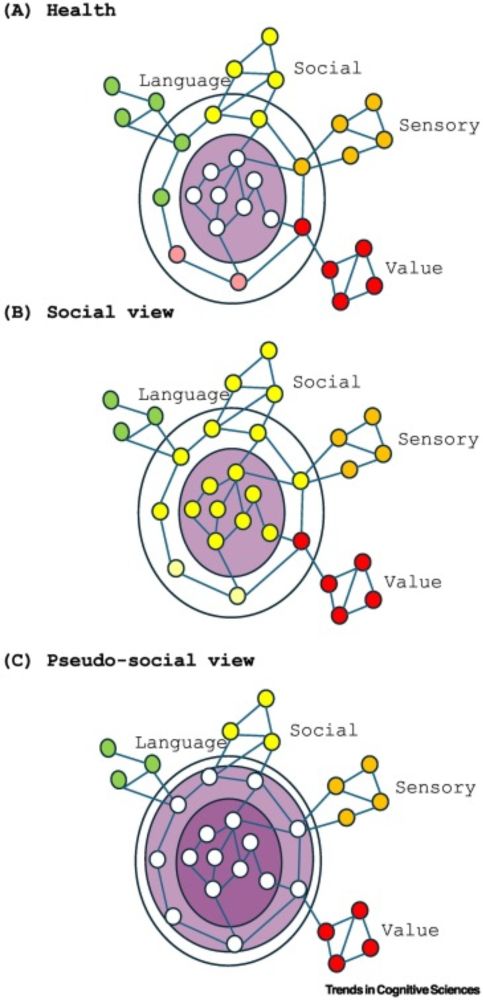
Pseudosocial cognition and paranoia
It has been argued that social processes are relevant to belief formation and maintenance
and thence to persecutory delusions – the fixed false beliefs that others intend harm.
We call this the social...
www.cell.com
June 28, 2025 at 10:21 AM
Also in @cp-trendscognsci.bsky.social this month, a perspective by @philcorlett.bsky.social and a new computational model of paranoia and persecutory delusions @philcorlett.bsky.social www.cell.com/trends/cogni...
Reposted by Praveen Suthaharan
When we started this work in the pandemic, I never imagined we’d progress to a clinical trial. Amazing work from @juliasheffield.bsky.social
Priors on volatility change with symptom improvement in a clinical trial!
jamanetwork.com/journals/jam...
Priors on volatility change with symptom improvement in a clinical trial!
jamanetwork.com/journals/jam...

Prior Expectations of Volatility Following Psychotherapy for Delusions
his randomized clinical trial examines the association between volatility expectation and psychotic symptom severity among adults with schizophrenia spectrum or delusional disorder receiving treatment...
jamanetwork.com
June 26, 2025 at 1:26 AM
When we started this work in the pandemic, I never imagined we’d progress to a clinical trial. Amazing work from @juliasheffield.bsky.social
Priors on volatility change with symptom improvement in a clinical trial!
jamanetwork.com/journals/jam...
Priors on volatility change with symptom improvement in a clinical trial!
jamanetwork.com/journals/jam...