


Liz Cooney
@protistwtmostest.bsky.social
Postdoc in the Keeling Lab at UBC
Dinoflagellate evol 🔬| protistology in general | (respectfully) watching birds | 🇺🇸 living in 🇨🇦
Dinoflagellate evol 🔬| protistology in general | (respectfully) watching birds | 🇺🇸 living in 🇨🇦
Reposted by Liz Cooney

Out now in Environmental Microbiome! 🧬
By re-analyzing microbialite sequencing data, we show that chromerid algae (the closest photosynthetic relatives of apicomplexans) are consistent and widespread associates of microbialites across diverse marine and freshwater environments worldwide 🌎
By re-analyzing microbialite sequencing data, we show that chromerid algae (the closest photosynthetic relatives of apicomplexans) are consistent and widespread associates of microbialites across diverse marine and freshwater environments worldwide 🌎

Modern microbialites harbor an undescribed diversity of chromerid algae - Environmental Microbiome
Background Chromerid algae are the closest photosynthetic relatives of apicomplexan parasites. While chromerids have been central to understanding the evolutionary transition from free-living algae to...
link.springer.com
January 15, 2026 at 4:14 PM
Out now in Environmental Microbiome! 🧬
By re-analyzing microbialite sequencing data, we show that chromerid algae (the closest photosynthetic relatives of apicomplexans) are consistent and widespread associates of microbialites across diverse marine and freshwater environments worldwide 🌎
By re-analyzing microbialite sequencing data, we show that chromerid algae (the closest photosynthetic relatives of apicomplexans) are consistent and widespread associates of microbialites across diverse marine and freshwater environments worldwide 🌎
Reposted by Liz Cooney

If you're interested in biodiversity in freshwater ecosystems, there's just a few days to apply for our PhD project: Ecological Surveillance using High-Throughput Quantitative Imaging at @uniofbath.bsky.social .
Deadline: January 16th!
Apply: is.gd/svXBcr
Image: www.planktoscope.org/how-it-works
Deadline: January 16th!
Apply: is.gd/svXBcr
Image: www.planktoscope.org/how-it-works

January 13, 2026 at 2:07 PM
If you're interested in biodiversity in freshwater ecosystems, there's just a few days to apply for our PhD project: Ecological Surveillance using High-Throughput Quantitative Imaging at @uniofbath.bsky.social .
Deadline: January 16th!
Apply: is.gd/svXBcr
Image: www.planktoscope.org/how-it-works
Deadline: January 16th!
Apply: is.gd/svXBcr
Image: www.planktoscope.org/how-it-works
Reposted by Liz Cooney

Just on time for the holidays! Happy to share the published version of the discovery of leptophytes, a new deep-branching and widespread group of microalgae based on plastid MAGs (ptMAGs). Now with additional support from a mitochondrial MAG (mtMAG) of leptophytes.
www.nature.com/articles/s41...
www.nature.com/articles/s41...
Identification of a deep-branching lineage of algae using environmental plastid genomes - Nature Communications
Here, the authors leverage data from the Tara Oceans expeditions to perform a phylogeny-guided plastid genome-resolved metagenomic survey and provide 660 non-redundant plastid genomes from marine alga...
www.nature.com
December 18, 2025 at 9:48 AM
Just on time for the holidays! Happy to share the published version of the discovery of leptophytes, a new deep-branching and widespread group of microalgae based on plastid MAGs (ptMAGs). Now with additional support from a mitochondrial MAG (mtMAG) of leptophytes.
www.nature.com/articles/s41...
www.nature.com/articles/s41...
Reposted by Liz Cooney
One more week to apply to this PhD position on working out an endosymbiosis relationship in a protist. Please share widely to prospective PhD student #protistsonsky
We are looking for a PhD student to work on an exciting plastid endosymbiosis in microbial eukaryotes. This position involves sampling, exciting microscopy such as CARDFISH, ExM and FIBSEM, single-cell transcriptomics and more. #protistsonsky 1/2

December 5, 2025 at 8:48 AM
One more week to apply to this PhD position on working out an endosymbiosis relationship in a protist. Please share widely to prospective PhD student #protistsonsky
Reposted by Liz Cooney
🎉 There are currently 4 opportunities to join the Holt lab in beautiful Bath! 🎉
If you're interested in protists, parasites, and/or biodiversity then please check out our website:
theholtlab.com/posts/ln5-21...
🚨 Deadlines vary between project.
✉️ Please reach out if you have any questions!
If you're interested in protists, parasites, and/or biodiversity then please check out our website:
theholtlab.com/posts/ln5-21...
🚨 Deadlines vary between project.
✉️ Please reach out if you have any questions!


November 24, 2025 at 2:30 PM
🎉 There are currently 4 opportunities to join the Holt lab in beautiful Bath! 🎉
If you're interested in protists, parasites, and/or biodiversity then please check out our website:
theholtlab.com/posts/ln5-21...
🚨 Deadlines vary between project.
✉️ Please reach out if you have any questions!
If you're interested in protists, parasites, and/or biodiversity then please check out our website:
theholtlab.com/posts/ln5-21...
🚨 Deadlines vary between project.
✉️ Please reach out if you have any questions!
Reposted by Liz Cooney
🥶Our GW4+ PhD project exploring polar protist diversity is accepting applications!🥶
With @tweethinking.bsky.social (@uniofbath.bsky.social) and Melody Clark (@bas.ac.uk), you will uncover the ecological roles, evolutionary histories, and environmental adaptions of polar protists!
Interested? 👀
With @tweethinking.bsky.social (@uniofbath.bsky.social) and Melody Clark (@bas.ac.uk), you will uncover the ecological roles, evolutionary histories, and environmental adaptions of polar protists!
Interested? 👀

GW4+ DLTP PhD Project: Ecological and Evolutionary Insights from Polar Protists at University of Bath on FindAPhD.com
PhD Project - GW4+ DLTP PhD Project: Ecological and Evolutionary Insights from Polar Protists at University of Bath, listed on FindAPhD.com
www.findaphd.com
November 7, 2025 at 3:37 PM
🥶Our GW4+ PhD project exploring polar protist diversity is accepting applications!🥶
With @tweethinking.bsky.social (@uniofbath.bsky.social) and Melody Clark (@bas.ac.uk), you will uncover the ecological roles, evolutionary histories, and environmental adaptions of polar protists!
Interested? 👀
With @tweethinking.bsky.social (@uniofbath.bsky.social) and Melody Clark (@bas.ac.uk), you will uncover the ecological roles, evolutionary histories, and environmental adaptions of polar protists!
Interested? 👀
Reposted by Liz Cooney

Charting the landscape of cytoskeletal diversity in microbial eukaryotes: Cell www.cell.com/cell/fulltex...

Charting the landscape of cytoskeletal diversity in microbial eukaryotes
An imaging resource of over 200 microbial eukaryotic species provides a glimpse into
the remarkable universe of cytoskeletal diversity.
www.cell.com
October 31, 2025 at 5:45 PM
Charting the landscape of cytoskeletal diversity in microbial eukaryotes: Cell www.cell.com/cell/fulltex...

Reposted by Liz Cooney
Version 5.1.1 of the PR2 database has been released.
The major novelty is the inclusion of the recently published eKOI database (coi gene- doi.org/10.1093/data...) in the web interface. The 18S rRNA database is not changed so you can use 5.1.0 or 5.1.1 for metabarcode annotations
The major novelty is the inclusion of the recently published eKOI database (coi gene- doi.org/10.1093/data...) in the web interface. The 18S rRNA database is not changed so you can use 5.1.0 or 5.1.1 for metabarcode annotations

A novel taxonomic database for eukaryotic mitochondrial cytochrome oxidase subunit I gene (eKOI), with a focus on protists diversity
Abstract. Metabarcoding has emerged as a robust method for assessing biodiversity patterns by retrieving environmental DNA directly from ecosystems. While
doi.org
October 28, 2025 at 8:59 AM
Version 5.1.1 of the PR2 database has been released.
The major novelty is the inclusion of the recently published eKOI database (coi gene- doi.org/10.1093/data...) in the web interface. The 18S rRNA database is not changed so you can use 5.1.0 or 5.1.1 for metabarcode annotations
The major novelty is the inclusion of the recently published eKOI database (coi gene- doi.org/10.1093/data...) in the web interface. The 18S rRNA database is not changed so you can use 5.1.0 or 5.1.1 for metabarcode annotations
Reposted by Liz Cooney

We’re back with the next DinoSphere Online Seminar!
Join us on Nov 4th, we're hosting:
Edmée Royen (ULiège) - Symbiodinium
Nicolas dos Santos Pacheco (Cambridge) - Perkinsids
📅 Tue, Nov 4 - 4 PM CET/3 PM GMT
💻 Zoom link: sites.google.com/view/dinosphere
Please spread the word!
#protistonsky
Join us on Nov 4th, we're hosting:
Edmée Royen (ULiège) - Symbiodinium
Nicolas dos Santos Pacheco (Cambridge) - Perkinsids
📅 Tue, Nov 4 - 4 PM CET/3 PM GMT
💻 Zoom link: sites.google.com/view/dinosphere
Please spread the word!
#protistonsky

October 28, 2025 at 3:29 PM
We’re back with the next DinoSphere Online Seminar!
Join us on Nov 4th, we're hosting:
Edmée Royen (ULiège) - Symbiodinium
Nicolas dos Santos Pacheco (Cambridge) - Perkinsids
📅 Tue, Nov 4 - 4 PM CET/3 PM GMT
💻 Zoom link: sites.google.com/view/dinosphere
Please spread the word!
#protistonsky
Join us on Nov 4th, we're hosting:
Edmée Royen (ULiège) - Symbiodinium
Nicolas dos Santos Pacheco (Cambridge) - Perkinsids
📅 Tue, Nov 4 - 4 PM CET/3 PM GMT
💻 Zoom link: sites.google.com/view/dinosphere
Please spread the word!
#protistonsky
Reposted by Liz Cooney

Pretty excited to share our new preprint!
Non-photosynthetic Plastid Replacement by a Primary Plastid in the Making
www.biorxiv.org/content/10.1...
Non-photosynthetic Plastid Replacement by a Primary Plastid in the Making
www.biorxiv.org/content/10.1...

October 10, 2025 at 3:34 AM
Pretty excited to share our new preprint!
Non-photosynthetic Plastid Replacement by a Primary Plastid in the Making
www.biorxiv.org/content/10.1...
Non-photosynthetic Plastid Replacement by a Primary Plastid in the Making
www.biorxiv.org/content/10.1...
Reposted by Liz Cooney
I'm looking for a PhD student to dive into some protist genomes and maybe find some cool parasites like this (very flexible) apicomplexan.
www.findaphd.com/phds/project...
Please do reach out if you're interested. And APPLY EARLY! The advert will be taken down when a suitable candidate is found.🪱🦀🐟
www.findaphd.com/phds/project...
Please do reach out if you're interested. And APPLY EARLY! The advert will be taken down when a suitable candidate is found.🪱🦀🐟
October 9, 2025 at 4:02 PM
I'm looking for a PhD student to dive into some protist genomes and maybe find some cool parasites like this (very flexible) apicomplexan.
www.findaphd.com/phds/project...
Please do reach out if you're interested. And APPLY EARLY! The advert will be taken down when a suitable candidate is found.🪱🦀🐟
www.findaphd.com/phds/project...
Please do reach out if you're interested. And APPLY EARLY! The advert will be taken down when a suitable candidate is found.🪱🦀🐟
Reposted by Liz Cooney
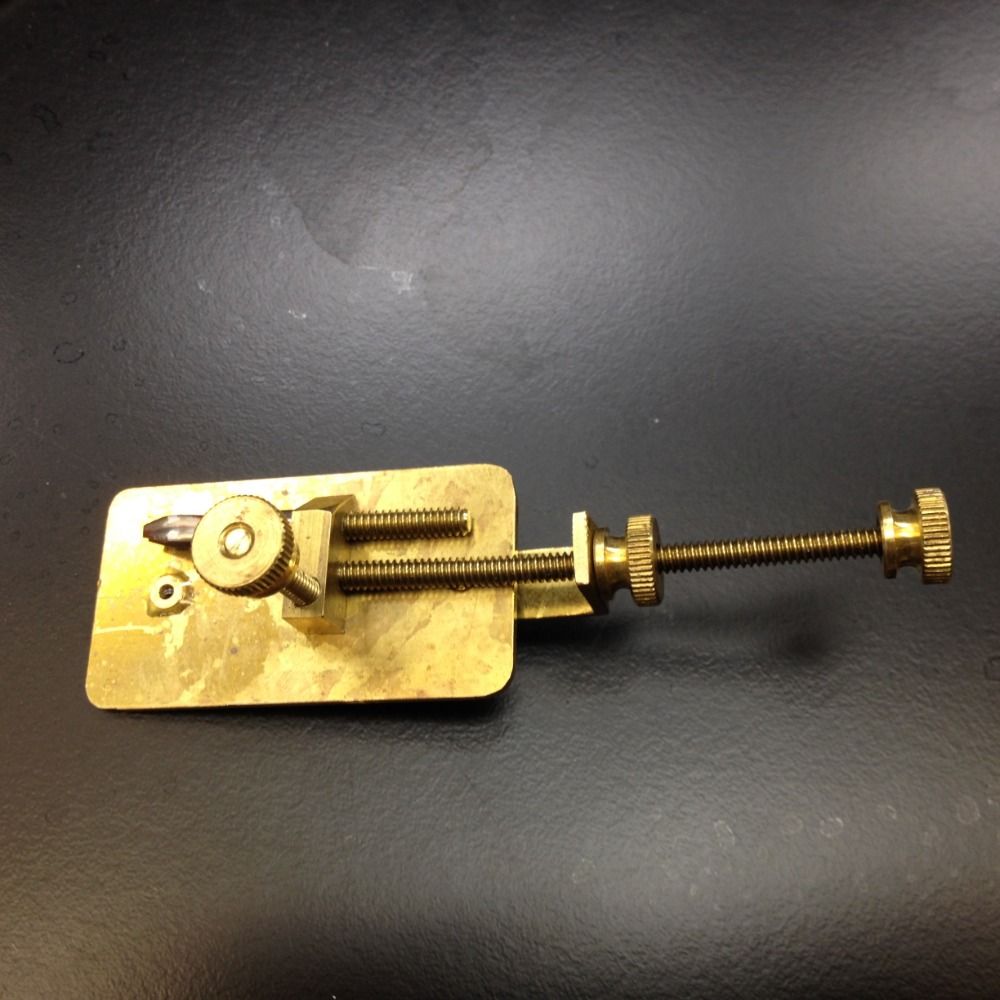
What could be more exciting than watching Euplotes scurry around under the microscope? How about adding some raptorial predation by supergiant cannibal cells?
www.biorxiv.org/content/10.1...
Video by Vittorio Boscaro.
1/n
www.biorxiv.org/content/10.1...
Video by Vittorio Boscaro.
1/n
August 26, 2025 at 8:56 PM
What could be more exciting than watching Euplotes scurry around under the microscope? How about adding some raptorial predation by supergiant cannibal cells?
www.biorxiv.org/content/10.1...
Video by Vittorio Boscaro.
1/n
www.biorxiv.org/content/10.1...
Video by Vittorio Boscaro.
1/n
Reposted by Liz Cooney

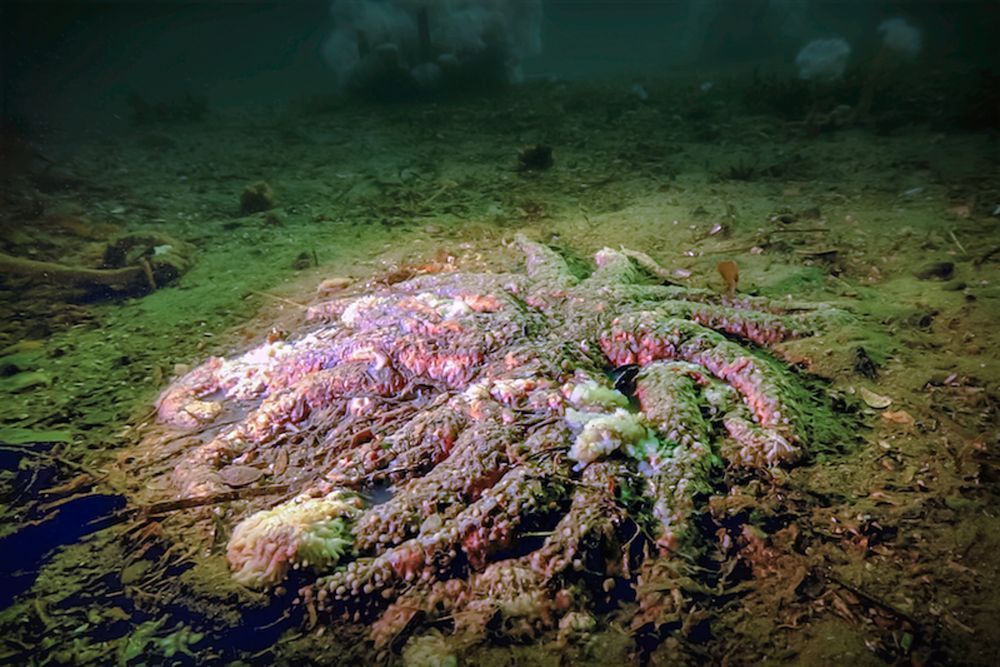
After a four-year investigation, a breakthrough study reveals the cause of sea star wasting disease (SSWD). A strain of the bacterium Vibrio pectenicida is the culprit behind the marine epidemic that has killed billions of sea stars since 2013. Read the study: 🔗https://tinyurl.com/4rcb3xpf
August 4, 2025 at 4:03 PM
After a four-year investigation, a breakthrough study reveals the cause of sea star wasting disease (SSWD). A strain of the bacterium Vibrio pectenicida is the culprit behind the marine epidemic that has killed billions of sea stars since 2013. Read the study: 🔗https://tinyurl.com/4rcb3xpf
Reposted by Liz Cooney

Check out our new preprint all about Pirsonia, a tiny killer of bloom-forming Coscinodiscus diatoms!
www.biorxiv.org/content/10.1...
#protistsonsky #marinemicrobes 🌊🔬
www.biorxiv.org/content/10.1...
#protistsonsky #marinemicrobes 🌊🔬
July 30, 2025 at 3:04 PM
Check out our new preprint all about Pirsonia, a tiny killer of bloom-forming Coscinodiscus diatoms!
www.biorxiv.org/content/10.1...
#protistsonsky #marinemicrobes 🌊🔬
www.biorxiv.org/content/10.1...
#protistsonsky #marinemicrobes 🌊🔬
Reposted by Liz Cooney
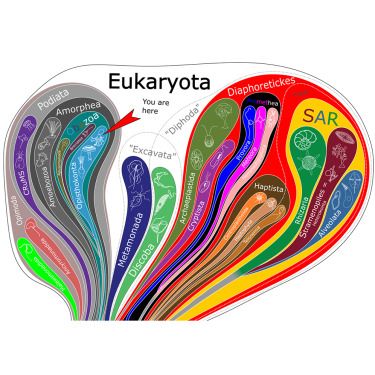
New protist supergroup: Promethea! From @zlatogursky.bsky.social et al #ProtistsOnSky
Phylogenetic position and mitochondrial genome evolution of ‘orphan’ eukaryotic lineages
The phylogenetic tree of eukaryotes is divided into a handful of highly diverse ‘supergroups’;
only a few so-called ‘orphan’ lineages branch in uncertain positions outside of these
large clades. We fo...
www.cell.com
July 24, 2025 at 2:51 PM
New protist supergroup: Promethea! From @zlatogursky.bsky.social et al #ProtistsOnSky
Reposted by Liz Cooney
We’re kicking off the DinoSphere Online Seminar Series! Join us for our first session with Karel Mockaer (Heidelberg) & Yong Heng Phua (OIST)
📅 1 July 9AM CEST
🔗 tinyurl.com/4mjaverj
Spread the word!
@protistwtmostest.bsky.social @ehehenberger.bsky.social @chandnibhickta.bsky.social&Norico Yamada
📅 1 July 9AM CEST
🔗 tinyurl.com/4mjaverj
Spread the word!
@protistwtmostest.bsky.social @ehehenberger.bsky.social @chandnibhickta.bsky.social&Norico Yamada
June 4, 2025 at 4:34 AM
We’re kicking off the DinoSphere Online Seminar Series! Join us for our first session with Karel Mockaer (Heidelberg) & Yong Heng Phua (OIST)
📅 1 July 9AM CEST
🔗 tinyurl.com/4mjaverj
Spread the word!
@protistwtmostest.bsky.social @ehehenberger.bsky.social @chandnibhickta.bsky.social&Norico Yamada
📅 1 July 9AM CEST
🔗 tinyurl.com/4mjaverj
Spread the word!
@protistwtmostest.bsky.social @ehehenberger.bsky.social @chandnibhickta.bsky.social&Norico Yamada
Reposted by Liz Cooney

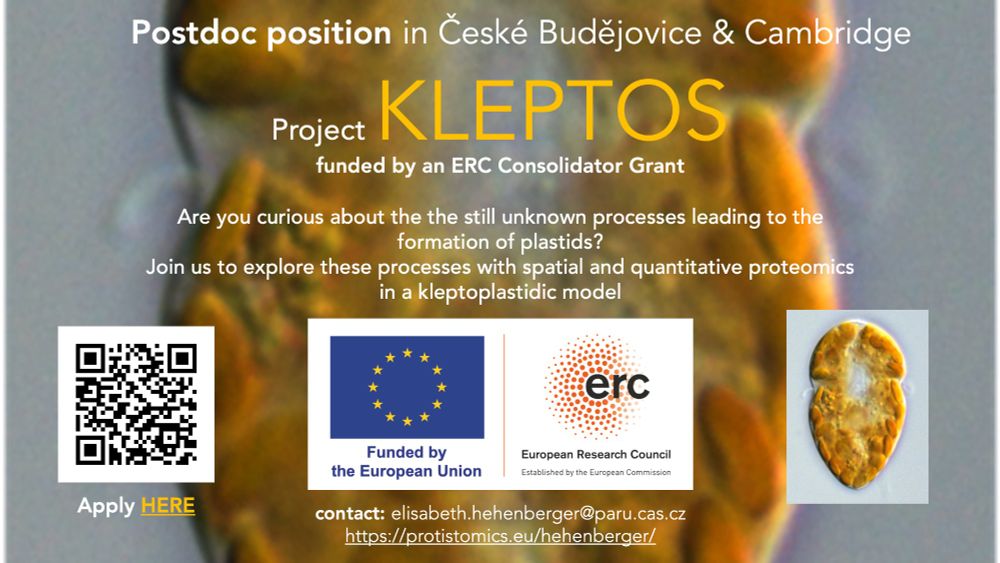
POSTDOC position available in Ceske Budejovice & Cambridge, funded by ERC KLEPTOS, to study plastid endosymbiosis in kleptoplastidic taxa with spatial proteomics. Are you curious about this process and interested in proteomics and data analysis? Join us by applying here: jobs.bc.cas.cz/en/detail/250
April 22, 2025 at 9:15 AM
POSTDOC position available in Ceske Budejovice & Cambridge, funded by ERC KLEPTOS, to study plastid endosymbiosis in kleptoplastidic taxa with spatial proteomics. Are you curious about this process and interested in proteomics and data analysis? Join us by applying here: jobs.bc.cas.cz/en/detail/250
Reposted by Liz Cooney

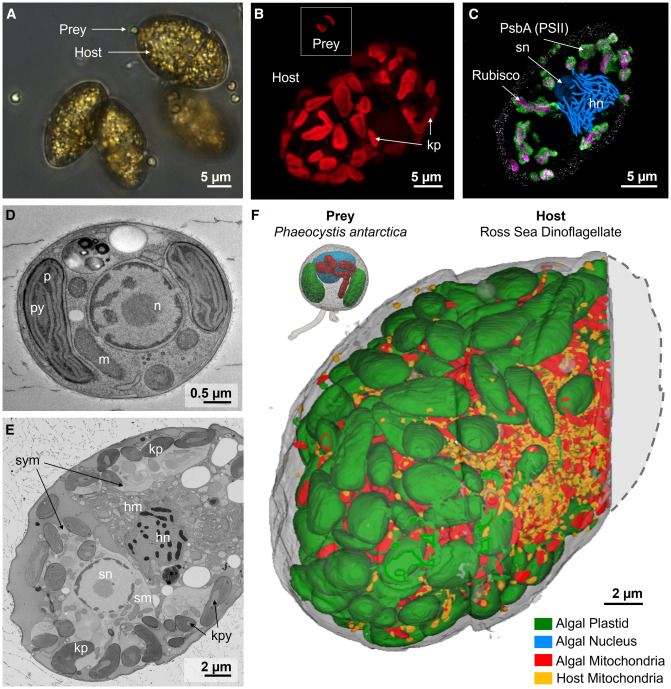
New #ISEPpapers! Hijacking and integration of algal #plastids and #mitochondria in a polar planktonic host: Ananya Kedige Rao et al. www.cell.com/current-biol...
#Microbes #Algae #Protists #Symbiosis #Organelles #Plankton
#Microbes #Algae #Protists #Symbiosis #Organelles #Plankton
April 18, 2025 at 3:49 PM
New #ISEPpapers! Hijacking and integration of algal #plastids and #mitochondria in a polar planktonic host: Ananya Kedige Rao et al. www.cell.com/current-biol...
#Microbes #Algae #Protists #Symbiosis #Organelles #Plankton
#Microbes #Algae #Protists #Symbiosis #Organelles #Plankton
Reposted by Liz Cooney
fourth and final chapter of my PhD is out! 🚨 We used single cell metabarcode sequencing to describe the diversity of organisms associated with polycystine radiolarians near Bermuda. we found that polycystines associate with a really wide diversity of phytoplankton, compared to other radiolarians! 🤩

April 7, 2025 at 6:41 PM
fourth and final chapter of my PhD is out! 🚨 We used single cell metabarcode sequencing to describe the diversity of organisms associated with polycystine radiolarians near Bermuda. we found that polycystines associate with a really wide diversity of phytoplankton, compared to other radiolarians! 🤩
Reposted by Liz Cooney

Check our paper by @nicolecoots.bsky.social, where she delved into the photosynthetic symbionts on Polycystine #Rhizaria. Nicole came to @biosstation.bsky.social after having to drastically change her dissertation due to COVID, So proud of you, Nicole, keep going!
academic.oup.com/plankt/artic...
academic.oup.com/plankt/artic...

Polycystine radiolarians associate with diverse phytoplankton
Abstract. Radiolarians are marine protists with a global distribution. Epipelagic radiolarians host photosynthetic endosymbionts, but the identity and spec
academic.oup.com
April 7, 2025 at 9:59 AM
Check our paper by @nicolecoots.bsky.social, where she delved into the photosynthetic symbionts on Polycystine #Rhizaria. Nicole came to @biosstation.bsky.social after having to drastically change her dissertation due to COVID, So proud of you, Nicole, keep going!
academic.oup.com/plankt/artic...
academic.oup.com/plankt/artic...
Reposted by Liz Cooney
Yet to share our recent paper “Phylogenomic resolution of marine to freshwater dinoflagellate transitions” led by Mahara and @protistwtmostest.bsky.social. Includes work from two @science.ubc.ca undergraduates! 🤩
Freshwater dinoflagellates need more love! 💚
academic.oup.com/ismej/articl...
Freshwater dinoflagellates need more love! 💚
academic.oup.com/ismej/articl...

Phylogenomic resolution of marine to freshwater dinoflagellate transitions
Abstract. Dinoflagellates are an abundant and diverse group of protists that inhabit aquatic environments worldwide. They are characterized by numerous uni
academic.oup.com
April 1, 2025 at 9:00 PM
Yet to share our recent paper “Phylogenomic resolution of marine to freshwater dinoflagellate transitions” led by Mahara and @protistwtmostest.bsky.social. Includes work from two @science.ubc.ca undergraduates! 🤩
Freshwater dinoflagellates need more love! 💚
academic.oup.com/ismej/articl...
Freshwater dinoflagellates need more love! 💚
academic.oup.com/ismej/articl...
Reposted by Liz Cooney

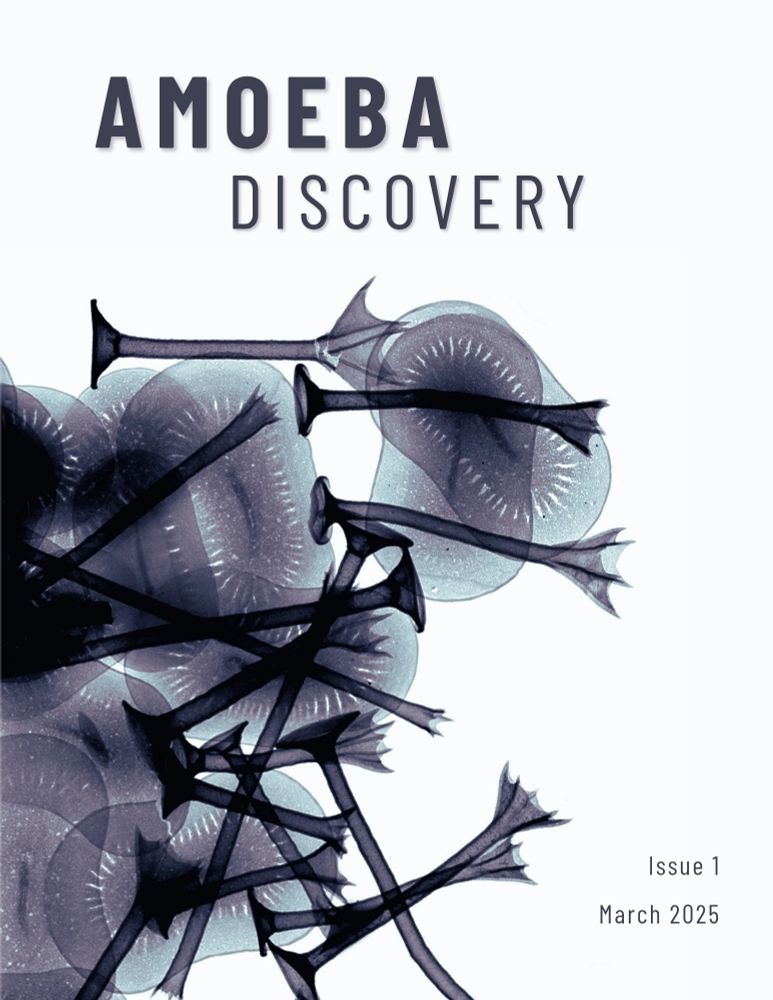
@amoebadiscovery.bsky.social made an iteresting interview with me about #heliozoa and #centrohelids - I think these organisms are really important, understudied and gorgeous 😍 Also lots other intresting reading and beatiful pictures! #protistsonsky link: tinyurl.com/adiscovery1
March 28, 2025 at 7:38 AM
@amoebadiscovery.bsky.social made an iteresting interview with me about #heliozoa and #centrohelids - I think these organisms are really important, understudied and gorgeous 😍 Also lots other intresting reading and beatiful pictures! #protistsonsky link: tinyurl.com/adiscovery1
Reposted by Liz Cooney
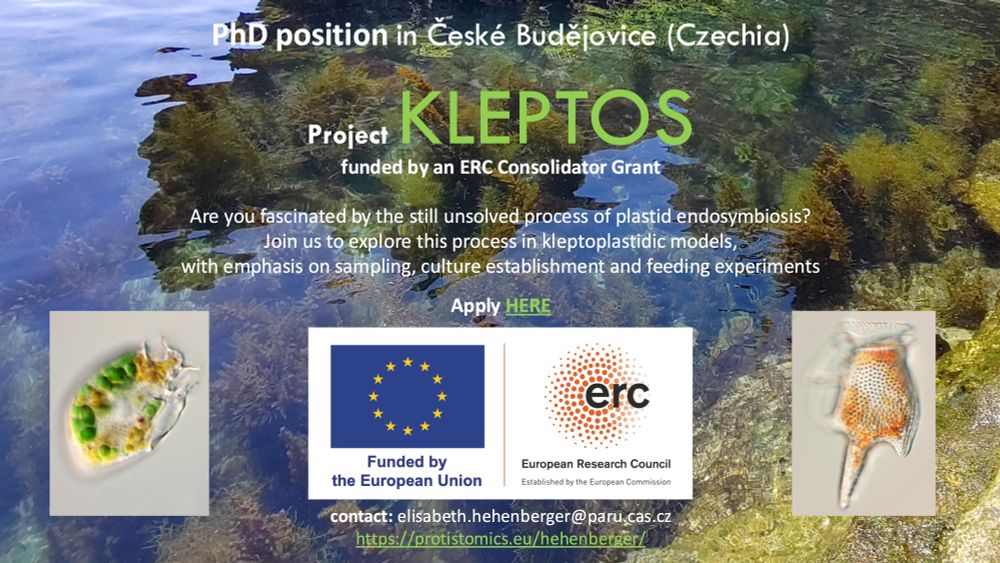
PhD position available in Ceske Budejovice (Czechia), funded by ERC KLEPTOS, to study plastid endosymbiosis in kleptoplastidic protists. Are you curious about this process and do you like sampling/cultivation of protists? Join our team by applying here: jobs.bc.cas.cz/en/detail/243
#protistsonsky
#protistsonsky
March 12, 2025 at 8:24 AM
PhD position available in Ceske Budejovice (Czechia), funded by ERC KLEPTOS, to study plastid endosymbiosis in kleptoplastidic protists. Are you curious about this process and do you like sampling/cultivation of protists? Join our team by applying here: jobs.bc.cas.cz/en/detail/243
#protistsonsky
#protistsonsky
Reposted by Liz Cooney
🚨New preprint🚨 Here we provide the first evidence for a non-anthozoan host of Corallicolids: the bearded fire worm (Hermodice carunculata) 🪱🔥 #ProtistsOnSky #Symbiosky #CoralReefs

Fireworms (Hermodice carunculata) are a reservoir and potential vector for coral-infecting apicomplexans
Corals (Cnidaria; Anthozoa) play critical roles as habitat-forming species with a wide range, from warm shallow-water tropical coral reefs to cold-water ecosystems [1-3]. They also represent a complex...
www.biorxiv.org
March 7, 2025 at 7:16 AM
🚨New preprint🚨 Here we provide the first evidence for a non-anthozoan host of Corallicolids: the bearded fire worm (Hermodice carunculata) 🪱🔥 #ProtistsOnSky #Symbiosky #CoralReefs