


@quigley.bsky.social
Reposted

High-stoichiometry m6A sites are evolutionarily conserved bit.ly/498rOuQ

January 14, 2026 at 3:32 PM
High-stoichiometry m6A sites are evolutionarily conserved bit.ly/498rOuQ
Reposted
I've been waiting for this Titeca et al. story from Anne-Claude Gavin's lab to come out: A systematic, comprehensive analysis of lipid transfer protein cargo selection, a truly massive undertaking. What a time to work in lipid biology. Cool stuff every few days.
www.nature.com/articles/s41...
www.nature.com/articles/s41...
Systematic analyses of lipid mobilization by human lipid transfer proteins - Nature
Nature - Systematic analyses of lipid mobilization by human lipid transfer proteins
www.nature.com
January 8, 2026 at 1:41 PM
I've been waiting for this Titeca et al. story from Anne-Claude Gavin's lab to come out: A systematic, comprehensive analysis of lipid transfer protein cargo selection, a truly massive undertaking. What a time to work in lipid biology. Cool stuff every few days.
www.nature.com/articles/s41...
www.nature.com/articles/s41...
Reposted

Finally out! We studied the retinas of the longest-living vertebrate, the Greenland shark, and found that the retinas remain remarkably healthy in animals around 150 years old. What is the mechanism? It may be a highly efficient DNA repair system. Enjoy!
www.nature.com/articles/s41...
www.nature.com/articles/s41...

January 6, 2026 at 1:40 AM
Finally out! We studied the retinas of the longest-living vertebrate, the Greenland shark, and found that the retinas remain remarkably healthy in animals around 150 years old. What is the mechanism? It may be a highly efficient DNA repair system. Enjoy!
www.nature.com/articles/s41...
www.nature.com/articles/s41...

Reposted
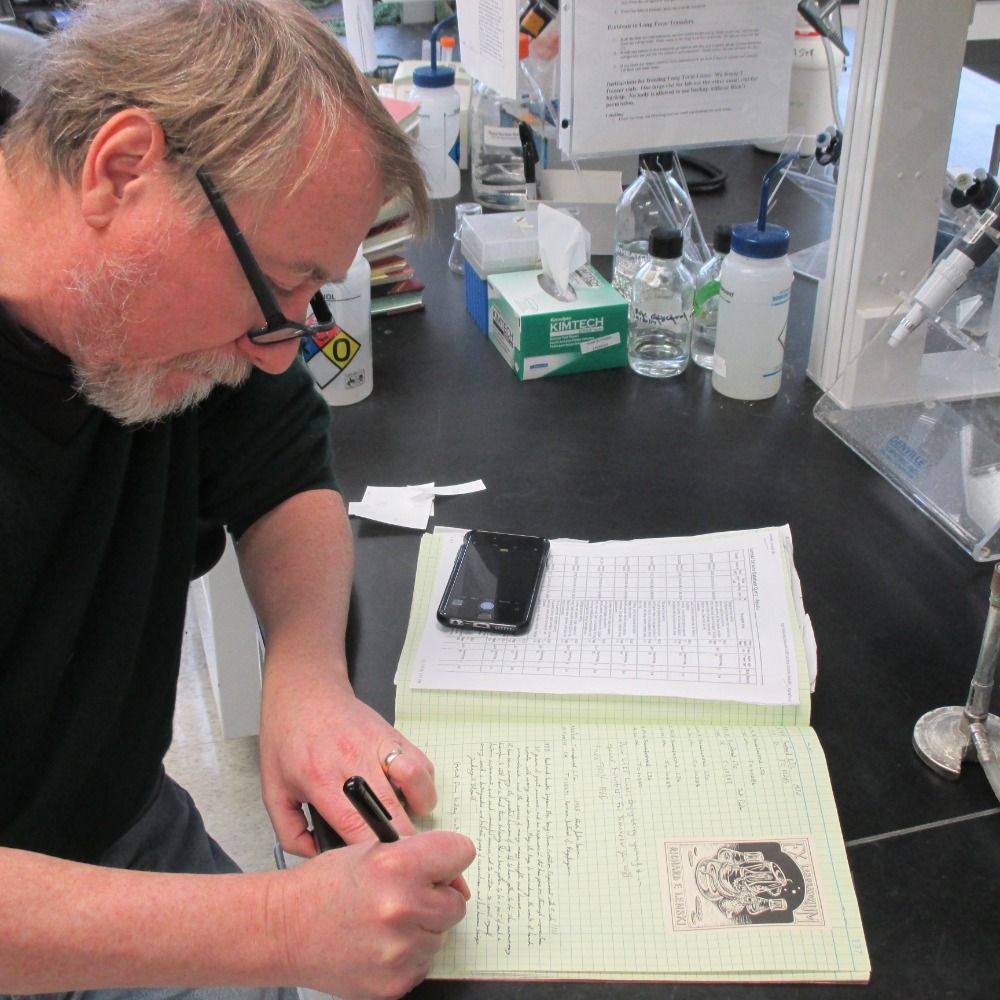
'Skull of St. Thomas Aquinas being transported to Fossanova Abbey.'
Photograph by Daniel Ibanez
Photograph by Daniel Ibanez

December 10, 2025 at 8:31 AM
'Skull of St. Thomas Aquinas being transported to Fossanova Abbey.'
Photograph by Daniel Ibanez
Photograph by Daniel Ibanez
Reposted
Can't believe my postdoc paper is finally out. Christmas came early this year, holy moly 🎄
Molecular basis for de novo thymus regeneration in a vertebrate, the axolotl | Science Immunology www.science.org/doi/10.1126/...
Molecular basis for de novo thymus regeneration in a vertebrate, the axolotl | Science Immunology www.science.org/doi/10.1126/...

Molecular basis for de novo thymus regeneration in a vertebrate, the axolotl
The molecular, cellular, and functional restoration of the axolotl thymus after de novo regeneration is described.
www.science.org
December 5, 2025 at 9:17 PM
Can't believe my postdoc paper is finally out. Christmas came early this year, holy moly 🎄
Molecular basis for de novo thymus regeneration in a vertebrate, the axolotl | Science Immunology www.science.org/doi/10.1126/...
Molecular basis for de novo thymus regeneration in a vertebrate, the axolotl | Science Immunology www.science.org/doi/10.1126/...
Reposted
Now THAT is going down in a blaze of glory... just watch the last few minutes/seconds of this stream as the eruption gets closer and closer until eventually it kills the camera.
www.youtube.com/watch?v=Bqmp...
www.youtube.com/watch?v=Bqmp...
December 6, 2025 at 8:48 PM
Now THAT is going down in a blaze of glory... just watch the last few minutes/seconds of this stream as the eruption gets closer and closer until eventually it kills the camera.
www.youtube.com/watch?v=Bqmp...
www.youtube.com/watch?v=Bqmp...
Reposted

27-Years-Owned 1962 BMW Isetta 250 at No Reserve

No Reserve: 27-Years-Owned 1962 BMW Isetta 250
Bid for the chance to own a No Reserve: 27-Years-Owned 1962 BMW Isetta 250 at auction with Bring a Trailer, the home of the best vintage and classic cars online. Lot #222,846.
bringatrailer.com
December 5, 2025 at 12:20 AM
27-Years-Owned 1962 BMW Isetta 250 at No Reserve
Reposted

New paper from the @rouxlab.bsky.social on Nature Communications! We study how membrane tension is spatially organized in cells. Using the mechanosensitive probe Flipper-TR to visualize tension across the plasma membrane of adherent cells and to dissect the conditions needed for a gradient to happen

November 27, 2025 at 2:14 PM
New paper from the @rouxlab.bsky.social on Nature Communications! We study how membrane tension is spatially organized in cells. Using the mechanosensitive probe Flipper-TR to visualize tension across the plasma membrane of adherent cells and to dissect the conditions needed for a gradient to happen
Reposted
Omg this is amazing. Fun fact: my original PhD goal was to study magnetoreception but no PIs were interested and someone suggested I study hair cells as an analogous system. Turns out they were even more analogous than we imagined!!!
www.science.org/doi/10.1126/...
www.science.org/doi/10.1126/...

A global screen for magnetically induced neuronal activity in the pigeon brain
How animals detect the Earth’s magnetic field remains a mystery in sensory biology. Despite extensive behavioral evidence, the neural circuitry and molecular mechanisms responsible for magnetic sensin...
www.science.org
November 24, 2025 at 6:01 AM
Omg this is amazing. Fun fact: my original PhD goal was to study magnetoreception but no PIs were interested and someone suggested I study hair cells as an analogous system. Turns out they were even more analogous than we imagined!!!
www.science.org/doi/10.1126/...
www.science.org/doi/10.1126/...
Reposted

PULLET TRAIN
A train crew found a loose chicken on an N train this morning—and couldn’t get it to leave.

Loose chicken fouls N train as subway stowaway slows morning commute
A loose chicken gave new meaning to “free range,” scoring a gratis subway ride to Coney Island on the N train Thursday morning after it was discovered fouling a subway car in storage.
www.nydailynews.com
November 21, 2025 at 2:32 AM
PULLET TRAIN
Reposted

Wow, furthest south confirmed sighting of the 11/11 aurora (that I have found) is in Zacatecas, Mexico, north of Guadalajara. Phenomenonal!
Low on the horizon, pink/red in color, these types of auroras are very high in the atmosphere and thus is why they can be seen so far south.
#northernlights
Low on the horizon, pink/red in color, these types of auroras are very high in the atmosphere and thus is why they can be seen so far south.
#northernlights

November 13, 2025 at 12:58 PM
Wow, furthest south confirmed sighting of the 11/11 aurora (that I have found) is in Zacatecas, Mexico, north of Guadalajara. Phenomenonal!
Low on the horizon, pink/red in color, these types of auroras are very high in the atmosphere and thus is why they can be seen so far south.
#northernlights
Low on the horizon, pink/red in color, these types of auroras are very high in the atmosphere and thus is why they can be seen so far south.
#northernlights
Reposted

How do GWAS and rare variant burden tests rank gene signals?
In new work @nature.com with @hakha.bsky.social, @jkpritch.bsky.social, and our wonderful coauthors we find that the key factors are what we call Specificity, Length, and Luck!
🧬🧪🧵
www.nature.com/articles/s41...
In new work @nature.com with @hakha.bsky.social, @jkpritch.bsky.social, and our wonderful coauthors we find that the key factors are what we call Specificity, Length, and Luck!
🧬🧪🧵
www.nature.com/articles/s41...

Specificity, length and luck drive gene rankings in association studies - Nature
Genetic association tests prioritize candidate genes based on different criteria.
www.nature.com
November 7, 2025 at 12:05 AM
How do GWAS and rare variant burden tests rank gene signals?
In new work @nature.com with @hakha.bsky.social, @jkpritch.bsky.social, and our wonderful coauthors we find that the key factors are what we call Specificity, Length, and Luck!
🧬🧪🧵
www.nature.com/articles/s41...
In new work @nature.com with @hakha.bsky.social, @jkpritch.bsky.social, and our wonderful coauthors we find that the key factors are what we call Specificity, Length, and Luck!
🧬🧪🧵
www.nature.com/articles/s41...
Reposted

However, at other sites only the intricate structure of the nucleosome depleted region changes.
From this we conclude that nucleosome depletion itself is a major driver of long-range contacts.
From this we conclude that nucleosome depletion itself is a major driver of long-range contacts.

November 5, 2025 at 5:20 PM
However, at other sites only the intricate structure of the nucleosome depleted region changes.
From this we conclude that nucleosome depletion itself is a major driver of long-range contacts.
From this we conclude that nucleosome depletion itself is a major driver of long-range contacts.
Reposted

A molecular, spatial and regulatory atlas of the Hydra vulgaris nervous system
Read this #LifelongDevSI #OA Techniques and Resources Article by Hannah Morris Little, Abby S. Primack, Jennifer Tsverov, Celina E. Juliano (@julianolab.bsky.social) and colleagues:
doi.org/10.1242/dev....
Read this #LifelongDevSI #OA Techniques and Resources Article by Hannah Morris Little, Abby S. Primack, Jennifer Tsverov, Celina E. Juliano (@julianolab.bsky.social) and colleagues:
doi.org/10.1242/dev....

November 3, 2025 at 3:53 PM
A molecular, spatial and regulatory atlas of the Hydra vulgaris nervous system
Read this #LifelongDevSI #OA Techniques and Resources Article by Hannah Morris Little, Abby S. Primack, Jennifer Tsverov, Celina E. Juliano (@julianolab.bsky.social) and colleagues:
doi.org/10.1242/dev....
Read this #LifelongDevSI #OA Techniques and Resources Article by Hannah Morris Little, Abby S. Primack, Jennifer Tsverov, Celina E. Juliano (@julianolab.bsky.social) and colleagues:
doi.org/10.1242/dev....

This is the kind of stuff we're going to need to do virtual cells well

Afternoon session of #BiomembraneDays2025 starts with Zheng Shi and a genuine fluorescent sensor for membrane tension.

September 29, 2025 at 1:25 PM
This is the kind of stuff we're going to need to do virtual cells well
Reposted

How do cells navigate up gradients of adhesive proteins?
🤔
Termed "Haptotaxis", this effect is ubiquitous in cell migration, but it's mechanism was poorly understood
We show that passive friction directs cells & explains complex trajectories on gradients
👉 www.nature.com/articles/s41...
🤔
Termed "Haptotaxis", this effect is ubiquitous in cell migration, but it's mechanism was poorly understood
We show that passive friction directs cells & explains complex trajectories on gradients
👉 www.nature.com/articles/s41...
September 27, 2025 at 8:48 AM
How do cells navigate up gradients of adhesive proteins?
🤔
Termed "Haptotaxis", this effect is ubiquitous in cell migration, but it's mechanism was poorly understood
We show that passive friction directs cells & explains complex trajectories on gradients
👉 www.nature.com/articles/s41...
🤔
Termed "Haptotaxis", this effect is ubiquitous in cell migration, but it's mechanism was poorly understood
We show that passive friction directs cells & explains complex trajectories on gradients
👉 www.nature.com/articles/s41...
Reposted
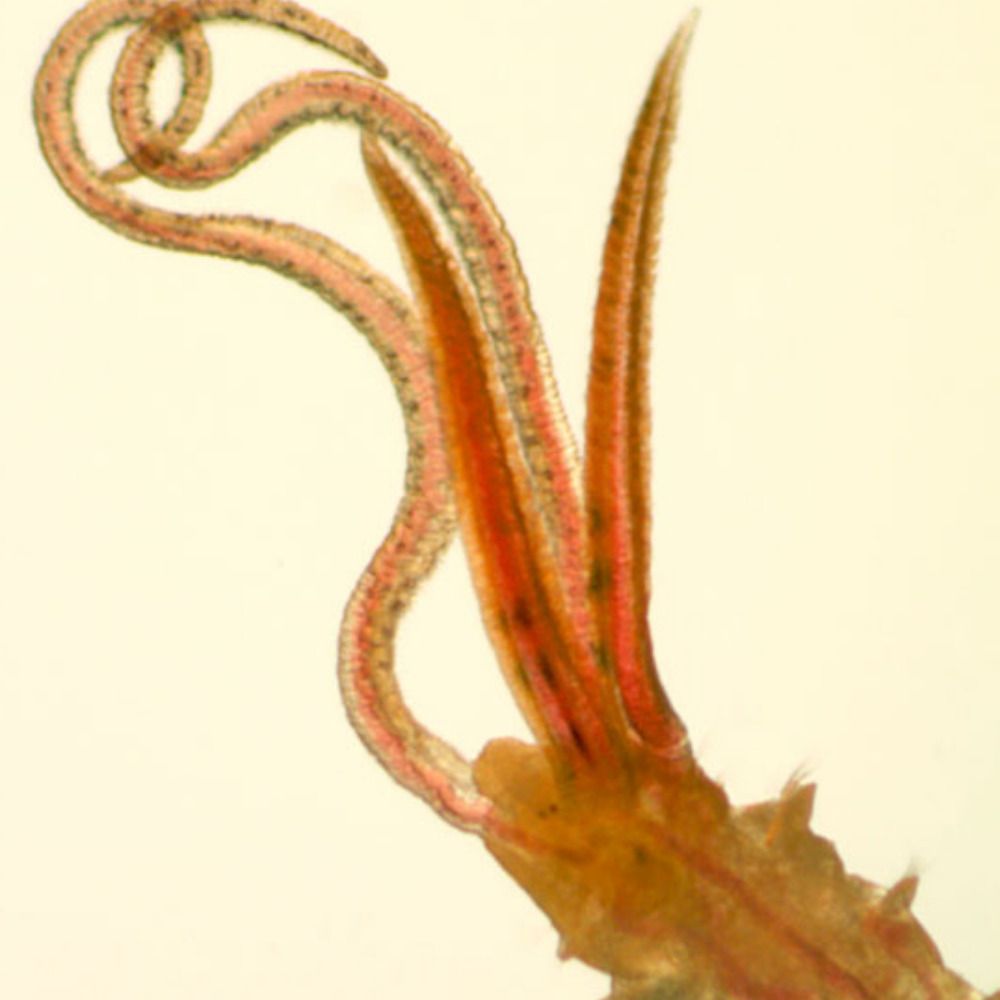
C. elegans is a real animal and we set out to understand how it comes to have its distinctive biogeography. Its ancestral center of diversity is in the higher elevation forests of Hawaii. Its closest relatives are spread across east Asia. Did they travel from Asia? [Preprint 🧵]
September 24, 2025 at 8:33 PM
C. elegans is a real animal and we set out to understand how it comes to have its distinctive biogeography. Its ancestral center of diversity is in the higher elevation forests of Hawaii. Its closest relatives are spread across east Asia. Did they travel from Asia? [Preprint 🧵]
So, uh, when are folks gonna talk about this kind of stuff in "virtual cells"?

Ever wondered how to control stretch/compression in your epithelial system? Do you know why it’s important, which mechanotransduction mechanisms could be involved? I am @valeriaventurini.bsky.social and today I will guide you through this journey.

September 22, 2025 at 3:33 AM
So, uh, when are folks gonna talk about this kind of stuff in "virtual cells"?
Reposted

This is awesome! Lipid probes for quantitative imaging of lipid transport. A real need in the lipid field!
@nadlerlab.bsky.social
@nadlerlab.bsky.social

Quantitative imaging of lipid transport in mammalian cells - Nature
Directional, non-vesicular lipid transport is responsible for fast, species-selective lipid sorting into organelle membranes.
www.nature.com
August 27, 2025 at 11:34 AM
This is awesome! Lipid probes for quantitative imaging of lipid transport. A real need in the lipid field!
@nadlerlab.bsky.social
@nadlerlab.bsky.social
Reposted

It's Minnesota State Fair time! It's time for Minnesotan folk art! Here, for example, is Saturn Devouring His Corn, in the seed art category!

August 25, 2025 at 2:11 PM
It's Minnesota State Fair time! It's time for Minnesotan folk art! Here, for example, is Saturn Devouring His Corn, in the seed art category!
Reposted

Delighted to share the peer-reviewed version of our study led by @tomlewin.bsky.social now out in Genome Biology @bmc.springernature.com! We analyzed 64 chromosome-level genomes across 15 animal phyla and found that extensive genome rearrangements are the norm in bilaterians.
doi.org/10.1186/s130...
doi.org/10.1186/s130...

Conservation of bilaterian genome structure is the exception, not the rule - Genome Biology
Species from diverse animal lineages have conserved groups of orthologous genes together on the same chromosome for over half a billion years since the last common ancestor of bilaterians. Although no...
doi.org
August 18, 2025 at 9:39 AM
Delighted to share the peer-reviewed version of our study led by @tomlewin.bsky.social now out in Genome Biology @bmc.springernature.com! We analyzed 64 chromosome-level genomes across 15 animal phyla and found that extensive genome rearrangements are the norm in bilaterians.
doi.org/10.1186/s130...
doi.org/10.1186/s130...
Reposted

After nearly twenty years in the making, our attempt at understanding what makes the chaetognath phylum so unique has finally been published! www.nature.com/articles/s41...
with #LauraPiovani @dariagavr.bsky.social @alexdemendoza.bsky.social @chemamd.bsky.social and others /1
with #LauraPiovani @dariagavr.bsky.social @alexdemendoza.bsky.social @chemamd.bsky.social and others /1

The genomic origin of the unique chaetognath body plan - Nature
Genomic, single-cell transcriptomic and epigenetic analyses show that chaetognaths, following extensive gene loss in the gnathiferan lineage, relied on newly evolved genes and lineage-specific tandem ...
www.nature.com
August 13, 2025 at 4:38 PM
After nearly twenty years in the making, our attempt at understanding what makes the chaetognath phylum so unique has finally been published! www.nature.com/articles/s41...
with #LauraPiovani @dariagavr.bsky.social @alexdemendoza.bsky.social @chemamd.bsky.social and others /1
with #LauraPiovani @dariagavr.bsky.social @alexdemendoza.bsky.social @chemamd.bsky.social and others /1
Reposted

A genome sequence and single-cell atlas of a marine worm species point towards bursts of gene emergence, duplication and loss as the drivers of lineage-specific body traits
go.nature.com/4oAI2nf
go.nature.com/4oAI2nf

The perplexing body plan of arrow worms decoded
A genome sequence and single-cell atlas of a marine worm species point towards bursts of gene emergence, duplication and loss as the drivers of lineage-specific body traits.
go.nature.com
August 13, 2025 at 4:04 PM
A genome sequence and single-cell atlas of a marine worm species point towards bursts of gene emergence, duplication and loss as the drivers of lineage-specific body traits
go.nature.com/4oAI2nf
go.nature.com/4oAI2nf