




RSPB Science
@rspbscience.bsky.social
Research, reports, and citizen science from the RSPB Centre for Conservation Science
Job alert:
Join our International team on a 2yr Conservation Scientist post working on Island Restoration. This role is UK based, but includes a 4-month expedition to Henderson Island.
Deadline: 30th Jan
Find out more here: app.vacancy-filler.co.uk/salescrm/Car...
Join our International team on a 2yr Conservation Scientist post working on Island Restoration. This role is UK based, but includes a 4-month expedition to Henderson Island.
Deadline: 30th Jan
Find out more here: app.vacancy-filler.co.uk/salescrm/Car...

January 5, 2026 at 10:14 AM
Job alert:
Join our International team on a 2yr Conservation Scientist post working on Island Restoration. This role is UK based, but includes a 4-month expedition to Henderson Island.
Deadline: 30th Jan
Find out more here: app.vacancy-filler.co.uk/salescrm/Car...
Join our International team on a 2yr Conservation Scientist post working on Island Restoration. This role is UK based, but includes a 4-month expedition to Henderson Island.
Deadline: 30th Jan
Find out more here: app.vacancy-filler.co.uk/salescrm/Car...
Well its certainly been a busy year for RSPB Conservation Science
In 2025 we…
- Worked in 54 countries & UKOTs
- Carried out 94 research projects
- Studied 107 species
- Tracked 366 seabirds
- Surveyed 4420 people
Bring on 2026!
📷 Andy Schofield, Paul Insua-Cao, Ben Andrew
In 2025 we…
- Worked in 54 countries & UKOTs
- Carried out 94 research projects
- Studied 107 species
- Tracked 366 seabirds
- Surveyed 4420 people
Bring on 2026!
📷 Andy Schofield, Paul Insua-Cao, Ben Andrew

January 2, 2026 at 9:30 AM
Well its certainly been a busy year for RSPB Conservation Science
In 2025 we…
- Worked in 54 countries & UKOTs
- Carried out 94 research projects
- Studied 107 species
- Tracked 366 seabirds
- Surveyed 4420 people
Bring on 2026!
📷 Andy Schofield, Paul Insua-Cao, Ben Andrew
In 2025 we…
- Worked in 54 countries & UKOTs
- Carried out 94 research projects
- Studied 107 species
- Tracked 366 seabirds
- Surveyed 4420 people
Bring on 2026!
📷 Andy Schofield, Paul Insua-Cao, Ben Andrew
Did you know? Scientists have un-discovered two species of Redpoll
Following investigations into their genetics and variation in plumage, the Lesser Redpoll, Common Redpoll and Arctic Redpoll are now lumped together as a single species; the Redpoll.
#ScienceFactFriday
Following investigations into their genetics and variation in plumage, the Lesser Redpoll, Common Redpoll and Arctic Redpoll are now lumped together as a single species; the Redpoll.
#ScienceFactFriday

December 19, 2025 at 9:30 AM
Did you know? Scientists have un-discovered two species of Redpoll
Following investigations into their genetics and variation in plumage, the Lesser Redpoll, Common Redpoll and Arctic Redpoll are now lumped together as a single species; the Redpoll.
#ScienceFactFriday
Following investigations into their genetics and variation in plumage, the Lesser Redpoll, Common Redpoll and Arctic Redpoll are now lumped together as a single species; the Redpoll.
#ScienceFactFriday
Celebrating 20 years of Action for Birds in England!
This partnership between Natural England and @rspb.bsky.social has worked on restoring some of England's most threatened birds.
Read about some of its historic wins here: www.rspb.org.uk/england/engl...
📷Henry Cook
@rspbengland.bsky.social
This partnership between Natural England and @rspb.bsky.social has worked on restoring some of England's most threatened birds.
Read about some of its historic wins here: www.rspb.org.uk/england/engl...
📷Henry Cook
@rspbengland.bsky.social

December 17, 2025 at 3:50 PM
Celebrating 20 years of Action for Birds in England!
This partnership between Natural England and @rspb.bsky.social has worked on restoring some of England's most threatened birds.
Read about some of its historic wins here: www.rspb.org.uk/england/engl...
📷Henry Cook
@rspbengland.bsky.social
This partnership between Natural England and @rspb.bsky.social has worked on restoring some of England's most threatened birds.
Read about some of its historic wins here: www.rspb.org.uk/england/engl...
📷Henry Cook
@rspbengland.bsky.social
Reconciling top-down and bottom-up treescape objectives
Wednesday - 1215 - Tinto
@tfinch.bsky.social
@britishecologicalsociety.org
📷Tom Finch
Wednesday - 1215 - Tinto
@tfinch.bsky.social
@britishecologicalsociety.org
📷Tom Finch

December 17, 2025 at 10:27 AM
Reconciling top-down and bottom-up treescape objectives
Wednesday - 1215 - Tinto
@tfinch.bsky.social
@britishecologicalsociety.org
📷Tom Finch
Wednesday - 1215 - Tinto
@tfinch.bsky.social
@britishecologicalsociety.org
📷Tom Finch
Attending #BES2025?
Make sure to catch talks from @rspbscience.bsky.social
Deriving Essential Biodiversity Variables from passive acoustic monitoring
Wednesday-12:15-Pentland
Metric Soup – exploring biodiversity metrics for use in business’ nature-related disclosures
Thursday-11:30-Lowther
Make sure to catch talks from @rspbscience.bsky.social
Deriving Essential Biodiversity Variables from passive acoustic monitoring
Wednesday-12:15-Pentland
Metric Soup – exploring biodiversity metrics for use in business’ nature-related disclosures
Thursday-11:30-Lowther

December 16, 2025 at 4:49 PM
Attending #BES2025?
Make sure to catch talks from @rspbscience.bsky.social
Deriving Essential Biodiversity Variables from passive acoustic monitoring
Wednesday-12:15-Pentland
Metric Soup – exploring biodiversity metrics for use in business’ nature-related disclosures
Thursday-11:30-Lowther
Make sure to catch talks from @rspbscience.bsky.social
Deriving Essential Biodiversity Variables from passive acoustic monitoring
Wednesday-12:15-Pentland
Metric Soup – exploring biodiversity metrics for use in business’ nature-related disclosures
Thursday-11:30-Lowther
Did you know? Bitterns’ eyes are made to look down
Bittern eyes are placed lower down on their head than many other birds so they can easily look for prey beneath them in the water
#ScienceFactFriday
Bittern eyes are placed lower down on their head than many other birds so they can easily look for prey beneath them in the water
#ScienceFactFriday

December 12, 2025 at 9:30 AM
Did you know? Bitterns’ eyes are made to look down
Bittern eyes are placed lower down on their head than many other birds so they can easily look for prey beneath them in the water
#ScienceFactFriday
Bittern eyes are placed lower down on their head than many other birds so they can easily look for prey beneath them in the water
#ScienceFactFriday
Use of tidal mixing fronts varied between birds based on individual space use and the habitats and ocean features they encountered
Birds whose foraging ranges overlapped most with tidal fronts were more likely to switch to foraging near these features
Birds whose foraging ranges overlapped most with tidal fronts were more likely to switch to foraging near these features

December 10, 2025 at 9:26 AM
Use of tidal mixing fronts varied between birds based on individual space use and the habitats and ocean features they encountered
Birds whose foraging ranges overlapped most with tidal fronts were more likely to switch to foraging near these features
Birds whose foraging ranges overlapped most with tidal fronts were more likely to switch to foraging near these features
To understand the context of individual birds’ responses to fronts, authors used tracking data to cluster birds by foraging area and test how environmental context shapes their response to fronts
Bird movements were then categorised as either resting, travelling or foraging
Bird movements were then categorised as either resting, travelling or foraging

December 10, 2025 at 9:26 AM
To understand the context of individual birds’ responses to fronts, authors used tracking data to cluster birds by foraging area and test how environmental context shapes their response to fronts
Bird movements were then categorised as either resting, travelling or foraging
Bird movements were then categorised as either resting, travelling or foraging
Tidal mixing fronts are often highly productive areas, where nutrient enrichment and prey aggregations create important foraging hotspots for marine predators
Scientists used GPS loggers to track 144 Kittiwakes from neighbouring North Sea colonies close to the Flamborough Front
Scientists used GPS loggers to track 144 Kittiwakes from neighbouring North Sea colonies close to the Flamborough Front

December 10, 2025 at 9:26 AM
Tidal mixing fronts are often highly productive areas, where nutrient enrichment and prey aggregations create important foraging hotspots for marine predators
Scientists used GPS loggers to track 144 Kittiwakes from neighbouring North Sea colonies close to the Flamborough Front
Scientists used GPS loggers to track 144 Kittiwakes from neighbouring North Sea colonies close to the Flamborough Front
Last month our Conservation Science dept. conference returned!
-131 attendees
-32 talks
-18 posters
-9 workshops
-1 winning quiz team
We heard about biosecurity, breeding waders, biodiversity monitoring, seabird tracking and more. Look out for some exciting papers in 2026...
-131 attendees
-32 talks
-18 posters
-9 workshops
-1 winning quiz team
We heard about biosecurity, breeding waders, biodiversity monitoring, seabird tracking and more. Look out for some exciting papers in 2026...

December 8, 2025 at 10:11 AM
Last month our Conservation Science dept. conference returned!
-131 attendees
-32 talks
-18 posters
-9 workshops
-1 winning quiz team
We heard about biosecurity, breeding waders, biodiversity monitoring, seabird tracking and more. Look out for some exciting papers in 2026...
-131 attendees
-32 talks
-18 posters
-9 workshops
-1 winning quiz team
We heard about biosecurity, breeding waders, biodiversity monitoring, seabird tracking and more. Look out for some exciting papers in 2026...
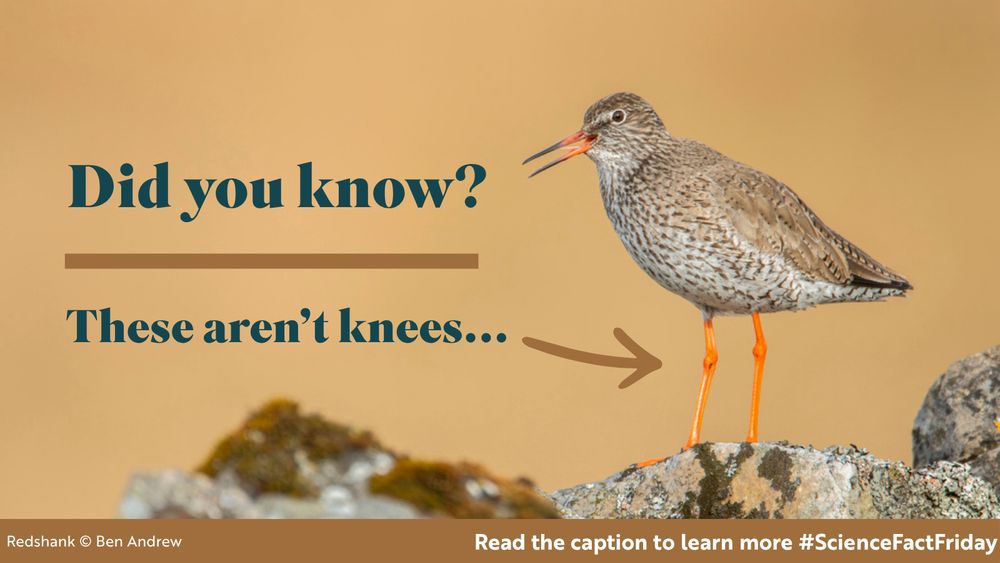
Did you know? Birds keep their knees hidden
The back bend in bird legs is actually the ankle not the knee. Birds’ knees are hidden higher up, closer to the body
#ScienceFactFriday
The back bend in bird legs is actually the ankle not the knee. Birds’ knees are hidden higher up, closer to the body
#ScienceFactFriday
December 5, 2025 at 9:30 AM
Did you know? Birds keep their knees hidden
The back bend in bird legs is actually the ankle not the knee. Birds’ knees are hidden higher up, closer to the body
#ScienceFactFriday
The back bend in bird legs is actually the ankle not the knee. Birds’ knees are hidden higher up, closer to the body
#ScienceFactFriday
This research highlights the need to balance conservation action with community livelihoods
By involving local communities in management decisions and co-developing interventions, conservation programmes can reduce the potential for conflict in the landscape
📷 Sorrel Jones
By involving local communities in management decisions and co-developing interventions, conservation programmes can reduce the potential for conflict in the landscape
📷 Sorrel Jones

December 2, 2025 at 10:01 AM
This research highlights the need to balance conservation action with community livelihoods
By involving local communities in management decisions and co-developing interventions, conservation programmes can reduce the potential for conflict in the landscape
📷 Sorrel Jones
By involving local communities in management decisions and co-developing interventions, conservation programmes can reduce the potential for conflict in the landscape
📷 Sorrel Jones
Saiga populations have undergone a huge recovery thanks to conservation work
But new research shows when hay and water is scarce, competition between Saiga and livestock can lead to conflict 🌏 🧪
Read on to learn more…
Full article: doi.org/10.1016/j.bi...
📷 Albert Salemgareyev
But new research shows when hay and water is scarce, competition between Saiga and livestock can lead to conflict 🌏 🧪
Read on to learn more…
Full article: doi.org/10.1016/j.bi...
📷 Albert Salemgareyev

December 2, 2025 at 10:01 AM
Saiga populations have undergone a huge recovery thanks to conservation work
But new research shows when hay and water is scarce, competition between Saiga and livestock can lead to conflict 🌏 🧪
Read on to learn more…
Full article: doi.org/10.1016/j.bi...
📷 Albert Salemgareyev
But new research shows when hay and water is scarce, competition between Saiga and livestock can lead to conflict 🌏 🧪
Read on to learn more…
Full article: doi.org/10.1016/j.bi...
📷 Albert Salemgareyev
New #PhDproject with @thinkuhi.bsky.social 🧪
Blurring the edges: assessing impacts from the spread of non-native conifers on birds, plants and hydrology in Scottish open blanket bog habitat mosaics
Closing date: 09-01-26
Location: Thurso, Scotland
Apply here: www.findaphd.com/phds/project...
Blurring the edges: assessing impacts from the spread of non-native conifers on birds, plants and hydrology in Scottish open blanket bog habitat mosaics
Closing date: 09-01-26
Location: Thurso, Scotland
Apply here: www.findaphd.com/phds/project...

December 1, 2025 at 4:33 PM
New #PhDproject with @thinkuhi.bsky.social 🧪
Blurring the edges: assessing impacts from the spread of non-native conifers on birds, plants and hydrology in Scottish open blanket bog habitat mosaics
Closing date: 09-01-26
Location: Thurso, Scotland
Apply here: www.findaphd.com/phds/project...
Blurring the edges: assessing impacts from the spread of non-native conifers on birds, plants and hydrology in Scottish open blanket bog habitat mosaics
Closing date: 09-01-26
Location: Thurso, Scotland
Apply here: www.findaphd.com/phds/project...
Did you know? Some birds can bend their long beaks
Rhynchokinesis allows birds like Snipe and Black-tailed Godwits to flex the end of their upper beak, allowing them to be efficient in picking out prey from deep mud or sand.
#ScienceFactFriday
Rhynchokinesis allows birds like Snipe and Black-tailed Godwits to flex the end of their upper beak, allowing them to be efficient in picking out prey from deep mud or sand.
#ScienceFactFriday

November 28, 2025 at 9:30 AM
Did you know? Some birds can bend their long beaks
Rhynchokinesis allows birds like Snipe and Black-tailed Godwits to flex the end of their upper beak, allowing them to be efficient in picking out prey from deep mud or sand.
#ScienceFactFriday
Rhynchokinesis allows birds like Snipe and Black-tailed Godwits to flex the end of their upper beak, allowing them to be efficient in picking out prey from deep mud or sand.
#ScienceFactFriday
Current guidance recommends wader AES areas be ≥30m from woodland
However, these results show the distance should be ≥500m to fully benefit waders
As woodland creation is set to increase in the UK, it is essential future sites are selected with sensitivity
📷Ben Andrew
However, these results show the distance should be ≥500m to fully benefit waders
As woodland creation is set to increase in the UK, it is essential future sites are selected with sensitivity
📷Ben Andrew

November 27, 2025 at 2:45 PM
Current guidance recommends wader AES areas be ≥30m from woodland
However, these results show the distance should be ≥500m to fully benefit waders
As woodland creation is set to increase in the UK, it is essential future sites are selected with sensitivity
📷Ben Andrew
However, these results show the distance should be ≥500m to fully benefit waders
As woodland creation is set to increase in the UK, it is essential future sites are selected with sensitivity
📷Ben Andrew
Results also revealed differences in wader habitat preference:
• Curlew and Snipe preferred areas with more rush
• Redshank and Snipe preferred wetter fields
Demonstrating that AES management can be tailored to favour certain species
📷Andy Hay
• Curlew and Snipe preferred areas with more rush
• Redshank and Snipe preferred wetter fields
Demonstrating that AES management can be tailored to favour certain species
📷Andy Hay

November 27, 2025 at 2:45 PM
Results also revealed differences in wader habitat preference:
• Curlew and Snipe preferred areas with more rush
• Redshank and Snipe preferred wetter fields
Demonstrating that AES management can be tailored to favour certain species
📷Andy Hay
• Curlew and Snipe preferred areas with more rush
• Redshank and Snipe preferred wetter fields
Demonstrating that AES management can be tailored to favour certain species
📷Andy Hay
Results showed densities of all four species increased away from woodland edges
For every 100m away from woodland, predicted wader density increased by ~10% for at least 500m
Most waders favour wide, open landscapes. Potentially to avoid predators associated with woodlands.
For every 100m away from woodland, predicted wader density increased by ~10% for at least 500m
Most waders favour wide, open landscapes. Potentially to avoid predators associated with woodlands.

November 27, 2025 at 2:45 PM
Results showed densities of all four species increased away from woodland edges
For every 100m away from woodland, predicted wader density increased by ~10% for at least 500m
Most waders favour wide, open landscapes. Potentially to avoid predators associated with woodlands.
For every 100m away from woodland, predicted wader density increased by ~10% for at least 500m
Most waders favour wide, open landscapes. Potentially to avoid predators associated with woodlands.
Agricultural Environment Schemes (AES) created to support threatened waders could potentially be undermined by proximity to woodland
To measure the scale of these ‘edge effects’, densities of Curlew, Lapwing, Redshank and Snipe were modelled across farms in Scotland
📷Andy Hay
To measure the scale of these ‘edge effects’, densities of Curlew, Lapwing, Redshank and Snipe were modelled across farms in Scotland
📷Andy Hay

November 27, 2025 at 2:45 PM
Agricultural Environment Schemes (AES) created to support threatened waders could potentially be undermined by proximity to woodland
To measure the scale of these ‘edge effects’, densities of Curlew, Lapwing, Redshank and Snipe were modelled across farms in Scotland
📷Andy Hay
To measure the scale of these ‘edge effects’, densities of Curlew, Lapwing, Redshank and Snipe were modelled across farms in Scotland
📷Andy Hay
New paper 🪶
Proximity to woodlands may be reducing the effectiveness of conservation interventions for farmland waders
Read on for a summary
Or find the full paper here:
doi.org/10.1111/1365...
@kirstyjpark.bsky.social
@naturescot.bsky.social
@stir.ac.uk
📷Ben Andrew
Proximity to woodlands may be reducing the effectiveness of conservation interventions for farmland waders
Read on for a summary
Or find the full paper here:
doi.org/10.1111/1365...
@kirstyjpark.bsky.social
@naturescot.bsky.social
@stir.ac.uk
📷Ben Andrew

November 27, 2025 at 2:45 PM
New paper 🪶
Proximity to woodlands may be reducing the effectiveness of conservation interventions for farmland waders
Read on for a summary
Or find the full paper here:
doi.org/10.1111/1365...
@kirstyjpark.bsky.social
@naturescot.bsky.social
@stir.ac.uk
📷Ben Andrew
Proximity to woodlands may be reducing the effectiveness of conservation interventions for farmland waders
Read on for a summary
Or find the full paper here:
doi.org/10.1111/1365...
@kirstyjpark.bsky.social
@naturescot.bsky.social
@stir.ac.uk
📷Ben Andrew
Huge congratulations to our colleague Rhys Green on winning the 2025 Nature of Scotland Outstanding Achievement Award for a lifetime of scientific dedication to Corncrake conservation
@rspbscotland.bsky.social
@rspbscotland.bsky.social
November 21, 2025 at 2:12 PM
Huge congratulations to our colleague Rhys Green on winning the 2025 Nature of Scotland Outstanding Achievement Award for a lifetime of scientific dedication to Corncrake conservation
@rspbscotland.bsky.social
@rspbscotland.bsky.social
Did you know? Some owls aren't silent fliers
Unlike many other owl species, fish owls make noise when they fly because their wings have fewer sound blocking combs. This is because they don't need to sneak up on prey with sensitive hearing.
#ScienceFactFriday
Unlike many other owl species, fish owls make noise when they fly because their wings have fewer sound blocking combs. This is because they don't need to sneak up on prey with sensitive hearing.
#ScienceFactFriday

November 21, 2025 at 9:30 AM
Did you know? Some owls aren't silent fliers
Unlike many other owl species, fish owls make noise when they fly because their wings have fewer sound blocking combs. This is because they don't need to sneak up on prey with sensitive hearing.
#ScienceFactFriday
Unlike many other owl species, fish owls make noise when they fly because their wings have fewer sound blocking combs. This is because they don't need to sneak up on prey with sensitive hearing.
#ScienceFactFriday
Sadly, we have seen a big increase in avian flu cases in the UK - particularly in waterfowl
Whilst the risk to the public remains assessed as very low, Government advice is not to touch any visibly sick or dead birds, and to keep pets away
Read on for ways to help:
📷Ben Andrew
Whilst the risk to the public remains assessed as very low, Government advice is not to touch any visibly sick or dead birds, and to keep pets away
Read on for ways to help:
📷Ben Andrew

November 19, 2025 at 8:58 AM
Sadly, we have seen a big increase in avian flu cases in the UK - particularly in waterfowl
Whilst the risk to the public remains assessed as very low, Government advice is not to touch any visibly sick or dead birds, and to keep pets away
Read on for ways to help:
📷Ben Andrew
Whilst the risk to the public remains assessed as very low, Government advice is not to touch any visibly sick or dead birds, and to keep pets away
Read on for ways to help:
📷Ben Andrew
Did you know? Storm Petrels weigh the same as one AA battery, making them the smallest Atlantic seabirds
Weight is regularly recorded by our scientists when tagging birds because it is a key indicator of health and age
#ScienceFactFriday
Weight is regularly recorded by our scientists when tagging birds because it is a key indicator of health and age
#ScienceFactFriday

November 14, 2025 at 9:30 AM
Did you know? Storm Petrels weigh the same as one AA battery, making them the smallest Atlantic seabirds
Weight is regularly recorded by our scientists when tagging birds because it is a key indicator of health and age
#ScienceFactFriday
Weight is regularly recorded by our scientists when tagging birds because it is a key indicator of health and age
#ScienceFactFriday