




H S Sathya Chandra Sagar
@sagara-sailways.bsky.social
Conservation science | Ornithology | Field ecology | Conservation strategies | Animal migration | Flyways | Bird ringing & tracking | Bioacoustics | Conservation technology
(he/him)
ಸಾಗರ Sailor ⛵️ | #sail_to_bird | #sail_for_flyways | #sail_for_wildlife
(he/him)
ಸಾಗರ Sailor ⛵️ | #sail_to_bird | #sail_for_flyways | #sail_for_wildlife
Pinned


Before Christmas:
1. Make wreath & decorate tree with wildlife
2. Make unlimited cookies & coffee to fight -24°C
3. Plan new year's fieldwork
4. "To see" species list for 2026
5. Winterise sailboat #NeeruNaayi & Cabin
6. Split more wood - just in case
7. Manage oak woodland & cut invasive plants
1. Make wreath & decorate tree with wildlife
2. Make unlimited cookies & coffee to fight -24°C
3. Plan new year's fieldwork
4. "To see" species list for 2026
5. Winterise sailboat #NeeruNaayi & Cabin
6. Split more wood - just in case
7. Manage oak woodland & cut invasive plants
Reposted by H S Sathya Chandra Sagar
Hahaha! Thanks Michael. It's the name of our sailboat. We love otters a lot, so we named her #NeeruNaayi


December 26, 2025 at 5:12 PM
Hahaha! Thanks Michael. It's the name of our sailboat. We love otters a lot, so we named her #NeeruNaayi
Reposted by H S Sathya Chandra Sagar
And a longer piece by Shreya Dasupta: news.mongabay.com/short-articl...

Declared extinct in 2025: A look back at some of the species we lost
Some species officially bid us farewell this year. They may have long been gone, but following more recent assessments, they’re now formally categorized as extinct on the IUCN Red List, considered the...
news.mongabay.com
December 28, 2025 at 6:41 PM
And a longer piece by Shreya Dasupta: news.mongabay.com/short-articl...
Reposted by H S Sathya Chandra Sagar

Some species officially bid us farewell this year. Recent IUCN assessments now list the slender-billed curlew, Christmas Island shrew, three Australian bandicoots, plants in Mauritius and Hawai‘i, and a Cape Verde cone snail as extinct.

Declared extinct in 2025: A look back at some of the species we lost
Some species officially bid us farewell this year. They may have long been gone, but following more recent assessments, they’re now formally categorized as extinct on the IUCN Red List, considered…
news.mongabay.com
December 28, 2025 at 2:40 PM
Some species officially bid us farewell this year. Recent IUCN assessments now list the slender-billed curlew, Christmas Island shrew, three Australian bandicoots, plants in Mauritius and Hawai‘i, and a Cape Verde cone snail as extinct.
Reposted by H S Sathya Chandra Sagar

From 2004–2011, ~62,000 African Penguin died near Cape Town because of sardine collapse caused by climate change and overfishing. That’s ~95% of the breeding penguins! In 2024, African Penguins were uplisted to Critically Endangered on the IUCN Red List.

High adult mortality of African Penguins Spheniscus demersus in South Africa after 2004 was likely caused by starvation
From 2004–2011, following the collapse of sardine Sardinops sagax, a main food for African Penguins Spheniscus demersus, to < 25% of its maximum recorded abundance, survival of penguins breeding at...
www.tandfonline.com
December 28, 2025 at 12:51 AM
From 2004–2011, ~62,000 African Penguin died near Cape Town because of sardine collapse caused by climate change and overfishing. That’s ~95% of the breeding penguins! In 2024, African Penguins were uplisted to Critically Endangered on the IUCN Red List.
Reposted by H S Sathya Chandra Sagar

How do birds sense the magnetic field to navigate?
The research field is slowly coalescing around a quantum mechanics mechanism described in the thread below.
#Ornithology 🪶
The research field is slowly coalescing around a quantum mechanics mechanism described in the thread below.
#Ornithology 🪶
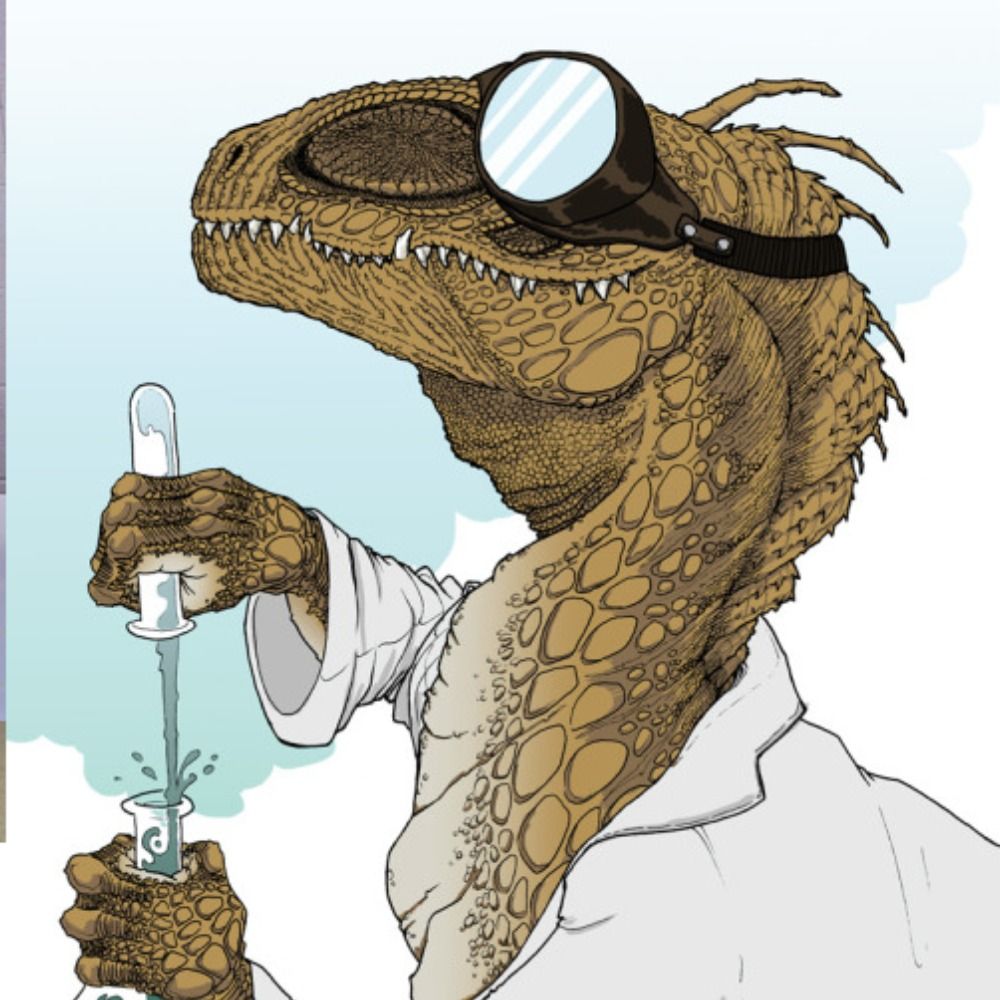
We know that birds can sense magnetic fields for navigation. But how does that work?
Do they have little magnets wired up to their brains?
The most likely answer is 1000X times weirder than that, and involves quantum spin.
Let's talk about 'cryptochromes' & magnetic sensing.🧪
Do they have little magnets wired up to their brains?
The most likely answer is 1000X times weirder than that, and involves quantum spin.
Let's talk about 'cryptochromes' & magnetic sensing.🧪
![A blue and red feathered parakeet? with a simple bar magnet illustration overlayed on it, and yellow lines of force radiating out from the head. It also has the word "yes*" underneath it.
I stole this from a cover photo for a video on the topic from YouTuber "Learn with Kay" with title "Birds navigte with Magnets in their heads ??" [sic]](https://cdn.bsky.app/img/feed_thumbnail/plain/did:plc:r643qxafn6b3pxfffiodojbn/bafkreigvdthlwkzkkbjl63ykyyssyqbuhj4jxxkbxos6cfpanbfi7pwdv4@jpeg)
December 27, 2025 at 2:29 PM
How do birds sense the magnetic field to navigate?
The research field is slowly coalescing around a quantum mechanics mechanism described in the thread below.
#Ornithology 🪶
The research field is slowly coalescing around a quantum mechanics mechanism described in the thread below.
#Ornithology 🪶
Reposted by H S Sathya Chandra Sagar

High-altitude species are among the first victims of climate change, just like Arctic species.

Citril Finch population collapses in Germany amid broader European declines
Citril Finch has nearly disappeared from Germany’s Black Forest, with numbers plunging by over 97%. Across Europe, habitat loss and climatic change threaten this mountain specialist, prompting urgent ...
www.birdguides.com
December 25, 2025 at 5:03 PM
High-altitude species are among the first victims of climate change, just like Arctic species.
Before Christmas:
1. Make wreath & decorate tree with wildlife
2. Make unlimited cookies & coffee to fight -24°C
3. Plan new year's fieldwork
4. "To see" species list for 2026
5. Winterise sailboat #NeeruNaayi & Cabin
6. Split more wood - just in case
7. Manage oak woodland & cut invasive plants
1. Make wreath & decorate tree with wildlife
2. Make unlimited cookies & coffee to fight -24°C
3. Plan new year's fieldwork
4. "To see" species list for 2026
5. Winterise sailboat #NeeruNaayi & Cabin
6. Split more wood - just in case
7. Manage oak woodland & cut invasive plants
December 25, 2025 at 5:46 AM
Before Christmas:
1. Make wreath & decorate tree with wildlife
2. Make unlimited cookies & coffee to fight -24°C
3. Plan new year's fieldwork
4. "To see" species list for 2026
5. Winterise sailboat #NeeruNaayi & Cabin
6. Split more wood - just in case
7. Manage oak woodland & cut invasive plants
1. Make wreath & decorate tree with wildlife
2. Make unlimited cookies & coffee to fight -24°C
3. Plan new year's fieldwork
4. "To see" species list for 2026
5. Winterise sailboat #NeeruNaayi & Cabin
6. Split more wood - just in case
7. Manage oak woodland & cut invasive plants
New study on factors influencing collisions of Red Kite Milvus milvus with wind turbines: findings suggest that turbines with rotor diameters <90m and clearances > 60m may pose a lower relative threat to Red Kites. Read more here: doi.org/10.1016/j.bi...

December 24, 2025 at 6:15 PM
Reposted by H S Sathya Chandra Sagar


KBA Biodiversity Bikeride
Explore Kevin Bouliane's solo cycling, expedition to visit over 100 KBAs!
f.mtr.cool
December 24, 2025 at 3:30 PM
Reposted by H S Sathya Chandra Sagar
Brazil has launched its first deforestation-free beef label, Beef-on-Track. With four tiers, it aims to boost transparency in meat supply chains and could help meet EUDR rules — though industry uptake is still limited.

In Brazil, a new label gives more visibility to deforestation-free beef
Amid growing pressure for beef supply chains to be deforestation-free, a new certification system in Brazil will allow meatpackers, importers and retailers to guarantee that the meat cuts they sell…
news.mongabay.com
December 24, 2025 at 5:14 PM
Brazil has launched its first deforestation-free beef label, Beef-on-Track. With four tiers, it aims to boost transparency in meat supply chains and could help meet EUDR rules — though industry uptake is still limited.
Reposted by H S Sathya Chandra Sagar
It’s not difficult to come up with a list of likely suspects: just find the nearest shooting estates and who works as gamekeepers on them.
December 23, 2025 at 6:06 PM
It’s not difficult to come up with a list of likely suspects: just find the nearest shooting estates and who works as gamekeepers on them.
Reposted by H S Sathya Chandra Sagar

House Martins are declining in Switzerland. To help them, our team conducted a study and recommend installing artificial nests withing 500m of occupied sites and using playback of conspecific vocalizations. doi.org/10.1111/csp2...

December 23, 2025 at 2:43 PM
House Martins are declining in Switzerland. To help them, our team conducted a study and recommend installing artificial nests withing 500m of occupied sites and using playback of conspecific vocalizations. doi.org/10.1111/csp2...
Reposted by H S Sathya Chandra Sagar

BirdWatch Ireland is hiring a Marine Advocacy and Campaigns Officer. Deadline Jan 7th 2026. Details at link here:
birdwatchireland.ie/get-involved...
birdwatchireland.ie/get-involved...

December 23, 2025 at 11:13 AM
BirdWatch Ireland is hiring a Marine Advocacy and Campaigns Officer. Deadline Jan 7th 2026. Details at link here:
birdwatchireland.ie/get-involved...
birdwatchireland.ie/get-involved...
Reposted by H S Sathya Chandra Sagar

🎤 We’re excited to introduce another plenary speaker for the 5th EOU Fledglings Meeting in Gdańsk (27–29 March 2026)!
🌿 Miriam Liedvogel (@genmig.bsky.social) will share her work on blackcap migration - a fascinating look into one of Europe’s most dynamic songbird species.
#EOU26 #Ornithology
🌿 Miriam Liedvogel (@genmig.bsky.social) will share her work on blackcap migration - a fascinating look into one of Europe’s most dynamic songbird species.
#EOU26 #Ornithology

December 1, 2025 at 11:29 AM
🎤 We’re excited to introduce another plenary speaker for the 5th EOU Fledglings Meeting in Gdańsk (27–29 March 2026)!
🌿 Miriam Liedvogel (@genmig.bsky.social) will share her work on blackcap migration - a fascinating look into one of Europe’s most dynamic songbird species.
#EOU26 #Ornithology
🌿 Miriam Liedvogel (@genmig.bsky.social) will share her work on blackcap migration - a fascinating look into one of Europe’s most dynamic songbird species.
#EOU26 #Ornithology
Reposted by H S Sathya Chandra Sagar

Now online in Journal of #Ornithology
Seasonal variation in the foraging intensity of Somali Ostrich (Struthio molybdophanes) at different habitat zones in a semi-arid savanna, Kenya
link.springer.com/article/10.1...
Seasonal variation in the foraging intensity of Somali Ostrich (Struthio molybdophanes) at different habitat zones in a semi-arid savanna, Kenya
link.springer.com/article/10.1...

Seasonal variation in the foraging intensity of Somali Ostrich (Struthio molybdophanes) at different habitat zones in a semi-arid savanna, Kenya - Journal of Ornithology
The population of Somali Ostrich (Struthio molybdophanes) is rapidly declining due to ongoing threats, such as hunting, egg collection, habitat loss, and degradation. Conservation efforts are hampered...
link.springer.com
December 22, 2025 at 11:40 AM
Now online in Journal of #Ornithology
Seasonal variation in the foraging intensity of Somali Ostrich (Struthio molybdophanes) at different habitat zones in a semi-arid savanna, Kenya
link.springer.com/article/10.1...
Seasonal variation in the foraging intensity of Somali Ostrich (Struthio molybdophanes) at different habitat zones in a semi-arid savanna, Kenya
link.springer.com/article/10.1...
Reposted by H S Sathya Chandra Sagar

On Friday 13 Feb I’ll be at the perfect place to talk about extinction in natural history museums: Oxford University Museum of Natural History @morethanadodo.bsky.social.
Free tickets available for “Dead as a Dodo: The Haunted Heritage of Extinction”
oumnh.ox.ac.uk/event/dead-a...
#extinction
Free tickets available for “Dead as a Dodo: The Haunted Heritage of Extinction”
oumnh.ox.ac.uk/event/dead-a...
#extinction

Dead as a Dodo: The Haunted Heritage of Extinction’
In the halls of natural history museums all over the world, you can peer through the glass and come face-to-face with the ghosts of extinction.
oumnh.ox.ac.uk
December 22, 2025 at 4:55 PM
On Friday 13 Feb I’ll be at the perfect place to talk about extinction in natural history museums: Oxford University Museum of Natural History @morethanadodo.bsky.social.
Free tickets available for “Dead as a Dodo: The Haunted Heritage of Extinction”
oumnh.ox.ac.uk/event/dead-a...
#extinction
Free tickets available for “Dead as a Dodo: The Haunted Heritage of Extinction”
oumnh.ox.ac.uk/event/dead-a...
#extinction
Reposted by H S Sathya Chandra Sagar

Hawai‘i is nearing a pivotal deadline on military land leases, exposing how the US has long abused Hawaiian land and opening a rare chance for Native communities to assert Indigenous sovereignty and demand the land’s return for public and ecological healing.

Hawai‘i Has a Rare Opportunity to Reclaim Land From the US Military
The US military is abusing Hawaiian land. Will residents be able to exert Indigenous sovereignty and get it back?
truthout.org
December 22, 2025 at 11:22 PM
Hawai‘i is nearing a pivotal deadline on military land leases, exposing how the US has long abused Hawaiian land and opening a rare chance for Native communities to assert Indigenous sovereignty and demand the land’s return for public and ecological healing.
Reposted by H S Sathya Chandra Sagar
70 environmental defenders & conservationists who died in 2025
Environmental progress often depends on endurance, sustained over years, by people whose work mattered long before their names did.
news.mongabay.com/2025/12/envi...
Environmental progress often depends on endurance, sustained over years, by people whose work mattered long before their names did.
news.mongabay.com/2025/12/envi...

December 23, 2025 at 4:04 AM
70 environmental defenders & conservationists who died in 2025
Environmental progress often depends on endurance, sustained over years, by people whose work mattered long before their names did.
news.mongabay.com/2025/12/envi...
Environmental progress often depends on endurance, sustained over years, by people whose work mattered long before their names did.
news.mongabay.com/2025/12/envi...
Reposted by H S Sathya Chandra Sagar

Rapid Global Deforestation Leaves Forest‐Dependent Raptors With Half of Their Suitable Habitat Remaining
📄 buff.ly/g0CHFXG
📄 buff.ly/g0CHFXG

December 22, 2025 at 5:59 PM
Rapid Global Deforestation Leaves Forest‐Dependent Raptors With Half of Their Suitable Habitat Remaining
📄 buff.ly/g0CHFXG
📄 buff.ly/g0CHFXG
Reposted by H S Sathya Chandra Sagar

Proud to have my photo essay out in the publication Current Conservation. I got really into photography during my PhD including using a film camera. I hope it conveys some of the visual experience of being in a bird market and the sense of place. Enjoy 🐦
www.currentconservation.org/visual-stori...
www.currentconservation.org/visual-stori...

Visual stories from a bird marketplace | Current Conservation
Current Conservation Visual stories from a bird marketplace
www.currentconservation.org
December 20, 2025 at 4:49 PM
Proud to have my photo essay out in the publication Current Conservation. I got really into photography during my PhD including using a film camera. I hope it conveys some of the visual experience of being in a bird market and the sense of place. Enjoy 🐦
www.currentconservation.org/visual-stori...
www.currentconservation.org/visual-stori...
Oh gosh!!! 😂😂😂
Wow! The "Indian Bison" I see in our coffee farm are much more majestic and big.... But, I thought I saw they had white socks😉
Wow! The "Indian Bison" I see in our coffee farm are much more majestic and big.... But, I thought I saw they had white socks😉

AI slop meets poor 19th-century colonial taxonomy.
The gaur is not a bison and this is likely not a real bison.
The gaur is not a bison and this is likely not a real bison.

December 20, 2025 at 8:06 PM
Oh gosh!!! 😂😂😂
Wow! The "Indian Bison" I see in our coffee farm are much more majestic and big.... But, I thought I saw they had white socks😉
Wow! The "Indian Bison" I see in our coffee farm are much more majestic and big.... But, I thought I saw they had white socks😉
Reposted by H S Sathya Chandra Sagar
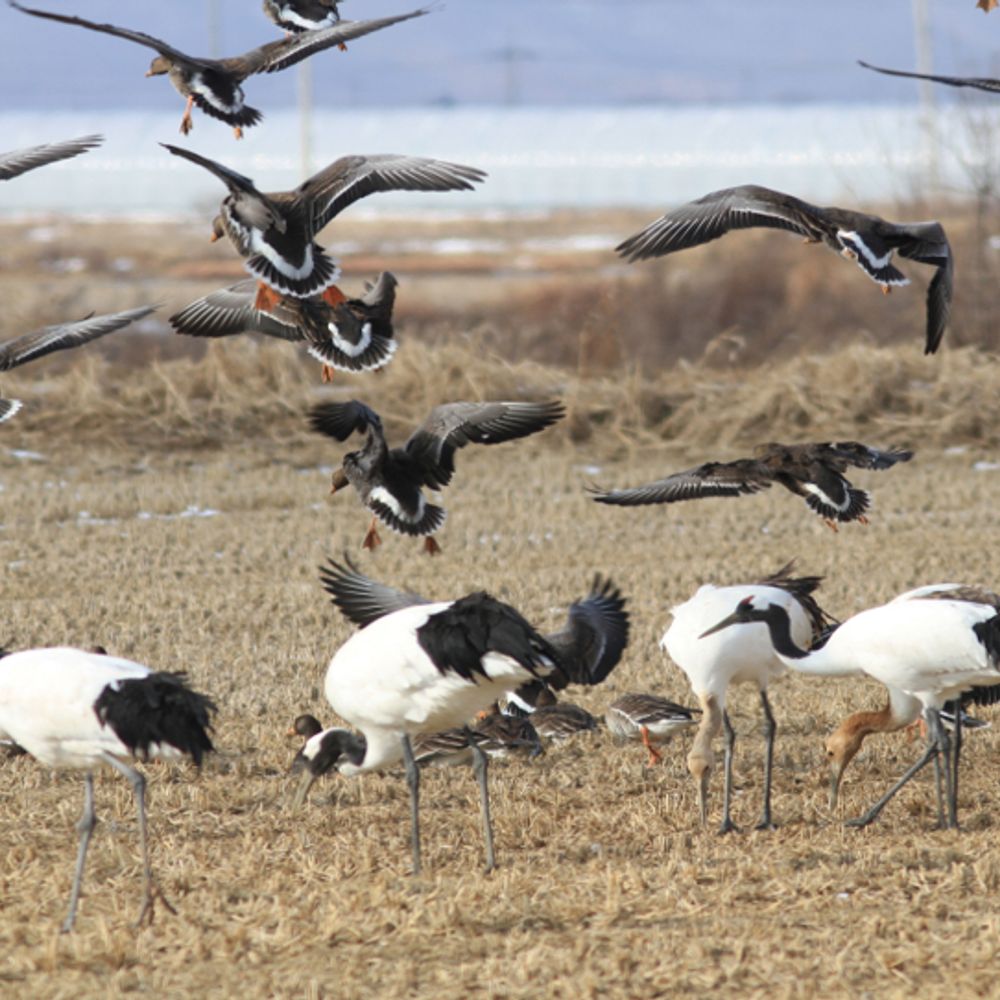
Great to see this statement from WOAH, recognizing the broader ecological impacts of HPAI and the need to integrate conservation initiatives beyond just wildlife health.
www.woah.org/en/statement...
www.woah.org/en/statement...

Statement on the impact of HPAI on wildlife worldwide - WOAH - World Organisation for Animal Health
Highly pathogenic avian influenza (HPAI) H5 viruses are causing increased mortality in wildlife and ecological disruption worldwide. Since 2021, the panzootic has spread across continents and now affe...
www.woah.org
December 20, 2025 at 3:20 PM
Great to see this statement from WOAH, recognizing the broader ecological impacts of HPAI and the need to integrate conservation initiatives beyond just wildlife health.
www.woah.org/en/statement...
www.woah.org/en/statement...
Reposted by H S Sathya Chandra Sagar

Read the paper here: tinyurl.com/5byfab8f
Findings: restored #OakWoodlands have higher #SoundscapeSaturation #AcousticComplexity, #arthropod biomass, & #bird abundance
Maia Persche, Zuzana Burivalova, Anna Pidgeon @sagara-sailways.bsky.social @uwmadisoncals.bsky.social @nature.org
Findings: restored #OakWoodlands have higher #SoundscapeSaturation #AcousticComplexity, #arthropod biomass, & #bird abundance
Maia Persche, Zuzana Burivalova, Anna Pidgeon @sagara-sailways.bsky.social @uwmadisoncals.bsky.social @nature.org

Complex and highly saturated soundscapes in restored oak woodlands reflect avian richness and abundance - Oecologia
Temperate woodlands are biodiverse natural communities threatened by land use change and fire suppression. Excluding historic disturbance regimes of periodic groundfires from woodlands causes degradat...
tinyurl.com
December 19, 2025 at 10:29 PM
Read the paper here: tinyurl.com/5byfab8f
Findings: restored #OakWoodlands have higher #SoundscapeSaturation #AcousticComplexity, #arthropod biomass, & #bird abundance
Maia Persche, Zuzana Burivalova, Anna Pidgeon @sagara-sailways.bsky.social @uwmadisoncals.bsky.social @nature.org
Findings: restored #OakWoodlands have higher #SoundscapeSaturation #AcousticComplexity, #arthropod biomass, & #bird abundance
Maia Persche, Zuzana Burivalova, Anna Pidgeon @sagara-sailways.bsky.social @uwmadisoncals.bsky.social @nature.org
Reposted by H S Sathya Chandra Sagar
NEW JOB in #ornithology with @RSPBScience to tag and track #seabirds on Rathlin Island: buff.ly/YXOCMiU

December 19, 2025 at 11:53 AM
NEW JOB in #ornithology with @RSPBScience to tag and track #seabirds on Rathlin Island: buff.ly/YXOCMiU
Reposted by H S Sathya Chandra Sagar
✈️ Great news! Travel grants for the 5th EOU Fledglings Meeting are available thanks to the German Ornithologists’ Society (DO-G, @dornitholges.bsky.social), supporting early-career researchers attending #EOU26 in Gdańsk.
ℹ️ Details & eligibility: eou-fledglings.github.io/2026/travel/
#Ornithology
ℹ️ Details & eligibility: eou-fledglings.github.io/2026/travel/
#Ornithology

December 19, 2025 at 9:44 AM
✈️ Great news! Travel grants for the 5th EOU Fledglings Meeting are available thanks to the German Ornithologists’ Society (DO-G, @dornitholges.bsky.social), supporting early-career researchers attending #EOU26 in Gdańsk.
ℹ️ Details & eligibility: eou-fledglings.github.io/2026/travel/
#Ornithology
ℹ️ Details & eligibility: eou-fledglings.github.io/2026/travel/
#Ornithology