



Sarthak Mishra
@sarthak94.bsky.social
PhD @MPI Münster
Each cell has a story to tell
Each cell has a story to tell
Reposted by Sarthak Mishra

We’ve tried to shelter our minds but tonight we’re preparing for the genocide of Science.
Entire NIH departments will have no leaders.
World renowned Scientists kicked to the curb without cause, & grants will loose their lead investigators.
Is this what they want?
Chaos? Destruction?
Entire NIH departments will have no leaders.
World renowned Scientists kicked to the curb without cause, & grants will loose their lead investigators.
Is this what they want?
Chaos? Destruction?
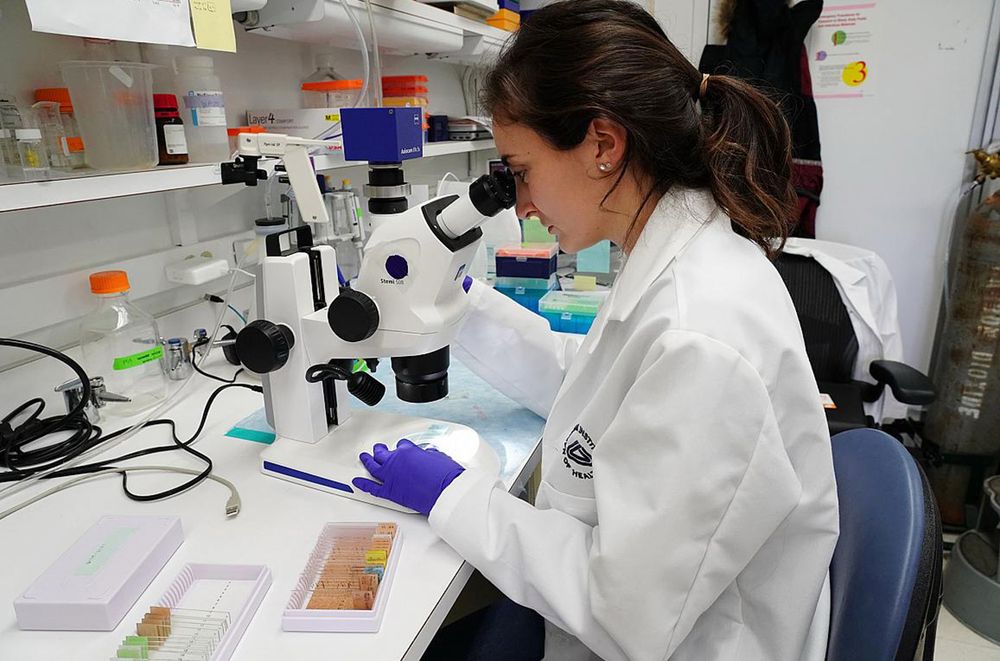
NIH ban on renewing senior scientists adds to assaults on its in-house research
Policy follows firings of tenure-track scientists and suspension of training programs
www.science.org
February 28, 2025 at 4:06 AM
We’ve tried to shelter our minds but tonight we’re preparing for the genocide of Science.
Entire NIH departments will have no leaders.
World renowned Scientists kicked to the curb without cause, & grants will loose their lead investigators.
Is this what they want?
Chaos? Destruction?
Entire NIH departments will have no leaders.
World renowned Scientists kicked to the curb without cause, & grants will loose their lead investigators.
Is this what they want?
Chaos? Destruction?
Reposted by Sarthak Mishra

The Trump administration's efforts to slash research funding have US graduate students, postdocs and other early-career scientists fearing for their careers. Some might leave the country -- or abandon research altogether.
https://go.nature.com/43ao2zq
https://go.nature.com/43ao2zq
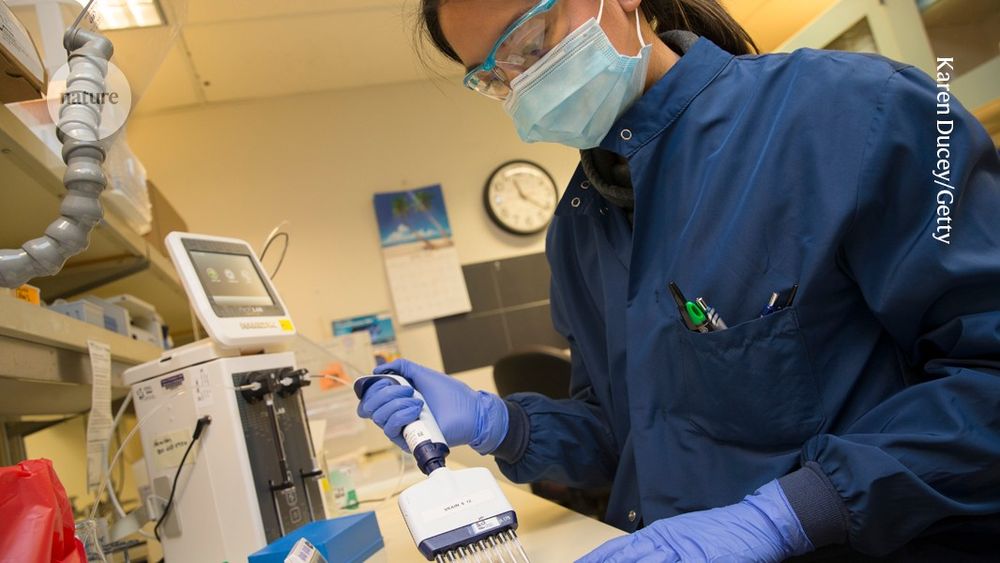
Postdocs and PhD students hit hard by Trump’s crackdown on science
As US federal grants remain frozen and budget cuts loom, anxiety and fear grip early-career researchers.
go.nature.com
February 24, 2025 at 9:39 PM
The Trump administration's efforts to slash research funding have US graduate students, postdocs and other early-career scientists fearing for their careers. Some might leave the country -- or abandon research altogether.
https://go.nature.com/43ao2zq
https://go.nature.com/43ao2zq
Reposted by Sarthak Mishra

ETH researchers have developed a new gene switch that can be activated using a commercially available nitroglycerine patch applied to the skin. One day, such switches could be used to trigger cell therapies for various metabolic diseases.
ethz.ch/en/news-and-...
ethz.ch/en/news-and-...

A new switch for the cell therapies of the future
ETH researchers have developed a new gene switch that can be activated using a commercially available nitroglycerine patch applied to the skin. One day, researchers want to use switches of this kind t...
ethz.ch
February 14, 2025 at 12:31 PM
ETH researchers have developed a new gene switch that can be activated using a commercially available nitroglycerine patch applied to the skin. One day, such switches could be used to trigger cell therapies for various metabolic diseases.
ethz.ch/en/news-and-...
ethz.ch/en/news-and-...
Reposted by Sarthak Mishra
The human genome encodes potentially thousands of tiny proteins that were previously overlooked.
The search is on to find out what they do
https://go.nature.com/41amXq2
The search is on to find out what they do
https://go.nature.com/41amXq2
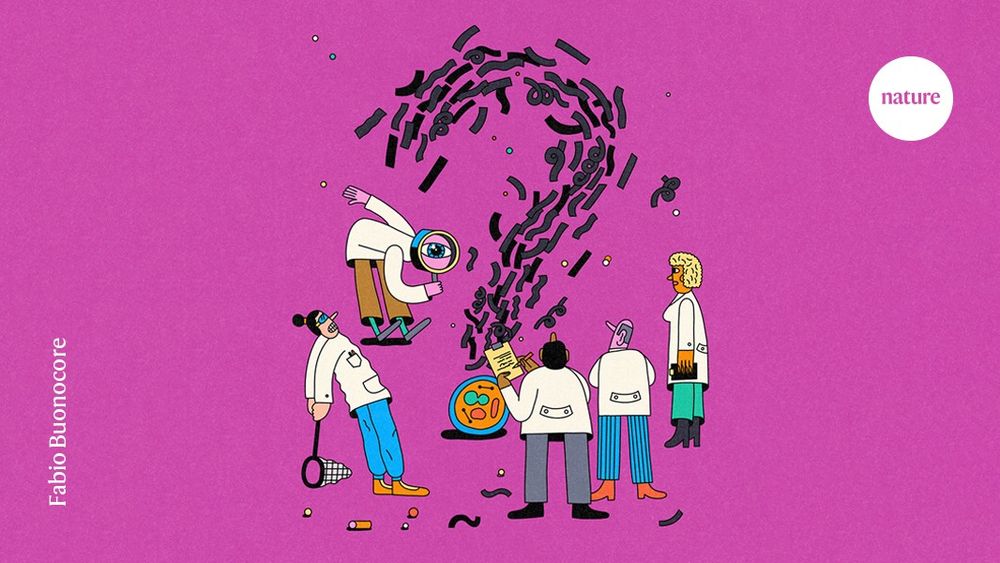
‘Dark proteins’ hiding in our cells could hold clues to cancer and other diseases
The human genome encodes potentially thousands of tiny proteins that were previously overlooked. The search is on to find out what they do.
go.nature.com
February 11, 2025 at 11:18 AM
The human genome encodes potentially thousands of tiny proteins that were previously overlooked.
The search is on to find out what they do
https://go.nature.com/41amXq2
The search is on to find out what they do
https://go.nature.com/41amXq2
Reposted by Sarthak Mishra
The first clinical trial testing whether pig kidneys can be safely transplanted into living people has been approved by the US Food and Drug Administration
https://go.nature.com/3CHIGfC
https://go.nature.com/3CHIGfC

The science behind the first pig-organ transplant trial in humans
The small trial will help to establish whether kidneys from genetically modified pigs can be transplanted into people safely and effectively.
go.nature.com
February 9, 2025 at 8:02 PM
The first clinical trial testing whether pig kidneys can be safely transplanted into living people has been approved by the US Food and Drug Administration
https://go.nature.com/3CHIGfC
https://go.nature.com/3CHIGfC
Reposted by Sarthak Mishra

Nudging or #boosting – which behavioural approach works best for decision-making? In a review paper researchers @ MPI for Human Development suggest that #boosting - empowering rather than steering - can lead to lasting, informed decisions even amid manipulative choice architectures.

Boosting decision-making skills
In the face of growing global challenges such as climate change, pandemics, and threats to democratic values, traditional behavioral policy approaches are increasingly coming into question. The once-d...
www.mpib-berlin.mpg.de
February 5, 2025 at 10:07 AM
Reposted by Sarthak Mishra
Latest from the Nature Podcast 🔊 Asteroid Bennu contains building blocks of life
https://go.nature.com/4hkPzm7
https://go.nature.com/4hkPzm7

Asteroid Bennu contains building blocks of life
Hear the latest science news from the Nature Podcast | 29 January 2025
go.nature.com
February 1, 2025 at 10:00 AM
Latest from the Nature Podcast 🔊 Asteroid Bennu contains building blocks of life
https://go.nature.com/4hkPzm7
https://go.nature.com/4hkPzm7
Reposted by Sarthak Mishra
Scratching a mosquito bite can offer a moment of bliss, and now scientists have learnt why: scratching activates an immune response that helps to protect the skin against harmful infections, at least in mice.
https://go.nature.com/4aJpL0r
https://go.nature.com/4aJpL0r

Why it feels good to scratch that itch: the immune benefits of scratching
Scratching where it itches reduces the presence of potentially harmful bacteria on the skin, studies in mice show.
go.nature.com
January 30, 2025 at 10:00 PM
Scratching a mosquito bite can offer a moment of bliss, and now scientists have learnt why: scratching activates an immune response that helps to protect the skin against harmful infections, at least in mice.
https://go.nature.com/4aJpL0r
https://go.nature.com/4aJpL0r
Reposted by Sarthak Mishra

Die DFG-Gremien tagen turnusmäßig vier Mal im Jahr. An folgenden Daten entscheiden sie 2025 über Anträge u. a. in der #Einzelförderung. An gesonderten Terminen wird zudem über Entscheidungen in der #Exzellenzstrategie (EXC), zu #Graduiertenkollegs (GRK) und Sonderforschungsbereichen (SFB) beraten.

January 30, 2025 at 1:37 PM
Die DFG-Gremien tagen turnusmäßig vier Mal im Jahr. An folgenden Daten entscheiden sie 2025 über Anträge u. a. in der #Einzelförderung. An gesonderten Terminen wird zudem über Entscheidungen in der #Exzellenzstrategie (EXC), zu #Graduiertenkollegs (GRK) und Sonderforschungsbereichen (SFB) beraten.
Successful test in #Breast #Cancer patients: the active agent digoxin, a cardiac #Medication, dissolves clusters of circulating breast cancer cells in the blood, thus reducing the risk of #Metastases formation. ethz.ch/en/news-and-...

Dissolving clusters of cancer cells to prevent metastases
Successful test in breast cancer patients: the active agent digoxin, a cardiac medication, dissolves clusters of circulating breast cancer cells in the blood, thus reducing the risk of metastases form...
ethz.ch
January 29, 2025 at 10:57 PM
Reposted by Sarthak Mishra
Since January 2025, ETH researchers have once again been able to apply for the coveted and scientifically important ERC grants and project coordination in Horizon Europe.
ethz.ch/staffnet/en/...
ethz.ch/staffnet/en/...

Horizon Europe and the ERC Grants - what now applies to ETH researchers
Since January 2025, ETH researchers have once again been able to apply for the coveted and scientifically important ERC grants and project coordination in Horizon Europe. The EU has opened up almost a...
ethz.ch
January 29, 2025 at 10:11 AM
Since January 2025, ETH researchers have once again been able to apply for the coveted and scientifically important ERC grants and project coordination in Horizon Europe.
ethz.ch/staffnet/en/...
ethz.ch/staffnet/en/...
Reposted by Sarthak Mishra

One of the brightest members of the Virgo Cluster of galaxies, M100, also known as NGC 4321 is 56 million light-years distant toward the well-groomed constellation Coma Berenices.
Credit & Copyright: Drew Evans
Credit & Copyright: Drew Evans

January 29, 2025 at 10:42 PM
One of the brightest members of the Virgo Cluster of galaxies, M100, also known as NGC 4321 is 56 million light-years distant toward the well-groomed constellation Coma Berenices.
Credit & Copyright: Drew Evans
Credit & Copyright: Drew Evans
Reposted by Sarthak Mishra

A rare cartwheel galaxy
PGC-2248
Photo credit James Webb Space Telescope
Constellation Sculptor
Discovered 1941 by Fritz Zwicky
Distance 500 light years
Once a normal spiral galaxy it collided perfectly (bulls eye) with another galaxy who's shock wave created this unique structure.
PGC-2248
Photo credit James Webb Space Telescope
Constellation Sculptor
Discovered 1941 by Fritz Zwicky
Distance 500 light years
Once a normal spiral galaxy it collided perfectly (bulls eye) with another galaxy who's shock wave created this unique structure.

January 29, 2025 at 3:49 AM
A rare cartwheel galaxy
PGC-2248
Photo credit James Webb Space Telescope
Constellation Sculptor
Discovered 1941 by Fritz Zwicky
Distance 500 light years
Once a normal spiral galaxy it collided perfectly (bulls eye) with another galaxy who's shock wave created this unique structure.
PGC-2248
Photo credit James Webb Space Telescope
Constellation Sculptor
Discovered 1941 by Fritz Zwicky
Distance 500 light years
Once a normal spiral galaxy it collided perfectly (bulls eye) with another galaxy who's shock wave created this unique structure.
Reposted by Sarthak Mishra
If you're wondering why scientists are freaking the fuck out about what's being described as a pause in spending, I have written an article just for you:

Science at risk: The funding pause is more damaging than you might think
Research that helps drive our economy is on hold and may face new ideological limits.
arstechnica.com
January 29, 2025 at 5:34 PM
If you're wondering why scientists are freaking the fuck out about what's being described as a pause in spending, I have written an article just for you: