



StarParty.com
@starparty.com
StarParty.com is a website devoted to astronomy, cosmology, astrophysics and space exploration
Reposted by StarParty.com

March 3rd, 2026 will be the last total lunar eclipse anywhere on Earth until New Year's Eve 2028. It will appear as a “blood moon” and is expected to be viewed in totality for about 58 minutes. The entire eclipse — including the penumbral and partial phases — will last 5 hours and 38 minutes. 🌕

March 2026 total lunar eclipse: Everything you need to know about the next 'blood moon'
A total lunar eclipse on March 2-4, 2026, will be visible in North America and will be the last total lunar eclipse anywhere on Earth until New Year's Eve 2028-2029.
www.space.com
January 12, 2026 at 8:53 PM
March 3rd, 2026 will be the last total lunar eclipse anywhere on Earth until New Year's Eve 2028. It will appear as a “blood moon” and is expected to be viewed in totality for about 58 minutes. The entire eclipse — including the penumbral and partial phases — will last 5 hours and 38 minutes. 🌕

Reposted by StarParty.com

After a three-and-a-half-month journey, NASA’s Interstellar Mapping and Acceleration Probe IMAP has finally reached its destinationwhere it will begin its groundbreaking mission to study the edge of our solar system and advance our knowledge of space weather on Feb. 1: www.jhuapl.edu/news/news-re...

NASA’s IMAP Reaches Orbit to Start Study of Heliosphere and Space Weather
NASA’s Interstellar Mapping and Acceleration Probe (IMAP) has reached its destination of the first Sun-Earth Lagrange point (L1), where it will start its prime mission of studying the heliosphere and ...
www.jhuapl.edu
January 12, 2026 at 9:23 PM
After a three-and-a-half-month journey, NASA’s Interstellar Mapping and Acceleration Probe IMAP has finally reached its destinationwhere it will begin its groundbreaking mission to study the edge of our solar system and advance our knowledge of space weather on Feb. 1: www.jhuapl.edu/news/news-re...
Reposted by StarParty.com

It's happening!!! Pandora is going to space in just over 16 hours (if all goes well). Pandora is going to help us study exoplanet atmospheres, even when their host stars are misbehaving. I am headed up to Vandenberg to watch the launch shortly, and will make a thread about the mission/launch here!

January 10, 2026 at 8:41 PM
It's happening!!! Pandora is going to space in just over 16 hours (if all goes well). Pandora is going to help us study exoplanet atmospheres, even when their host stars are misbehaving. I am headed up to Vandenberg to watch the launch shortly, and will make a thread about the mission/launch here!
First ‘Superkilonova’ may have been spotted #astronomy www.forbes.com/sites/jamiec...
January 1, 2026 at 11:27 PM
First ‘Superkilonova’ may have been spotted #astronomy www.forbes.com/sites/jamiec...
Reposted by StarParty.com

Selections from 2025: Researchers explored the reaches of humanity’s technological signatures to determine if intelligent life like that on Earth could detect Earth. 🔭🧪 aasnova.org/2025/12/30/s...

Selections from 2025: Could Earth Detect Earth?
Researchers explored the reaches of humanity's technological signatures to determine if intelligent life like that on Earth could detect Earth.
aasnova.org
December 30, 2025 at 8:29 PM
Selections from 2025: Researchers explored the reaches of humanity’s technological signatures to determine if intelligent life like that on Earth could detect Earth. 🔭🧪 aasnova.org/2025/12/30/s...
Reposted by StarParty.com

Jersey Skies: New space telescope set for possible Fall 2026 launch
www.jerseysbest.com/community/je...
#astronomy 🔭
www.jerseysbest.com/community/je...
#astronomy 🔭

Jersey Skies: New space telescope set for possible Fall 2026 launch
The James Webb Space Telescope (JWST) celebrated its 4th anniversary in space on Dec. 25. Its predecessor, the Hubble Space Telescope (HST), will amazingly celebrate its 36th year in space next April. Meanwhile, engineers have finished building another amazing spacecraft that will soon join NASA’s fleet of space observatories. The Nancy Grace Roman Space Telescope... Read more »
www.jerseysbest.com
December 31, 2025 at 12:08 AM
Jersey Skies: New space telescope set for possible Fall 2026 launch
www.jerseysbest.com/community/je...
#astronomy 🔭
www.jerseysbest.com/community/je...
#astronomy 🔭
Reposted by StarParty.com

Astronomers made a truly mind-boggling discovery using the JWST:
A runaway super-massive black hole, rocketing through space at a staggering 1,000 km/s, leaving a 200,000 light-year-long tail in its wake in which gas is accumulating and triggering star formation.
🧪
www.space.com/astronomy/bl...
A runaway super-massive black hole, rocketing through space at a staggering 1,000 km/s, leaving a 200,000 light-year-long tail in its wake in which gas is accumulating and triggering star formation.
🧪
www.space.com/astronomy/bl...

James Webb Space Telescope confirms 1st 'runaway' supermassive black hole rocketing through home galaxy at 2.2 million mph: 'It boggles the mind!'
"The forces that are needed to dislodge such a massive black hole from its home are enormous."
www.space.com
December 27, 2025 at 1:05 AM
Astronomers made a truly mind-boggling discovery using the JWST:
A runaway super-massive black hole, rocketing through space at a staggering 1,000 km/s, leaving a 200,000 light-year-long tail in its wake in which gas is accumulating and triggering star formation.
🧪
www.space.com/astronomy/bl...
A runaway super-massive black hole, rocketing through space at a staggering 1,000 km/s, leaving a 200,000 light-year-long tail in its wake in which gas is accumulating and triggering star formation.
🧪
www.space.com/astronomy/bl...
Reposted by StarParty.com

From Annelia Anderson @astroannelia.bsky.social : Today’s paper argues that a little red dot with a massive Balmer break could be a black hole star. ⚛️🔭☄🧪
astrobites.org/2025/12/29/b...
astrobites.org/2025/12/29/b...

Black hole sun, won’t you come… help solve the little red dot mystery?
Today’s paper argues that a little red dot with a massive Balmer break could be a black hole star.
astrobites.org
December 29, 2025 at 9:13 PM
From Annelia Anderson @astroannelia.bsky.social : Today’s paper argues that a little red dot with a massive Balmer break could be a black hole star. ⚛️🔭☄🧪
astrobites.org/2025/12/29/b...
astrobites.org/2025/12/29/b...
Reposted by StarParty.com

👀 Our scientists used Gaia's data to craft the most accurate 3D map of star-forming regions in the Milky Way! 🌌 🧪🔭
🔗 esa.int/Science_Exploration/Space_Science/Gaia/Fly_through_Gaia_s_3D_map_of_stellar_nurseries
🔗 esa.int/Science_Exploration/Space_Science/Gaia/Fly_through_Gaia_s_3D_map_of_stellar_nurseries
December 27, 2025 at 1:31 PM
👀 Our scientists used Gaia's data to craft the most accurate 3D map of star-forming regions in the Milky Way! 🌌 🧪🔭
🔗 esa.int/Science_Exploration/Space_Science/Gaia/Fly_through_Gaia_s_3D_map_of_stellar_nurseries
🔗 esa.int/Science_Exploration/Space_Science/Gaia/Fly_through_Gaia_s_3D_map_of_stellar_nurseries
Large Spider-Like Blob on Europa futurism.com/space/spider...

Scientists Intrigued by Large Spider-Like Blob on Europa
The spider-like formation could be evidence of epic eruptions of water that blast through Europa' surface.
futurism.com
December 20, 2025 at 11:46 PM
Large Spider-Like Blob on Europa futurism.com/space/spider...
Reposted by StarParty.com

In an unprecedented celestial event, NASA's Hubble Space Telescope (HST) captured the dramatic aftermath of colliding space rocks within a nearby planetary system. 🌌🔭🦛

Hubble captures rare collision in nearby planetary system
In an unprecedented celestial event, NASA's Hubble Space Telescope (HST) captured the dramatic aftermath of colliding space rocks within a nearby planetary system.
phys.org
December 18, 2025 at 8:03 PM
In an unprecedented celestial event, NASA's Hubble Space Telescope (HST) captured the dramatic aftermath of colliding space rocks within a nearby planetary system. 🌌🔭🦛
JWST finds evidence of 'dinosaur-like' stars #astronomy www.space.com/astronomy/ja...

James Webb Space Telescope finds 1st evidence of 'dinosaur-like' stars in the early universe
"A bit like dinosaurs on Earth — they were enormous and primitive. And they had short lives, living for just a quarter of a million years."
www.space.com
December 15, 2025 at 11:13 PM
JWST finds evidence of 'dinosaur-like' stars #astronomy www.space.com/astronomy/ja...
Reposted by StarParty.com

#PPOD: These polar dunes on Mars show both carbon dioxide frost (the white colored areas) along with darker material that’s been exposed due to sublimation, and is blown by the wind to form these dark spots. Credit: NASA/JPL/University of Arizona 🧪 🔭

December 15, 2025 at 8:10 PM
#PPOD: These polar dunes on Mars show both carbon dioxide frost (the white colored areas) along with darker material that’s been exposed due to sublimation, and is blown by the wind to form these dark spots. Credit: NASA/JPL/University of Arizona 🧪 🔭
Reposted by StarParty.com
The third interstellar object to enter our solar system, 3I/ATLAS, is without a doubt one of the most fascinating astronomical discoveries of this year. aasnova.org/2025/12/15/s... 🔭🧪

Selections from 2025: Hubble Observes 3I/ATLAS
The third interstellar object to enter our solar system, 3I/ATLAS, is without a doubt one of the most fascinating astronomical discoveries of this year.
aasnova.org
December 15, 2025 at 6:12 PM
The third interstellar object to enter our solar system, 3I/ATLAS, is without a doubt one of the most fascinating astronomical discoveries of this year. aasnova.org/2025/12/15/s... 🔭🧪
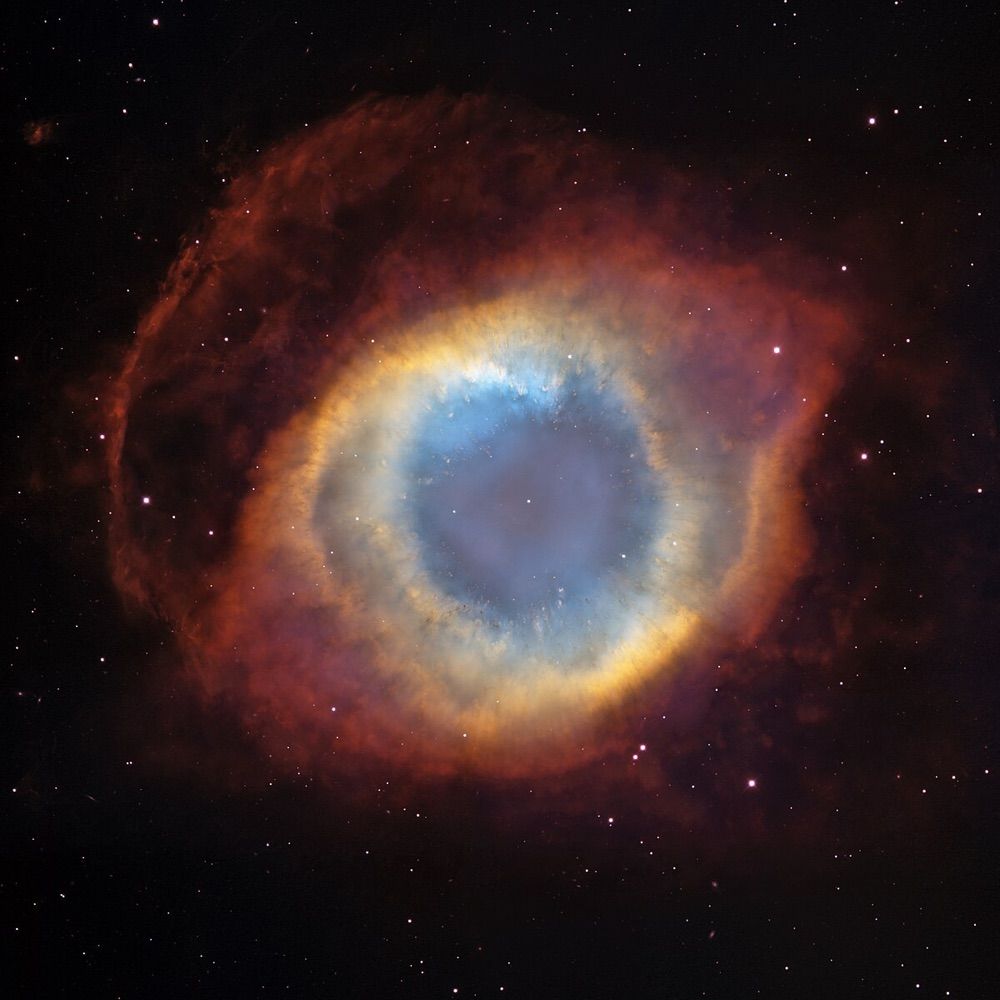
Scientists Detect Huge Rotating Structure in Space

December 14, 2025 at 5:29 PM
Scientists Detect Huge Rotating Structure in Space
Reposted by StarParty.com
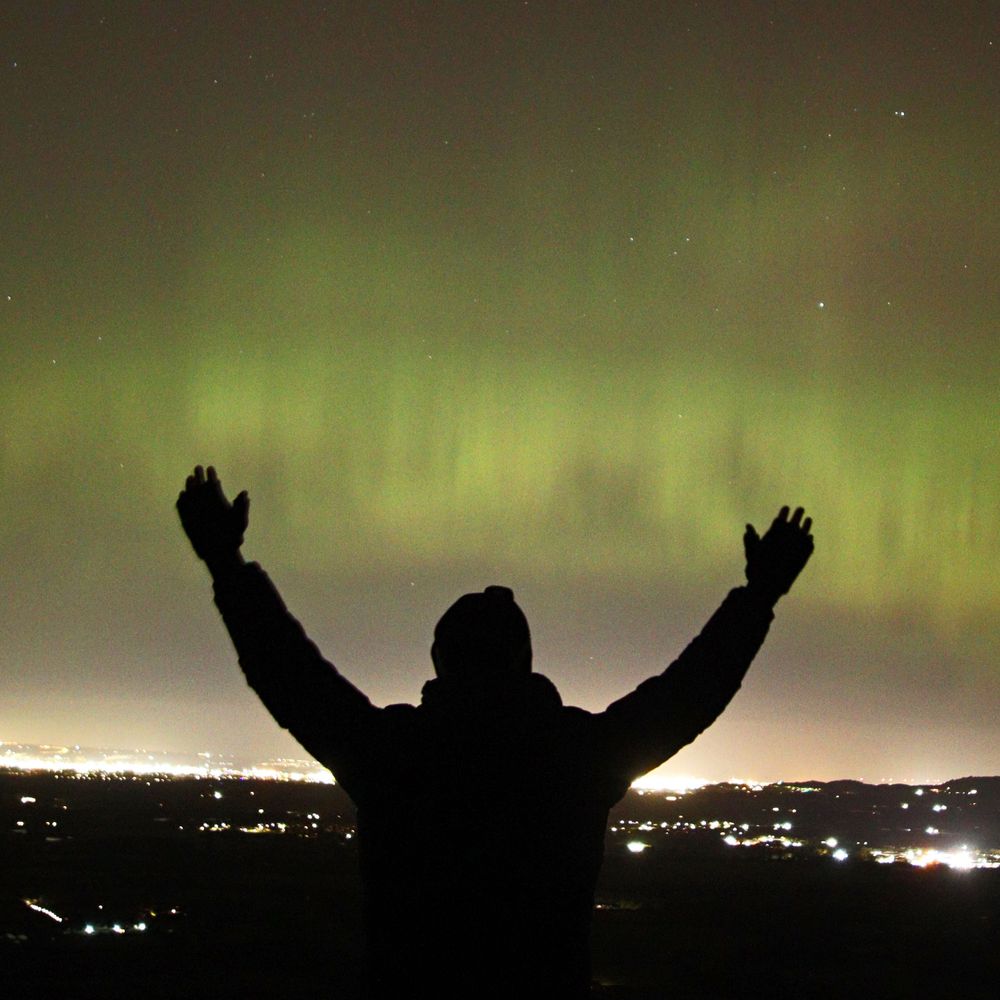
The peak of the #Geminids meteor shower occurs this evening into tomorrow morning. You could see 30 to 40 meteors per hour from a dark location. The Moon doesn't rise until around 03:00 UT so won't interfere for most of the night. Wishing you clear skies for meteor spotting! #Astronomy #Space

December 13, 2025 at 12:30 PM
The peak of the #Geminids meteor shower occurs this evening into tomorrow morning. You could see 30 to 40 meteors per hour from a dark location. The Moon doesn't rise until around 03:00 UT so won't interfere for most of the night. Wishing you clear skies for meteor spotting! #Astronomy #Space