



Jonathan Clapsaddle
@tclap.bsky.social
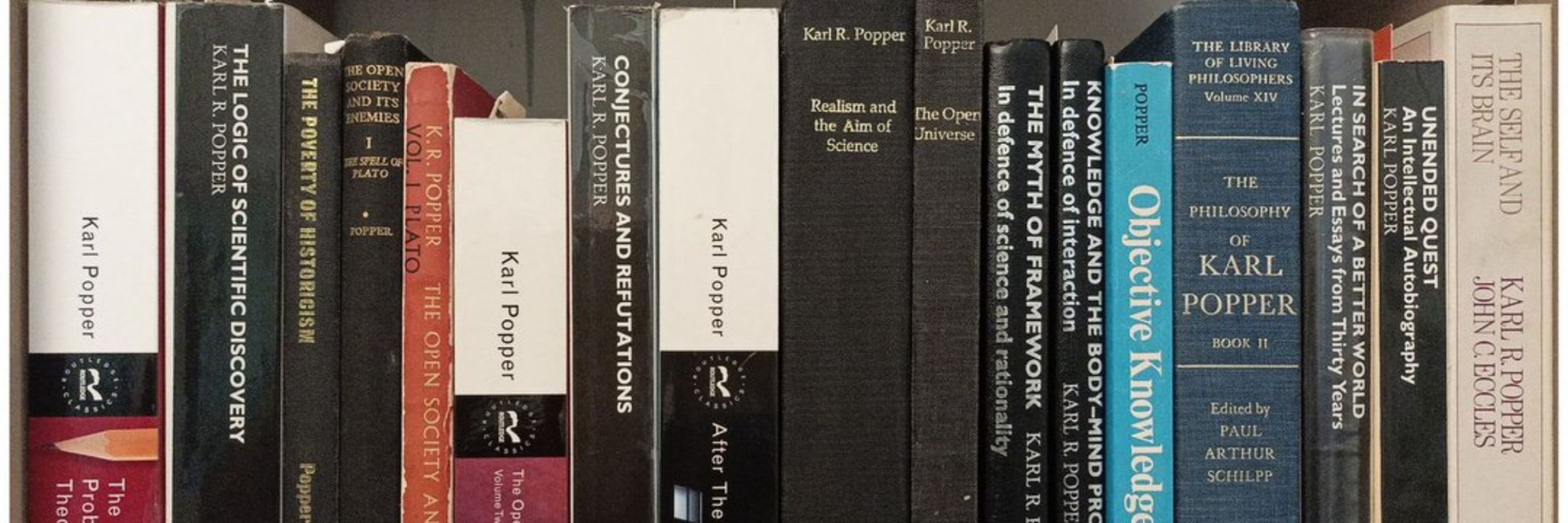
Karl Popper. Also philosophy more generally (esp. epistemology, ethics), economics, history of ideas, theories of distributive justice.
Popper aficionado 👋🏼
Popper's point in the paradox of tolerance concerns the limits to allowing political actors who are hostile to certain principles of a broadly liberal form of governance, to act without contraint. Free speech comes into it only secondarily to this point, and subject to it.
Popper's point in the paradox of tolerance concerns the limits to allowing political actors who are hostile to certain principles of a broadly liberal form of governance, to act without contraint. Free speech comes into it only secondarily to this point, and subject to it.

February 26, 2025 at 2:56 PM
Popper aficionado 👋🏼
Popper's point in the paradox of tolerance concerns the limits to allowing political actors who are hostile to certain principles of a broadly liberal form of governance, to act without contraint. Free speech comes into it only secondarily to this point, and subject to it.
Popper's point in the paradox of tolerance concerns the limits to allowing political actors who are hostile to certain principles of a broadly liberal form of governance, to act without contraint. Free speech comes into it only secondarily to this point, and subject to it.
Popper didn't claim scientific hypotheses "should be rejected as soon as... empirical evidence reveals one instance incompatible with it". Accepted contradicting evidence needed to corroborate a falsifying (and itself testable) theory, and repeated that theories shouldn't be abandoned too hastily.


February 13, 2025 at 8:06 PM
Popper didn't claim scientific hypotheses "should be rejected as soon as... empirical evidence reveals one instance incompatible with it". Accepted contradicting evidence needed to corroborate a falsifying (and itself testable) theory, and repeated that theories shouldn't be abandoned too hastily.
Popper aficionado here:
Both this (2) and the previous (1) posts don't quite get P right.
(1') the "one counterexample" had to do with the *logical* status of theories - the data here isn't a theory - not necessarily in practice.
(2') P always acknowledged probabilistic statements within science.
Both this (2) and the previous (1) posts don't quite get P right.
(1') the "one counterexample" had to do with the *logical* status of theories - the data here isn't a theory - not necessarily in practice.
(2') P always acknowledged probabilistic statements within science.

February 13, 2025 at 5:06 PM
Popper aficionado here:
Both this (2) and the previous (1) posts don't quite get P right.
(1') the "one counterexample" had to do with the *logical* status of theories - the data here isn't a theory - not necessarily in practice.
(2') P always acknowledged probabilistic statements within science.
Both this (2) and the previous (1) posts don't quite get P right.
(1') the "one counterexample" had to do with the *logical* status of theories - the data here isn't a theory - not necessarily in practice.
(2') P always acknowledged probabilistic statements within science.
Thanks. On Lakatos - criminally abbreviated - nearly all of his supposed critique of Popper is already in Popper - including the notion of research programs (that Lakatos saw in P's manuscripts).
Marxism: Popper sympathised with Marx's concerns; the critiques mostly aimed at "scientific" Marxism.
Marxism: Popper sympathised with Marx's concerns; the critiques mostly aimed at "scientific" Marxism.

February 10, 2025 at 3:48 PM
Thanks. On Lakatos - criminally abbreviated - nearly all of his supposed critique of Popper is already in Popper - including the notion of research programs (that Lakatos saw in P's manuscripts).
Marxism: Popper sympathised with Marx's concerns; the critiques mostly aimed at "scientific" Marxism.
Marxism: Popper sympathised with Marx's concerns; the critiques mostly aimed at "scientific" Marxism.
(Popper afficionado here.)
Popper's falsification criterion wasn't meant to explain as much as it was a proposal in light of philosophical problems, given accepted aims.
He later (pre-Kuhn) acknowledged the role in science of theories that don't meet it, and stressed their criticizability as key.
Popper's falsification criterion wasn't meant to explain as much as it was a proposal in light of philosophical problems, given accepted aims.
He later (pre-Kuhn) acknowledged the role in science of theories that don't meet it, and stressed their criticizability as key.

February 10, 2025 at 9:05 AM
(Popper afficionado here.)
Popper's falsification criterion wasn't meant to explain as much as it was a proposal in light of philosophical problems, given accepted aims.
He later (pre-Kuhn) acknowledged the role in science of theories that don't meet it, and stressed their criticizability as key.
Popper's falsification criterion wasn't meant to explain as much as it was a proposal in light of philosophical problems, given accepted aims.
He later (pre-Kuhn) acknowledged the role in science of theories that don't meet it, and stressed their criticizability as key.
The call for action is well placed. Still, best to see theory and action as part of the same thing, lest we repeat what Popper demonstrated in this amusing tidbit (back when it was widely held that science just *was* action - going out and collecting observations).

December 10, 2024 at 10:20 AM
The call for action is well placed. Still, best to see theory and action as part of the same thing, lest we repeat what Popper demonstrated in this amusing tidbit (back when it was widely held that science just *was* action - going out and collecting observations).
Popper enthusiast here. (He was a major - though far from sole - contributor to Tetlock's idea here.)
Note the statement isn't that all scientific knowledge is *false*, only that it's tentative. It's about the epistemic status of theories, since we don't have how to verify (or "justify") them.
Note the statement isn't that all scientific knowledge is *false*, only that it's tentative. It's about the epistemic status of theories, since we don't have how to verify (or "justify") them.

December 10, 2024 at 10:06 AM
Popper enthusiast here. (He was a major - though far from sole - contributor to Tetlock's idea here.)
Note the statement isn't that all scientific knowledge is *false*, only that it's tentative. It's about the epistemic status of theories, since we don't have how to verify (or "justify") them.
Note the statement isn't that all scientific knowledge is *false*, only that it's tentative. It's about the epistemic status of theories, since we don't have how to verify (or "justify") them.
Popper enthusiast here.
This is a common refrain, but misses its mark: Popper's falsifiability was a (normative) proposal for science. From the start (LScD §2) he stressed he wasn't attempting a description/reconstruction of how scientists think or act, but rather analyzing methodology.
This is a common refrain, but misses its mark: Popper's falsifiability was a (normative) proposal for science. From the start (LScD §2) he stressed he wasn't attempting a description/reconstruction of how scientists think or act, but rather analyzing methodology.

December 10, 2024 at 9:18 AM
Popper enthusiast here.
This is a common refrain, but misses its mark: Popper's falsifiability was a (normative) proposal for science. From the start (LScD §2) he stressed he wasn't attempting a description/reconstruction of how scientists think or act, but rather analyzing methodology.
This is a common refrain, but misses its mark: Popper's falsifiability was a (normative) proposal for science. From the start (LScD §2) he stressed he wasn't attempting a description/reconstruction of how scientists think or act, but rather analyzing methodology.
From Popper's "The Rationality of Scientific Revolutions" in The Myth of the Framework (1975/1994).

December 5, 2024 at 10:20 PM
From Popper's "The Rationality of Scientific Revolutions" in The Myth of the Framework (1975/1994).
There are 2 problems here. One is that Popper never denied the real value of unobservable phenomena to the scientific enterprise throughout its history - he repeatedly acknowledged it.
The second is that this ignores how his position on untestable theories changed for his last 40 years of writing.👇🏼
The second is that this ignores how his position on untestable theories changed for his last 40 years of writing.👇🏼

December 5, 2024 at 7:12 PM
There are 2 problems here. One is that Popper never denied the real value of unobservable phenomena to the scientific enterprise throughout its history - he repeatedly acknowledged it.
The second is that this ignores how his position on untestable theories changed for his last 40 years of writing.👇🏼
The second is that this ignores how his position on untestable theories changed for his last 40 years of writing.👇🏼
Popper enthusiast here:
The story of Popper's transmission as having offered a science devoid of human influence is too long to recount, but it's utterly mistaken. His project was to try and improve _human_ scientific practice given, as he repeatedly stressed, our numerous insuperable limitations.
The story of Popper's transmission as having offered a science devoid of human influence is too long to recount, but it's utterly mistaken. His project was to try and improve _human_ scientific practice given, as he repeatedly stressed, our numerous insuperable limitations.

December 5, 2024 at 6:02 PM
Popper enthusiast here:
The story of Popper's transmission as having offered a science devoid of human influence is too long to recount, but it's utterly mistaken. His project was to try and improve _human_ scientific practice given, as he repeatedly stressed, our numerous insuperable limitations.
The story of Popper's transmission as having offered a science devoid of human influence is too long to recount, but it's utterly mistaken. His project was to try and improve _human_ scientific practice given, as he repeatedly stressed, our numerous insuperable limitations.
From Popper's "Realism and the Aim of Science".

December 5, 2024 at 5:40 PM
From Popper's "Realism and the Aim of Science".
Popper enthusiast here.
His criteria were wider than suggested here: He included universal theories that rule out states of affairs (logical criterion), and (so) in practice - detectable states of affairs.
He certainly viewed quantum theory as scientific, returning to it over decades of writing.
His criteria were wider than suggested here: He included universal theories that rule out states of affairs (logical criterion), and (so) in practice - detectable states of affairs.
He certainly viewed quantum theory as scientific, returning to it over decades of writing.

December 2, 2024 at 3:02 PM
Popper enthusiast here.
His criteria were wider than suggested here: He included universal theories that rule out states of affairs (logical criterion), and (so) in practice - detectable states of affairs.
He certainly viewed quantum theory as scientific, returning to it over decades of writing.
His criteria were wider than suggested here: He included universal theories that rule out states of affairs (logical criterion), and (so) in practice - detectable states of affairs.
He certainly viewed quantum theory as scientific, returning to it over decades of writing.