


Ziyi
@ziyizh.bsky.social
Reposted by Ziyi

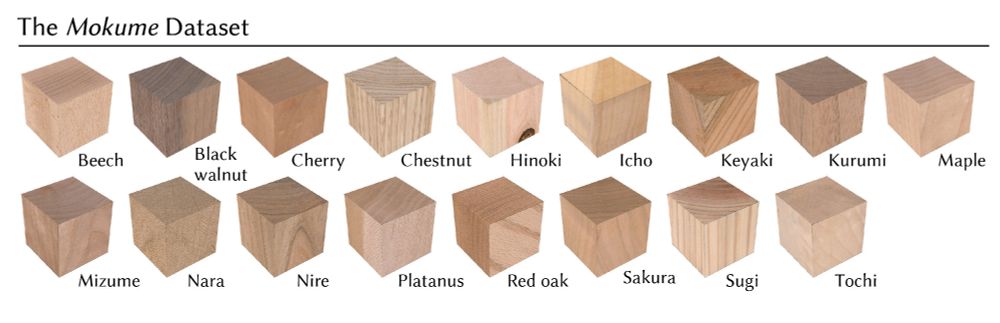
How can one reconstruct the complete 3D interior of a wood block using only photos of its surfaces? 🪵
At SIGGRAPH'25 (Thursday!), Maria Larsson will present *Mokume*: a dataset of 190 diverse wood samples and a pipeline that solves this inverse texturing challenge. 🧵👇
At SIGGRAPH'25 (Thursday!), Maria Larsson will present *Mokume*: a dataset of 190 diverse wood samples and a pipeline that solves this inverse texturing challenge. 🧵👇
August 8, 2025 at 11:53 AM
How can one reconstruct the complete 3D interior of a wood block using only photos of its surfaces? 🪵
At SIGGRAPH'25 (Thursday!), Maria Larsson will present *Mokume*: a dataset of 190 diverse wood samples and a pipeline that solves this inverse texturing challenge. 🧵👇
At SIGGRAPH'25 (Thursday!), Maria Larsson will present *Mokume*: a dataset of 190 diverse wood samples and a pipeline that solves this inverse texturing challenge. 🧵👇
Reposted by Ziyi
Methods like NeRF and Gaussian Splats model the world as radioactive fog, rendered using alpha blending. This produces great results.. but are volumes the only way to get there?🤔 Our new SIGGRAPH'25 paper directly reconstructs surfaces without heuristics or regularizers.
August 7, 2025 at 12:21 PM
Methods like NeRF and Gaussian Splats model the world as radioactive fog, rendered using alpha blending. This produces great results.. but are volumes the only way to get there?🤔 Our new SIGGRAPH'25 paper directly reconstructs surfaces without heuristics or regularizers.
Reposted by Ziyi
Dr.Jit+Mitsuba just added support for fused neural networks, hash grids, and function freezing to eliminate tracing overheads. This significantly accelerates optimization &realtime workloads and enables custom Instant NGP and neural material/radiosity/path guiding projects. What will you do with it?

August 7, 2025 at 11:15 AM
Dr.Jit+Mitsuba just added support for fused neural networks, hash grids, and function freezing to eliminate tracing overheads. This significantly accelerates optimization &realtime workloads and enables custom Instant NGP and neural material/radiosity/path guiding projects. What will you do with it?
Reposted by Ziyi

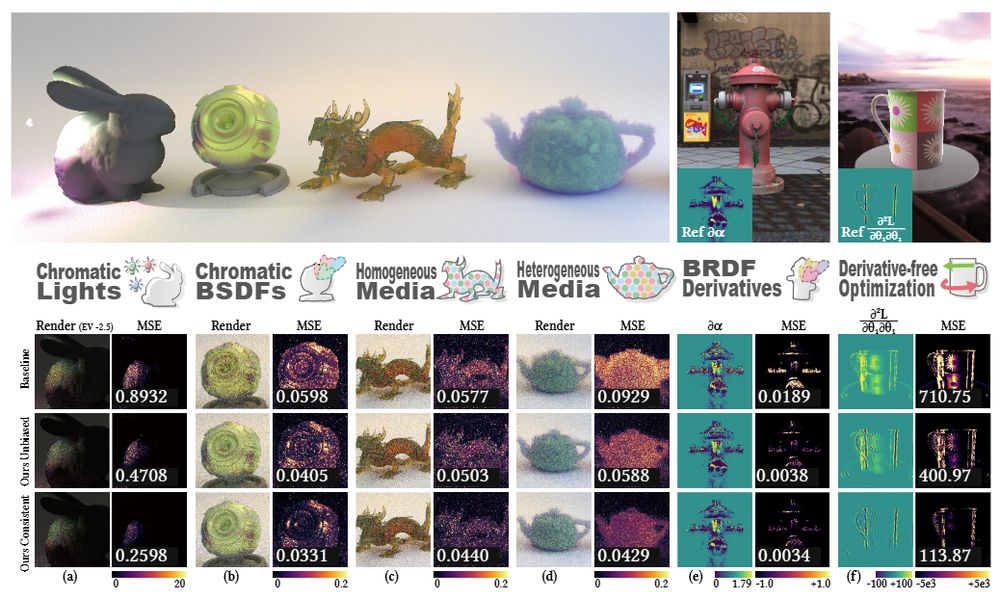
Rendering nerds! Check out our latest work "Vector-Valued Monte Carlo Integration Using Ratio Control Variates" that has just gotten the best paper award at SIGGRAPH 2025. This paper presents a method that reduces variance of a wide range of rendering and diff. rendering tasks with negligible cost.
June 14, 2025 at 5:26 PM
Rendering nerds! Check out our latest work "Vector-Valued Monte Carlo Integration Using Ratio Control Variates" that has just gotten the best paper award at SIGGRAPH 2025. This paper presents a method that reduces variance of a wide range of rendering and diff. rendering tasks with negligible cost.
Reposted by Ziyi

Our #SGP25 work studies a simple and effective way to uniformly sample implicit surfaces by casting rays. (1/9)
“Uniform Sampling of Surfaces by Casting Rays” w/ @abhishekmadan.bsky.social @nmwsharp.bsky.social and Alec Jacobson
“Uniform Sampling of Surfaces by Casting Rays” w/ @abhishekmadan.bsky.social @nmwsharp.bsky.social and Alec Jacobson
June 10, 2025 at 2:40 PM
Our #SGP25 work studies a simple and effective way to uniformly sample implicit surfaces by casting rays. (1/9)
“Uniform Sampling of Surfaces by Casting Rays” w/ @abhishekmadan.bsky.social @nmwsharp.bsky.social and Alec Jacobson
“Uniform Sampling of Surfaces by Casting Rays” w/ @abhishekmadan.bsky.social @nmwsharp.bsky.social and Alec Jacobson
Reposted by Ziyi
The latest development version of Dr.Jit now provides built-in support for evaluating and training MLPs (including fusing them into rendering workloads). They compile to efficient Tensor Core operations via NVIDIA's Cooperative Vector extension. Details: drjit.readthedocs.io/en/latest/nn...

June 1, 2025 at 2:04 AM
The latest development version of Dr.Jit now provides built-in support for evaluating and training MLPs (including fusing them into rendering workloads). They compile to efficient Tensor Core operations via NVIDIA's Cooperative Vector extension. Details: drjit.readthedocs.io/en/latest/nn...
Reposted by Ziyi

Inverse rendering has become a standard tool for 3D reconstruction problems. However, recovering high-frequency appearance textures is challenging. In our SIGGRAPH 2025 paper, we propose several techniques to robustly reconstruct complex appearances (e.g., human skin). 1/n
May 12, 2025 at 4:20 PM
Inverse rendering has become a standard tool for 3D reconstruction problems. However, recovering high-frequency appearance textures is challenging. In our SIGGRAPH 2025 paper, we propose several techniques to robustly reconstruct complex appearances (e.g., human skin). 1/n
Reposted by Ziyi
Fun new paper at #SIGGRAPH2025:
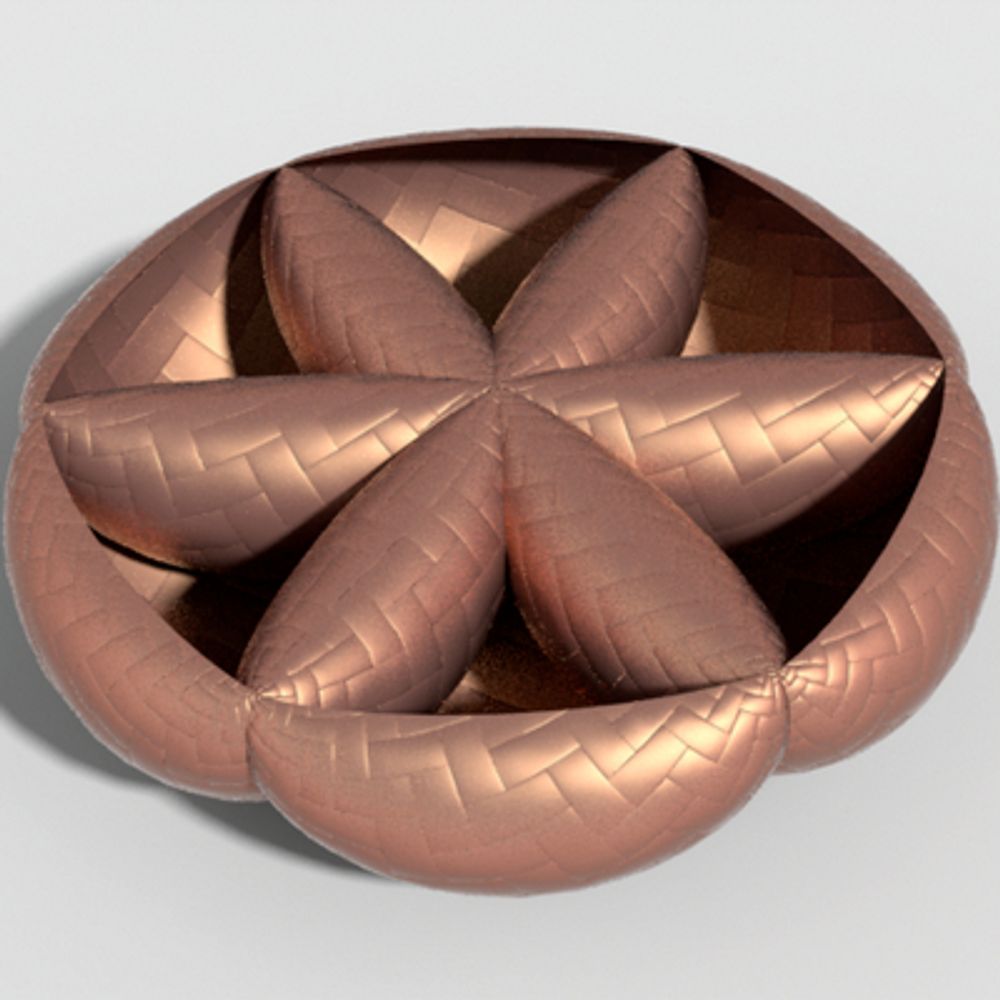
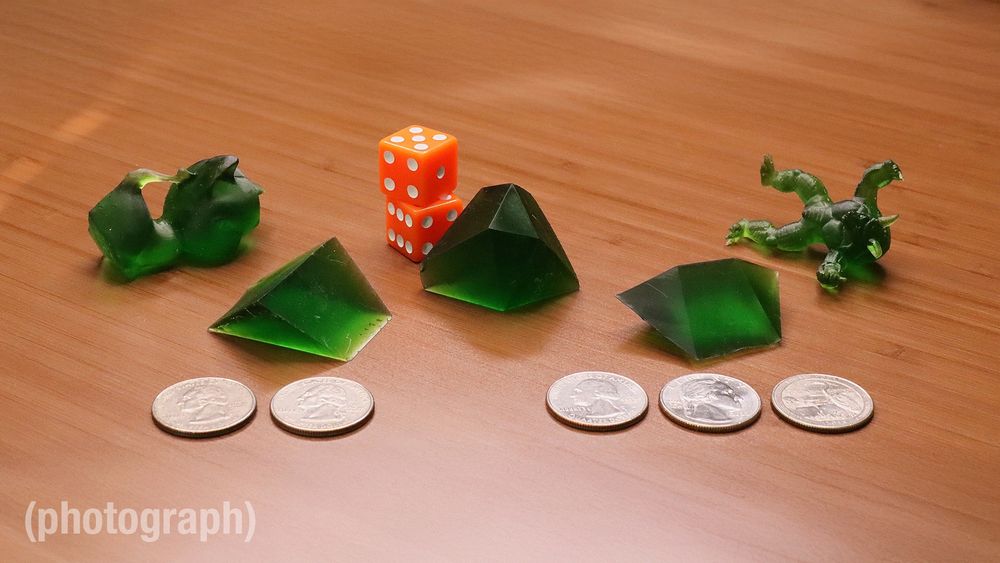
What if instead of two 6-sided dice, you could roll a single "funky-shaped" die that gives the same statistics (e.g, 7 is twice as likely as 4 or 10).
Or make fair dice in any shape—e.g., dragons rather than cubes?
That's exactly what we do! 1/n
What if instead of two 6-sided dice, you could roll a single "funky-shaped" die that gives the same statistics (e.g, 7 is twice as likely as 4 or 10).
Or make fair dice in any shape—e.g., dragons rather than cubes?
That's exactly what we do! 1/n
May 21, 2025 at 4:29 PM
Fun new paper at #SIGGRAPH2025:
What if instead of two 6-sided dice, you could roll a single "funky-shaped" die that gives the same statistics (e.g, 7 is twice as likely as 4 or 10).
Or make fair dice in any shape—e.g., dragons rather than cubes?
That's exactly what we do! 1/n
What if instead of two 6-sided dice, you could roll a single "funky-shaped" die that gives the same statistics (e.g, 7 is twice as likely as 4 or 10).
Or make fair dice in any shape—e.g., dragons rather than cubes?
That's exactly what we do! 1/n
Reposted by Ziyi
cseweb.ucsd.edu/~tzli/Score_...
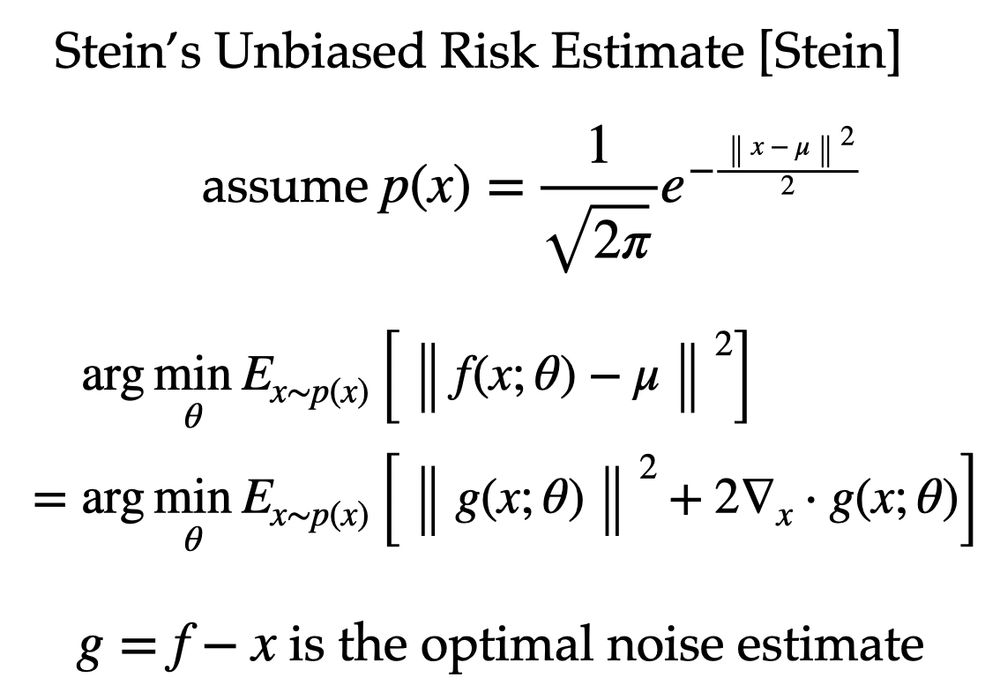
I wrote down some random notes about the connection between score matching (aka diffusion models) and Stein's unbiased risk estimate (SURE). It shows why optimal denoising lead to optimal score. Not a new observation but doesn't seem to be talked enough in literature.
I wrote down some random notes about the connection between score matching (aka diffusion models) and Stein's unbiased risk estimate (SURE). It shows why optimal denoising lead to optimal score. Not a new observation but doesn't seem to be talked enough in literature.

December 5, 2024 at 9:44 PM
cseweb.ucsd.edu/~tzli/Score_...
I wrote down some random notes about the connection between score matching (aka diffusion models) and Stein's unbiased risk estimate (SURE). It shows why optimal denoising lead to optimal score. Not a new observation but doesn't seem to be talked enough in literature.
I wrote down some random notes about the connection between score matching (aka diffusion models) and Stein's unbiased risk estimate (SURE). It shows why optimal denoising lead to optimal score. Not a new observation but doesn't seem to be talked enough in literature.
Reposted by Ziyi

We are excited to present a SIGGRAPH Asia paper exploring a new application of inverse rendering to Tomographic Volumetric Additive Manufacturing (TVAM), a new light-based 3D printing technology that can print objects in less than a minute.
November 27, 2024 at 2:12 PM
We are excited to present a SIGGRAPH Asia paper exploring a new application of inverse rendering to Tomographic Volumetric Additive Manufacturing (TVAM), a new light-based 3D printing technology that can print objects in less than a minute.
Reposted by Ziyi
Following over 1.5 years of hard work (w/@njroussel.bsky.social &@rtabbara.bsky.social), we just released a brand-new version of Dr.Jit (v1.0), my lab's differentiable rendering compiler along with an updated Mitsuba (v3.6). The list of changes is insanely long—here is what we're most excited about🧵
November 26, 2024 at 3:09 PM
Following over 1.5 years of hard work (w/@njroussel.bsky.social &@rtabbara.bsky.social), we just released a brand-new version of Dr.Jit (v1.0), my lab's differentiable rendering compiler along with an updated Mitsuba (v3.6). The list of changes is insanely long—here is what we're most excited about🧵
Reposted by Ziyi
Hi! I'll share classical and less known graphics (and other) papers here. The first paper I'll share is "Model-Based 3D Hand Pose Estimation from Monocular Video" from de la Gorce et al. in 2011. They proposed one of the first differentiable rasterizers that can properly handle edge discontinuities.


November 20, 2024 at 6:31 PM
Hi! I'll share classical and less known graphics (and other) papers here. The first paper I'll share is "Model-Based 3D Hand Pose Estimation from Monocular Video" from de la Gorce et al. in 2011. They proposed one of the first differentiable rasterizers that can properly handle edge discontinuities.