




January 17, 2026 at 12:12 PM

There’s also a misapplication of r/K selection theory (a real evobio principle) to different human races or cultures (conflating the two):
— “western” people are adapted to small families with tight bonds producing vigorous children
— other people breed like rats
7a/9
— “western” people are adapted to small families with tight bonds producing vigorous children
— other people breed like rats
7a/9
J. Philippe Rushton - Wikipedia
en.wikipedia.org
January 15, 2026 at 3:39 PM
There’s also a misapplication of r/K selection theory (a real evobio principle) to different human races or cultures (conflating the two):
— “western” people are adapted to small families with tight bonds producing vigorous children
— other people breed like rats
7a/9
— “western” people are adapted to small families with tight bonds producing vigorous children
— other people breed like rats
7a/9

De Filippo et al. investigated the evolution of recombination suppression in dung fungi, revealing multiple, likely independent evolutionary strata, associated with an extended diploid-like stage in Schizothecium fungi.
🔗 doi.org/10.1093/molbev/msaf325
#evobio #molbio #fungi
🔗 doi.org/10.1093/molbev/msaf325
#evobio #molbio #fungi

Stepwise recombination suppression around the mating-type locus associated with a diploid-like life cycle in Schizothecium fungi
Abstract. Recombination suppression often evolves around sex-determining loci and extends stepwise, resulting in adjacent regions with different levels of
doi.org
January 15, 2026 at 3:20 PM
De Filippo et al. investigated the evolution of recombination suppression in dung fungi, revealing multiple, likely independent evolutionary strata, associated with an extended diploid-like stage in Schizothecium fungi.
🔗 doi.org/10.1093/molbev/msaf325
#evobio #molbio #fungi
🔗 doi.org/10.1093/molbev/msaf325
#evobio #molbio #fungi
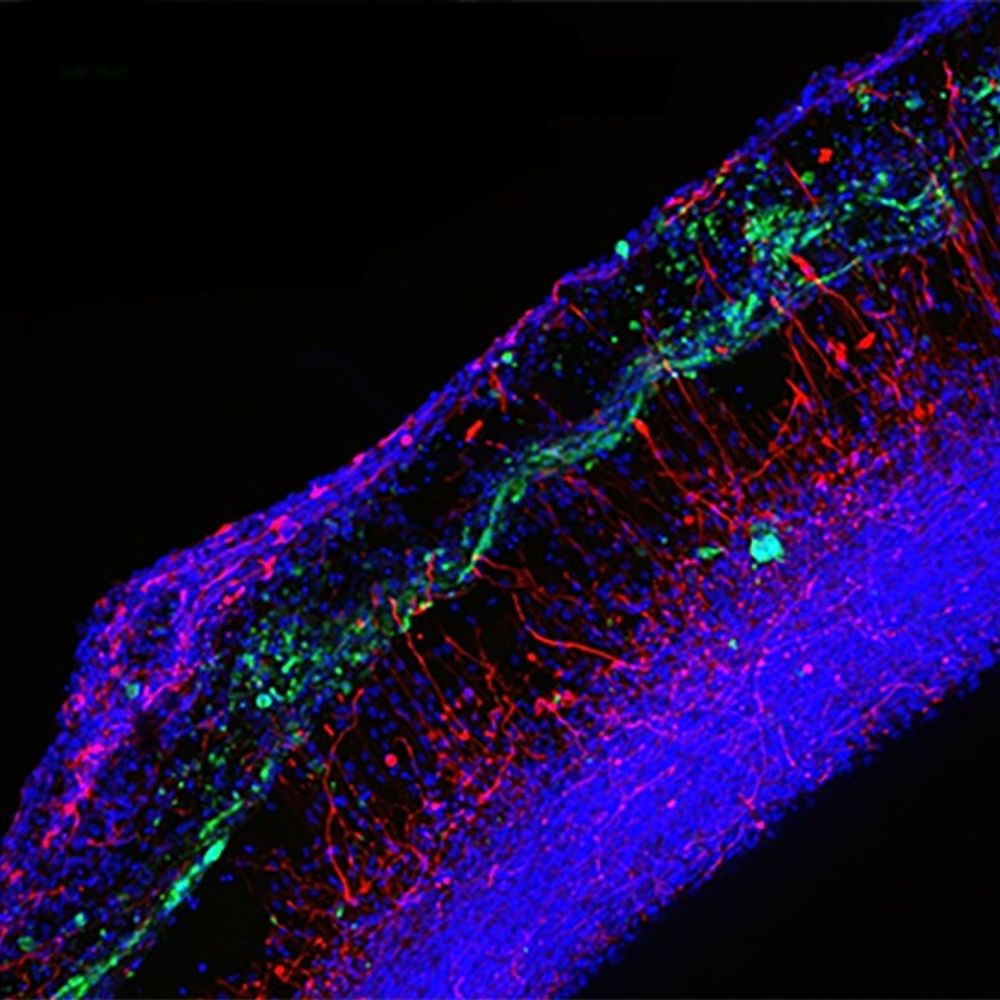
This looks like a fantastic graduate meeting by our EvoBIo colleagues of the DZG! 👏
Please share: We are hosting the 2026 DZG evolutionary biology graduate meeting at Uni Hamburg on March 25-27: "Interactions and Coevolution: from Molecules to Species". #PhD students, early postdocs and advanced Master students in evolutionary biology are welcome to register! t1p.de/dzg2026evolbio

January 15, 2026 at 9:24 AM
This looks like a fantastic graduate meeting by our EvoBIo colleagues of the DZG! 👏
@phiferrixey.bsky.social Ward & @katyamack.bsky.social investigated wild-derived strains of house mice from different climates on standard and high-fat diets, showing the potential of alternative splicing for adaptation and plasticity.
🔗 doi.org/10.1093/molbev/msaf332
#evobio #molbio
🔗 doi.org/10.1093/molbev/msaf332
#evobio #molbio

Alternative splicing contributes to plasticity and regulatory divergence in locally adapted house mice from the Americas
Abstract. Alternative splicing is a major driver of transcriptome and proteome variation, but the role of alternative splicing in regulatory evolution is o
doi.org
January 14, 2026 at 1:48 PM
@phiferrixey.bsky.social Ward & @katyamack.bsky.social investigated wild-derived strains of house mice from different climates on standard and high-fat diets, showing the potential of alternative splicing for adaptation and plasticity.
🔗 doi.org/10.1093/molbev/msaf332
#evobio #molbio
🔗 doi.org/10.1093/molbev/msaf332
#evobio #molbio
Chrudinová, @emrahaltindis.bsky.social et al. used >1000 insulin and insulin-like growth factor sequences from vertebrates, invertebrates, and viruses to uncover the evolution of this essential metabolic and developmental system.
🔗 doi.org/10.1093/molbev/msaf319
#evobio #molbio
🔗 doi.org/10.1093/molbev/msaf319
#evobio #molbio

Evolution of Insulin, Insulin-like Growth Factors, and Their Cognate Receptors in Vertebrates, Invertebrates, and Viruses
Abstract. The insulin and insulin-like growth factor (IGF) system regulates essential biological functions such as growth, metabolism, and development. Whi
doi.org
January 14, 2026 at 1:41 PM
Chrudinová, @emrahaltindis.bsky.social et al. used >1000 insulin and insulin-like growth factor sequences from vertebrates, invertebrates, and viruses to uncover the evolution of this essential metabolic and developmental system.
🔗 doi.org/10.1093/molbev/msaf319
#evobio #molbio
🔗 doi.org/10.1093/molbev/msaf319
#evobio #molbio
OTD 1908 Willhelm Weinberg gave a talk to the Society for the Natural History of the Fatherland in Württemberg giving the population genetics equations GH Hardy would independently publish 5 months later. It was 35 years before his work was recognized in the Anglophone world.
🐋🌱🥢🧪 #EvoBio #HistSTM
🐋🌱🥢🧪 #EvoBio #HistSTM

January 13, 2026 at 5:27 PM

Are you a #PhD student in #EvolutionaryBiology? Don’t miss the opportunity to join this year’s #EMPSEB — a conference organized by PhD students, for PhD students!
🗓️ Submit your abstract before February 1st.
👉 empsebconf.github.io
#EMPSEB31 #conference #EvoBio @eseb.bsky.social
🗓️ Submit your abstract before February 1st.
👉 empsebconf.github.io
#EMPSEB31 #conference #EvoBio @eseb.bsky.social
January 13, 2026 at 9:51 AM
Are you a #PhD student in #EvolutionaryBiology? Don’t miss the opportunity to join this year’s #EMPSEB — a conference organized by PhD students, for PhD students!
🗓️ Submit your abstract before February 1st.
👉 empsebconf.github.io
#EMPSEB31 #conference #EvoBio @eseb.bsky.social
🗓️ Submit your abstract before February 1st.
👉 empsebconf.github.io
#EMPSEB31 #conference #EvoBio @eseb.bsky.social
Contingent responses of diversity and disparity of different animal groups to the P-Tr mass extinction:
"Ammonoids...brachiopods exhibit refilling of vacated morphospace of shell outlines, Ostracods underwent adaptive radiation"
www.sciencedirect.com/science/arti...
🧪 #Geology ⚒️ #Paleobio #EvoBio
"Ammonoids...brachiopods exhibit refilling of vacated morphospace of shell outlines, Ostracods underwent adaptive radiation"
www.sciencedirect.com/science/arti...
🧪 #Geology ⚒️ #Paleobio #EvoBio


January 13, 2026 at 9:14 AM
Contingent responses of diversity and disparity of different animal groups to the P-Tr mass extinction:
"Ammonoids...brachiopods exhibit refilling of vacated morphospace of shell outlines, Ostracods underwent adaptive radiation"
www.sciencedirect.com/science/arti...
🧪 #Geology ⚒️ #Paleobio #EvoBio
"Ammonoids...brachiopods exhibit refilling of vacated morphospace of shell outlines, Ostracods underwent adaptive radiation"
www.sciencedirect.com/science/arti...
🧪 #Geology ⚒️ #Paleobio #EvoBio
"...occurrence [of SSB] was more likely in species inhabiting drier environments with increased food scarcity and predation pressure, in species with greater size dimorphism and longer lifespans and in those with more complex social structures and hierarchies."
🧪 #EvoBio
🧪 #EvoBio

January 12, 2026 at 8:39 PM
"...occurrence [of SSB] was more likely in species inhabiting drier environments with increased food scarcity and predation pressure, in species with greater size dimorphism and longer lifespans and in those with more complex social structures and hierarchies."
🧪 #EvoBio
🧪 #EvoBio
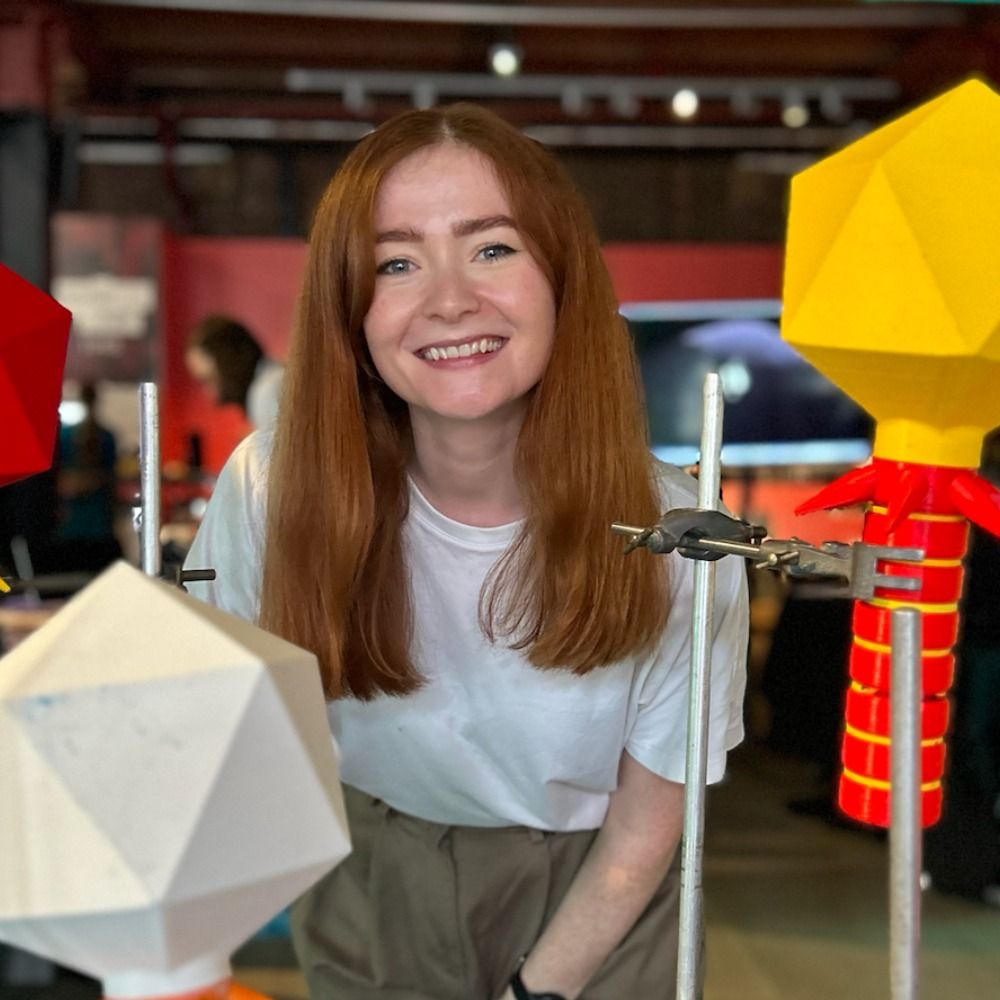

Ecologist friends! Can anyone recommend papers that link species abundance distributions to ecological processes? I'm interested in what inferences can be made from SADs, and the theoretical basis for those inferences. Thanks 🫶
January 12, 2026 at 3:34 PM

Massive revision to our paper on relaxed selection of male reproductive genes in gorillas. TL;DR, they are eroding away coincident with the shift to polygyny in gorillas; big bodies no need for good sperm. 🦍 🤷 🧪 #EvoBio #SpermCompetition
www.biorxiv.org/content/10.1...
www.biorxiv.org/content/10.1...
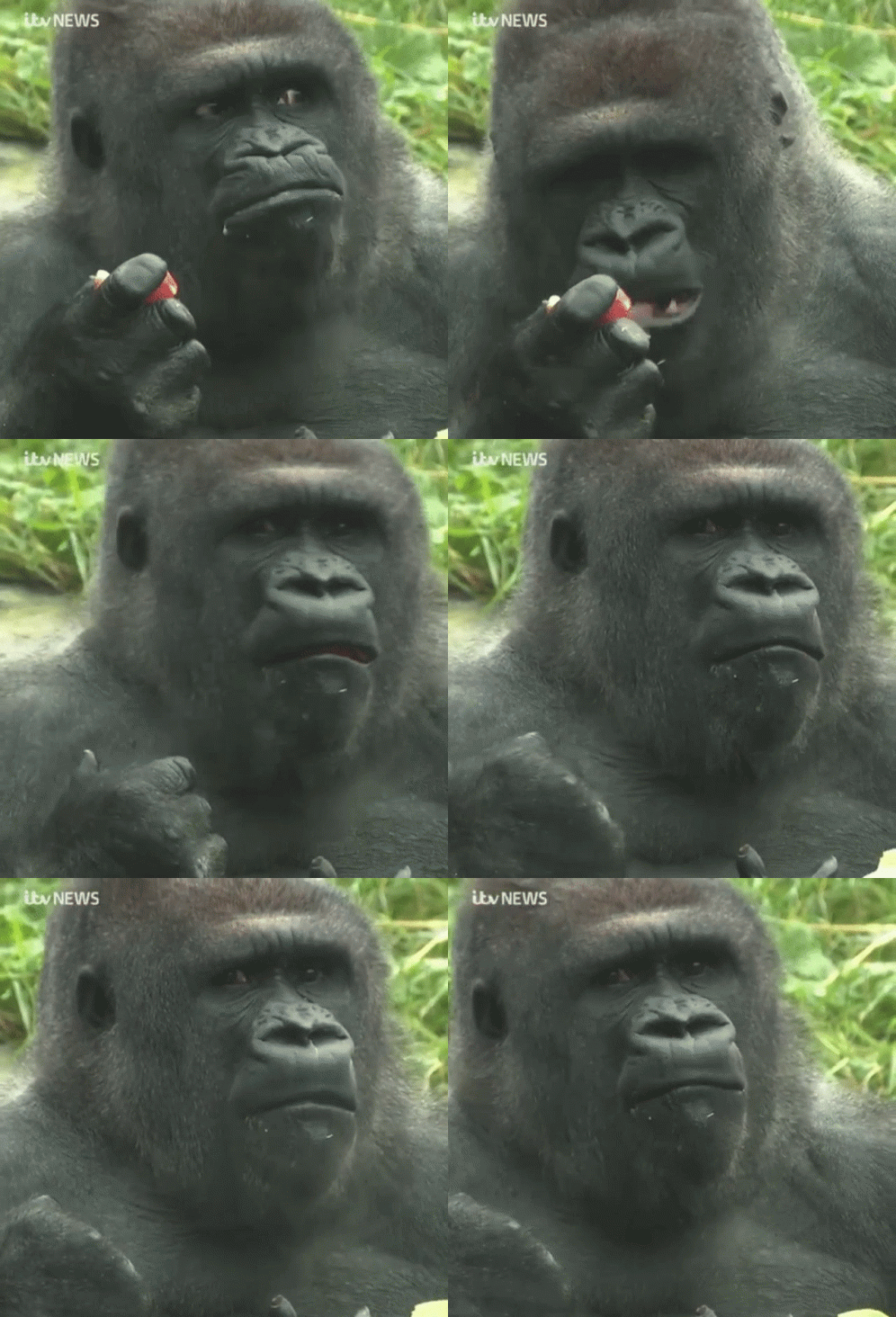
a close up of a gorilla eating a strawberry with itv news written on the bottom right
ALT: a close up of a gorilla eating a strawberry with itv news written on the bottom right
media.tenor.com
January 12, 2026 at 2:56 PM
Massive revision to our paper on relaxed selection of male reproductive genes in gorillas. TL;DR, they are eroding away coincident with the shift to polygyny in gorillas; big bodies no need for good sperm. 🦍 🤷 🧪 #EvoBio #SpermCompetition
www.biorxiv.org/content/10.1...
www.biorxiv.org/content/10.1...
Interested in genetic diversity-area relationships as a potential proxy for genetic diversity? Check out Chloé Schmidt's latest 😀
@chloology.bsky.social 🧪🌎🧬🌐
#consgen #popgen #evobio
with Sean Hoban, @debbiemleigh.bsky.social, & Walter Jetz
onlinelibrary.wiley.com/doi/full/10....
@chloology.bsky.social 🧪🌎🧬🌐
#consgen #popgen #evobio
with Sean Hoban, @debbiemleigh.bsky.social, & Walter Jetz
onlinelibrary.wiley.com/doi/full/10....

January 9, 2026 at 5:38 PM
Interested in genetic diversity-area relationships as a potential proxy for genetic diversity? Check out Chloé Schmidt's latest 😀
@chloology.bsky.social 🧪🌎🧬🌐
#consgen #popgen #evobio
with Sean Hoban, @debbiemleigh.bsky.social, & Walter Jetz
onlinelibrary.wiley.com/doi/full/10....
@chloology.bsky.social 🧪🌎🧬🌐
#consgen #popgen #evobio
with Sean Hoban, @debbiemleigh.bsky.social, & Walter Jetz
onlinelibrary.wiley.com/doi/full/10....

🎙️ Our final keynote is Dr. Abderrahman Khila from the Institute of Functional Genomics. Lyon, France.
Using tools from transcriptomics to epigenetics, he studies how genes and development interact with selection to shape phenotypes.
Our keynote lineup is complete!🧬✨
#EMPSEB31 #EvoBio #EvoDevo
Using tools from transcriptomics to epigenetics, he studies how genes and development interact with selection to shape phenotypes.
Our keynote lineup is complete!🧬✨
#EMPSEB31 #EvoBio #EvoDevo

January 9, 2026 at 1:12 PM
@simonokholm.bsky.social et al. examine the skin cancer hypothesis for the evolution of dark skin in early humans, arguing that protective effects were likely selected to mitigate other UV-related risks, rather than skin cancer.
🔗 doi.org/10.1093/molbev/msaf306
#evobio #molbio #humanevolution
🔗 doi.org/10.1093/molbev/msaf306
#evobio #molbio #humanevolution

January 9, 2026 at 9:07 AM
@simonokholm.bsky.social et al. examine the skin cancer hypothesis for the evolution of dark skin in early humans, arguing that protective effects were likely selected to mitigate other UV-related risks, rather than skin cancer.
🔗 doi.org/10.1093/molbev/msaf306
#evobio #molbio #humanevolution
🔗 doi.org/10.1093/molbev/msaf306
#evobio #molbio #humanevolution

Mark your calendar for 2/12 at 7:00 PM EST/4:00 PST for NCSE and NABT's free Darwin Day webinar! Rick and Lindsay Hunter will share stories from the discovery and excavation of the first-known fossils of Homo naledi. To register - member.nabt.org/event/2026Da... #DarwinDay2026 #EduSky #evobio

January 8, 2026 at 11:06 PM
Mark your calendar for 2/12 at 7:00 PM EST/4:00 PST for NCSE and NABT's free Darwin Day webinar! Rick and Lindsay Hunter will share stories from the discovery and excavation of the first-known fossils of Homo naledi. To register - member.nabt.org/event/2026Da... #DarwinDay2026 #EduSky #evobio
Alfred Russel Wallace born OTD in 1823.
He said he shared with Darwin “an intense interest in … the variety [of living things] that catches the eye of the observer even among those which are very much alike, but which are soon found to differ in several distinct characters.”
🌱🐋🧪 #HistSTM #EvoBio
He said he shared with Darwin “an intense interest in … the variety [of living things] that catches the eye of the observer even among those which are very much alike, but which are soon found to differ in several distinct characters.”
🌱🐋🧪 #HistSTM #EvoBio

January 8, 2026 at 4:03 PM
Li, Huang & Li show that Asgard primases fall into two major groups, the Heimdall and Loki groups, which are phylogenetically and structurally more closely related to eukaryotic primases and to primases from non-Asgard archaea, respectively.
🔗 doi.org/10.1093/molbev/msaf330
#evobio #molbio
🔗 doi.org/10.1093/molbev/msaf330
#evobio #molbio

Phylogenetic and functional characterization of Asgard primases
Abstract. Eukarya resemble Archaea in DNA replication. Analysis of the DNA replication machinery of Asgard archaea may provide a valuable test of the hypot
doi.org
January 7, 2026 at 2:52 PM
Li, Huang & Li show that Asgard primases fall into two major groups, the Heimdall and Loki groups, which are phylogenetically and structurally more closely related to eukaryotic primases and to primases from non-Asgard archaea, respectively.
🔗 doi.org/10.1093/molbev/msaf330
#evobio #molbio
🔗 doi.org/10.1093/molbev/msaf330
#evobio #molbio
Shi et al. investigate the genomic architecture of distyly in Cordia subcordata; the candidate S-locus contained 12 genes, including CsGA2ox6, exclusively expressed in S-morph. Functional assays support this gene's role in heterostyly.
🔗 doi.org/10.1093/molbev/msaf322
#evobio #molbio #PlantSky
🔗 doi.org/10.1093/molbev/msaf322
#evobio #molbio #PlantSky

January 7, 2026 at 1:32 PM
Shi et al. investigate the genomic architecture of distyly in Cordia subcordata; the candidate S-locus contained 12 genes, including CsGA2ox6, exclusively expressed in S-morph. Functional assays support this gene's role in heterostyly.
🔗 doi.org/10.1093/molbev/msaf322
#evobio #molbio #PlantSky
🔗 doi.org/10.1093/molbev/msaf322
#evobio #molbio #PlantSky
Tang et al. analyze genome data from 11 Xisima Cemetery individuals (China's Central Plain), demonstrating that social stratification occurred without corresponding genetic distinction, supporting decoupling of social hierarchy from genetics.
🔗 doi.org/10.1093/molbev/msaf316
#evobio #molbio
🔗 doi.org/10.1093/molbev/msaf316
#evobio #molbio

January 7, 2026 at 9:05 AM
Tang et al. analyze genome data from 11 Xisima Cemetery individuals (China's Central Plain), demonstrating that social stratification occurred without corresponding genetic distinction, supporting decoupling of social hierarchy from genetics.
🔗 doi.org/10.1093/molbev/msaf316
#evobio #molbio
🔗 doi.org/10.1093/molbev/msaf316
#evobio #molbio
Interesting!
"Fossils in storm beds plus paleoclimate modelling reveal a seasonal, nearshore setting like that of modern horseshoe crabs."
www.sciencedirect.com/science/arti...
🧪 #Geology ⚒️ #Paleobio #EvoBio
"Fossils in storm beds plus paleoclimate modelling reveal a seasonal, nearshore setting like that of modern horseshoe crabs."
www.sciencedirect.com/science/arti...
🧪 #Geology ⚒️ #Paleobio #EvoBio

January 6, 2026 at 9:09 PM
Interesting!
"Fossils in storm beds plus paleoclimate modelling reveal a seasonal, nearshore setting like that of modern horseshoe crabs."
www.sciencedirect.com/science/arti...
🧪 #Geology ⚒️ #Paleobio #EvoBio
"Fossils in storm beds plus paleoclimate modelling reveal a seasonal, nearshore setting like that of modern horseshoe crabs."
www.sciencedirect.com/science/arti...
🧪 #Geology ⚒️ #Paleobio #EvoBio
Thawornwattana, Rannala & @zihengyang.bsky.social use simulation to study the false positive rate of a Bayesian test of gene flow under the MSC with multiple influencing factors.
🔗 doi.org/10.1093/molbev/msaf327
#evobio #molbio #compbio
🔗 doi.org/10.1093/molbev/msaf327
#evobio #molbio #compbio

On the robustness of Bayesian inference of gene flow to intragenic recombination and natural selection
Abstract. The multispecies coalescent (MSC) model provides a framework for detecting gene flow using genomic data, including between sister species. Howeve
doi.org
January 5, 2026 at 3:21 PM
Thawornwattana, Rannala & @zihengyang.bsky.social use simulation to study the false positive rate of a Bayesian test of gene flow under the MSC with multiple influencing factors.
🔗 doi.org/10.1093/molbev/msaf327
#evobio #molbio #compbio
🔗 doi.org/10.1093/molbev/msaf327
#evobio #molbio #compbio
@mariusmaur.bsky.social et al. investigate the venom system in Neuroptera by integrating genomics, transcriptomics and functional assays, showing that their toxin arsenal is the result of a multitude of genomic and evolutionary mechanisms.
🔗 doi.org/10.1093/molbev/msaf326
#evobio #molbio
🔗 doi.org/10.1093/molbev/msaf326
#evobio #molbio

The green lacewing venom system and the complex mechanisms underlying its evolution
Abstract. Venom has independently evolved across many lineages, yet relatively few have been studied in detail, particularly among insects. Of these, Neuro
doi.org
January 5, 2026 at 3:16 PM
@mariusmaur.bsky.social et al. investigate the venom system in Neuroptera by integrating genomics, transcriptomics and functional assays, showing that their toxin arsenal is the result of a multitude of genomic and evolutionary mechanisms.
🔗 doi.org/10.1093/molbev/msaf326
#evobio #molbio
🔗 doi.org/10.1093/molbev/msaf326
#evobio #molbio
Haller, Ralph & Messer present SLiM 5, a major extension of the SLiM simulation framework for simulating multiple chromosomes, enabling a heightened level of realism for full-genome simulations.
🔗 doi.org/10.1093/molbev/msaf313
#evobio #molbio #compbio
🔗 doi.org/10.1093/molbev/msaf313
#evobio #molbio #compbio

January 5, 2026 at 8:53 AM
Haller, Ralph & Messer present SLiM 5, a major extension of the SLiM simulation framework for simulating multiple chromosomes, enabling a heightened level of realism for full-genome simulations.
🔗 doi.org/10.1093/molbev/msaf313
#evobio #molbio #compbio
🔗 doi.org/10.1093/molbev/msaf313
#evobio #molbio #compbio
The January cover of Molecular Biology and Evolution features the work of Stanek et al., who investigated chromosome-specific size expansion by focusing on the Drosophila "dot chromosome”.
🔗 doi.org/10.1093/molbev/msaf304
#evobio #molbio #drosophila
🔗 doi.org/10.1093/molbev/msaf304
#evobio #molbio #drosophila

January 5, 2026 at 7:39 AM
The January cover of Molecular Biology and Evolution features the work of Stanek et al., who investigated chromosome-specific size expansion by focusing on the Drosophila "dot chromosome”.
🔗 doi.org/10.1093/molbev/msaf304
#evobio #molbio #drosophila
🔗 doi.org/10.1093/molbev/msaf304
#evobio #molbio #drosophila