



Sialidase variability in Gardnerella: genetics, taxonomy, function, and clinical presentation https://www.biorxiv.org/content/10.64898/2026.01.10.698787v1
January 13, 2026 at 1:49 AM
Sialidase variability in Gardnerella: genetics, taxonomy, function, and clinical presentation https://www.biorxiv.org/content/10.64898/2026.01.10.698787v1

Sialidase variability in Gardnerella: genetics, taxonomy, function, and clinical presentation https://www.biorxiv.org/content/10.64898/2026.01.10.698787v1
January 12, 2026 at 2:17 AM
Sialidase variability in Gardnerella: genetics, taxonomy, function, and clinical presentation https://www.biorxiv.org/content/10.64898/2026.01.10.698787v1

Sialidase variability in Gardnerella: genetics, taxonomy, function, and clinical presentation https://www.biorxiv.org/content/10.64898/2026.01.10.698787v1
January 12, 2026 at 2:17 AM
Sialidase variability in Gardnerella: genetics, taxonomy, function, and clinical presentation https://www.biorxiv.org/content/10.64898/2026.01.10.698787v1

3) people with penises can use condoms! There is no way for people with penises to know whether they have BV but condoms can help!

January 10, 2026 at 5:35 PM
3) people with penises can use condoms! There is no way for people with penises to know whether they have BV but condoms can help!

Amazing presentation by Dr. Nicole Gilbert on the vaginal microbiome and #UTI risk. Loved the deep dive into community state types, Gardnerella clades that can infect the bladder, and how shotgun metagenomics is changing what we see. 🧬🚀
#PPI @washumedicine.bsky.social
#PPI @washumedicine.bsky.social

January 7, 2026 at 8:55 PM
Amazing presentation by Dr. Nicole Gilbert on the vaginal microbiome and #UTI risk. Loved the deep dive into community state types, Gardnerella clades that can infect the bladder, and how shotgun metagenomics is changing what we see. 🧬🚀
#PPI @washumedicine.bsky.social
#PPI @washumedicine.bsky.social

BV is the most common vaginal infection worldwide, yet treatment failure and recurrence are high. We used advanced computational models to identify new, targeted inhibitors against Gardnerella vaginalis.
doi.org/10.1038/s41598-024-68443-2
#WeiPublications #DrugDiscovery #Bioinformatics
doi.org/10.1038/s41598-024-68443-2
#WeiPublications #DrugDiscovery #Bioinformatics

Computational approach for drug discovery against Gardnerella vaginalis in quest for safer and effective treatments for bacterial vaginosis - Scientific Reports
Scientific Reports - Computational approach for drug discovery against Gardnerella vaginalis in quest for safer and effective treatments for bacterial vaginosis
doi.org
January 4, 2026 at 12:38 AM
BV is the most common vaginal infection worldwide, yet treatment failure and recurrence are high. We used advanced computational models to identify new, targeted inhibitors against Gardnerella vaginalis.
doi.org/10.1038/s41598-024-68443-2
#WeiPublications #DrugDiscovery #Bioinformatics
doi.org/10.1038/s41598-024-68443-2
#WeiPublications #DrugDiscovery #Bioinformatics
#OTILT Chorioamnionitis is an intra-amniotic infection, usually from bacteria ascending the lower genital tract. Typically, it is polymicrobial, commonly Ureaplasma, Gardnerella, and Mycoplasma. The ACOG guideline recommends a combination of ampicillin and gentamicin for treatment when suspected.
November 21, 2025 at 5:47 PM
#OTILT Chorioamnionitis is an intra-amniotic infection, usually from bacteria ascending the lower genital tract. Typically, it is polymicrobial, commonly Ureaplasma, Gardnerella, and Mycoplasma. The ACOG guideline recommends a combination of ampicillin and gentamicin for treatment when suspected.

yeah I think it is what's been making me extra sick but I took my last pill this morning so hopefully it got rid of the gardnerella and ALSO I will feel better soon
November 5, 2025 at 3:56 PM
yeah I think it is what's been making me extra sick but I took my last pill this morning so hopefully it got rid of the gardnerella and ALSO I will feel better soon

Gardnerella species exhibit synergy in their ability to displace Lactobacillus crispatus adhered to HeLa cells @peerj.bsky.social
Gardnerella species exhibit synergy in their ability to displace Lactobacillus crispatus adhered to HeLa cells
Background
Bacterial vaginosis (BV) is the most common vaginal infection in reproductive-age women. It is associated with adverse pregnancy complications, such as preterm birth and low birth weight, in addition to an increased risk of acquisition of HIV and sexually transmitted infections. BV is characterized by a vaginal dysbiosis, involving loss of protective Lactobacillus species (including L. crispatus) and overgrowth of facultative and strict anaerobic bacteria, with Gardnerella species playing a predominant role. However, despite extensive research on BV pathogenesis, its etiology remains unclear, and the sequence of events leading to the displacement of lactobacilli by anaerobic bacteria in women has not yet been fully elucidated. Until 2019, all bacteria belonging to the Gardnerella genus were considered part of the species G. vaginalis. However, it is now recognized that different Gardnerella species exist, each with varying virulence potentials. Recent data have shown that multiple subgroups of Gardnerella spp. are frequently detected simultaneously in the vaginal microbiota of women with BV. With this in mind, we aimed to test the hypothesis that different combinations of known Gardnerella species, isolated from the vaginal microbiota of women with BV, have an enhanced ability to compete against Lactobacillus crispatus, pre-adhered to HeLa cells, thereby facilitating the early stages of BV development.
Methods
Adhesion assays of dual combinations of Gardnerella spp. (G. vaginalis, G. leopoldii, G. swidsinskii, G. piotii) were performed on an in vitro model of HeLa cells, covered with and without L. crispatus. Quantification of the species used in our assays was subsequently performed using quantitative polymerase chain reaction (qPCR).
Results
Our results revealed synergy between different Gardnerella spp., demonstrating their ability to overcome the presumed protective effect of L. crispatus, thereby creating favorable conditions for the development of a polymicrobial biofilm characteristic of BV. The combination of G. vaginalis and G. leopoldii showed the greatest synergistic effect on initial adhesion to HeLa cells while the combination of G. leopoldii and G. swidsinskii had the greatest ability to reduce L. crispatus colonization.
Conclusions
Although this in vitro study does not unequivocally prove that BV is initiated by the disruption of normal vaginal microbiota by Gardnerella spp., it strongly supports this possibility, contributing to a better understanding of BV etiology.
dlvr.it
November 5, 2025 at 12:15 PM
Gardnerella species exhibit synergy in their ability to displace Lactobacillus crispatus adhered to HeLa cells @peerj.bsky.social

🌸 Profiling 6423 Chinese women, this study uncovers a midlife shift in the #vaginal #microbiota—
⚖️ Decline of #Lactobacillus crispatus, rise of #Gardnerella vaginalis around age 40.
🧠 A new #microbiome balance score predicts reproductive health risks.
🔗 doi.org/10.1002/imt2...
⚖️ Decline of #Lactobacillus crispatus, rise of #Gardnerella vaginalis around age 40.
🧠 A new #microbiome balance score predicts reproductive health risks.
🔗 doi.org/10.1002/imt2...

Nationwide profiling of vaginal microbiota in Chinese women reveals age‐dependent shifts and predictive biomarkers for reproductive health
The vaginal microbiome is central to reproductive health, yet large-scale studies in East Asian populations remain scarce. Here, we characterized the vaginal microbiota of 6423 Chinese women of repro...
doi.org
October 30, 2025 at 3:24 PM
🌸 Profiling 6423 Chinese women, this study uncovers a midlife shift in the #vaginal #microbiota—
⚖️ Decline of #Lactobacillus crispatus, rise of #Gardnerella vaginalis around age 40.
🧠 A new #microbiome balance score predicts reproductive health risks.
🔗 doi.org/10.1002/imt2...
⚖️ Decline of #Lactobacillus crispatus, rise of #Gardnerella vaginalis around age 40.
🧠 A new #microbiome balance score predicts reproductive health risks.
🔗 doi.org/10.1002/imt2...

โรคตับ → ใช้เฉพาะยาสอดหรือยาทา คู่เพศสัมพันธ์: รักษาเฉพาะถ้ามีอาการ 💙 #ช่องคลอดอักเสบจากแบคทีเรีย (Bacterial Vaginitis; BV) สาเหตุ: "เชื้อแบคทีเรีย" หลายชนิด เช่น Gardnerella vaginalis, Mobiluncus sp. เชื้อดีในช่องคลอด (Lactobacillus) ลดลง →
October 18, 2025 at 11:37 PM
โรคตับ → ใช้เฉพาะยาสอดหรือยาทา คู่เพศสัมพันธ์: รักษาเฉพาะถ้ามีอาการ 💙 #ช่องคลอดอักเสบจากแบคทีเรีย (Bacterial Vaginitis; BV) สาเหตุ: "เชื้อแบคทีเรีย" หลายชนิด เช่น Gardnerella vaginalis, Mobiluncus sp. เชื้อดีในช่องคลอด (Lactobacillus) ลดลง →

exato! comecei a ter na adolescência, bem cedo, por variação hormonal. associar candidíase e gardnerella com vida sexual é criar mais um estigma desnecessário. são problemas relacionados à alteração de pH.
September 29, 2025 at 9:36 PM
exato! comecei a ter na adolescência, bem cedo, por variação hormonal. associar candidíase e gardnerella com vida sexual é criar mais um estigma desnecessário. são problemas relacionados à alteração de pH.
Strain-level differences in Gardnerella urinary tract persistence and pathogenesis are consistent with comparative phylogenomic analyses https://pubmed.ncbi.nlm.nih.gov/41000933/
September 27, 2025 at 1:01 AM
Strain-level differences in Gardnerella urinary tract persistence and pathogenesis are consistent with comparative phylogenomic analyses https://pubmed.ncbi.nlm.nih.gov/41000933/
Strain-level differences in Gardnerella urinary tract persistence and pathogenesis are consistent with comparative phylogenomic analyses. https://www.biorxiv.org/content/10.1101/2025.09.19.677092v1
September 20, 2025 at 3:18 AM
Strain-level differences in Gardnerella urinary tract persistence and pathogenesis are consistent with comparative phylogenomic analyses. https://www.biorxiv.org/content/10.1101/2025.09.19.677092v1
Strain-level differences in Gardnerella urinary tract persistence and pathogenesis are consistent with comparative phylogenomic analyses. https://www.biorxiv.org/content/10.1101/2025.09.19.677092v1
September 20, 2025 at 3:18 AM
Strain-level differences in Gardnerella urinary tract persistence and pathogenesis are consistent with comparative phylogenomic analyses. https://www.biorxiv.org/content/10.1101/2025.09.19.677092v1

🔬 135 women studied; 18 developed incident BV (iBV). 📈 Gardnerella spp. increased 5 days before iBV, F. vaginae on diagnosis day. P. bivia showed no significant difference.##idsky
Investigating Bacterial Vaginosis Pathogenesis Using Peptide Nucleic Acid-Fluorescence In Situ Hybridization With a Focus on the Roles of Gardnerella Species, Prevotella bivia, and Fannyhessea vaginae
Bacterial vaginosis (BV) is a vaginal dysbiosis characterized by polymicrobial communities of BV-associated bacteria (BVAB) adhered to the vaginal epithelium. Despite decades of research, its etiology remains unknown. We aimed to investigate BV biofilm formation over time among women who developed incident BV (iBV) using peptide nucleic acid-fluorescence in situ hybridization (PNA-FISH), focusing on 3 key BVAB (Gardnerella species, Prevotella bivia, and Fannyhessea vaginae).MethodsHeterosexual, nonpregnant women ages 18–45 with optimal vaginal microbiota were enrolled to self-collect twice-daily vaginal specimens for 60 days. iBV was defined as a Nugent score of 7–10 on ≥4 consecutive specimens. For women who developed iBV (cases), Gardnerella spp., P. bivia, and F. vaginae were visualized and quantified by PNA-FISH for up to 14 days prior to iBV, the day of iBV, and 3 days post-iBV. Cases were matched to women maintaining optimal vaginal microbiota (controls) based on age, race, and contraceptive method. Control specimens were matched to case specimens by day of menses.ResultsAmong 135 women enrolled, 18 developed iBV and were matched to 18 controls. Pooled median Gardnerella spp. counts significantly increased starting 5 days before iBV, while pooled median F. vaginae counts significantly increased on the day of iBV diagnosis. In contrast, pooled median P. bivia counts were not significantly different between groups.ConclusionsThese data suggest that Gardnerella spp. are early colonizers of the BV biofilm while F. vaginae is a secondary colonizer. P. bivia was not found to be significantly different between iBV case and control specimens.
academic.oup.com
September 18, 2025 at 4:30 AM
🔬 135 women studied; 18 developed incident BV (iBV). 📈 Gardnerella spp. increased 5 days before iBV, F. vaginae on diagnosis day. P. bivia showed no significant difference.##idsky

Investigating Bacterial Vaginosis Pathogenesis Using Peptide Nucleic Acid-Fluorescence in situ Hybridization with a Focus on the Roles of Gardnerella species, Prevotella bivia, and Fannyhessea vaginae
✅ Just Accepted
#IDSky
✅ Just Accepted
#IDSky

Investigating Bacterial Vaginosis Pathogenesis Using Peptide Nucleic Acid-Fluorescence in situ Hybridization with a Focus on the Roles of Gardnerella species, Prevotella bivia, and Fannyhessea vaginae
Bacterial vaginosis (BV) is a vaginal dysbiosis characterized by polymicrobial communities of BV-associated bacteria (BVAB) adhered to the vaginal epithelium.
bit.ly
September 15, 2025 at 6:45 PM
Investigating Bacterial Vaginosis Pathogenesis Using Peptide Nucleic Acid-Fluorescence in situ Hybridization with a Focus on the Roles of Gardnerella species, Prevotella bivia, and Fannyhessea vaginae
✅ Just Accepted
#IDSky
✅ Just Accepted
#IDSky
🔬 135 women studied; 18 developed incident BV (iBV). 📈 Gardnerella spp. increased 5 days before iBV, F. vaginae on diagnosis day. P. bivia showed no significant difference.##idsky
Investigating Bacterial Vaginosis Pathogenesis Using Peptide Nucleic Acid-Fluorescence in situ Hybridization with a Focus on the Roles of Gardnerella species, Prevotella bivia, and Fannyhessea vaginae
Bacterial vaginosis (BV) is a vaginal dysbiosis characterized by polymicrobial communities of BV-associated bacteria (BVAB) adhered to the vaginal epithelium. Despite decades of research, its etiology remains unknown. We aimed to investigate BV biofilm formation over time among women who developed incident BV (iBV) using peptide nucleic acid-fluorescence in situ hybridization (PNA-FISH), focusing on three key BVAB (Gardnerella species, Prevotella bivia, and Fannyhessea vaginae).MethodsHeterosexual, non-pregnant women ages 18-45 with optimal vaginal microbiota were enrolled to self-collect twice-daily vaginal specimens for 60 days. iBV was defined as a Nugent score of 7-10 on ≥4 consecutive specimens. For women who developed iBV (cases), Gardnerella spp., P. bivia, and F. vaginae were visualized and quantified by PNA-FISH for up to 14 days prior to iBV, the day of iBV, and 3 days post-iBV. Cases were matched to women maintaining optimal vaginal microbiota (controls) based on age, race, and contraceptive method. Control specimens were matched to case specimens by day of menses.ResultsAmong 135 women enrolled, 18 developed iBV and were matched to 18 controls. Pooled median Gardnerella spp. counts significantly increased starting 5 days before iBV, while pooled median F. vaginae counts significantly increased on the day of iBV diagnosis. In contrast, pooled median P. bivia counts were not significantly different between groups.ConclusionThese data suggest that Gardnerella spp. are early colonizers of the BV biofilm while F. vaginae is a secondary colonizer. P. bivia was not found to be significantly different between iBV case and control specimens.
academic.oup.com
September 4, 2025 at 11:30 AM
🔬 135 women studied; 18 developed incident BV (iBV). 📈 Gardnerella spp. increased 5 days before iBV, F. vaginae on diagnosis day. P. bivia showed no significant difference.##idsky

She don't even have an STD. It's a probiotic. At most she's probably trying to prevent BV (an overgrowth of gardnerella which is a natural part of the vaginal microbiome) or a yeast infection (which yeast is also a natural part of the vaginal microbiome, there's just an overgrowth)
August 30, 2025 at 3:35 PM
She don't even have an STD. It's a probiotic. At most she's probably trying to prevent BV (an overgrowth of gardnerella which is a natural part of the vaginal microbiome) or a yeast infection (which yeast is also a natural part of the vaginal microbiome, there's just an overgrowth)
In 96 Tanzanian women, S. haematobium infection (OR: 4.7) and Gardnerella-dominant microbiome (p=0.049) linked to HR-HPV persistence, raising cervical cancer risk. 🦠💔##idsky
Schistosome Infection is Associated with High-Risk Human Papillomavirus Persistence, Together with Altered Cervicovaginal Microbiota
AbstractSchistosoma haematobium infection may impair female genital mucosal antiviral defense. We sought to determine whether women with S. haematobium infection had higher odds of high-risk human papillomavirus (HR-HPV) persistence, a pre-requisite to cervical cancer. We also examined cervicovaginal dysbiosis, which has been linked to HR-HPV persistence and schistosome infection. In 96 Tanzanian women with baseline and 9-12-month follow-up samples, we performed HPV genotyping, schistosome antigen quantification, and 16S rRNA sequencing. Both S. haematobium (Odds ratio (OR): 4.7 [1.3-16.5], p=0.017) and Gardnerella-dominant microbiome (p=0.049) were associated with HR-HPV persistence, suggesting these factors may contribute to high cervical cancer rates in Africa.
academic.oup.com
August 22, 2025 at 12:30 PM
In 96 Tanzanian women, S. haematobium infection (OR: 4.7) and Gardnerella-dominant microbiome (p=0.049) linked to HR-HPV persistence, raising cervical cancer risk. 🦠💔##idsky

Our paper describing transformation of Gardnerella species is published in Infection and Immunity. We think this will lead to further molecular studies of bacterial vaginosis and potential therapeutics.
journals.asm.org/doi/10.1128/...
journals.asm.org/doi/10.1128/...

Genetic transformation of Gardnerella species and characterization of vaginolysin and sialidase mutants | Infection and Immunity
Genetic manipulation is a fundamental process in the study of bacterial pathogenesis. The ability to make mutations and complements is necessary for definitive identification of virulence genes, and the ability to make unmarked mutations is preferable in these studies (1). Certain bacterial pathogens were considered genetically intractable for many years, such as Mycobacterium tuberculosis or Chlamydia trachomatis, and studies of their virulence mechanisms necessarily focused on epidemiology, immunology, cell biology in the host, and proteomic or transcriptomic analyses (2, 3). Those classic cases were eventually resolved by the discovery of effective transduction, natural transformation, and chemical transformation methods, greatly facilitating the identification of virulence factors (4–7). Gardnerella species have similarly been considered genetically intractable, and like M. tuberculosis and C. trachomatis, Gardnerella have an unusual cell envelope. Similar to other Actinobacteria, Gardnerella are generally considered gram-positive, but stain gram-variable because of their unusual and incompletely characterized envelope (8).
journals.asm.org
August 21, 2025 at 7:11 PM
Our paper describing transformation of Gardnerella species is published in Infection and Immunity. We think this will lead to further molecular studies of bacterial vaginosis and potential therapeutics.
journals.asm.org/doi/10.1128/...
journals.asm.org/doi/10.1128/...

The findings showed a significant reduction in microbial diversity and richness post-surgery, with Lactobacillus, Bifidobacterium, Gardnerella, Streptococcus, and Anaerococcus as the predominant genera.
August 12, 2025 at 12:11 PM
The findings showed a significant reduction in microbial diversity and richness post-surgery, with Lactobacillus, Bifidobacterium, Gardnerella, Streptococcus, and Anaerococcus as the predominant genera.

A pessoa ficaria incomodada pq o namorado passa o dia vendo periquita com gardnerella.
🫠🫠🫠
🫠🫠🫠

Eu não ficaria incomodada. Imagina ter um ginecologia a disposição? Ia me economizar muito tempo.
Agora namorar um legista talvez não seja boa ideia. #bajo16944
Agora namorar um legista talvez não seja boa ideia. #bajo16944

July 10, 2025 at 11:15 PM
A pessoa ficaria incomodada pq o namorado passa o dia vendo periquita com gardnerella.
🫠🫠🫠
🫠🫠🫠
pessoal usa as coisas com uma liberalidade, né
iogurte, alho, óleo de coco, o pH ali igual uma gangorra entre a candidíase e a gardnerella
iogurte, alho, óleo de coco, o pH ali igual uma gangorra entre a candidíase e a gardnerella
July 2, 2025 at 8:28 PM
pessoal usa as coisas com uma liberalidade, né
iogurte, alho, óleo de coco, o pH ali igual uma gangorra entre a candidíase e a gardnerella
iogurte, alho, óleo de coco, o pH ali igual uma gangorra entre a candidíase e a gardnerella

Metagenomics enabled the surprising observation that common vaginal microbiome member Gardnerella (but not Lactobacillus) made up at >10% of the low biomass lower leg skin microbiome of 4/8 female subjects. 3/4
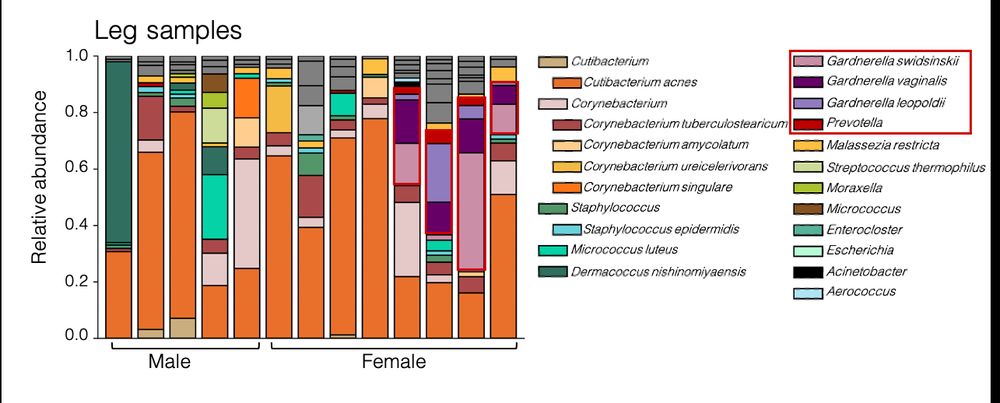
June 25, 2025 at 12:30 PM
Metagenomics enabled the surprising observation that common vaginal microbiome member Gardnerella (but not Lactobacillus) made up at >10% of the low biomass lower leg skin microbiome of 4/8 female subjects. 3/4