



Norman Osborn: Start Here – The Essential Marvel Echoes Primer #NormanOsborn #GreenGoblin #Marvel #SpiderMan #ComicBooks

Norman Osborn: Start Here – The Essential Marvel Echoes Primer
Origin Spark: A Mind Split by Ambition
Before the mask, the glider, or the manic laughter, Norman Osborn was a man defined by a cold, suffocating ambition. Born into a harsh family dynamic that he eventually perpetuated, Norman built himself into a ruthless industrialist, valuing success and power above all else—including his own son, Harry. He wasn't a villain in the theatrical sense yet, but he was a man who had already excised his own empathy to climb the ladder of New York’s elite.
His obsession with wealth and dominance led him to frame his business partner, Mendel Stromm, for embezzlement, seizing full control of Osborn Industries and, more importantly, Stromm’s research notes on a strength-enhancing serum. This period of cold corporate warfare and parental neglect set the stage for the monster to come, as seen in the flashbacks of Spectacular Spider-Man Annual (Vol. 1) #14 (1994) .
With Stromm out of the way, Norman attempted to perfect the stolen formula himself, but his impatience was his undoing. He wasn't a chemist of Stromm's caliber, and in his haste to unlock the serum's potential, he made a critical error in the mixture. The resulting solution didn't just bubble; it exploded in a violent green flash that bathed Norman in chemical compounds. This accident, detailed in the seminal Amazing Spider-Man (Vol. 1) #40 (1966), granted him the superhuman strength he craved, but the cost was his sanity. The chemicals rewired his brain, increasing his intelligence but stripping away his moral inhibitors and fracturing his psyche into a dual identity.
Norman didn't immediately don a Halloween costume; he first had to come to terms with the voice in his head that was louder and more confident than his own. The explosion had birthed the "Green Goblin" persona—a manifestation of Norman's id that craved chaos and dominance over the criminal underworld. He utilized his company’s resources to construct a terrifying arsenal: bat-shaped gliders, pumpkin bombs, and razor-bats. His goal wasn't just theft; it was organization. He sought to unite the fracturing gangs of New York under his leadership, intending to kill Spider-Man to cement his reputation, a debut chronicled in Amazing Spider-Man (Vol. 1) #14 (1964).
His early campaign against the Wall-Crawler was calculated and relentless. Unlike other villains who just wanted to rob banks, the Goblin wanted to dismantle the hero. He initially hired the Enforcers to do his dirty work and even tricked Spider-Man into fighting the Hulk, showing a tactical cunning that far outstripped his peers. These early skirmishes, seen in issues 14–17 , established him not just as a physical threat, but as a mastermind who preferred to strike from a distance before delivering the killing blow.
However, the game changed forever when the Goblin realized that to destroy Spider-Man, he had to destroy the man beneath the mask. In a move that shattered the status quo of the Silver Age, he discovered Peter Parker’s identity and revealed his own, leading to a brutal confrontation that ended with Norman suffering from selective amnesia. For years, the "Goblin" personality would be suppressed, leaving a confused Norman Osborn to raise Harry, unaware of the monster lurking just beneath the surface, as shown in the classic Amazing Spider-Man (Vol. 1) #39–40 (1966). But a demon born of chemicals and hate doesn't stay buried forever, and Norman remains the ticking time bomb at the heart of the Marvel Universe.
Allies and Adversaries: The Goblin’s Court
In the solipsistic world of Norman Osborn, relationships are never built on trust—they are forged in manipulation, obsession, and blood. Explore the toxic orbit surrounding Marvel's most dangerous mastermind, where allies are merely tools to be discarded and enemies are the fuel for his eternal rage.
Key Allies
* Harry Osborn: Norman’s son is the primary victim of his legacy; constantly torn between seeking his father’s approval and stopping his madness, Harry eventually inherited the mask himself.
* The Thunderbolts: During a period of calculated sanity, Norman manipulated this team of seeking-redemption villains, using them as his personal hit squad to gain political leverage.
* The Dark Avengers: When Norman seized control of national security, he dressed villains (like Bullseye and Venom) as heroes (Hawkeye and Spider-Man), creating a twisted mirror of Earth's Mightiest Heroes to stroke his own ego.
Key Adversaries
* Spider-Man (Peter Parker): The obsession that defines his life; Norman sees Peter as the son he should have had, and the obstacle that must be broken to prove his own superiority.
* Gwen Stacy: The symbol of his greatest victory and his most heinous crime; her death at his hands changed the tone of superhero comics forever.
* Doctor Octopus: His only true rival for the title of Spider-Man's arch-nemesis; their relationship is one of bitter jealousy and constant one-upmanship over who gets to kill the Spider.
Resonance Arcs: The Echo of Madness
Death of the Stacys: Amazing Spider-Man (Vol. 1) #88-92 and #121–122 (1973)
This is the moment the Silver Age died. After his memory returned, the Goblin decided to hit Peter where it hurt most. He kidnapped Peter’s girlfriend, Gwen Stacy, and threw her from the George Washington Bridge. It wasn't a plot to take over the world; it was a personal strike to break a hero's heart. This arc matters because it established that in the Marvel Universe, failure is possible and consequences are permanent. It cemented the Goblin as a monster beyond redemption.
The Clone Saga: Spider-Man: The Osborn Journal #1 (1997)
For years, fans thought Norman was dead, impaled by his own glider. But in the 90s, it was revealed he had survived thanks to his healing factor and had been manipulating Peter’s life from the shadows for years—even orchestrating the Clone Saga. This era culminates in The Gathering of Five, where Norman attempts to gain godlike power but instead receives the gift of insanity. It re-contextualized decades of history, revealing Norman as the architect of Peter's suffering.
Dark Reign: Dark Avengers #1–16 (2009)
What if the bad guy won? After killing the Skrull Queen on live TV, Norman was handed the keys to the kingdom. He dismantled S.H.I.E.L.D., created H.A.M.M.E.R., and donned the Iron Patriot armor (a mix of Captain America and Iron Man imagery). This arc is crucial because it took Norman out of Spider-Man's corner and made him an Avengers-level threat. It explored the terrifying idea of a madman with the power of the state behind him, ending only when his insanity inevitably cracked his public facade during the Siege of Asgard.
The Red Goblin: Amazing Spider-Man (Vol. 1) #797–800 (2018)
Seeking to regain his power after losing the Goblin formula, Norman bonded with the Carnage symbiote. The result was the Red Goblin—a creature with the tactical mind of Osborn, the chaos of the Goblin, and the raw power of a symbiote, minus the weaknesses to fire and sound. It was a "final boss" escalation that forced Peter to make desperate alliances, highlighting that even stripped of his original powers, Norman's hatred makes him capable of evolving into something worse.
Legacy and Echoes: The Green Shadow
The true measure of a villain’s impact isn't just the battles they fight, but the scars they leave behind. Norman Osborn may have been the original architect of the madness, but the "Goblin" persona eventually outgrew him, mutating into a contagion that infected every corner of Spider-Man's world.
* Harry Osborn (Green Goblin II): Harry took up the mantle not out of malice, but out of a drug-fueled mental breakdown and a desperate need to avenge the father he thought loved him.
* Hobgoblin (Roderick Kingsley): Kingsley found Norman’s hidden caches and improved upon the gear; he represents the "corporate" side of the legacy, using the Goblin persona for profit rather than obsession.
* The Goblin Nation: Various gangs and cults have risen worshipping the Goblin, proving that Norman’s madness has become an ideology that infects the weak-willed.
The Primer: Essential Reading
Ready to see the madness unfold? Grab these collections to start your journey into the mind of Norman Osborn.
* Spider-Man: Death of the Stacys: Contains the original battles and the tragic turning point.
* Spider-Man: Revenge of the Green Goblin: Covers his return from the grave and the depth of his psychological manipulation.
* The Clone Saga: While not directly revealed, this is where Norman pulls the strings to make Peter think he is the clone, not Ben Reilly.
* Dark Avengers by Brian Michael Bendis: The definitive saga of Norman Osborn as the ruler of the Marvel Universe.
* Amazing Spider-Man: Red Goblin: The modern horror epic where Norman bonds with Carnage.
Whatever you do, don't turn your back on the pumpkin bombs. Happy reading!
dlvr.it
December 15, 2025 at 5:31 PM
Norman Osborn: Start Here – The Essential Marvel Echoes Primer #NormanOsborn #GreenGoblin #Marvel #SpiderMan #ComicBooks
How the Green Goblin KILLED the Silver Age of comics | Marvel Spider-Man #GreenGoblin #SpiderMan #GwenStacy #MarvelComics #MarvelEchoes

How the Green Goblin KILLED the Silver Age of comics | Marvel Spider-Man
The moment the Green Goblin changed comics forever. It wasn't just a death; it was the end of an era. Catch the full breakdown in Marvel Echoes Resonance podcast episode 46, The Green Goblin: Norman Osborn and his Infinite Madness.
#GreenGoblin #SpiderMan #GwenStacy #MarvelComics #MarvelEchoes #SilverAge
www.youtube.com
December 14, 2025 at 4:38 PM
How the Green Goblin KILLED the Silver Age of comics | Marvel Spider-Man #GreenGoblin #SpiderMan #GwenStacy #MarvelComics #MarvelEchoes

Ad: For Sale - LEGO Spider-Man: Spidey Vs. Green Goblin 10793 BRAND NEW Sealed #LEGO #SpiderMan #GreenGoblin

LEGO Spider-Man: Spidey Vs. Green Goblin 10793 BRAND NEW Sealed
Seller: adidor77 (100.0% positive feedback)
Location: GB
Condition: New
Price: 28.47 GBP
Shipping cost: 2.94 GBP
Buy It Now
www.ebay.co.uk
December 14, 2025 at 9:11 AM
Ad: For Sale - LEGO Spider-Man: Spidey Vs. Green Goblin 10793 BRAND NEW Sealed #LEGO #SpiderMan #GreenGoblin

December 13, 2025 at 5:24 PM

Green Goblin Part 2… #GreenGoblin #Marvel #SpiderMan #PumpkinBomb #ComicBooks #Goblin #Evil #HorrorMouth #TheHorrorMouth #begood @jadewabisabi.bsky.social
December 13, 2025 at 4:07 AM
Green Goblin Part 2… #GreenGoblin #Marvel #SpiderMan #PumpkinBomb #ComicBooks #Goblin #Evil #HorrorMouth #TheHorrorMouth #begood @jadewabisabi.bsky.social
Honest question about
#Marvel GreenGoblin and HobGoblin
Which versions do you prefer?
Goblin Serum + Polymer Suit
Goblin Serum + Armor Suit
Goblin Serum Mutation
If you want to bring that version in your D&D campaign?
#Marvel GreenGoblin and HobGoblin
Which versions do you prefer?
Goblin Serum + Polymer Suit
Goblin Serum + Armor Suit
Goblin Serum Mutation
If you want to bring that version in your D&D campaign?
December 12, 2025 at 1:49 PM
Honest question about
#Marvel GreenGoblin and HobGoblin
Which versions do you prefer?
Goblin Serum + Polymer Suit
Goblin Serum + Armor Suit
Goblin Serum Mutation
If you want to bring that version in your D&D campaign?
#Marvel GreenGoblin and HobGoblin
Which versions do you prefer?
Goblin Serum + Polymer Suit
Goblin Serum + Armor Suit
Goblin Serum Mutation
If you want to bring that version in your D&D campaign?
Green Goblin Part 1… #GreenGoblin #Marvel #TheAmazingSpiderMan #NormanOsborn #ComicBooks #SteveDitko #StanLee #HorrorMouth #TheHorrorMouth #begood @jadewabisabi.bsky.social
December 12, 2025 at 10:02 AM

December 12, 2025 at 7:47 AM

|non-sharing|
I can’t muster the energy to make this look good but i drew this for me and that’s all that matters
#selfship #selfshipping #greengoblin
I can’t muster the energy to make this look good but i drew this for me and that’s all that matters
#selfship #selfshipping #greengoblin

December 10, 2025 at 12:02 PM
|non-sharing|
I can’t muster the energy to make this look good but i drew this for me and that’s all that matters
#selfship #selfshipping #greengoblin
I can’t muster the energy to make this look good but i drew this for me and that’s all that matters
#selfship #selfshipping #greengoblin
The Green Goblin: Norman Osborn and the Echo of Madness #GreenGoblin #NormanOsborn #SpiderMan #MarvelComics #ComicBookVillains
The Green Goblin: Norman Osborn and the Echo of Madness
Introduction: The Face in the Nightmare
In the sprawling, intricate tapestry of the Marvel Universe, there are villains who seek to rule the world, and there are villains who seek to burn it down. But then there is Norman Osborn. He is a singular entity in the pantheon of comic book antagonism—a man whose evil is not defined merely by the scale of his ambition, but by the intimacy of his hatred. While Doctor Doom may look down from a throne in Latveria, and Thanos may gaze upon the stars with nihilistic intent, Norman Osborn looks across the dinner table at his son’s best friend and smiles.
The story of the Green Goblin is a multigenerational saga of trauma, psychological projection, and the corrosive nature of legacy. From his first appearance in The Amazing Spider-Man #14 (1964), riding a ridiculous mechanical broomstick, to his ascent as the Iron Patriot leading the free world, Norman has embodied the dark reflection of the American Dream. He is the industrialist who built his empire on stolen genius, the father who devoured his children to feed his own ego, and the monster who proved that in the bright, colorful world of superheroes, the good guys don’t always win.
Marvel Echoes Resonance: Episode 46
Origin Spark: A House Built on Sand and Hellfire
The cultural understanding of the Green Goblin’s origin usually begins and ends with an explosion in a laboratory—a green cloud, a scream, and the birth of a split personality. However, a true analysis of Earth-616 reveals that the explosion as revealed in Amazing Spider-Man #40 (1966), was merely the final punctuation mark on a sentence written years prior. Norman Osborn did not become a monster because of a serum; the serum merely allowed the monster to step into the light.
The Foundation of Failure
To understand the Goblin, one must look at the man who created Norman: his father, Amberson Osborn. As detailed in Spectacular Spider-Man Annual #14 (1980) and Spider-Man: Revenge of the Green Goblin #1 (2000), Norman’s childhood was a crucible of humiliation. Amberson was a failed inventor and a violent alcoholic who lost the family fortune and took out his frustrations on his son. He locked young Norman in dark rooms, instilling a primal fear of the dark and a pathological hatred of failure.
This trauma became the engine of Norman’s life. Every action he takes is a desperate attempt to prove he is not Amberson Osborn. It explains his disdain for his own son, Harry, whom he views as soft, and his twisted obsession with Peter Parker, whom he views as the strong heir he deserves. The Goblin is not just chemical madness; it is the manifestation of the terrified child who resolved to become the thing in the dark so he would no longer have to fear it.
The Shadow Before the Goblin
Recent revelations have added a darker layer to this origin. Before Norman ever donned the mask, there was a test run. As seen in Spider-Man: Shadow of the Green Goblin (2024), Norman refused to test Mendel Stromm’s stolen strength formula on himself without human trials. He used an employee, Nels Van Adder, as a guinea pig. Van Adder didn't gain the powers Norman sought; he transformed into a hulking, demonic entity known as the Proto-Goblin.
This proves that the Goblin mindset existed before the Green Goblin was born. Norman saw the monster he created in Van Adder and didn't repent—he simply refined the weapon. When the final accident occurred in 1966, splashing Norman with the green chemical solution, it didn't create a new personality so much as it liberated the one that had been waiting for permission to surface.
The Resonant Arc: The Night the Silver Age Died
If the origin spark was the explosion, the inferno that burned down the Silver Age of comics was the story arc encompassing Amazing Spider-Man #121-122 (1973). This is the pivotal arc where the fun of superhero comics died, replaced by a grim reality where actions had irreversible consequences.
Leading up to this event, the Osborn household was imploding. Harry Osborn, crushed by the pressure of living up to his father’s impossible standards, had turned to drugs. Seeing his son in a hospital bed triggered the return of the Goblin in Norman. But this time, he wasn't looking to take over the mob. He was looking to hurt Peter Parker, whom he blamed for Harry’s condition in a classic case of projection.
The sequence on the George Washington Bridge is seared into the collective memory of fandom. The Goblin kidnapped Gwen Stacy—Peter’s true love—and threw her from the tower. When Spider-Man dived to save her, his web-line caught her ankle, but the sudden stop snapped her neck. The sound effect SNAP! next to Gwen’s neck remains the most brutal onomatopoeia in Marvel history.
This moment changed the genre. It was the first time an A-list superhero failed to save the damsel. The Goblin didn't kill Gwen with a bomb or a laser; he killed her by exploiting Spider-Man’s love and the laws of physics. He turned Peter’s heroism into the weapon of her destruction, establishing the terrifying intimacy of his evil.
Legacy and Echoes: The Green Shadow
Norman Osborn is not just a character; he is a virus in the operating system of Marvel Earth-616. His origin and arcs have created ripples that have reshaped the narrative landscape for decades.
Before Norman, villains generally didn't know who the heroes were. In Amazing Spider-Man #39 (1966), Norman changed the rules by stalking Peter Parker and unmasking him. He weaponized the personal life of the hero, setting a precedent that the way to beat the hero is to target the aunt, the girlfriend, or the wife. He moved the battlefield from the city streets to the living room.
Norman also evolved with the fears of the American public. In the 2000s, during the Dark Reign era, he shifted from a chaotic terrorist to a populist strongman. As the Iron Patriot, leading the Dark Avengers, he showed how easily the infrastructure of heroism could be co-opted. He didn't need to break the law; he became the law. This echoed the real-world anxieties about power, security, and the wolves hiding in sheep's clothing.
Norman Osborn Reading Guide: Essential Issues
To truly witness the madness and the majesty of Norman Osborn, these are the essential texts that form the backbone of his legacy.
Essential Reading List
* Amazing Spider-Man #14 (1964) – The First Appearance. The broomstick, the Enforcers, and the debut of the mystery villain.
* Amazing Spider-Man #39-40 (1966) – The Unmasking. The pivotal reveal that Norman Osborn is the Goblin, shifting the dynamic to a personal vendetta.
* Amazing Spider-Man #121-122 (1973) – The Night Gwen Stacy Died. The death of innocence and the single most important Spider-Man story ever told.
* Spider-Man: Revenge of the Green Goblin #1-3 (2000) – A psychological masterclass where Norman attempts to break Peter’s mind to make him his heir.
* Dark Avengers #1-6 (2009) – Norman forms his twisted Avengers and dons the Iron Patriot armor. Essential for understanding his political phase.
* Amazing Spider-Man #797-800 (2018) – The Red Goblin saga. Norman bonds with the Carnage symbiote for a terrifying final battle.
dlvr.it
December 10, 2025 at 3:37 AM
The Green Goblin: Norman Osborn and the Echo of Madness #GreenGoblin #NormanOsborn #SpiderMan #MarvelComics #ComicBookVillains
My personal rendition of the Green Goblin if he was in the Midnight Suns game.
#marvelcomics #midnightsuns #greengoblin
#marvelcomics #midnightsuns #greengoblin

December 10, 2025 at 2:23 AM
My personal rendition of the Green Goblin if he was in the Midnight Suns game.
#marvelcomics #midnightsuns #greengoblin
#marvelcomics #midnightsuns #greengoblin

The mercenary goblin, Ilba, belongs to a pal from Discord. I'm actually proud of how well it goes with the colors.
#greengoblin #goblin #ocart #fanartoc #sketch #art #drawing #colorpencil #doodle
#greengoblin #goblin #ocart #fanartoc #sketch #art #drawing #colorpencil #doodle

December 9, 2025 at 10:58 PM
The mercenary goblin, Ilba, belongs to a pal from Discord. I'm actually proud of how well it goes with the colors.
#greengoblin #goblin #ocart #fanartoc #sketch #art #drawing #colorpencil #doodle
#greengoblin #goblin #ocart #fanartoc #sketch #art #drawing #colorpencil #doodle


December 9, 2025 at 5:42 PM

I'm just going to gently lay this down right here for the Marvel's What If congregation...
THE WAY THAT I JUST HOLLERED!!!
If they don't do this on the next season of What If!!! 🤣🤣🤣
#TheWisdomOfCharlieWonderful #TWofCW #IAmYourConscience #NormanIsborne #GreenGoblin #WhatIf #Marvel #Funny
THE WAY THAT I JUST HOLLERED!!!
If they don't do this on the next season of What If!!! 🤣🤣🤣
#TheWisdomOfCharlieWonderful #TWofCW #IAmYourConscience #NormanIsborne #GreenGoblin #WhatIf #Marvel #Funny


December 9, 2025 at 2:09 PM
I'm just going to gently lay this down right here for the Marvel's What If congregation...
THE WAY THAT I JUST HOLLERED!!!
If they don't do this on the next season of What If!!! 🤣🤣🤣
#TheWisdomOfCharlieWonderful #TWofCW #IAmYourConscience #NormanIsborne #GreenGoblin #WhatIf #Marvel #Funny
THE WAY THAT I JUST HOLLERED!!!
If they don't do this on the next season of What If!!! 🤣🤣🤣
#TheWisdomOfCharlieWonderful #TWofCW #IAmYourConscience #NormanIsborne #GreenGoblin #WhatIf #Marvel #Funny
The Green Goblin: Norman Osborn and the Echo of Madness #GreenGoblin #NormanOsborn #Marvel #SpiderMan #ComicBooks

The Green Goblin: Norman Osborn and the Echo of Madness
Introduction: The Face in the Nightmare
In the sprawling, intricate tapestry of the Marvel Universe, there are villains who seek to rule the world, and there are villains who seek to burn it down. But then there is Norman Osborn. He is a singular entity in the pantheon of comic book antagonism—a man whose evil is not defined merely by the scale of his ambition, but by the intimacy of his hatred. While Doctor Doom may look down from a throne in Latveria, and Thanos may gaze upon the stars with nihilistic intent, Norman Osborn looks across the dinner table at his son’s best friend and smiles.
The story of the Green Goblin is a multigenerational saga of trauma, psychological projection, and the corrosive nature of legacy. From his first appearance in The Amazing Spider-Man #14 (1964), riding a ridiculous mechanical broomstick, to his ascent as the Iron Patriot leading the free world, Norman has embodied the dark reflection of the American Dream. He is the industrialist who built his empire on stolen genius, the father who devoured his children to feed his own ego, and the monster who proved that in the bright, colorful world of superheroes, the good guys don’t always win.
Marvel Echoes Resonance: Episode 46
Origin Spark: A House Built on Sand and Hellfire
The cultural understanding of the Green Goblin’s origin usually begins and ends with an explosion in a laboratory—a green cloud, a scream, and the birth of a split personality. However, a true analysis of Earth-616 reveals that the explosion as revealed in Amazing Spider-Man #40 (1966), was merely the final punctuation mark on a sentence written years prior. Norman Osborn did not become a monster because of a serum; the serum merely allowed the monster to step into the light.
The Foundation of Failure
To understand the Goblin, one must look at the man who created Norman: his father, Amberson Osborn. As detailed in Spectacular Spider-Man Annual #14 (1980) and Spider-Man: Revenge of the Green Goblin #1 (2000), Norman’s childhood was a crucible of humiliation. Amberson was a failed inventor and a violent alcoholic who lost the family fortune and took out his frustrations on his son. He locked young Norman in dark rooms, instilling a primal fear of the dark and a pathological hatred of failure.
This trauma became the engine of Norman’s life. Every action he takes is a desperate attempt to prove he is not Amberson Osborn. It explains his disdain for his own son, Harry, whom he views as soft, and his twisted obsession with Peter Parker, whom he views as the strong heir he deserves. The Goblin is not just chemical madness; it is the manifestation of the terrified child who resolved to become the thing in the dark so he would no longer have to fear it.
The Shadow Before the Goblin
Recent revelations have added a darker layer to this origin. Before Norman ever donned the mask, there was a test run. As seen in Spider-Man: Shadow of the Green Goblin (2024), Norman refused to test Mendel Stromm’s stolen strength formula on himself without human trials. He used an employee, Nels Van Adder, as a guinea pig. Van Adder didn't gain the powers Norman sought; he transformed into a hulking, demonic entity known as the Proto-Goblin.
This proves that the Goblin mindset existed before the Green Goblin was born. Norman saw the monster he created in Van Adder and didn't repent—he simply refined the weapon. When the final accident occurred in 1966, splashing Norman with the green chemical solution, it didn't create a new personality so much as it liberated the one that had been waiting for permission to surface.
The Resonant Arc: The Night the Silver Age Died
If the origin spark was the explosion, the inferno that burned down the Silver Age of comics was the story arc encompassing Amazing Spider-Man #121-122 (1973). This is the pivotal arc where the fun of superhero comics died, replaced by a grim reality where actions had irreversible consequences.
Leading up to this event, the Osborn household was imploding. Harry Osborn, crushed by the pressure of living up to his father’s impossible standards, had turned to drugs. Seeing his son in a hospital bed triggered the return of the Goblin in Norman. But this time, he wasn't looking to take over the mob. He was looking to hurt Peter Parker, whom he blamed for Harry’s condition in a classic case of projection.
The sequence on the George Washington Bridge is seared into the collective memory of fandom. The Goblin kidnapped Gwen Stacy—Peter’s true love—and threw her from the tower. When Spider-Man dived to save her, his web-line caught her ankle, but the sudden stop snapped her neck. The sound effect SNAP! next to Gwen’s neck remains the most brutal onomatopoeia in Marvel history.
This moment changed the genre. It was the first time an A-list superhero failed to save the damsel. The Goblin didn't kill Gwen with a bomb or a laser; he killed her by exploiting Spider-Man’s love and the laws of physics. He turned Peter’s heroism into the weapon of her destruction, establishing the terrifying intimacy of his evil.
Legacy and Echoes: The Green Shadow
Norman Osborn is not just a character; he is a virus in the operating system of Marvel Earth-616. His origin and arcs have created ripples that have reshaped the narrative landscape for decades.
Before Norman, villains generally didn't know who the heroes were. In Amazing Spider-Man #39 (1966), Norman changed the rules by stalking Peter Parker and unmasking him. He weaponized the personal life of the hero, setting a precedent that the way to beat the hero is to target the aunt, the girlfriend, or the wife. He moved the battlefield from the city streets to the living room.
Norman also evolved with the fears of the American public. In the 2000s, during the Dark Reign era, he shifted from a chaotic terrorist to a populist strongman. As the Iron Patriot, leading the Dark Avengers, he showed how easily the infrastructure of heroism could be co-opted. He didn't need to break the law; he became the law. This echoed the real-world anxieties about power, security, and the wolves hiding in sheep's clothing.
Norman Osborn Reading Guide: Essential Issues
To truly witness the madness and the majesty of Norman Osborn, these are the essential texts that form the backbone of his legacy.
* Amazing Spider-Man #14 (1964) – The First Appearance. The broomstick, the Enforcers, and the debut of the mystery villain.
* Amazing Spider-Man #39-40 (1966) – The Unmasking. The pivotal reveal that Norman Osborn is the Goblin, shifting the dynamic to a personal vendetta.
* Amazing Spider-Man #121-122 (1973) – The Night Gwen Stacy Died. The death of innocence and the single most important Spider-Man story ever told.
* Spider-Man: Revenge of the Green Goblin #1-3 (2000) – A psychological masterclass where Norman attempts to break Peter’s mind to make him his heir.
* Dark Avengers #1-6 (2009) – Norman forms his twisted Avengers and dons the Iron Patriot armor. Essential for understanding his political phase.
* Amazing Spider-Man #797-800 (2018) – The Red Goblin saga. Norman bonds with the Carnage symbiote for a terrifying final battle.
dlvr.it
December 8, 2025 at 3:00 PM
The Green Goblin: Norman Osborn and the Echo of Madness #GreenGoblin #NormanOsborn #Marvel #SpiderMan #ComicBooks
The Green Goblin: Norman Osborn and his Infinite Madness | Marvel Echoes Podcast Ep. 46 #Marvel #GreenGoblin #NormanOsborn #SpiderMan #MarvelComics

The Green Goblin: Norman Osborn and his Infinite Madness | Marvel Echoes Podcast Ep. 46
In Episode 46 of Marvel Echoes Resonance, we dive deep into the twisted psyche of Marvel’s most personal nightmare: The Green Goblin. From the childhood trauma that forged Norman Osborn’s madness to the terrifying snap that ended the Silver Age of comics, we unravel the history of the man who turned Spider-Man’s life into a tragedy.
Whether you're a die-hard fan who remembers the 90s cartoon or a new reader catching up on the 8 Deaths of Spider-Man, this episode challenges everything you know about villainy. We track Norman's evolution from a cackling criminal on a broomstick to the "Iron Patriot" leading the Avengers, and finally to his shocking current status as the "Resolute Spider-Man."
Subscribe, like, and join the conversation in the comments. Is Norman Osborn truly redeemed, or is the Goblin just waiting for the right moment to laugh again?
Visit Marvel Echoes HQ for a full deep-dive post with historical context and key arcs, a new-reader intro to help you jump in without getting lost, and a visual infographic page for quick reference and sharing: https://marvelechoeshq.blogspot.com
Buy Spider-Man: The Death of the Stacys collecting Amazing Spider-Man #88-92 & 121-122.: https://amzn.to/4a8auIx
• 0:00 Intro Music
• 0:12 Introduction
• 0:56 Origin Spark
• 6:12 Modern Echo
• 10:23 Final Thoughts
• 11:03 Outro
#greengoblin #normanosborn #spiderman #marvelcomics
www.youtube.com
December 8, 2025 at 2:33 PM
The Green Goblin: Norman Osborn and his Infinite Madness | Marvel Echoes Podcast Ep. 46 #Marvel #GreenGoblin #NormanOsborn #SpiderMan #MarvelComics
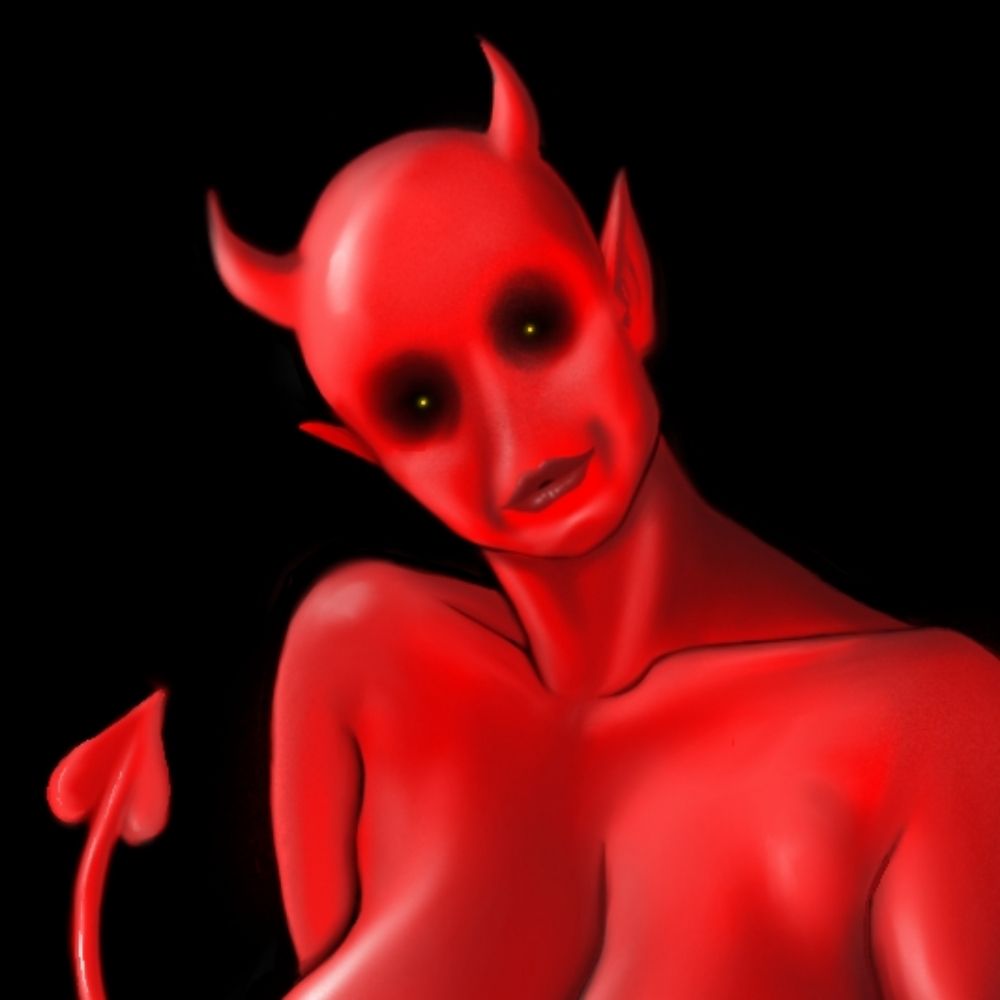
Green Goblin, Digital Painting, Sep 2024
#digitalart #digitalpainting #realism #spiderman #samraimi #greengoblin #willemdefoe #art #digitalartist
#digitalart #digitalpainting #realism #spiderman #samraimi #greengoblin #willemdefoe #art #digitalartist

December 8, 2025 at 6:27 AM
Green Goblin, Digital Painting, Sep 2024
#digitalart #digitalpainting #realism #spiderman #samraimi #greengoblin #willemdefoe #art #digitalartist
#digitalart #digitalpainting #realism #spiderman #samraimi #greengoblin #willemdefoe #art #digitalartist

Some retro colour fun I did on this awesome #greengoblin by the talented @philhester.bsky.social and @andeparks.bsky.social 🕷️🕸️
#comics #spiderman #comicsky #marvel
#comics #spiderman #comicsky #marvel


December 7, 2025 at 2:47 PM
Some retro colour fun I did on this awesome #greengoblin by the talented @philhester.bsky.social and @andeparks.bsky.social 🕷️🕸️
#comics #spiderman #comicsky #marvel
#comics #spiderman #comicsky #marvel
NEW LOW PRICE !! Now £89.99 (RRP £119.99)
Link - amzn.to/48Ankwv
#lego #marvel #spiderman #oscorp #building #greengoblin #spiderwoman #venom #kraven #superhero #ad
Link - amzn.to/48Ankwv
#lego #marvel #spiderman #oscorp #building #greengoblin #spiderwoman #venom #kraven #superhero #ad

December 7, 2025 at 11:25 AM
NEW LOW PRICE !! Now £89.99 (RRP £119.99)
Link - amzn.to/48Ankwv
#lego #marvel #spiderman #oscorp #building #greengoblin #spiderwoman #venom #kraven #superhero #ad
Link - amzn.to/48Ankwv
#lego #marvel #spiderman #oscorp #building #greengoblin #spiderwoman #venom #kraven #superhero #ad

December 6, 2025 at 7:25 PM

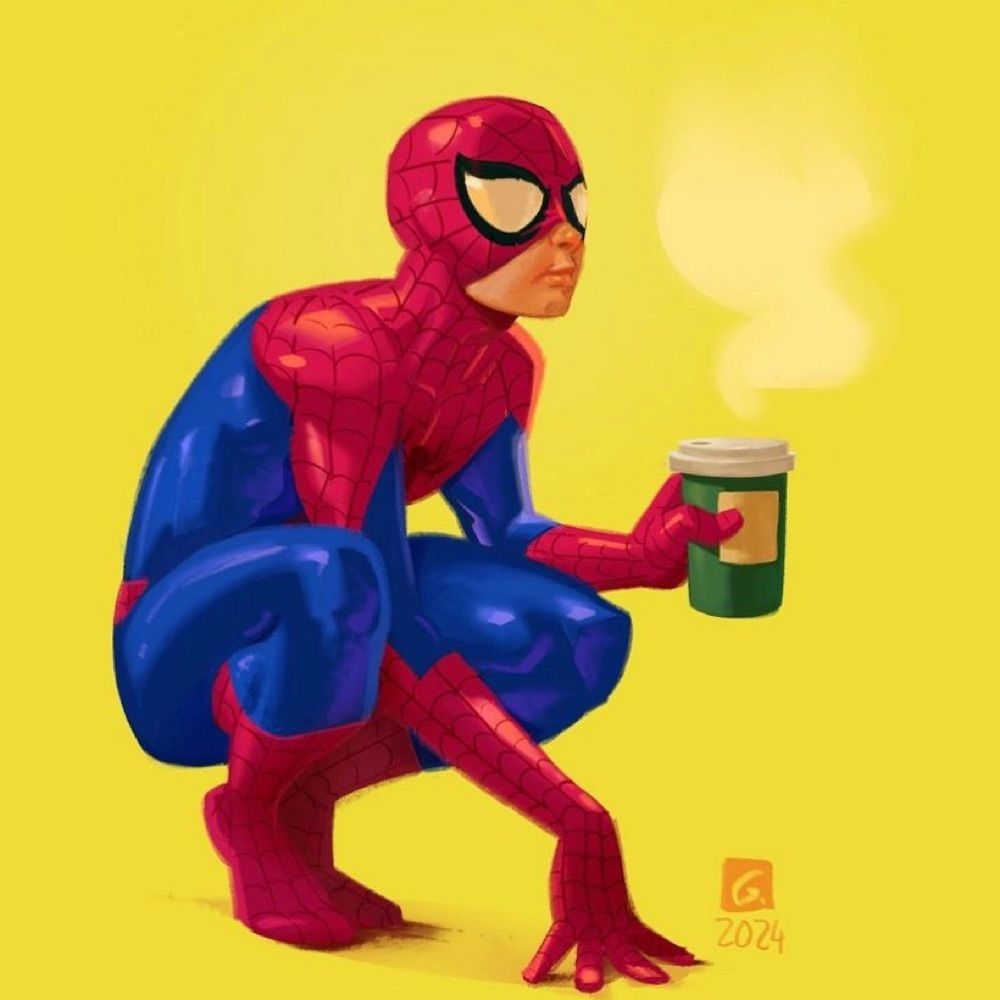
Rewatching the first Spider-Man and realizing they used a trampoline during the final Green Goblin fight is wild. Early 2000s movie magic at its finest.
#SpiderMan #GreenGoblin #BehindTheScenes
#SpiderMan #GreenGoblin #BehindTheScenes
December 5, 2025 at 10:12 PM
Rewatching the first Spider-Man and realizing they used a trampoline during the final Green Goblin fight is wild. Early 2000s movie magic at its finest.
#SpiderMan #GreenGoblin #BehindTheScenes
#SpiderMan #GreenGoblin #BehindTheScenes
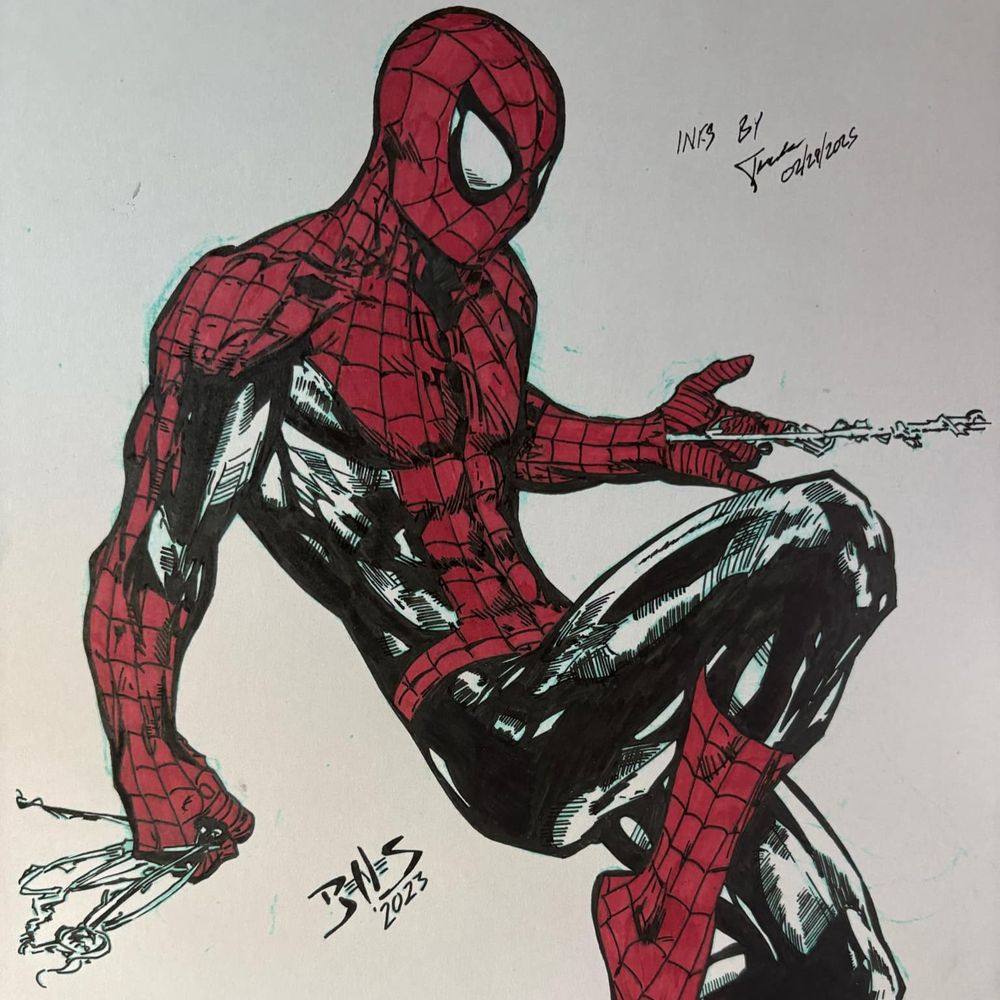
Pt 3 Of a villains piece Im inking up on pencils by Allan Goldman.
#comicart #villains #marvel #marvel616 #characterart #inking #comicinks #penandink #redskull #magneto #mystique #sabertooth #doctordoom #emmafrost #brood #juggernaut #octopus #ultron #greengoblin #brood #annihlus #kang
#comicart #villains #marvel #marvel616 #characterart #inking #comicinks #penandink #redskull #magneto #mystique #sabertooth #doctordoom #emmafrost #brood #juggernaut #octopus #ultron #greengoblin #brood #annihlus #kang
December 1, 2025 at 7:07 PM
Pt 3 Of a villains piece Im inking up on pencils by Allan Goldman.
#comicart #villains #marvel #marvel616 #characterart #inking #comicinks #penandink #redskull #magneto #mystique #sabertooth #doctordoom #emmafrost #brood #juggernaut #octopus #ultron #greengoblin #brood #annihlus #kang
#comicart #villains #marvel #marvel616 #characterart #inking #comicinks #penandink #redskull #magneto #mystique #sabertooth #doctordoom #emmafrost #brood #juggernaut #octopus #ultron #greengoblin #brood #annihlus #kang

Be@rbrick Happy Kuji Spider-Man: Green Goblin #14 brought to you by the #PlastiqueBoutique
#Toy #Spiderman #GreenGoblin #Marvel #ToyCollection #ToyCollector
#Toy #Spiderman #GreenGoblin #Marvel #ToyCollection #ToyCollector

Be@rbrick Happy Kuji Spider-Man: Green Goblin #14 *Sealed*
Related Post: What Are Japanese Kuji & How Do They Work?
plastiqueboutique.com
December 1, 2025 at 10:16 AM
Be@rbrick Happy Kuji Spider-Man: Green Goblin #14 brought to you by the #PlastiqueBoutique
#Toy #Spiderman #GreenGoblin #Marvel #ToyCollection #ToyCollector
#Toy #Spiderman #GreenGoblin #Marvel #ToyCollection #ToyCollector

Ad: For Sale - LEGO Marvel Heroes Mighty Micros Spider-Man vs Green Goblin 76064 New Sealed #LEGO #SpiderMan #GreenGoblin

LEGO Marvel Heroes Mighty Micros Spider-Man vs Green Goblin 76064 New Sealed
Seller: theprosatjetsom (97.0% positive feedback)
Location: US
Condition: New
Price: 18.00 USD
Shipping cost: Free
Buy It Now
www.ebay.com
November 29, 2025 at 8:26 AM
Ad: For Sale - LEGO Marvel Heroes Mighty Micros Spider-Man vs Green Goblin 76064 New Sealed #LEGO #SpiderMan #GreenGoblin

