



Your ‘monads’ are just another bunch of state machines, like ck-machines are.
January 14, 2026 at 8:57 PM
Your ‘monads’ are just another bunch of state machines, like ck-machines are.

A classic is "Higher-Order Functions for Parsing" by Graham Hutton from 1992. All the stuff about monads, starting with "Comprehending Monads" by Phil Wadler. A whole book "Purely Functional Data Structures" by Chris Okasaki Or are these too academic?
people.cs.nott.ac.uk/pszgmh/parsi...
people.cs.nott.ac.uk/pszgmh/parsi...
people.cs.nott.ac.uk
January 14, 2026 at 8:26 PM
A classic is "Higher-Order Functions for Parsing" by Graham Hutton from 1992. All the stuff about monads, starting with "Comprehending Monads" by Phil Wadler. A whole book "Purely Functional Data Structures" by Chris Okasaki Or are these too academic?
people.cs.nott.ac.uk/pszgmh/parsi...
people.cs.nott.ac.uk/pszgmh/parsi...
Hence, considering all the monads which can appear on
the contemplation of sets of units of the universe in their monadic aspect, every single unit is determined to be one subject of a dyad which has any one of those
monads as its second subject,
/1
the contemplation of sets of units of the universe in their monadic aspect, every single unit is determined to be one subject of a dyad which has any one of those
monads as its second subject,
/1
January 14, 2026 at 5:13 PM
Hence, considering all the monads which can appear on
the contemplation of sets of units of the universe in their monadic aspect, every single unit is determined to be one subject of a dyad which has any one of those
monads as its second subject,
/1
the contemplation of sets of units of the universe in their monadic aspect, every single unit is determined to be one subject of a dyad which has any one of those
monads as its second subject,
/1

Jeri Ann Spiker: An Application of Idempotent Monads and Comonads to Compactifications and Unitizations https://arxiv.org/abs/2601.07940 https://arxiv.org/pdf/2601.07940 https://arxiv.org/html/2601.07940
January 14, 2026 at 6:40 AM
Jeri Ann Spiker: An Application of Idempotent Monads and Comonads to Compactifications and Unitizations https://arxiv.org/abs/2601.07940 https://arxiv.org/pdf/2601.07940 https://arxiv.org/html/2601.07940

De kindjes die in de wieg gelegd zijn voor Latijn gaan dat zeker snappen. Voor de leerlingen uit de Griekse gaat het liefst over monads in de eerste les. Anders gaan die zich al gauw vervelen (een beetje zoals dat dansen van Will Tura zonder z'n vlam).
January 13, 2026 at 12:20 PM
De kindjes die in de wieg gelegd zijn voor Latijn gaan dat zeker snappen. Voor de leerlingen uit de Griekse gaat het liefst over monads in de eerste les. Anders gaan die zich al gauw vervelen (een beetje zoals dat dansen van Will Tura zonder z'n vlam).

Haskell's learning curve *still* matters when deadlines are looming. And have you seen the error messages LLMs spit out when trying to debug monads? 😅 Good luck with that on a prod outage.
January 11, 2026 at 10:12 PM
Haskell's learning curve *still* matters when deadlines are looming. And have you seen the error messages LLMs spit out when trying to debug monads? 😅 Good luck with that on a prod outage.

Also, even if one accepts that the learning curve of Haskell's various powerful typing features is nonviable for the average dev, that DOESN'T MATTER ANYMORE: every powerful Haskell type system feature is in Claude's training corpus, LLMs can use lenses/hylomorphisms/monads/etc with zero overhead.
January 11, 2026 at 9:32 PM
Also, even if one accepts that the learning curve of Haskell's various powerful typing features is nonviable for the average dev, that DOESN'T MATTER ANYMORE: every powerful Haskell type system feature is in Claude's training corpus, LLMs can use lenses/hylomorphisms/monads/etc with zero overhead.
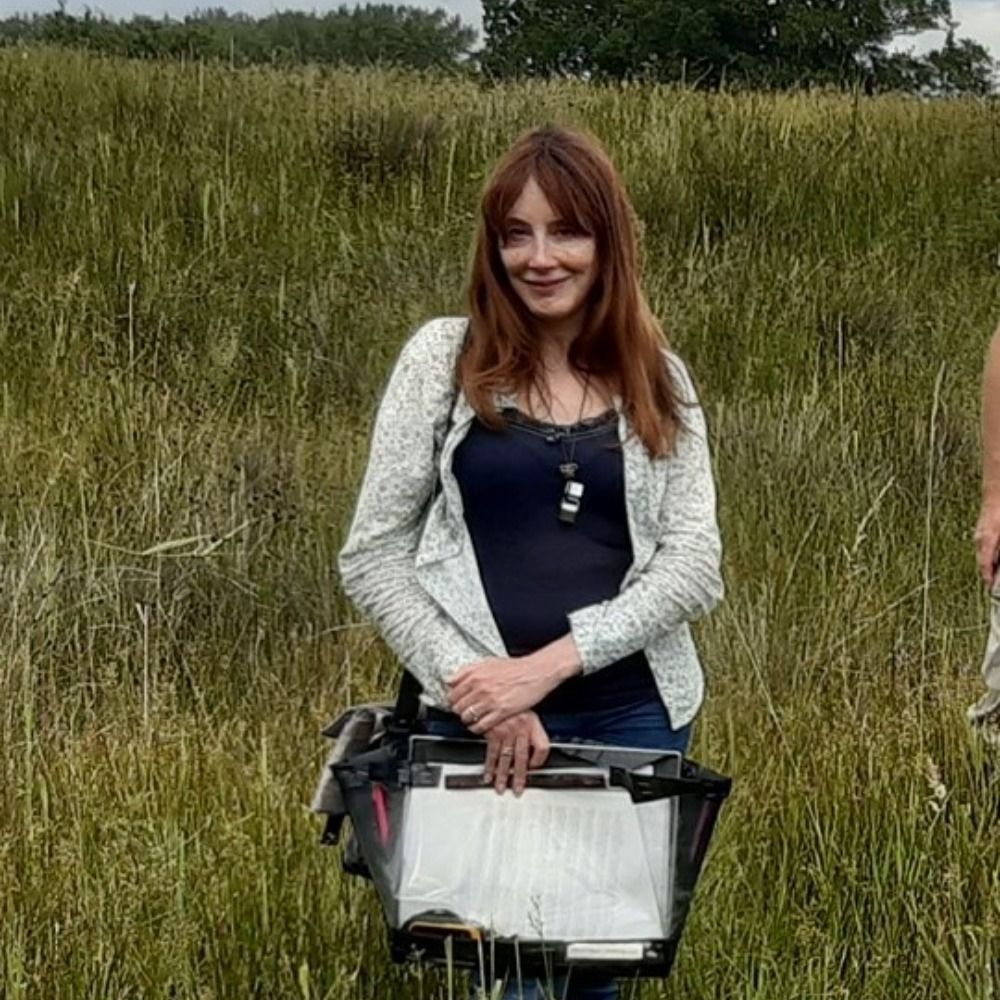
We had around 175 discrete taxa in the 3 rural monads we visited and the group (including special guest @ghostofdatura.bsky.social) visiting an urban monad at Gt Bircham clocked up an astonishing 227 species!
January 11, 2026 at 1:04 PM
We had around 175 discrete taxa in the 3 rural monads we visited and the group (including special guest @ghostofdatura.bsky.social) visiting an urban monad at Gt Bircham clocked up an astonishing 227 species!

Learn gradually: basic syntax (now I can write imperative programs), basic FP concepts (now I can build a tree and higher order functions), the module system, ..., laziness, monads and Lwt, then ocaml.org/manual/5.4/e...
Don't try all these at once, tried that approach with Haskell and failed.
Don't try all these at once, tried that approach with Haskell and failed.
January 11, 2026 at 10:33 AM
Learn gradually: basic syntax (now I can write imperative programs), basic FP concepts (now I can build a tree and higher order functions), the module system, ..., laziness, monads and Lwt, then ocaml.org/manual/5.4/e...
Don't try all these at once, tried that approach with Haskell and failed.
Don't try all these at once, tried that approach with Haskell and failed.

I want to agree, but I also don't want to talk about monads and functors like a space alien
January 10, 2026 at 5:27 PM
I want to agree, but I also don't want to talk about monads and functors like a space alien

the main problem with the 'monad is a burrito' analogy is that monads are closer to sequences of operations than they are containers. for example the IO monad in your language of choice probably doesn't actually contain anything except shattered promises and broken dreams
January 10, 2026 at 4:41 AM
the main problem with the 'monad is a burrito' analogy is that monads are closer to sequences of operations than they are containers. for example the IO monad in your language of choice probably doesn't actually contain anything except shattered promises and broken dreams

Some more thoughts on this. I have 25 records for 2025, from 17 monads across 11 hectads.
Interestingly, I have the impression that I'm seeing macrolabic males much more often than I used to.
Interestingly, I have the impression that I'm seeing macrolabic males much more often than I used to.
January 8, 2026 at 2:37 PM
Some more thoughts on this. I have 25 records for 2025, from 17 monads across 11 hectads.
Interestingly, I have the impression that I'm seeing macrolabic males much more often than I used to.
Interestingly, I have the impression that I'm seeing macrolabic males much more often than I used to.

January 7, 2026 at 10:21 PM

January 7, 2026 at 9:12 PM
The ᴍᴏɴᴀᴅs are responsible for spawning our cosmos and our being. Storytellers and dreamers.
They are as beyond us as we are to humans.
They are as beyond us as we are to humans.
January 7, 2026 at 9:08 PM
The ᴍᴏɴᴀᴅs are responsible for spawning our cosmos and our being. Storytellers and dreamers.
They are as beyond us as we are to humans.
They are as beyond us as we are to humans.

My brain is stubborn procedural, but functional code is very elegant.
Don't get me started on monads lol
Don't get me started on monads lol

a man with glasses and a bandana on his head is talking about his brain hurting .
ALT: a man with glasses and a bandana on his head is talking about his brain hurting .
media.tenor.com
January 7, 2026 at 7:55 PM
My brain is stubborn procedural, but functional code is very elegant.
Don't get me started on monads lol
Don't get me started on monads lol

Hardcaml_step_testbench now uses algebraic effects instead of monads. The refactor demonstrates how effects can simplify hardware simulation testbenches while maintaining the same capabilities.
https://blog.janestreet.com/fun-with-algebraic-effects-hardcaml/
https://blog.janestreet.com/fun-with-algebraic-effects-hardcaml/
Fun with Algebraic Effects - from Toy Examples to Hardcaml Simulations
I recently ported the Hardcaml_step_testbenchlibrary, one of the libraries thatwe use at Jane Street for Hardcaml simulations, from using monads to using alg...
blog.janestreet.com
January 7, 2026 at 11:52 AM
Hardcaml_step_testbench now uses algebraic effects instead of monads. The refactor demonstrates how effects can simplify hardware simulation testbenches while maintaining the same capabilities.
https://blog.janestreet.com/fun-with-algebraic-effects-hardcaml/
https://blog.janestreet.com/fun-with-algebraic-effects-hardcaml/

We're just a programming language, you'll have to program the feminisation yourself. But we have a couple of monads that could help…
January 7, 2026 at 9:57 AM
We're just a programming language, you'll have to program the feminisation yourself. But we have a couple of monads that could help…

Jiri Adamek: Strongly finitary metric monads are too strong https://arxiv.org/abs/2601.03180 https://arxiv.org/pdf/2601.03180 https://arxiv.org/html/2601.03180
January 7, 2026 at 6:37 AM
Jiri Adamek: Strongly finitary metric monads are too strong https://arxiv.org/abs/2601.03180 https://arxiv.org/pdf/2601.03180 https://arxiv.org/html/2601.03180

Abstract monads, explained for people who eat food
(A monad is a kind of bag that supports all 4 operations)
(A monad is a kind of bag that supports all 4 operations)

I had to check whether I got this right in the ill-conceived lens post that I wrote six years ago, and it turns out that I did

January 7, 2026 at 3:05 AM
Abstract monads, explained for people who eat food
(A monad is a kind of bag that supports all 4 operations)
(A monad is a kind of bag that supports all 4 operations)

i think the original one was useful for its intended purpose, namely as a satire of ridiculous metaphors used to explain monads. how it took on its own life where people actually tried to use it to explain monads for real is a mystery to me
January 7, 2026 at 12:13 AM
i think the original one was useful for its intended purpose, namely as a satire of ridiculous metaphors used to explain monads. how it took on its own life where people actually tried to use it to explain monads for real is a mystery to me

monads are not safe for consumption as they can bind to your stomach, causing indigestion
January 6, 2026 at 10:33 PM
monads are not safe for consumption as they can bind to your stomach, causing indigestion

Strong Dinatural Transformations and Generalised Codensity Monads
By arXiv
https://arxiv.org/abs/2510.06777
Introduces dicodensity monads, generalizing monads using mixed-variant bifunctors, and explores isomorphisms between them.
By arXiv
https://arxiv.org/abs/2510.06777
Introduces dicodensity monads, generalizing monads using mixed-variant bifunctors, and explores isomorphisms between them.
Strong Dinatural Transformations and Generalised Codensity Monads
This paper introduces dicodensity monads, a fancy way of generalizing monads using mixed-variant bifunctors, inspired by continuation monads and polymorphic lambda calculi, and provides conditions for isomorphisms between monads and dicodensity monads.
arxiv.org
January 6, 2026 at 3:12 PM
Strong Dinatural Transformations and Generalised Codensity Monads
By arXiv
https://arxiv.org/abs/2510.06777
Introduces dicodensity monads, generalizing monads using mixed-variant bifunctors, and explores isomorphisms between them.
By arXiv
https://arxiv.org/abs/2510.06777
Introduces dicodensity monads, generalizing monads using mixed-variant bifunctors, and explores isomorphisms between them.
It's probably not right for other people get attention after Simon Manus has decided that he's better than them. Do you see Paracelsus have the nerve to coincidentally attend the same play that Valentinus and Simon are seeing together w Isabelle and Laxasia? #LiesofP

January 6, 2026 at 12:56 PM
It's probably not right for other people get attention after Simon Manus has decided that he's better than them. Do you see Paracelsus have the nerve to coincidentally attend the same play that Valentinus and Simon are seeing together w Isabelle and Laxasia? #LiesofP

Functors, Applicatives, and Monads: The Scary Words You Already Understand cekrem.github.io/posts/functo... #FunctionalProgramming

Functors, Applicatives, and Monads: The Scary Words You Already Understand
Demystifying the most feared terms in functional programming - and how Elm teaches these concepts without ever mentioning them
cekrem.github.io
January 6, 2026 at 12:04 PM
Functors, Applicatives, and Monads: The Scary Words You Already Understand cekrem.github.io/posts/functo... #FunctionalProgramming