



👮 De controle op verse #kurkuma wordt vanaf 19 januari 2026 uitgebreid met een verplichte steekproefsgewijze en symptoomloze bemonstering. Dit meldt de NVWA. Aanleiding hiervoor zijn vondsten van de bacterie Ralstonia pseudosolanacearum.

NVWA gaat kurkuma scherper controleren op bruinrot
De Nederlandse Voedsel- en Warenautoriteit (NVWA) geeft keuringsdienst KCB opdracht om vanaf komende maand verse kurkuma (Curcuma longa) bij import ook steekproefsgewijs te controleren als er geen sym...
www.nieuweoogst.nl
December 22, 2025 at 12:02 PM
👮 De controle op verse #kurkuma wordt vanaf 19 januari 2026 uitgebreid met een verplichte steekproefsgewijze en symptoomloze bemonstering. Dit meldt de NVWA. Aanleiding hiervoor zijn vondsten van de bacterie Ralstonia pseudosolanacearum.

Heat shock-mediated transformation in several Gram-negative bacteria such as Ralstonia pseudosolanacearum, Pseudomonas aeruginosa, Pseudomonas putida, and Enterobacter roggenkampii https://www.biorxiv.org/content/10.1101/2025.10.30.685485v1
October 31, 2025 at 2:17 AM
Heat shock-mediated transformation in several Gram-negative bacteria such as Ralstonia pseudosolanacearum, Pseudomonas aeruginosa, Pseudomonas putida, and Enterobacter roggenkampii https://www.biorxiv.org/content/10.1101/2025.10.30.685485v1

Heat shock-mediated transformation in several Gram-negative bacteria such as Ralstonia pseudosolanacearum, Pseudomonas aeruginosa, Pseudomonas putida, and Enterobacter roggenkampii https://www.biorxiv.org/content/10.1101/2025.10.30.685485v1
October 31, 2025 at 2:17 AM
Heat shock-mediated transformation in several Gram-negative bacteria such as Ralstonia pseudosolanacearum, Pseudomonas aeruginosa, Pseudomonas putida, and Enterobacter roggenkampii https://www.biorxiv.org/content/10.1101/2025.10.30.685485v1
Development and Application of a Filamentous Phage-Based Rapid Detection Tool for Ralstonia pseudosolanacearum https://www.biorxiv.org/content/10.1101/2025.08.15.670626v1
August 17, 2025 at 2:16 AM
Development and Application of a Filamentous Phage-Based Rapid Detection Tool for Ralstonia pseudosolanacearum https://www.biorxiv.org/content/10.1101/2025.08.15.670626v1
Development and Application of a Filamentous Phage-Based Rapid Detection Tool for Ralstonia pseudosolanacearum https://www.biorxiv.org/content/10.1101/2025.08.15.670626v1
August 17, 2025 at 2:16 AM
Development and Application of a Filamentous Phage-Based Rapid Detection Tool for Ralstonia pseudosolanacearum https://www.biorxiv.org/content/10.1101/2025.08.15.670626v1
Vanaf 4 augustus zijn er extra controles op gember die wordt geïmporteerd uit derde landen. Aanleiding zijn recente vondsten van Ralstonia pseudosolanacearum. Deze EU-quarantainebacterie kan bruinrot in verschillende gewassen veroorzaken. #gember #bruinrot

Extra controle verse gember vanwege kans op bruinrot
De Nederlandse Voedsel- en Warenautoriteit (NVWA) geeft het Kwaliteits-Controle-Bureau (KCB) opdracht om vanwege mogelijke besmettingen met bruinrot op maandag 4 augustus te beginnen met het steekproe...
www.nieuweoogst.nl
July 28, 2025 at 9:58 AM

🌱 New EFSA Pest Report
📄 #Ralstonia #pseudosolanacearum
👉 doi.org/10.2903/sp.e...
EFSA’s scientific support for ranking EU candidate #PriorityPests.
📊 EFSA assessed 47 pests, focusing on:
✔️ Lag period
✔️ Spread rate
✔️ Impact on crops and the environment
#EFSA
#PlantHealth
#ScienceToPolicy
📄 #Ralstonia #pseudosolanacearum
👉 doi.org/10.2903/sp.e...
EFSA’s scientific support for ranking EU candidate #PriorityPests.
📊 EFSA assessed 47 pests, focusing on:
✔️ Lag period
✔️ Spread rate
✔️ Impact on crops and the environment
#EFSA
#PlantHealth
#ScienceToPolicy


July 1, 2025 at 12:35 PM
🌱 New EFSA Pest Report
📄 #Ralstonia #pseudosolanacearum
👉 doi.org/10.2903/sp.e...
EFSA’s scientific support for ranking EU candidate #PriorityPests.
📊 EFSA assessed 47 pests, focusing on:
✔️ Lag period
✔️ Spread rate
✔️ Impact on crops and the environment
#EFSA
#PlantHealth
#ScienceToPolicy
📄 #Ralstonia #pseudosolanacearum
👉 doi.org/10.2903/sp.e...
EFSA’s scientific support for ranking EU candidate #PriorityPests.
📊 EFSA assessed 47 pests, focusing on:
✔️ Lag period
✔️ Spread rate
✔️ Impact on crops and the environment
#EFSA
#PlantHealth
#ScienceToPolicy

Ralstonia pseudosolanacearum LOV domain protein regulates environmental stress tolerance, iron homeostasis, and bacterial wilt virulence https://www.biorxiv.org/content/10.1101/2025.06.11.659228v1
June 13, 2025 at 4:18 AM
Ralstonia pseudosolanacearum LOV domain protein regulates environmental stress tolerance, iron homeostasis, and bacterial wilt virulence https://www.biorxiv.org/content/10.1101/2025.06.11.659228v1
Ralstonia pseudosolanacearum LOV domain protein regulates environmental stress tolerance, iron homeostasis, and bacterial wilt virulence https://www.biorxiv.org/content/10.1101/2025.06.11.659228v1
June 13, 2025 at 4:18 AM
Ralstonia pseudosolanacearum LOV domain protein regulates environmental stress tolerance, iron homeostasis, and bacterial wilt virulence https://www.biorxiv.org/content/10.1101/2025.06.11.659228v1

🌱 From PhytoFrontiers: Draft genomes of 19 Tanzanian Ralstonia isolates shed light on pathogen diversity, evolution, and wilt risk in tomato crops. (Vienna Elmgreen, Saleena Bains, Samantha Green, Victoria Vo, Tabitha Cowell, Tiffany M. Lowe-Power)
▶️ apsjournals.apsnet.org/doi/10.1094/...
▶️ apsjournals.apsnet.org/doi/10.1094/...

May 28, 2025 at 9:23 PM
🌱 From PhytoFrontiers: Draft genomes of 19 Tanzanian Ralstonia isolates shed light on pathogen diversity, evolution, and wilt risk in tomato crops. (Vienna Elmgreen, Saleena Bains, Samantha Green, Victoria Vo, Tabitha Cowell, Tiffany M. Lowe-Power)
▶️ apsjournals.apsnet.org/doi/10.1094/...
▶️ apsjournals.apsnet.org/doi/10.1094/...

Disruption of putrescine export in experimentally evolved Ralstonia pseudosolanacearum enhances symbiosis with Mimosa pudica

Disruption of putrescine export in experimentally evolved Ralstonia pseudosolanacearum enhances symbiosis with Mimosa pudica
Polyamines are essential molecules across all domains of life, but their role as signaling molecules in host-microbe interactions is increasingly recognized. However, because they are produced by both...
www.biorxiv.org
April 21, 2025 at 6:55 PM
Disruption of putrescine export in experimentally evolved Ralstonia pseudosolanacearum enhances symbiosis with Mimosa pudica

Very nice story -> Disruption of putrescine export in experimentally evolved Ralstonia pseudosolanacearum enhances symbiosis with Mimosa pudica | bioRxiv
Disruption of putrescine export in experimentally evolved Ralstonia pseudosolanacearum enhances symbiosis with Mimosa pudica | bioRxiv
Polyamines are essential molecules across all domains of life, but their role as signaling molecules in host-microbe interactions is increasingly recognized. However, because they are produced by both the host and the microbe, their dual origin makes their functional dissection challenging. The plant pathogen Ralstonia pseudosolanacearum GMI1000 secretes large amounts of putrescine both in vitro and in the xylem sap of host plants. In this study, we investigated the genetic changes underlying its experimental evolution into a legume symbiont. We showed that the paeA gene (RSc2277), which was repeatedly mutated during this process, encodes a putrescine exporter. Mutations in paeA completely abolished putrescine excretion in vitro and enhanced bacterial proliferation within nodules during interaction with the legume Mimosa pudica. When these mutations occurred in symbionts already capable of intracellular infection, it further increased bacterial load in nodules and allowed the detection of nitrogenase activity. In addition, paeA-mutated symbionts modulated host gene expression towards a more functional symbiotic state by repressing defense-related genes and inducing nodule development genes. These nodule development genes include genes encoding leghemoglobins and an arginine decarboxylase, a key enzyme in plant putrescine biosynthesis. These results indicate that bacterial and plant putrescine have distinct functions in legume symbiosis and highlight the complex role of polyamines in plant-microbe interactions.
www.biorxiv.org
April 21, 2025 at 2:07 AM
Very nice story -> Disruption of putrescine export in experimentally evolved Ralstonia pseudosolanacearum enhances symbiosis with Mimosa pudica | bioRxiv
Disruption of putrescine export in experimentally evolved Ralstonia pseudosolanacearum enhances symbiosis with Mimosa pudica https://www.biorxiv.org/content/10.1101/2025.04.16.649159v1
April 17, 2025 at 5:16 AM
Disruption of putrescine export in experimentally evolved Ralstonia pseudosolanacearum enhances symbiosis with Mimosa pudica https://www.biorxiv.org/content/10.1101/2025.04.16.649159v1
Disruption of putrescine export in experimentally evolved Ralstonia pseudosolanacearum enhances symbiosis with Mimosa pudica https://www.biorxiv.org/content/10.1101/2025.04.16.649159v1
April 17, 2025 at 5:16 AM
Disruption of putrescine export in experimentally evolved Ralstonia pseudosolanacearum enhances symbiosis with Mimosa pudica https://www.biorxiv.org/content/10.1101/2025.04.16.649159v1
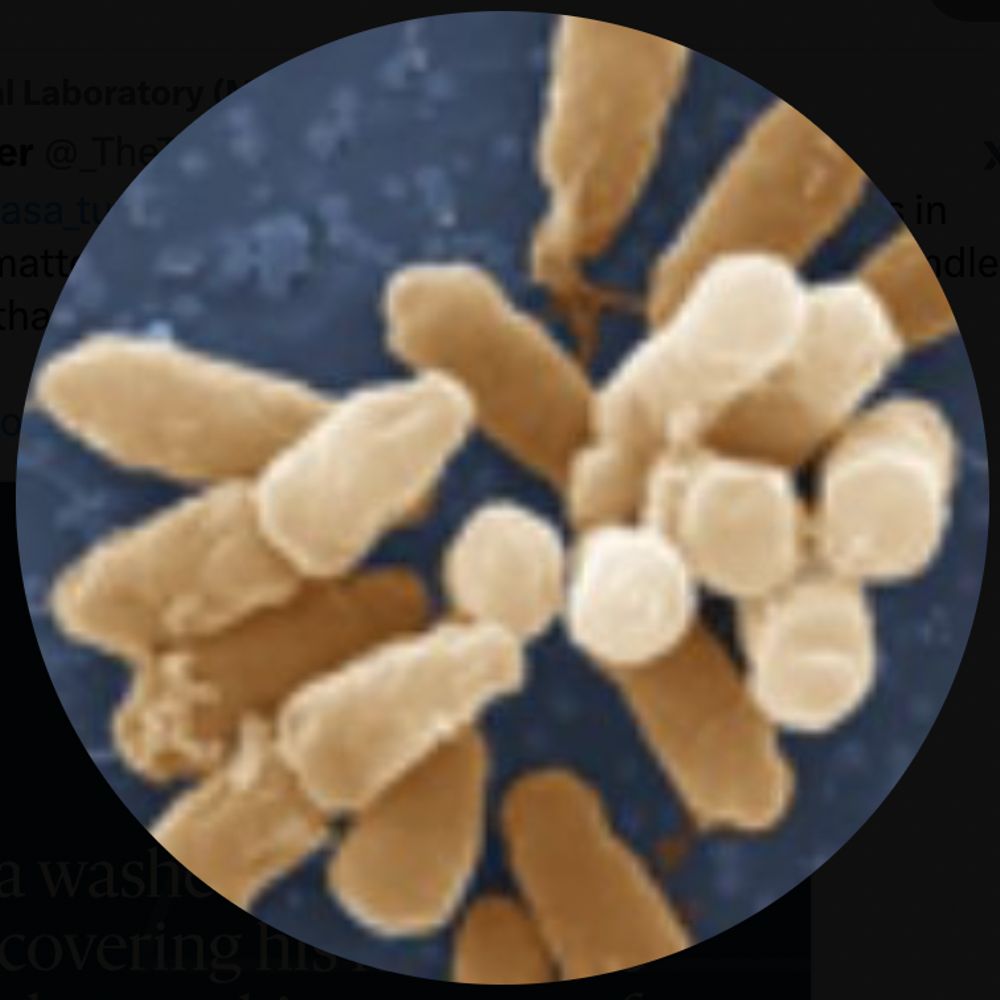
New in JB: Cao, Ohnishi et al. show sucrose & malic acid in tobacco plants induces the hrp regulon in R. pseudosolanacearum, and they make excellent strides in defining the sensing mechanism highlighting a plant-microbe interaction.
journals.asm.org/doi/10.1128/...
@asm.org #JBacteriology
journals.asm.org/doi/10.1128/...
@asm.org #JBacteriology

April 4, 2025 at 3:04 PM
New in JB: Cao, Ohnishi et al. show sucrose & malic acid in tobacco plants induces the hrp regulon in R. pseudosolanacearum, and they make excellent strides in defining the sensing mechanism highlighting a plant-microbe interaction.
journals.asm.org/doi/10.1128/...
@asm.org #JBacteriology
journals.asm.org/doi/10.1128/...
@asm.org #JBacteriology

Description of two novel bacteriophages of the class Caudoviricetes that infect Ralstonia solanacearum and Ralstonia pseudosolanacearum https://pubmed.ncbi.nlm.nih.gov/40126658/
March 26, 2025 at 5:56 PM
Description of two novel bacteriophages of the class Caudoviricetes that infect Ralstonia solanacearum and Ralstonia pseudosolanacearum https://pubmed.ncbi.nlm.nih.gov/40126658/
Description of two novel bacteriophages of the class Caudoviricetes that infect Ralstonia solanacearum and Ralstonia pseudosolanacearum https://pubmed.ncbi.nlm.nih.gov/40126658/
March 25, 2025 at 11:59 AM
Description of two novel bacteriophages of the class Caudoviricetes that infect Ralstonia solanacearum and Ralstonia pseudosolanacearum https://pubmed.ncbi.nlm.nih.gov/40126658/
We’re pleased to share the latest EFSA Pest Reports, supporting the ranking of EU candidate #PriorityPests.
Nepovirus myrtilli:
doi.org/10.2903/sp.e...
Polygraphus proximus: doi.org/10.2903/sp.e...
Popillia japonica:
doi.org/10.2903/sp.e...
Ralstonia pseudosolanacearum: doi.org/10.2903/sp.e...
Nepovirus myrtilli:
doi.org/10.2903/sp.e...
Polygraphus proximus: doi.org/10.2903/sp.e...
Popillia japonica:
doi.org/10.2903/sp.e...
Ralstonia pseudosolanacearum: doi.org/10.2903/sp.e...

Nepovirus myrtilli Pest Report to support the ranking of EU candidate priority pests
In 2022, EFSA was mandated by the European Commission's Directorate-General for Health and Food Safety (M-2022-00070) to provide technical assistance on the list of Union quarantine pests qualifying ...
doi.org
February 5, 2025 at 4:39 PM
We’re pleased to share the latest EFSA Pest Reports, supporting the ranking of EU candidate #PriorityPests.
Nepovirus myrtilli:
doi.org/10.2903/sp.e...
Polygraphus proximus: doi.org/10.2903/sp.e...
Popillia japonica:
doi.org/10.2903/sp.e...
Ralstonia pseudosolanacearum: doi.org/10.2903/sp.e...
Nepovirus myrtilli:
doi.org/10.2903/sp.e...
Polygraphus proximus: doi.org/10.2903/sp.e...
Popillia japonica:
doi.org/10.2903/sp.e...
Ralstonia pseudosolanacearum: doi.org/10.2903/sp.e...
First Report of Bacterial Wilt of Ginger Caused by Ralstonia pseudosolanacearum in the Continental United States https://pubmed.ncbi.nlm.nih.gov/39818989/
January 19, 2025 at 8:26 PM
First Report of Bacterial Wilt of Ginger Caused by Ralstonia pseudosolanacearum in the Continental United States https://pubmed.ncbi.nlm.nih.gov/39818989/

Working on the development of a #deeplearning pipeline for phenotyping of #Arabidopsis bacterial disease. Here a Ralstonia pseudosolanacearum infection. Will keep you posted of work by talented PhD student Felicia Maviane Macia @lipme-toulouse.bsky.social

December 2, 2024 at 12:14 PM
Working on the development of a #deeplearning pipeline for phenotyping of #Arabidopsis bacterial disease. Here a Ralstonia pseudosolanacearum infection. Will keep you posted of work by talented PhD student Felicia Maviane Macia @lipme-toulouse.bsky.social

Tissue-independent nature of plant susceptibility: a comparative pathogenicity study of the systemic phytopathogen Ralstonia pseudosolanacearum in eggplant and tomato seedlings through root and leaf https://www.biorxiv.org/content/10.1101/2024.11.25.625158v1

Tissue-independent nature of plant susceptibility: a comparative pathogenicity study of the systemic phytopathogen Ralstonia pseudosolanacearum in eggplant and tomato seedlings through root and leaf https://www.biorxiv.org/content/10.1101/2024.11.25.625158v1
Ralstonia pseudosolanacearum causes a lethal bacterial wilt disease in many plant species, posing si
www.biorxiv.org
November 27, 2024 at 1:01 AM
Tissue-independent nature of plant susceptibility: a comparative pathogenicity study of the systemic phytopathogen Ralstonia pseudosolanacearum in eggplant and tomato seedlings through root and leaf https://www.biorxiv.org/content/10.1101/2024.11.25.625158v1
Tissue-independent nature of plant susceptibility: a comparative pathogenicity study of the systemic phytopathogen Ralstonia pseudosolanacearum in eggplant and tomato seedlings through root and leaf https://www.biorxiv.org/content/10.1101/2024.11.25.625158v1

Tissue-independent nature of plant susceptibility: a comparative pathogenicity study of the systemic phytopathogen Ralstonia pseudosolanacearum in eggplant and tomato seedlings through root and leaf https://www.biorxiv.org/content/10.1101/2024.11.25.625158v1
Ralstonia pseudosolanacearum causes a lethal bacterial wilt disease in many plant species, posing si
www.biorxiv.org
November 27, 2024 at 1:01 AM
Tissue-independent nature of plant susceptibility: a comparative pathogenicity study of the systemic phytopathogen Ralstonia pseudosolanacearum in eggplant and tomato seedlings through root and leaf https://www.biorxiv.org/content/10.1101/2024.11.25.625158v1

Changes in DNA methylation contribute to rapid adaptation in bacterial plant pathogen evolution
Ralstonia pseudosolanacearum
#PLOSBiology from Alice Guidot
journals.plos.org/plosbiology/...
Ralstonia pseudosolanacearum
#PLOSBiology from Alice Guidot
journals.plos.org/plosbiology/...

Changes in DNA methylation contribute to rapid adaptation in bacterial plant pathogen evolution
Do epigenetic changes contribute to long-term bacterial adaptation? This study shows that changes in DNA methylation enable rapid adaptation of the major agricultural bacterial pathogen Ralstonia pseu...
journals.plos.org
October 9, 2024 at 12:20 PM
Changes in DNA methylation contribute to rapid adaptation in bacterial plant pathogen evolution
Ralstonia pseudosolanacearum
#PLOSBiology from Alice Guidot
journals.plos.org/plosbiology/...
Ralstonia pseudosolanacearum
#PLOSBiology from Alice Guidot
journals.plos.org/plosbiology/...

Morphology of softening and translucency in the stems of tomato and eggplant seedlings due to infection by Ralstonia pseudosolanacearum F1C1 https://www.biorxiv.org/content/10.1101/2024.09.10.612199v1

Morphology of softening and translucency in the stems of tomato and eggplant seedlings due to infection by Ralstonia pseudosolanacearum F1C1 https://www.biorxiv.org/content/10.1101/2024.09.10.612199v1
Ralstonia pseudosolanacearum F1C1 is a soil-borne phytopathogenic bacterium with a broad host range
www.biorxiv.org
September 13, 2024 at 6:01 PM
Morphology of softening and translucency in the stems of tomato and eggplant seedlings due to infection by Ralstonia pseudosolanacearum F1C1 https://www.biorxiv.org/content/10.1101/2024.09.10.612199v1