




Alberto Espay
@albertoespay.bsky.social
Neurology professor at the University of Cincinnati, an advocate of precision and rescue medicines for Parkinson's & Alzheimer's. Author #BrainFables.
Pinned
Alberto Espay
@albertoespay.bsky.social
· Jun 27

Physics of Protein Aggregation in Normal and Accelerated Brain Aging
Soluble monomeric proteins precipitate via nucleation into insoluble amyloids in response to age-related exposures (e.g., microbes, nanoparticles). Persistent soluble-to-insoluble phase transition de....
onlinelibrary.wiley.com
How does physics inform neurodegeneration? Supersaturation lowers the nucleation barrier for the precipitation of monomeric proteins into their pathological state. In normal aging, replacement matches loss; in accelerated aging, it does not. (1/4)
onlinelibrary.wiley.com/doi/10.1002/...
onlinelibrary.wiley.com/doi/10.1002/...
𝐓𝐡𝐢𝐬 𝐭𝐫𝐞𝐚𝐭𝐦𝐞𝐧𝐭 𝐜𝐚𝐧 𝐤𝐢𝐥𝐥. 𝐂𝐨𝐮𝐧𝐭𝐢𝐧𝐠 𝐢𝐬 𝐥𝐞𝐠𝐚𝐥𝐥𝐲 𝐩𝐫𝐨𝐡𝐢𝐛𝐢𝐭𝐞𝐝
(*until 2036–2037).
Deaths occur with lecanemab & donanemab, but excess mortality can’t be estimated: it is proprietary data and can be withheld for a decade. www.linkedin.com/posts/albert...
(*until 2036–2037).
Deaths occur with lecanemab & donanemab, but excess mortality can’t be estimated: it is proprietary data and can be withheld for a decade. www.linkedin.com/posts/albert...

Science For Sale: How Drugmakers Captured The FDA | Alberto Espay
𝐓𝐡𝐢𝐬 𝐭𝐫𝐞𝐚𝐭𝐦𝐞𝐧𝐭 𝐜𝐚𝐧 𝐤𝐢𝐥𝐥. 𝐂𝐨𝐮𝐧𝐭𝐢𝐧𝐠 𝐢𝐬 𝐥𝐞𝐠𝐚𝐥𝐥𝐲 𝐩𝐫𝐨𝐡𝐢𝐛𝐢𝐭𝐞𝐝.*
(*until 2036–2037)
𝐃𝐞𝐚𝐭𝐡𝐬 𝐚𝐬 𝐩𝐫𝐨𝐩𝐫𝐢𝐞𝐭𝐚𝐫𝐲 𝐝𝐚𝐭𝐚.
It has now been 15 months since I retracted my first and only paper, which sought to estimate ...
www.linkedin.com
February 1, 2026 at 10:49 PM
𝐓𝐡𝐢𝐬 𝐭𝐫𝐞𝐚𝐭𝐦𝐞𝐧𝐭 𝐜𝐚𝐧 𝐤𝐢𝐥𝐥. 𝐂𝐨𝐮𝐧𝐭𝐢𝐧𝐠 𝐢𝐬 𝐥𝐞𝐠𝐚𝐥𝐥𝐲 𝐩𝐫𝐨𝐡𝐢𝐛𝐢𝐭𝐞𝐝
(*until 2036–2037).
Deaths occur with lecanemab & donanemab, but excess mortality can’t be estimated: it is proprietary data and can be withheld for a decade. www.linkedin.com/posts/albert...
(*until 2036–2037).
Deaths occur with lecanemab & donanemab, but excess mortality can’t be estimated: it is proprietary data and can be withheld for a decade. www.linkedin.com/posts/albert...
𝐘𝐨𝐮𝐫 𝐛𝐫𝐚𝐢𝐧 𝐰𝐢𝐥𝐥 𝐬𝐡𝐫𝐢𝐧𝐤 𝐛𝐮𝐭 𝐭𝐡𝐢𝐬 𝐢𝐬 “𝐩𝐬𝐞𝐮𝐝𝐨-𝐚𝐭𝐫𝐨𝐩𝐡𝐲,” 𝐭𝐫𝐮𝐬𝐭 𝐮𝐬. We need independent analysis, not trust. The dry weight of Aβ accounts for <1/1,000 of the observed volume change in #Alzheimers with treatment. www.linkedin.com/posts/albert...

𝐓𝐡𝐢𝐬 𝐭𝐫𝐞𝐚𝐭𝐦𝐞𝐧𝐭 𝐰𝐢𝐥𝐥 𝐬𝐡𝐫𝐢𝐧𝐤 𝐲𝐨𝐮𝐫 𝐛𝐫𝐚𝐢𝐧. 𝐘𝐨𝐮'𝐫𝐞 𝐰𝐞𝐥𝐜𝐨𝐦𝐞.
That statement is not rhetorical. We are told that reduced brain volume is the mechanism by which… | Alberto Espay
𝐓𝐡𝐢𝐬 𝐭𝐫𝐞𝐚𝐭𝐦𝐞𝐧𝐭 𝐰𝐢𝐥𝐥 𝐬𝐡𝐫𝐢𝐧𝐤 𝐲𝐨𝐮𝐫 𝐛𝐫𝐚𝐢𝐧. 𝐘𝐨𝐮'𝐫𝐞 𝐰𝐞𝐥𝐜𝐨𝐦𝐞.
That statement is not rhetorical. We are told that reduced brain volume is the mechanism by which anti-amyloid (Aβ) monoclonal antibodies benefi...
www.linkedin.com
January 26, 2026 at 3:28 PM
𝐘𝐨𝐮𝐫 𝐛𝐫𝐚𝐢𝐧 𝐰𝐢𝐥𝐥 𝐬𝐡𝐫𝐢𝐧𝐤 𝐛𝐮𝐭 𝐭𝐡𝐢𝐬 𝐢𝐬 “𝐩𝐬𝐞𝐮𝐝𝐨-𝐚𝐭𝐫𝐨𝐩𝐡𝐲,” 𝐭𝐫𝐮𝐬𝐭 𝐮𝐬. We need independent analysis, not trust. The dry weight of Aβ accounts for <1/1,000 of the observed volume change in #Alzheimers with treatment. www.linkedin.com/posts/albert...
In Parkinson’s, we obsess over what α-synuclein becomes when aggregated, and ignore what neurons lose when its normal form disappears. New data in α-syn KO mice: hyposmia, apoptosis, impaired autophagy. Depletion may matter more than we think. www.linkedin.com/posts/albert...

Parkinson’s disease is often framed as a disorder of 'toxic accumulation' of pathological α-synuclein. Yet the reciprocal process, the depletion of soluble, functional α-synuclein, has receive...
Parkinson’s disease is often framed as a disorder of 'toxic accumulation' of pathological α-synuclein. Yet the reciprocal process, the depletion of soluble, functional α-synuclein, has received far le...
www.linkedin.com
January 24, 2026 at 9:19 PM
In Parkinson’s, we obsess over what α-synuclein becomes when aggregated, and ignore what neurons lose when its normal form disappears. New data in α-syn KO mice: hyposmia, apoptosis, impaired autophagy. Depletion may matter more than we think. www.linkedin.com/posts/albert...
“Alzheimer’s is caused by pathology decades before symptoms.” If so, removing pathology in preclinical AD should prevent decline. It didn't—most preclinical AD trials (4/6) worsened outcomes in treated vs placebo. Pathology ≠ disease.
www.youtube.com/watch?v=_Z_Z...
www.youtube.com/watch?v=_Z_Z...

Alzheimer’s Isn’t Inevitable - What Top Harvard Scientist Now Knows About Prevention
YouTube video by The HumanWare Project
www.youtube.com
January 10, 2026 at 10:14 PM
“Alzheimer’s is caused by pathology decades before symptoms.” If so, removing pathology in preclinical AD should prevent decline. It didn't—most preclinical AD trials (4/6) worsened outcomes in treated vs placebo. Pathology ≠ disease.
www.youtube.com/watch?v=_Z_Z...
www.youtube.com/watch?v=_Z_Z...
Detecting Alzheimer’s, or Detecting Age?
A new @Nature study shows the wide gap between #Alzheimers pathology (Tau217) and disease. Pathology and disease prevalence diverge across adulthood. Is pathology a marker of successful aging?
www.linkedin.com/pulse/detect... via @LinkedIn
A new @Nature study shows the wide gap between #Alzheimers pathology (Tau217) and disease. Pathology and disease prevalence diverge across adulthood. Is pathology a marker of successful aging?
www.linkedin.com/pulse/detect... via @LinkedIn

Detecting Alzheimer’s — or Detecting Age?
A blood-based biomarker of Alzheimer’s quintuples the population prevalence of Alzheimer’s. This is in the newly created world, where a pathology test trumps clinical symptoms.
www.linkedin.com
January 10, 2026 at 10:04 PM
Detecting Alzheimer’s, or Detecting Age?
A new @Nature study shows the wide gap between #Alzheimers pathology (Tau217) and disease. Pathology and disease prevalence diverge across adulthood. Is pathology a marker of successful aging?
www.linkedin.com/pulse/detect... via @LinkedIn
A new @Nature study shows the wide gap between #Alzheimers pathology (Tau217) and disease. Pathology and disease prevalence diverge across adulthood. Is pathology a marker of successful aging?
www.linkedin.com/pulse/detect... via @LinkedIn
Resolving the Biomarker-Clinical “Mismatch” in Alzheimer's Disease
www.linkedin.com/pulse/resolv...
www.linkedin.com/pulse/resolv...

Resolving the Biomarker-Clinical “Mismatch” in Alzheimer's Disease
A recent JAMA Neurology paper assesses the extent to which a measure of the tau protein in plasma known as p-tau217, drives the severity of Alzheimer’s disease, as measured by the Clinical Dementia Ra...
www.linkedin.com
December 20, 2025 at 9:06 PM
Resolving the Biomarker-Clinical “Mismatch” in Alzheimer's Disease
www.linkedin.com/pulse/resolv...
www.linkedin.com/pulse/resolv...
Antivirals treat active viral infections. Using HSV-1 IgG/IgM to enroll #Alzheimers patients does not mean the virus is actively driving dementia. Without viral replication, there is no target. Thus, placebo outperforming valacyclovir is unsurprising.
jamanetwork.com/journals/jam...
jamanetwork.com/journals/jam...

Valacyclovir Treatment of Early Symptomatic Alzheimer Disease
This randomized clinical trial compares the efficacy and adverse effects of valacyclovir vs placebo in patients with early symptomatic Alzheimer disease and seropositivity to herpes simplex viruses.
jamanetwork.com
December 18, 2025 at 3:40 PM
Antivirals treat active viral infections. Using HSV-1 IgG/IgM to enroll #Alzheimers patients does not mean the virus is actively driving dementia. Without viral replication, there is no target. Thus, placebo outperforming valacyclovir is unsurprising.
jamanetwork.com/journals/jam...
jamanetwork.com/journals/jam...
Can high LRRK2 kinase activity be compensatory in LRRK2-#Parkinsons? We collect evidence suggesting we may be undermining cellular restoration in ongoing kinase inhibitor trials (e.g., BIIB122) & outline precision-medicine strategies in G2019S LRRK2-PD
www.sciencedirect.com/science/arti...
www.sciencedirect.com/science/arti...

December 6, 2025 at 4:47 PM
Can high LRRK2 kinase activity be compensatory in LRRK2-#Parkinsons? We collect evidence suggesting we may be undermining cellular restoration in ongoing kinase inhibitor trials (e.g., BIIB122) & outline precision-medicine strategies in G2019S LRRK2-PD
www.sciencedirect.com/science/arti...
www.sciencedirect.com/science/arti...
On why the α-Syn SAA test cannot inform on #Parkinsons severity, biology, risk, or prognosis. In this article, I reflect on why "seeding activity" extracted from "kinetic parameters" can never reflect disease activity. linkedin.com/pulse/why-la... via @linkedin.com

Why the latest test for Parkinson’s cannot be quantitative –only binary (yes/no)
The α-Synuclein Seed Amplification Assay (α-Syn SAA) In response to many biological exposures, monomeric (normal) α-synuclein transforms into fibrillar (abnormal) aggregates, which we call Lewy pathol...
linkedin.com
November 26, 2025 at 11:15 PM
On why the α-Syn SAA test cannot inform on #Parkinsons severity, biology, risk, or prognosis. In this article, I reflect on why "seeding activity" extracted from "kinetic parameters" can never reflect disease activity. linkedin.com/pulse/why-la... via @linkedin.com
For decades, we have tried to suppress γ-secretase, lower Aβ42 levels, or remove amyloid from the brain. We show that PSEN1 mutations already reduce γ-secretase activity and lower Aβ42. Why restoring Aβ42 is the way forward for #Alzheimers, via @Brain1878
academic.oup.com/brain/articl...
academic.oup.com/brain/articl...

Restoring amyloid-β42 and γ-secretase function in Alzheimer’s disease
Espay et al. challenge the view that Alzheimer’s disease is caused by increased gamma-secretase activity and overproduction of Aβ42. Instead, they suggest
academic.oup.com
November 6, 2025 at 7:15 PM
For decades, we have tried to suppress γ-secretase, lower Aβ42 levels, or remove amyloid from the brain. We show that PSEN1 mutations already reduce γ-secretase activity and lower Aβ42. Why restoring Aβ42 is the way forward for #Alzheimers, via @Brain1878
academic.oup.com/brain/articl...
academic.oup.com/brain/articl...
Increasing synuclein pathology as a treatment for corticobasal syndrome?
Facetious, yes ... but that’s one logical takeaway when learning that CBS patients positive for αSyn-SAA show milder disease, slower progression, and lower NfL.
movementdisorders.onlinelibrary.wiley.com/doi/10.1002/...
Facetious, yes ... but that’s one logical takeaway when learning that CBS patients positive for αSyn-SAA show milder disease, slower progression, and lower NfL.
movementdisorders.onlinelibrary.wiley.com/doi/10.1002/...

A Biomarker‐Based Classification of Corticobasal Syndrome
Background Corticobasal syndrome (CBS) is a clinically defined syndrome with progressive movement and cortical dysfunction, caused by various underlying pathologies, most commonly tau-predominant pa...
movementdisorders.onlinelibrary.wiley.com
November 1, 2025 at 11:33 AM
Increasing synuclein pathology as a treatment for corticobasal syndrome?
Facetious, yes ... but that’s one logical takeaway when learning that CBS patients positive for αSyn-SAA show milder disease, slower progression, and lower NfL.
movementdisorders.onlinelibrary.wiley.com/doi/10.1002/...
Facetious, yes ... but that’s one logical takeaway when learning that CBS patients positive for αSyn-SAA show milder disease, slower progression, and lower NfL.
movementdisorders.onlinelibrary.wiley.com/doi/10.1002/...
Proposing three principles to guide #Parkinson research:
1. Quantify monomeric & pathological α-synuclein
2. Prioritize human evidence over animal models
3. Use clinical trials to test hypotheses, not just molecules
@ajlees.bsky.social
movementdisorders.onlinelibrary.wiley.com/doi/10.1002/...
1. Quantify monomeric & pathological α-synuclein
2. Prioritize human evidence over animal models
3. Use clinical trials to test hypotheses, not just molecules
@ajlees.bsky.social
movementdisorders.onlinelibrary.wiley.com/doi/10.1002/...

Beyond Pathology: α‐Synuclein Homeostasis and Three Principles to Guide Research
Click on the article title to read more.
movementdisorders.onlinelibrary.wiley.com
October 16, 2025 at 3:50 AM
Proposing three principles to guide #Parkinson research:
1. Quantify monomeric & pathological α-synuclein
2. Prioritize human evidence over animal models
3. Use clinical trials to test hypotheses, not just molecules
@ajlees.bsky.social
movementdisorders.onlinelibrary.wiley.com/doi/10.1002/...
1. Quantify monomeric & pathological α-synuclein
2. Prioritize human evidence over animal models
3. Use clinical trials to test hypotheses, not just molecules
@ajlees.bsky.social
movementdisorders.onlinelibrary.wiley.com/doi/10.1002/...
Can #Alzheimers happen when β-amyloid protection fails? This is one conclusion drawn by the authors of a new Human Connectome Project study, which shows that higher β-amyloid load is associated with better cognition, fitness, tissue integrity & perfusion.
onlinelibrary.wiley.com/doi/10.1111/...
onlinelibrary.wiley.com/doi/10.1111/...

Clinical and MRI Correlates of β‐Amyloid Load Inconsistent With Its Presumed Neurotoxicity in Cognitively Healthy Ageing
At low levels, β-amyloid—a protein commonly present in brains of patients with Alzheimer's disease – appears to actually support overall tissue integrity, blood flow, brain function and cognitive abi....
onlinelibrary.wiley.com
September 28, 2025 at 5:23 PM
Can #Alzheimers happen when β-amyloid protection fails? This is one conclusion drawn by the authors of a new Human Connectome Project study, which shows that higher β-amyloid load is associated with better cognition, fitness, tissue integrity & perfusion.
onlinelibrary.wiley.com/doi/10.1111/...
onlinelibrary.wiley.com/doi/10.1111/...
Reposted by Alberto Espay
Remember kids: "Pathology does not mean disease. Most individuals with pathology will never have disease"
Wonderful letter from @albertoespay.bsky.social
"In the reality we inhabit, we have made Lewy pathology not just a marker of PD, but its very maker!
journals.sagepub.com/doi/10.1177/...
Wonderful letter from @albertoespay.bsky.social
"In the reality we inhabit, we have made Lewy pathology not just a marker of PD, but its very maker!
journals.sagepub.com/doi/10.1177/...

‘Pathology is disease’ Parkinson's mythology: The ‘brain-first-body-first’ case study - Alberto J. Espay, Andrew J. Lees, 2025
journals.sagepub.com
September 20, 2025 at 5:52 PM
Remember kids: "Pathology does not mean disease. Most individuals with pathology will never have disease"
Wonderful letter from @albertoespay.bsky.social
"In the reality we inhabit, we have made Lewy pathology not just a marker of PD, but its very maker!
journals.sagepub.com/doi/10.1177/...
Wonderful letter from @albertoespay.bsky.social
"In the reality we inhabit, we have made Lewy pathology not just a marker of PD, but its very maker!
journals.sagepub.com/doi/10.1177/...
We neurologists fall in love with our hypotheses: they never die. The latest: Depending on where Lewy pathology is first found, one of 2 #Parkinsons types exists. @ajlees and I explain the newest inconsistency in this “brain-first/body-first” hypothesis.
journals.sagepub.com/doi/10.1177/...
journals.sagepub.com/doi/10.1177/...

Sage Journals: Discover world-class research
Subscription and open access journals from Sage, the world's leading independent academic publisher.
journals.sagepub.com
September 19, 2025 at 7:03 PM
We neurologists fall in love with our hypotheses: they never die. The latest: Depending on where Lewy pathology is first found, one of 2 #Parkinsons types exists. @ajlees and I explain the newest inconsistency in this “brain-first/body-first” hypothesis.
journals.sagepub.com/doi/10.1177/...
journals.sagepub.com/doi/10.1177/...
Remember the “time saved” modeling for #Alzheimers infusions introduced a year ago? Extrapolating the observed curves, patients would increase their months ‘saved’ to 7.5. The #lecanemab data have shattered the optimistic model prediction—Details on this discrepancy follow (🧵1 of 5).


September 5, 2025 at 9:01 PM
Remember the “time saved” modeling for #Alzheimers infusions introduced a year ago? Extrapolating the observed curves, patients would increase their months ‘saved’ to 7.5. The #lecanemab data have shattered the optimistic model prediction—Details on this discrepancy follow (🧵1 of 5).
Losing your mind by forgetting 𝘵𝘩𝘦 password
www.nature.com/articles/d41...
www.nature.com/articles/d41...

A mind-reading brain implant that comes with password protection
A brain–computer interface decodes in near-real time the imagined speech of people who have difficulty enunciating words.
www.nature.com
September 3, 2025 at 1:45 PM
Losing your mind by forgetting 𝘵𝘩𝘦 password
www.nature.com/articles/d41...
www.nature.com/articles/d41...
Reposted by Alberto Espay
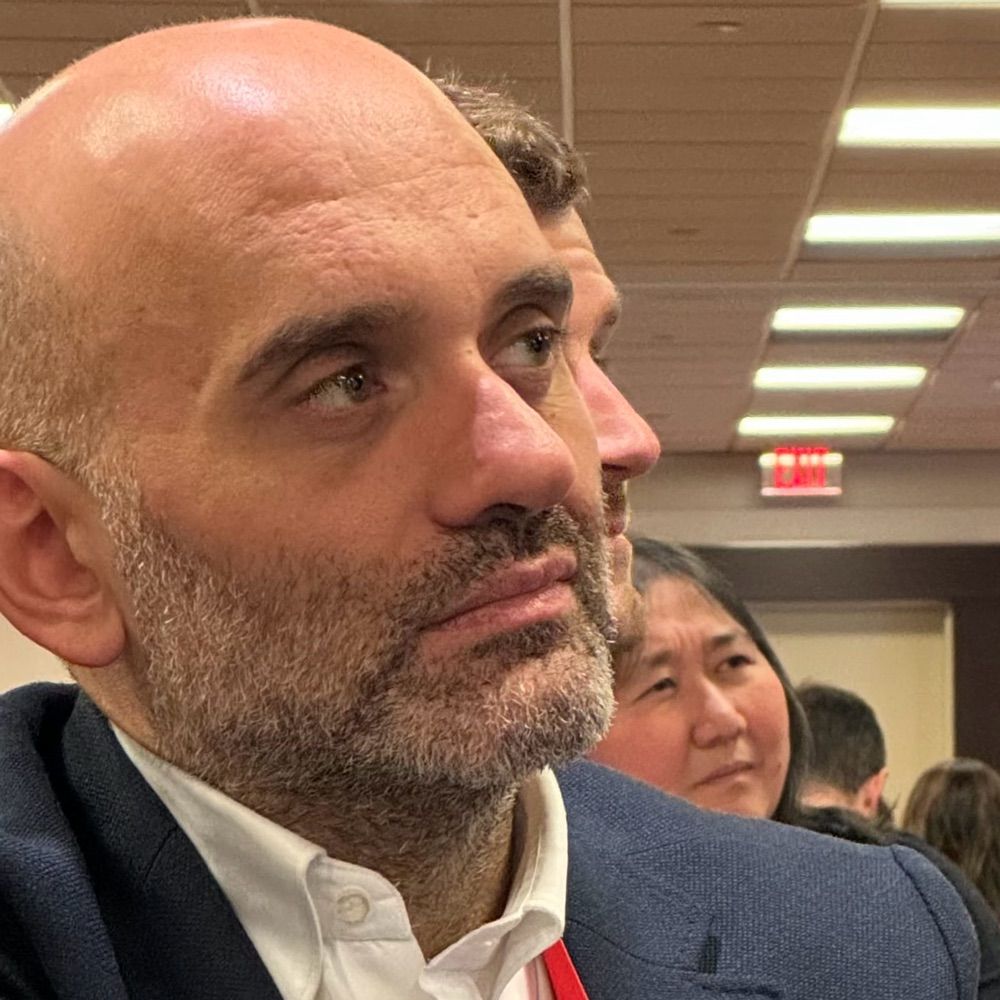
15 years (and 12 editions) later, here we are again for our annual 4-day intensive course on the diagnosis and treatment of #movementdisorders.
This year we're in charming Milan, hosted by the conference centre of Humanitas University.
More info here: www.mdscourse.com
This year we're in charming Milan, hosted by the conference centre of Humanitas University.
More info here: www.mdscourse.com

July 12, 2025 at 3:15 PM
15 years (and 12 editions) later, here we are again for our annual 4-day intensive course on the diagnosis and treatment of #movementdisorders.
This year we're in charming Milan, hosted by the conference centre of Humanitas University.
More info here: www.mdscourse.com
This year we're in charming Milan, hosted by the conference centre of Humanitas University.
More info here: www.mdscourse.com
In #Alzheimers news: “4 years on #lecanemab, the benefit tripled” … “3 years on #donanemab, the benefit doubled”, as summed by @Alzforum from #AAIC25 reported data. How the graphical illusion hides the acceleration of cognitive decline (9-part thread).
www.alzforum.org/news/confere...
www.alzforum.org/news/confere...


August 28, 2025 at 3:10 PM
In #Alzheimers news: “4 years on #lecanemab, the benefit tripled” … “3 years on #donanemab, the benefit doubled”, as summed by @Alzforum from #AAIC25 reported data. How the graphical illusion hides the acceleration of cognitive decline (9-part thread).
www.alzforum.org/news/confere...
www.alzforum.org/news/confere...
Amylyx halted the ORION trial in #PSP: no benefit from AMX0035 (sodium phenylbutyrate + taurursodiol).
The question: a false negative trial (inadequate drug) or a true negative (protein aggregation + mitochondrial dysfunction not driving PSP)?
investors.amylyx.com/news-release...
The question: a false negative trial (inadequate drug) or a true negative (protein aggregation + mitochondrial dysfunction not driving PSP)?
investors.amylyx.com/news-release...
Amylyx Pharmaceuticals to Discontinue ORION Program of AMX0035 for Progressive Supranuclear Palsy (PSP) | Amylyx Pharmaceuticals, Inc.
- AMX0035 did not show differences compared to placebo on primary or secondary outcomes at Week 24 - AMX0035 continued to be generally well-tolerated CAMBRIDGE, Mass. --(BUSINESS WIRE)--Aug. 27, 2025-...
investors.amylyx.com
August 27, 2025 at 8:25 PM
Amylyx halted the ORION trial in #PSP: no benefit from AMX0035 (sodium phenylbutyrate + taurursodiol).
The question: a false negative trial (inadequate drug) or a true negative (protein aggregation + mitochondrial dysfunction not driving PSP)?
investors.amylyx.com/news-release...
The question: a false negative trial (inadequate drug) or a true negative (protein aggregation + mitochondrial dysfunction not driving PSP)?
investors.amylyx.com/news-release...
Reposted by Alberto Espay
"These findings suggest that restoring, not reducing, γ-secretase activity & monomeric Aβ42 levels above a compensation threshold could offer disease-modifying therapeutic benefits"; More data from @albertoespay.bsky.social & colleagues
academic.oup.com/brain/advanc...
academic.oup.com/brain/advanc...

Restoring amyloid-β42 and γ-secretase function in Alzheimer’s disease
Espay et al. challenge the view that Alzheimer’s disease is caused by increased gamma-secretase activity and overproduction of Aβ42. Instead, they suggest
academic.oup.com
August 26, 2025 at 10:21 PM
"These findings suggest that restoring, not reducing, γ-secretase activity & monomeric Aβ42 levels above a compensation threshold could offer disease-modifying therapeutic benefits"; More data from @albertoespay.bsky.social & colleagues
academic.oup.com/brain/advanc...
academic.oup.com/brain/advanc...
Reposted by Alberto Espay

Some scholars have become so preoccupied with turning reality into definitions that they have totally lost sight of what Parkinson’s disease and Alzheimer’s disease actually are.
They are so fixated with galaxies they can no longer see the stars
They are so fixated with galaxies they can no longer see the stars
June 10, 2025 at 8:35 AM
Some scholars have become so preoccupied with turning reality into definitions that they have totally lost sight of what Parkinson’s disease and Alzheimer’s disease actually are.
They are so fixated with galaxies they can no longer see the stars
They are so fixated with galaxies they can no longer see the stars
Plagiarism = copying words without credit.
'Idea plagiarism' = stealing insights without credit.
With AI “remixing” text, sources get obscured, making idea theft easier. Copying words is bad, but copying findings or methods may be worse.
Via @nature.com
www.nature.com/articles/d41...
'Idea plagiarism' = stealing insights without credit.
With AI “remixing” text, sources get obscured, making idea theft easier. Copying words is bad, but copying findings or methods may be worse.
Via @nature.com
www.nature.com/articles/d41...

What counts as plagiarism? AI-generated papers pose new risks
Researchers argue over whether ‘novel’ AI-generated works use others’ ideas without credit.
www.nature.com
August 25, 2025 at 2:18 PM
Plagiarism = copying words without credit.
'Idea plagiarism' = stealing insights without credit.
With AI “remixing” text, sources get obscured, making idea theft easier. Copying words is bad, but copying findings or methods may be worse.
Via @nature.com
www.nature.com/articles/d41...
'Idea plagiarism' = stealing insights without credit.
With AI “remixing” text, sources get obscured, making idea theft easier. Copying words is bad, but copying findings or methods may be worse.
Via @nature.com
www.nature.com/articles/d41...
Key findings of critical new research in #Parkinsons and #Alzheimers disease -with corrected conclusions.
1/7🧵
www.nature.com/articles/s41...
1/7🧵
www.nature.com/articles/s41...

Phosphorylated α-synuclein in CSF and plasma does not reflect synucleinopathy - npj Parkinson's Disease
npj Parkinson's Disease - Phosphorylated α-synuclein in CSF and plasma does not reflect synucleinopathy
www.nature.com
August 15, 2025 at 4:38 PM
Key findings of critical new research in #Parkinsons and #Alzheimers disease -with corrected conclusions.
1/7🧵
www.nature.com/articles/s41...
1/7🧵
www.nature.com/articles/s41...
Looking forward to tomorrow's noon EST debate at Indiana University on 'proteinopathies' as cause (Dr. Malu Tamsey) versus consequence (me). Here is the link:

August 10, 2025 at 3:47 PM
Looking forward to tomorrow's noon EST debate at Indiana University on 'proteinopathies' as cause (Dr. Malu Tamsey) versus consequence (me). Here is the link: